Glow Labs successfully raised $4.15M in a 2022 Seed round by positioning themselves as the essential infrastructure for Web3 community retention. At a time when the NFT market was defined by speculative 'drops,' Glow Labs identified a critical gap: the lack of post-launch engagement tools. Their deck focuses heavily on the transition from Web2 loyalty points to Web3 'utility rewards,' offering a white-label solution that automates on-chain and off-chain incentives. While the deck is light on financial projections and specific unit economics, it leans into the founders' technical backgrounds a…
Key takeaways
- The company identifies a specific market gap: Web3 businesses lack strategies for post-launch community growth (Slide 3).
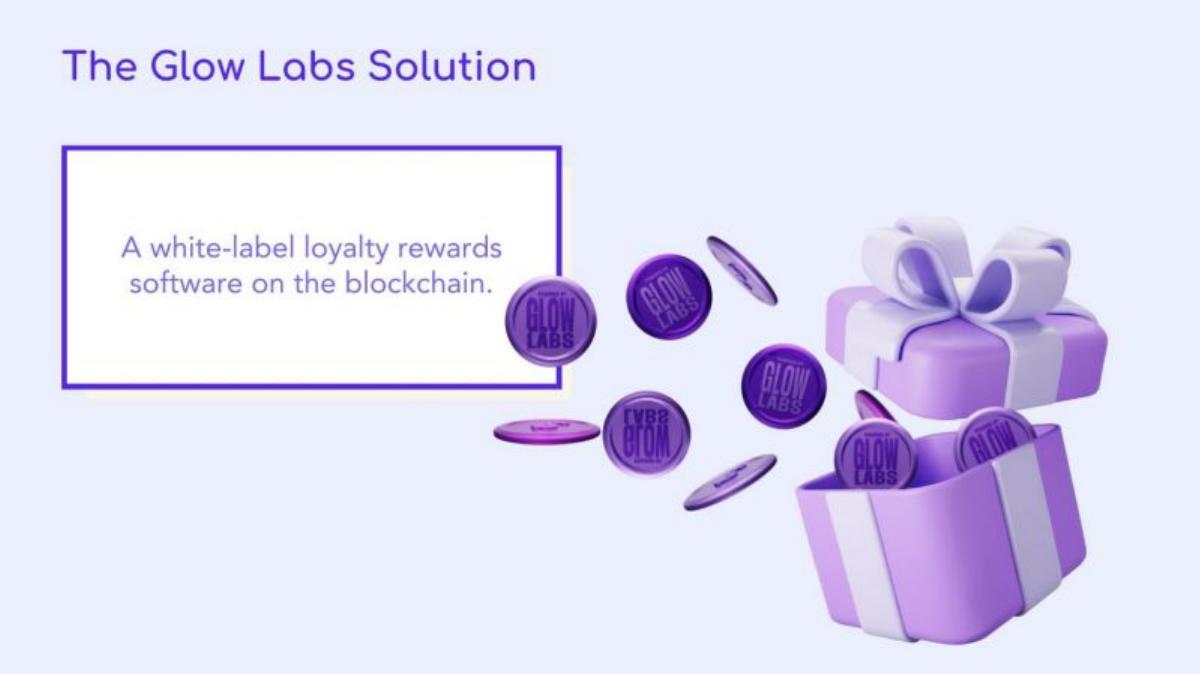
- The solution is a white-label software that automates loyalty rewards on the blockchain (Slide 4).
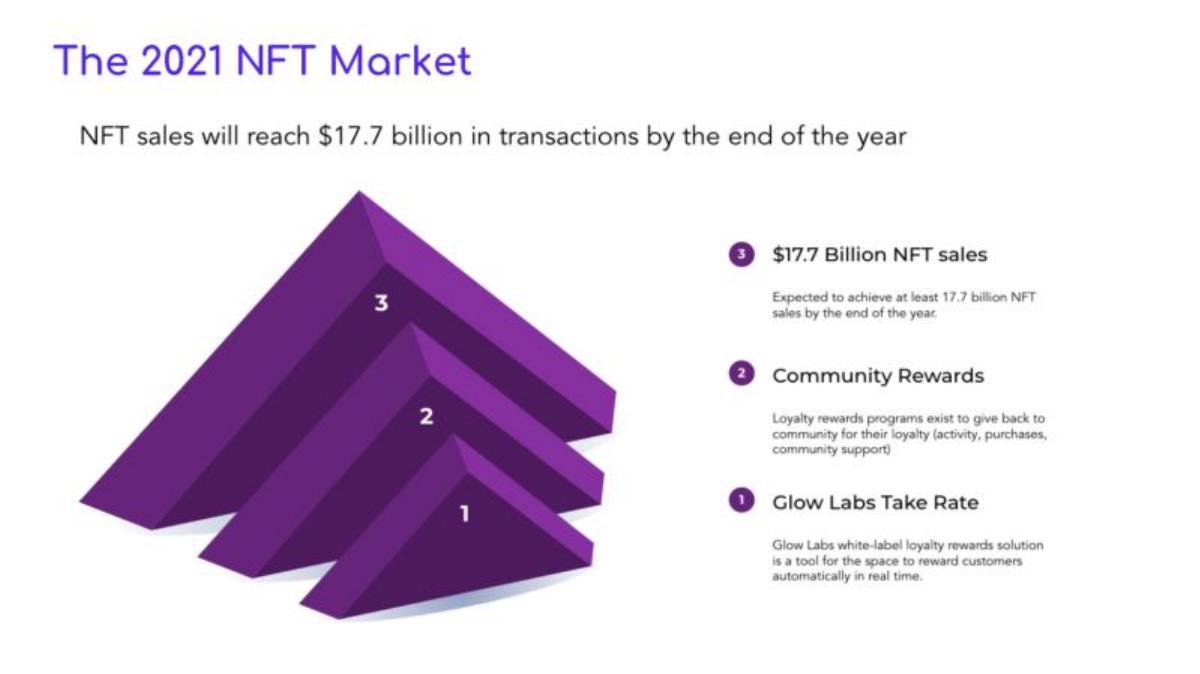
- Glow Labs anchors its market opportunity in the $17.7 billion NFT transaction volume of 2021 (Slide 5).
- The product distinguishes between on-chain rewards like 'Gas Back' and off-chain rewards like Twitter engagement (Slide 8).
- A three-tier product strategy is outlined, scaling from basic on-chain rewards to complex tokenomics for 10,000+ wallets (Slide 10).
- The founders emphasize technical execution, with Renee Russo having launched an NFT project generating $1.1M+ in revenue (Slide 2).
- The deck lacks a formal 'Ask' slide detailing the specific use of funds or valuation targets.
- There are no slides dedicated to competition, financial forecasts, or current burn rate.
The Narrative: From Speculation to Retention
In 2022, the NFT market was moving away from pure speculation toward 'utility.' Glow Labs entered this space by pitching a white-label loyalty layer. The deck is a classic example of a 'bridge' narrative: taking a proven Web2 concept (loyalty programs) and explaining why the Web3 version is technically different but commercially similar.
Slide 1: Title Slide
The deck opens with a minimalist title slide featuring the Glow Labs logo in a purple, textured font. There is no tagline or mission statement here, relying entirely on the brand identity to set the tone.
Slide 2: Co-Founders & Co-CEOs
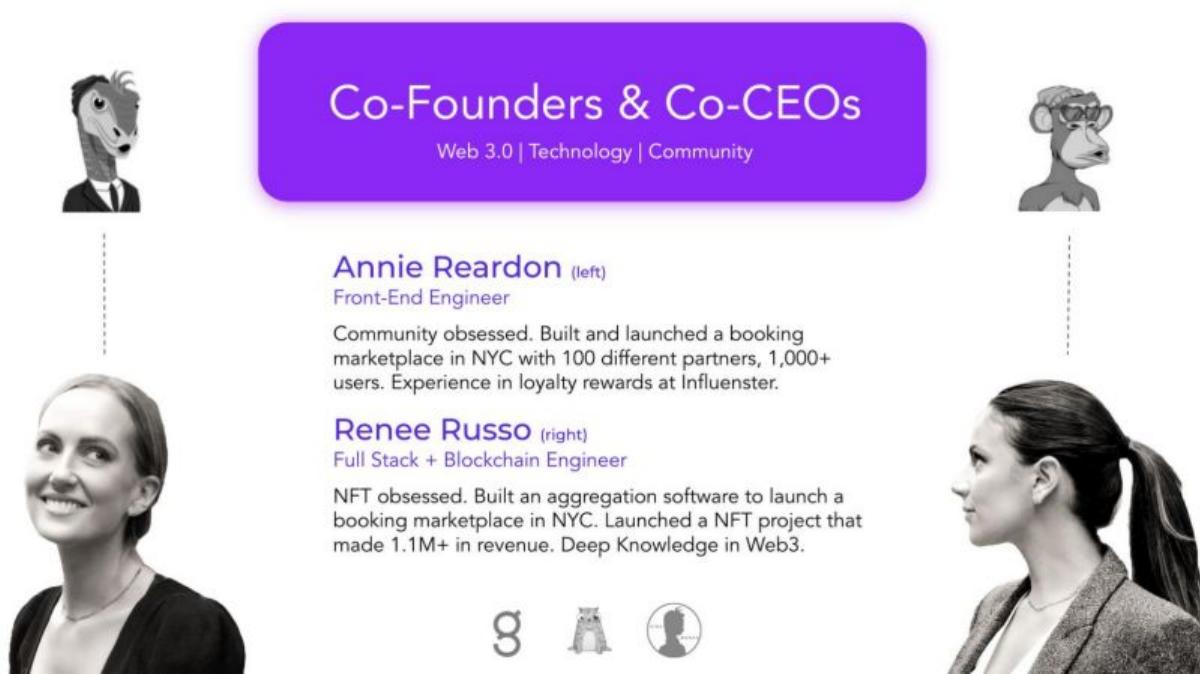
Unusually, the team slide appears second. This is a high-conviction move, suggesting that the founders' pedigree is the primary selling point. Annie Reardon is highlighted as a Front-End Engineer with experience in loyalty rewards at Influenster. Renee Russo is presented as a Full Stack and Blockchain Engineer who launched an NFT project that generated $1.1M+ in revenue. By leading with these bios, Glow Labs establishes technical credibility and a track record of generating revenue in the very niche they are targeting.
Slide 3: The Problem
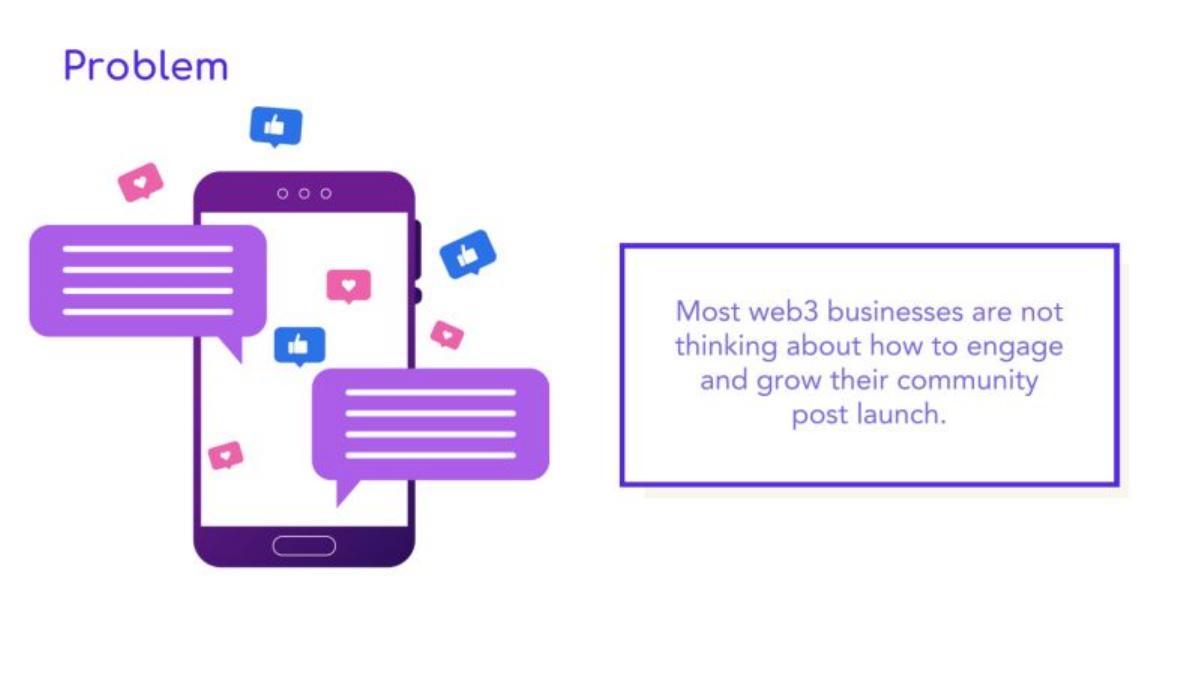
The problem statement is concise: "Most web3 businesses are not thinking about how to engage and grow their community post launch." This addresses the 'post-mint' slump that plagued many NFT projects in 2021 and 2022. It identifies a lack of infrastructure for long-term retention.
Slide 4: The Glow Labs Solution
The solution is defined as "A white-label loyalty rewards software on the blockchain." The slide uses 3D assets of purple coins and gift boxes to visually reinforce the concept of rewards. It is a straightforward 'X for Y' value proposition: Shopify for Web3 loyalty.
Slide 5: The 2021 NFT Market
This slide provides the macro context. It cites that NFT sales will reach $17.7 billion in transactions by the end of the year. It uses a pyramid graphic to link this massive transaction volume to the need for community rewards and, ultimately, the 'Glow Labs Take Rate.' This is the only hint at the business model—a fee based on the volume of rewards or transactions processed through their software.
Slide 6: Evolution of Loyalty Rewards
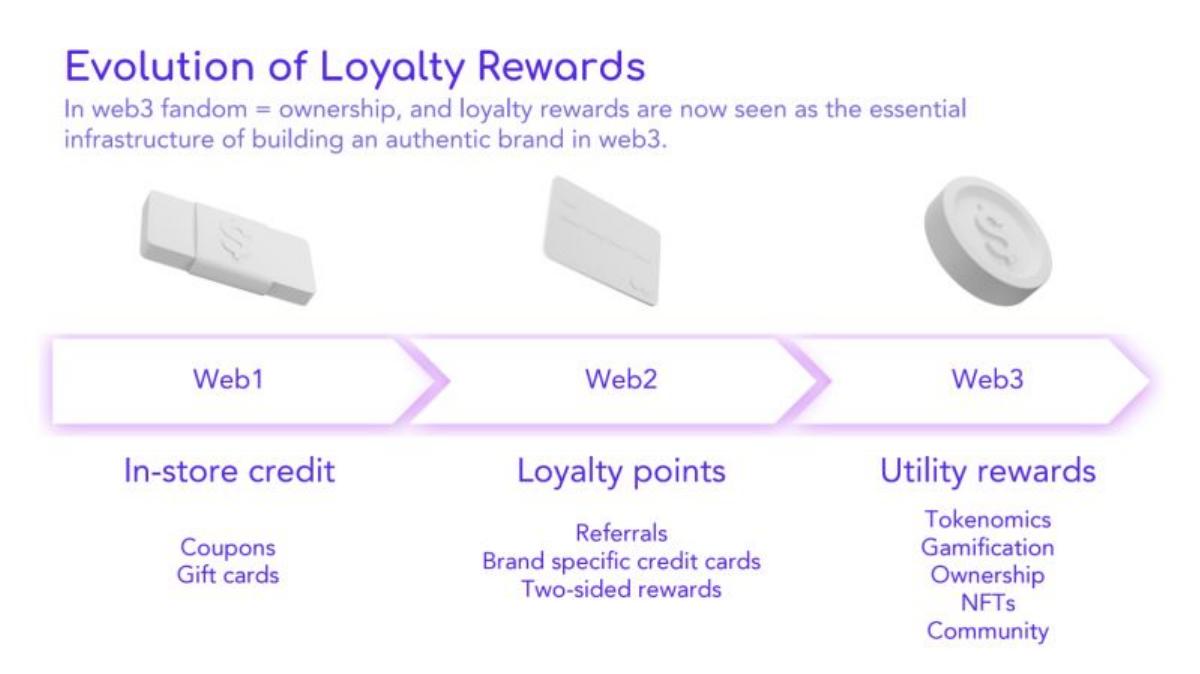
This is a conceptual slide that educates the investor. it tracks the progress from Web1 (In-store credit/coupons) to Web2 (Loyalty points/referrals) to Web3 (Utility rewards/Tokenomics). It positions Glow Labs as the inevitable successor to traditional loyalty platforms by incorporating ownership and NFTs into the reward loop.
Slide 7: Social Token Rewards Mechanics
Glow Labs makes a bold prediction here: while only 30% of NFT projects currently distribute social tokens, they anticipate 90% will do so within 3-6 months. The slide features a circular flow diagram showing the loop between determining activity, rewarding tokens, and users using those tokens to engage further with the brand.
Slide 8: Glow Labs Promotion Features
This is the most detailed product slide. It splits features into On-Chain and Off-Chain activity. On-chain features include 'Gas Back' at drop (refunding transaction fees to buyers) and rewarding loyal holders. Off-chain features focus on Twitter integration: mentions, retweets, and hashtag use. This demonstrates that the software bridges the gap between social media buzz and blockchain transactions.
Slide 9: Customize Your Loyalty Program
This slide emphasizes speed and flexibility. It claims users can distribute ETH, WETH, or social tokens "within 30 seconds." It also makes a competitive claim: "Glow Labs is currently the only software that allows each web3 company to create their own, unique rewards program."
Slide 10: Glow Labs Product Tiers
The business strategy is presented through three tiers: Basic (on-chain rewards), Analytics (adds a dashboard and 1,000 wallets), and Tokenomics (adds off-chain rewards and 10,000 wallets). This suggests a SaaS-style pricing model based on feature sets and community size, though no dollar amounts are listed.
Slide 11: Team
A broader team slide follows, listing six members including a Head of Partnerships, Account Manager, Community Manager, and Head of Growth. This indicates that despite being a Seed round, the company has already begun hiring for go-to-market roles, not just engineering.
Slide 12: Advisors
The deck concludes with a strong advisor slide. It features founders and executives from Gilt Groupe, Seated, GoPuff, and Glowbar. These are heavy hitters in the retail and loyalty space, which validates the founders' claim that they are bringing professional loyalty expertise to the crypto world.
Slide 13: Closing Slide
The final slide is a promotional graphic for the platform where the deck is hosted, rather than a company-specific closing or contact slide.
What Glow Labs Does Well
The deck is exceptionally clean and visually consistent. It uses a limited color palette (purple and white) and high-quality 3D assets that make the product feel modern and 'Web3-native.' The founders also do a great job of identifying a very specific, painful problem—the 'post-mint' death of NFT projects—and offering a technical solution that feels like a natural evolution of existing marketing tech.
What is Missing from the Deck
The most glaring omission is current traction. While Renee Russo's past $1.1M project is mentioned, there is no data on how many projects are currently using Glow Labs, what the retention rates are for those projects, or any pilot results. Additionally, there is no 'Ask' slide. Investors typically want to see how much capital is being raised and exactly how it will be deployed (e.g., 50% engineering, 30% sales). Finally, a competitive landscape slide is missing; given the claim on Slide 9 that they are the "only software" doing this, investors would likely want to see how they compare to emerging Web3 CRM and marketing tools.
What a Founder Should Copy
Founders should emulate the 'Evolution' slide (Slide 6). It is a highly effective way to show that your startup isn't just a random idea, but the logical next step in a decades-long industry trend. The split between On-Chain and Off-Chain features (Slide 8) is also a great way to explain a complex technical product in simple, benefit-oriented terms that a non-technical investor can understand.
Frequently asked questions
- How much did Glow Labs raise with this deck?
- According to the catalogue facts, Glow Labs raised $4.15M in a Seed round in 2022. The deck itself does not state the amount being raised or the valuation, which is common in decks shared publicly after a round closes.
- What is the core problem Glow Labs is solving?
- The problem, as stated on Slide 3, is that most Web3 businesses do not have a plan to engage or grow their community after the initial launch or 'mint' phase. This leads to stagnant projects and declining token holder interest.
- What are the specific features of the Glow Labs software?
- The software allows brands to reward 'On-Chain Activity' (like giving gas back to minters or rewarding loyal holders) and 'Off-Chain Activity' (like rewarding Twitter mentions, retweets, and hashtag use) as detailed on Slide 8.
- How does Glow Labs plan to make money?
- While the deck doesn't show a pricing table, Slide 10 outlines a tiered product structure (Basic, Analytics, and Tokenomics). Slide 5 also mentions a 'Glow Labs Take Rate' as part of their market capture strategy, though the specific percentage is not disclosed.
- Does the deck include a roadmap or traction metrics?
- The deck is surprisingly light on current company traction. It highlights the founders' past successes—such as a $1.1M revenue NFT project—but does not list current Glow Labs customers, active pilots, or a future development roadmap.