GlobeKeeper raised $2.5 million in 2014 with a 16-slide deck that leaned heavily on the 'show, don't tell' philosophy. The deck identifies a massive $17 billion annual spend on outdated law enforcement equipment and proposes a mobile-first, military-grade collaboration platform. While the deck is light on financial projections and unit economics, it excels at demonstrating product-market fit through specific case studies—like the Invictus Games—and a quantified reduction in incident handling time (from 20 minutes to 7 minutes). The team slide leverages high-signal logos like Lockheed Martin a…
Key takeaways
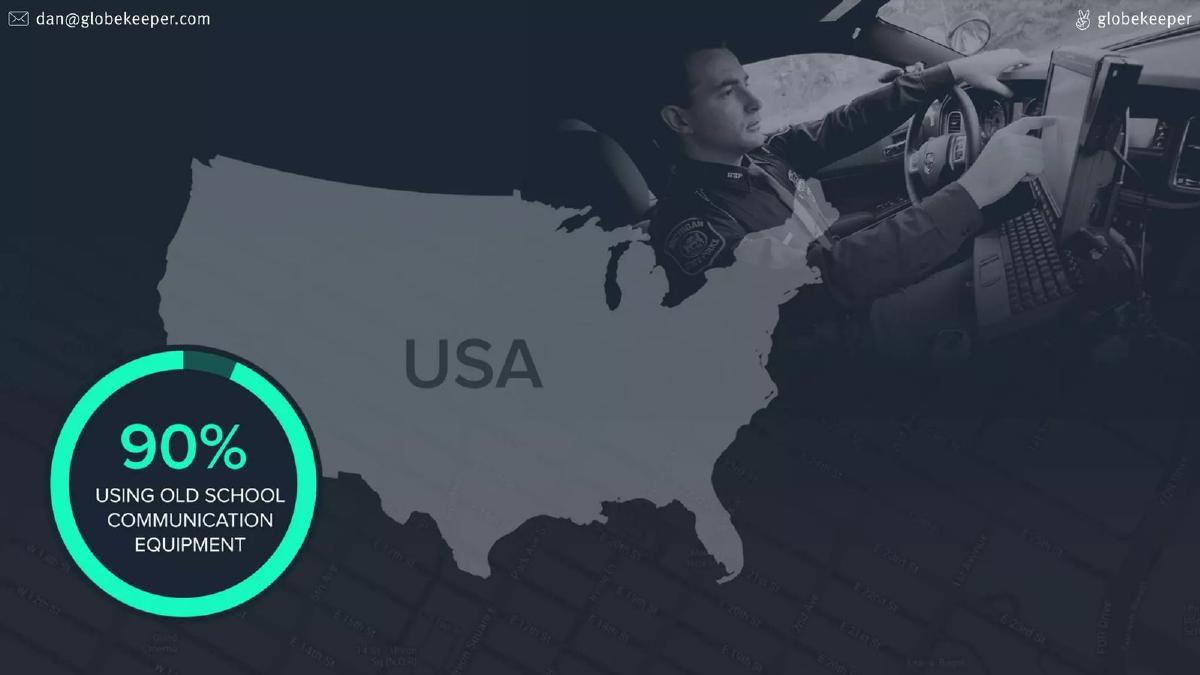
- The deck identifies that 90% of US law enforcement uses 'old school' communication equipment on slide 6.
- It highlights a massive $17B annual investment in outdated hardware like bulky laptops and handheld radios on slide 7.
- GlobeKeeper demonstrates a significant efficiency gain, reducing handling time by 65% (20 min to 7 min) according to slide 13.
- The product was battle-tested at the Invictus Games, securing an event with 50,000 visitors over 4 days as shown on slide 9.
- The team features experience from defense giants Lockheed Martin and General Dynamics on slide 15.
- Traction is quantified with $80K in paid pilots and a $2M pipeline across various police and sheriff departments on slides 16 and 17.
- The deck uses an 'Incident Response Timeline' on slide 14 to visualize how the software tracks field agents in real-time.
- There is a total absence of a 'The Ask' slide, leaving the specific funding requirements and use of funds to the imagination.
The GlobeKeeper Teardown: Selling Modernity to the Public Sector
GlobeKeeper’s 2014 seed deck is a fascinating example of a 'problem-solution' narrative that relies almost entirely on visual contrast. In the world of GovTech and security, the barrier to entry isn't just technology; it is the inertia of legacy systems. This deck addresses that inertia head-on by making the status quo look ancient and the GlobeKeeper solution look inevitable. With $2.5 million raised, the strategy clearly resonated with investors who saw the opportunity to disrupt the $17 billion annual spend on law enforcement hardware.
Slides 1-5: The Visual Hook
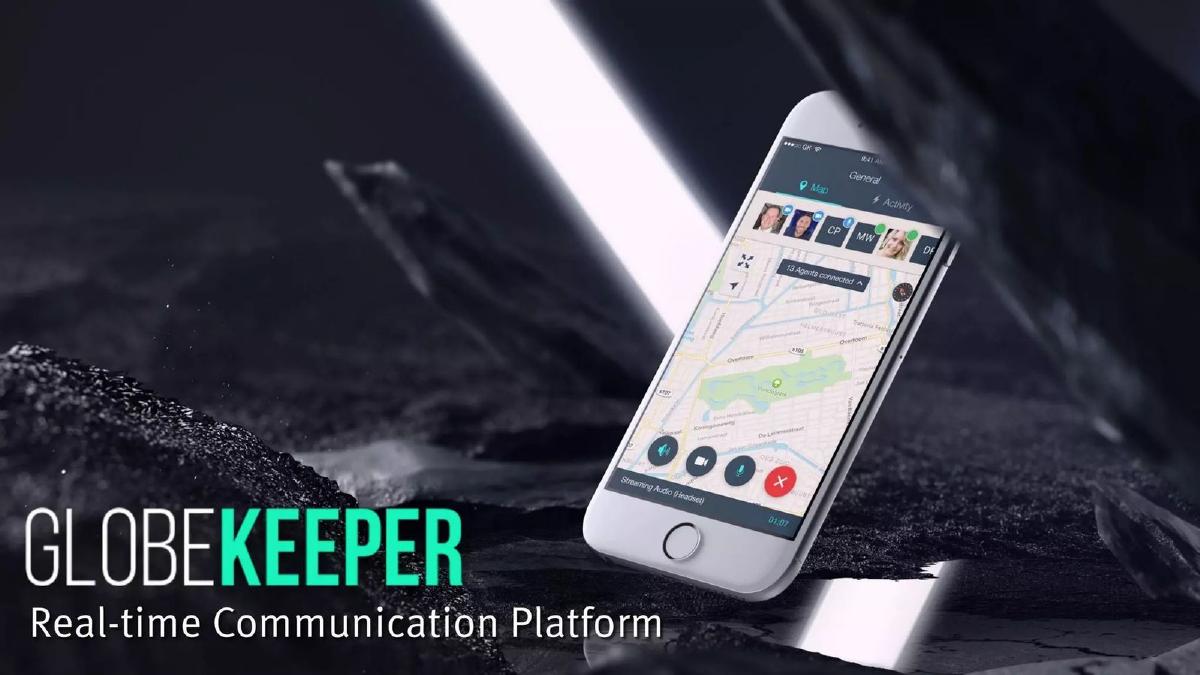
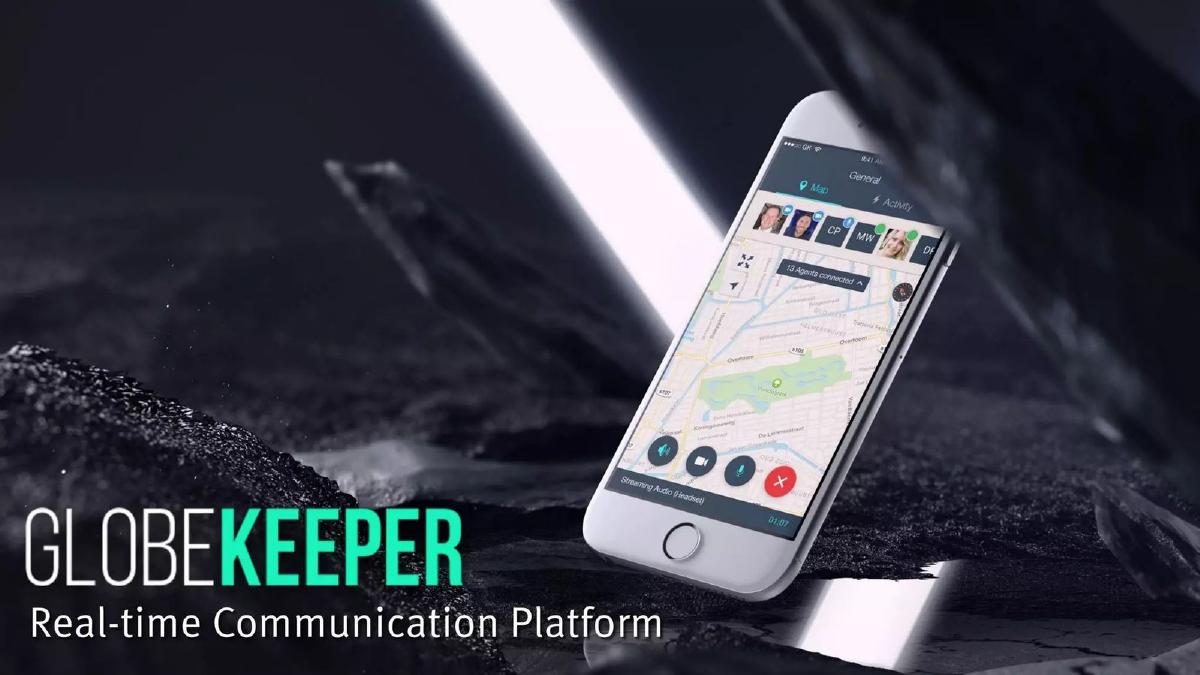
Slide 1: Title The deck opens with a high-fidelity render of an iPhone running the GlobeKeeper app, set against a dark, tactical background. The subtitle 'Real-time Communication Platform' is simple and descriptive. It immediately establishes the 'mobile-first' nature of the product.
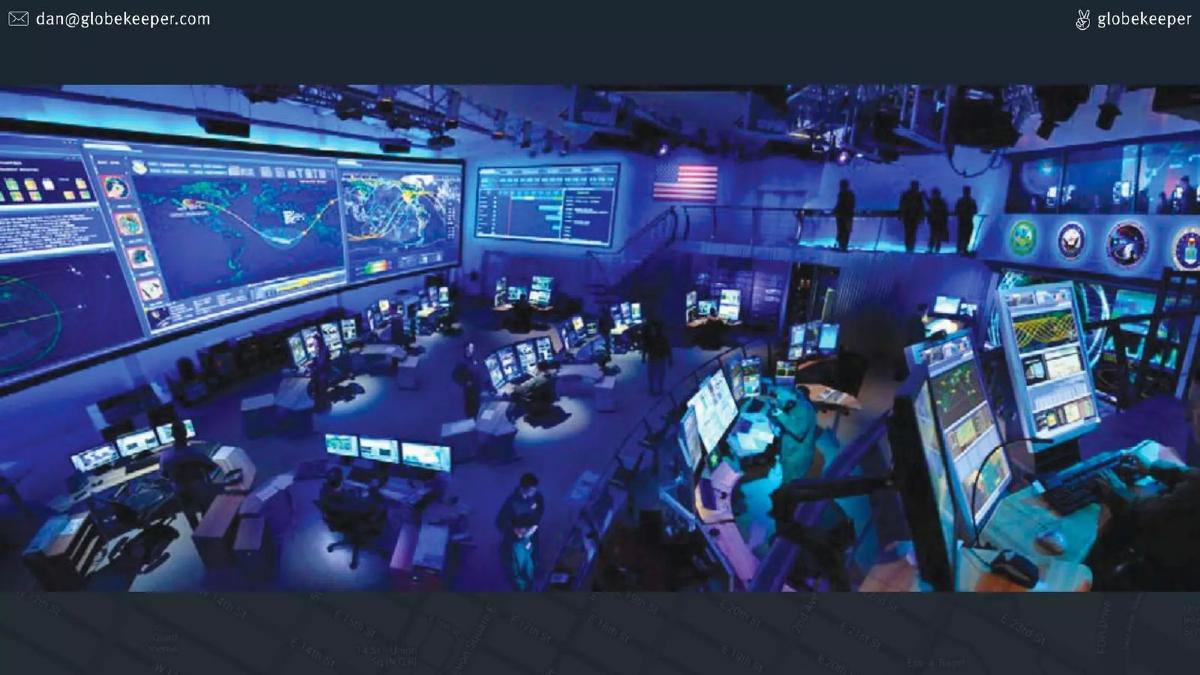
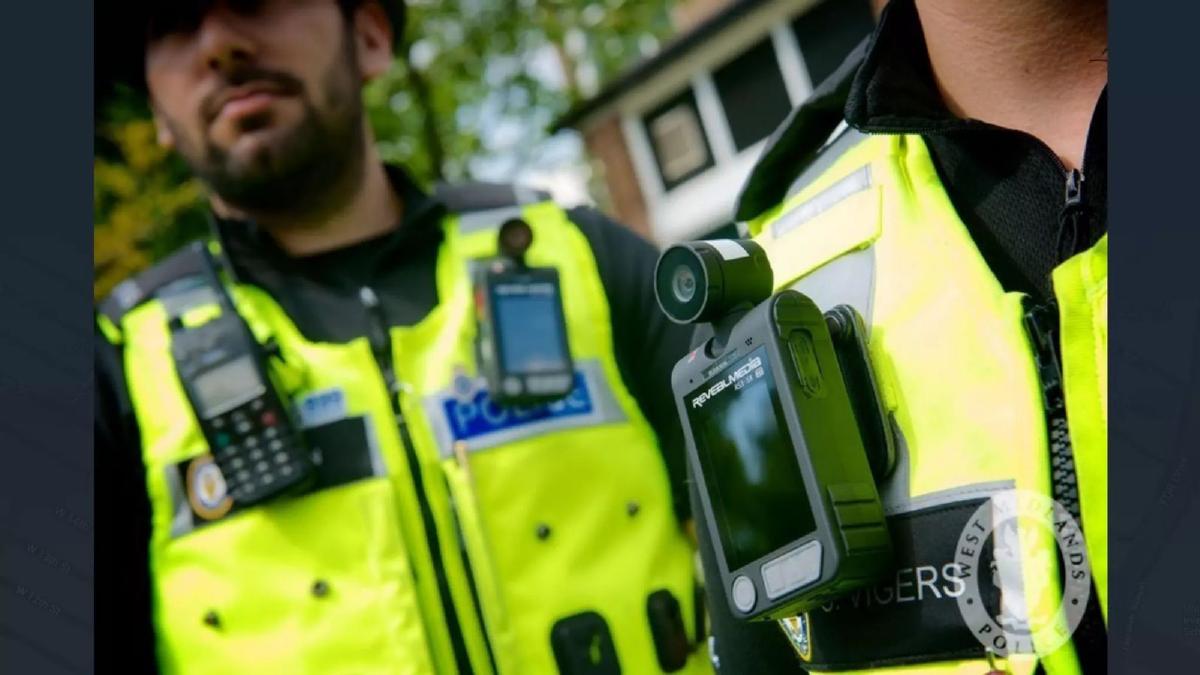
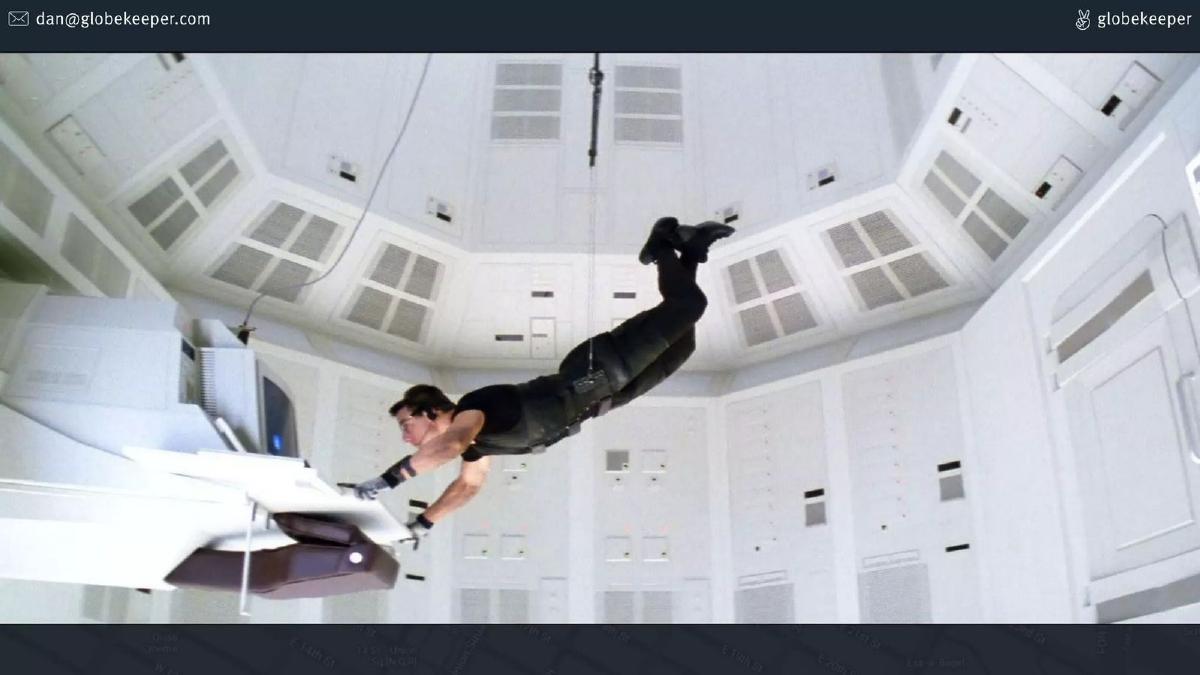
Slides 2-5: The 'Silent' Problem These four slides contain no text. They are full-bleed images designed to evoke the high-stakes environment of security operations. We see a command center (Slide 2), body-worn cameras (Slide 3), a discrete earpiece (Slide 4), and a cinematic shot of a field agent (Slide 5). This is a classic 'mood board' approach, setting the stage for the specific problems the company intends to solve without cluttering the slides with bullet points.
Slides 6-7: Quantifying the Antiquity
Slide 6: The Market Gap This slide introduces the first major metric: '90% using old school communication equipment.' By overlaying this on a map of the USA and an image of an officer using a bulky, mounted terminal, GlobeKeeper frames the entire country as a greenfield opportunity for modernization.
Slide 7: The $17B Opportunity Here, the deck puts a price tag on the problem: '$17B Invested Annually.' The slide is a collage of 'old' tech: a cluttered car dashboard with a thick Dell laptop, a wired earbud, a body cam, and a handheld radio. The implication is clear: agencies are spending billions on fragmented, hardware-heavy solutions that don't talk to each other.
Slides 8-12: The Solution and Real-World Proof
Slide 8: The Platform GlobeKeeper finally shows the full product suite. We see a web-based dashboard and a mobile app. The UI is clean, showing agent locations on a map, status updates, and live feeds. It looks like a modern SaaS product, which stands in stark contrast to the hardware shown on the previous slide.
Slide 9: The Invictus Games Case Study Traction is most believable when it involves high-profile events. Slide 9 notes that GlobeKeeper secured the Invictus Games, an 'International multi-sport event' with '50K Visitors' over '4 Days.' Using a photo of Michelle Obama and Prince Harry adds a layer of 'social proof' that is hard to ignore.
Slide 10: Ease of Adoption A common concern in GovTech is the training burden. Slide 10 addresses this by showing '52 Officers' being trained in just '1 Hour.' This suggests the platform is intuitive and doesn't require the weeks of certification often associated with police hardware.
Slides 11-12: Field Utility Slide 11 shows a real-world use case: capturing a license plate photo and instantly sharing it with a command center. Slide 12 features a testimonial from 'Captain Mike' of the Osceola County Sheriff’s Office, stating that GlobeKeeper reduced handling time from '20 min to 7 min.' This 65% reduction in time is a powerful ROI metric for any agency head.
Slides 13-16: The Timeline, Team, and Pipeline
Slide 13: Incident Response Timeline This slide visualizes the 'Real-time' claim. It shows a breadcrumb trail of an agent (John Cox) with timestamps (10:02 PM to 10:09 PM) and embedded video. It proves the system isn't just for chatting; it’s for forensic auditing and situational awareness.
Slide 14: The Team The team slide is lean, featuring only three members: Dan P. (CEO), Shai S. (VP R&D), and Carmi P. (President). The most important elements here are the logos at the bottom: Lockheed Martin and General Dynamics. In the security sector, having 'Defense' DNA on the founding team is a prerequisite for trust.
Slide 15: Current Traction GlobeKeeper discloses '$80K paid pilots' with three specific entities: Osceola County Sheriff, St. Cloud Police, and Central Florida HIDTA. While $80K is a modest sum, the fact that they are 'paid' pilots is a significant signal of product-market fit in a sector known for endless free trials.
Slide 16: The $2M Pipeline The final slide breaks down the future. A '$2M Pipeline' is divided into 'In Trial' ($890K), 'Proposal Sent' ($1M), and 'Committed' ($110K). Using the 'Confidential' stamps over some logos creates a sense of exclusivity and momentum, suggesting that more agencies are onboarding than they are allowed to publicly name.
What Works in This Deck
The Contrast: The deck effectively pits 'Old School' (Slide 7) against 'Modern' (Slide 8). It makes the current technology look like a liability. · Quantified Value: Reducing a process from 20 minutes to 7 minutes (Slide 12) is a 'hair-on-fire' solution. It’s a metric that a Sheriff can use to justify a budget. · Logo Authority: Even with a small team, the inclusion of Lockheed Martin and General Dynamics (Slide 14) provides the necessary 'adult in the room' credibility for a seed-stage startup. · Case Study Depth: Instead of just listing features, the deck walks through the Invictus Games and a license plate capture scenario, making the abstract 'collaboration platform' tangible.
What is Missing
The Ask: There is no slide stating how much money the company is raising or what they plan to do with it. While this might have been handled in a separate document or a verbal pitch, its absence in the deck leaves the narrative unfinished. · Business Model: It is unclear if this is a per-user SaaS model, a per-agency flat fee, or if there is a hardware component. Investors generally want to see how the $2M pipeline translates into recurring revenue. · Competition: The deck ignores competitors like Motorola or Axon (formerly TASER International), who were already dominant in the space in 2014. A 'Competitive Landscape' slide would have helped define their niche. · Financial Projections: There are no mentions of burn rate, margins, or long-term revenue targets.
What a Founder Should Copy
The 'Pipeline' Slide: Slide 16 is excellent. It doesn't just say 'we have a pipeline'; it categorizes it by stage (Trial, Proposal, Committed) and assigns dollar values to each. This gives investors a clear view of the sales velocity. · The 'Training' Metric: In enterprise and government sales, 'Time to Value' is a huge hurdle. Showing that you can train 50+ people in an hour (Slide 10) removes a major objection early in the pitch. · Visual Storytelling: The use of high-quality, full-bleed imagery in the first five slides creates a professional, 'big company' feel that helps a small team punch above its weight class.
Frequently asked questions
- How much did GlobeKeeper raise with this deck?
- According to the catalogue data, GlobeKeeper raised $2,500,000 in a Seed round in 2014. The deck itself focuses on building a case for the technology and market need rather than specifying the dollar amount requested, which is a common tactic for decks intended for wide circulation or early-stage conversations.
- What is the primary problem GlobeKeeper solves?
- The problem is the reliance on fragmented, 'old school' hardware. Slide 7 shows the current state: a cluttered police cruiser with a bulky Dell laptop, wired headsets, and standalone radios. GlobeKeeper replaces this with a unified mobile platform that integrates live video, audio, and GPS tracking into a single secure environment.
- Who are the target customers for this platform?
- The deck specifically targets law enforcement and security agencies. Slide 16 and 17 list the Osceola County Sheriff Department, St. Cloud Police Department, and the Central Florida High Intensity Drug Trafficking Areas (HIDTA) as pilot partners or pipeline prospects.
- Does the deck include a financial forecast?
- No. The deck is purely focused on the product, the market opportunity ($17B), and current traction ($80K in pilots). It lacks a slide for revenue projections, burn rate, or a breakdown of the business model (SaaS vs. per-seat licensing).
- What makes the team qualified to build this?
- Slide 15 highlights the team's background in the defense industry. By displaying the logos of Lockheed Martin and General Dynamics, the founders signal they understand the security, encryption, and reliability requirements necessary for government and military-grade software.