Snyk’s pitch deck is remarkably brief at only 8 slides, yet it successfully established a new category in the cybersecurity market. The deck relies heavily on a 'shift-left' philosophy, arguing that because coders outnumber security professionals by 50-100x (Slide 2), security must become a developer-owned function. The presentation highlights a specific, growing technical debt: third-party code, which accounts for over 90% of applications but suffers from a 390-day mean time to remediate (Slide 5). With a founding team boasting deep pedigree from the IDF, Akamai, and IBM (Slide 6), Snyk posi…
Key takeaways
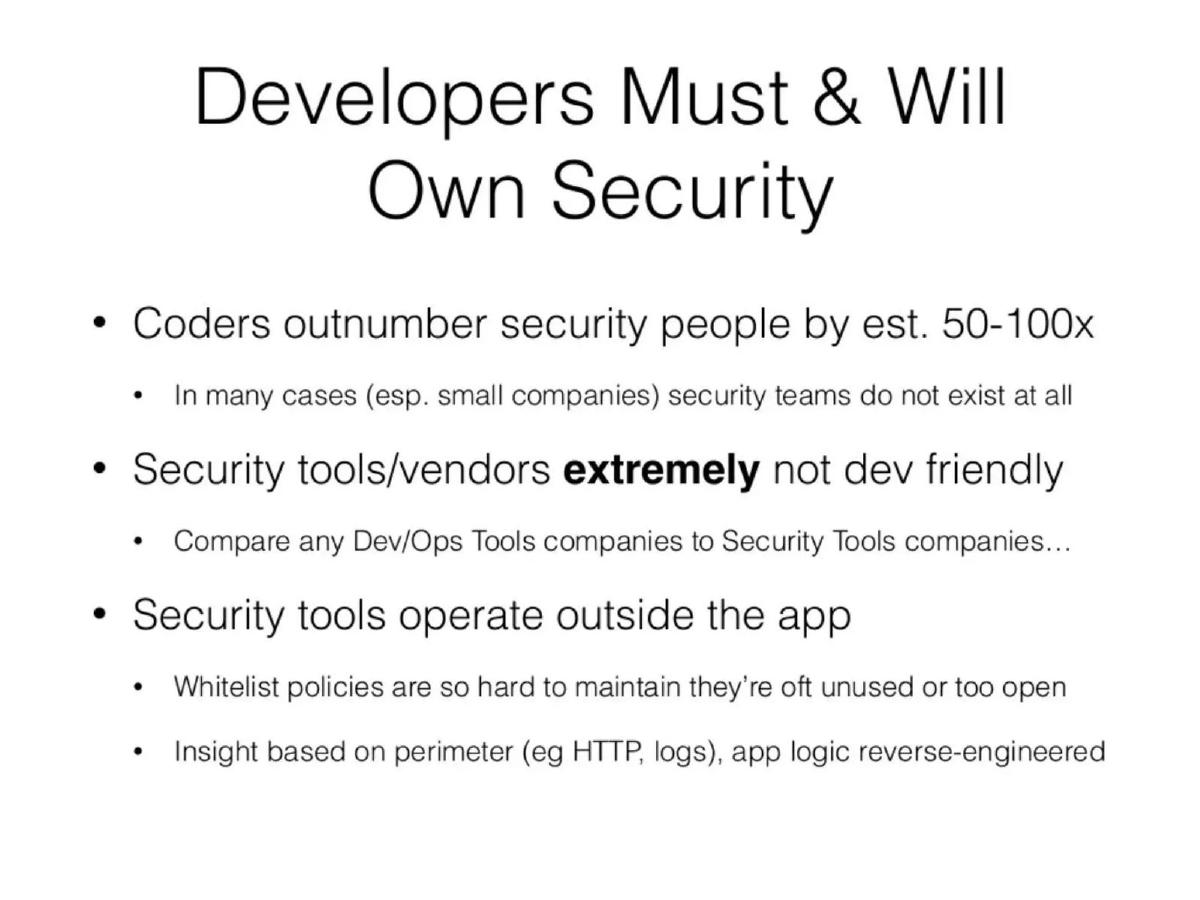
- Coders outnumber security personnel by an estimated 50-100x, creating a structural bottleneck in traditional security models (Slide 2).
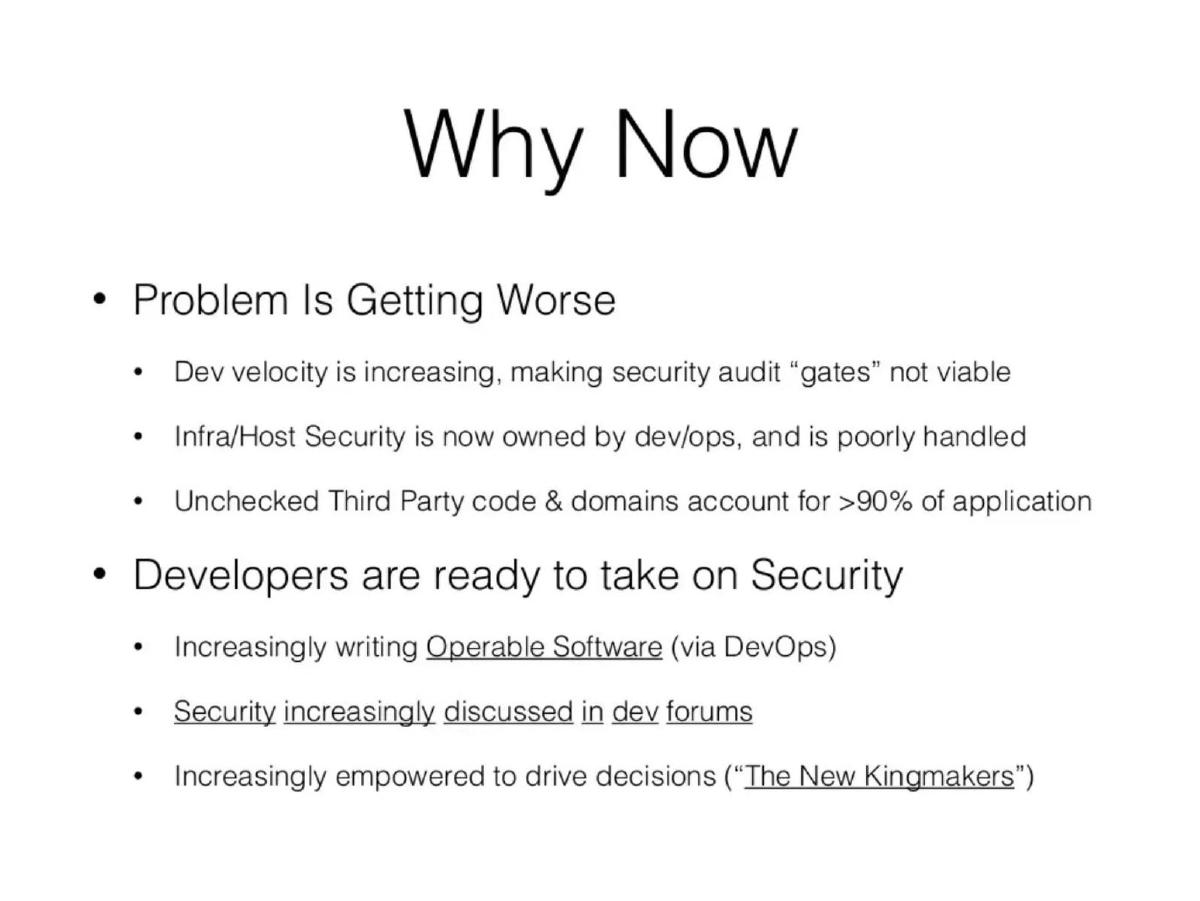
- Unchecked third-party code and domains account for more than 90% of modern applications (Slide 3).
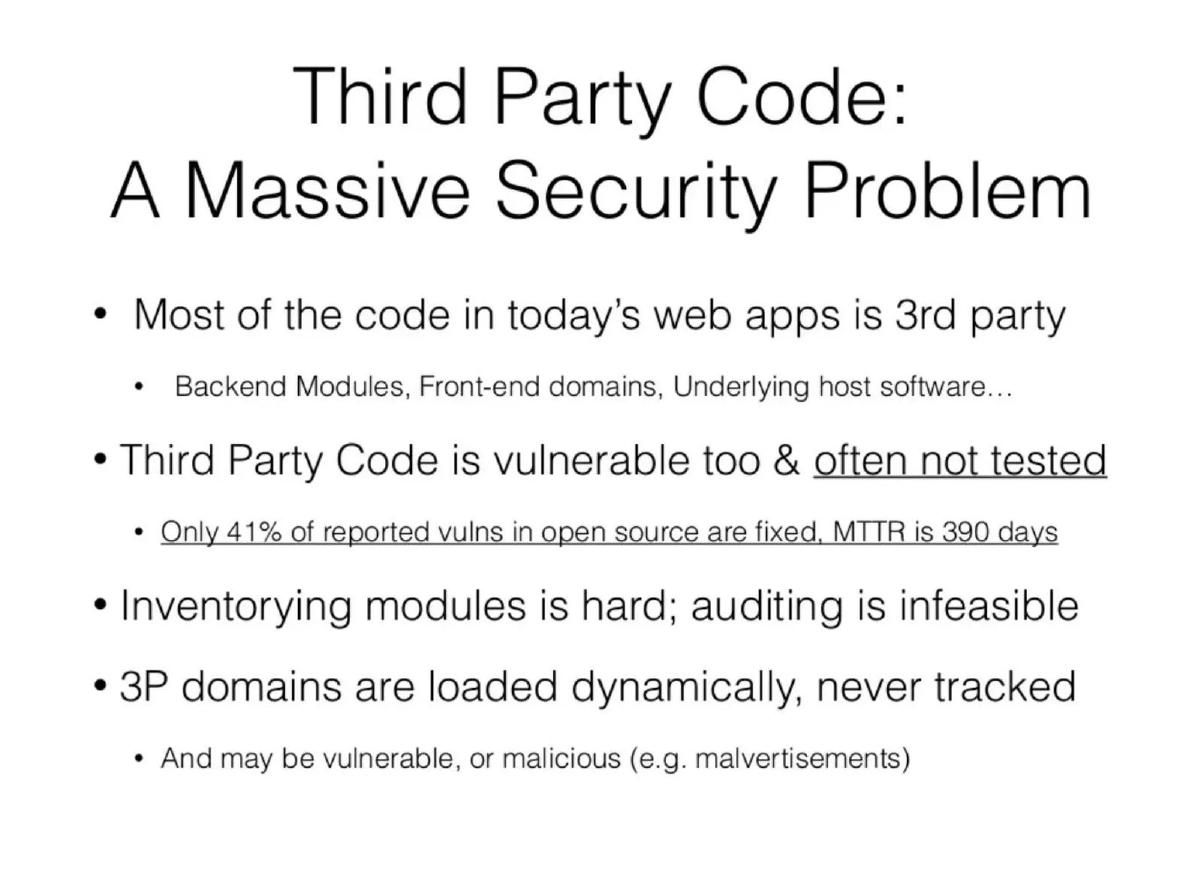
- The mean time to remediate (MTTR) for open-source vulnerabilities is 390 days, and only 41% of reported vulnerabilities are ever fixed (Slide 5).
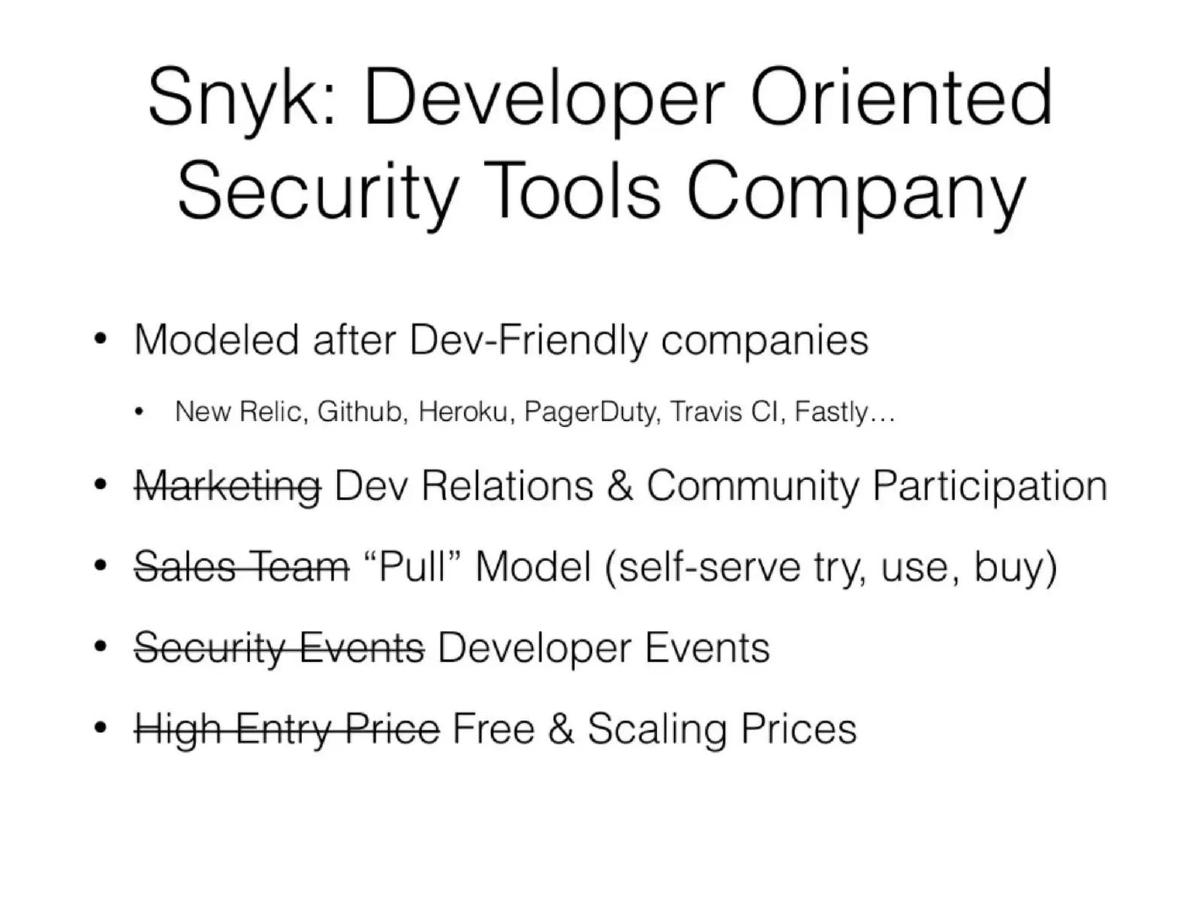
- Snyk explicitly models its business after developer-friendly successes like GitHub, Heroku, and PagerDuty (Slide 4).
- The company rejects the traditional high-entry-price security sales model in favor of a 'pull' model with free and scaling prices (Slide 4).
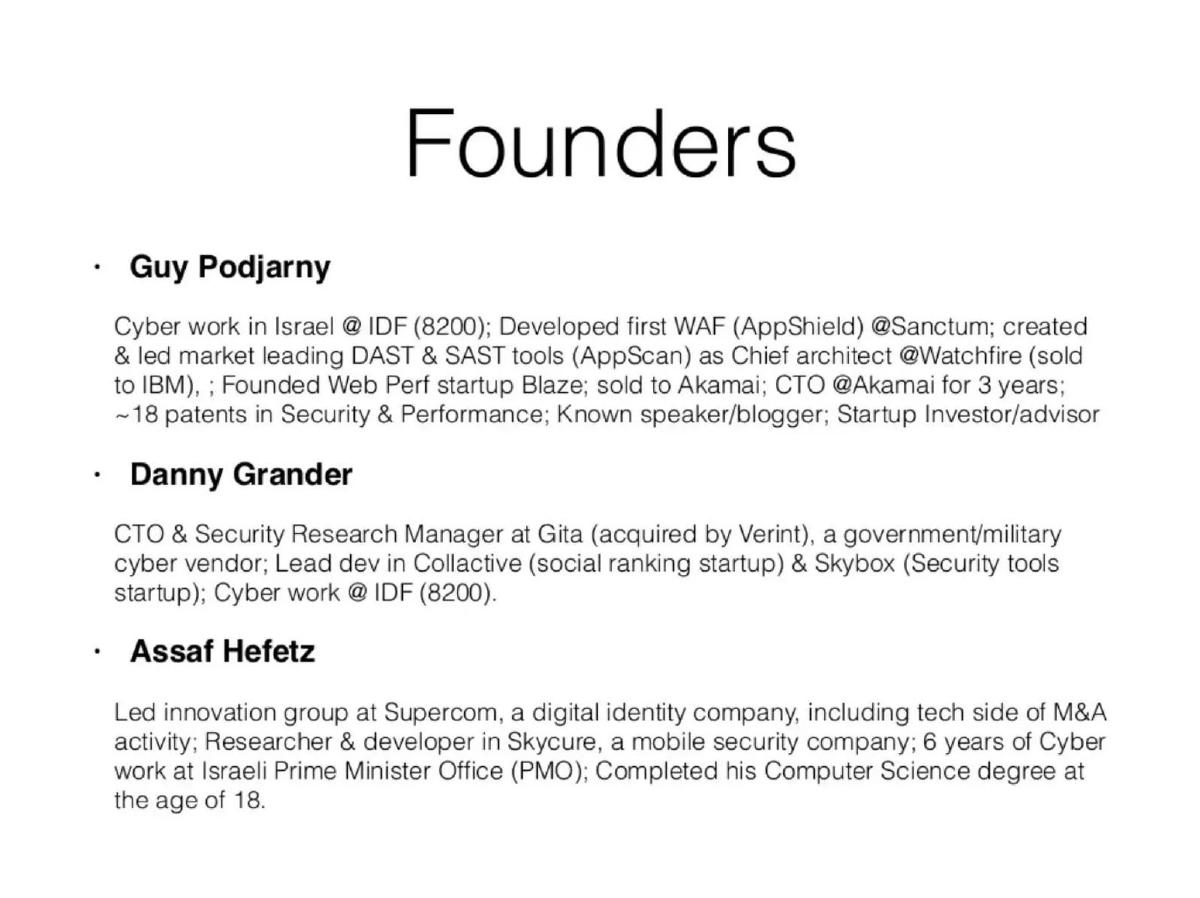
- The founding team includes the former CTO of Akamai and veterans of the IDF's 8200 unit (Slide 6).
- The deck identifies a $2.5B Web Security market with a 5.7% CAGR, but highlights the SaaS portion growing at 10.8% (Slide 7).
- Snyk positions itself as a 'Product per threat' platform covering 3rd party code, AppSec, and privacy (Slide 8).
Introduction: The Thesis-Driven Security Deck
The Snyk pitch deck from 2015 is a lean, 8-slide presentation that prioritizes a market shift over product screenshots. At a time when cybersecurity was largely the domain of specialized 'gatekeeper' teams, Snyk proposed a developer-first approach. The deck is less about 'what we built' and more about 'why the world has changed.' According to catalogue facts, this vision eventually led to $849,500,000 in total funding, proving that a strong logical foundation can outweigh a lack of flashy graphics.
Slide 1: Title and Positioning
The cover slide is minimalist, featuring the Snyk logo—a stylized guard dog in a hat and sunglasses—and the subtitle 'Web Security for Developers.' This immediately establishes the target audience. Unlike traditional security companies that target the CISO (Chief Information Security Officer), Snyk identifies the developer as their primary user from the very first second.
Slide 2: The Structural Imbalance
Slide 2, titled 'Developers Must & Will Own Security,' presents the core problem. It notes that 'Coders outnumber security people by est. 50-100x.' This is a powerful framing of a bottleneck. If security teams are that outnumbered, they cannot possibly audit every line of code in a modern, fast-moving development cycle. The slide also critiques existing tools as 'extremely not dev friendly' and notes that they 'operate outside the app,' relying on perimeter insights like HTTP logs rather than the application logic itself.
Slide 3: The 'Why Now' of DevSecOps
Slide 3 addresses the urgency of the market. It argues that 'Dev velocity is increasing,' which makes traditional security 'gates' non-viable. A key technical insight here is that 'Unchecked Third Party code & domains account for >90% of application.' This suggests that developers are building houses using pre-fabricated parts that they don't actually inspect. The slide concludes that developers are 'The New Kingmakers,' ready to take on security because they are already writing 'Operable Software' via DevOps practices.
Slide 4: The Business Model Pivot
Slide 4 is perhaps the most important for an investor evaluating the go-to-market strategy. Snyk explicitly positions itself against the traditional security vendor model. They use a 'strikethrough' visual style to reject old methods:
Marketing: Crossed out 'Security Events,' replaced with 'Dev Relations & Community Participation.' · Sales: Crossed out 'Sales Team,' replaced with 'Pull Model (self-serve try, use, buy).' · Pricing: Crossed out 'High Entry Price,' replaced with 'Free & Scaling Prices.'
By citing New Relic, GitHub, and PagerDuty as models, Snyk tells investors they are applying a proven SaaS growth playbook to a new vertical: security.
Slide 5: The Third-Party Code Crisis
Slide 5 dives deeper into the technical problem. It defines third-party code as a 'Massive Security Problem.' The most damning statistic provided is that 'Only 41% of reported vulns in open source are fixed' and the 'MTTR [Mean Time To Remediate] is 390 days.' This slide justifies the need for a specialized tool like Snyk; if it takes over a year to fix a known vulnerability in a library your app depends on, you are perpetually at risk.
Slide 6: Founder Pedigree
Slide 6, 'Founders,' establishes the team's 'right to win.' Guy Podjarny’s bio is particularly dense with credibility: he developed the first Web Application Firewall (WAF), was Chief Architect at Watchfire (sold to IBM), and was CTO at Akamai for three years. Danny Grander and Assaf Hefetz bring military-grade experience from the IDF's 8200 unit and the Israeli Prime Minister's Office. This slide compensates for the lack of traction data elsewhere in the deck by showing that the team has deep domain expertise and a history of successful exits.
Slide 7: Market Size and Comparables
Slide 7 outlines the TAM (Total Addressable Market). It cites IDC 2018 predictions, valuing Web Security at $2.5B and App Vuln Assessment at $838M. More importantly, it lists 'Comparable Companies Valuations' to give investors a sense of the upside: New Relic at $1.6B and Imperva at $2.1B. This anchors the investor's expectations in the billion-dollar range.
Slide 8: The Summary
The final slide, 'Snyk: So Now You Know,' serves as a summary of the value proposition. It reiterates the 'New Relic for Security' tag and lists the product scope: 3rd party code, AppSec, and privacy. Interestingly, there is a large blacked-out bar on this slide in the public version of the deck, likely concealing a specific strategic milestone or a confidential partnership that was relevant only to the original pitch audience.
What Works in the Snyk Deck
The 100:1 Ratio: The most effective part of this deck is the identification of the developer-to-security-pro ratio. It is a simple, undeniable fact that explains why the old way of doing security is broken. It forces the investor to agree with the premise that security must move to the developer.
The Playbook Comparison: By explicitly naming New Relic and GitHub, Snyk avoids having to explain their business model from scratch. They are simply saying, 'We are doing for security what those companies did for monitoring and version control.' This is a highly effective use of analogy to reduce perceived risk.
Focus on the Supply Chain: Identifying that 90% of code is third-party was prescient in 2015. It narrowed the focus from 'general security' to a specific, high-growth problem: the software supply chain.
What is Missing from the Snyk Deck
Product Visuals: There are no screenshots of the Snyk interface. For a 'developer-friendly' tool, showing the CLI (Command Line Interface) or the integration into the workflow would have been powerful. The deck remains entirely theoretical regarding the user experience.
Traction and Metrics: While the catalogue facts state Snyk now has 1,200 customers including Google and Salesforce, this 2015 deck contains zero information on current users, revenue, or beta testers. It is a pure 'vision' deck.
The Ask: There is no slide detailing how much money is being raised, the valuation, or the intended use of funds. This suggests the deck was used as a high-level teaser or that the founders preferred to handle the 'ask' in person to maintain leverage.
What a Founder Should Copy
The 'Strikethrough' Strategy: If you are disrupting an industry with a known, painful sales process (like enterprise security or healthcare), use the visual style from Slide 4. Explicitly crossing out the 'old way' and writing in the 'new way' is a clear, aggressive way to signal innovation.
Thesis-First Structure: Snyk spends the first five slides building a logical trap. By the time you get to the team slide, you have already agreed that: 1) Security is a bottleneck, 2) Developers are the only ones who can fix it, and 3) Third-party code is the biggest hole. A founder should copy this 'logical inevitability' flow.
Founder-Market Fit: Slide 6 is a perfect example of how to present a high-pedigree team. It doesn't just list titles; it lists specific achievements (e.g., 'Developed first WAF') that directly relate to the problem the company is solving. If you have deep expertise, make sure your bio slide proves you are the only people capable of executing the vision.
Frequently asked questions
- Why is the Snyk deck so short at only 8 slides?
- The deck focuses on a high-level thesis rather than granular operational data. In 2015, the concept of 'Developer Security' was relatively new. The founders needed to convince investors of a paradigm shift—that developers would eventually own security—before they could sell the specific product. By keeping it short, they focused the conversation on the massive talent gap (100:1 dev-to-security ratio) and the vulnerability of third-party code.
- What is the most compelling metric in the Snyk deck?
- The most striking metric is found on Slide 5: 'Only 41% of reported vulns in open source are fixed, MTTR is 390 days.' This highlights a massive, unaddressed risk in the software supply chain. When combined with the fact that 90% of an application is third-party code, it creates an urgent 'Why Now' case that traditional security tools, which operate outside the app, cannot solve.
- How does Snyk differentiate its sales strategy from traditional security firms?
- Slide 4 explicitly crosses out 'Sales Team' and 'High Entry Price,' replacing them with a 'Pull Model' (self-serve) and 'Free & Scaling Prices.' This was a radical departure from the 'top-down' enterprise security sales of the era. By adopting the New Relic or GitHub playbook, Snyk aimed to win the hearts of developers first, knowing that enterprise adoption would follow the users.
- Is the lack of a 'The Ask' slide a mistake?
- In a standard seed or Series A deck, omitting the 'Ask' is usually a negative. However, for a high-pedigree team like Snyk's, the deck often serves as a conversation starter for a competitive round. The catalogue facts show they eventually raised nearly $850 million, suggesting that the specific terms of the 2015 round were likely negotiated based on the strength of the team and the market thesis rather than a fixed slide.
- What role does the 'Founders' slide play in this specific deck?
- Slide 6 is the 'heavy lifter' of the deck. Because the product is technical and the market is crowded, the founders' backgrounds—specifically Guy Podjarny’s role in creating the first WAF at Sanctum and his tenure as CTO at Akamai—provide the necessary credibility. It signals to investors that these aren't just developers, but industry veterans who have already built and sold successful security and performance companies.