Snapshyft’s 2017 Seed deck is a masterclass in minimalist storytelling, relying on bold typography and high-level metrics rather than dense technical explanations. The 10-slide presentation successfully secured €400K in funding by emphasizing two critical proof points: a $375,000 annual run rate and a 90% fulfillment rate. While the deck lacks traditional sections like a detailed market size (TAM), competitive landscape, or a specific financial ask, it compensates with strong social proof through a logo wall of enterprise clients like Aramark and the Indianapolis Motor Speedway. The visual de…
Key takeaways
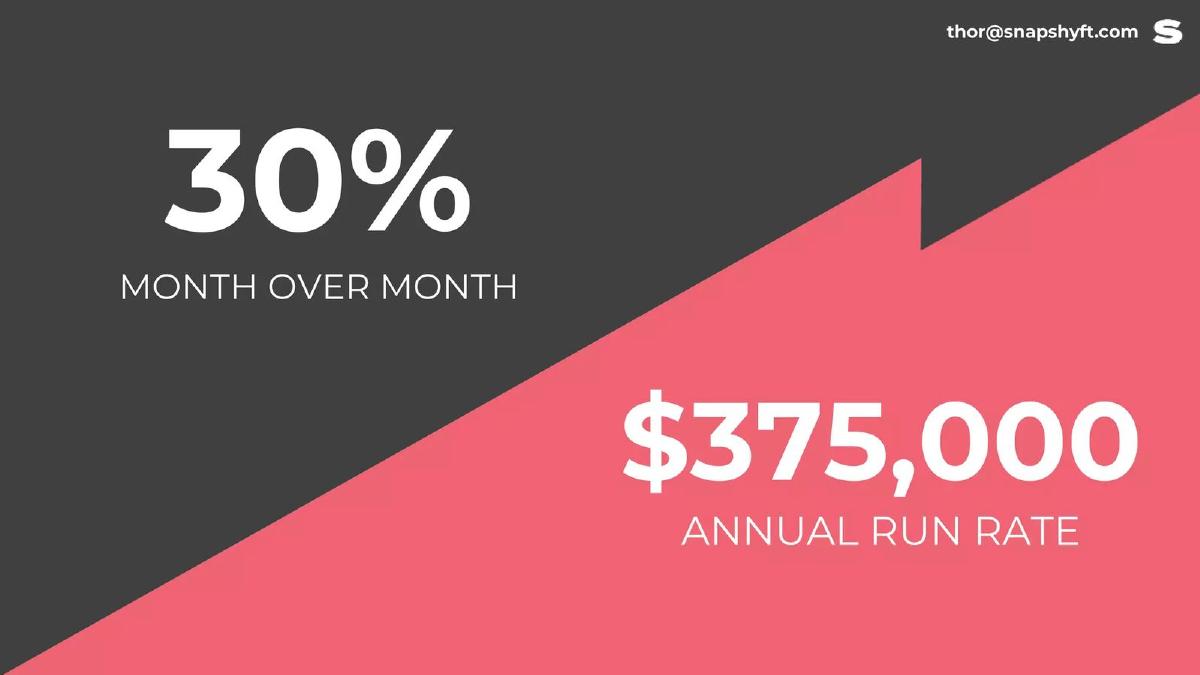
- The deck leads with traction, showing a $375,000 annual run rate on slide 2 to immediately validate the business model.
- A 90% fulfillment rate is cited on slide 6, addressing the primary pain point in gig staffing: reliability.
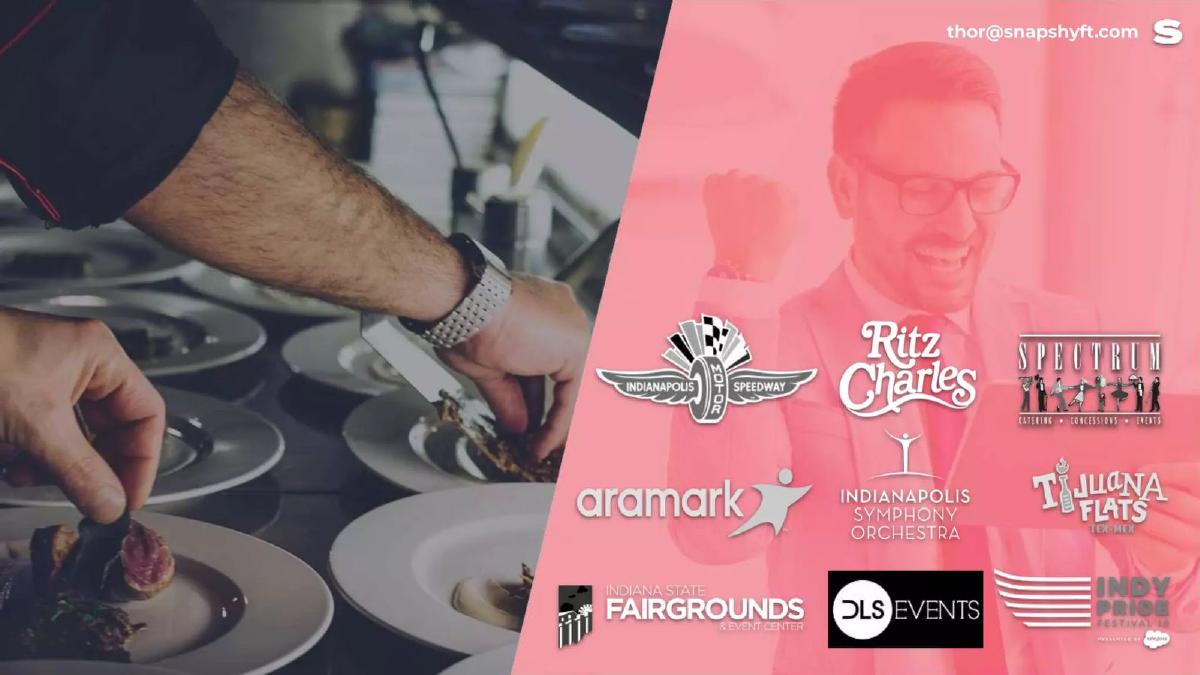
- Social proof is established on slide 3 through a logo wall featuring major entities like Aramark and the Indianapolis Symphony Orchestra.
- The product interface is shown only once on slide 9, focusing on the simplicity of finding shifts for roles like dishwashers and cooks.
- Growth velocity is highlighted twice, with 30% month-over-month growth appearing on both slide 2 and slide 10.
- The team slide (slide 7) is extremely lean, providing only names and titles (CEO, COO, CTO) without professional biographies or past exits.
- There is no mention of the total addressable market (TAM) or the specific dollar amount being raised within the slides.
- The deck uses a 'Dual Rating System' as a key feature (slide 5) to ensure quality on both sides of the labor marketplace.
The Power of Minimalism in Seed Fundraising
Snapshyft’s pitch deck is a departure from the data-heavy, 20-page documents often seen in the SaaS space. With only 10 slides, the company managed to secure €400K in Seed funding in 2017. The strategy here is clear: lead with traction, prove the product works with high-tier logos, and keep the technical details to a minimum. This teardown examines how Snapshyft used brevity to build a compelling case for investment in the competitive gig economy staffing market.
Slide 1: Title and Branding
The cover slide is clean and professional, featuring the Snapshyft logo and a contact email for the CEO. The imagery in the background—a bartender at work—immediately establishes the industry context (hospitality and service) without needing a tagline. The use of a diagonal split design creates a sense of movement, which aligns with the 'fast' nature of on-demand staffing.
Slide 2: The Hook – Traction First
Snapshyft makes a bold move by placing their most impressive metrics on the second slide. By stating a $375,000 Annual Run Rate and 30% Month Over Month growth, they immediately answer the investor's most important question: 'Is there a market for this?' Starting with revenue rather than a 'Problem' slide is a tactic used by companies that already have significant momentum, effectively silencing doubts about product-market fit from the outset.
Slide 3: Social Proof and Enterprise Validation
Slide 3 is a logo wall that provides massive credibility. For a startup in the staffing space, the quality of the clients is a proxy for the quality of the labor pool. The slide features Aramark , a global leader in food service, alongside local heavyweights like the Indianapolis Motor Speedway and the Indianapolis Symphony Orchestra . This demonstrates that Snapshyft can handle the scale and complexity required by large-scale venues and events, not just small local cafes.
Slide 4: The Three Pillars of the Service
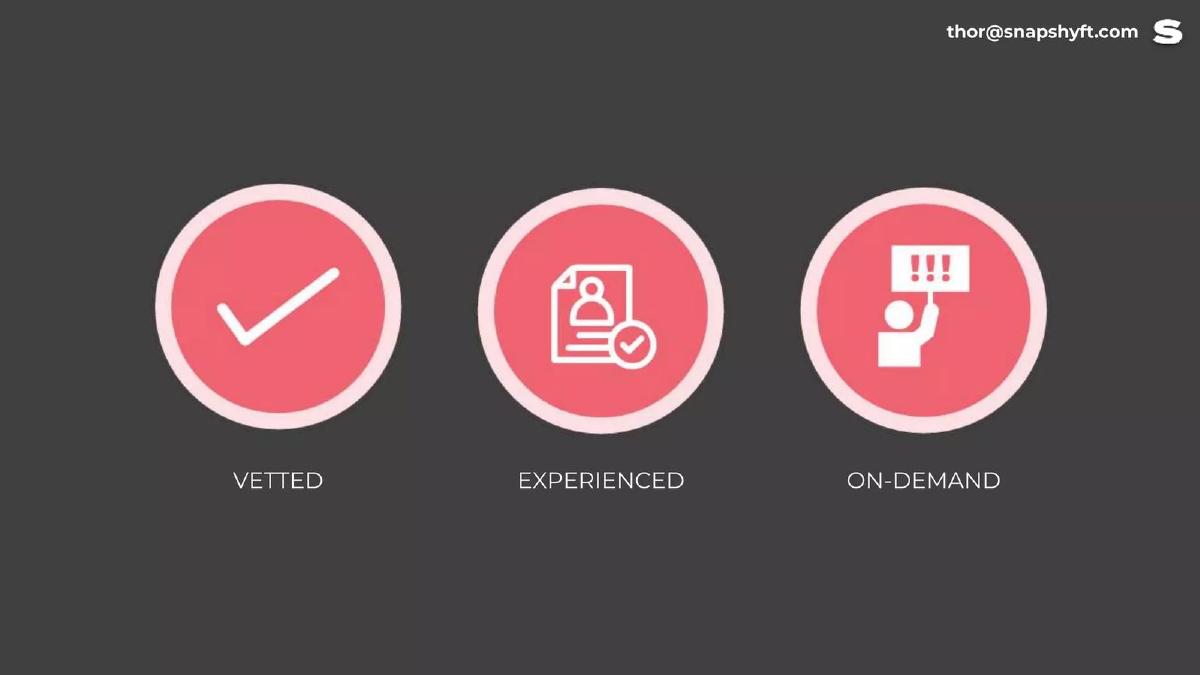
This slide introduces the core attributes of the labor force provided by the platform: Vetted, Experienced, and On-Demand . By using simple icons and single-word descriptors, Snapshyft addresses the three biggest fears of a restaurant manager: that the worker won't show up (On-Demand), won't know what they are doing (Experienced), or might be a liability (Vetted). It is a concise summary of the value proposition for the B2B customer.
Slide 5: Platform Features
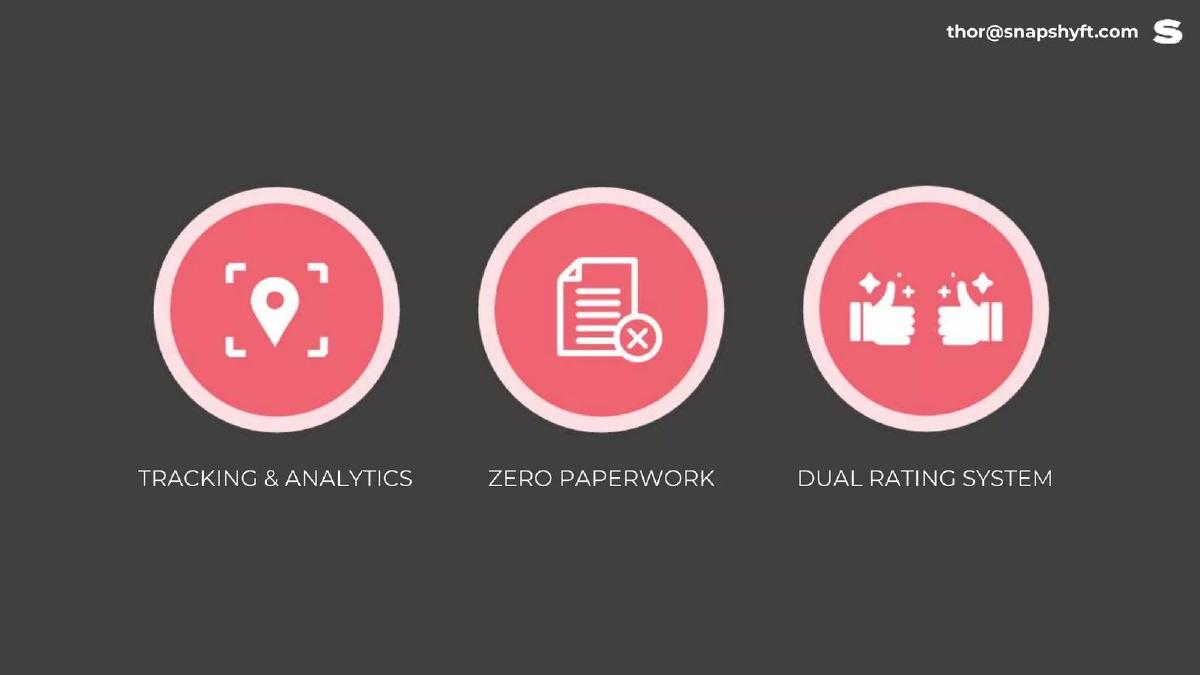
Continuing the minimalist theme, slide 5 highlights three technical features: Tracking & Analytics, Zero Paperwork, and a Dual Rating System . The 'Zero Paperwork' claim is particularly strong for the hospitality industry, which is notoriously bogged down by administrative tasks related to temporary staffing. The 'Dual Rating System' suggests a marketplace balance where both the employer and the employee are held accountable, a standard feature in successful gig economy platforms like Uber or Airbnb.
Slide 6: The 'North Star' Metric
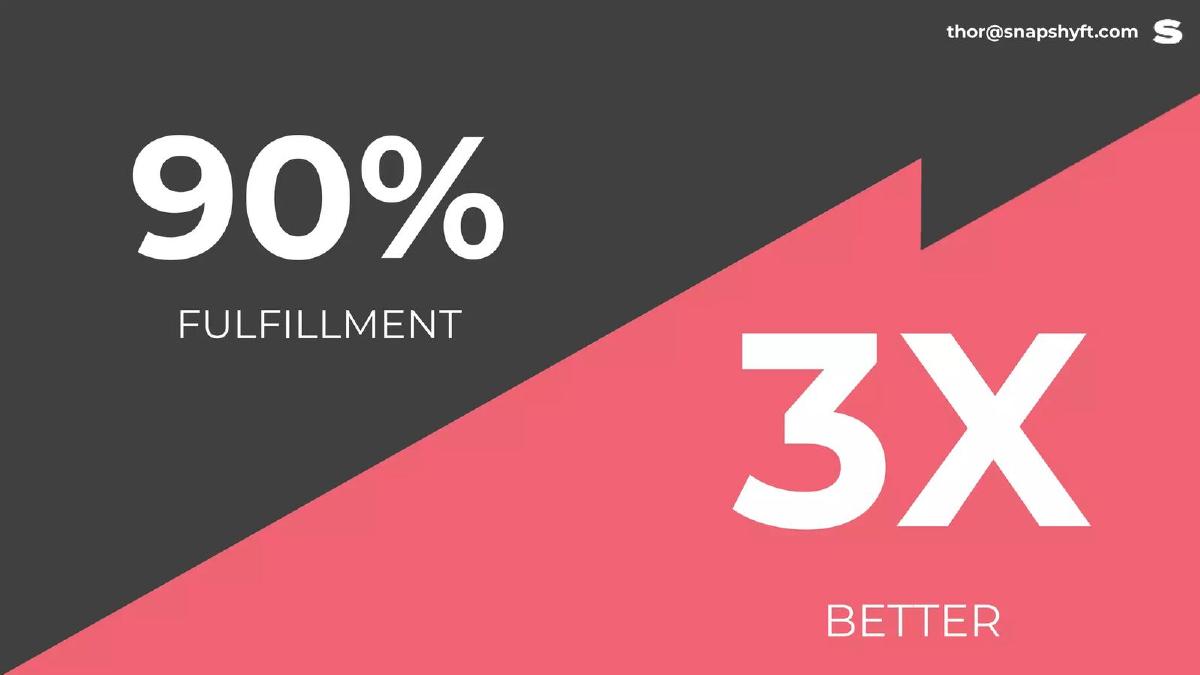
Slide 6 presents a 90% Fulfillment rate and claims to be 3X Better . In the world of on-demand staffing, the 'fill rate' is the only metric that truly matters to a client. If a manager requests five servers and only three show up, the platform has failed. By highlighting a 90% success rate, Snapshyft positions itself as a premium, reliable alternative to traditional temp agencies or less-specialized gig apps.
Slide 7: The Team
The team slide is perhaps the most surprising element of the deck. It features Thor (CEO), Steph (COO), and Tony (CTO) . There are no bios, no mention of past companies, and no LinkedIn links. While this minimalism maintains the deck's aesthetic, it is generally considered a risk. Investors typically want to know why this specific team is uniquely qualified to win this market. However, given the €400K successful raise, it is likely that the founders' backgrounds were detailed in the verbal pitch or the accompanying executive summary.
Slide 8: Brand Reinforcement
Slide 8 is a simple transition slide featuring only the Snapshyft logo. In a 10-slide deck, using a full slide for a logo is a luxury. It serves as a visual breather before the final product and traction recap, ensuring the brand name is etched into the viewer's mind.
Slide 9: Product in Action
This slide provides the only look at the actual user interface. The mockup shows a list of 'Available shifts' with clear pricing (e.g., $103.50 for a Dishwasher ) and specific times. The keywords Reliable, Efficient, and Focused are placed next to the phone. This slide proves the product is functional and user-friendly, emphasizing the ease with which a worker can claim a shift and see exactly what they will earn.
Slide 10: The Closing Recap
The final slide repeats the core growth metrics: 30% MoM and $375K ARR . This repetition is intentional. It ensures that the last thing an investor sees is the evidence of financial success and growth velocity. It leaves the conversation on a high note of 'This is moving fast; do you want to be part of it?'
What Snapshyft Got Right
Metric-Driven Narrative: By leading and ending with revenue and growth, the deck feels like a business case rather than a creative pitch. · Clarity of Industry: The use of specific roles (Dishwasher, Cook/Chef) and relevant logos makes it clear exactly who this is for. · Visual Consistency: The pink and dark grey color palette is used effectively to highlight key numbers, making the deck easy to skim. · Addressing Pain Points: The focus on '90% Fulfillment' and 'Zero Paperwork' speaks directly to the operational headaches of their target customers.
What Is Missing from the Snapshyft Deck
The Ask: There is no slide detailing how much money is being raised, the valuation, or the intended use of funds. · Market Size (TAM): The deck does not quantify the opportunity. Investors usually want to see a path to a billion-dollar market, even at the Seed stage. · Competition: There is no mention of how Snapshyft compares to incumbents like traditional staffing agencies or other gig platforms like Wonolo or Instawork. · Unit Economics: While the ARR is stated, there is no information on the take rate (margin) or the cost of customer acquisition (CAC). · Founder Pedigree: The team slide lacks the 'Why Us' factor that helps build trust in the founders' execution capabilities.
Founder's Playbook: Lessons to Copy
Lead with your strongest card: If you have revenue and growth like Snapshyft did ($375K ARR), don't hide it on slide 12. Put it on slide 2. · Use social proof early: A logo wall of recognizable brands is more persuasive than five slides of 'market trends.' · Focus on the 'North Star': Identify the one metric your customers care about most (in this case, fulfillment rate) and make it a centerpiece of your deck. · Keep it brief: If you can tell your story in 10 slides, don't expand it to 20. A short deck forces you to refine your message to its most potent form.
Frequently asked questions
- What is the core value proposition of Snapshyft based on the deck?
- Snapshyft positions itself as a reliable, efficient, and focused on-demand staffing platform for the hospitality industry. Its primary differentiator is a 90% fulfillment rate, which is significantly higher than industry averages for gig labor. The deck emphasizes that workers are vetted and experienced, while the platform offers tracking, analytics, and a dual rating system to maintain quality control for B2B clients.
- How does the deck handle financial projections and the 'Ask'?
- The deck completely omits future financial projections and a specific funding ask. It focuses exclusively on historical performance, specifically the $375,000 annual run rate and 30% month-over-month growth. This suggests the deck was likely used as a visual aid for a verbal pitch where the specific terms of the €400K round were discussed separately.
- Which industries does Snapshyft target?
- Based on the client logos on slide 3 and the app mockups on slide 9, the company targets the food, beverage, and events sectors. Specific clients include sports venues (Indianapolis Motor Speedway), catering services (Aramark, Ritz Charles), and restaurant chains (Tijuana Flats). The app mockup specifically lists roles for dishwashers and cooks/chefs.
- What is the significance of the 30% MoM growth mentioned twice?
- Repeating the 30% month-over-month growth figure on the second and final slides serves to bookend the presentation with a message of momentum. For a Seed stage company, this level of growth suggests that they have found an effective customer acquisition channel and that the market demand for flexible hospitality labor is high.
- Is the team's background a focus in this pitch?
- No. Slide 7 is one of the most minimalist team slides in professional fundraising. It features photos of Thor (CEO), Steph (COO), and Tony (CTO) but provides zero information regarding their previous experience, education, or industry expertise. This indicates the founders chose to let the company's metrics and client list speak for their ability to execute.