Uprising Food’s 15-slide deck is a textbook example of how to pitch a Consumer Packaged Goods (CPG) startup by blending traditional retail potential with modern direct-to-consumer (DTC) performance metrics. The company successfully raised $1.25 million by demonstrating a 10x year-over-year revenue increase and a clear path to scaling through hyper-targeted audience segments they call 'Tribal Elders' and 'Healthy Besties.' The deck excels at defining a proprietary product—the 'Superfood Cube'—while anchoring its valuation in a series of high-profile CPG exits like Dave’s Killer Bread and RXBAR…
Key takeaways
- Revenue grew 10x year-over-year, with transactions increasing by 717.67% as shown on Slide 13.
- The company identifies two primary personas: 'Tribal Elders' ($134M prize) and 'Healthy Besties' ($8.4B prize) on Slides 11 and 12.
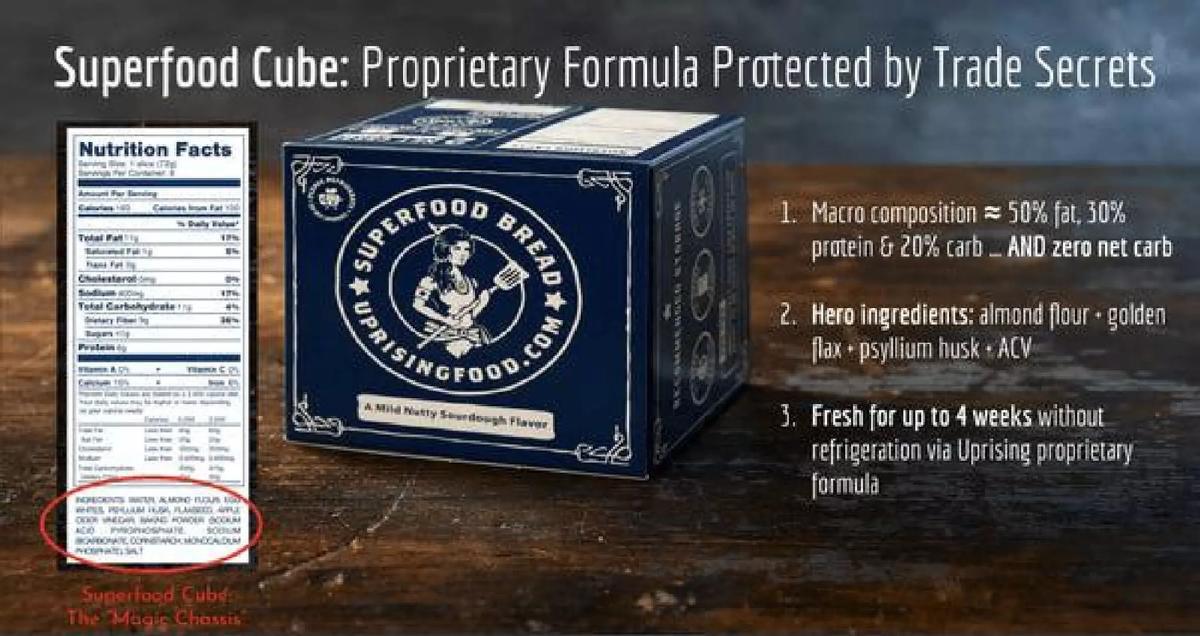
- The 'Superfood Cube' bread product claims a macro composition of approximately 50% fat, 30% protein, and 20% carb with zero net carbs on Slide 5.
- Uprising Food utilizes a proprietary formula that allows bread to stay fresh for up to 4 weeks without refrigeration (Slide 5).
- The $1.25M seed round was allocated with $500,000 for people and $400,000 for sales and marketing (Slide 8).
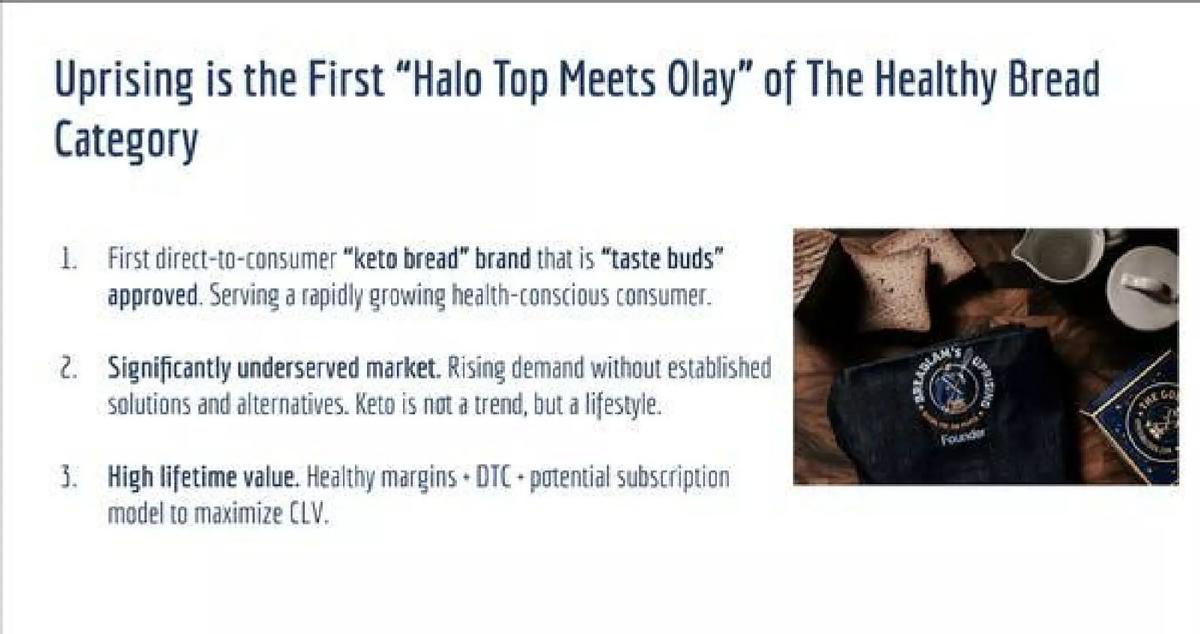
- The deck positions the brand as the 'Halo Top meets Olay' of the healthy bread category on Slide 4.
- Retail expansion is anchored by a pilot program with Meijer, as indicated on Slide 10.
- The team combines P&G brand-building experience with 11 years of commercial bakery ownership (Slide 15).
The CPG Playbook: Uprising Food's $1.25M Seed Deck
Uprising Food entered the market at the height of the keto and functional food craze. Their deck is a masterclass in how to present a physical product as a high-growth tech-enabled brand. By focusing on 'Superfood' staples, they aimed to disrupt the massive but stagnant bread and chip categories. This teardown explores the 15 slides that convinced investors to back a bakery startup with venture-scale capital.
The Mission and Market Opportunity
Slide 1: Title and Mission The deck opens with 'Breadlam’s Uprising: Baking for the People.' The mission is stated clearly: to upgrade staple foods for the masses by reinventing high-carb foods using modern health science. The branding is revolutionary-themed, featuring a character holding a whisk like a weapon, signaling a disruptive intent.
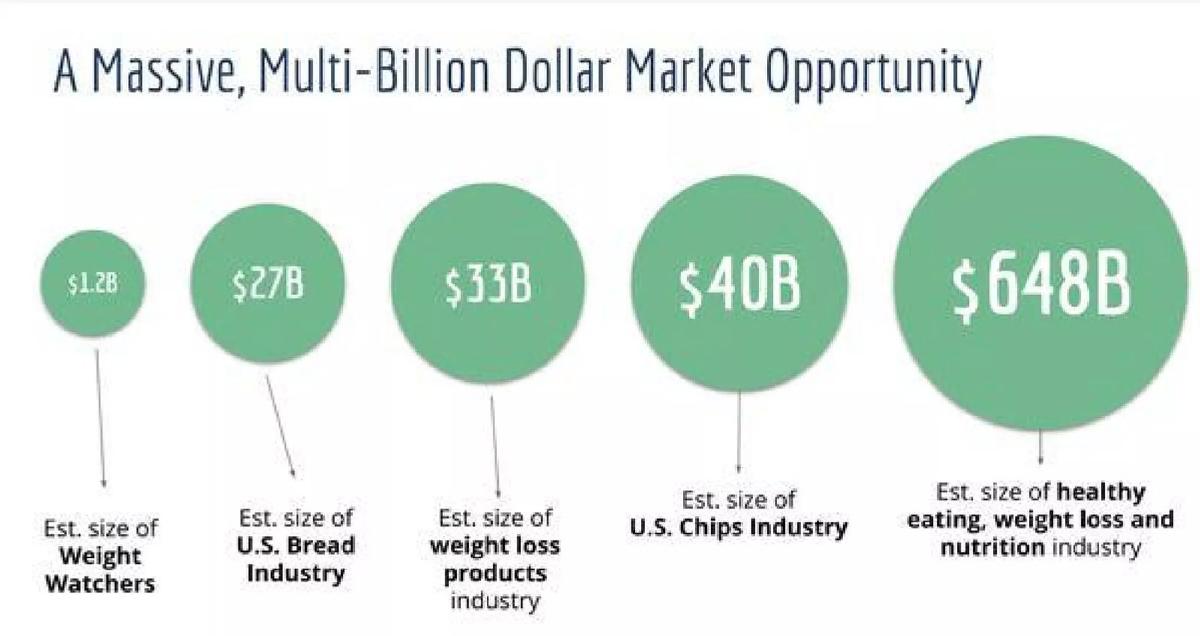
Slide 2: Market Size Uprising uses a series of green circles to visualize the 'Massive, Multi-Billion Dollar Market Opportunity.' They cite the U.S. Bread Industry at $27B and the U.S. Chips Industry at $40B. By including the $648B healthy eating industry, they position themselves as a player in a much larger ecosystem than just baked goods.
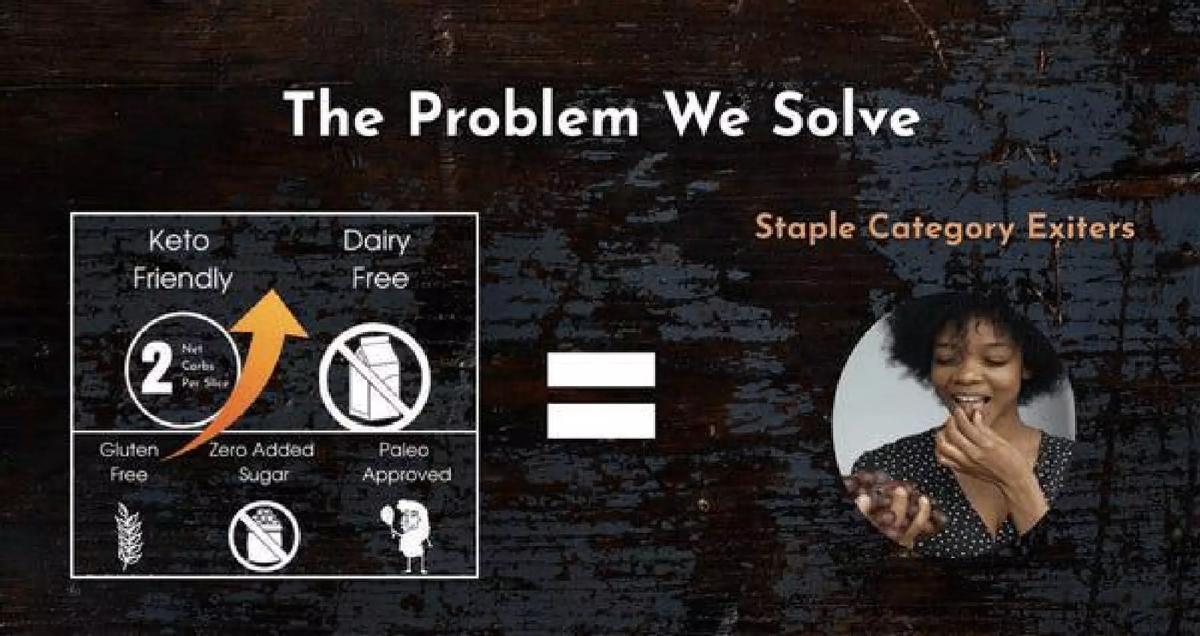
Slide 3: The Problem The problem is framed as 'Staple Category Exiters.' These are consumers who want to eat bread and chips but have left the category due to dietary restrictions (Keto, Gluten-Free, Dairy-Free, Paleo). The slide uses icons to show that their product solves all these pain points simultaneously.
Product and Positioning
Slide 4: The 'Halo Top' Comparison This is a crucial positioning slide. They call Uprising the 'First Halo Top Meets Olay of the Healthy Bread Category.' This comparison suggests they are taking a boring category (bread) and making it a high-growth, brand-led sensation, similar to what Halo Top did for ice cream. They highlight high lifetime value (CLV) and healthy margins as key business drivers.
Slide 5: The Superfood Cube This slide introduces the flagship product. It details a 'proprietary formula protected by trade secrets.' Key specs include a macro composition of 50% fat, 30% protein, and 20% carb, resulting in zero net carbs. Most impressively for a CPG investor, they claim the product stays fresh for 4 weeks without refrigeration, which significantly eases logistics and retail spoilage concerns.
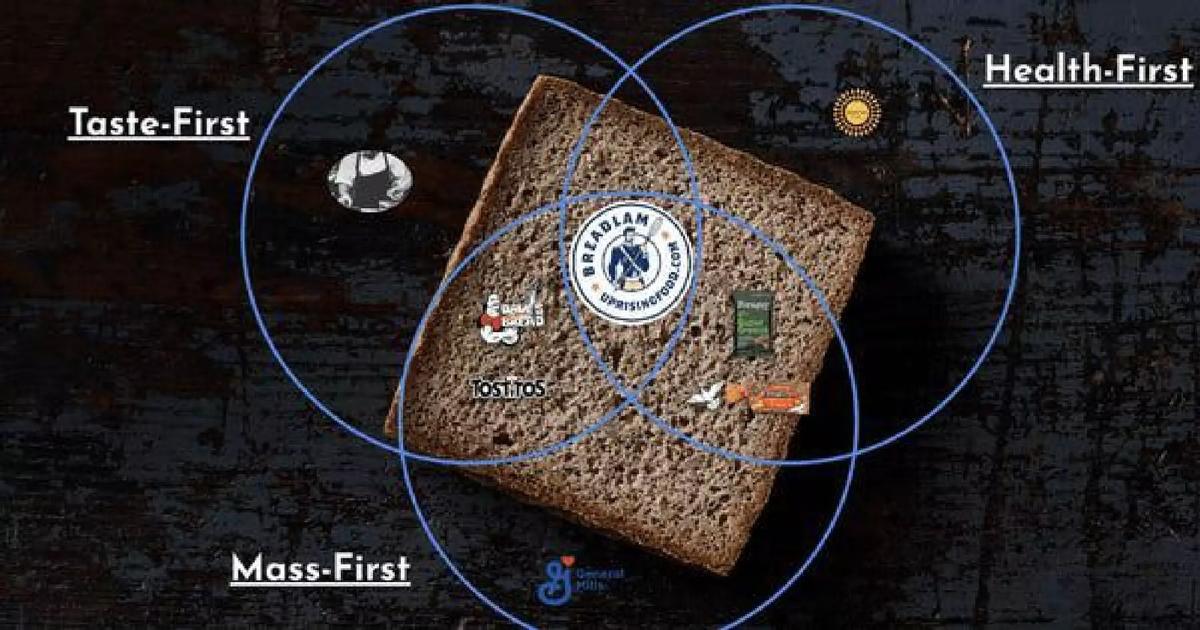
Slide 6: Competitive Landscape Using a Venn diagram of 'Taste-First,' 'Health-First,' and 'Mass-First,' Uprising places itself at the center. They position competitors like Tostitos and Dave’s Killer Bread as lacking in one or more of these categories, while Uprising claims to hit the 'sweet spot' of all three.
Slide 7: Product Expansion The deck looks forward to a January 2021 launch of 'Superfood Chips.' These are described as the first low-carb, MCT oil-boosted chips. This shows investors that the company is a platform for multiple products, not just a one-hit-wonder bread company.
The Investment and Growth Strategy
Slide 8: Investment Overview The 'Ask' is $1.25 million. The slide includes a pie chart of 'Investment Buckets' for the next two years: $500k for People (33.3%), $400k for Sales and Marketing (26.7%), $250k for Inventory (16.7%), $200k for Product Development (13.3%), and $150k for Infrastructure (10%).
Slide 9: The Winning Formula This slide outlines a four-step blitz-scale plan: capturing 'tribal elders,' expanding into chips, installing e-commerce growth infrastructure to minimize CAC, and driving 'happy belly bundle' subscriptions to maximize recurring revenue.
Slide 10: Distribution Channels The strategy is bifurcated: 'Blitz Scale Fast' via their own DTC website (uprisingfood.com) and 'Pilot & Prep for Scale' via traditional retail, specifically naming Meijer as a partner.
Audience Segmentation and Traction
Slide 11 & 12: The Personas These slides are unique because they include actual screenshots from Facebook Ads Manager. They define 'Tribal Elders' (Paleo/Keto enthusiasts) as a $134M prize and 'Healthy Besties' (general health and wellness) as an $8.4B prize. This level of granularity in digital marketing personas is rare in CPG decks and speaks to their DTC-first mindset.
Slide 13: eCommerce Traction This is the 'money slide.' It shows 10x year-over-year revenue growth. Transactions grew from 1,568 to 12,821 (a 717.67% increase). Average Order Value (AOV) also trended upward from $55.85 to $59.92. The bar chart shows a clear, aggressive upward trajectory over five quarters.
The Exit and The Team
Slide 14: Comparable Exits To justify the venture investment, Uprising shows successful exits in the space: Dave’s Killer Bread ($275M), RXBAR ($600M), Annie’s ($820M), and Halo Top ($1B+). This provides a roadmap for what an eventual acquisition might look like.
Slide 15: The Team The deck concludes with the founders. It balances the 'Brand Builder' (William Schumacher, ex-P&G/Olay) with 'Professional Bakers' (Mark and Sara Frommeyer, owners of Blue Oven bakery). This combination of marketing savvy and technical production expertise is a strong closing argument for the company's ability to execute.
What Works in This Deck
Specific Traction: The 10x YOY growth and 717% transaction increase are hard to ignore. · Audience Granularity: Using Facebook Ads screenshots to define the 'Tribal Elders' and 'Healthy Besties' shows a sophisticated understanding of customer acquisition. · Shelf-Stability: Highlighting the 4-week non-refrigerated shelf life addresses a major hurdle in the bread industry. · The 'Halo Top' Anchor: Comparing themselves to a known category-disruptor helps investors immediately grasp the potential upside.
What Is Missing
Unit Economics: While they mention 'healthy margins,' the deck does not provide specific COGS (Cost of Goods Sold) or Contribution Margin figures. · Burn Rate and Runway: The deck shows how they will spend the $1.25M but doesn't explicitly state how long that capital will last or what the monthly burn is. · Manufacturing Details: It mentions a proprietary formula but doesn't explain if they are co-packing or manufacturing in-house, which is a significant factor in scaling CPG. · Long-term Projections: There is no 3-5 year financial forecast, only a 2-year spend plan.
What a Founder Should Copy
The 'Size of Prize' Slides: Don't just say the market is big; show exactly how you will target it using modern digital tools. · The Venn Diagram: Use a simple visual to show why you are the only company sitting at the intersection of three desirable traits (Taste, Health, Mass). · Comparable Exits: Always include a slide that shows investors how they get their money back by highlighting recent acquisitions in your specific sector. · The 'Ask' Breakdown: A simple pie chart showing exactly where the money goes builds trust and shows operational readiness.
Frequently asked questions
- What is Uprising Food's core product?
- Uprising Food produces 'Superfood' keto-friendly bread and chips. Their flagship 'Superfood Cube' is a keto bread with 2 net carbs per slice, featuring ingredients like almond flour, golden flax, and psyllium husk. According to Slide 5, the product is shelf-stable for up to four weeks without refrigeration due to a proprietary formula.
- How does the company justify its market size?
- The deck uses a nested circle diagram on Slide 2, starting with the $1.2B Weight Watchers market and scaling up to a $648B healthy eating and nutrition industry. They specifically target the $27B U.S. bread industry and the $40B U.S. chips industry as their primary battlegrounds.
- What are the 'Tribal Elders' and 'Healthy Besties'?
- These are Uprising Food’s primary customer segments. 'Tribal Elders' (Slide 11) are high-income individuals interested in Paleo and Ketosis diets, representing a $134M opportunity. 'Healthy Besties' (Slide 12) are a broader $8.4B market of health and wellness enthusiasts. The deck even includes Facebook Ads Manager screenshots to prove these audiences are reachable.
- What traction did Uprising Food show in their seed deck?
- On Slide 13, the company reported 10x year-over-year revenue growth. Key metrics included a 717.67% increase in transactions (12,821 vs. 1,568) and a 7.29% increase in Average Order Value (AOV), rising from $55.85 to $59.92.
- Who is on the founding team?
- The team is a mix of corporate brand builders and artisanal bakers. CEO William Schumacher brings experience from P&G (Olay) and investment banking. Co-founders Mark and Sara Frommeyer provide technical expertise, having owned and operated the award-winning Blue Oven commercial bakery for 11 years (Slide 15).