Upvest’s 17-slide deck is a masterclass in positioning a B2B infrastructure play. By drawing direct parallels to the evolution of payments (Stripe) and banking (SolarisBank), Upvest creates a logical inevitability for its 'Brokerage-as-a-Service' model. The deck leans heavily on institutional credibility, highlighting a BaFin license and a leadership team with deep roots in fintech giants like Klarna and TransferWise. While the deck excels at articulating the market shift—driven by negative interest rates and rising millennial wealth—it remains high-level on specific unit economics. However,…
Key takeaways
- The company positions itself as the third wave of fintech infrastructure, following payments and banking (Slide 10).
- Upvest holds a BaFin license, a critical regulatory moat for European financial services (Slide 3).
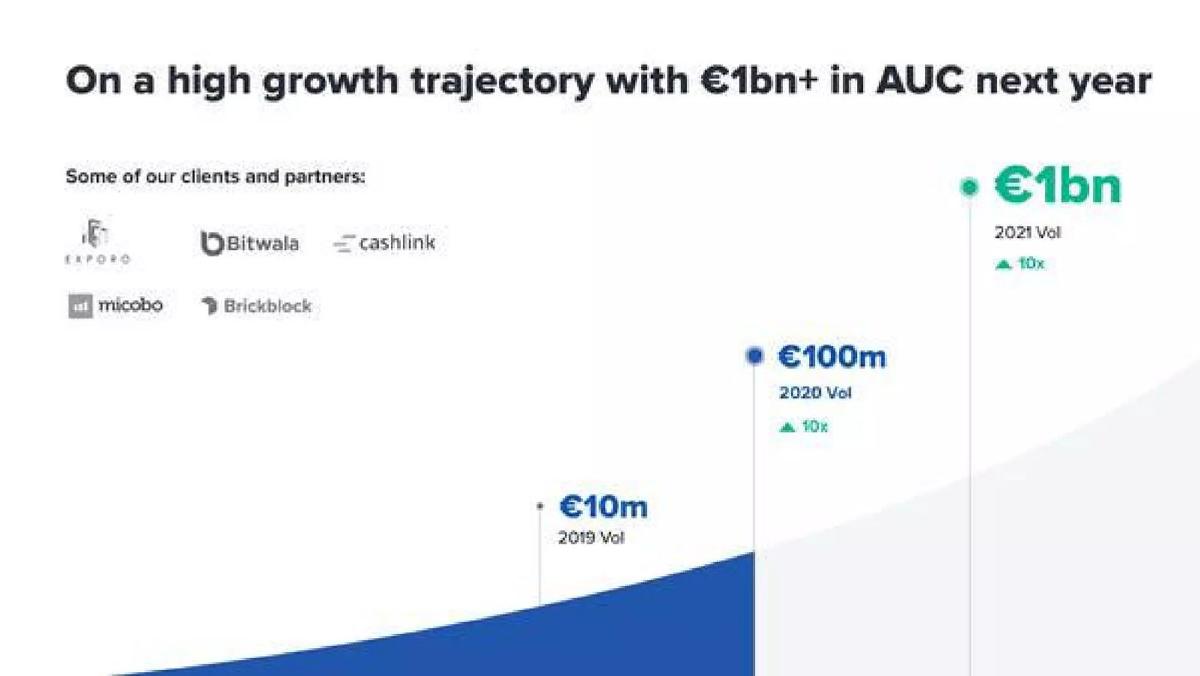
- The deck highlights a 10x annual growth trajectory in volume, moving from €10m in 2019 to a projected €1bn in 2021 (Slide 6).
- Market timing is justified by three macro factors: negative interest rates, rising millennial wealth, and regulatory margin pressure (Slide 9).
- The product is modular, covering brokerage, settlement, and custody in an all-in-one API (Slide 15).
- The leadership team features executives from TransferWise, Raisin, and Klarna, emphasizing 'fintech infrastructure expertise' (Slide 16).
- Upvest targets a wide range of use cases beyond simple trading, including round-ups for Visa/Mastercard and cashbacks for Uber/Zalando (Slide 13).
- The deck omits a specific 'Ask' slide detailing the exact funding amount or planned allocation of capital.
The Securities API: Upvest's Infrastructure Play
Upvest’s pitch deck is a clinical example of how to present a B2B infrastructure solution. It avoids the trap of over-explaining technical architecture too early, instead focusing on the strategic 'why' and the pedigree of the team building it. Founded in 2017 and based in Berlin, Upvest entered the market at a time when 'embedded finance' was transitioning from a buzzword to a core requirement for consumer fintechs.
Slides 1-5: Credibility and Team
Slide 1: Title The deck opens with a clear, functional title: "The Securities API." The subtitle, "Offer investment products in your app," immediately identifies the customer (businesses) and the value (speed to market).
Slide 2: Transition A simple blue divider asking "Who are we?" leads into the company overview.
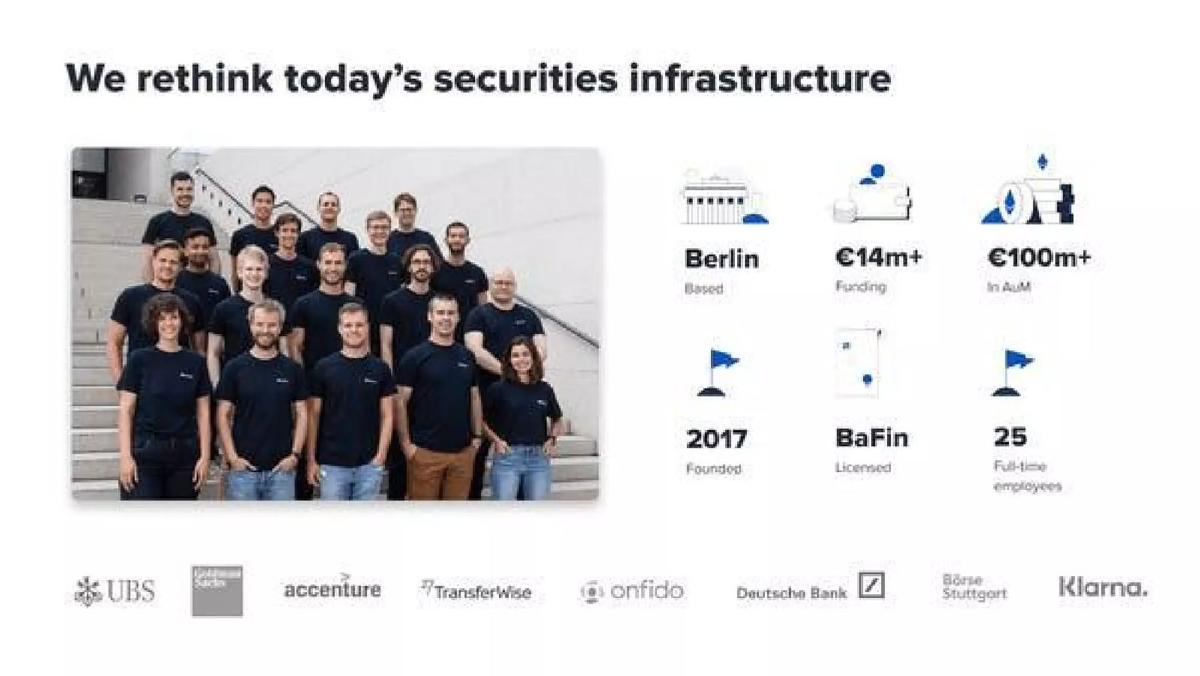
Slide 3: Company Overview This is a high-density traction slide. It establishes the following facts:
Location: Berlin-based. · Funding: €14m+ raised to date. · Traction: €100m+ in AuM. · Regulatory: BaFin Licensed. · Team Size: 25 full-time employees.
The bottom of the slide features logos of prestigious former employers of the team, including UBS, Goldman Sachs, and Klarna, signaling institutional-grade experience.
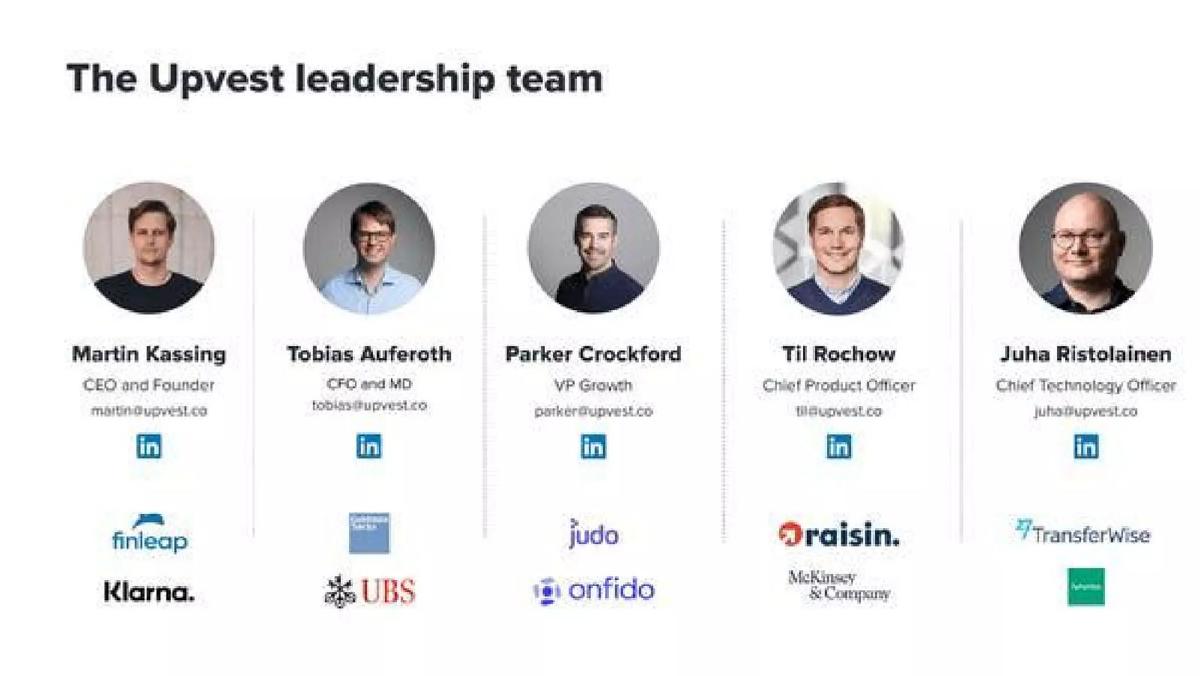
Slide 4: The Upvest Leadership Team This slide reinforces the 'pedigree' narrative. It lists Martin Kassing (CEO), Tobias Auferoth (CFO), Parker Crockford (VP Growth), Til Rochow (CPO), and Juha Ristolainen (CTO). Each profile is backed by logos of high-growth fintechs like Finleap, Raisin, and TransferWise, suggesting the team has already scaled the types of companies they are now selling to.
Slide 5: Supported by Leading Investors The deck displays logos for Notion, Partech, HV Capital, and Earlybird. It also mentions support from the European Union Regional Development Fund, which adds a layer of public-sector validation often valued in European fintech.
Slides 6-10: Market Momentum and The Big Picture
Slide 6: Growth Trajectory This slide uses a bar chart to show exponential growth. It claims €10m in volume for 2019, €100m for 2020, and a projection of €1bn+ in AUC (Assets under Custody) for 2021. This 10x annual growth rate is the primary hook for a Series B investor. It also lists early clients like Bitwala and Cashlink.
Slide 7: Transition A divider asking "What’s the big picture?" shifts the focus from the company to the macro environment.
Slide 8: The Fintech Mandate Upvest argues that "Any fintech needs to offer investment products soon." They cite three drivers:
Negative interest rates: Banks are penalized for holding cash, forcing them to find yield-bearing products for users. · Millennial wealth: Projected to reach $20T by 2030, with a preference for seamless digital experiences. · Margin pressure: Regulatory costs have increased 800% over 10 years, making securities brokerage an attractive way to increase Customer Lifetime Value (CLV).
Slide 9: Brokerage-as-a-Service This is the 'Stripe' slide. It maps the evolution of fintech infrastructure:
2010 (Payments): Led by Stripe and Adyen for apps like Uber and Shopify. · 2015 (Banking): Led by Mambu and SolarisBank for apps like N26 and Revolut. · 2020 (Brokerage): Led by Upvest for apps like Coinbase, Trade Republic, and Bux.
By positioning themselves as the natural successor to Stripe and Mambu, Upvest frames their success as an industry inevitability.
Slides 11-15: Product and Use Cases
Slide 10: Transition A divider asking "Why are we needed?" leads into the product differentiation.
Slide 11: Upvest lets fintechs scale A comparison table pits Upvest against "DIY & Incumbents." Upvest claims three advantages: 1. State-of-the-art API: Scalable microservices vs. legacy system maintenance. 2. Modular ecosystem: Access to high-margin products vs. standard securities only. 3. Internationalization: EU-wide roll-out with taxes and licenses covered vs. country-by-country integration.
Slide 12: Use Cases This slide demonstrates the versatility of the API. It highlights four categories:
Direct investments: Fractional products for N26 or Coinbase. · Saving plans: Automated investments for Revolut or Bitwala. · Round-ups: Converting spare change into securities for Visa or Apple Pay. · Cashbacks: Converting rewards into securities for Uber or Zalando.
This effectively expands their Total Addressable Market (TAM) from just 'fintechs' to any consumer platform with a loyalty program.
Slide 13: User Experience Upvest shows a mobile UI flow (Investment offering -> Order request -> Confirmation -> Success -> Overview). The key message is that while Upvest provides the plumbing, the fintech "owns the UX," allowing for a white-labeled experience.
Slide 14: All-in-one Infrastructure A technical block diagram shows the full stack: Brokerage (Trading Gateway), Settlement (Transaction domain), and Custody (Customer Data, Tax, Reporting). It explicitly mentions the "Securities trading bank licence" as the foundation of the stack.
Slides 16-17: The Experts and Contact
Slide 16: Fintech Infrastructure Experts The deck circles back to the team, providing more detail on three key figures:
Christian Schäfer: Built a securities trading bank from scratch at Flatex. · Juha Ristolainen: Scaled TransferWise Business from 20 to 80 people. · Til Rochow: Led product at Raisin and worked at McKinsey.
This slide is designed to de-risk the execution of a complex, regulated product.
Slide 17: Contact The final slide features the CEO, Martin Kassing, and a cloud of icons representing the various assets Upvest supports (ETFs, Shares, Commodities, Crypto, etc.).
What Works in the Upvest Deck
1. The Regulatory Moat: Mentioning the BaFin license on Slide 3 and Slide 14 is a powerful signal. In fintech, technology is often easier to replicate than regulatory approval. By leading with the license, Upvest tells investors they have already cleared the hardest hurdle.
2. The Category Comparison: The chart on Slide 9 that aligns Upvest with Stripe and Mambu is highly effective. It uses the success of existing unicorns to explain Upvest's potential, making the business model easy to grasp for generalist investors.
3. Use Case Breadth: Slide 12 does an excellent job of showing that Upvest isn't just for stock-trading apps. By including logos like Uber, Zalando, and Lufthansa for "Cashbacks," they suggest a massive horizontal market for embedded investments.
What is Missing from the Upvest Deck
1. The Ask: There is no slide stating how much capital is being raised in this Series B or how it will be spent. While this is common in decks that are leaked or shared after a round, a fundraising deck should ideally specify the milestones the new capital will unlock.
2. Unit Economics: The deck mentions "high growth" and "€1bn AUC," but it does not explain how Upvest makes money. There is no mention of basis points on AUC, per-transaction fees, or SaaS implementation fees. Investors need to see the path to profitability, not just volume growth.
3. Competitive Landscape: While they compare themselves to "Incumbents," they ignore other API-first competitors in the space (such as DriveWealth in the US or other European infrastructure players). Acknowledging the competitive landscape and explaining their specific edge (e.g., the tax engine or the specific license type) would strengthen the pitch.
What a Founder Should Copy
1. The 'Pedigree' Slide: If you have a team from top-tier companies, use Slide 4’s format. Putting the logos of former employers directly under the headshots is a shorthand for "we know what we're doing."
2. The Macro-Trend Justification: Slide 8 is a great template for a "Why Now?" slide. It doesn't just say "people like investing"; it points to specific economic pressures (negative interest rates) and demographic shifts (millennial wealth) that create a sense of urgency.
3. Visualizing the 'Plumbing': Slide 13 is a perfect way to show a B2B product. By showing the end-user's mobile screens but labeling them as "Powered by Upvest," you clarify that you are an invisible but essential layer of the stack.
Final Verdict: Upvest’s deck is a sophisticated, high-level pitch that relies on the strength of its team and the clarity of its market positioning. It successfully frames the company as a critical piece of the next generation of financial infrastructure.
Frequently asked questions
- What is Upvest's core value proposition?
- Upvest provides a 'Securities API' that allows any fintech or business to integrate investment products into their existing apps. By handling the heavy lifting of licenses (BaFin), vendor management, and back-office operations, they enable companies to offer fractional trading, saving plans, and crypto investments without building the infrastructure from scratch.
- How does Upvest demonstrate market traction?
- Traction is shown through Assets under Management (AuM) and volume growth. Slide 3 states they have €100m+ in AuM, while Slide 6 shows a 10x year-over-year volume growth, projecting €1bn in Assets under Custody (AUC) for the following year. They also list several live clients like Bitwala and Exporo.
- What regulatory advantages does Upvest have?
- A central pillar of the deck is their BaFin license (Slide 3). In the highly regulated European market, holding a license from the German Federal Financial Supervisory Authority acts as a significant barrier to entry and allows them to offer a 'one-stop solution' that includes tax handling and local customizations across the EU.
- Who are the target customers for Upvest?
- The deck identifies three main categories: neo-banks and fintechs (like N26 or Revolut) needing to increase customer lifetime value, traditional players facing margin pressure, and non-financial platforms (like Uber or Zalando) looking to offer embedded finance features like investment cashbacks.
- What is missing from the Upvest pitch deck?
- The deck lacks a clear financial 'Ask' slide specifying the round size and use of proceeds. It also omits detailed unit economics (CAC, LTV, or take-rates) and a traditional competition slide, opting instead to compare themselves broadly against 'DIY & Incumbents' rather than naming direct API competitors.