The Super Coffee pitch deck is a 22-slide presentation that prioritizes market traction and product differentiation over complex financial modeling. By 2018, the company had already secured authorizations from major retailers like Whole Foods, Wegmans, and Target, which it highlights through extensive 'Success in Stores' photo galleries. The core narrative centers on the 'Bad Guys'—legacy brands like Starbucks and Dunkin' Donuts—whose products contain up to 45g of sugar, contrasted against Super Coffee's 0g sugar and 80-calorie profile. The deck effectively uses competitive benchmarking table…
Key takeaways
- The deck positions legacy brands like Starbucks and Dunkin' as 'The Bad Guys' due to high sugar content (Slide 3).
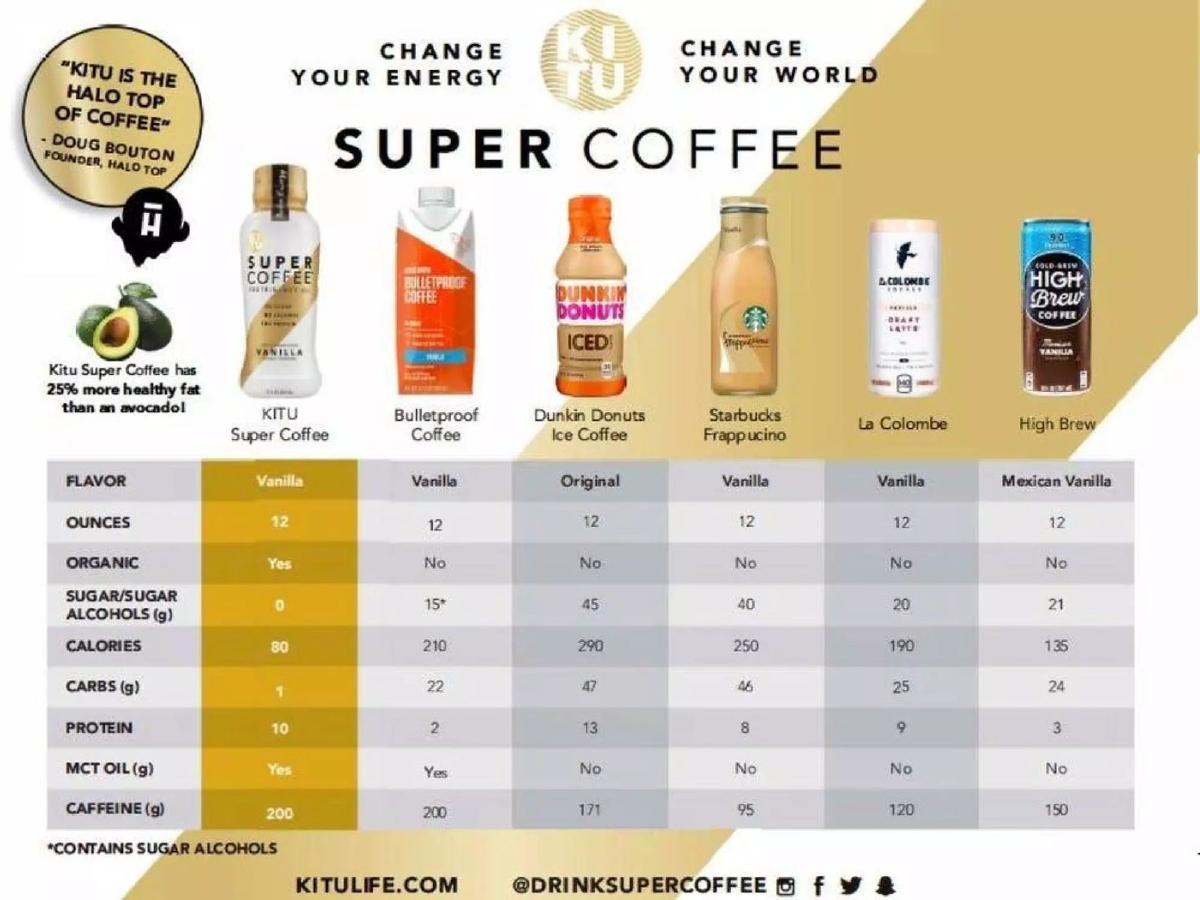
- Super Coffee claims a 0g sugar and 80-calorie profile for its core product, significantly lower than competitors (Slide 4).
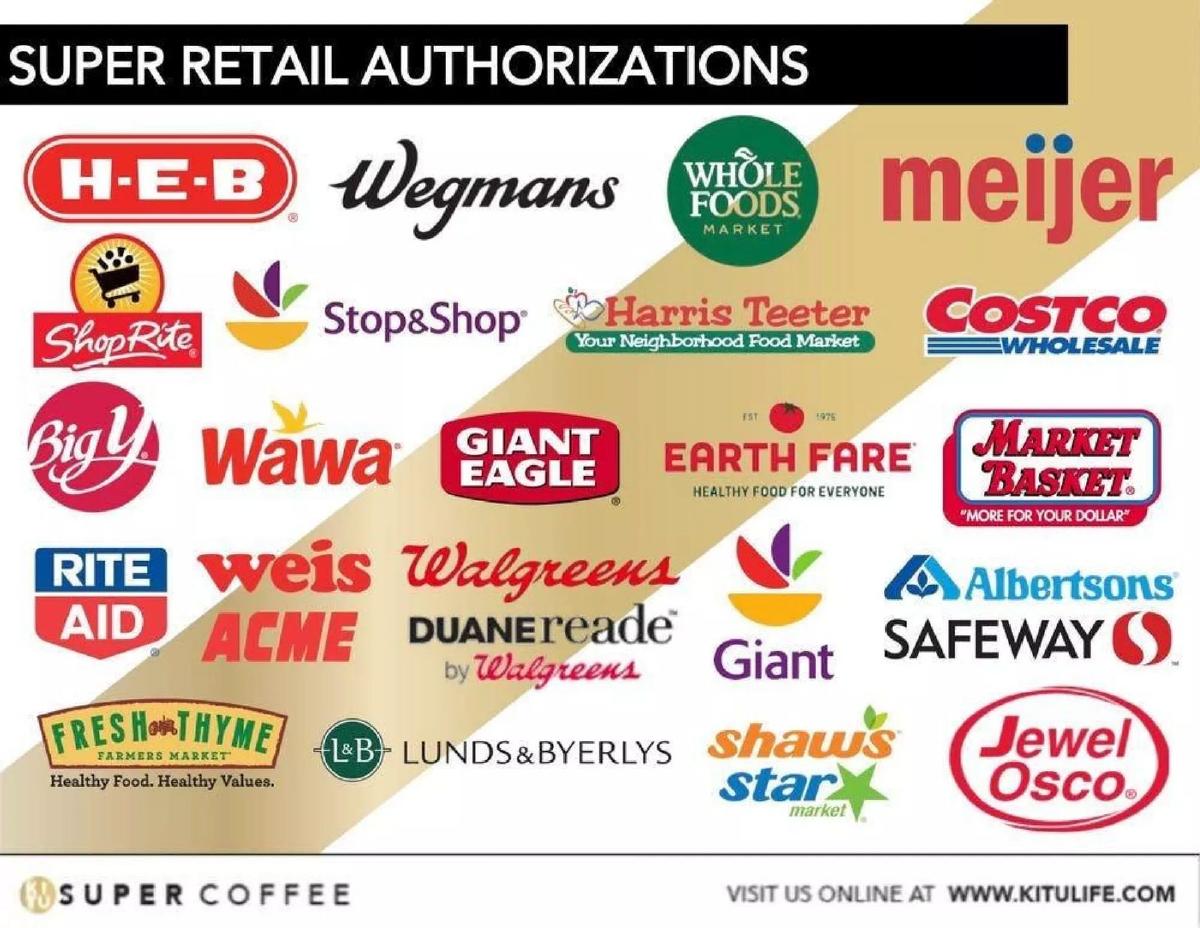
- Retail traction is the deck's strongest asset, listing over 25 major retail authorizations including Costco, Walgreens, and Safeway (Slide 6).
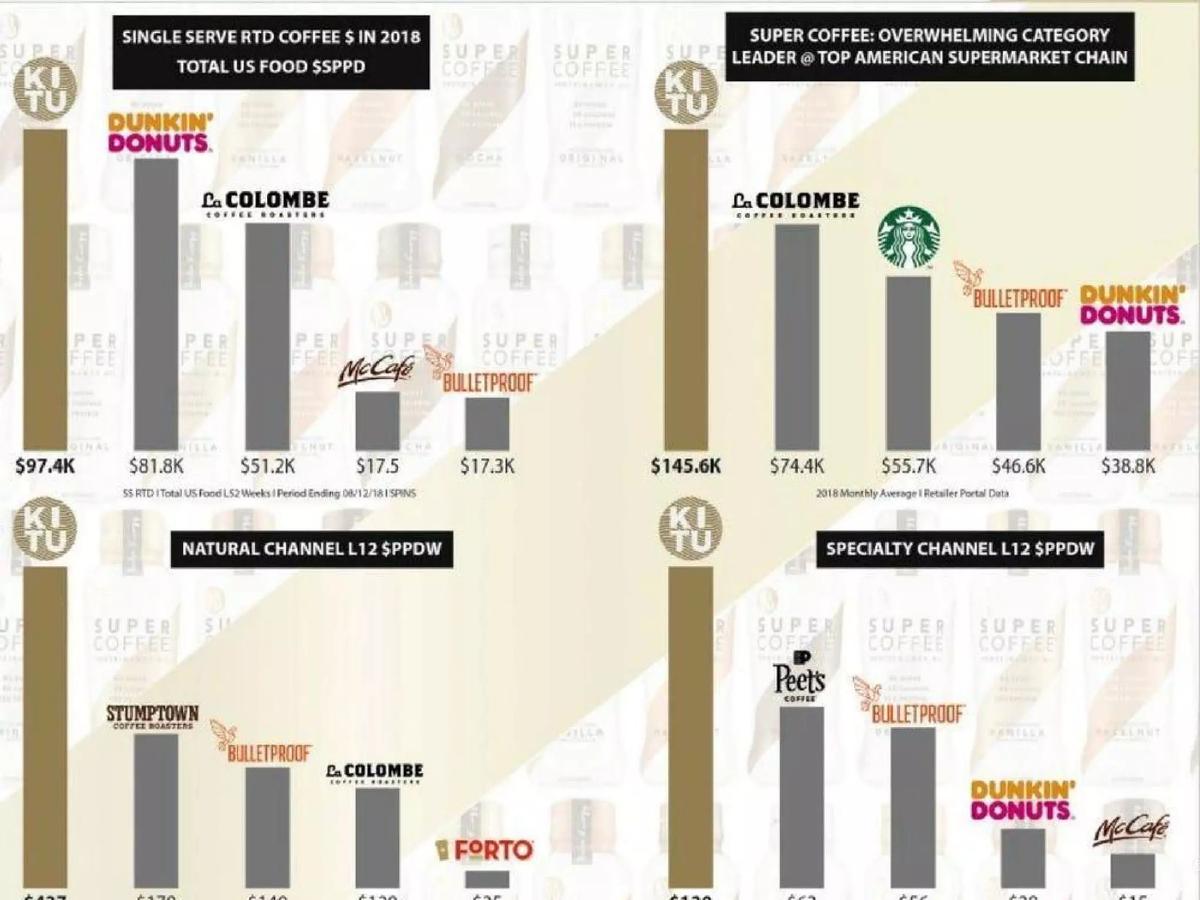
- The company uses SPINS data to claim the #1 spot in single-serve RTD coffee sales at a top American supermarket chain with $145.6K in sales (Slide 5).
- Extensive visual evidence of 'Success in Stores' spans five slides, showing massive end-cap displays and Shark Tank-branded signage (Slides 7-11).
- The deck introduces 'Super Creamer' as an innovation to improve what it calls a 'dying category' dominated by non-natural players (Slide 15).
- A new 'Multi Serve' 32 fl oz product is introduced with a $5.99 SRP to drive further market penetration (Slide 20).
- The brand leverages its 'Shark Tank' appearance and 'Under Armour' partnership as key trust signals throughout the deck (Slide 17).
The Strategy of Visual Dominance
The Super Coffee pitch deck, representing Kitu Life, is a masterclass in showing rather than telling. In the competitive Consumer Packaged Goods (CPG) space, investors are often wary of 'kitchen table' brands that can't scale. Super Coffee addresses this head-on by dedicating nearly 25% of its deck to high-resolution photos of its products on retail shelves. This teardown examines how the brand transitioned from a dorm-room concept to a $131 million funded powerhouse by focusing on nutritional superiority and aggressive retail expansion.
Slides 1-2: The Origin Story and Brand Identity
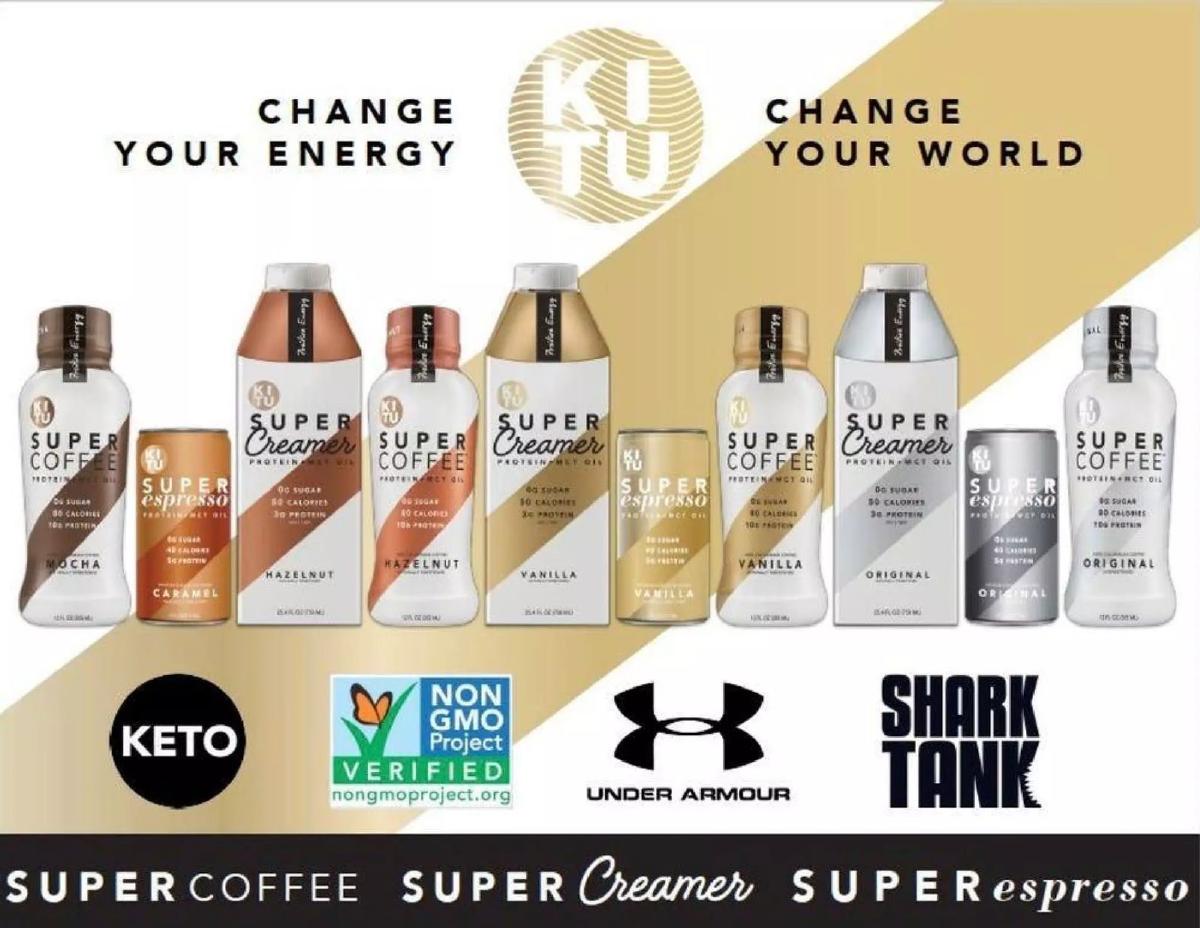
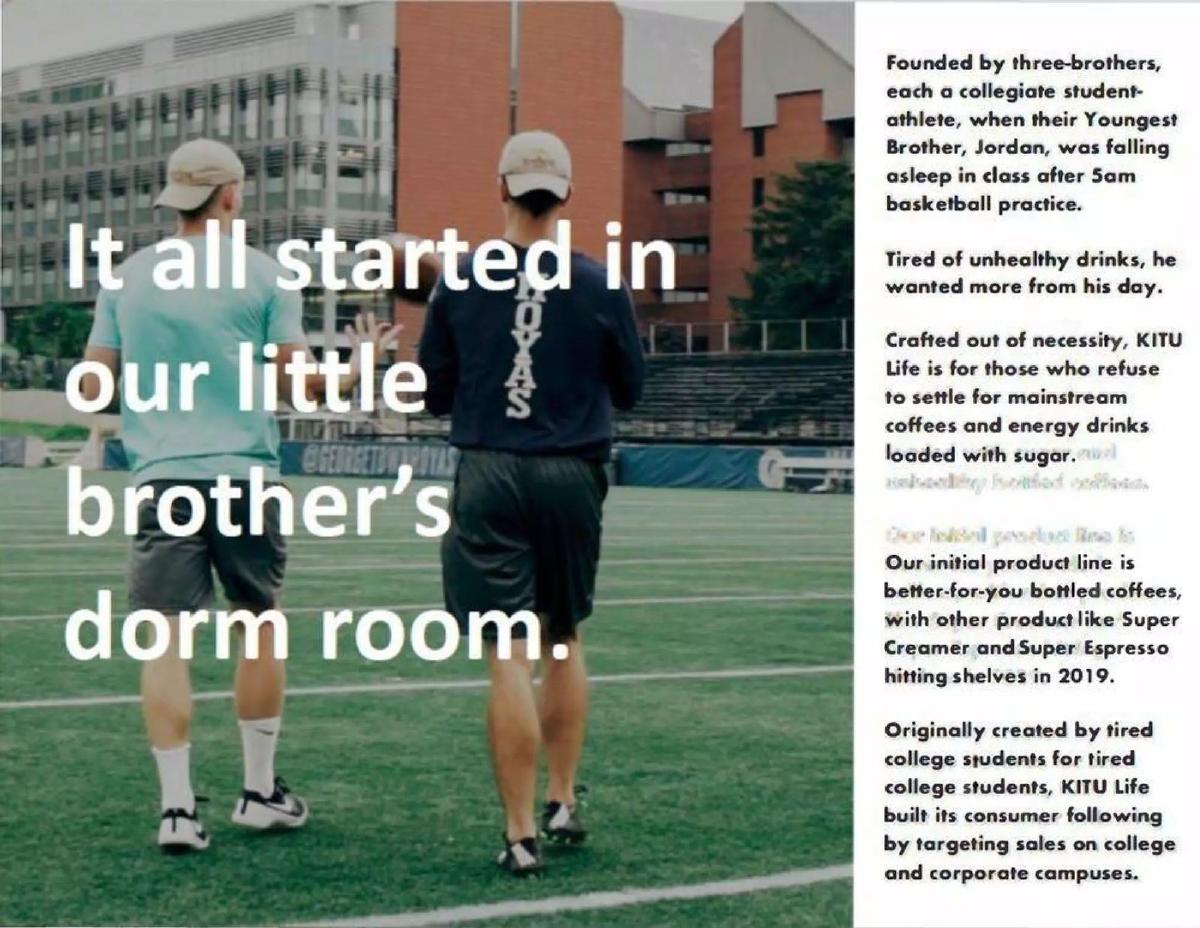
The deck opens with a clean, lifestyle-oriented cover slide featuring the full product lineup: Super Coffee, Super Creamer, and Super Espresso. It immediately establishes credibility by featuring the Under Armour logo and a Shark Tank badge. Slide 2 provides the 'Founding Story,' noting the company was started by three brothers, all collegiate student-athletes. The narrative is one of 'necessity,' born when the youngest brother, Jordan, was falling asleep in class after 5 AM basketball practice. This establishes the brand's target demographic: tired, health-conscious high-performers.
Slides 3-5: Market Problem and Competitive Benchmarking
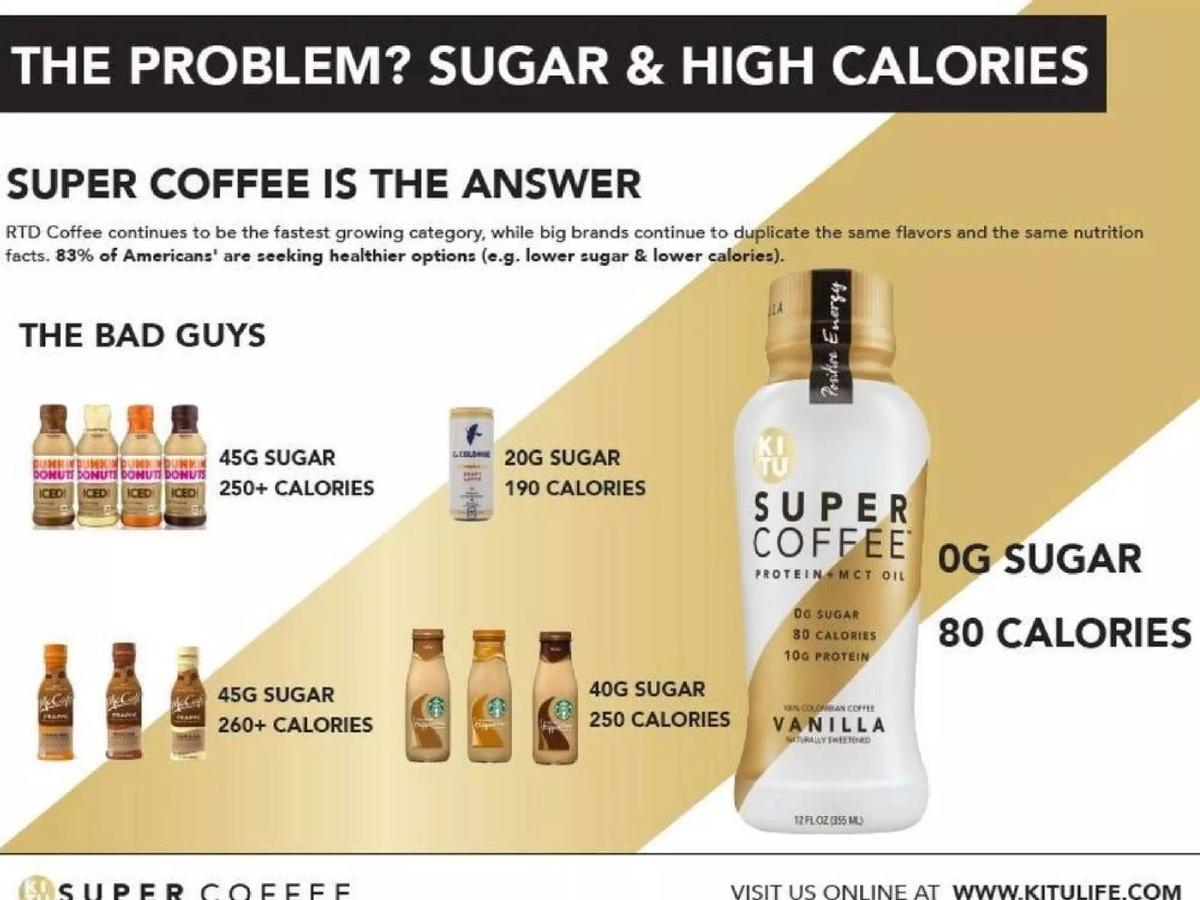
Slide 3 identifies 'The Bad Guys.' It explicitly names and shows products from Dunkin' Donuts, Starbucks, and McCafe, highlighting their high sugar content (45g) and calorie counts (250+). Super Coffee is positioned as the antithesis with 0g sugar and 80 calories . Slide 4 expands this into a detailed matrix, comparing Super Coffee against Bulletproof, La Colombe, and High Brew. It wins on almost every metric shown: it is the only one listed as 'Organic,' '0 Sugar,' and containing 'MCT Oil' while maintaining a high caffeine count of 200mg. Slide 5 introduces hard data, utilizing SPINS and retailer portal data to show Super Coffee as the 'Overwhelming Category Leader' at a top American supermarket chain, with $145.6K in sales compared to Starbucks' $55.7K in the same period.
Slides 6-12: The Retail Blitz
Slide 6 is a 'wall of logos' representing retail authorizations. It includes heavyweights like Whole Foods, Costco, Walgreens, Target, and Safeway . This slide is crucial because it proves the product has passed the rigorous vetting process of national category buyers. Following this, Slides 7 through 11 are titled 'Success in Stores.' These slides are purely visual, showing massive floor displays, end-caps, and even a promotional bicycle display. For a Series-stage investor, these photos represent 'velocity' and 'brand presence'—proof that the product isn't just sitting in a warehouse but is actively being marketed and sold in the real world. Slide 12 specifically focuses on Target, showing the product in both the refrigerated section and specialized 'cart-stopping' displays priced at $2.79 and $3.29.
Slides 13-16: Category Expansion - Super Creamer
The deck shifts focus to 'Innovation to Drive Velocity' on Slide 13. Slide 14 introduces Super Creamer , a lactose-free, protein-enriched, and sugar-free alternative to traditional creamers. It highlights 'MCTs from Coconut Oil' and 'Organic Monk Fruit' as key ingredients. Slide 15 takes a bold stance, calling the creamer category a 'dying category' and comparing Super Creamer to legacy brands like Coffee Mate and International Delight. The claim that Super Creamer has '25% more healthy fat than an avocado' is a standout marketing hook. Slide 16 reinforces the brand's commitment to sustainability with a visual of a wood-textured bottle, though it lacks specific technical details on the packaging material.
Slides 17-19: The Espresso Play
Slide 17 introduces Super Espresso , a 6 oz can designed for quick energy. It mirrors the nutritional profile of the coffee line: 0g sugar, 40 calories, and 5g of protein. Slide 18 provides another competitive matrix, this time targeting the energy drink market. It compares Super Espresso to Red Bull, 5-Hour Energy, and Starbucks Double Shot . Super Espresso is positioned as the 'clean' alternative, offering 180mg of caffeine without the 37g of sugar found in a Red Bull.
Slides 20-22: Future Growth and Multi-Serve
The final section of the deck focuses on 2019 innovations. Slide 20 introduces the Multi-Serve 32 fl oz bottles. This is a strategic move to move from 'on-the-go' consumption to 'in-home' consumption. The slide lists a $5.99 SRP , which breaks down to $1.49 per serving, positioning it as a value play for loyal customers. Slide 21 details 'Super Cold Brew,' an unsweetened, zero-calorie option enhanced with L-Theanine. The deck concludes on Slide 22 by showing how Super Creamer and Super Cold Brew work together, stating, 'We no longer need to partner with other brands for a cold brew solution while sampling Super Creamer.'
What Works in This Deck
1. Aggressive Benchmarking: The deck doesn't shy away from naming competitors. By labeling Starbucks and Dunkin' as 'The Bad Guys,' it creates a clear 'Us vs. Them' narrative that is easy for investors to grasp. The use of nutritional tables makes the product's superiority feel objective rather than subjective.
2. Visual Proof of Traction: The five slides of store photos are incredibly effective. In CPG, seeing a brand take over an end-cap at a major retailer like Target is more persuasive than any revenue graph. It shows that the brand has the operational capability to manage large-scale retail displays.
3. Clear Value Proposition: The repetition of '0g Sugar, 80 Calories, 10g Protein' across multiple slides ensures the core message is never lost. The deck stays focused on the 'Keto' and 'Healthy Energy' trends which were peaking during the time of this raise.
What Is Missing
1. Team Slide: While the 'three brothers' are mentioned in the intro, there is no slide detailing their professional backgrounds, the executive leadership team, or their board of directors. For a $131M raise, investors usually want to see a deep bench of CPG industry veterans.
2. Financials and Unit Economics: The deck provides sales velocity in specific stores but lacks a consolidated P&L, gross margin data, or customer acquisition cost (CAC) for their direct-to-consumer channel. There is no mention of the company's burn rate or path to profitability.
3. The Ask: There is no slide stating how much money is being raised or how the funds will be allocated. This suggests the deck was either a 'leave-behind' after a meeting or a growth update for existing stakeholders rather than a cold-pitch document.
Founder Takeaways
Copy the 'Success in Stores' approach: If you are a physical product founder, take high-quality photos of your product on the shelf. It proves you have solved the hardest part of CPG: distribution. Use SPINS or Nielsen data: If you have access to category data that shows you outperforming a legacy incumbent in a specific region or store, make that the centerpiece of your traction slide. Simplify your nutritional wins: Super Coffee focused on just three numbers (Sugar, Calories, Protein). Don't overwhelm investors with a full ingredient list; pick the three metrics where you destroy the competition and repeat them until they stick.
Frequently asked questions
- What is the primary problem Super Coffee aims to solve?
- According to slide 3, the problem is 'Sugar & High Calories' in the Ready-to-Drink (RTD) coffee category. The deck notes that while RTD coffee is the fastest-growing category, legacy brands continue to produce drinks with 40g-45g of sugar and 250+ calories. Super Coffee positions itself as the answer with 0g sugar and 80 calories, catering to the 83% of Americans seeking healthier options.
- How does Super Coffee compare to its competitors nutritionally?
- The deck uses detailed comparison tables on slides 4 and 18. For example, Super Espresso is compared to Red Bull and Starbucks Double Shot. Super Espresso contains 0g sugar and 5g protein, whereas Red Bull contains 37g sugar and 1g protein. The deck also highlights the inclusion of MCT oil and L-Theanine, which are absent in most mainstream competitors.
- What evidence of market traction does the deck provide?
- Traction is demonstrated through three methods: retail logos, sales data, and photography. Slide 6 displays logos for dozens of major retailers like HEB, Meijer, and Rite Aid. Slide 5 uses SPINS data to show Super Coffee outperforming brands like La Colombe and Starbucks in specific channels. Finally, slides 7 through 12 provide dozens of photos of actual store displays, proving physical shelf dominance.
- What new products were introduced in this deck?
- The deck outlines a significant expansion beyond single-serve bottles. It introduces 'Super Creamer' (Slide 14), 'Super Espresso' cans (Slide 17), and a 'Multi Serve' 32 oz bottle (Slide 20). The Multi Serve product is specifically priced at a $5.99 SRP ($1.49 per serving) to appeal to value-conscious consumers and increase household penetration.
- Is there a specific 'Ask' or financial breakdown in the deck?
- No. The 22 slides provided do not include a specific investment 'Ask,' a use-of-funds breakdown, or a team slide. This suggests the deck was likely used as a supplemental growth presentation for existing investors or as a high-level teaser for a Series round where the founders' background (mentioned briefly on slide 2) was already known.