The Sunshine (Kitu Life) deck is a high-energy, visual-heavy presentation that prioritizes physical retail proof over traditional startup metrics. Spanning 22 slides, the deck focuses on the 'Super Coffee' product line's nutritional advantages—specifically zero sugar and the addition of MCT oil—against giants like Starbucks and Dunkin'. Rather than focusing on CAC/LTV or burn rates, the founders lean heavily on their Shark Tank appearance, Under Armour partnership, and photographic evidence of massive 'end-cap' displays in national grocery chains. It is a classic CPG (Consumer Packaged Goods)…
Key takeaways
- The deck leads with high-profile social proof, featuring logos for Shark Tank and Under Armour on the very first slide.
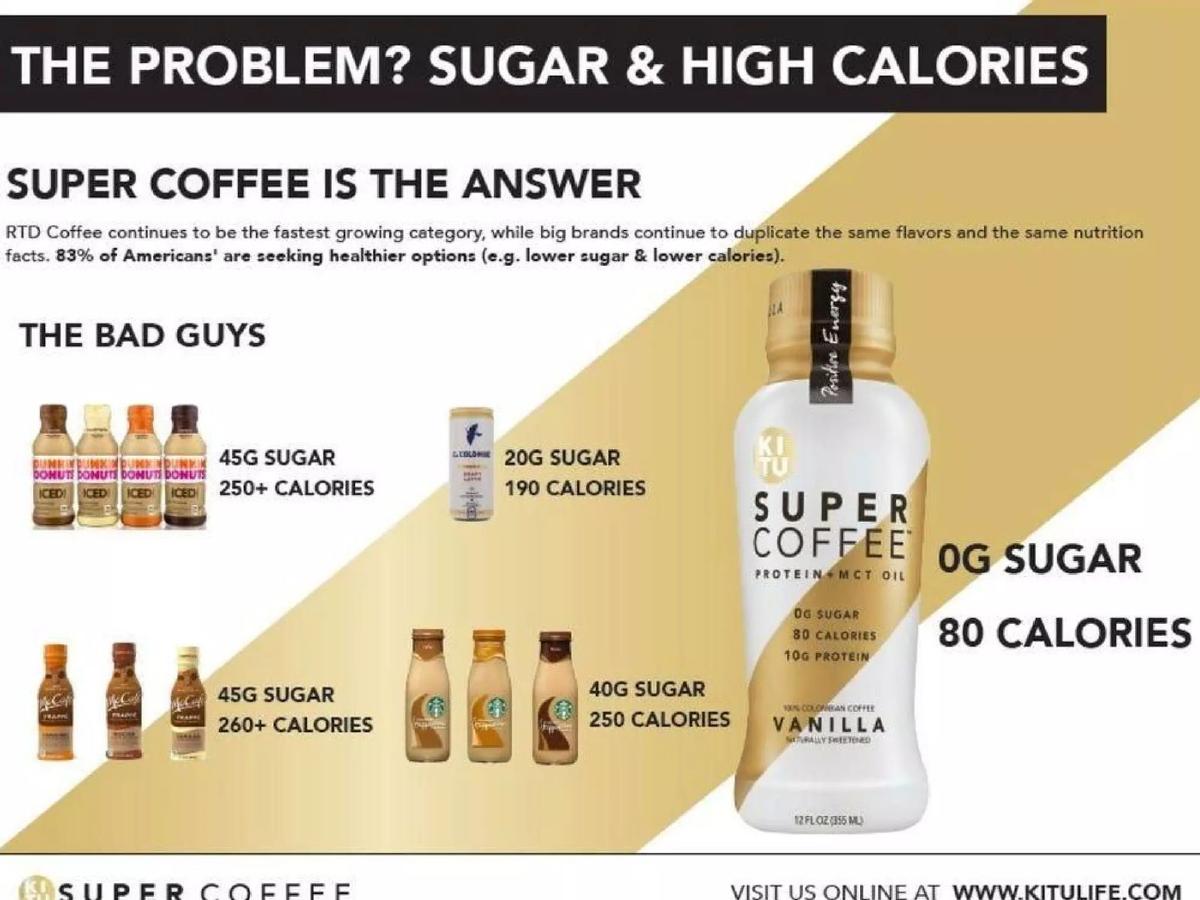
- Nutritional differentiation is central, with Slide 3 highlighting that 83% of Americans seek healthier options like lower sugar and calories.
- Competitive benchmarking is aggressive, specifically calling out Starbucks and Dunkin' as 'The Bad Guys' on Slide 3.
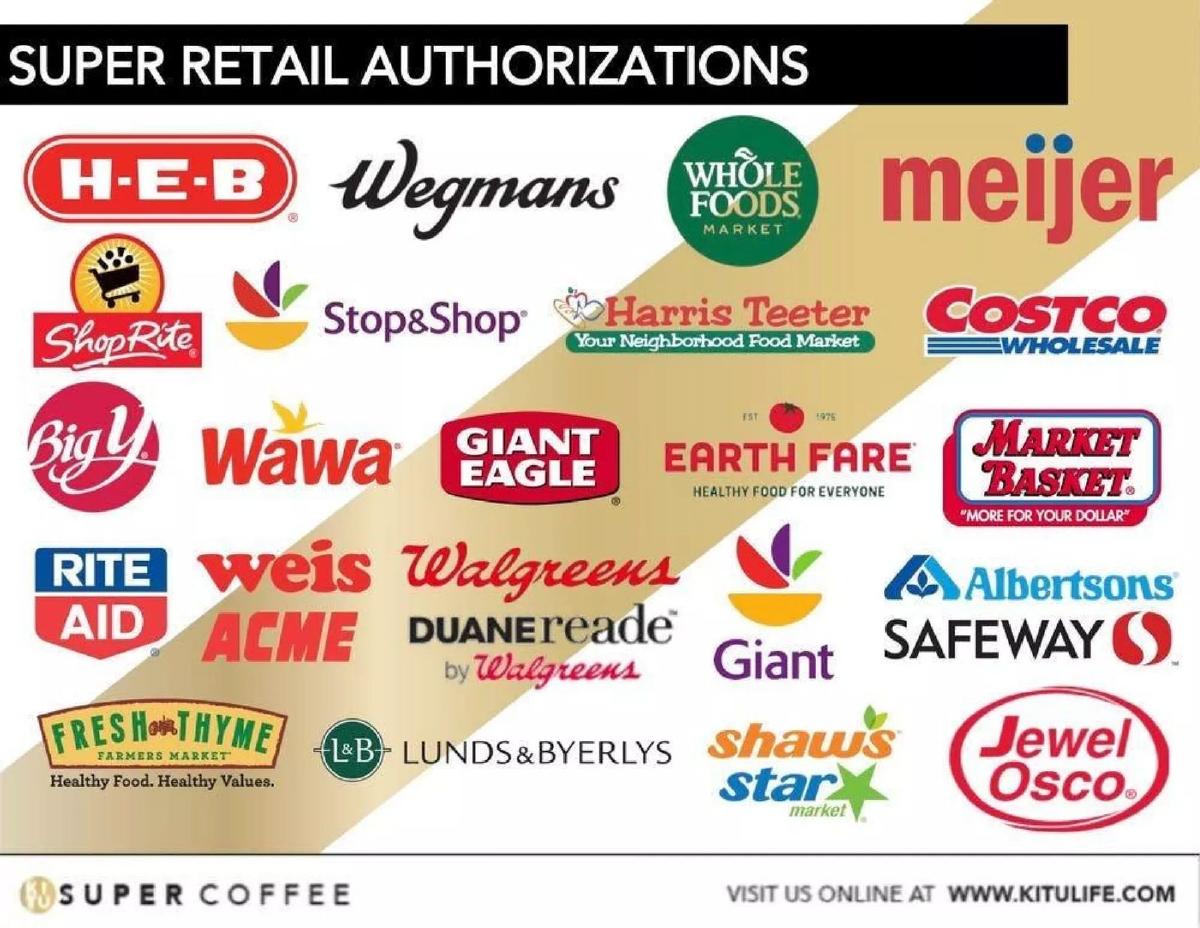
- Retail distribution is the primary metric of success, with Slide 6 listing over 25 major retailers including Costco, Wegmans, and CVS/Walgreens.
- The 'Success in Stores' section (Slides 7-10) uses 15+ photos of real-world shelf displays to prove velocity and retail partner support.
- The deck introduces a 'Super Creamer' product on Slide 14 to address what it calls a 'dying category' dominated by high-sugar legacy brands.
- Future growth is mapped through product line expansion, specifically 'Multi Serve' 32oz bottles priced at a $5.99 SRP as shown on Slide 20.
- The deck omits a traditional team slide, financial projections, and a specific 'Ask' or use of funds for the $20M round.
The Visual Strategy of a CPG Powerhouse
The Sunshine (Kitu Life) pitch deck is a 22-slide masterclass in brand positioning. Unlike tech decks that often get bogged down in software architecture or complex user acquisition funnels, this deck focuses on the physical reality of the product. It is designed to convince an investor of one thing: this product belongs on every shelf in America. By the time an investor reaches the end, they have seen the product in Target, Whole Foods, and Costco, making the brand's success feel inevitable.
Slides 1-2: Origin and Social Proof
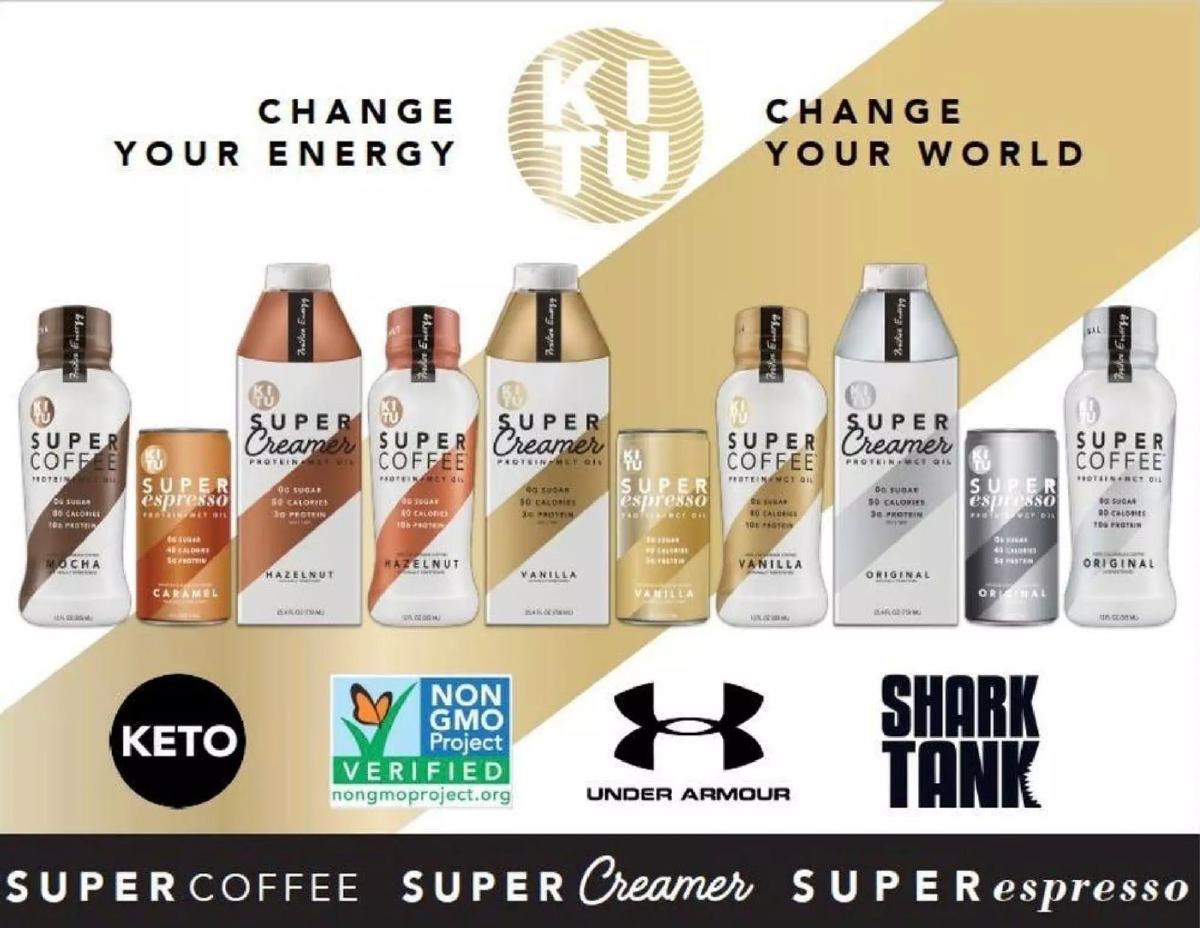
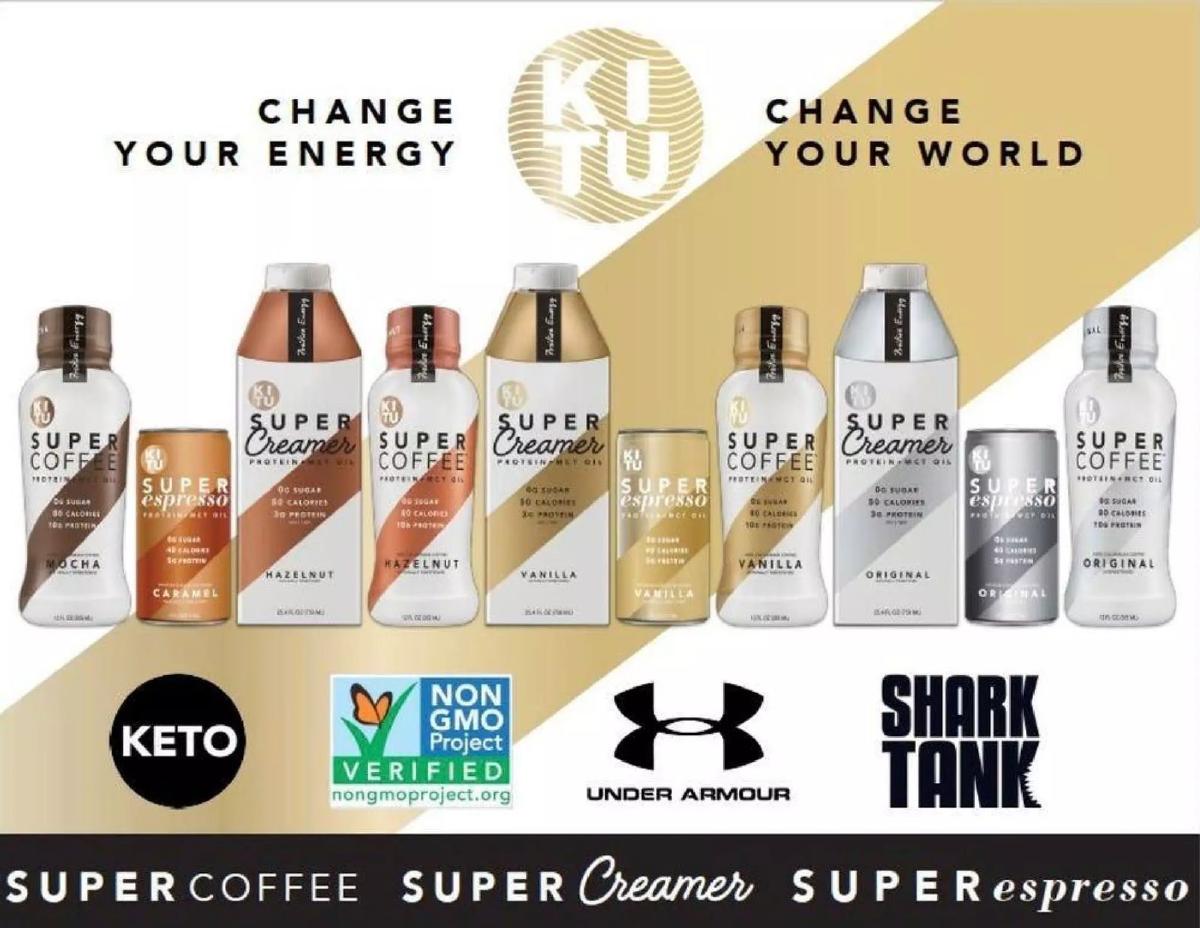
Slide 1 sets the tone immediately. It features the full product lineup—Super Coffee, Super Creamer, and Super Espresso—flanked by the logos for Under Armour and Shark Tank. The inclusion of the 'Keto' and 'Non-GMO Project Verified' seals signals that the brand is aligned with modern dietary trends. The tagline 'Change Your Energy, Change Your World' positions the beverage as more than just a drink; it is a lifestyle tool.
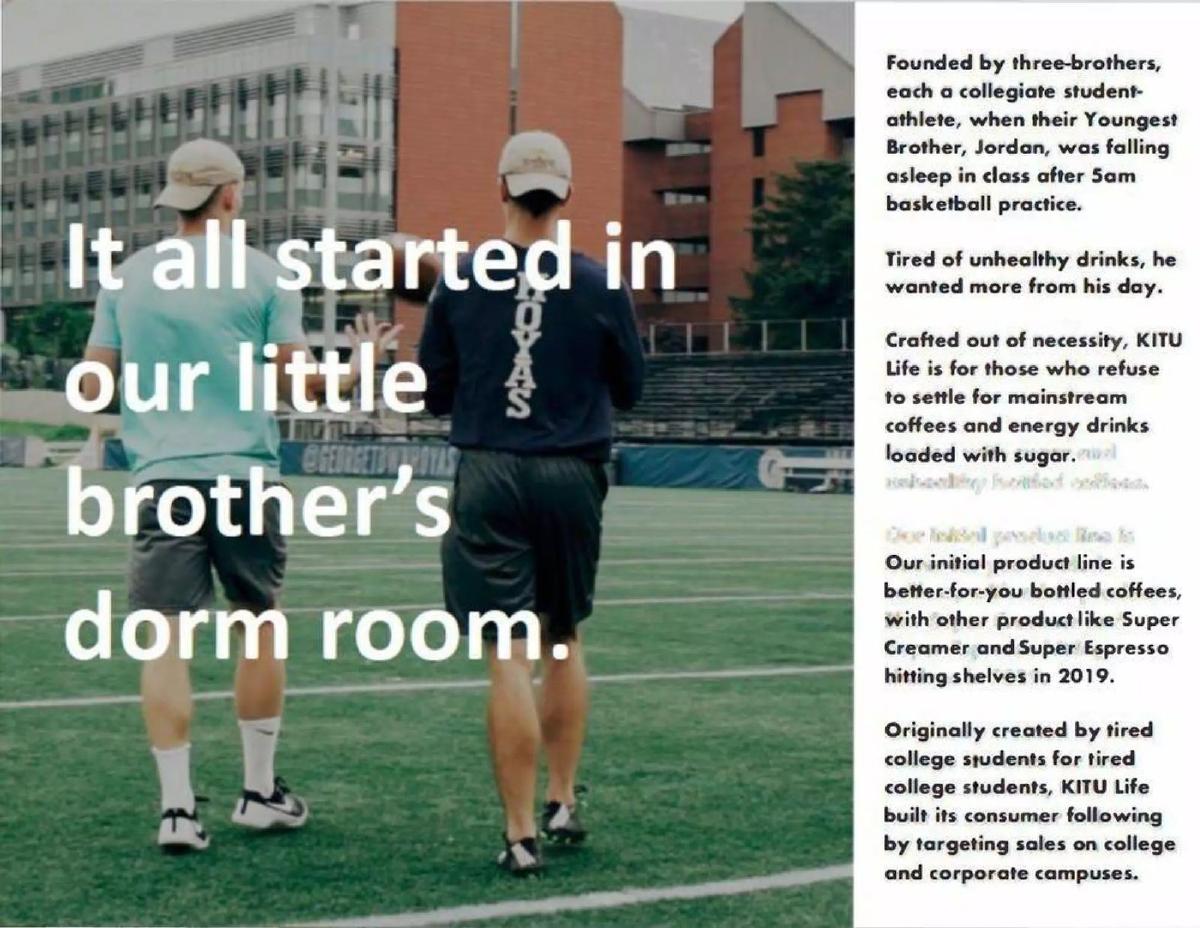
Slide 2 provides the 'Founder Story.' It notes the company was 'Founded by three-brothers, each a collegiate student-athlete.' The narrative is classic: a product 'crafted out of necessity' because the youngest brother, Jordan, was falling asleep after 5 am basketball practice. This slide establishes the target demographic: 'tired college students' and corporate professionals who refuse to settle for 'mainstream coffees loaded with sugar.'
Slides 3-5: The Problem and The Comparison
Slide 3 identifies 'The Bad Guys.' It explicitly names and shows images of Dunkin' Donuts, Starbucks, and McCafe bottled drinks. The slide lists their stats: 45g of sugar and 250+ calories. In contrast, Super Coffee is shown with '0G Sugar' and '80 Calories.' This is a binary choice presented to the investor: the unhealthy past versus the healthy future.
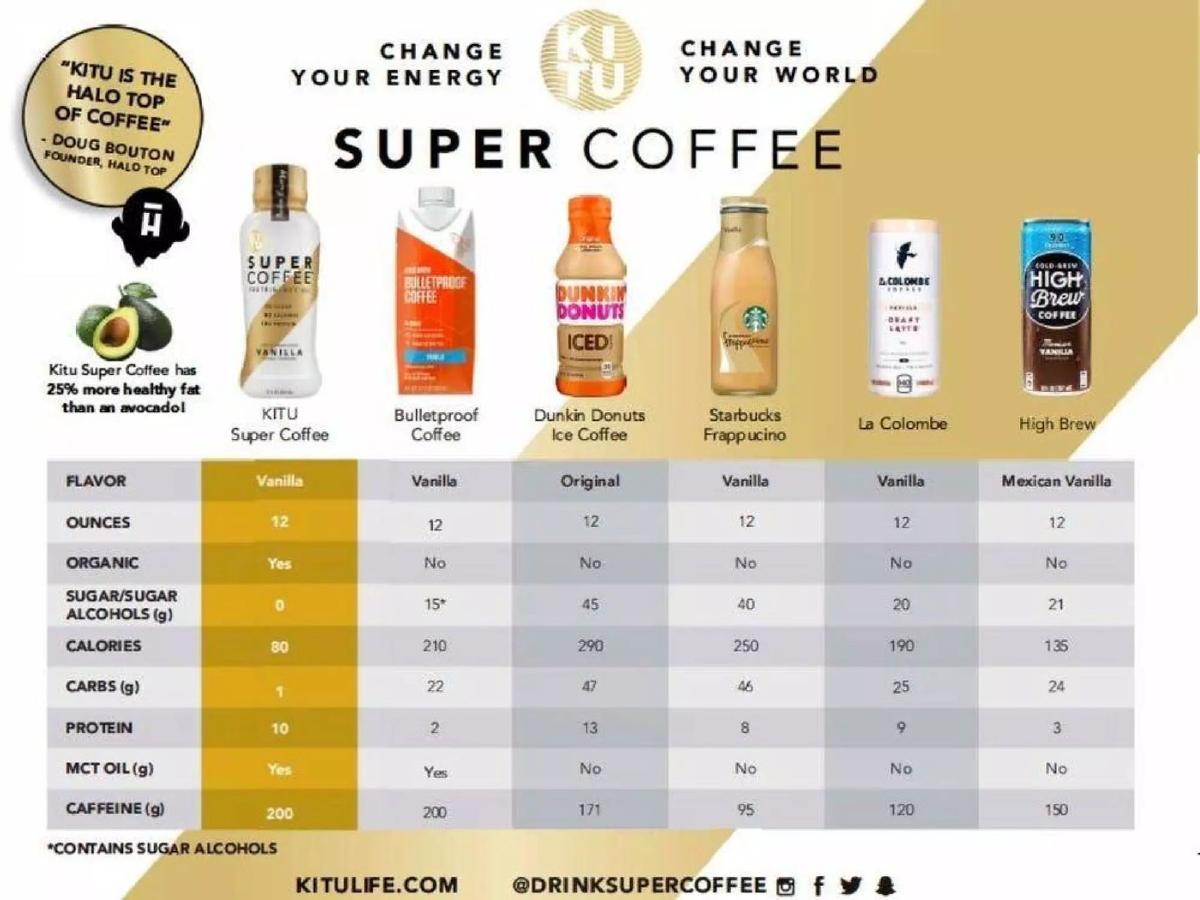
Slide 4 is a detailed competitive matrix. It compares Super Coffee to Bulletproof, Dunkin', Starbucks, La Colombe, and High Brew. The data points are specific: Kitu is the only one listed with 'Yes' for Organic, '0' for Sugar, and 'Yes' for MCT Oil. A quote from Doug Bouton, co-founder of Halo Top, calls Kitu 'the Halo Top of Coffee,' which is a powerful piece of social proof in the CPG world, referencing another brand that disrupted a legacy category.
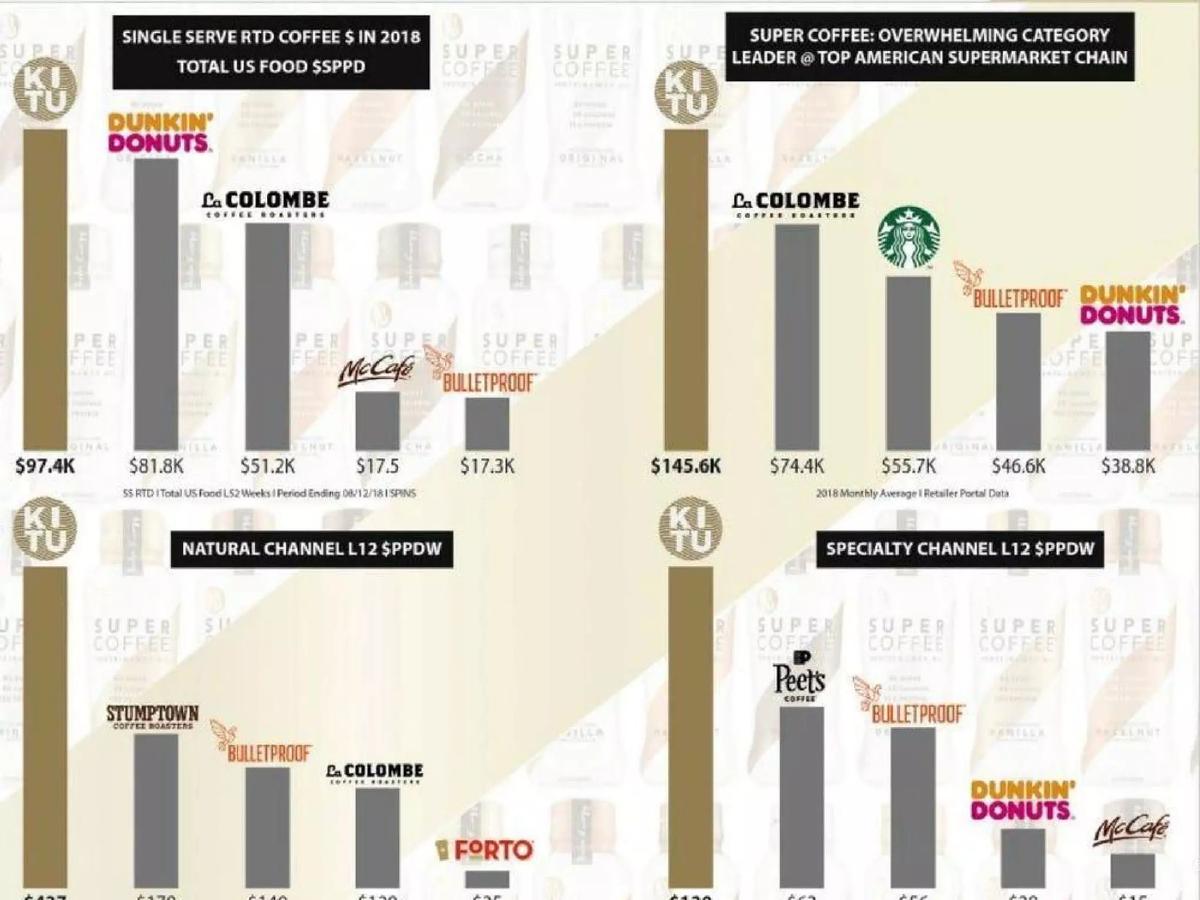
Slide 5 uses bar charts to show market performance. It claims Super Coffee is the 'Overwhelming Category Leader @ Top American Supermarket Chain' with $145.6K in sales, significantly outpacing Starbucks ($55.7K) and La Colombe ($74.4K) in that specific, unnamed context. The slide uses industry-standard metrics like $PPPD (Dollars Per Point of Distribution) to speak the language of retail investors.
Slides 6-12: The Retail Blitz
Slide 6 is a 'logo soup' of retail authorizations. It includes heavyweights like H-E-B, Wegmans, Whole Foods, Meijer, Costco, Wawa, Walgreens, and Safeway. This slide proves that the 'hard part' of CPG—getting into the stores—has already been accomplished.
Slides 7 through 10 are titled 'Success in Stores.' These slides are almost entirely photographic. They show massive, floor-to-ceiling displays of Super Coffee. One photo on Slide 7 shows a display featuring a bicycle as a promotional prize, while Slide 8 shows a 'Shark Tank' branded wooden display. These images are crucial because they show that retailers aren't just stocking the product; they are highlighting it. This indicates high 'velocity'—the speed at which product leaves the shelf.
Slides 11 and 12 focus specifically on Target. They show the product in various locations within the store: in the refrigerated section, on end-caps, and in 'grab-and-go' bins near the registers. The price point is visible in several shots, such as '$3.29' and '$2.79,' giving investors a clear idea of the retail pricing strategy.
Slides 13-18: Product Line Expansion
Slide 13 transitions to 'Innovation to Drive Velocity,' introducing the Super Creamer and Super Espresso lines. Slide 14 breaks down 'What is Super Creamer?' highlighting its lactose-free protein (3g), monk fruit sweetening, and coconut oil MCTs. It repeats the 'Zero Sugar' and 'Keto' messaging found in the coffee slides.
Slide 15 takes aim at the creamer category, calling it a 'dying category.' It compares Kitu Super Creamer to International Delight and Coffee Mate, showing that the competitors have 20g of sugar while Kitu has 0g. Slide 16 adds a 'Committed to Sustainability' message, showing a bottle made of 'Renewable raw material' and being 'Fully recyclable.'
Slides 17 and 18 repeat this format for 'Super Espresso.' The comparison on Slide 18 is particularly aggressive, pitting the 6oz Kitu can (180mg caffeine, 0g sugar) against a 12oz Red Bull (114mg caffeine, 37g sugar) and 5-Hour Energy. This positions the brand as a clean energy alternative to the entire energy drink sector, not just the coffee sector.
Slides 19-22: The Future and The 'Multi Serve'
Slides 19 and 20 introduce the 'Multi Serve' format coming in 2019. This is a 32oz bottle designed for home use. Slide 20 provides the economics: a '$5.99 SRP' which breaks down to '$1.49 per serving.' This shows the brand moving from a 'grab-and-go' impulse buy to a staple in the consumer's refrigerator.
Slide 21 introduces 'Super Cold Brew,' which they claim is the 'World's First Enhanced Super Cold Brew' containing L-Theanine for 'sustainable energy.' Slide 22 concludes by showing how the Super Creamer and Super Cold Brew work together, stating 'We no longer need to partner with other brands for a cold brew solution... we have now our own!' This indicates a strategy of capturing the entire 'share of wallet' for a coffee drinker's morning routine.
What Works in This Deck
Visual Proof of Traction: The 'Success in Stores' section is the strongest part of the deck. It moves the conversation from 'we think people like this' to 'here is the product in 25 national chains.' · Clear Differentiation: The deck never wavers from its 'Zero Sugar / MCT Oil / Keto' messaging. Every comparison slide reinforces these three pillars. · Social Proof: The constant presence of the Shark Tank and Under Armour logos provides a level of legitimacy that is hard for other seed-stage startups to match. · Category Expansion: The deck successfully argues that Kitu isn't just a coffee company, but a platform that can disrupt creamers, espresso shots, and multi-serve home products.
What is Missing
Financial Data: There is a total absence of revenue figures, gross margins, or EBITDA. While the retail logos are impressive, investors usually want to see the actual dollars and the cost of goods sold (COGS). · Team Slide: While the 'three brothers' are mentioned, there is no slide detailing their specific backgrounds, previous successes, or the broader executive team (e.g., Head of Sales, Head of Operations). · The Ask: The deck does not state how much capital is being raised or what the valuation expectations are. It also lacks a 'Use of Funds' slide to explain how the $20M will be deployed. · Unit Economics: There is no mention of Customer Acquisition Cost (CAC) for their direct-to-consumer channel or the 'slotting fees' required to maintain their retail presence.
What a Founder Should Copy
The Comparison Table: Slides 4, 15, and 18 are perfect examples of how to do competitive analysis. They don't just list competitors; they list the specific metrics where the startup wins. · Contextual Photography: If you have a physical product, show it in the wild. The photos of the product in Target and Market Basket are more convincing than any chart could be. · The 'Halo Top' Strategy: Comparing yourself to a recent, well-known success story in your industry (as they did with Halo Top on Slide 4) helps investors instantly understand your potential trajectory. · Simple Messaging: The deck uses very little text. It relies on bold headers and clear icons, making it easy to skim while still absorbing the core value proposition.
Frequently asked questions
- What is the primary value proposition of Sunshine (Kitu Life)?
- The brand positions itself as a 'better-for-you' alternative to mainstream energy drinks and bottled coffees. As seen on Slide 4, the core product, Super Coffee, contains 0g of sugar, 80 calories, and 10g of protein, while adding MCT oil for healthy fats. They explicitly contrast this with Starbucks Frappuccinos, which they list as having 40g of sugar and 250 calories.
- How does this deck handle competitive analysis?
- The deck uses direct comparison tables on Slides 4, 15, and 18. It compares Super Coffee, Super Creamer, and Super Espresso against specific competitors like Bulletproof, La Colombe, and International Delight. The comparison focuses on sugar content, protein, and the presence of MCT oil, consistently positioning Kitu as the only 'Keto Certified' and 'Organic' option in several categories.
- Why are there so many photos of grocery store shelves?
- In CPG fundraising, 'velocity' and 'shelf presence' are the most important metrics. Slides 7 through 12 serve as a visual proof of concept. By showing massive displays in Target and Market Basket, the founders demonstrate that retailers are willing to give them premium floor space and that the product is moving fast enough to justify those large inventories.
- What major components are missing from this pitch deck?
- The deck is notably missing a Team slide (though the founders' story is mentioned on Slide 2), a Financials slide (no revenue, margins, or burn rate), and an 'Ask' slide. There is no mention of how much money is being raised or how it will be spent. It functions more as a brand overview than a comprehensive investment memorandum.
- What is the significance of the Under Armour and Shark Tank logos?
- These logos appear on almost every product-focused slide (e.g., Slides 14, 17, 21). They serve as 'trust signals.' The Shark Tank logo reminds investors of the brand's national television exposure, while the Under Armour partnership suggests an endorsement from a major athletic brand, reinforcing the 'Super Coffee' identity as a performance beverage for athletes.