SnapShyft’s 10-slide deck is a masterclass in brevity, designed to highlight rapid growth and operational efficiency in the gig economy. The company addresses the chronic understaffing in the foodservice and hospitality industries by offering a 'Staffing-as-a-Service' marketplace. The deck leans heavily on two primary metrics: a 30% month-over-month growth rate and a $375,000 annual run rate. While it lacks traditional sections like a detailed competitor matrix, market size (TAM/SAM/SOM), or a specific financial 'Ask,' it compensates with high-impact visuals of its current client roster, incl…
Key takeaways
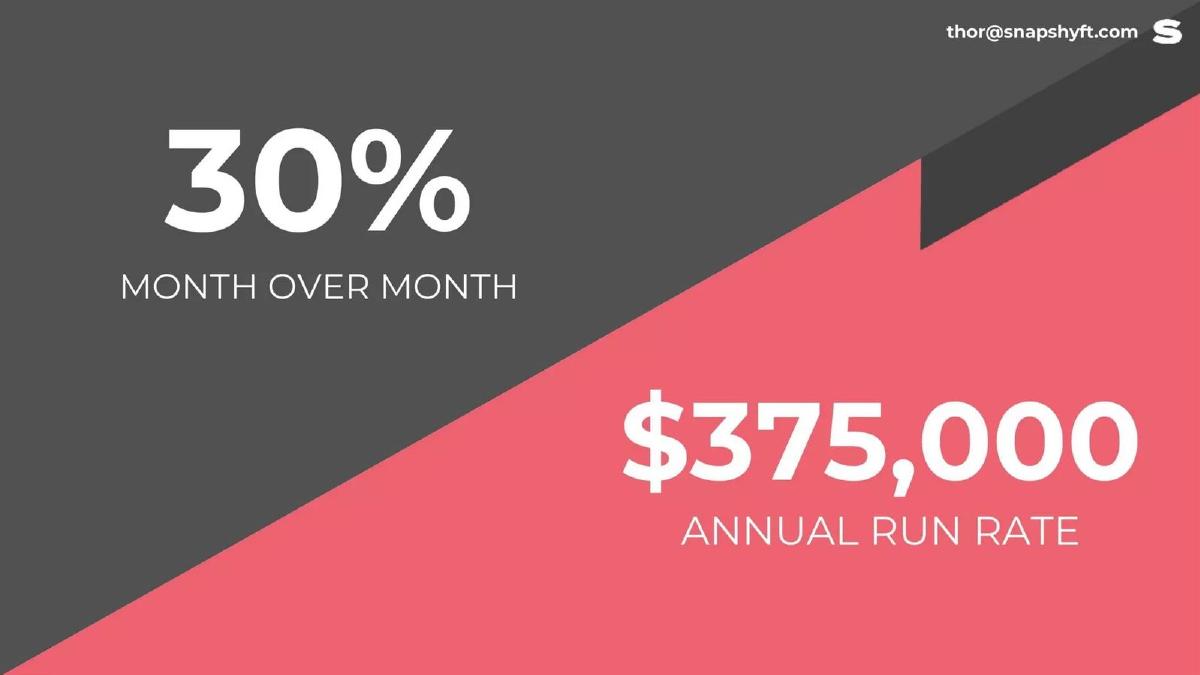
- The company reports a consistent 30% month-over-month growth rate as shown on Slide 2 and Slide 10.
- SnapShyft claims an annual run rate (ARR) of $375,000, featured prominently on Slide 2.
- Operational efficiency is a core value proposition, with a 90% fulfillment rate highlighted on Slide 6.
- The platform claims to be '3X Better' than industry standards regarding fulfillment on Slide 6.
- The deck showcases significant enterprise traction with logos from Aramark, Ritz Charles, and Indianapolis Motor Speedway on Slide 3.
- The product interface focuses on gig-based roles such as Dishwashers and Cook/Chefs with transparent pricing on Slide 9.
- The team consists of three core executives—Thor (CEO), Steph (COO), and Tony (CTO)—as seen on Slide 7.
- The deck omits a formal 'Ask' slide, leaving the specific funding requirements and valuation unstated.
The SnapShyft Teardown: Traction-First Fundraising
SnapShyft’s 2016 Seed deck is an exercise in minimalism. In an era where pitch decks often bloat to 20 or 30 slides, SnapShyft delivers its message in exactly 10. The strategy here is clear: let the numbers do the talking. By leading with growth metrics and following up with a high-quality client list, the founders aim to prove that they have solved the 'chicken and egg' problem inherent in marketplaces.
Slide 1: Title and Branding
The deck opens with a clean title slide featuring the SnapShyft logo and a contact email for 'thor@snapshyft.com'. The imagery uses a diagonal split, showing a worker in a hospitality setting. It establishes the industry focus—foodservice—immediately without needing a subtitle.
Slide 2: The Hook – Growth and Revenue
Most decks wait until slide 8 or 9 to show traction. SnapShyft puts it on slide 2. The slide is split between two massive figures: 30% Month Over Month growth and a $375,000 Annual Run Rate . This is a bold move designed to immediately qualify the company as a high-growth startup and command the investor's attention before explaining how the product actually works.
Slide 3: Social Proof and Validation
Slide 3 is a 'logo wall.' It features a mix of local and national brands. Notable names include Aramark , Indianapolis Motor Speedway , Ritz Charles , and Tijuana Flats . By placing this early, the company validates that its $375k ARR isn't coming from a single source, but from a diverse set of reputable hospitality and event partners.
Slide 4: The Value Proposition – The 'What'
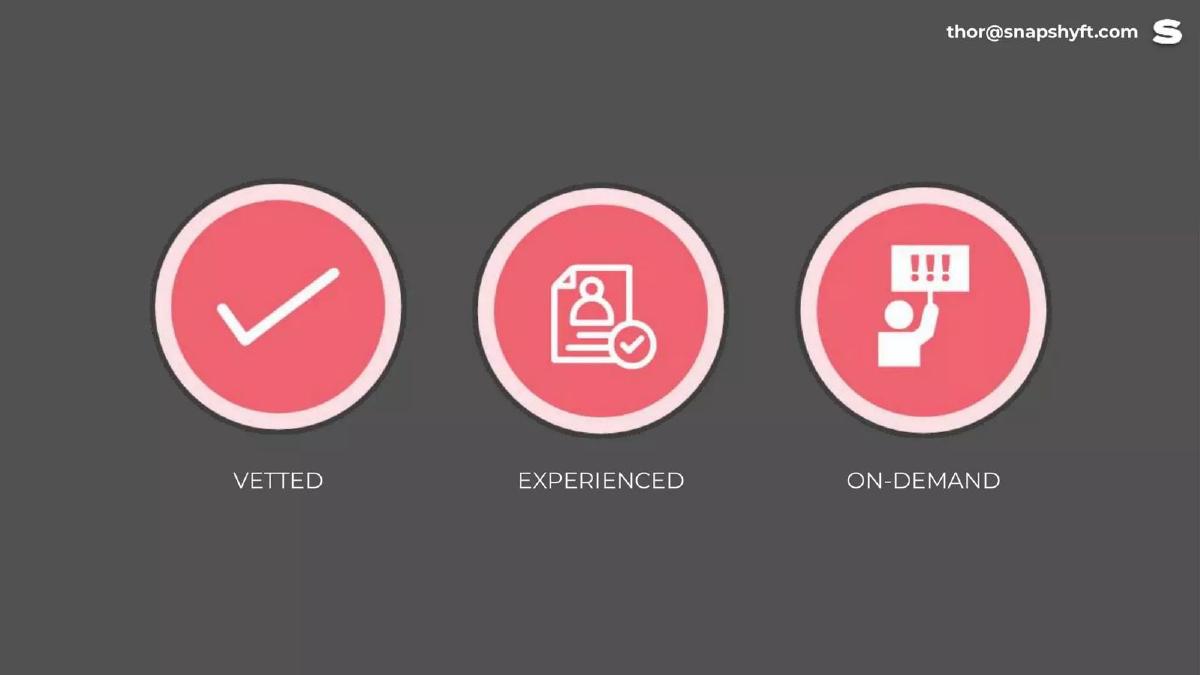
This slide uses three icons to define the worker pool: Vetted , Experienced , and On-Demand . This addresses the primary concerns of hospitality managers: reliability and skill. It suggests that SnapShyft isn't just a job board, but a curated marketplace where the quality of labor is guaranteed.
Slide 5: The Technology – The 'How'
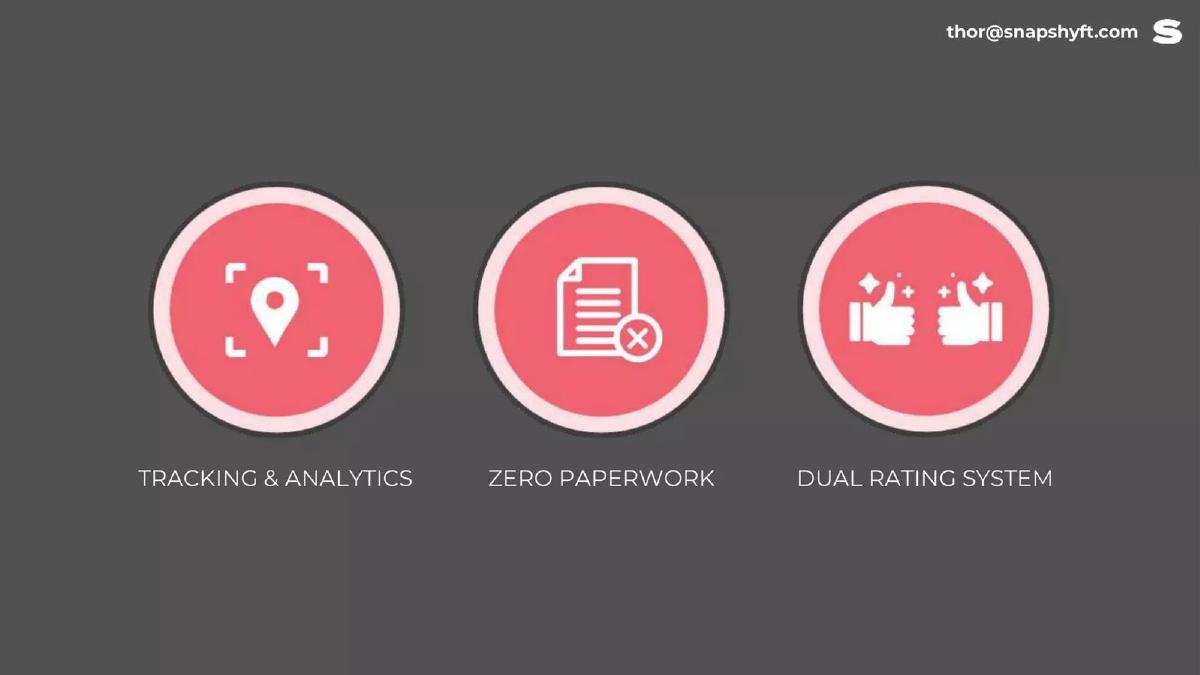
SnapShyft highlights three technical features that streamline the staffing process: Tracking & Analytics , Zero Paperwork , and a Dual Rating System . The 'Dual Rating System' is particularly important for marketplaces, as it ensures accountability for both the worker and the venue, theoretically driving up the quality of the ecosystem over time.
Slide 6: Operational Excellence
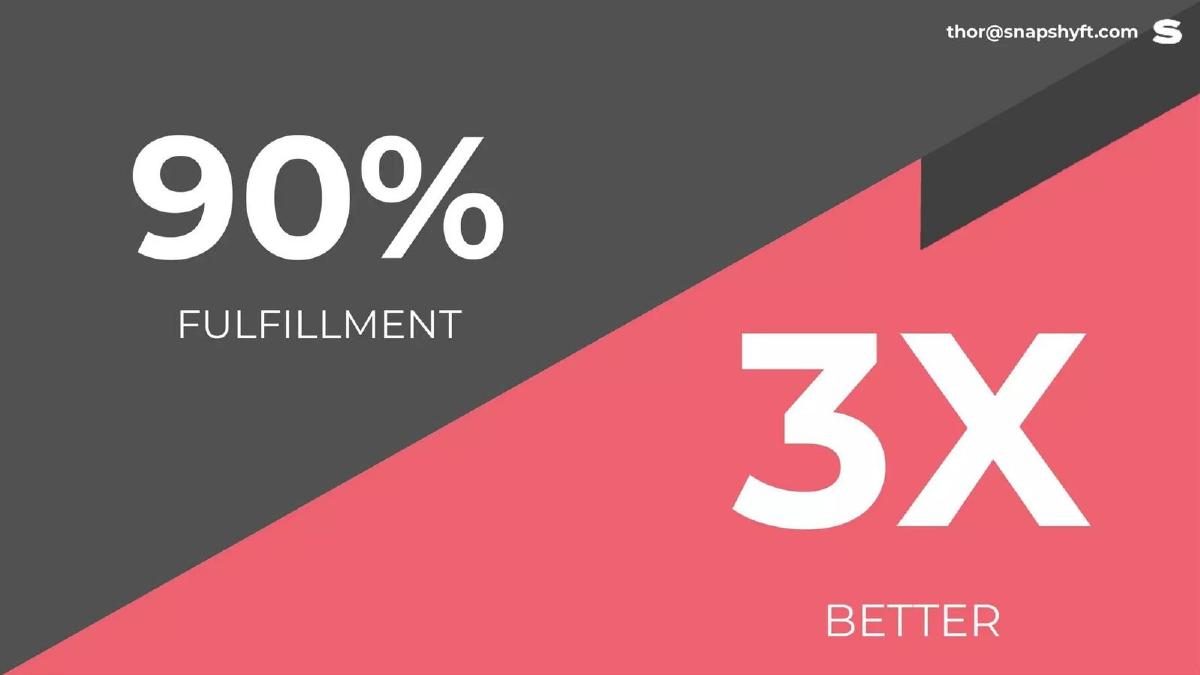
This slide doubles down on the metrics. It claims a 90% Fulfillment rate and states this is 3X Better than the industry average. In the staffing world, 'fill rate' is the most critical KPI. If a restaurant needs five servers and only three show up, the platform has failed. By claiming 90%, SnapShyft is positioning itself as a utility rather than a luxury.
Slide 7: The Team
The team slide is remarkably sparse. It lists Thor (CEO) , Steph (COO) , and Tony (CTO) . While the photos are professional, there is zero text regarding their pedigree. In a Seed round, investors usually look for 'Why this team?' This slide relies entirely on the traction shown in previous slides to justify the founders' capability.
Slide 8: Branding Interstitial
Slide 8 is a simple logo transition. In a 10-slide deck, using a full slide for just a logo is a questionable use of real estate, though it may have served as a visual break during a live presentation.
Slide 9: Product UI and Core Values
This slide shows the mobile app interface. It lists available shifts: Dishwasher for $103.50 and Cook/Chef for $94.50. It also shows a 'S 500' currency or point system, suggesting a gamified or internal credit element. The keywords Reliable , Efficient , and Focused are used to describe the user experience.
Slide 10: The Summary
The final slide repeats the core metrics from Slide 2: 30% MoM and $375K ARR . This reinforces the 'traction-first' narrative. However, there is no 'Ask' here. It does not state how much money they are raising or what the milestones for the next 18 months will be.
What Works in the SnapShyft Deck
Metric Dominance: Leading and ending with 30% MoM growth is a powerful way to frame the conversation. It shifts the investor's mindset from 'Will this work?' to 'How big can this get?'
Clarity of Industry: The deck never wanders. It is clearly about hospitality and foodservice labor. The logos and the UI screenshots (Dishwasher/Cook) make the niche undeniable.
Fulfillment Focus: Highlighting the 90% fulfillment rate (Slide 6) attacks the biggest pain point in the gig economy: ghosting. This is a 'killer stat' for this specific sector.
What is Missing from the SnapShyft Deck
The Financial Ask: This is the most glaring omission. A pitch deck is a fundraising tool; not stating the amount being raised or the planned use of funds is a missed opportunity to set the terms of the deal.
Market Size (TAM): There is no mention of how large the hospitality staffing market is. While investors likely know it is big, quantifying the specific opportunity in their target regions would add weight to the '30% growth' claim.
Competitive Landscape: The deck claims to be 3X better than the 'industry average,' but it doesn't name competitors like Shiftgig or Wonolo, which were active during this period. Investors want to know how a startup defends its moat against well-funded incumbents.
Founder Pedigree: The team slide (Slide 7) provides no context. If the CEO had 20 years in restaurant management or the CTO had built marketplaces before, that information should be on the slide to build trust.
What a Founder Should Copy
The 'Wall of Logos': If you have enterprise clients, display them prominently and early. Slide 3 does more for SnapShyft’s credibility than any amount of 'Problem/Solution' text could.
Visual Simplicity: The deck uses a consistent color palette (charcoal and coral) and avoids 'wall of text' slides. Each slide has one clear message.
Focus on Unit Economics/Efficiency: By focusing on fulfillment rates and run rates, the deck proves the business model is functional. Founders should copy the habit of identifying the one 'North Star' metric for their industry (in this case, fulfillment) and making it a centerpiece of the pitch.
Final Thoughts
SnapShyft’s deck is a 'traction teaser.' It is likely designed to secure a first meeting rather than provide a comprehensive due diligence package. While it leaves many questions unanswered—particularly regarding the team and the market—the strength of the 30% MoM growth figure is often enough to get a Seed-stage investor to pick up the phone.
Frequently asked questions
- What is SnapShyft's primary business model?
- Based on the catalogue listing and Slide 9, SnapShyft operates as a Staffing-as-a-Service marketplace. It connects foodservice and hospitality businesses with vetted, on-demand workers for short-term or seasonal shifts. The app interface shows specific shifts like 'Dishwasher' for $103.50, suggesting a transaction-based or commission-based revenue model on labor hours fulfilled.
- How does SnapShyft differentiate itself from traditional staffing agencies?
- SnapShyft differentiates through its fulfillment rate and technology. Slide 6 highlights a 90% fulfillment rate, which it claims is 3X better than the industry average. Additionally, Slide 5 emphasizes 'Zero Paperwork,' 'Tracking & Analytics,' and a 'Dual Rating System,' suggesting a more automated, data-driven approach than legacy manual staffing firms.
- What kind of traction does the company have?
- The company demonstrates both financial and brand traction. Financially, it reports a $375,000 annual run rate and 30% MoM growth (Slide 2). Brand-wise, Slide 3 displays a 'wall of logos' including major venues and service providers like the Indiana State Fairgrounds, Indianapolis Symphony Orchestra, and Tijuana Flats.
- Who are the founders of SnapShyft?
- The leadership team presented on Slide 7 includes Thor (CEO), Steph (COO), and Tony (CTO). While the slide provides their photos and titles, it does not list their professional backgrounds, previous exits, or specific industry experience, which is a notable omission for a Seed-stage deck.
- What is missing from this pitch deck?
- The deck is missing several standard fundraising components: a Market Size slide (TAM), a Competitor Matrix, a Go-To-Market strategy, and a Financial Ask. It also lacks a 'Problem' slide that quantifies the pain point, choosing instead to lead directly with traction and solution features.