Snapcommerce (now Super.com) presents a masterclass in the 'wedge' strategy. By 2021, the company had already proven its model with Snaptravel, generating massive scale through 1:1 messaging. This 18-slide deck focuses on the horizontal expansion of that core technology into 'Goods' and other verticals. The narrative is built on high-velocity growth metrics, including a projected $1B in total mobile sales for 2021 and a world-class NPS of 70. While the deck is light on detailed financial projections and unit economics, it leans heavily on the founders' previous exits and a high-profile endors…
Key takeaways
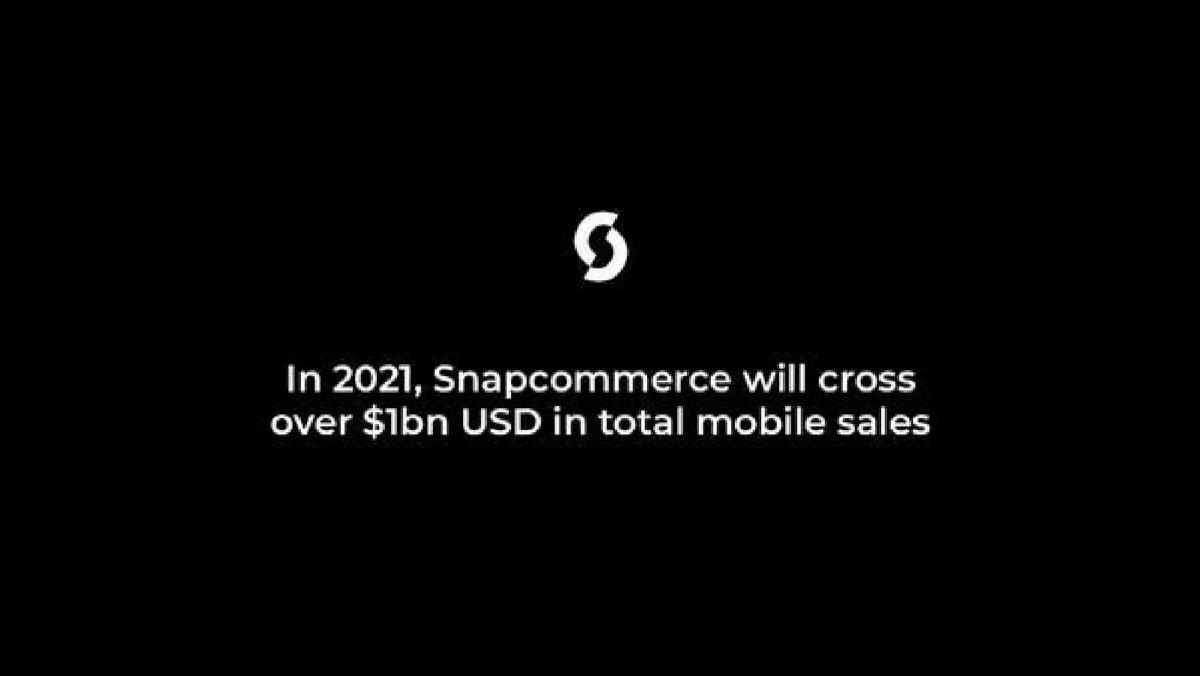
- The company projected crossing $1bn USD in total mobile sales in 2021 (Slide 3).
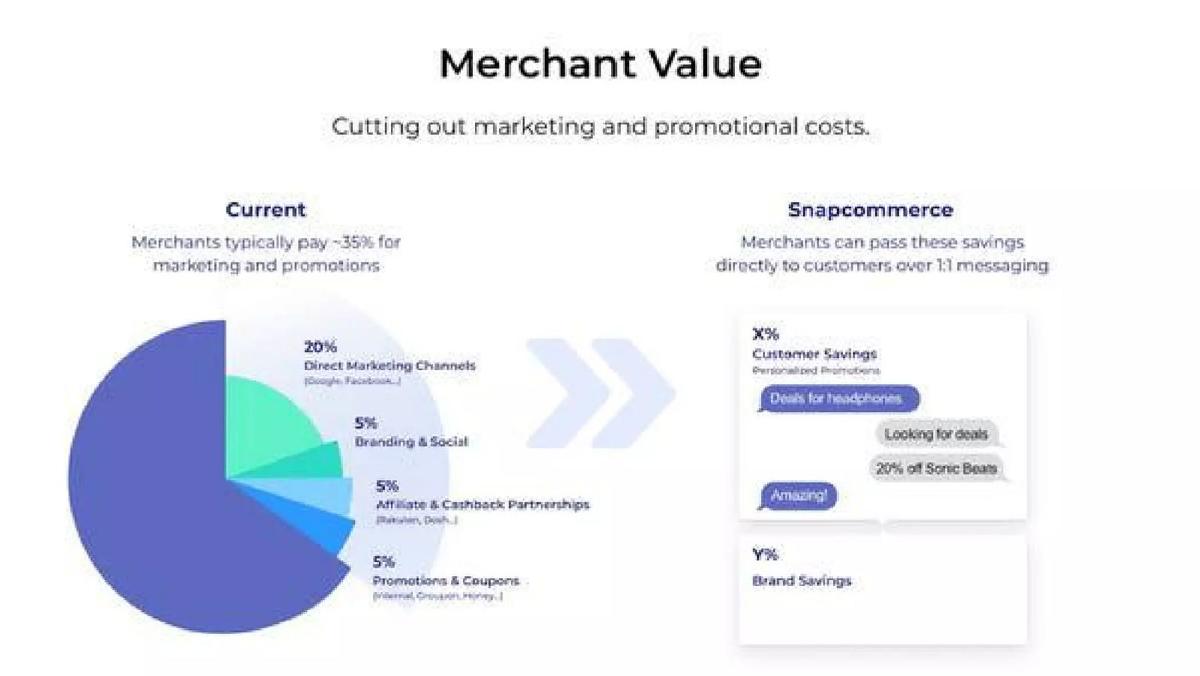
- Snapcommerce positions its value proposition as cutting out the ~35% of costs merchants typically pay for marketing and promotions (Slide 5).
- The core product, Snaptravel, achieved 10 million+ users and 100 million+ messages exchanged within four years of launch (Slide 8).
- Snapcommerce claims a 'world-class' NPS of 70, significantly higher than the industry average of 23 (Slide 9).
- The platform demonstrates high retention with a 40%+ re-engagement rate within 6 months of the first transaction (Slide 9).
- Expansion plans include a 'Snapcommerce Subscription' offering discounted offers and a concierge service (Slide 14).
- The founding team features Hussein Fazal, who previously built and sold AdParlor for over $100M, and Henry Shi, a former Google and LendUp engineer (Slide 17).
- The company leverages a unique 'unfair advantage' through brand ambassador Stephen Curry (Slide 18).
The Growth Round Narrative
The Snapcommerce (now Super.com) deck is a high-signal, low-noise presentation designed for a Series B or 'Growth Round.' At this stage, investors are looking for proof of a repeatable engine and a clear path to a massive exit. Snapcommerce provides this by showing a 'wedge' that has already reached significant scale—Snaptravel—and then explaining how that same engine will conquer the rest of the commerce world.
The Hook and the $1B Milestone
Slide 1 to 3: The deck opens with a minimalist aesthetic. Slide 2 sets the vision: "We are changing the way people shop on their phones." This is immediately followed by a massive 'flex' on Slide 3: "In 2021, Snapcommerce will cross over $1bn USD in total mobile sales." By putting the billion-dollar figure on the third slide, the founders establish immediate credibility and set the scale of the opportunity before explaining the mechanics of the business.
Problem and Merchant Value Proposition
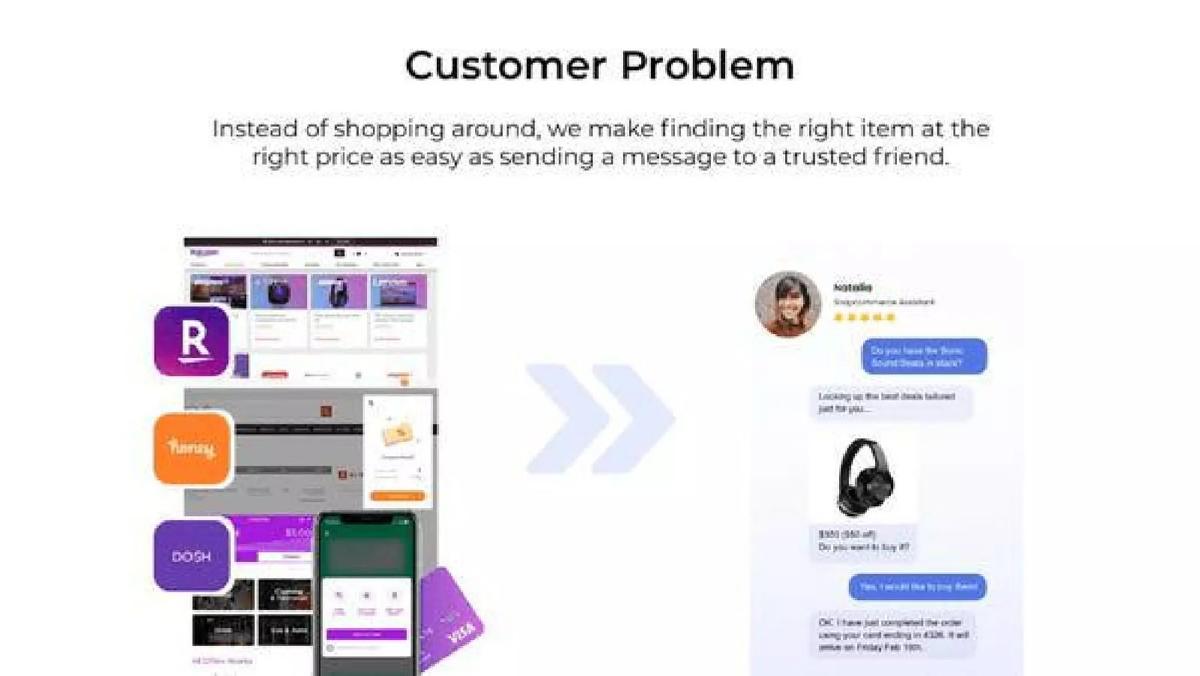
Slide 4 to 5: The 'Customer Problem' is framed as the friction of 'shopping around.' Snapcommerce proposes a conversational interface as the solution, making buying as easy as 'sending a message to a trusted friend.' Slide 5 is perhaps the most important strategic slide in the deck. It breaks down the 'Merchant Value.' It claims merchants typically pay ~35% for marketing and promotions (20% to direct channels like Google/Facebook, 5% to branding, 5% to affiliates, and 5% to coupons). Snapcommerce's 1:1 messaging model allows merchants to bypass these costs and pass savings directly to the customer. This is a classic 'disintermediation' play.
The Proof Point: Snaptravel
Slide 6 to 9: The deck then transitions into its first vertical. Slide 7 shows the UI of Snaptravel, emphasizing the messaging interface on mobile devices. Slide 8 provides the 'Key Metrics' for this vertical: 4 years since launch, 100 million+ messages, 10 million+ users, and presence in 150+ countries. They also highlight $75 million in customer savings. Slide 9 focuses on 'Customer Delight,' showcasing an NPS of 70 (vs. an industry average of 23) and a 40%+ re-engagement rate. These numbers are intended to prove that the conversational commerce model isn't just a gimmick—it builds superior loyalty compared to traditional e-commerce.
Expansion and the AI Engine
Slide 10 to 14: Having proven the model in travel, the deck moves to the future. Slide 11 and 12 announce the launch of 'Goods' in 2021. Slide 13 suggests a move into 'Additional Verticals.' Slide 14 introduces the 'Snapcommerce Subscription,' a move toward recurring revenue and a 'white-glove concierge service' that ties the various verticals together. This transition from a single-product company to a platform company is a core requirement for a growth-stage valuation.
The Technology and the Team
Slide 15 to 18: The 'how' is addressed on Slide 16. The company uses AI to process NLP data, purchase history, and search data to provide 'personalized deal recommendations.' This positions the company as a tech-first play rather than a travel agency. The deck concludes with the 'Strong Founding Team' on Slide 17. Hussein Fazal's background (selling AdParlor for $100M+) and Henry Shi's technical pedigree (Google, LendUp) provide the necessary 'founder-market fit.' Finally, Slide 18 highlights Stephen Curry as a brand ambassador, providing the company with an 'unfair advantage' in terms of consumer reach and brand recognition.
What Works in This Deck
The 'Billion Dollar' Anchor: Starting with the $1B sales projection (Slide 3) immediately qualifies the company as a potential 'unicorn' or 'decacorn' candidate. It forces the investor to take the rest of the deck seriously.
Clear Economic Incentive: Slide 5 clearly explains why the business exists. It isn't just about a 'better UI'; it's about a fundamental shift in the cost of customer acquisition. By quantifying the 35% 'marketing tax' that merchants pay, they make their value proposition undeniable.
High-Velocity Metrics: The combination of 10M users and a 70 NPS is rare. Usually, as a company scales, NPS drops. Showing that they have maintained 'world-class' satisfaction at scale is a strong indicator of a healthy product-market fit.
What is Missing
Unit Economics: While the deck mentions total sales and merchant savings, it does not explicitly state the company's take rate, CAC (Customer Acquisition Cost), or LTV (Lifetime Value). Investors in a growth round would typically want to see that the $1B in sales is being generated profitably or with a clear path to profitability.
The Competitive Landscape: The deck ignores competitors. While they mention 'larger players' on Slide 18, they don't name them or explain how they will defend their moat against Amazon, Expedia, or emerging social commerce features on Instagram and TikTok.
The Ask: There is no slide detailing how much they are raising or how they plan to allocate the capital. While common in 'leaked' decks, its absence makes the deck feel more like a company overview than a specific fundraising tool.
What a Founder Should Copy
The 'Wedge' Narrative: If you are building a multi-product platform, follow this structure: show the massive vision, show one vertical where you have already won, and then explain how that success is transferable to other markets.
Visualizing the Value Chain: Slide 5 is a perfect example of how to visualize a business model. Instead of a wall of text, use a simple pie chart to show the 'waste' in the current system and how your company reclaims that value.
Social Proof: If you have high-profile investors or advisors, don't just list them in small text. Snapcommerce dedicated a full slide to Stephen Curry (Slide 18), using his celebrity to imply a level of 'unfair advantage' that other startups can't replicate.
Frequently asked questions
- What is the core business model of Snapcommerce?
- Snapcommerce operates a message-driven mobile commerce platform. It uses AI to facilitate 1:1 messaging between consumers and the platform to find deals. By bypassing traditional marketing channels like Google and Facebook, which cost merchants roughly 35%, Snapcommerce allows merchants to pass those savings directly to the consumer while taking a cut of the transaction.
- How does the company plan to expand beyond travel?
- The deck outlines a horizontal expansion strategy. Slide 12 explicitly mentions the launch of 'Goods' in 2021, and Slide 13 notes the intent to move into 'Additional Verticals' over time. They also plan to launch a subscription service (Slide 14) to create a unified 'white-glove' experience across all their product offerings.
- What are the key performance indicators (KPIs) shown?
- The primary KPIs include $1B+ in projected 2021 sales, 10M+ users, 100M+ messages exchanged, and $75M+ in customer savings. Engagement metrics are also strong, with a 70 NPS and a 40% re-engagement rate, which the company contrasts against an industry average return rate of less than 25%.
- Who are the notable investors and team members?
- The team is led by Hussein Fazal (CEO) and Henry Shi (CTO). Investors include iNovia Capital, Lightbank, Bee Partners, and Telstra Ventures. A significant highlight in the deck is the involvement of NBA star Stephen Curry, who is listed as both an investor/advisor and a brand ambassador.
- What is missing from this pitch deck?
- The deck is notably missing a specific 'Ask' slide detailing how much capital is being raised and the valuation. It also lacks a detailed slide on unit economics (CAC/LTV), a comprehensive competitive landscape, and a multi-year financial forecast. These are likely reserved for a follow-up data room.