DoControl’s Series B deck is a masterclass in functional storytelling, prioritizing specific enterprise pain points over abstract market projections. By focusing on the 'how'—specifically through no-code workflows and automated remediation—the deck positions the platform as a necessary layer above existing investments like CASB and DLP. The 2022 raise of $30M was supported by a presentation that balances high-level risk metrics (such as the 10M assets in shared apps cited on slide 3) with granular solutions for insider threats and third-party vendor management. While the deck lacks a traditio…
Key takeaways
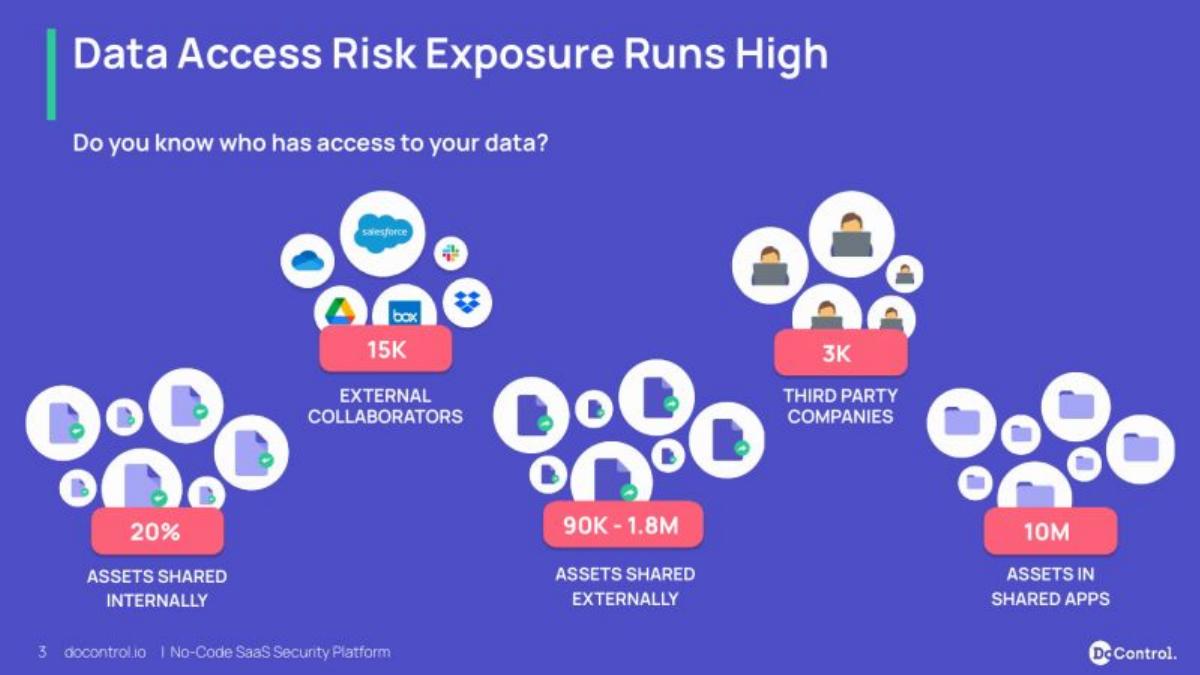
- The deck identifies a massive scale problem, noting that organizations can have 10M assets in shared apps (Slide 3).
- DoControl positions itself as a value-add to existing security stacks including SIEM, SOAR, EDR, and IDP (Slide 9).
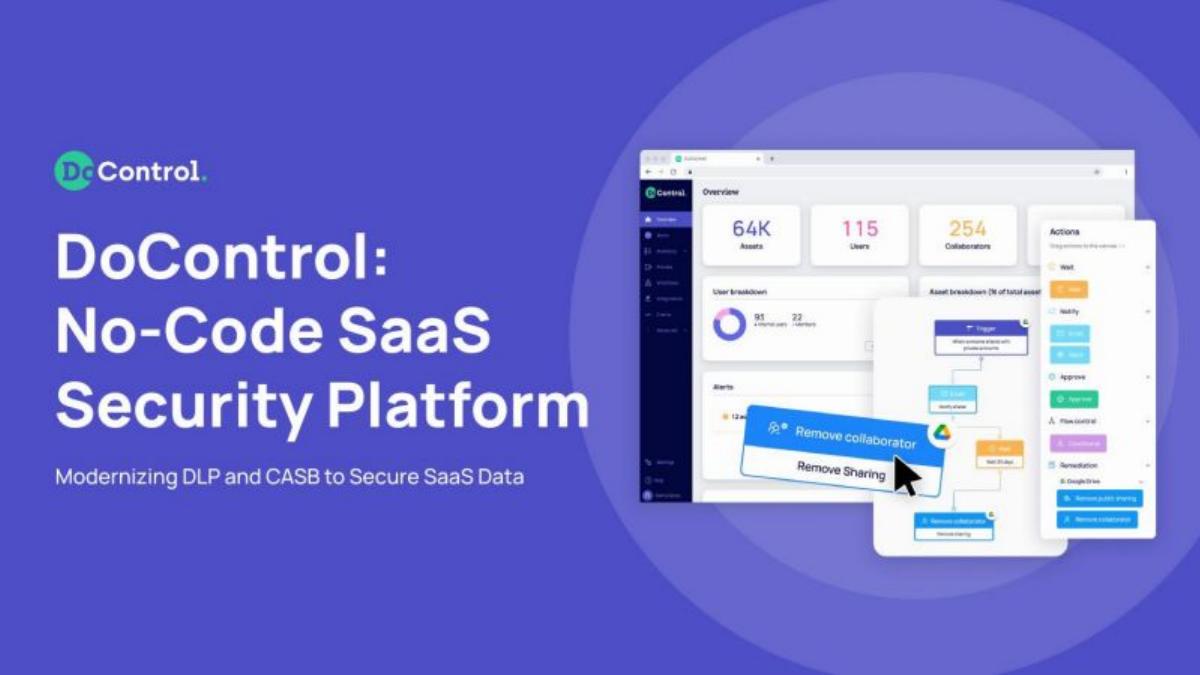
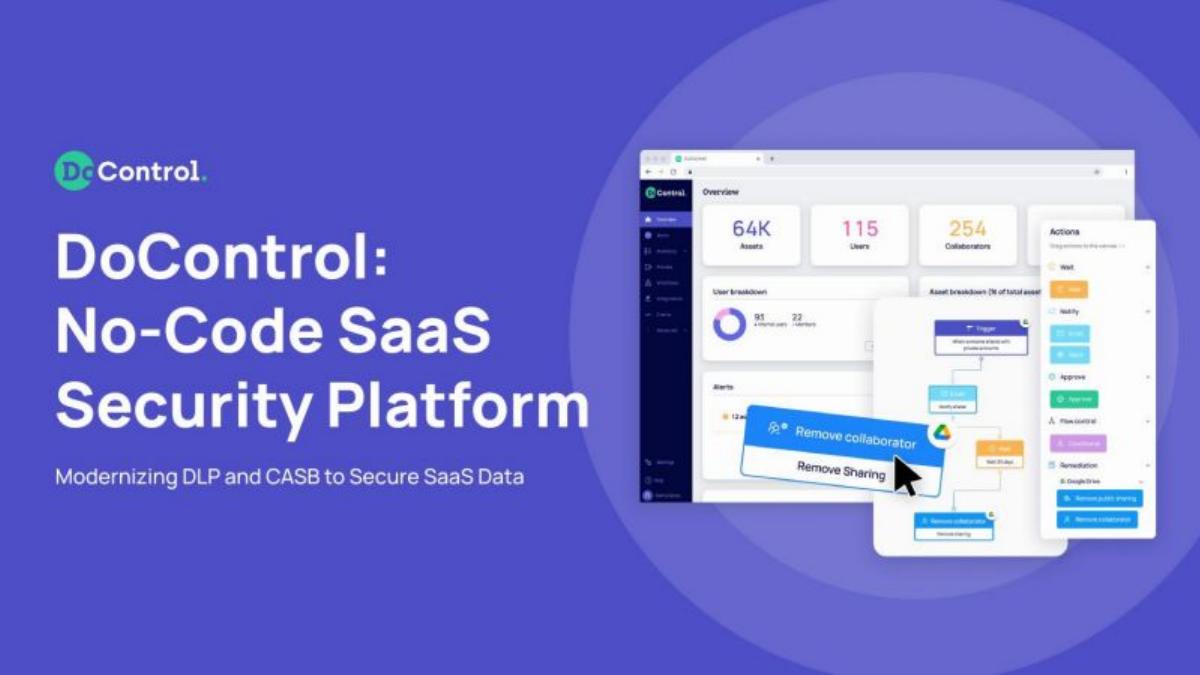
- The platform emphasizes a no-code approach to modernizing Data Loss Prevention (DLP) and Cloud Access Security Brokers (CASB) (Slide 1).
- Specific focus is placed on the 'forgotten' risk of third-party vendor access after projects are completed (Slide 14).
- The solution utilizes a Slackbot to bridge the gap between security teams and end-user business context (Slide 16).
- Insider threat protection is framed as a cross-departmental integration between HR and security platforms (Slide 18).
- The deck highlights industry validation through six major company awards from 2021 and 2022 (Slide 25).
- The product is marketed as 'agentless' and 'low-touch,' catering to enterprise scalability requirements (Slide 22).
The Series B Strategy: Product Depth Over Market Fluff
DoControl’s 2022 Series B deck, which secured $30M, reflects a company that has moved past the 'visionary' stage and into the 'execution' stage. In a Series B, investors are looking for proof that the product can handle the complexities of the enterprise. This deck achieves that by eschewing the typical 'market size' slides in favor of deep-dives into specific security use cases. By the time an investor reaches slide 20, they have a clear understanding of exactly how the software interacts with a Google Drive file or a departing employee's Slack account.
Slide 1: The Identity Statement
The cover slide establishes DoControl as a 'No-Code SaaS Security Platform.' It immediately identifies its targets: the modernization of DLP (Data Loss Prevention) and CASB (Cloud Access Security Broker). The visual includes a dashboard showing '64K Assets' and '254 Collaborators,' signaling that the platform is built to manage scale. The inclusion of a 'Remove collaborator' workflow snippet reinforces the 'no-code' promise—security is managed via UI, not scripts.
Slide 3: Quantifying the Chaos
Slide 3, titled 'Data Access Risk Exposure Runs High,' is the deck’s primary 'Problem' slide. It uses specific, large-scale numbers to create urgency: 15K external collaborators, 3K third-party companies, and 10M assets in shared apps. By framing the problem through the lens of 'who has access to your data,' DoControl targets the anxiety of the modern CISO who oversees thousands of employees using hundreds of SaaS tools.
Slide 5: The Competitive Gap
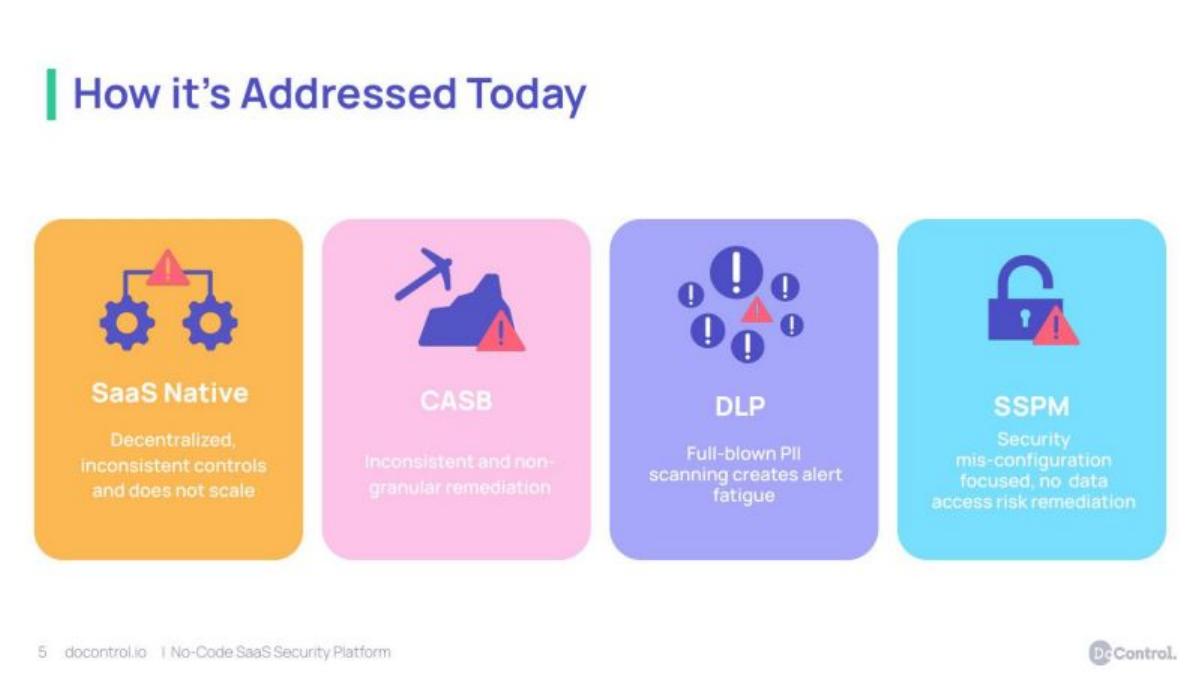
This slide is a tactical teardown of the status quo. It categorizes existing solutions into four buckets: SaaS Native, CASB, DLP, and SSPM. Each is dismissed with a specific flaw—for example, DLP is accused of creating 'alert fatigue,' while SSPM is noted for having 'no data access risk remediation.' This sets the stage for DoControl to be the 'all-in-one' fix for these fragmented approaches.
Slides 7 & 9: The Integration Layer
Slide 7 introduces the platform visually, but Slide 9 is more strategically important. It positions DoControl as a 'Value-add to Existing Security Investments.' By showing connections to SIEM, SOAR, EDR, and IDP, the company assures investors (and customers) that they don't need to 'rip and replace' their current stack. This is a critical enterprise sales strategy that reduces friction in the procurement process.
Slide 11: The Three Pillars
DoControl breaks its functionality into three clear categories: Visibility and Control, Continuous Monitoring, and Automated Remediation. The tagline at the bottom, 'Enforce consistent data access security from a single control point,' summarizes the entire business model in one sentence. The visuals here show the platform sitting between users and a variety of SaaS icons (Slack, Salesforce, Box, Google Drive, GitHub), emphasizing its breadth.
Slides 14, 16, 18, & 20: The Use Case Deep Dives
These four slides represent the 'meat' of the deck. Each follows a 'Problem/Solution' format for a specific enterprise headache:
Third-party Vendor Management (Slide 14): Focuses on the risk of 'forgotten' access after a project ends. · Automate Access Workflows (Slide 16): Introduces the DoControl Slackbot, which asks users for context on their actions, solving the 'security vs. business context' gap. · Insider Threat Protection (Slide 18): Explains the integration with HR systems to monitor departing employees. · Enforce Least Privilege (Slide 20): Addresses the 'labor-intensive' nature of removing risky permissions at scale.
This level of detail is rare in early-stage decks but is exactly what Series B investors need to see to believe in the product's stickiness.
Slide 22: Enterprise Readiness
Titled 'Built for the Enterprise,' this slide uses three icons to highlight that the platform is 'Agentless,' 'Future-proofed,' and 'Scalable.' These are the 'check-the-box' requirements for large-scale corporate deployments. It shifts the conversation from 'what it does' to 'how easily it fits into a large organization.'
Slide 25: Third-Party Validation
The 'Company Awards' slide features six badges from 2021 and 2022, including 'CRN 10 Hottest Cybersecurity Startups' and 'Global Infosec Awards Winner.' For a Series B company, this social proof serves to validate that the industry—not just the founders—believes the technology is significant.
What DoControl Does Well
The deck is exceptionally disciplined. It avoids the trap of trying to explain the underlying AI or code, focusing instead on the workflow . By showing the Slackbot and the no-code interface, they make a complex security product feel accessible. The use of specific numbers (like the 10M assets on Slide 3) provides a sense of the 'gravity' of the problem they are solving. Furthermore, the decision to dedicate four full slides to specific use cases (Slides 14-20) demonstrates a deep understanding of their customer's daily struggles.
What Is Missing from the Deck
As this is a 13-slide subset of a 26-slide deck, several standard components are absent. There is no Team Slide , which is usually a requirement to see the pedigree of the founders in a $30M round. There is no Financials or Traction Slide —we don't see ARR growth, customer logos, or churn rates. Most importantly for a Series B, the 'The Ask' slide is missing from this selection; we know from the catalogue that they raised $30M, but the deck subset doesn't show how they intended to spend it (e.g., sales expansion vs. R&D). Additionally, while they mention competitors like CASB and DLP generally, they do not name specific market rivals.
Founder's Guide: What to Copy
Use the 'Value-Add' Frame: If you are building a tool in a crowded space (like security or DevOps), don't position yourself as a replacement for the giants. Copy Slide 9’s approach: show how you make the existing, expensive tools the customer already bought work better. It makes the 'Yes' much easier for a CISO.
The Slackbot Strategy: If your product requires input from non-technical employees, show the interface where that happens. Slide 16’s mention of a Slackbot is a powerful way to show that your 'security' tool won't be hated by the marketing or sales teams who just want to share a file.
Quantify the 'Invisible' Problem: Most companies don't know they have 10 million shared assets. By putting a number on the 'Data Access Risk' (Slide 3), DoControl creates a problem that the viewer feels they must solve immediately. If you can quantify a hidden risk for your prospect, you have a winning 'Problem' slide.
Focus on Remediation, Not Just Alerts: The deck repeatedly hits the point that 'alerts' aren't enough (Slide 5). If your software actually does the work rather than just pointing at it, make that your central theme. In a world of alert fatigue, 'Automated Remediation' (Slide 11) is a premium value proposition. Specific Use Cases Over General Features: Instead of a long list of features, use the Slide 14-20 format. Pick the four biggest headaches your customers have and explain the specific 'before and after' for each. It proves you have talked to real users. Agentless is a Feature: If your software doesn't require a complex installation on every employee's laptop, shout it from the rooftops as DoControl does on Slide 22. In the enterprise, 'low-touch' is often more important than 'high-feature.'
Frequently asked questions
- What is the primary problem DoControl aims to solve?
- According to slide 3, the primary problem is the high exposure of data access risk. The deck quantifies this by showing that companies often deal with 15K external collaborators, 3K third-party companies, and up to 10 million assets within shared applications. The core issue is that existing tools like CASB and DLP provide inconsistent controls or create alert fatigue without offering granular remediation.
- How does DoControl differentiate itself from traditional security tools?
- Slide 5 explicitly critiques current methods: SaaS-native controls are decentralized, CASBs are non-granular, DLPs create alert fatigue, and SSPMs lack data access risk remediation. DoControl differentiates by being a 'no-code' platform that provides a single control point for visibility, continuous monitoring, and automated remediation (Slide 11), rather than just another monitoring tool.
- What role does automation play in their security model?
- Automation is central to the DoControl value proposition. Slide 16 explains that security teams often lack business context for alerts. DoControl uses a Slackbot to inquire directly with end-users, allowing them to approve or reject actions. This automates the 'labor-intensive' process of manually querying users to understand if their data sharing is legitimate or problematic.
- How does the platform handle departing employees?
- Slide 18 addresses insider threat protection. The platform integrates with HR systems to sync lists of departing employees. It then uses anomaly detection to identify inappropriate behavior and automatically triggers security workflows to prevent these individuals from exfiltrating data from SaaS applications before they leave the company.
- Is DoControl intended to replace existing security infrastructure?
- No. Slide 9 illustrates that DoControl is a 'Value-add to Existing Security Investments.' It is designed to sit alongside and integrate with HR systems, SIEM (Security Information and Event Management), SOAR (Security Orchestration, Automation and Response), EDR (Endpoint Detection and Response), and IDP (Identity Providers).