DivvyCloud’s 14-slide Series B deck is a study in high-signal enterprise fundraising. Rather than relying on dense financial modeling or market sizing, the deck leans heavily on validation from Fortune 500 clients and industry awards. With a clear focus on the 'how it works' (Slide 3) and specific compliance frameworks (Slide 4), the presentation positions the product as a mission-critical infrastructure layer. The final third of the deck is dedicated entirely to deep-dive customer stories from Autodesk, Fannie Mae, and Twilio, providing concrete evidence of scalability and competitive displa…
Key takeaways
- The deck leads with immediate credibility, showcasing five major industry awards from 2015 to 2019 on the title slide.
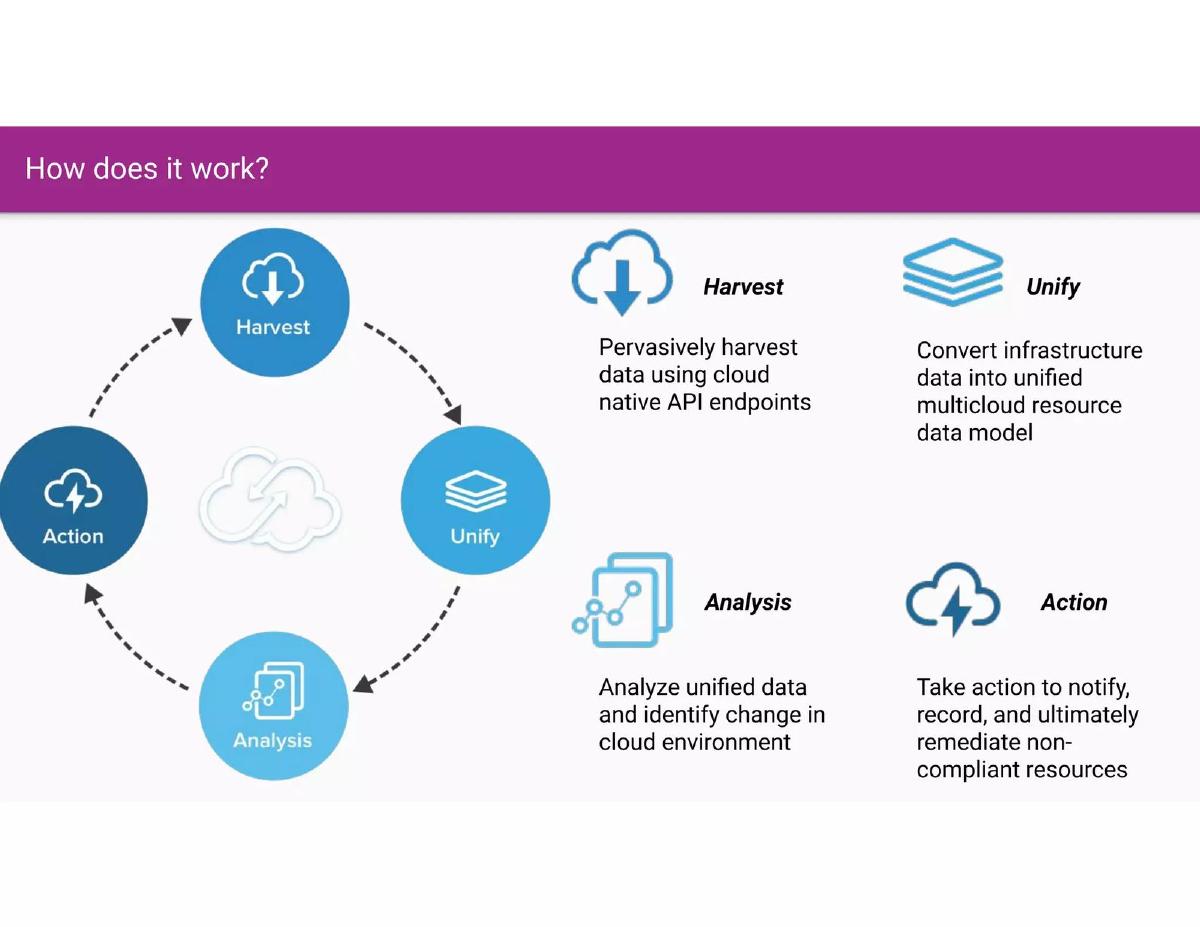
- Product functionality is distilled into a four-stage cycle: Harvest, Unify, Analysis, and Action (Slide 3).
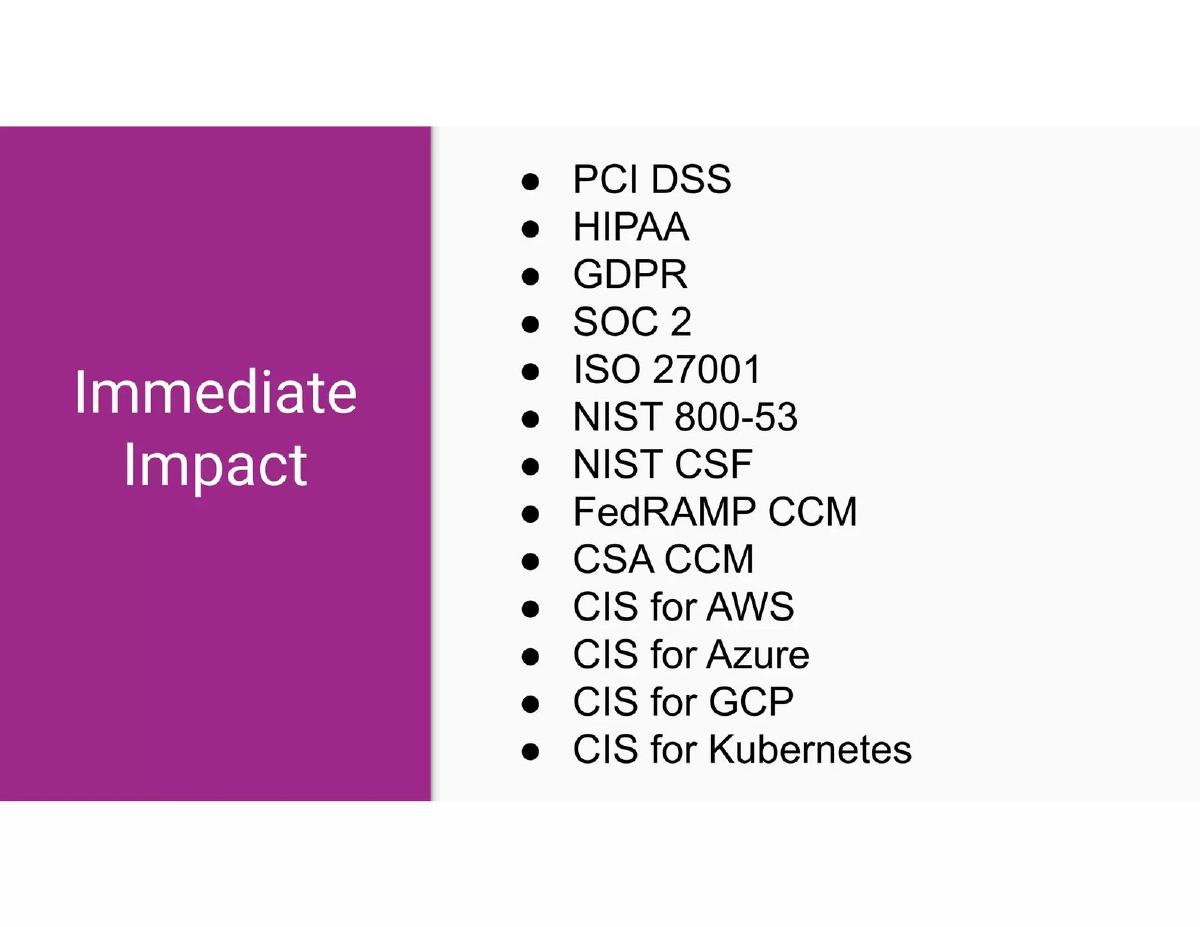
- The company lists 14 specific compliance and security frameworks it supports, including HIPAA, GDPR, and FedRAMP (Slide 4).
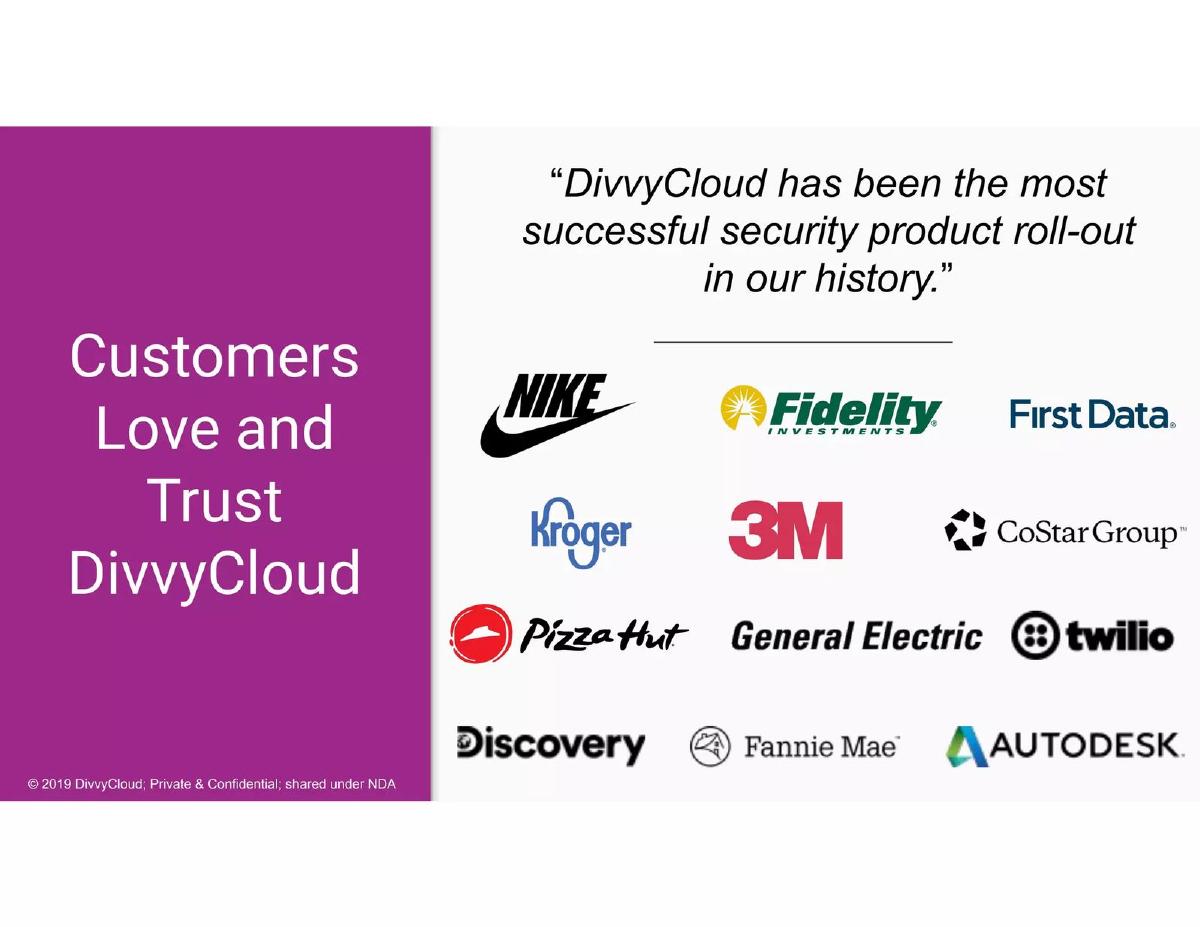
- Social proof is the deck's primary engine, featuring logos from Nike, Fidelity, 3M, and General Electric (Slide 5).
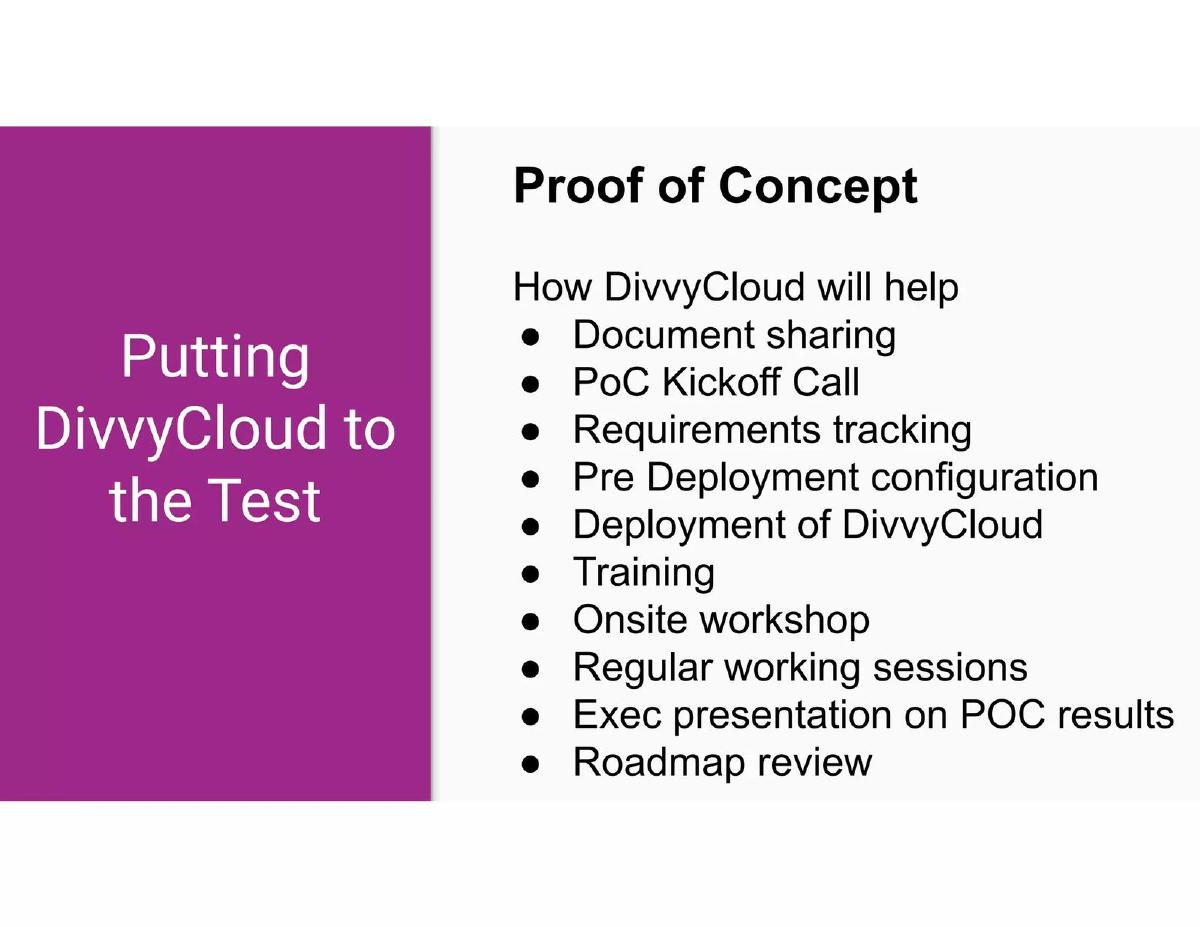
- The 'Proof of Concept' slide outlines a rigorous 10-step onboarding process, signaling enterprise readiness (Slide 6).
- Technical flexibility is highlighted through a comparison of Customer-hosted vs. DivvyCloud-hosted options (Slide 10).
- The deck includes three detailed case studies that highlight specific wins, such as onboarding 400 cloud accounts in one hour for Autodesk (Slide 12).
- There is a complete absence of financial data, team bios, or a specific 'ask' slide in this version of the deck.
The Power of Enterprise Validation
DivvyCloud’s Series B deck, used to secure $20M in 2019, is a focused 14-slide presentation that eschews the typical startup narrative for a more industrial, enterprise-ready tone. The deck is less about a 'vision' and more about 'proven execution.' By the time a company reaches Series B, investors are looking for repeatable sales motions and evidence that the product can survive the rigors of a Fortune 500 IT environment. DivvyCloud delivers this through a heavy emphasis on compliance, architecture, and deep-dive case studies.
Slides 1-2: Credibility and Scope
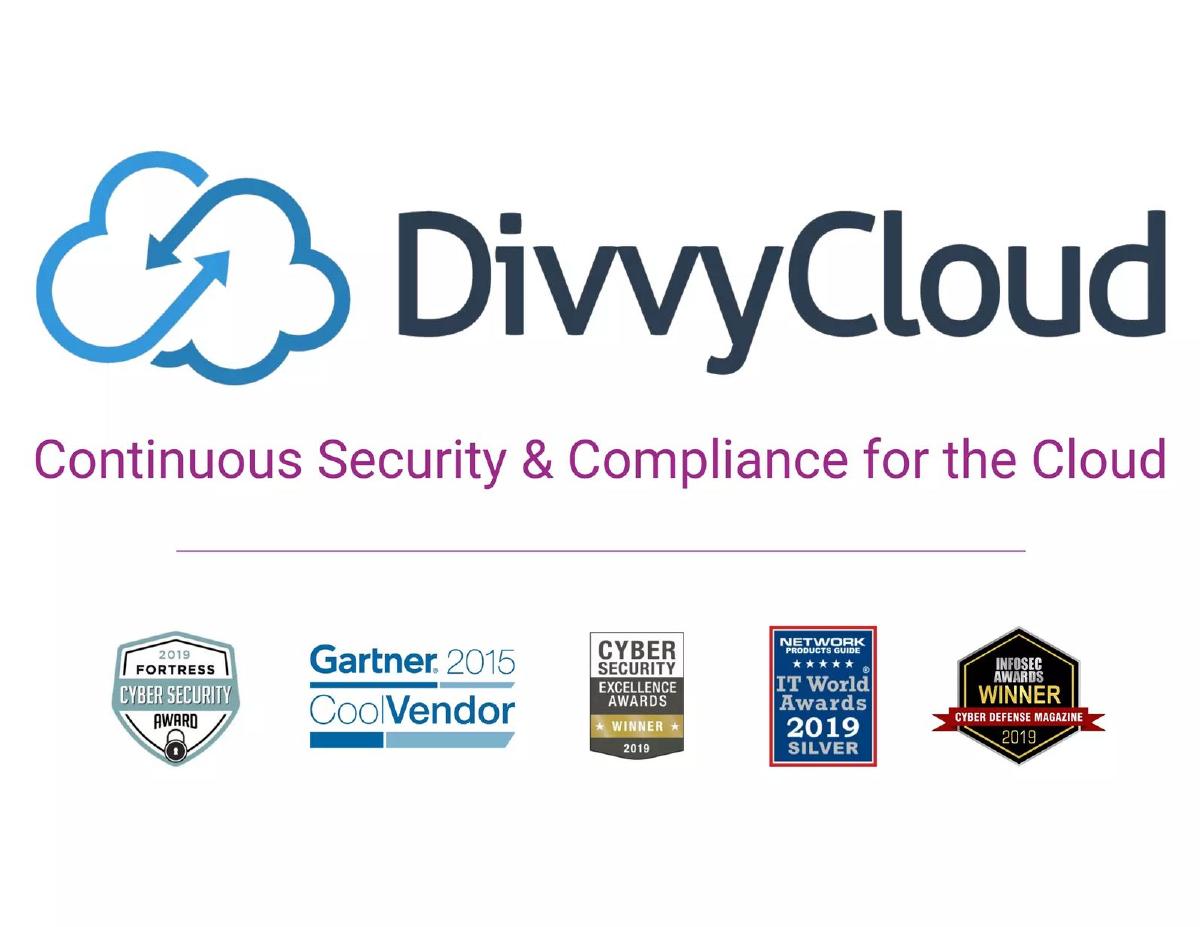
Slide 1 serves as more than just a title page. It features five distinct industry awards, including the 2015 Gartner Cool Vendor and the 2019 Cyber Security Excellence Award. This immediately establishes that the company is not a newcomer but a recognized leader in its niche. The tagline, 'Continuous Security & Compliance for the Cloud,' defines the value proposition in strictly professional terms.
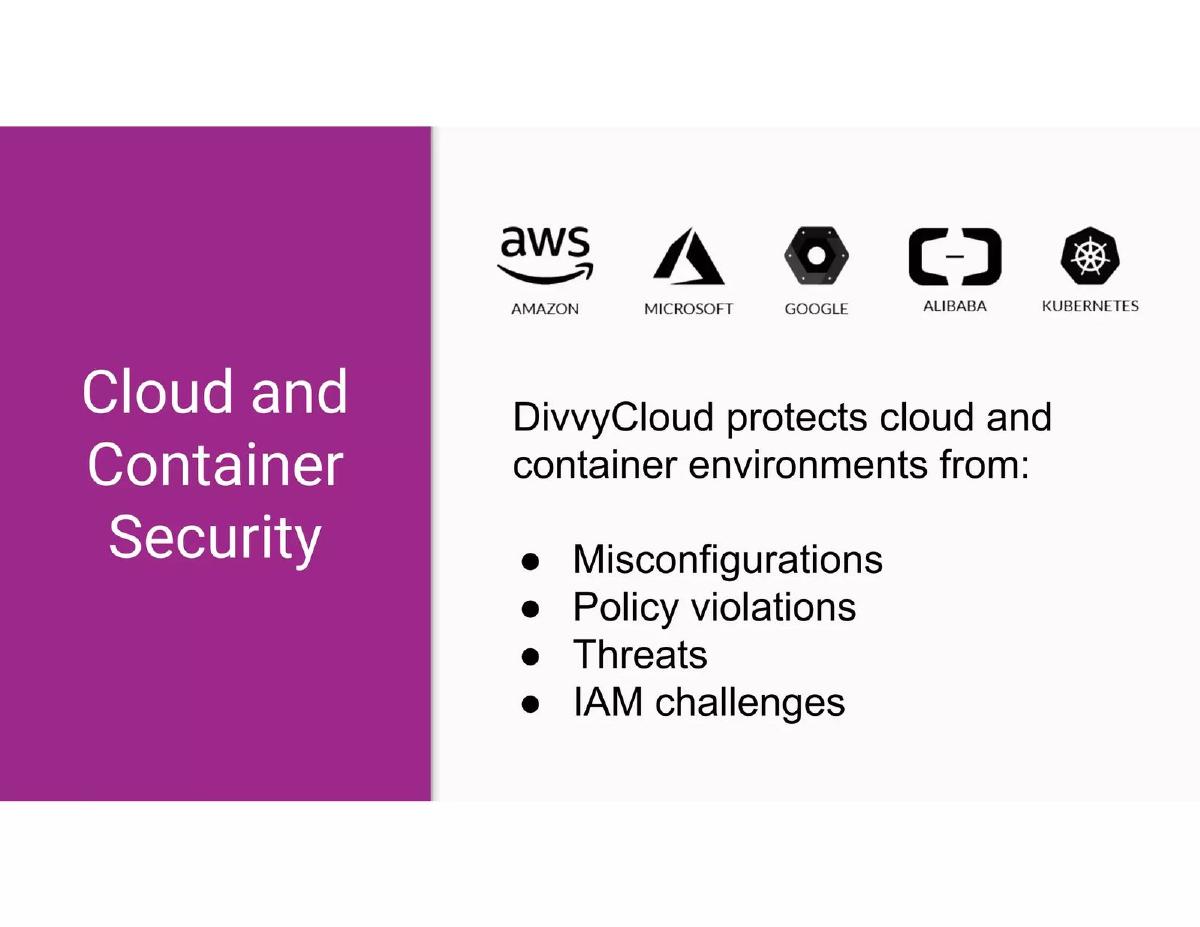
Slide 2 defines the technical scope. It lists the major platforms supported: AWS, Microsoft Azure, Google Cloud, Alibaba Cloud, and Kubernetes. It also identifies the four primary pain points the product addresses: Misconfigurations, Policy violations, Threats, and IAM challenges. This slide is a 'filter'—it tells the investor exactly what the product does and where it lives.
Slides 3-4: The Mechanics of Security
Slide 3 , titled 'How does it work?', breaks the product down into a logical four-step cycle: Harvest, Unify, Analysis, and Action. The inclusion of 'Action' is critical; in the cybersecurity world, tools that only provide alerts are often seen as 'noise.' DivvyCloud positions itself as a tool that can 'remediate non-compliant resources,' moving from passive observation to active defense.
Slide 4 is a simple but effective list of 14 compliance frameworks. By listing PCI DSS, HIPAA, GDPR, and FedRAMP, DivvyCloud signals that it is a horizontal solution capable of serving healthcare, finance, and government sectors. This slide represents the 'Immediate Impact' a customer feels upon deployment.
Slides 5-6: Social Proof and Process
Slide 5 is the 'money slide' for enterprise investors. It features a quote—'DivvyCloud has been the most successful security product roll-out in our history'—surrounded by logos like Nike, Fidelity, 3M, GE, and Twilio. For a Series B investor, this logo wall mitigates almost all perceived product risk.
Slide 6 outlines the 'Proof of Concept' (PoC) process. This is a rare but valuable inclusion in a pitch deck. It shows that DivvyCloud has a standardized, professionalized sales engineering motion. By listing steps like 'Requirements tracking' and 'Exec presentation on POC results,' they demonstrate that they know how to navigate the complex purchasing cycles of large corporations.
Slides 7-11: Technical Deep Dives
Slide 7 is a transition slide with the logo, followed by Slide 8 , 'Freedom To Innovate,' which uses a circular diagram to show the intersection of Continuous Security, IAM Protection, and Threat Protection. This is the most 'marketing-heavy' slide in the deck, aimed at the high-level 'why.'
Slide 9 introduces 'Data Layers,' visualizing the product's reach from Infrastructure and Application up to Identity and Events. This reinforces the 'Unify' message from Slide 3.
Slide 10 provides a detailed comparison of hosting options. In 2019, many enterprises were still hesitant about SaaS-only security tools. By offering a 'Customer-hosted' option deployed via Terraform or CloudFormation, DivvyCloud removes a major barrier to entry for high-security clients. The slide provides a granular breakdown of maintenance, administration, and SLA differences between the two models.
Slide 11 illustrates 'The DivvyCloud Platform' architecture. It highlights the 'Unified ROM' (Resource Object Model) and 'Autonomous Remediation.' This slide is intended for the technical due diligence portion of the investor conversation, showing how data flows from cloud providers through the harvesting layer to the user interface.
Slides 12-14: The Case Studies
The deck concludes with three specific 'Customer Story' slides, which provide the 'proof' for the claims made earlier. Slide 12 (Autodesk) focuses on scale and speed, noting the onboarding of 400 cloud accounts in one hour. Slide 13 (Fannie Mae) focuses on regulation and data volume, claiming that 'Every mortgage in America is protected by DivvyCloud.' Slide 14 (Twilio) focuses on competitive displacement and multi-cloud complexity, noting that DivvyCloud 'Replaced a competitor.'
What Works in the DivvyCloud Deck
Extreme Specificity: The deck doesn't just say 'we do security.' It lists 14 compliance frameworks and 5 cloud platforms. This specificity builds trust. · The 'Action' Differentiator: By repeatedly mentioning 'remediation' and 'action,' the deck separates DivvyCloud from the crowded field of 'visibility' tools. · The Hosting Comparison: Slide 10 is a masterclass in addressing enterprise objections before they are raised. Showing a clear path for customer-hosted deployment is a major win for Series B investors. · The Fannie Mae Claim: The statement 'Every mortgage in America is protected by DivvyCloud' is a powerful, high-stakes anchor that proves the software's reliability.
What is Missing from the DivvyCloud Deck
Team Slide: There is no mention of the founders, their backgrounds, or the size of the engineering team. While less critical at Series B, it is still standard practice to include a team slide. · Financials and Metrics: The deck contains zero mentions of ARR, churn, LTV, or CAC. These were likely moved to a separate 'Financials' deck or the data room. · The Ask: There is no slide stating how much they are raising (though we know it was $20M) or what the funds will be used for (e.g., sales expansion, R&D). · Market Size (TAM): The deck assumes the investor already knows that cloud security is a massive, growing market. It skips the 'TAM/SAM/SOM' slide entirely.
What a Founder Should Copy
The Award-Driven Title Slide: If you have third-party validation (Gartner, Forrester, industry awards), put it on Slide 1. It sets the tone for the entire meeting. · The PoC Process Slide: Showing that you have a repeatable, 10-step process for closing enterprise deals is incredibly attractive to Series B and C investors. It proves you have a 'sales machine,' not just a product. · Detailed Case Studies: Instead of a wall of 20 logos, use 3 slides to tell 3 distinct stories. One for scale (Autodesk), one for regulation (Fannie Mae), and one for competitive displacement (Twilio). · Address Deployment Early: If your product has a complex deployment model, be transparent about it. The 'Hosting Options' table (Slide 10) is an excellent way to show flexibility.
Frequently asked questions
- Why are there no financial slides in this Series B deck?
- At the Series B stage, especially in a $20M round, detailed financials are typically handled in the data room rather than the teaser or pitch deck. DivvyCloud chose to focus this presentation on 'product-market fit' evidence—specifically their ability to serve highly regulated, massive-scale enterprises like Fannie Mae.
- How does DivvyCloud differentiate itself technically?
- Slide 11 highlights their 'Unified ROM' and 'Autonomous Remediation.' Unlike tools that only offer visibility, DivvyCloud emphasizes 'Action'—the ability to automatically remediate non-compliant resources. Slide 10 also shows they offer a 'Customer-hosted' version via Terraform, which is a critical requirement for high-security enterprise clients.
- What is the significance of the compliance list on Slide 4?
- In cloud security, compliance is the primary budget driver. By listing 14 frameworks (PCI DSS, SOC 2, NIST, etc.), DivvyCloud tells the investor exactly which enterprise budgets they can tap into. It transforms a vague 'security' tool into a specific 'compliance' solution.
- Is the lack of a team slide a red flag?
- For a Series B company that has already raised multiple rounds and has a public track record, a team slide is less critical in a pitch deck than it is at the Seed stage. Investors at this level are often already familiar with the founders or can easily verify their pedigree via LinkedIn.
- What does the Autodesk case study prove to investors?
- Slide 12 is a 'speed-to-value' proof point. Claiming to onboard 400 cloud accounts in one hour using Terraform proves that the software is built for modern DevOps workflows and can be deployed at massive scale without months of professional services.