dLocal’s 11-slide deck from 2020 is a study in brevity and high-signal data. Operating in the complex cross-border payments space, the company avoids technical jargon in favor of massive market figures and undeniable business results. The deck highlights a 2.3 billion consumer opportunity in emerging markets while simultaneously proving dLocal’s dominance through its work with Microsoft, Amazon, and Google. Most notably, the presentation claims profitability since 'day 1' and a consistent doubling of revenue annually. This teardown examines how dLocal leveraged its status as a profitable, hig…
Key takeaways
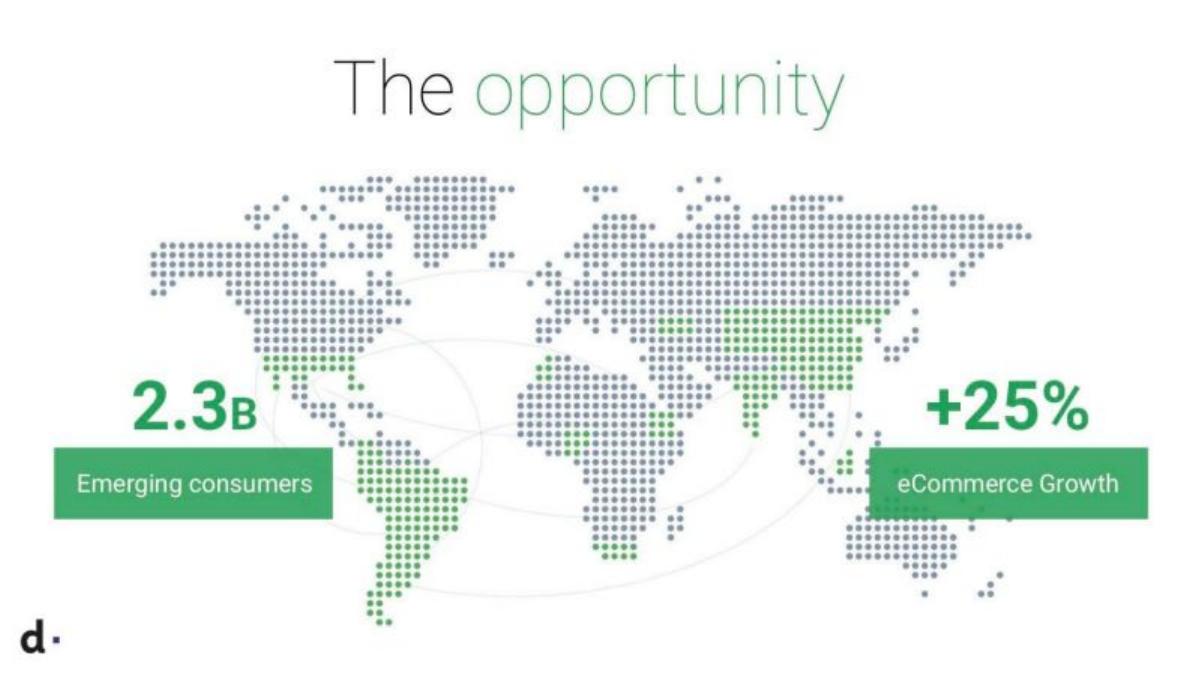
- The deck identifies a total addressable market of 2.3 billion emerging consumers with a 25% eCommerce growth rate on slide 2.
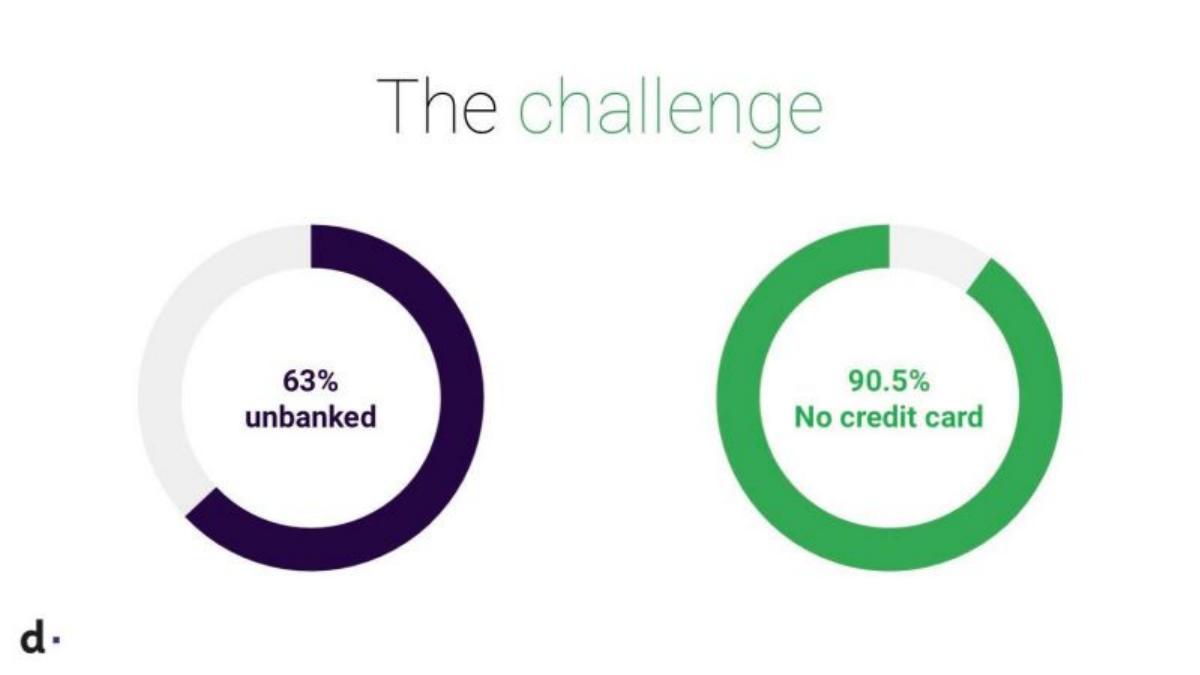
- dLocal highlights a massive financial inclusion gap, noting that 63% of their target market is unbanked and 90.5% lack credit cards on slide 3.
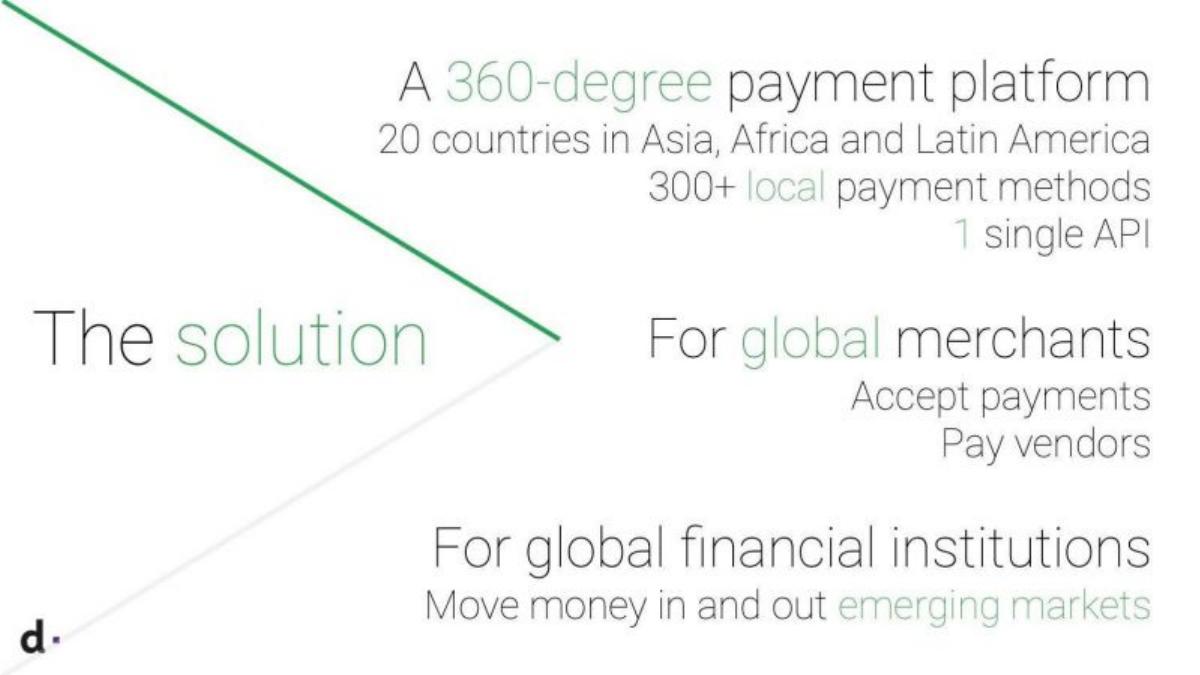
- The solution is presented as a '360-degree payment platform' covering 20 countries with over 300 local payment methods via a single API on slide 6.
- Financial performance is the core of the pitch, with slide 7 stating the company has doubled revenue every year and been profitable since day one.
- Social proof is established on slide 8 by revealing that 50% of the top 10 biggest global companies use the platform, specifically naming Microsoft, Amazon, and Google.
- The 'needs' slide (slide 9) explicitly states the company has 'no cash to burn,' framing the $200M raise as a strategic move for scale and 15 new markets rather than a necessity.
- The deck completely omits a team slide, detailed unit economics, and a competitive landscape analysis.
- The visual style is minimalist, using high-contrast green and purple accents to lead the eye to key metrics and logos.
The Power of Brevity in Growth Equity
The dLocal 2020 pitch deck is a masterclass in high-signal, low-noise communication. When a company is raising $200M at a unicorn valuation, the goal of the deck isn't to explain how the technology works—it's to prove that the machine is already built, profitable, and ready for more fuel. This 11-slide presentation focuses almost exclusively on market gap and proven traction.
Slide 1: Title Slide
The deck opens with a minimalist title slide featuring the dLocal logo. There is no tagline, no date, and no presenter name. This sets a tone of corporate maturity and brand confidence. The use of white space and the signature purple and green color palette is consistent throughout the presentation.
Slide 2: The Opportunity
Slide 2 immediately frames the scale. It cites 2.3B Emerging consumers and +25% eCommerce Growth . By using a dot-matrix world map, dLocal visually highlights their focus areas: Latin America, Africa, and parts of Asia. This slide establishes the 'Why Now'—a massive, rapidly growing audience that is currently underserved by global commerce.
Slide 3: The Challenge
This slide identifies the structural friction in emerging markets. It uses two simple donut charts to show that 63% are unbanked and 90.5% have no credit card . This is the 'problem' slide, but it is framed as a data-driven reality of the geography rather than a theoretical pain point. It justifies why a specialized intermediary like dLocal is necessary for global merchants.
Slide 4: Payment Landscape in Emerging Markets
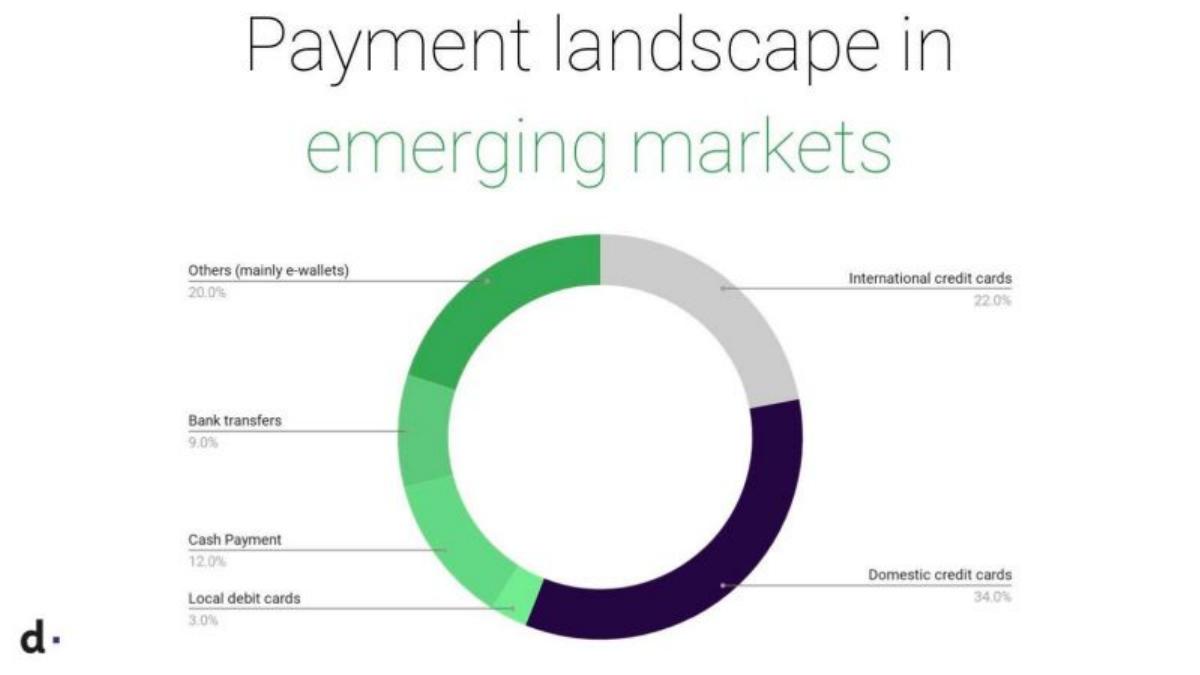
Slide 4 breaks down the payment methods used in these regions. Domestic credit cards (34.0%) and International credit cards (22.0%) represent the minority of the total pie. The rest is fragmented across Others (mainly e-wallets) at 20.0% , Cash Payment at 12.0% , Bank transfers at 9.0% , and Local debit cards at 3.0% . This slide proves that a merchant cannot simply 'turn on' Visa or Mastercard and expect to capture the market.
Slide 5: The Vision
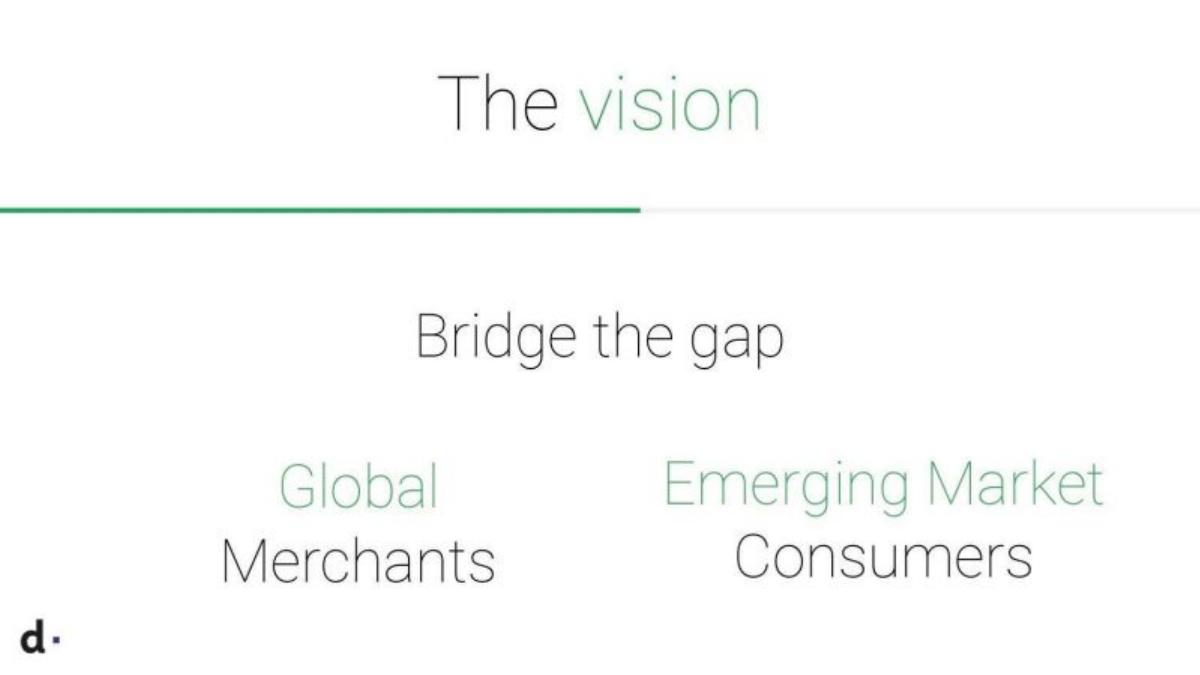
The vision is stated simply: "Bridge the gap" between Global Merchants and Emerging Market Consumers . This is the transition slide from the problem (fragmentation) to the solution (unification).
Slide 6: The Solution
dLocal defines its product as "A 360-degree payment platform." The key value drivers listed are 20 countries , 300+ local payment methods , and 1 single API . This is a critical technical value proposition: complexity on the backend, simplicity on the frontend for the merchant. It also notes the dual-sided nature of the platform: Accept payments and Pay vendors , as well as moving money for financial institutions.
Slide 7: The Growth
This is arguably the most important slide in the deck. It contains no charts or tables, only a rising green arrow and two bold statements: "Double revenue every year" and "Profitable since day 1." For growth investors, this removes the two biggest risks: product-market fit and the path to profitability. It suggests an incredibly efficient business model with high operating leverage.
Slide 8: The Achievement
To validate the claims of the previous slides, dLocal reveals its client roster. It states that 50% of the top 10 biggest global companies use the platform. The logos for Microsoft, Amazon, and Google are displayed prominently. This level of social proof is rare and effectively ends any debate about the platform's reliability or enterprise-grade security.
Slide 9: dLocal's Needs
The 'Ask' slide is framed uniquely. Instead of asking for money to survive, dLocal lists its 'needs' as strategic goals. They reiterate they are "Profitable. no cash to burn." They state "Size matters. we want to scale" and aim for "15 new markets." This framing puts the company in a position of power; they are looking for partners to accelerate a winning formula, not a lifeline.
Slide 10: Closing Slide
The deck concludes with the call to action: "Win in emerging markets with dLocal." It is a simple, brand-focused ending that mirrors the title slide.
What dLocal Does Exceptionally Well
The dLocal deck is an exercise in extreme focus . By the time an investor reaches slide 8, the narrative is airtight: the market is huge, the problem is structural, dLocal has solved it, the business is profitable, and the world's biggest companies are already paying customers. The use of 'Profitable since day 1' is a massive differentiator in a fintech landscape often characterized by high burn rates. Furthermore, the deck avoids 'feature creep.' It doesn't list every sub-feature of the API; it focuses on the outcome (access to 300+ payment methods) which is what the merchant and the investor care about most.
What Is Missing from the dLocal Deck
While effective for a growth round, the deck omits several standard elements:
Team Slide: There is no mention of the founders or executive leadership. This suggests the round was likely led by the company's metrics and existing reputation rather than individual 'pedigree' selling. · Competitive Landscape: The deck does not mention competitors like Adyen, Stripe, or local incumbents. It assumes the 'emerging market' niche is sufficiently distinct. · Unit Economics: While it mentions doubling revenue, it doesn't disclose Take Rates, Net Revenue Retention (NRR), or Customer Acquisition Cost (CAC). These were likely moved to the data room. · Detailed Financials: There are no specific dollar amounts for revenue or EBITDA, only growth percentages.
Lessons for Founders
Founders can learn three key lessons from dLocal's approach: 1. Lead with Traction: If you have enterprise logos like Amazon and Google, they should be the centerpiece of your deck. 2. Frame the Raise as Offensive: If you are profitable or have a long runway, say so. It changes the dynamic from 'please fund me' to 'here is an opportunity to join a rocket ship.' 3. Simplify the Problem: dLocal took the incredibly complex world of global banking regulations and distilled it into a single 'gap' that needs a 'bridge.' Use simple metaphors to describe complex infrastructure.
Frequently asked questions
- Why does the dLocal deck omit a team slide?
- At the growth stage (raising $200M), dLocal likely relied on its institutional reputation and the 'achievement' slide (slide 8) to validate its leadership. When you are profitable and serving half of the world's top 10 companies, the individual resumes of the founders become secondary to the proven execution of the organization as a whole.
- How does dLocal define its market opportunity?
- dLocal defines its opportunity through the lens of friction. Slide 3 and 4 show that while the market is growing at 25%, the vast majority of consumers (90.5%) cannot use traditional international credit cards. By quantifying the 'unbanked' and 'no credit card' segments, they position their 300+ local payment methods as the only viable bridge for global merchants.
- What is the significance of the 'Profitable since day 1' claim?
- This is a power move in growth-stage fundraising. It signals to investors that the $200M raise is 'offensive' capital used for aggressive expansion into 15 new markets (slide 9) rather than 'defensive' capital used to cover operational losses. It gives the founders maximum leverage in valuation negotiations.
- How does the deck handle the complexity of fintech regulations?
- It doesn't. The deck stays at a high strategic level, focusing on the 'Single API' value proposition (slide 6). By abstracting the regulatory and technical complexity of 20 different countries into one '360-degree platform,' they sell the outcome (global sales) rather than the plumbing (compliance and banking rails).
- Is 11 slides enough for a $200M round?
- For a company with dLocal's metrics, yes. The deck serves as a teaser or a high-level summary for a much deeper due diligence process. The strength of the logos (Microsoft, Amazon, Google) and the revenue growth rate do more work in 11 slides than a 40-page deck could do for a pre-revenue startup.