Domatic’s 10-slide pitch deck is a masterclass in technical storytelling, focusing on the transition from inefficient AC wiring to programmable DC power. By positioning their low-voltage solution as a 'Trojan Horse for Sustainability,' the company highlights a 46% lower cost and 4x faster installation speed compared to traditional methods. The deck relies heavily on the technical credibility of its founders, Jim Baldwin and Gladys Wong, whose backgrounds at Apple, Microsoft, and Intel provide the necessary weight to a hardware-heavy pitch. While the deck lacks traditional financial projection…
Key takeaways
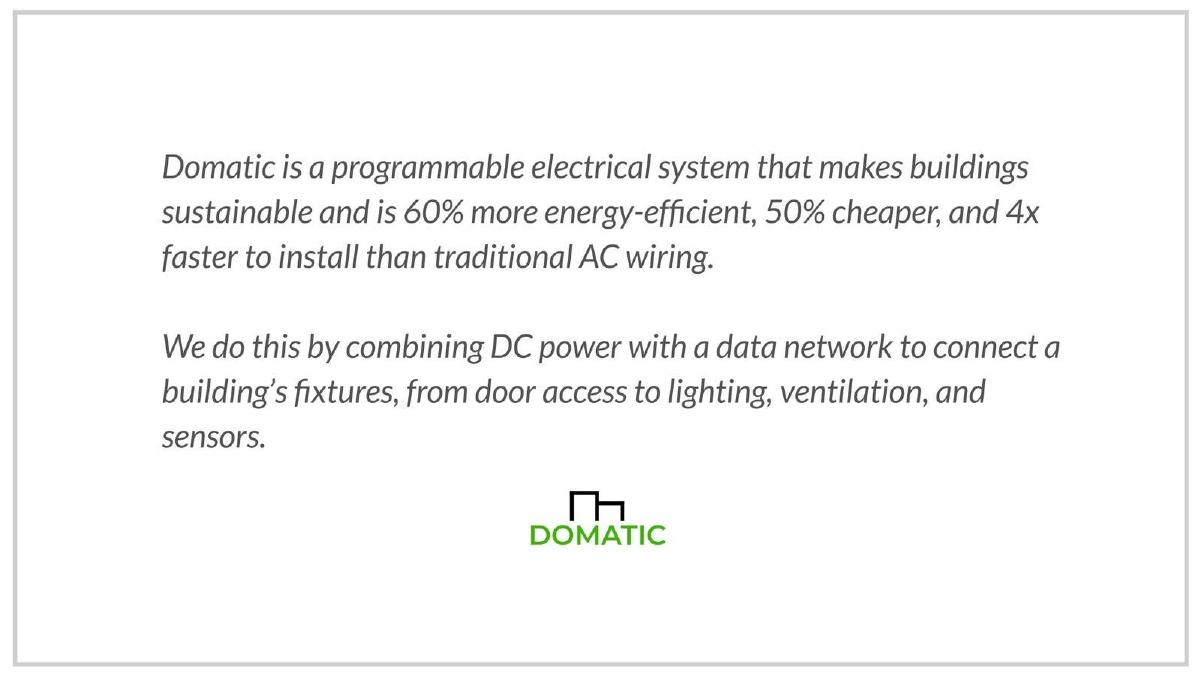
- The deck claims the system is 60% more energy-efficient, 50% cheaper, and 4x faster to install than traditional AC wiring (Slide 2).
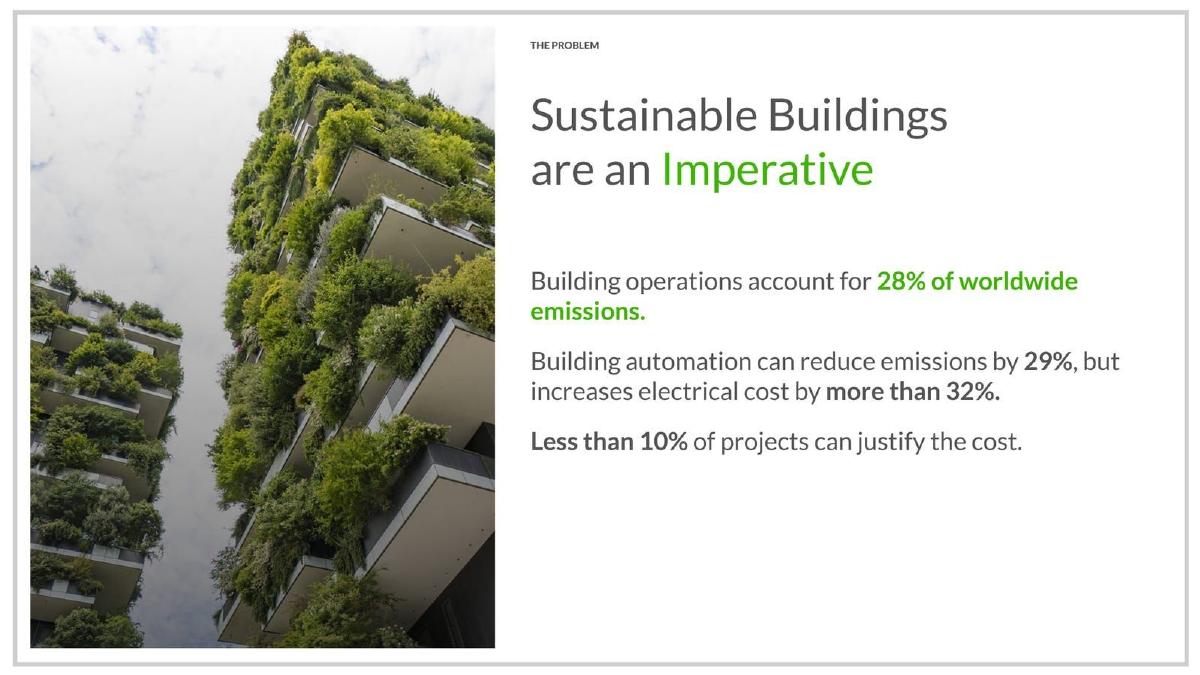
- Building automation currently increases electrical costs by more than 32%, leading to less than 10% of projects being able to justify the cost (Slide 4).
- Domatic's solution uses 93% less copper than traditional wiring and eliminates the need for licensed electricians for installation (Slide 7).
- The founders possess deep technical pedigree, including the creator of Firewire at Apple and a former CTO of Television at Microsoft (Slide 3).
- The total addressable market is calculated at $20 billion, split between $12B in residential and $8B in commercial sectors (Slide 8).
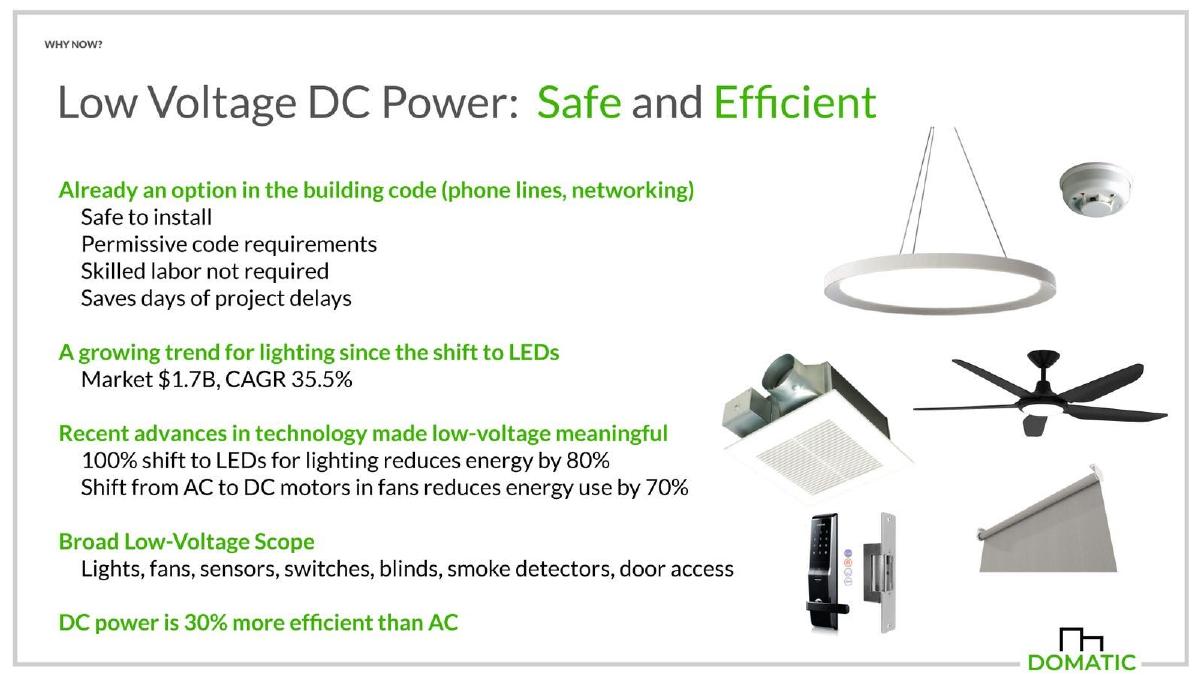
- The technology leverages the industry shift to LEDs and DC motors, which reduce lighting energy by 80% and fan energy by 70% respectively (Slide 6).
- The deck omits a specific 'Ask' slide, financial history, and a detailed competitive landscape analysis.
- Domatic positions its hardware as a 'Software Platform' that makes buildings programmable, suggesting a future SaaS or data revenue stream (Slide 7).
Executive Summary: The Infrastructure Play
Domatic’s 10-slide deck is a highly focused pitch targeting the construction and prop-tech sectors. Reported by Business Insider to have raised $4M in 2023, the startup aims to replace the 100-year-old standard of AC wiring with a modern, low-voltage DC alternative. The deck is characterized by its technical density and a strong emphasis on the 'Why Now'—specifically the global shift toward LEDs and DC-powered appliances. By removing the need for licensed electricians and reducing material costs, Domatic positions itself as the essential infrastructure for the next generation of sustainable, smart buildings.
Slide 1: Title and Vision
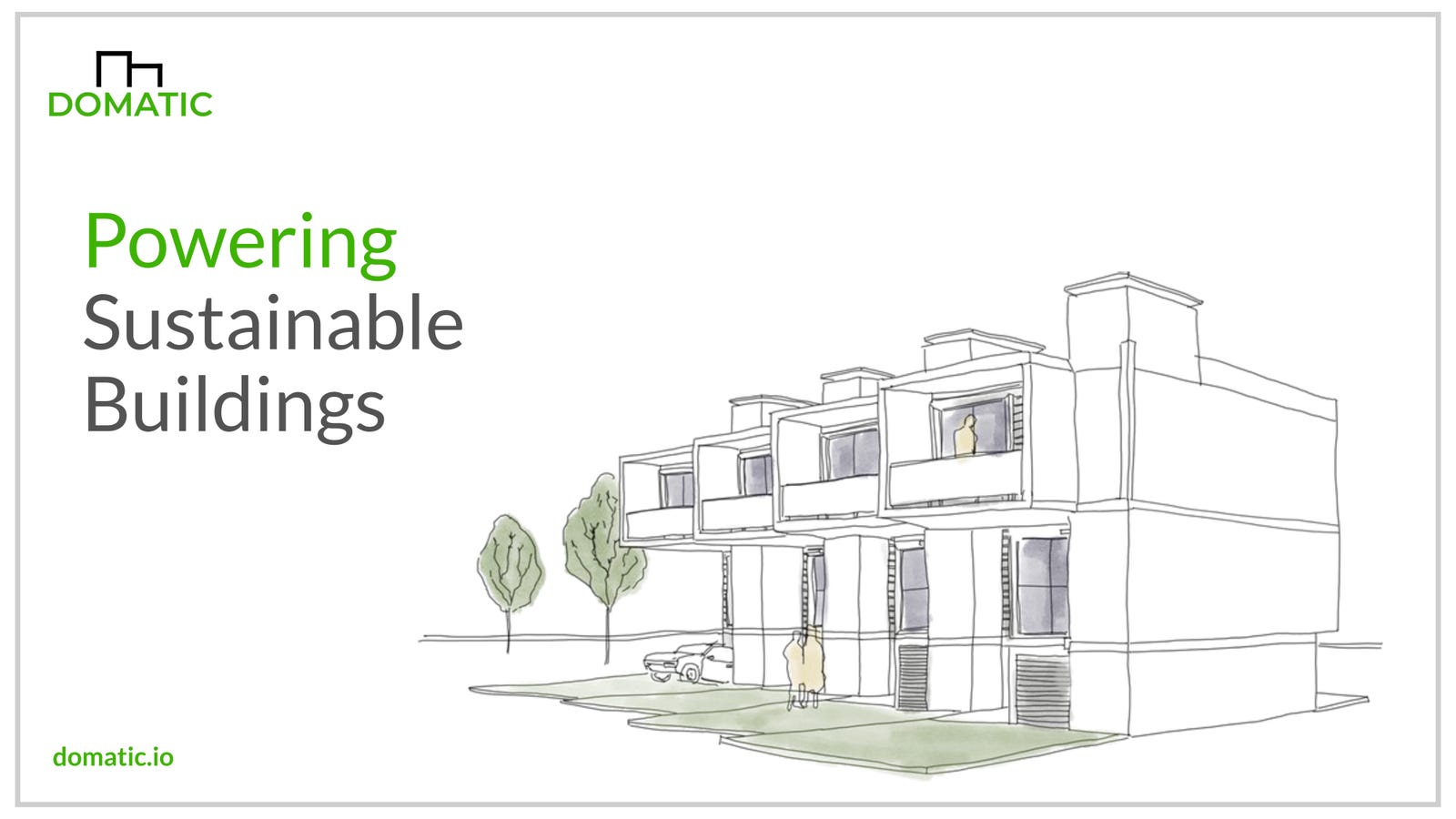
The deck opens with a minimalist architectural sketch of a modern multi-unit building. The tagline, "Powering Sustainable Buildings," is simple but broad. The branding is clean, using a green and grey palette that reinforces the sustainability theme. While the slide is sparse, it immediately establishes the company's domain: the physical built environment.
Slide 2: The Value Proposition
Slide 2 serves as an executive summary. It defines Domatic as a "programmable electrical system" and leads with three heavy-hitting metrics: 60% more energy-efficient, 50% cheaper, and 4x faster to install than traditional AC wiring. It also explains the technical 'how': combining DC power with a data network to connect fixtures ranging from lighting to sensors. This slide is effective because it answers the 'what' and 'why' before the investor even turns the page.
Slide 3: The 'Builders' Team
This is arguably the strongest slide in the deck. In hardware and infrastructure, the pedigree of the founders is often the primary de-risking factor. Jim Baldwin (CEO) is listed as having built Firewire at Apple and served as CTO of Television at Microsoft and VP at Intel. Gladys Wong (VP Engineering) brings experience from Qualcomm, Cisco, and Marvell. By titling the slide "We Are Builders," they emphasize their ability to execute on complex hardware-software integration—a notoriously difficult feat for early-stage startups.
Slide 4: The Problem - Cost vs. Sustainability
Slide 4 frames the market problem. It notes that building operations account for 28% of worldwide emissions. While building automation can reduce these emissions by 29%, it currently increases electrical costs by "more than 32%." The punchline is that "Less than 10% of projects can justify the cost." This identifies a clear bottleneck: the world wants smart buildings, but the current electrical delivery system makes them financially unviable.
Slide 5: The AC Wiring Impediment
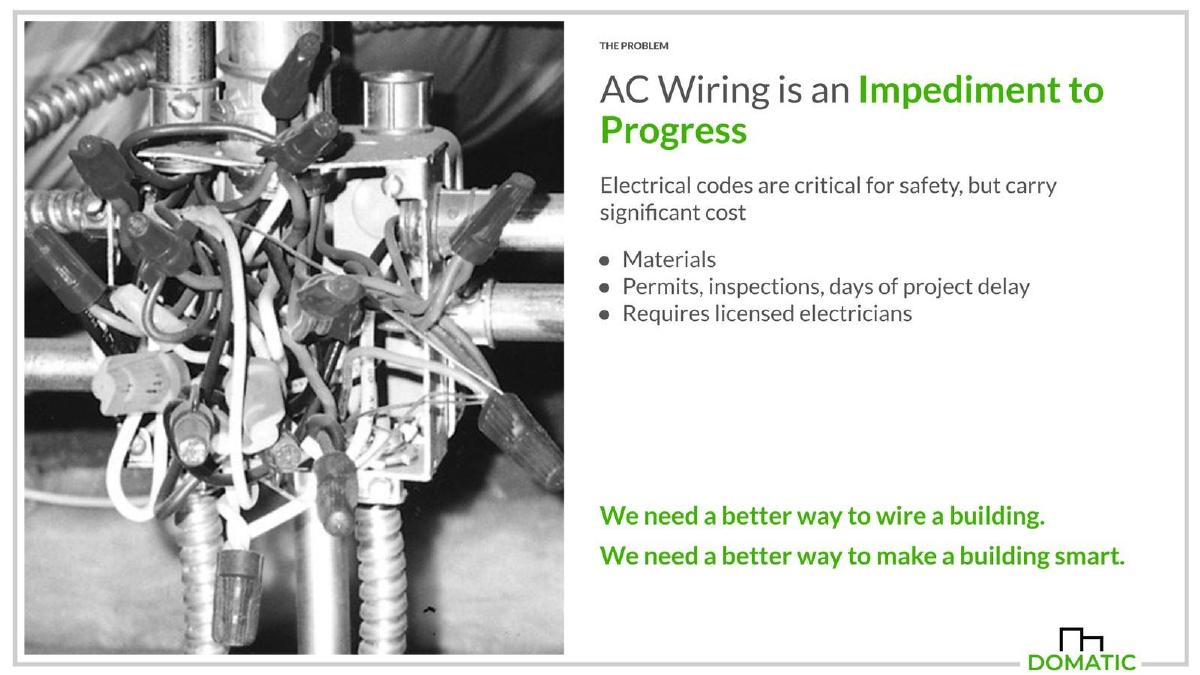
This slide uses a black-and-white photo of a chaotic AC junction box to visualize the problem. It lists the specific burdens of traditional wiring: high material costs, permits, inspections, and the requirement for licensed electricians. It frames AC wiring not just as an old technology, but as an "impediment to progress." This sets the stage for a disruptive alternative that bypasses these regulatory and labor hurdles.
Slide 6: Why Now? The DC Revolution
The 'Why Now' slide is critical for infrastructure plays. Domatic points to the shift to LEDs (which are natively DC) and DC motors in fans, which reduce energy use by 80% and 70% respectively. They cite a $1.7B market for low-voltage lighting with a 35.5% CAGR. By showing that the fixtures themselves have already changed, they make the case that the wiring behind the walls is the only thing left to modernize. This slide successfully argues that Domatic is riding a massive, existing wave of technological change.
Slide 7: The Solution - A Trojan Horse for Sustainability
Slide 7 details the Domatic system. It uses a floor plan to show the "plug-and-play" nature of the installation. Key claims include 46% lower cost, 4x faster installation, and a staggering 93% less copper usage. The phrase "Imagine USB, but for wiring a building" is a powerful analogy that simplifies a complex technical concept for non-technical investors. It also introduces the "Software Platform" concept, suggesting that once the hardware is in place, the building becomes "programmable."
Slide 8: Market Opportunity
Domatic quantifies its TAM at $20 billion. The slide breaks this down into a matrix of New Construction vs. Renovations and Residential vs. Commercial. Residential Renovations represent the largest single bucket at $10B. The bottom of the slide includes the assumptions used for these calculations, such as an average revenue per square foot of $4.27. This transparency in modeling helps build credibility with analysts.
Slide 9: Product Demo
Slide 9 is a placeholder for a video demo. The image shows a bench-top setup of the Domatic system, including a fan, light fixture, and various control modules connected by thin black wires. This serves as proof of concept, showing that the hardware is not just a theoretical design but a functional prototype capable of powering a variety of devices.
Slide 10: Closing and Contact
The final slide repeats the title branding and provides contact information for Jim Baldwin. It features a high-quality photo of a modern building, reinforcing the end-goal of the technology. Like the rest of the deck, it is professional and avoids unnecessary clutter.
What Domatic Does Well
The deck excels at quantifying the pain point . By citing specific percentage increases in cost that prevent 90% of projects from going green, they create a compelling economic argument for their solution. They aren't just selling "sustainability"; they are selling "cost reduction that enables sustainability."
The founder-market fit is also exceptionally well-presented. For a seed-stage company asking to re-wire buildings, the technical history of the founders is the most important asset. The deck leans into this by highlighting their roles at the world's most successful hardware and software companies.
Finally, the analogy use ("USB for buildings") is a masterstroke. It takes a complex electrical engineering pitch and turns it into a concept that any investor can visualize and understand the benefits of: universality, ease of use, and data/power integration.
What is Missing from the Deck
The Ask: There is no slide detailing the amount of capital being raised, the valuation, or the intended use of funds. While this is sometimes omitted in decks shared publicly after a round, its absence in a pitch context leaves the investor without a clear call to action.
Traction and Pilots: There is no mention of current partnerships with developers, architects, or construction firms. For a physical product, investors typically want to see letters of intent (LOIs) or results from a pilot installation to prove that the "4x faster installation" claim holds up in the field.
Competitive Landscape: The deck assumes the only competition is "traditional AC wiring." It ignores other low-voltage players (like PoE lighting companies) or smart home standards (like Matter or Zigbee). A slide addressing why Domatic's specific architecture is superior to other emerging low-voltage standards would have been valuable.
Unit Economics: While they mention a $4.27 revenue per square foot, there is no detail on the margins of the hardware or the potential for recurring software revenue. Investors in 2023 were increasingly focused on the path to profitability, which this deck largely ignores in favor of vision and technical specs.
Founder's Guide: What to Copy
The 'Why Now' Logic: If your startup relies on a shift in a related industry, copy Slide 6. Domatic doesn't just say they are better; they show that the world has already moved to DC-powered devices (LEDs, fans, sensors), making their solution the logical next step.
Specific Metric Comparison: Slide 7’s side-by-side comparison of cost, speed, and material usage is a perfect example of how to present a value proposition. Don't just say you are "cheaper"; say you are "46% lower cost" and back it up with a reason (93% less copper).
The Problem/Solution Bridge: The way Slide 4 and Slide 5 build a narrative—from global emissions to the specific mess of an AC junction box—is excellent. It moves from a high-level "macro" problem to a visceral, "micro" technical headache that a customer (a developer or contractor) actually feels.
Frequently asked questions
- What is the primary problem Domatic is solving?
- Domatic addresses the 'impediment' of traditional AC wiring in modern construction. According to Slide 5, AC wiring is expensive due to materials, permits, and the requirement for licensed electricians. This high cost prevents building automation from being widely adopted, as current smart building tech increases electrical costs by over 32%, making it unjustifiable for 90% of projects.
- How does Domatic's technology actually work?
- As described on Slide 7, Domatic combines low-voltage DC power with a data network 'injected into the same wires.' This creates a plug-and-play system that the deck compares to 'USB, but for wiring a building.' This allows for the simultaneous delivery of power and control to fixtures like lights, fans, and sensors without complex AC circuitry.
- Who are the founders and why are they relevant?
- The team is a core strength of this deck. CEO Jim Baldwin is credited with building Firewire at Apple and serving as CTO of Television at Microsoft. VP of Engineering Gladys Wong led hardware and networking at Qualcomm, Cisco, and Marvell. This level of 'builder' experience (Slide 3) is critical for a startup attempting to disrupt physical building infrastructure.
- What are the specific cost savings claimed by Domatic?
- The deck is very specific about its value proposition. Slide 7 claims a 46% lower cost, 4x faster installation, and 93% less copper usage. Slide 2 further notes that the system is 60% more energy-efficient. These metrics target the primary pain points of developers: material costs, labor shortages, and energy regulations.
- What is missing from this pitch deck?
- The deck is notably missing several standard venture components. There is no 'Ask' slide detailing how much they are raising or the terms. There are no financial projections, no mention of existing traction or pilot projects, and no competitive analysis. It functions more as a technical and vision-oriented deck than a business-operational one.