How climate and sustainability startups frame the problem in a pitch deck: from global emissions to a customer's cost, with sourced figures.
Climate Problem Slide: Real Pitch Deck Examples
Eight problem slides from climate and sustainability startups, shown in full, compare how each moves from a planet-sized issue to a problem a specific customer will pay to solve.
TL;DR
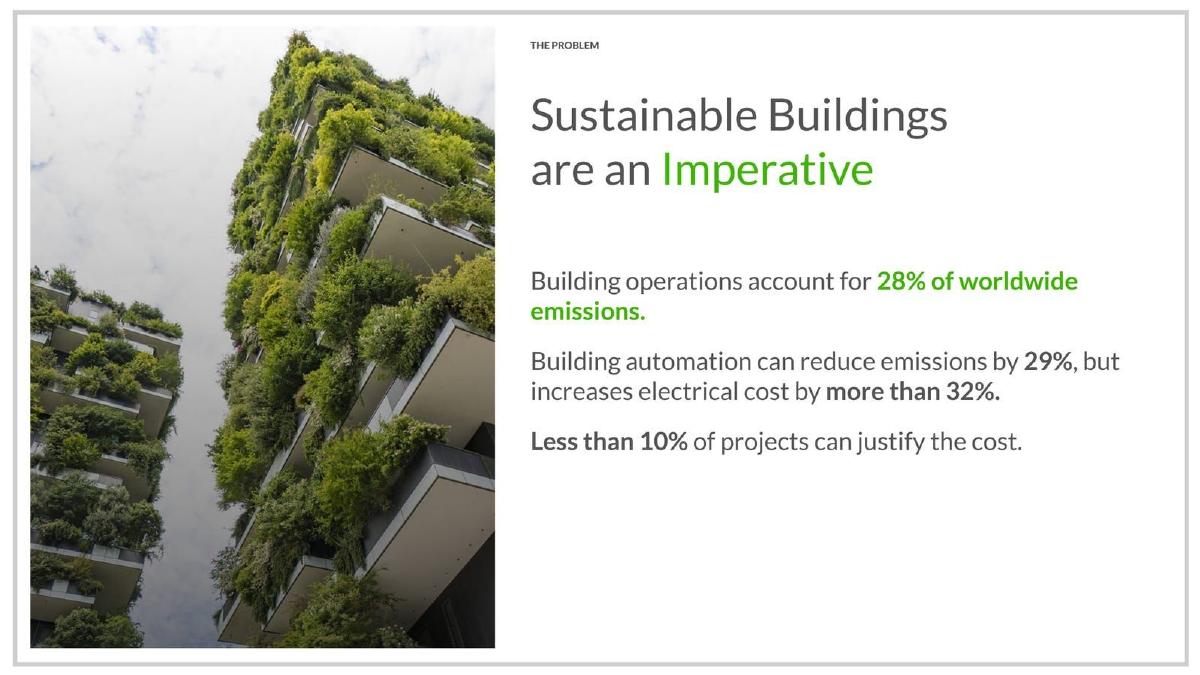
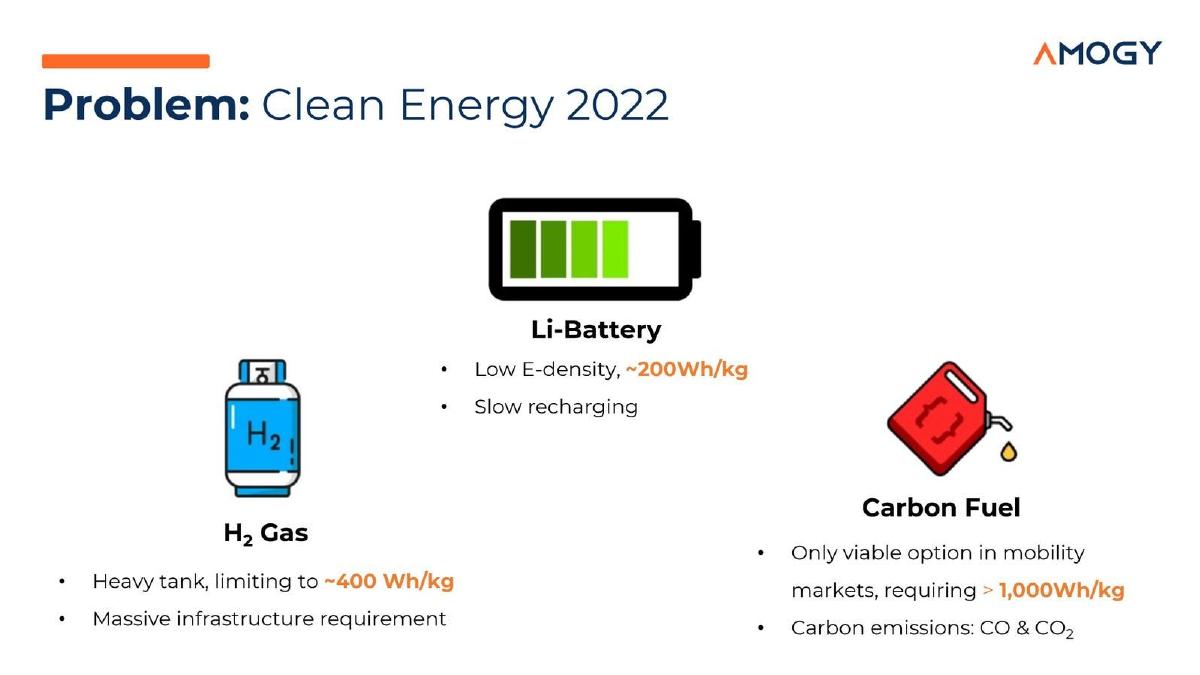
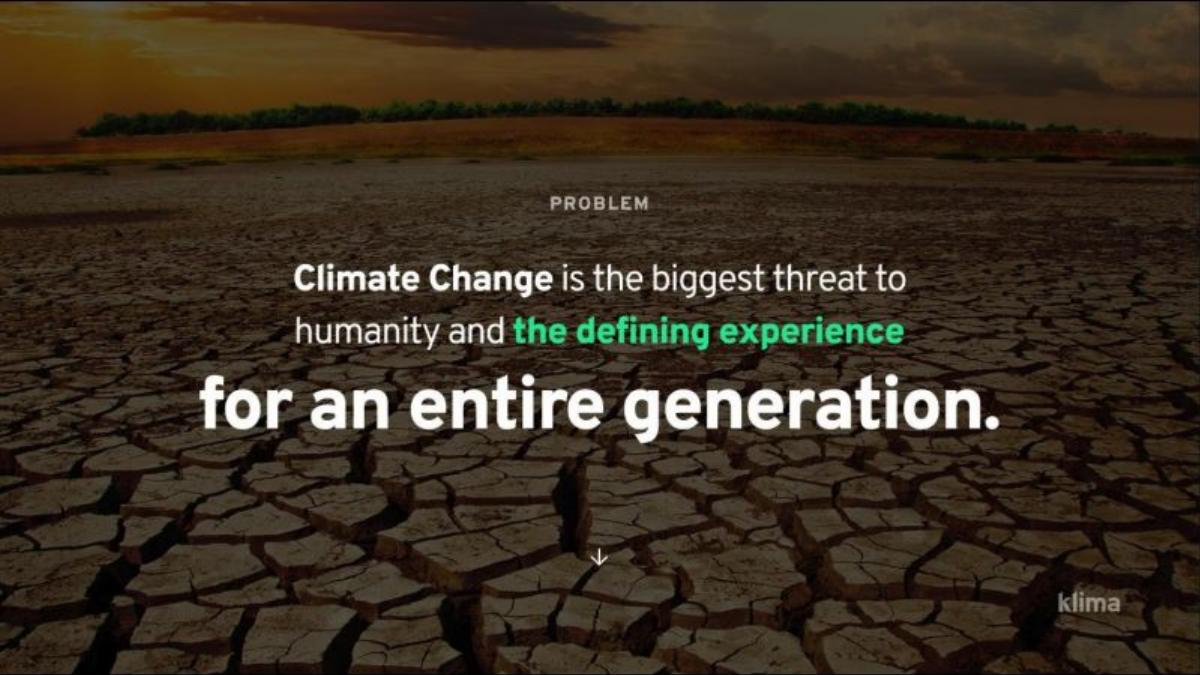
Investors already accept that climate change is real, so a climate problem slide shouldn't spend its space proving that. The strong slides narrow quickly: a sector's share of emissions, then the reason today's fix fails for the buyer, usually cost or performance. Domatic does this in three lines: buildings produce "28% of worldwide emissions", automation cuts emissions "by 29%, but increases electrical cost by more than 32%", so "less than 10% of projects can justify the cost". Ever Dye and Amogy frame the problem as a cost or performance gap for the customer. Slides that stop at the planetary level (Klima: climate change is "the biggest threat to humanity") give an investor nothing to test.
Climate problem slides from real pitch decks
Each example shows the exact stored slide above its analysis and links to the full teardown. Figures are as shown on the slides; we have not verified them.
Domatic problem slide — slide 4
Building automation. Sector share, then the cost barrier.
Domatic deck, slide 4. Exact stored slide matched to this analysis.
Our analysis: It shows that the solution exists but is too expensive, which is exactly the gap a cheaper product fills.
Evidence and limitation: Three figures in a chain; no sources on the slide.
What a founder can adapt: State the existing fix, what it costs the buyer, and how few can afford it.
Supporting analysis
What the deck claims: "THE PROBLEM — Sustainable Buildings are an Imperative. Building operations account for 28% of worldwide emissions. Building automation can reduce emissions by 29%, but increases electrical cost by more than 32%. Less than 10% of projects can justify the cost."
Presentation choice: The problem is adoption cost, not awareness. That's a business case.
When it does not fit: Add sources for 28%, 29% and 32%.
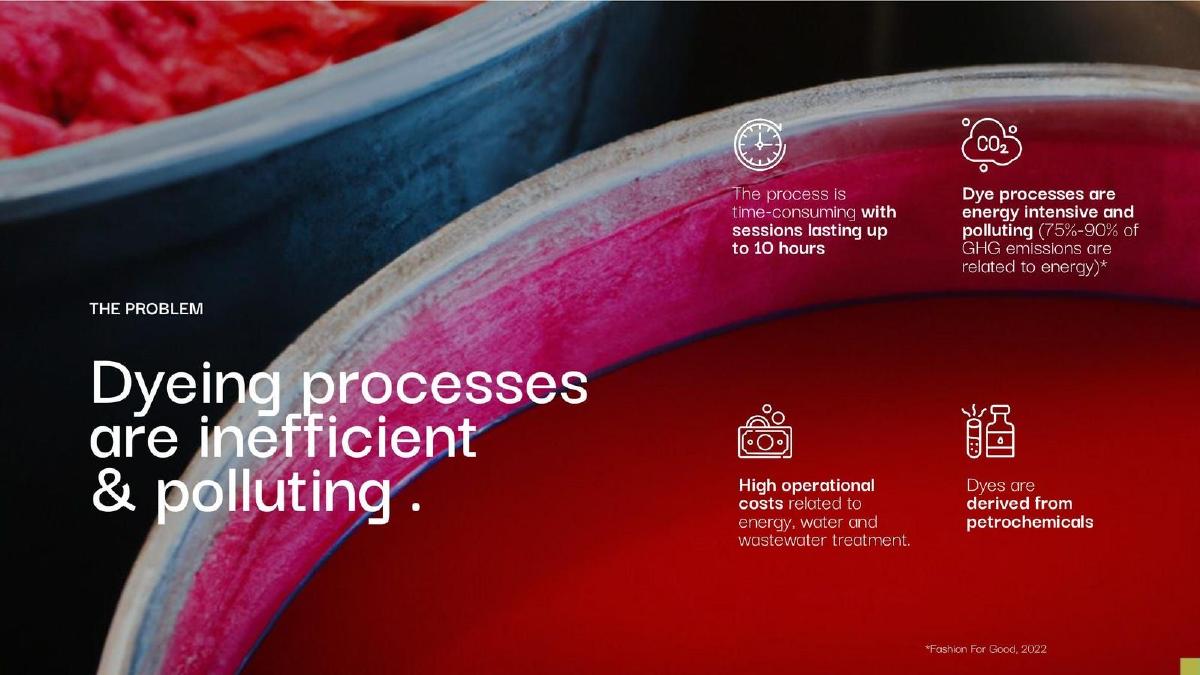
Textile dyeing. Customer cost and emissions side by side.
Ever Dye deck, slide 3. Exact stored slide matched to this analysis.
Our analysis: Half the points are the dye house's own costs (time, energy, water), so the buyer benefits even without caring about emissions.
Evidence and limitation: One sourced emissions figure and a stated process time.
What a founder can adapt: Pair every environmental point with what it costs the operator.
Supporting analysis
What the deck claims: "THE PROBLEM — Dyeing processes are inefficient & polluting." Four points: "sessions lasting up to 10 hours"; "Dye processes are energy intensive and polluting (75%-90% of GHG emissions are related to energy)*"; "High operational costs related to energy, water and wastewater treatment"; "Dyes are derived from petrochemicals". Source: "Fashion For Good, 2022".
Presentation choice: It gives the customer a financial reason alongside the environmental one.
When it does not fit: Operating costs are described but not quantified. Add a cost per kilo or per batch.
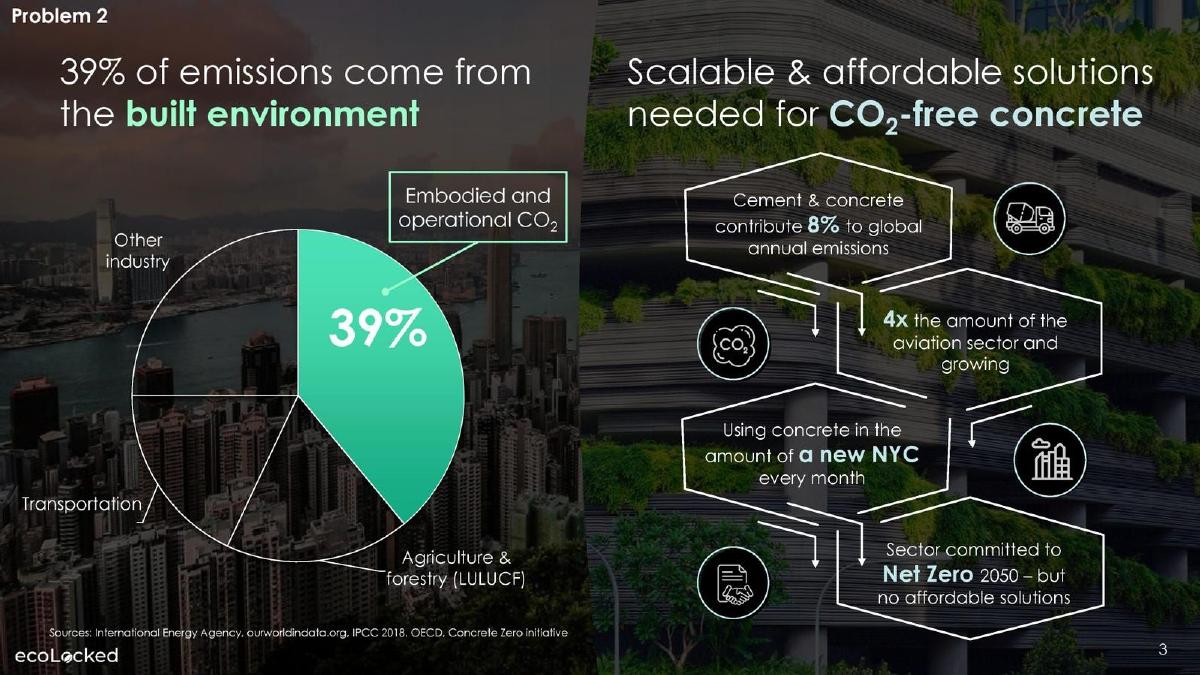
CO₂-storing concrete additives. Sector share, then the missing affordable fix.
ecoLocked deck, slide 3. Exact stored slide matched to this analysis.
Our analysis: It narrows from the built environment (39%) to concrete (8%), then states the buyer's gap: a net-zero commitment with no affordable way to meet it.
Evidence and limitation: Sourced sector shares and a comparison with aviation.
What a founder can adapt: Narrow in two steps: the wide sector, then your part of it, then the unmet commitment.
Supporting analysis
What the deck claims: "Problem 2 — 39% of emissions come from the built environment." "Scalable & affordable solutions needed for CO₂-free concrete": "Cement & concrete contribute 8% to global annual emissions", "4x the amount of the aviation sector and growing", "Using concrete in the amount of a new NYC every month", "Sector committed to Net Zero 2050 – but no affordable solutions". Sources: International Energy Agency, ourworldindata.org, IPCC 2018, OECD, Concrete Zero initiative.
Presentation choice: The narrowing is clear and the sources are on the slide.
When it does not fit: "No affordable solutions" needs a price comparison to be convincing.
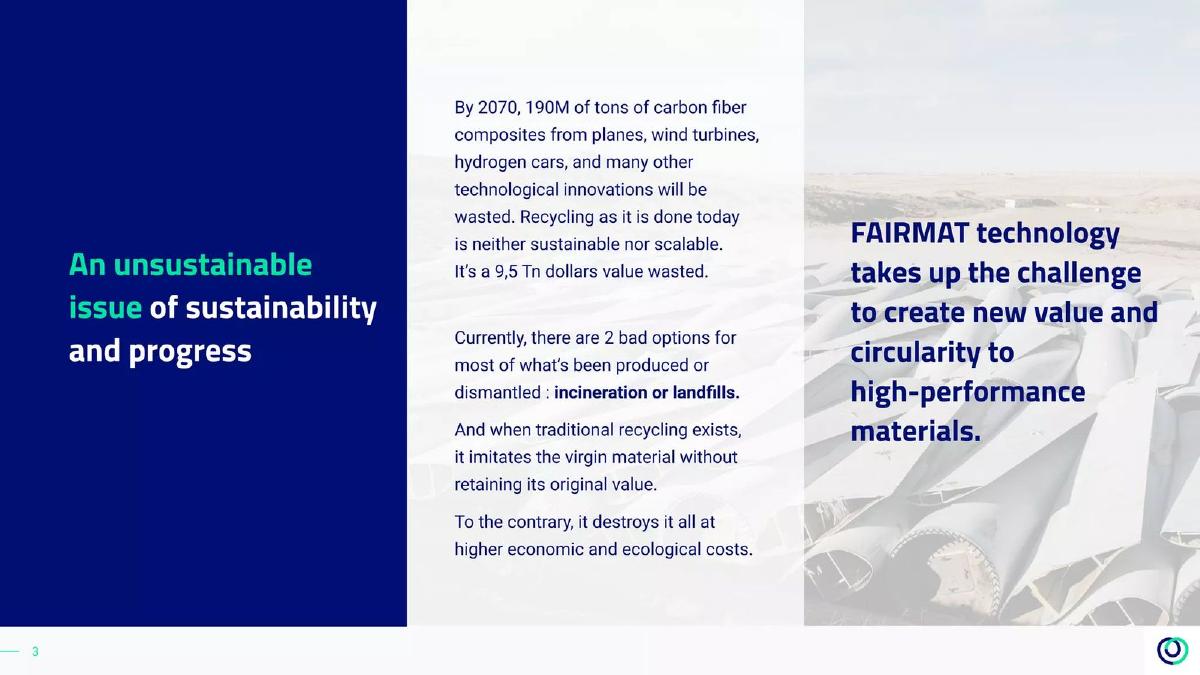
Carbon-fibre composite recycling. Waste volume and why current options fail.
Fairmat deck, slide 3. Exact stored slide matched to this analysis.
Our analysis: It names the current options (incineration, landfill, low-value recycling) and why each fails.
Evidence and limitation: A waste projection and a value figure; no sources.
What a founder can adapt: Name what happens to the material or emissions today, and what that costs.
Supporting analysis
What the deck claims: "By 2070, 190M of tons of carbon fiber composites from planes, wind turbines, hydrogen cars, and many other technological innovations will be wasted. Recycling as it is done today is neither sustainable nor scalable. It's a 9,5 Tn dollars value wasted." "Currently, there are 2 bad options... incineration or landfills."
Presentation choice: Listing the bad alternatives makes the gap concrete.
When it does not fit: A 2070 projection is far off; add today's volume. Source the $9.5 trillion.
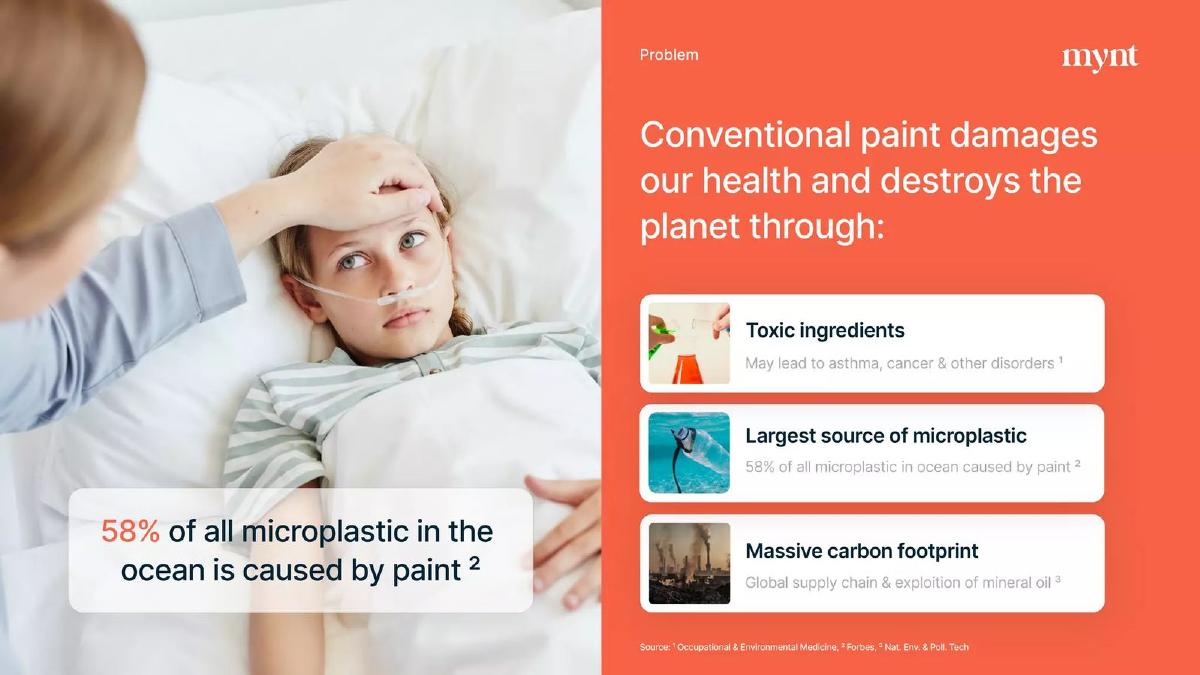
Sustainable paint. Health and environment together.
Mynt deck, slide 3. Exact stored slide matched to this analysis.
Our analysis: Leading with health gives the consumer a personal reason to switch, not just an environmental one.
Evidence and limitation: One headline figure (58%), with sources in the footer.
What a founder can adapt: For consumer climate products, lead with the benefit to the buyer.
Supporting analysis
What the deck claims: "Conventional paint damages our health and destroys the planet through: Toxic ingredients — May lead to asthma, cancer & other disorders; Largest source of microplastic — 58% of all microplastic in ocean caused by paint; Massive carbon footprint." Sources listed: Occupational & Environmental Medicine, Forbes, Nat. Env. & Poll. Tech.
Presentation choice: The personal reason comes first; the planetary one supports it.
When it does not fit: "Massive carbon footprint" has no number. Quantify it or drop it.
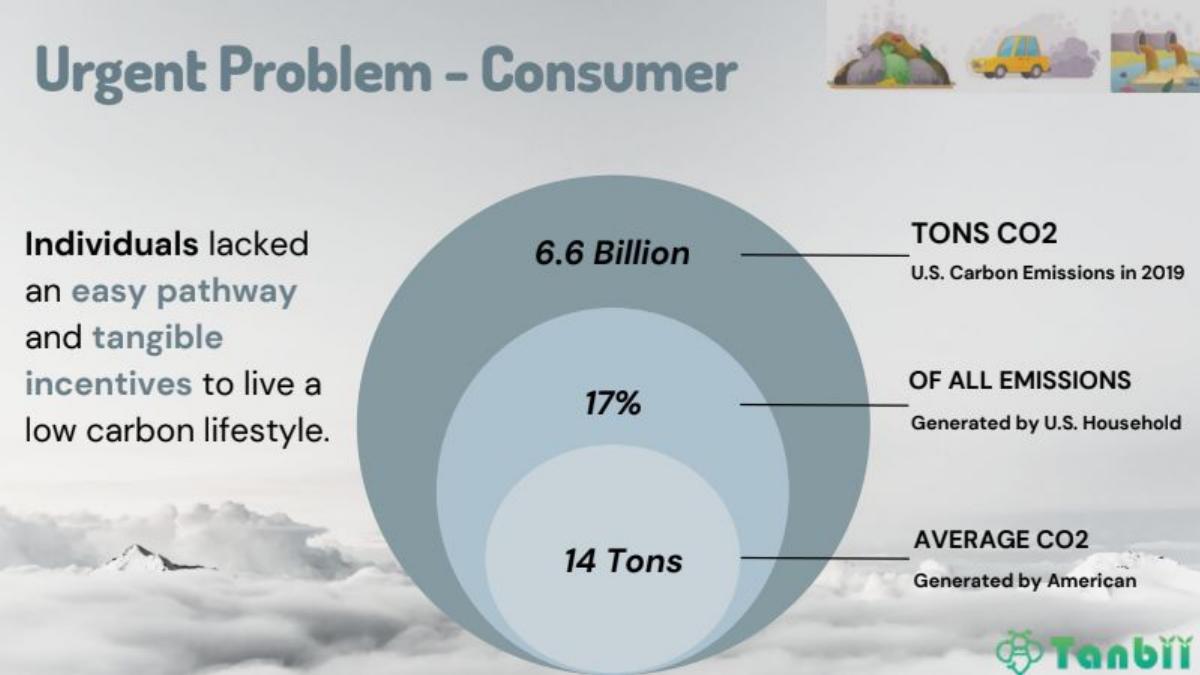
Consumer carbon-reduction app. Emissions scale, then the behaviour gap.
Tanbii deck, slide 2. Exact stored slide matched to this analysis.
Our analysis: The nested circles narrow from country to household to person, which suits a consumer product.
Evidence and limitation: Three nested emissions figures; no sources.
What a founder can adapt: Narrow to the unit your product acts on: a building, a fleet, a household.
Supporting analysis
What the deck claims: "Urgent Problem – Consumer. Individuals lacked an easy pathway and tangible incentives to live a low carbon lifestyle." Circles: "6.6 Billion TONS CO2 U.S. Carbon Emissions in 2019"; "17% OF ALL EMISSIONS Generated by U.S. Household"; "14 Tons AVERAGE CO2 Generated by American".
Presentation choice: It sizes the problem at the level of the user.
When it does not fit: The consumer problem ("lacked incentives") has no evidence. Add a survey or behaviour data.
Which levels each slide reaches, and whether figures are sourced.
Example
Sector share or volume
Buyer's barrier
Sources on slide
Domatic
Buildings 28%
Cost (+32% electricity)
No
Ever Dye
Energy = 75–90% of dye GHG
Time, energy, water costs
Yes
Amogy
—
Energy density below 1,000 Wh/kg
No
ecoLocked
Built env. 39%, concrete 8%
No affordable solution
Yes
Fairmat
190M tons by 2070
Only incineration or landfill
No
Mynt
58% of ocean microplastic
Health risk
Yes
Tanbii
Households 17%
No incentive (unproven)
No
Klima
—
—
No
Key Takeaways
Skip proving climate change. Start from a sector and its share of emissions or waste.
Name why current solutions aren't adopted, usually cost or performance. That gap is your market.
Give the customer's reason to buy alongside the planet's. Ever Dye puts operating cost next to emissions.
Source emissions figures on the slide, as Ecolocked, Ever Dye and Mynt do.
Keep the global number and the addressable problem distinct. 39% of emissions isn't your market.
Build your climate problem slide
One line per level, each with a number and a source.
Sector. Which sector, and its share of emissions or waste?
Current fix. What do buyers use or do today?
Barrier. Why don't they adopt the cleaner option: cost, performance, process?
Buyer's gain. What does fixing it save or earn the buyer?
Copyable framework: [Sector] produces [share] of [emissions/waste] ([source]). The cleaner option [does X] but [costs / performs] [number], so [how few adopt it].
Illustrative example 1 — written by us
Before: Climate change is the defining challenge of our time.
After: Cold storage uses 15% of food-sector electricity (source, year). Natural-refrigerant units cut emissions but cost 40% more upfront, so fewer than 1 in 10 warehouses switch.
What improved: Our illustrative rewrite; figures are invented for the example. It names the sector, the existing fix, and the cost barrier.
What this guide adds
The general problem slide guide covers customer pain in any industry. Climate decks have a specific trap: the problem everyone agrees on (emissions) is not the problem any one customer pays to fix. This guide compares how climate startups bridge from the first to the second.
The impact slide guide covers how to show the benefit a company creates; this guide covers the problem that comes before it.
Three levels of a climate problem
Planet: warming, emissions, waste in general (Klima). Everyone agrees, so it adds little.
Sector: one industry's share of emissions or waste (Ecolocked, Domatic, Fairmat, Tanbii). Shows where the problem sits and roughly how big it is.
Buyer: why the customer hasn't fixed it, usually cost, performance or process (Domatic, Ever Dye, Amogy). This is the level that makes a business case.
The strongest slides touch all three in a few lines and spend most of their space on the third.
Common mistakes
Proving climate change. Investors accept it; use the space for your sector.
Global share as market. 39% of emissions is not what your product addresses.
No buyer reason. Show what the customer saves or gains, not only the planet.
Distant projections only. Add today's volume next to 2050 or 2070 figures.
Diagnostic checklist
It names a sector and its share of emissions or waste.
It states why today's cleaner option isn't adopted.
It gives the buyer a financial or practical reason.
Every figure has a source.
The slide doesn't argue that climate change matters.
Frequently asked questions
How we chose these examples
Corpus: published pitch deck teardowns on StartupFundraising.com. Founder-uploaded private decks are excluded.
Selection (2026-09-24): we searched extracted text of slides 2–5 for problem or challenge slides mentioning emissions, CO₂, carbon, landfill or greenhouse gas, and inspected about twenty candidates. We excluded decks already used in other guides (Carbon Block, ComBio), duplicate deck versions (a second Fairmat and Tanbii deck), off-topic matches, and Mootral (a planetary statement similar to Klima).
Overlap check: the general problem slide guide covers customer pain in any industry and the impact slide guide covers benefits created. This guide covers how climate startups move from a global issue to a buyer's problem.
Klima is included to show a weaker pattern.
Review: all eight stored slide images were inspected on 2026-09-24 and matched to company, deck and slide number (editorial model review). No person has yet completed an editorial review of this page.
Figures are as shown on the slides; we have not verified them. We make no claim that any slide caused a fundraising outcome.