Klima raised €10.8M in 2022 using a deck that leans heavily on high-fidelity product UI and emotional resonance. The narrative moves quickly from the global threat of climate change to a highly individualized solution: an app that allows users to calculate, offset, and reduce their carbon footprint through a monthly subscription. The deck is notable for its lack of traditional business slides—there is no explicit revenue chart, no detailed market sizing (TAM/SAM/SOM), and no formal 'Ask' slide with valuation or use of funds. Instead, it sells the vision of 'Climate Action at Scale' through vi…
Key takeaways
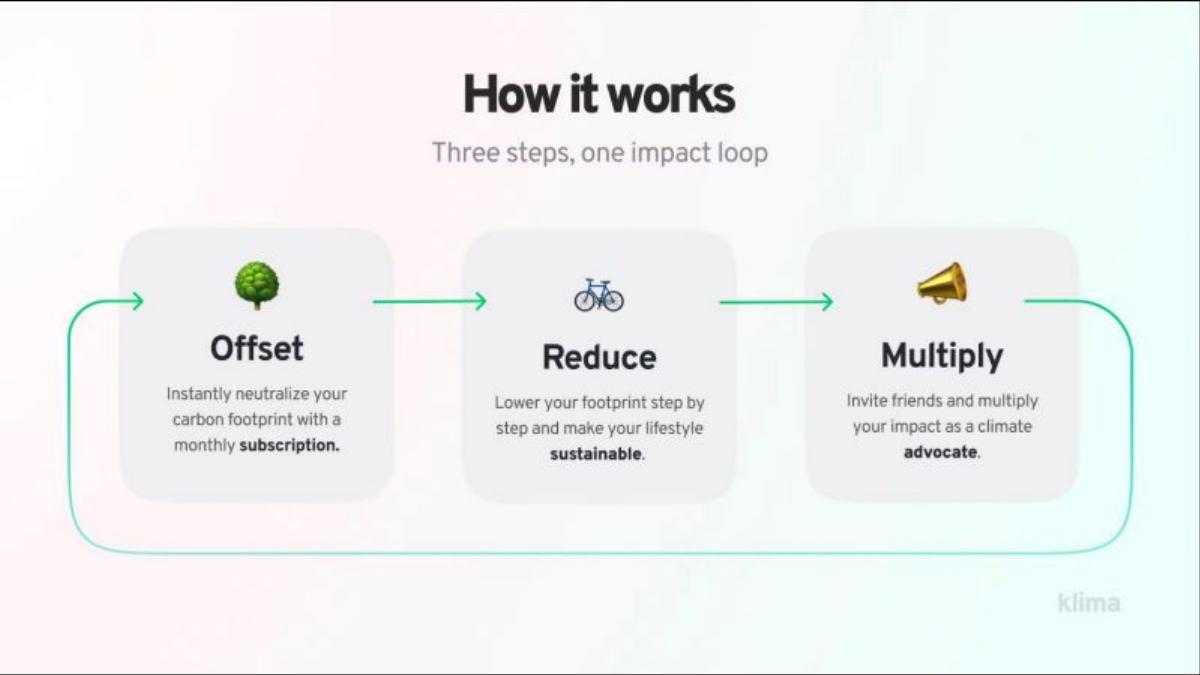
- The business model relies on a three-step impact loop: Offset (subscription), Reduce (lifestyle changes), and Multiply (referrals), as shown on Slide 5.
- Klima utilizes high-trust certification standards for its carbon projects, including Verified Carbon Standard, Gold Standard, and Climate, Community & Biodiversity Standards (Slide 7).
- The company claims a current impact equivalent to 100,000 barrels of raw oil unburned (Slide 15).
- Viral growth is a core product pillar, with 'Multiply' features like leaderboards and 'friends of friends' tracking designed to create a snowball effect (Slides 12-14).
- The founders highlight a 'US Exit 2016' and multiple 'App of the Year' awards to establish credibility in lieu of deep financial disclosures (Slide 19).
- Future growth is pegged on a B2B pivot called 'Klima for teams,' aimed at workforce carbon neutrality (Slide 18).
- The deck completely omits a financial 'Ask' slide, unit economics, and a competitive landscape analysis.
- Social proof is heavily emphasized through Apple Design Award nominations and features in Wired, Forbes, and TechCrunch (Slide 17).
The Narrative: From Global Crisis to Personal Agency
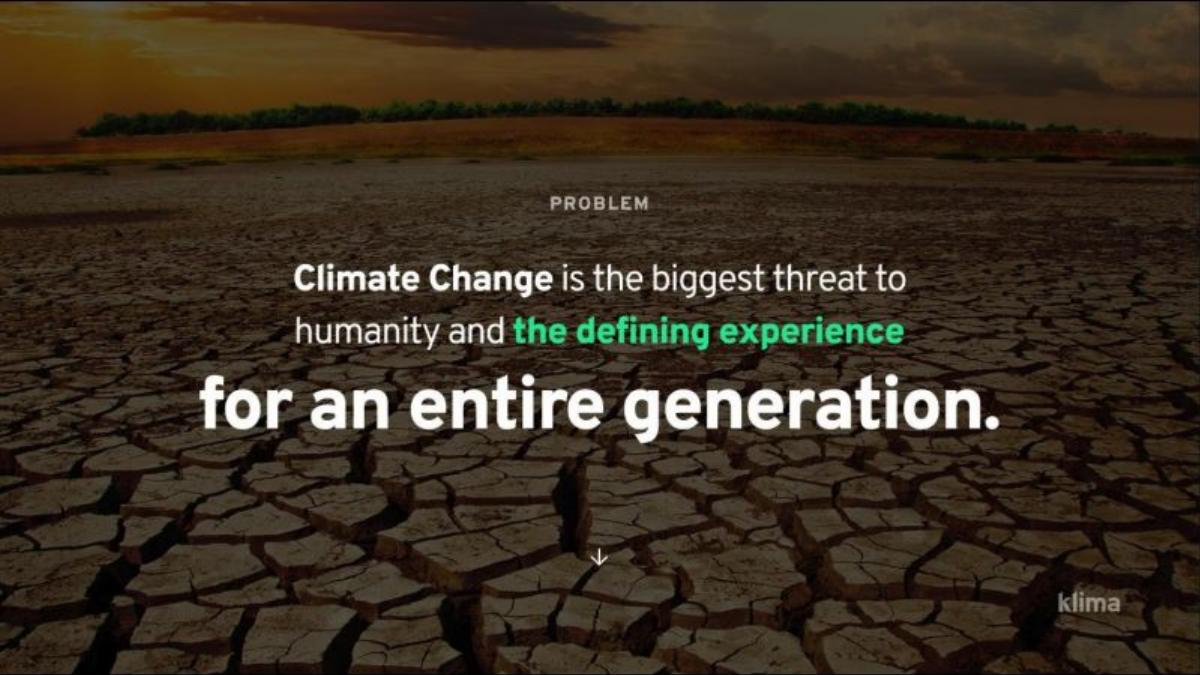
Klima’s Series A deck is a masterclass in emotional storytelling and product-led growth. In an industry often bogged down by complex carbon credit mathematics and regulatory jargon, Klima opts for a consumer-first approach. The deck is visually stunning, utilizing a dark-mode aesthetic that mirrors high-end fintech or lifestyle apps. It frames climate change not just as a problem to be solved, but as the 'defining experience for an entire generation' (Slide 2), positioning the app as the essential tool for that generation.
Slides 1-4: The Hook and the Solution
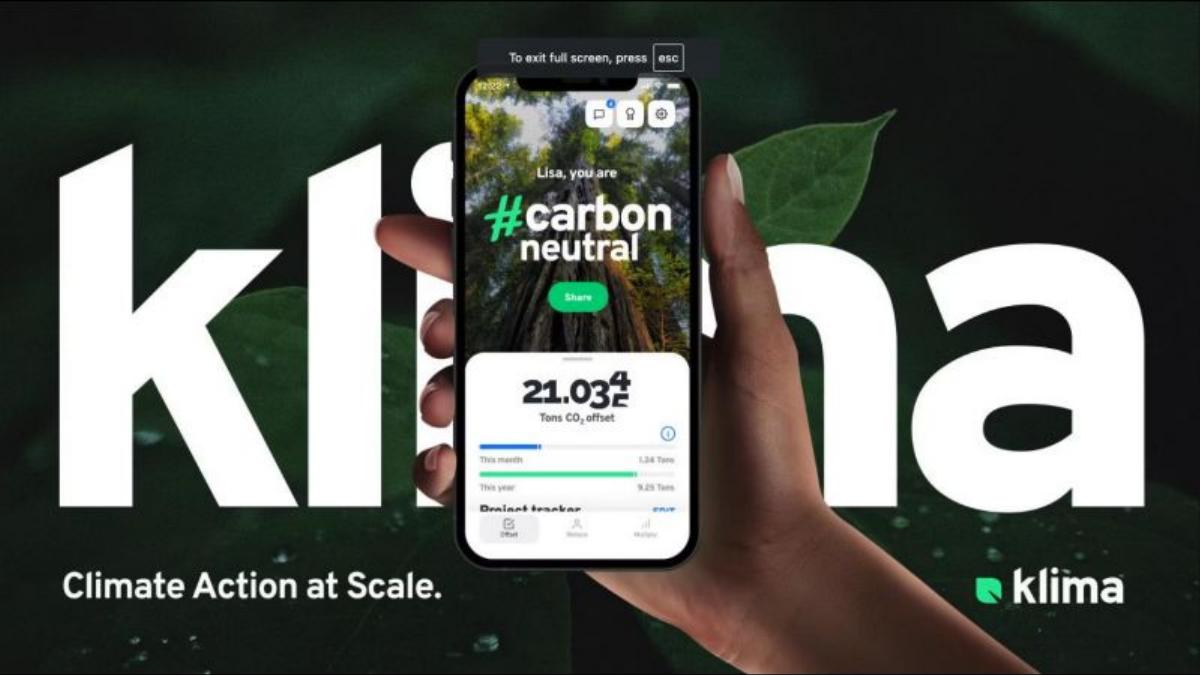
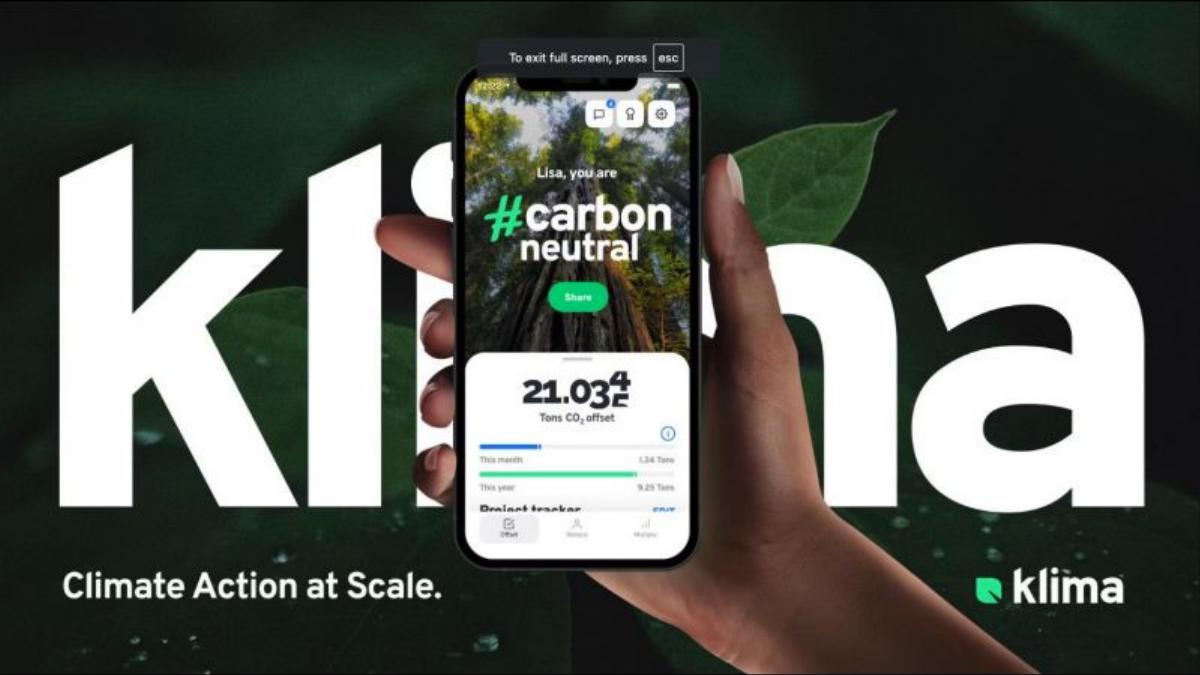
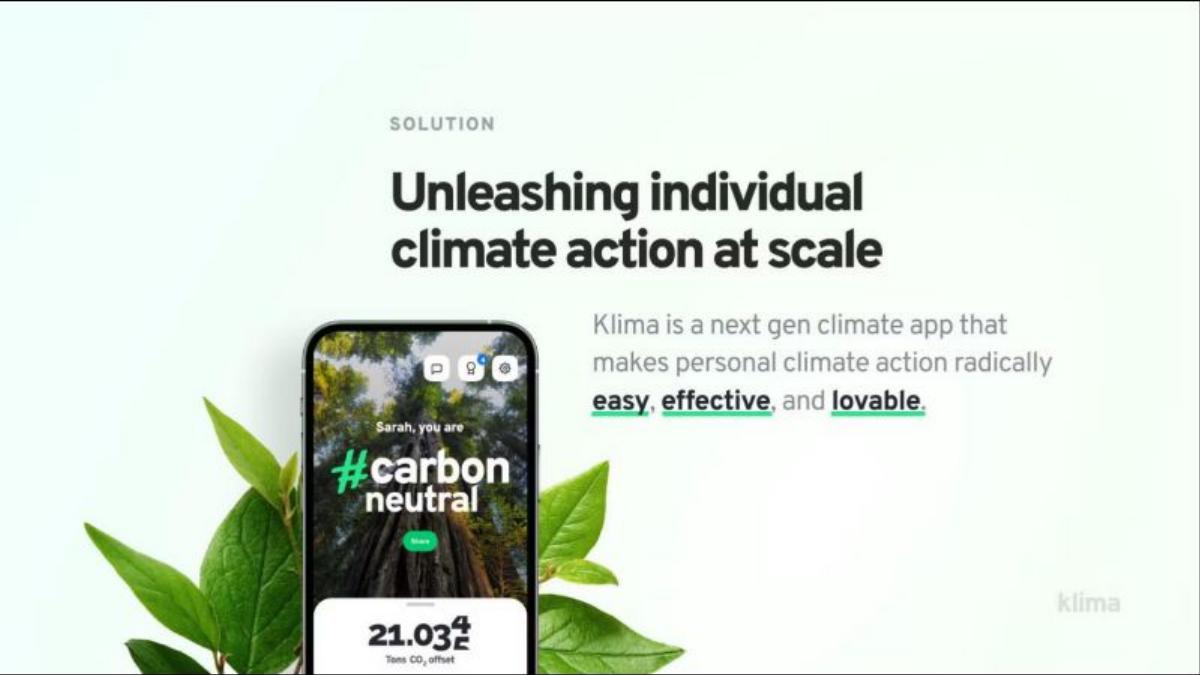
The deck opens with a bold title: 'Climate Action at Scale.' Slide 1 features a high-fidelity mockup of the app, showing a user named Lisa who is '#carbonneutral' with 21.034 tons of CO2 offset. This immediately establishes the product's core value proposition: personalization and status.
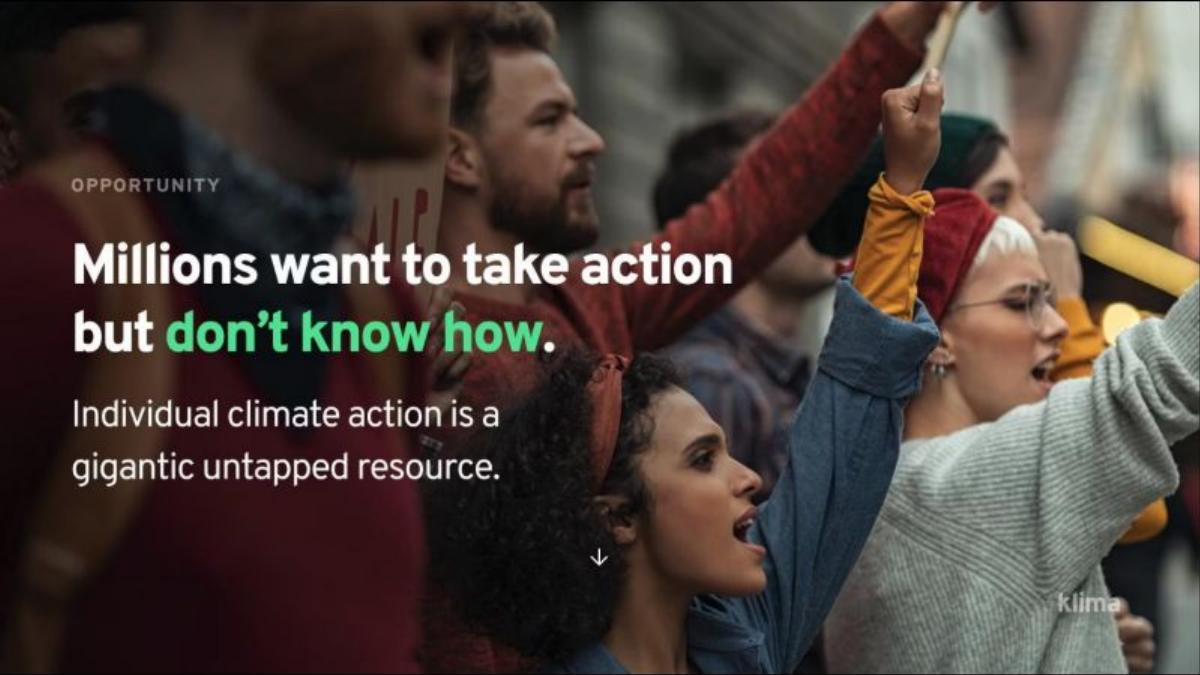
Slides 2 and 3 define the problem and opportunity. The problem is the 'biggest threat to humanity,' but the opportunity is the 'millions who want to take action but don’t know how.' This is a classic 'untapped resource' play. Slide 4 introduces Klima as the 'next gen climate app' that is 'easy, effective, and lovable.' The use of the word 'lovable' is a deliberate nod to the founders' product-centric background, signaling that they prioritize user retention and brand affinity.
Slides 5-8: The 'Offset' Pillar
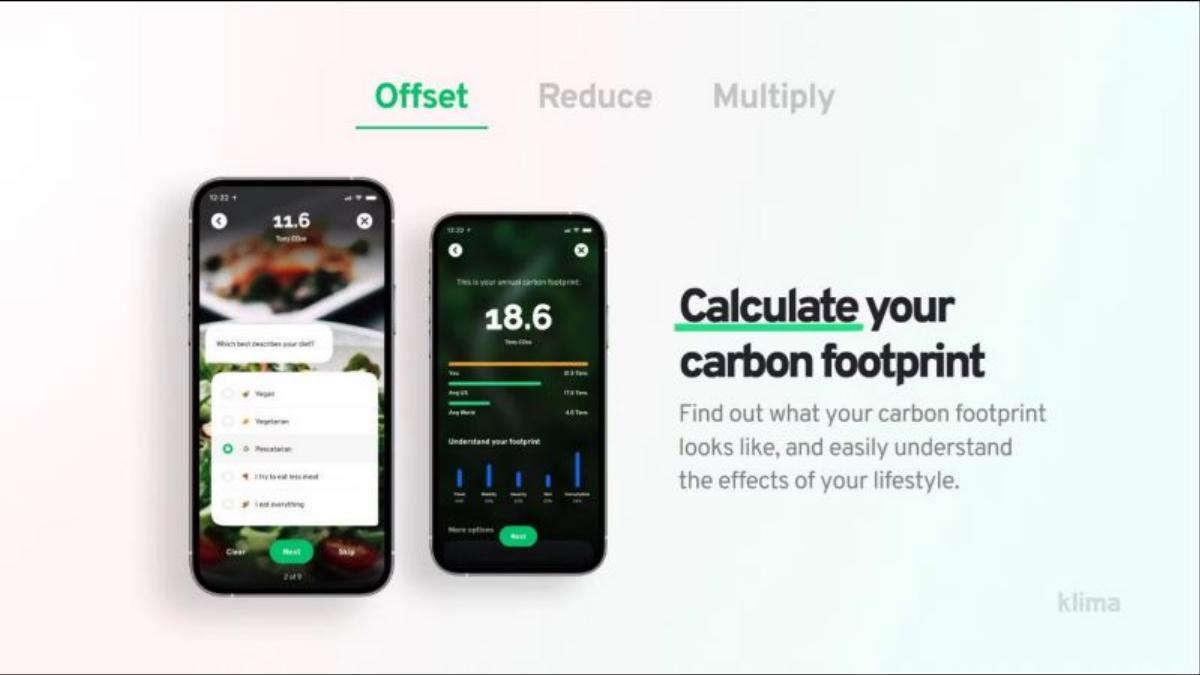
Slide 5 introduces the 'How it works' framework: Offset, Reduce, Multiply. This three-step loop is the backbone of the entire business model. Slides 6 through 8 dive into the 'Offset' phase. The app calculates a user's footprint through a simple onboarding quiz (Slide 6) and then allows them to fund a mix of 'Nature,' 'Tech,' and 'Social' projects (Slide 7). Crucially, Slide 7 includes logos for the Verified Carbon Standard and Gold Standard, providing the necessary institutional credibility to back up the consumer-facing UI.
Slides 9-11: The 'Reduce' Pillar
While offsetting provides immediate gratification, the 'Reduce' section (Slides 9-11) focuses on long-term lifestyle changes. The 'Segment Explorer' (Slide 9) breaks down emissions by Travel, Diet, Mobility, and Housing. Slide 10 shows how the app nudges users toward 'smarter decisions,' such as switching to green energy or going car-free, even showing the potential dollar savings. This adds a layer of utility beyond simple philanthropy, positioning the app as a personal sustainability coach.
Slides 12-14: The 'Multiply' Pillar and Virality
This is where the deck seeks to prove its 'at scale' claim. The 'Multiply' feature (Slide 12) is a referral system where every friend inspired to join 'means one more footprint taken off the planet.' Slide 13 and 14 showcase the social features: a '10x' impact visualization, a timeline of referrals, and a global leaderboard. By gamifying climate action, Klima aims to lower its Customer Acquisition Cost (CAC) through organic, viral growth—a key metric for any B2C app-based business.
Slides 15-17: Impact and Social Proof
Slide 15 provides a rare hard metric: the community's impact is equivalent to 100,000 barrels of raw oil unburned . This is a clever way to visualize a large number (tons of CO2) that might otherwise feel abstract to an investor. Slide 16 reiterates the quality of the offsetting projects, and Slide 17 is a 'Wall of Love' featuring Apple Design Award nominations and press logos from Wired, TechCrunch, and Forbes. This slide serves to validate that the 'lovable' product mentioned in Slide 4 has been recognized by the industry's toughest critics.
Slides 18-19: Future Roadmap and The Team
Slide 18 teases 'Klima for teams,' a B2B expansion planned for 2022. This is a critical slide for a Series A deck, as it suggests a path toward higher-contract-value enterprise revenue, moving beyond individual $10/month subscriptions. Slide 19 introduces the founders. Instead of listing every job they've ever had, they focus on 'Product DNA,' highlighting a 2016 US exit and the fact that their previous products were 'preinstalled in Apple Stores.' This tells investors: 'We know how to build world-class apps that people actually use.'
What Works in the Klima Deck
Visual Consistency: The deck looks and feels like the product. This creates a seamless transition from the vision to the reality of the app. · The 'Multiply' Logic: Investors love viral loops. By dedicating three slides to how one user becomes ten, Klima addresses the primary concern of B2C apps: expensive user acquisition. · Simplified Impact: Translating CO2 tons into 'barrels of oil' makes the impact tangible and memorable. · Founder-Market Fit: The team doesn't claim to be climate scientists; they claim to be 'product' people. In a crowded market of clunky carbon calculators, this is a unique and compelling angle.
What is Missing from the Klima Deck
The 'Ask': There is no slide stating how much they are raising, at what valuation, or what the specific milestones for the next 18 months are. (We know from the catalogue facts they raised €10.8M, but it isn't in the slides). · Unit Economics: There is no mention of LTV (Lifetime Value), CAC, or churn. For a subscription app, these are the 'make or break' metrics. · Revenue/Financials: The deck contains zero financial projections or historical revenue data. It is entirely focused on 'Impact' and 'Product.' · Competitive Landscape: The deck ignores other carbon offsetting apps (like Joro or Earthly), assuming the 'lovability' of their UI is a sufficient moat.
What Founders Should Copy
The 'How it Works' Loop: Slide 5 is a perfect example of how to distill a complex business model into three simple, repeatable steps. · High-Fidelity Mockups: If you are a B2C company, your product UI is your best salesperson. Don't use blurry screenshots; use high-resolution, stylized mockups that show the product in its best light. · Social Proof Integration: Instead of just listing press logos, Klima integrates user reviews and award nominations (Slide 17) to build a narrative of 'inevitable success.' · The B2B Pivot: Even if you are a B2C company today, showing a 'Teams' or 'Enterprise' version of your product (Slide 18) signals to investors that you have a plan for massive, high-margin scale.
Frequently asked questions
- How does Klima generate revenue?
- Based on Slide 5, Klima operates on a monthly subscription model. Users pay to 'instantly neutralize' their carbon footprint. While the deck doesn't disclose the margin kept by Klima versus the amount paid to carbon offset projects, the 'Offset' step is the primary monetization engine described in the product loop.
- What is the 'Multiply' feature mentioned in the deck?
- The 'Multiply' feature (Slides 12-14) is Klima's viral growth mechanism. It encourages users to invite friends and tracks the collective impact of those referrals. The app includes leaderboards and a 'snowball effect' visualization that shows the impact of 'friends of friends,' effectively turning carbon offsetting into a social competition.
- Does the deck provide any traction metrics?
- Traction is presented through impact and social proof rather than raw revenue. Slide 15 cites an annual CO2 reduction equal to 100,000 barrels of oil. Slide 17 highlights being an 'App of the Day' and an Apple Design Award nominee, while Slide 19 notes the team includes 10 product/engineering staff and 7 in marketing.
- Who are the founders and what is their background?
- The founders are Markus Gilles (CEO), Jonas Brandau (CPO & Design), and Andreas Pursian (CTO). According to Slide 19, they are 'mission-driven entrepreneurs with product DNA' who previously achieved a US exit in 2016 and have had products preinstalled in Apple Stores.
- What is missing from this pitch deck?
- This is a 'vision and product' deck. It lacks almost all traditional Series A financial data: there is no P&L, no CAC/LTV analysis, no competitive matrix, and no specific 'Ask' slide detailing how the €10.8M will be spent. It relies entirely on the strength of the UI and the founders' track record.