Kleoverse utilized a 12-slide deck to secure $1.2M in seed funding during the 2022 Web3 surge. The deck addresses a specific friction point in the decentralized economy: the inability to verify skills and find work opportunities across fragmented DAOs. By proposing a 'Proof-of-Talent' model, Kleoverse aimed to replace traditional resumes with blockchain-verified portfolios. The deck is notable for its clean aesthetic and clear roadmap, though it lacks a traditional competitor analysis or detailed unit economics. It leans heavily on the 'Future of Work' narrative, positioning the platform as t…
Key takeaways
- The core problem identified is the lack of a reliable way to signal and discover talent within DAOs and Web3 (Slide 2).
- The solution consists of two pillars: Kleoverse Discovery for opportunities and Kleoverse Profiles for objectively proven talent (Slide 3).
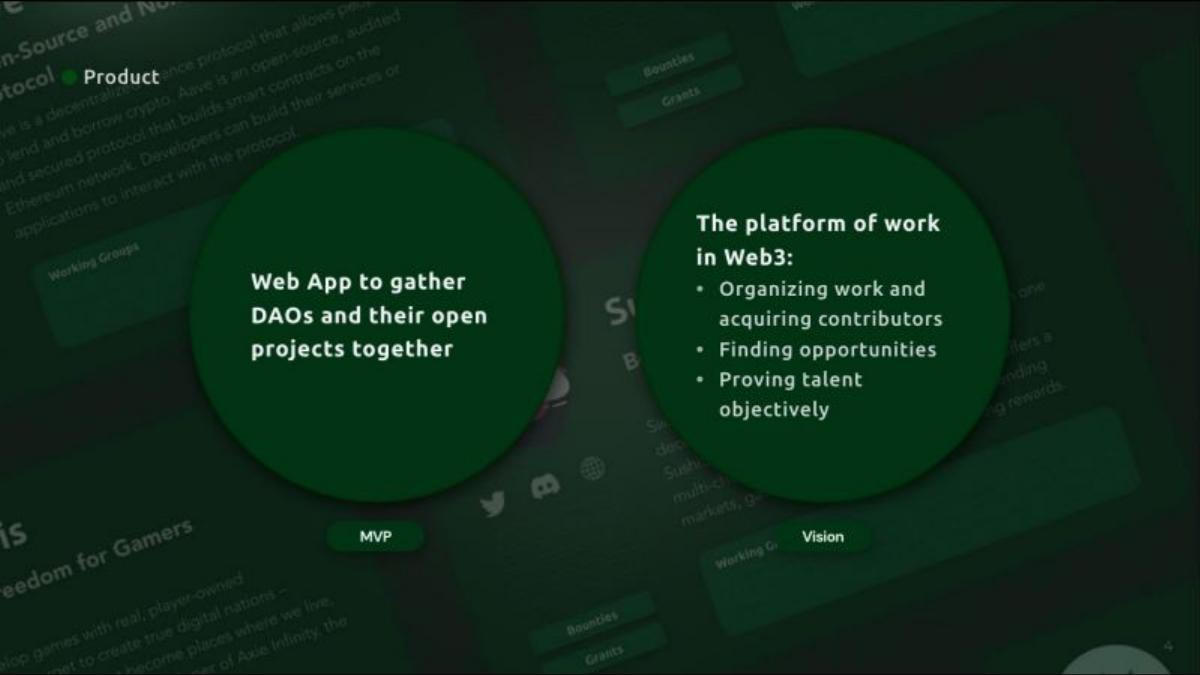
- The product vision aims to organize work, acquire contributors, and prove talent objectively (Slide 4).
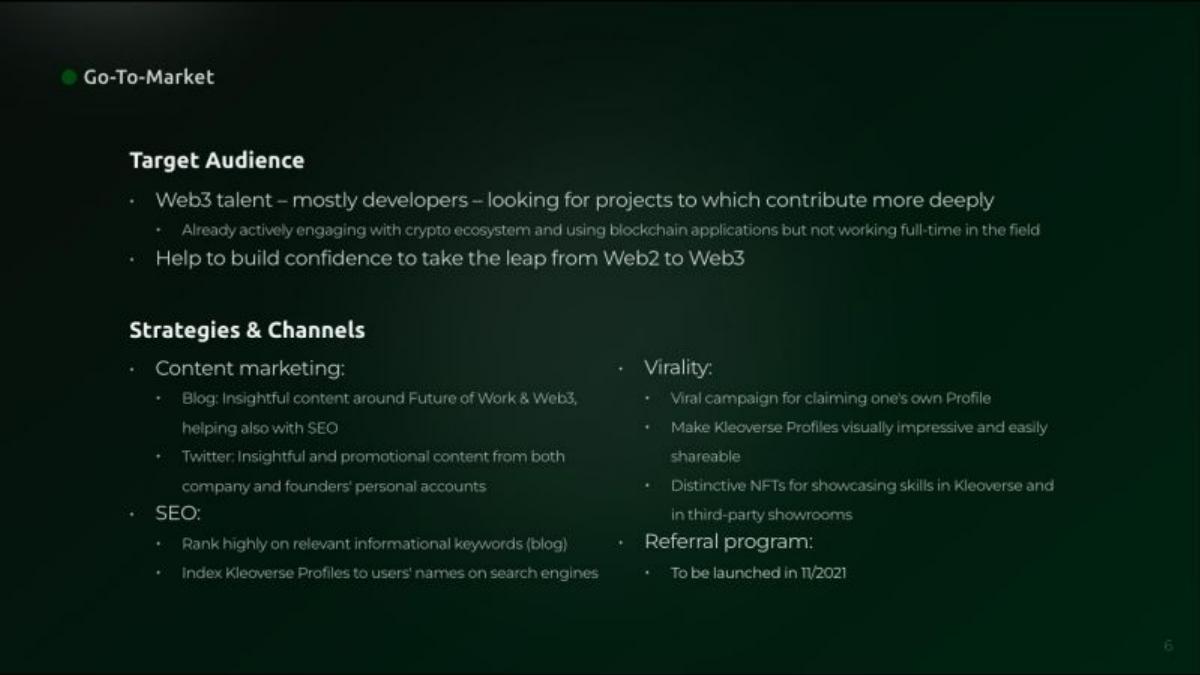
- Go-to-market strategy focuses on Web3 developers and includes viral loops like claiming profiles and NFT-based skill showcasing (Slide 6).
- The team highlights 'Unfair Advantages' including experience in growth flywheels and machine learning (Slide 8).
- The roadmap sets a clear target of 20,000 users by the time of the Seed round in Summer 2022 (Slide 9).
- The $1.2M equity financing round is explicitly allocated, with 71.6% dedicated to Product Development (Slide 10).
- The recruitment plan details specific needs for 4-6 developers and 3 commercial leads to execute the vision (Slide 10).
Introduction
Kleoverse entered the market in 2022 during a pivotal moment for the decentralized economy. As DAOs (Decentralized Autonomous Organizations) proliferated, the friction of finding work and verifying contributor skills became a significant bottleneck. This 12-slide seed deck, which successfully raised $1.2M, focuses on professionalizing the Web3 labor market. The narrative moves quickly from the abstract problem of 'talent signaling' to a concrete recruitment plan, positioning Kleoverse as the infrastructure layer for the 'Future of Work.'
Slide 1: Title Slide
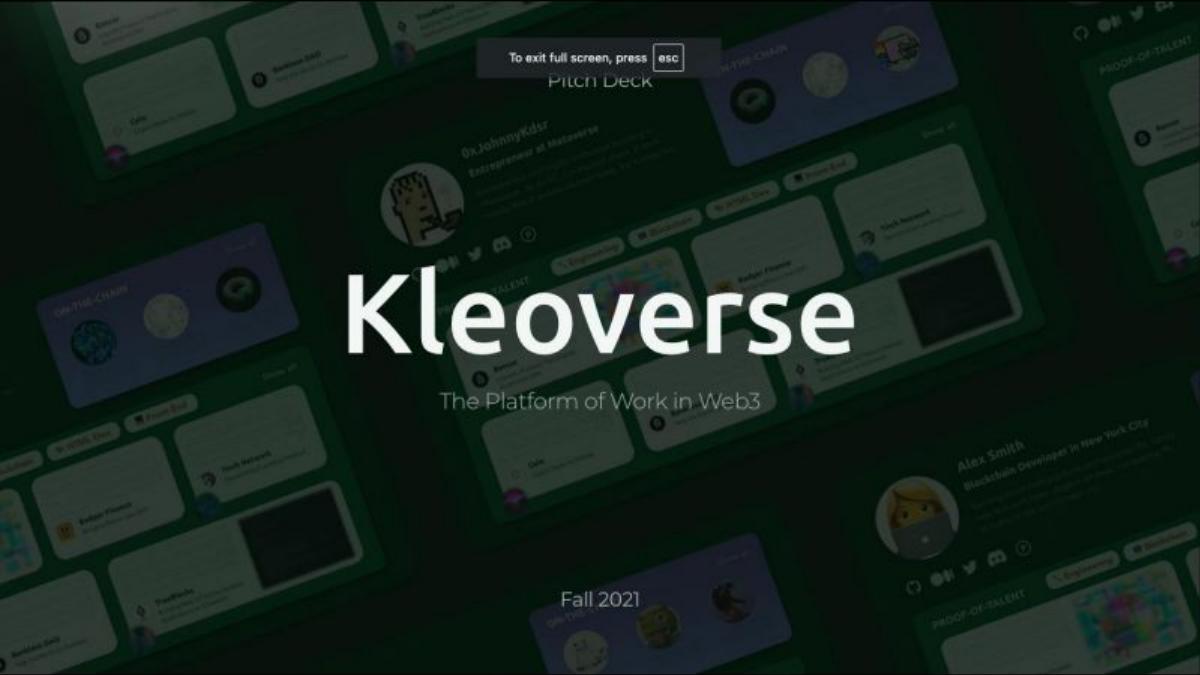
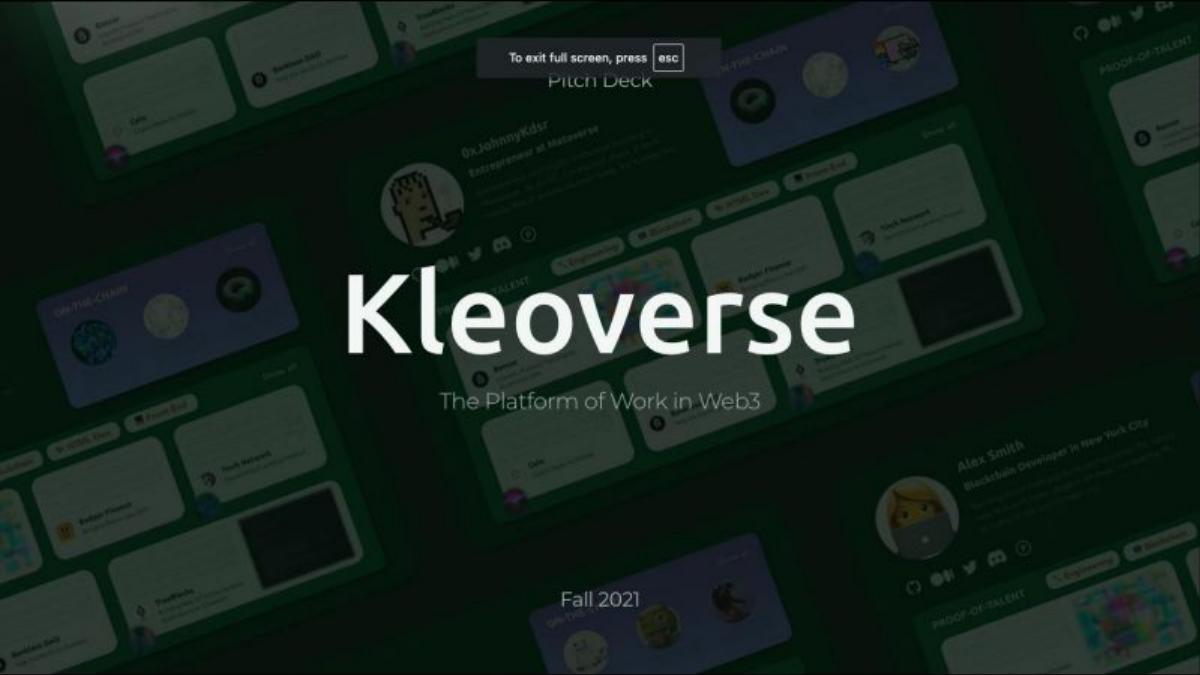
The cover slide establishes the visual identity of Kleoverse: dark greens, clean typography, and a background collage of the product interface. The tagline, "The Platform of Work in Web3," is broad but definitive. It dates the deck to "Fall 2021," placing the fundraise just before the 2022 market shift.
Slide 2: The Problem
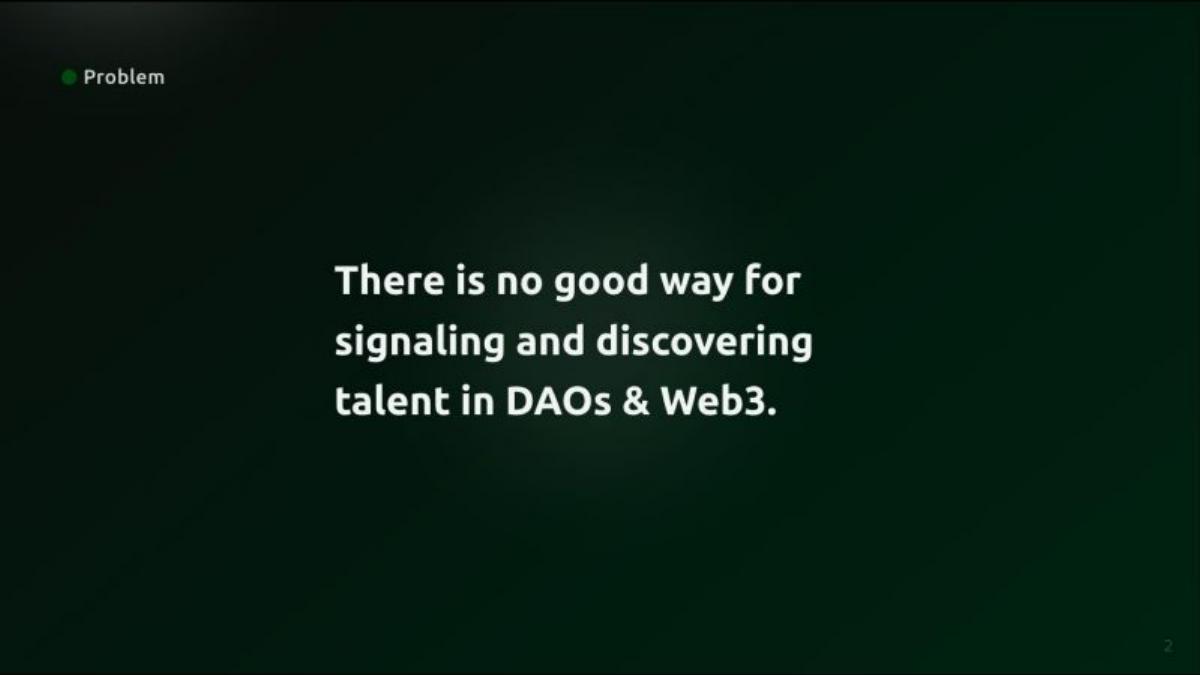
Slide 2 is a minimalist problem statement. It reads: "There is no good way for signaling and discovering talent in DAOs & Web3." By focusing on both 'signaling' (the worker's side) and 'discovering' (the employer's side), the deck immediately identifies the two-sided pain point of a marketplace. It avoids clutter, forcing the investor to agree with the premise before moving to the solution.
Slide 3: The Solution
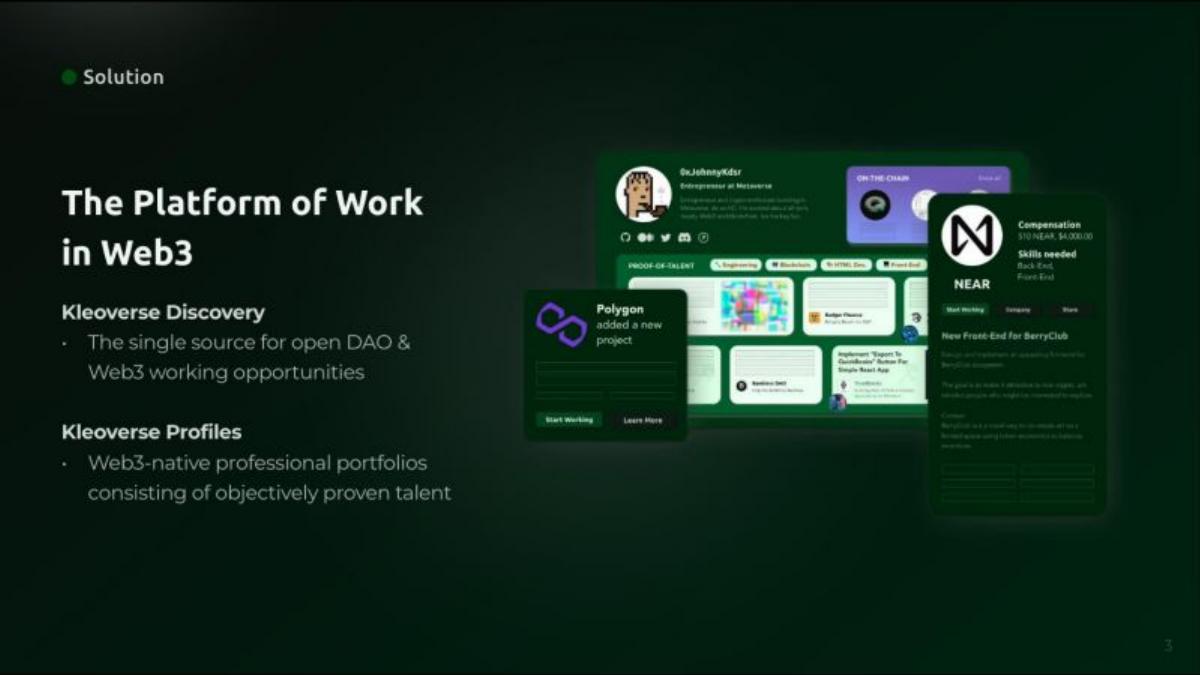
The solution is presented as two distinct products. "Kleoverse Discovery" is described as the "single source for open DAO & Web3 working opportunities." "Kleoverse Profiles" are defined as "Web3-native professional portfolios consisting of objectively proven talent." The slide includes a mockup of a profile featuring a CryptoPunk avatar and 'Proof-of-Talent' badges, signaling that the platform is built for the existing crypto culture.
Slide 4: Product Vision
This slide bridges the gap between the current "MVP" and the long-term "Vision." The MVP is a "Web App to gather DAOs and their open projects together." The vision expands this into a full ecosystem for "Organizing work and acquiring contributors," "Finding opportunities," and "Proving talent objectively." This slide is crucial because it shows the founders are thinking beyond a simple job board toward a comprehensive talent protocol.
Slide 5: Mission
Another minimalist slide, stating the mission: "Revolutionize talent measurement & discovery on the web." This elevates the pitch from a niche Web3 tool to a broader play on how professional identity is managed globally.
Slide 6: Go-To-Market Strategy
The GTM slide identifies the target audience as "Web3 talent – mostly developers" who are looking to move from Web2 to Web3. The strategy relies on four pillars:
Content Marketing: Blogs and Twitter content regarding the Future of Work. · SEO: Indexing Kleoverse Profiles to users' names on search engines. · Virality: Viral campaigns for claiming profiles and using NFTs to showcase skills. · Referral Program: Stated to launch in 11/2021.
This slide demonstrates a clear understanding of how to acquire users in a community-driven ecosystem without heavy paid ad spend.
Slide 7: User Feedback
Slide 7 serves as social proof. It features a wall of quotes from the early community. Notable quotes include: "Credentialing is a huge need in the Web3 space" and "You guys are saving me a ton of time." The footer notes these were selected answers from a sign-up questionnaire, proving that even at the pre-seed/seed stage, the team was collecting qualitative data to validate their product-market fit.
Slide 8: Team
The team slide features two co-founders: Aleksi Loytynoja (CEO) and Joni Karras (CTO) . The deck highlights their "Unfair advantages." Loytynoja cites experience as an Investment Manager at Evli Growth Partners and leading a team of 100+ volunteers. Karras is noted as a Machine Learning Engineer and the first employee at an AI/ML agency. This combination of venture/growth experience and technical engineering is a standard 'hacker and hustler' pairing that investors favor.
Slide 9: Roadmap
The roadmap is exceptionally detailed for a seed deck. It tracks progress from October 2021 to Summer 2022 . Key milestones include:
January 2022: Profile Beta Launch with a target of 1,000 users and 7,000 on the waitlist. · April 2022: Full launch and removing the waitlist. · Summer 2022: Hitting 20,000 users and raising the Seed round.
The inclusion of specific waitlist numbers (1,000, 7,000, 20,000) gives investors concrete metrics to hold the team accountable to.
Slide 10: Financials and Use of Funds
Kleoverse explicitly states they are raising an "equity financing round of USD 1.2M." The use of funds is broken down via a pie chart: 71.6% for Product Development , 16.4% for Marketing , and 12.0% for General & Admin . They also include a "Recruitment plan" for 4-6 developers and 3 commercial roles. This level of transparency regarding hiring needs shows that the founders have mapped out the operational requirements to reach their 20,000-user goal.
Slide 11: Contact Slide
The final slide returns to the title graphic with the call to action "Join our journey." It provides direct contact information for the CEO, including an email and a Finnish phone number.
What Kleoverse Does Well
The Kleoverse deck excels at clarity of purpose . In a space (Web3) often bogged down by technical jargon and whitepapers, this deck remains focused on the human element: work, talent, and discovery. The visual consistency is high, using a dark theme that feels native to the developer community they are targeting. Furthermore, the Roadmap (Slide 9) is a masterclass in setting measurable expectations; it doesn't just promise growth, it provides the specific user milestones the founders expect to hit at each stage of the product rollout.
What is Missing
The most glaring omission is a Competitor Analysis . In 2021-2022, several platforms were vying to be the 'LinkedIn of Web3' (e.g., RabbitHole, Layer3, or Gitcoin). Failing to address how Kleoverse differs from these existing bounty and credentialing platforms is a missed opportunity to define their unique value proposition. Additionally, there is no Market Size (TAM) slide. While the 'Future of Work' is a massive narrative, investors usually want to see a bottom-up calculation of how many Web3 developers exist and what the potential revenue per user might be. Finally, the Business Model is not explicitly stated on any slide, leaving the investor to guess whether they will take a cut of bounties, charge DAOs for recruitment, or sell premium profile features.
Founder Takeaways
1. Quantify your waitlist: If you don't have active revenue, your waitlist is your most valuable currency. Kleoverse used specific waitlist targets (Slide 9) to show momentum. 2. Define 'Unfair Advantages': Don't just list your job history. Follow Kleoverse's lead on Slide 8 and explicitly state why your specific background makes you the only person who can solve this problem. 3. Align hiring with funding: When asking for money, show exactly who you are going to hire to spend it. The recruitment plan on Slide 10 makes the $1.2M ask feel grounded in reality rather than a round number pulled from thin air. 4. Keep the problem simple: You don't need ten slides to explain why the world is broken. One sentence (Slide 2) can be enough if the pain point is universal within your target niche.
Frequently asked questions
- What is the primary business model of Kleoverse?
- According to the catalogue listing, Kleoverse operates as a B2C Marketplace. While the deck focuses on the user-facing 'Proof-of-Talent' profiles and discovery tools, the marketplace model implies that value is generated by connecting Web3 talent with DAOs and projects seeking contributors, likely through fees or premium discovery features.
- How does Kleoverse plan to verify talent?
- Slide 3 and Slide 4 introduce 'Kleoverse Profiles' and the concept of 'objectively proven talent.' The go-to-market slide (Slide 6) mentions using 'Distinctive NFTs for showcasing skills.' This suggests a system where on-chain actions or completed bounties are minted as non-fungible tokens to serve as immutable credentials.
- Who were the lead investors in this $1.2M seed round?
- The round was led by byFounders and Sfermion. Other participating investors included Equilibrium and Ville Vesterinen. This mix indicates support from both traditional venture capital firms and specialized Web3/NFT investment funds, aligning with the company's position at the intersection of HR tech and blockchain.
- What were the specific growth targets mentioned in the deck?
- On Slide 9 (Roadmap) and Slide 10 (Financials), the company sets a clear milestone to hit 20,000 users by the end of H1 2022. The roadmap also tracks progress from 500 waitlist members in late 2021 to a goal of 10,000s of waitlist members by early 2022.
- What is missing from the Kleoverse pitch deck?
- The deck lacks a competitive landscape slide, which is unusual for a marketplace startup. It also does not provide a Total Addressable Market (TAM) calculation or a detailed breakdown of how the platform will generate revenue (monetization strategy). These omissions suggest the seed round was raised primarily on vision, team, and early community traction.