Celer Network's 2018 pitch deck is a study in minimalist technical communication. Spanning 15 slides, the deck avoids the common pitfall of over-explaining blockchain mechanics with text, opting instead for a progressive visual build that illustrates the transition from centralized to decentralized systems, and finally to their proprietary Layer-2 solution. The deck claims significant performance benchmarks, including a 20,000X reduction in transaction latency and zero fees for smart contracts. While it lacks traditional business metrics like a detailed roadmap, financial projections, or a sp…
Key takeaways
- The deck uses a progressive disclosure technique, adding one layer of complexity per slide to explain the tech stack (Slides 6-9).
- Celer claims a 20,000X reduction in transaction latency for Ethereum and 100X lower costs on Slide 11.
- The technical value proposition includes 'ZERO transaction fee for smart contracts' as stated on Slide 11.
- Traction is demonstrated through testnet data, reporting 2,570 Monthly Active Users and 3.5 Million transactions per month (Slide 13).
- The team slide relies entirely on institutional and corporate logos (e.g., Google, Amazon, Stanford, MIT) rather than names or bios (Slide 12).
- A strategic partnership or use case with General Motors (GM) is highlighted through a 'Peer-to-peer Electricity Market' diagram (Slides 14-15).
- The deck completely omits a business model, competitor analysis, and a formal funding request slide.
- The visual identity is consistent, using a dark mode aesthetic with a specific orange-to-white gradient for technical components.
The Minimalist Technical Pitch: Celer Network
Celer Network’s 2018 pitch deck is a masterclass in visual storytelling for a highly technical product. In the world of blockchain infrastructure, founders often fall into the trap of writing whitepapers on slides. Celer did the opposite. With only 15 slides and minimal text, they focused on the architectural 'gap' in the market and how their Layer-2 solution fills it. This deck helped secure $6.1 million by prioritizing clarity and pedigree over granular business mechanics.
Slides 1-5: The Problem of Centralization vs. Decentralization
Slide 1 is a standard title slide featuring the tagline: "Bring Interactive, Secure and Low-Cost Applications to Every Blockchain." It establishes the mission immediately: cross-chain functionality and cost reduction.
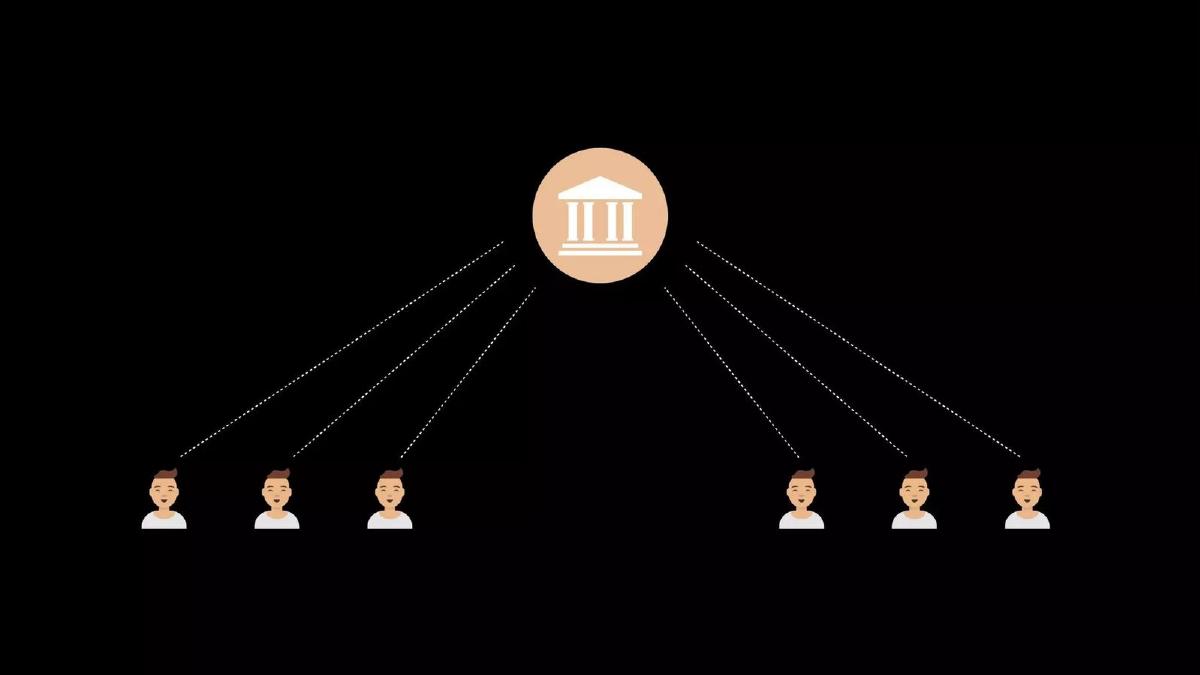
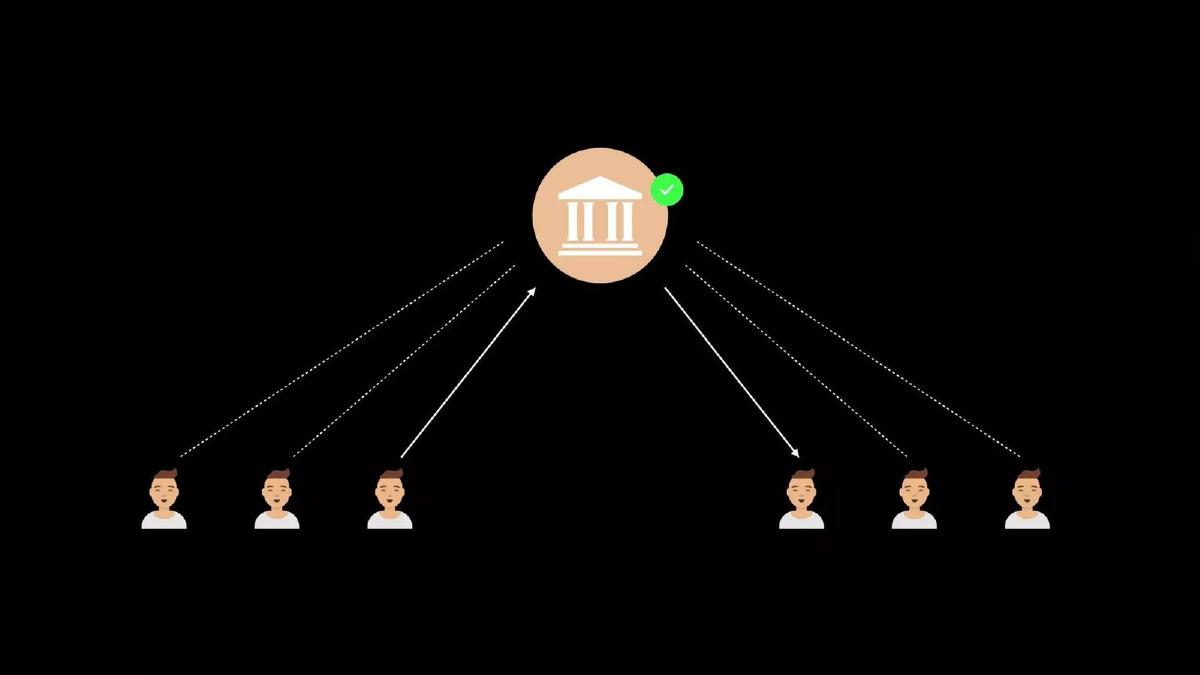
Slides 2 and 3 use simple iconography to represent centralized systems. A central bank-like icon is connected to six users. Slide 3 adds a green checkmark to the central hub, representing the efficiency of centralized validation. There is no text on these slides, forcing the presenter to narrate the trade-offs of centralized trust.
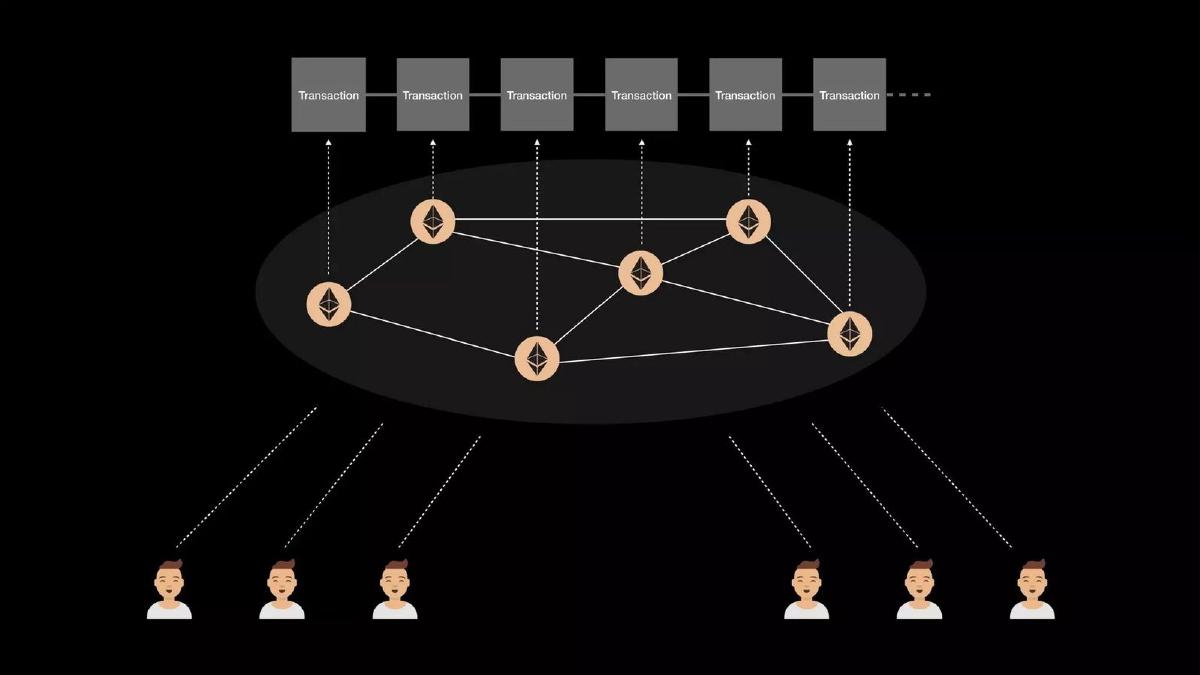
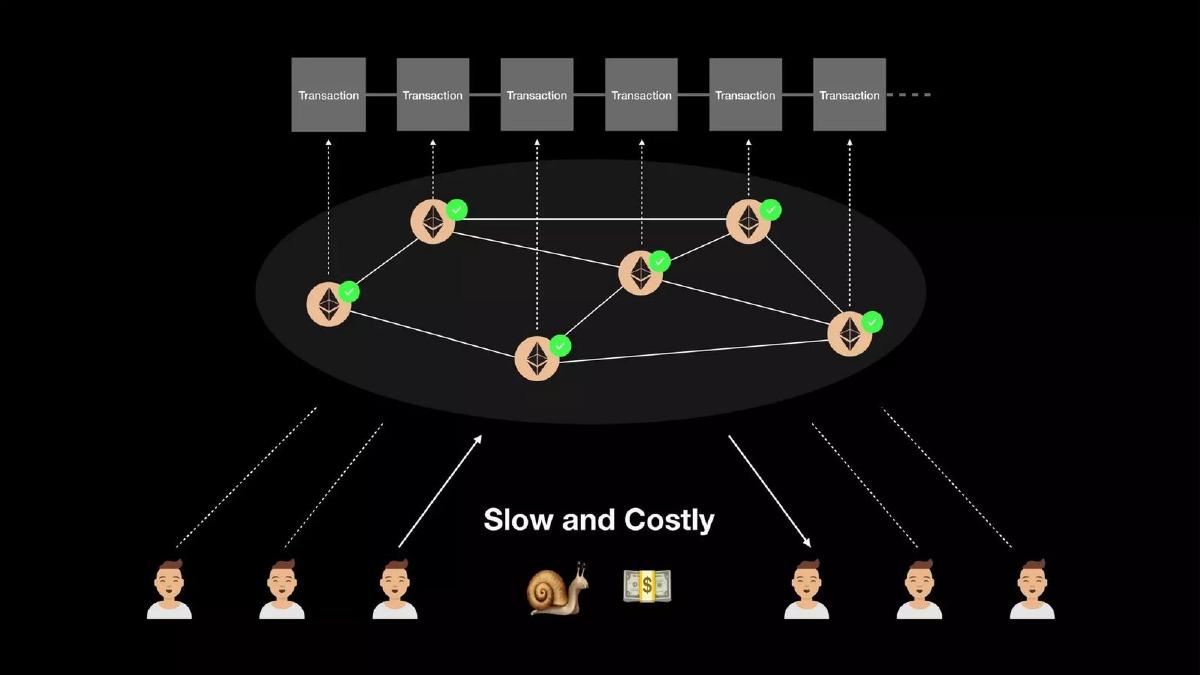
Slides 4 and 5 transition to the decentralized reality. Slide 4 shows an Ethereum-based network where transactions are processed through a web of nodes. Slide 5 introduces the friction, adding a snail icon and a stack of cash with the text "Slow and Costly." This is a classic 'Problem' sequence, visualized through the lens of network topology rather than market pain points.
Slides 6-11: The Solution and Performance Benchmarks
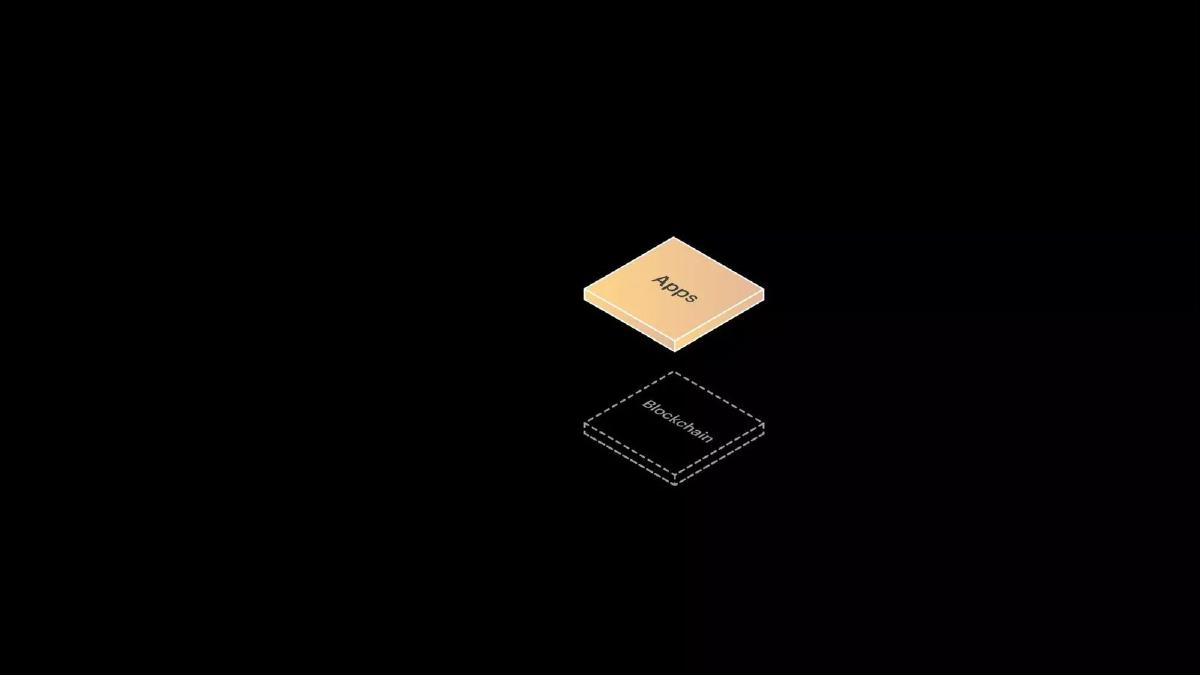
Slides 6 through 9 utilize a build-up animation style. Slide 6 shows 'Apps' floating above 'Blockchain.' Slide 7 introduces the 'Celer Network' name as the "Most Advanced Layer-2 Scaling Platform." By Slide 9, the Celer Network layer is physically inserted between the apps and the base blockchain, labeled as the combination of "cStack + cEconomy." This visual metaphor for 'Layer-2' is one of the most effective in the industry, as it literally shows the middleware positioning of the product.
Slide 10 is a transition slide that repeats the "Most Advanced Layer-2 Scaling Platform" claim, leading into the 'meat' of the technical promise on Slide 11 . Here, Celer presents its three core value propositions in large font: "20,000X reduction on transaction latency for Ethereum and 100X lower cost," alongside "ZERO transaction fee for smart contracts." By placing these figures next to the architectural diagram, they link the 'how' directly to the 'result.'
Slides 12-15: The Team, Traction, and Enterprise Vision
Slide 12 , titled "Built By," is a pure pedigree play. Instead of headshots, it features 18 logos. These include tech giants like Google, Amazon, and Cisco, and academic institutions like MIT, Stanford, Princeton, and Berkeley. The slide categorizes the team into Researchers, Engineers, Designers, and Marketing, signaling a well-rounded organization capable of both innovation and execution.
Slide 13 addresses the 'Traction' requirement. Under the headline "Scalability = Adoption," Celer claims their "Testnet App Beats 95% Blockchain dApps." They back this up with two key metrics: "2570 Monthly Active Users" and "3.5 Million Transactions per month." The inclusion of mobile mockups for a wallet and a game (cGomoku) suggests the platform is developer-ready.
Slides 14 and 15 move into the 'Future' or 'Use Case' category. By featuring the General Motors (GM) logo and a diagram of a "Peer-to-peer Electricity Market," Celer demonstrates that their technology isn't just for crypto-enthusiasts but has applications in the massive IoT and energy sectors. The deck concludes on Slide 16 with a simple logo and the website URL.
What Works in the Celer Network Deck
The most successful element of this deck is its visual economy . By using isometric diagrams to explain Layer-2 scaling, Celer avoids the 'wall of text' that plagues most infrastructure pitches. An investor doesn't need to understand the math of state channels to see that Celer is a necessary 'bridge' between apps and the blockchain.
Furthermore, the pedigree-first team slide is highly effective for the 2018 era of fundraising. In a market saturated with speculative projects, showing logos from Google and MIT serves as a powerful proxy for technical competence. The deck also does a great job of quantifying the value . Saying "it's faster" is weak; saying "20,000X reduction in latency" is a compelling, investable claim.
What is Missing from the Celer Network Deck
While the deck is visually stunning, it omits several traditional venture capital requirements:
Business Model: There is no mention of how the company makes money. While the 'cEconomy' is mentioned on Slide 9, the mechanics of token value accrual or fee structures are absent. · Competitor Analysis: In 2018, the Layer-2 space was becoming crowded with projects like Raiden and Plasma. Celer does not address why their 'cStack' is superior to these alternatives. · Roadmap: The deck shows current testnet traction but offers no timeline for mainnet launch, ecosystem expansion, or future technical milestones. · The Ask: There is no slide detailing how much money is being raised, the valuation, or how the funds will be allocated. This suggests the deck was likely used as a supporting visual for a verbal presentation rather than a standalone document.
What a Founder Should Copy
Founders building complex technical products should emulate Celer’s progressive disclosure of information . Start with the simplest version of the problem (Slides 2-5) and layer in the solution (Slides 6-9) so the audience is never overwhelmed.
Additionally, the use of 'Proxy Traction' is a smart move for early-stage companies. If you don't have millions of users yet, show that your testnet is outperforming the current market leaders, as Celer did on Slide 13. Finally, if your team has a high pedigree, use logos instead of bios . It is faster for an investor to scan a wall of prestigious logos than it is to read four paragraphs of career history.
Final Thoughts
Celer Network’s deck is a product of its time—a period where technical promise and team pedigree were the primary drivers of blockchain investment. It succeeds by being a 'visual aid' rather than a 'report.' For modern founders, the takeaway is clear: if your technology is complicated, your slides must be simple. Use diagrams to show the 'shape' of your solution, and let your metrics and team logos do the heavy lifting of building trust.
Frequently asked questions
- How does Celer Network explain its technical architecture?
- Celer uses an isometric diagrammatic approach. Starting on Slide 6, it shows 'Apps' floating above 'Blockchain.' By Slide 9, it inserts the 'Celer Network' layer in between, labeling the combination as 'cStack + cEconomy.' This visual shorthand avoids the need for dense paragraphs about off-chain scaling, making the 'Layer-2' concept immediately intuitive for the viewer.
- What performance metrics did Celer promise in this deck?
- On Slide 11, the company makes three bold claims: a 20,000X reduction in transaction latency for Ethereum, a 100X reduction in cost, and zero transaction fees for smart contracts. These figures are presented in large, high-contrast text to ensure they are the primary takeaway for potential investors evaluating the technology's efficiency.
- How is the team's expertise validated without individual bios?
- Slide 12, titled 'Built By,' uses a 'logo wall' strategy. It categorizes the team into Researchers, Engineers, Designers, and Marketing, then lists logos from top-tier universities (Princeton, Berkeley, MIT, Stanford) and tech giants (Google, Amazon, Oracle, Cisco). This implies a high level of collective expertise and 'pedigree' without requiring the reader to vet individual resumes.
- Does the deck show any real-world usage or traction?
- Yes, Slide 13 focuses on testnet adoption. It claims that their testnet app 'Beats 95% Blockchain dApps' and provides specific figures: 2,570 Monthly Active Users and 3.5 Million transactions per month. It also shows mobile UI mockups for 'cPay' and 'cGomoku' to prove the technology is functional and user-facing.
- What is the significance of the General Motors (GM) slide?
- Slides 14 and 15 introduce a 'Peer-to-peer Electricity Market' use case featuring the GM logo. This serves as a 'Future Vision' or 'Partnership' slide, suggesting that Celer's scaling technology can be applied to industrial IoT and energy sectors, moving the conversation beyond simple cryptocurrency transfers to enterprise-level utility.