CENOS is a simulation software platform designed to move industrial engineering tools from expensive, expert-only niches to mass adoption by practical engineers. Their 10-slide deck highlights a significant market gap: 38% of SMBs want simulation software but cannot access it due to cost and complexity. The company addresses this with vertical-focused apps that claim 2-8x lower costs and 8-12x faster learning curves compared to legacy solutions. With a founding team of three PhDs in applied physics and mathematics, CENOS demonstrated early traction with $120k in 2019 revenue from 13 global cu…
Key takeaways
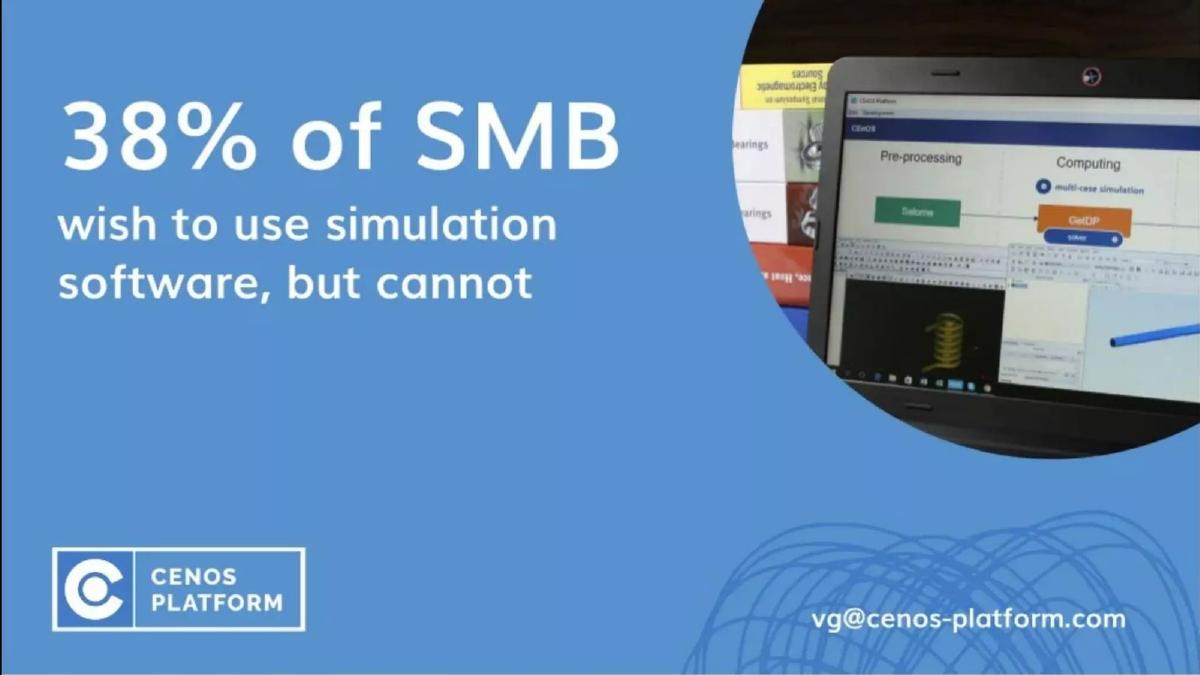
- The deck identifies a specific market pain point: 38% of SMBs are currently locked out of the simulation software market (Slide 4).
- CENOS quantifies its value proposition with specific efficiency metrics: 2-8x less cost and 8-12x faster learning (Slide 7).
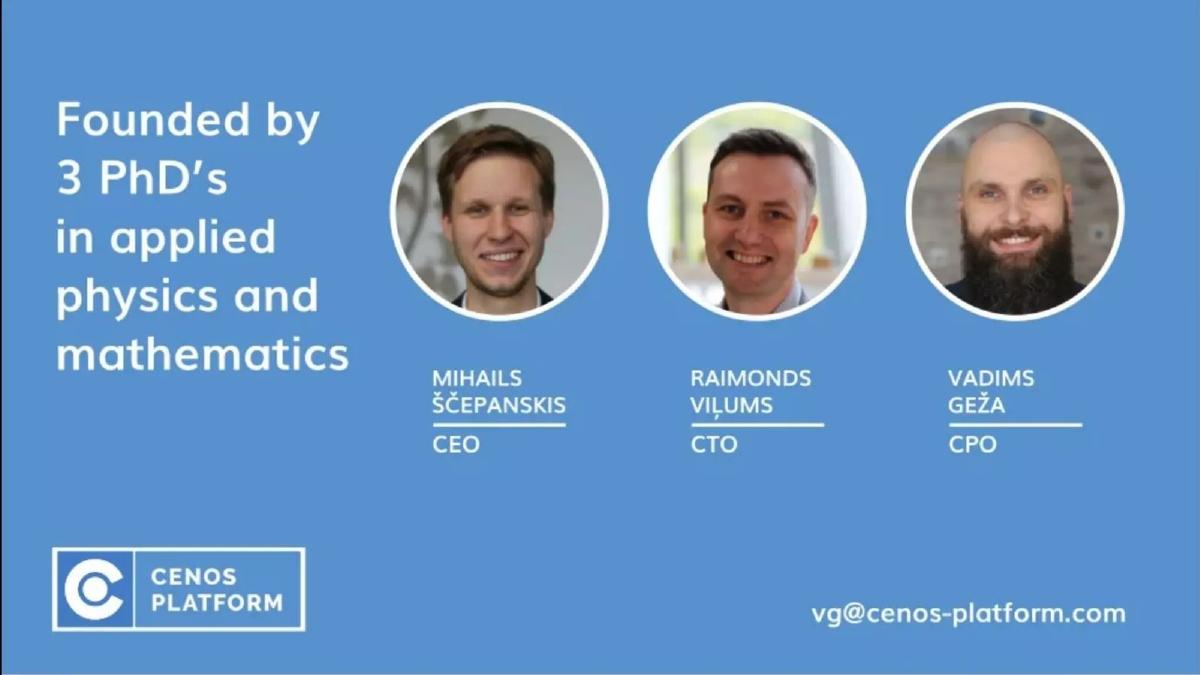
- The founding team consists of three PhDs in applied physics and mathematics, providing high technical credibility for a deep-tech product (Slide 5).
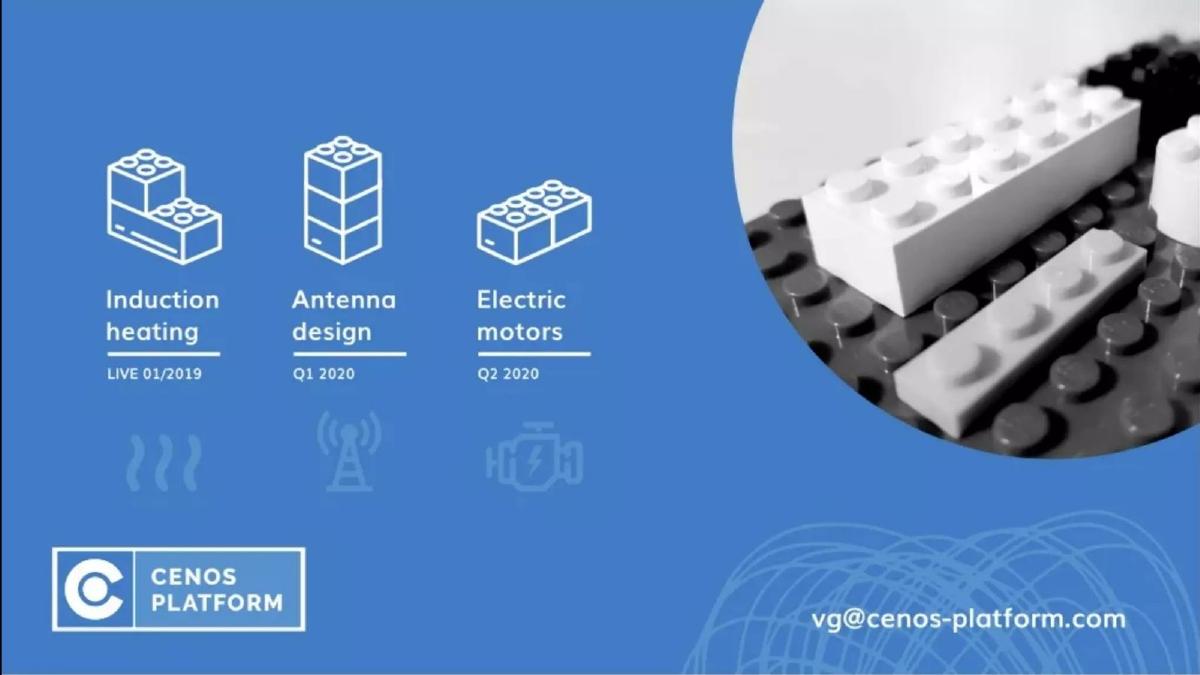
- The product strategy uses a modular 'Lego-like' approach, launching vertical-specific apps for induction heating, antennas, and motors (Slide 6).
- Market sizing is broken down into specific sub-sectors, including a $50M induction heating niche and a $300M electric motor segment (Slide 8).
- Early traction is clearly stated as $120k in revenue for 2019 from 13 customers across North America, South America, and Europe (Slide 9).
- The deck lacks a formal 'Ask' slide, omitting the specific funding amount or use of funds requested during the presentation (Slide 10).
- There is no explicit competitor analysis or comparison table included in the 10-slide sequence.
The CENOS Pitch Deck: A Deep-Tech Teardown
CENOS represents a classic 'democratization' play in the deep-tech space. Industrial simulation software (FEA/FEM) has historically been the domain of massive conglomerates like Ansys or Dassault Systèmes, with price tags and learning curves to match. The CENOS deck, consisting of just 10 slides, focuses on the untapped middle market: the Small and Medium-sized Businesses (SMBs) that need these tools but are priced out. With a team of three PhDs and clear early revenue, this deck illustrates how to present a complex technical product through the lens of market accessibility.
Slide 1-3: The Vision and The Process
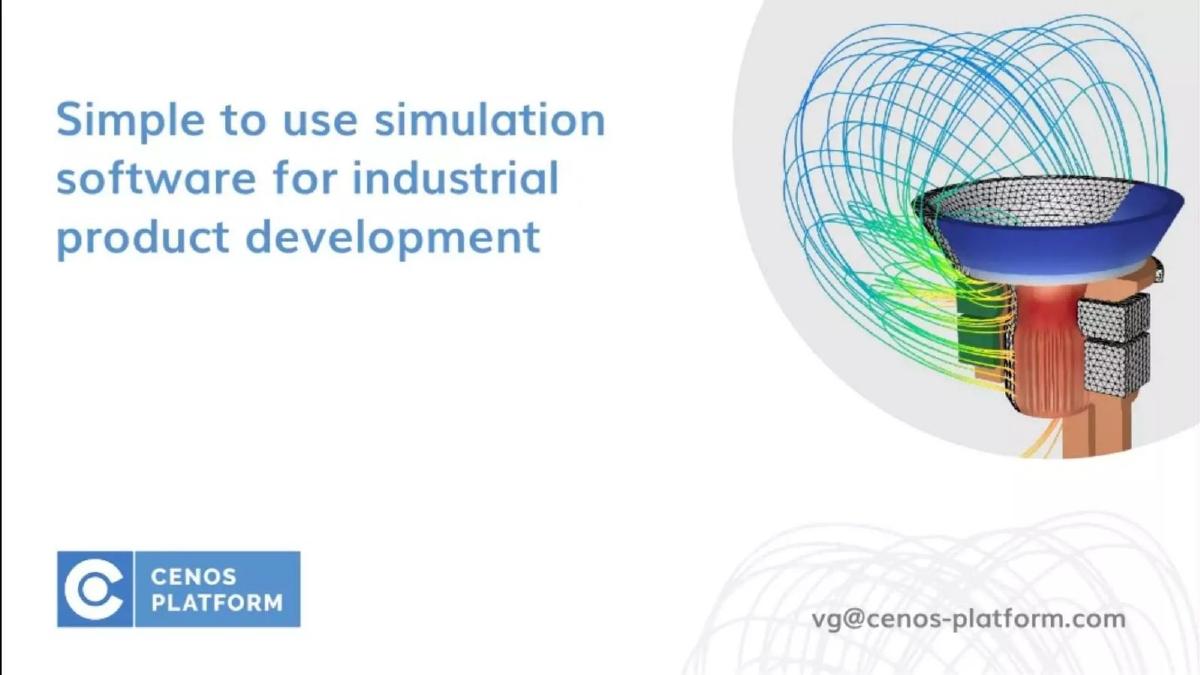
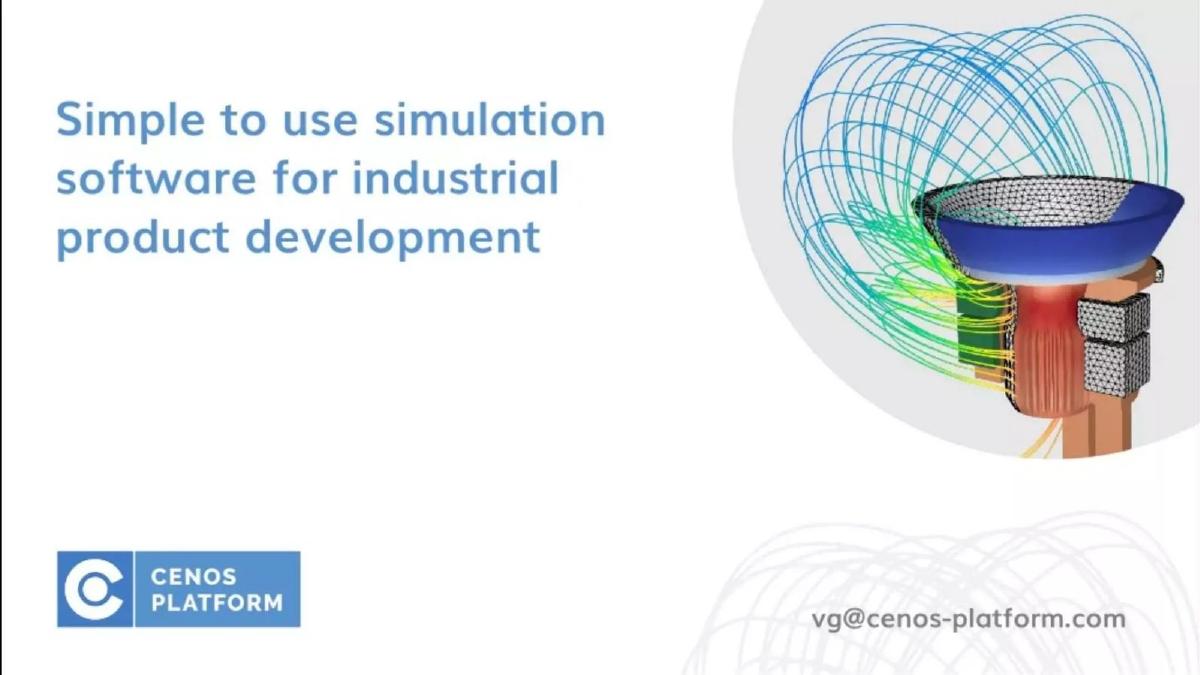
Slide 1 introduces the company with a simple tagline: Simple to use simulation software for industrial product development . The visual is a technical rendering of an induction heating simulation, immediately signaling the product's sophistication to a technical investor. The inclusion of a contact email (vg@cenos-platform.com) on every slide is a subtle but effective way to ensure the deck remains actionable if shared as a standalone PDF.
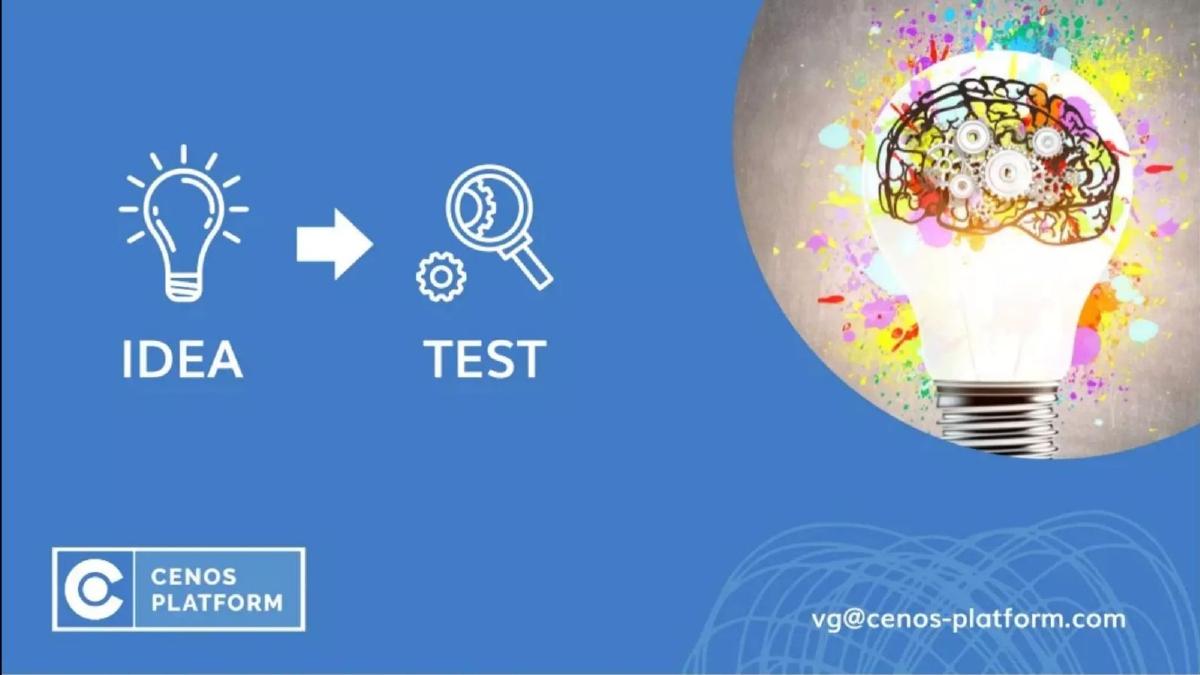
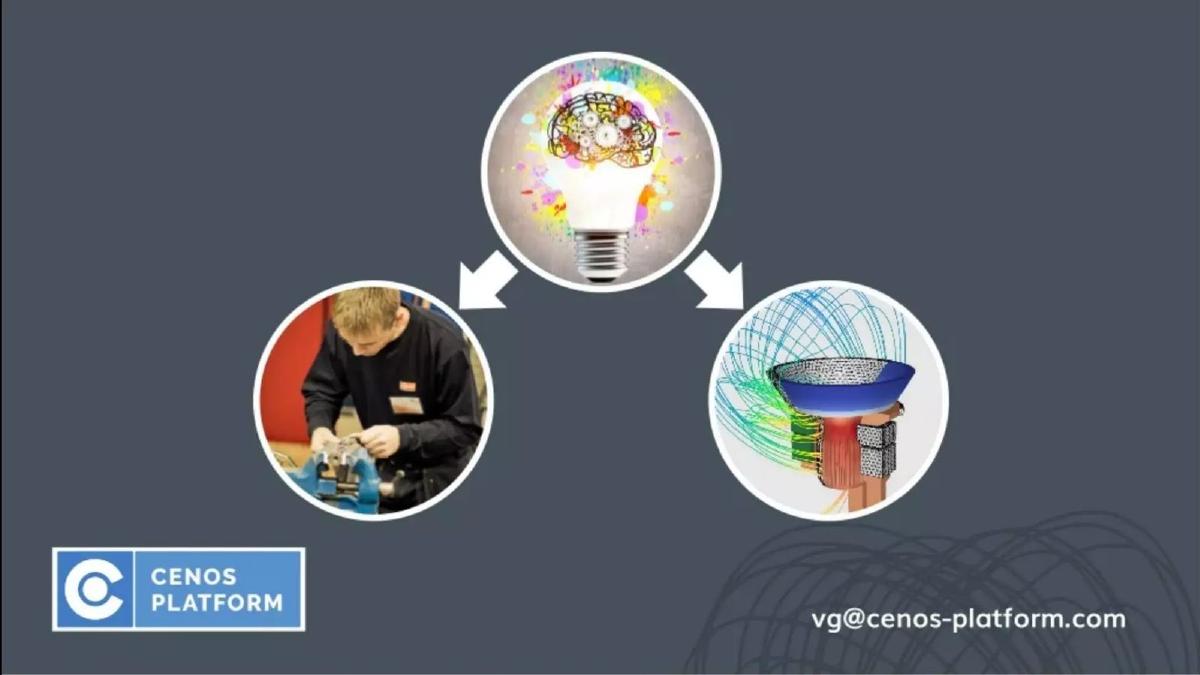
Slide 2 and 3 use minimalist iconography to describe the engineering workflow. Slide 2 shows a transition from 'IDEA' to 'TEST,' while Slide 3 splits the 'TEST' phase into two paths: physical prototyping (represented by a photo of a man at a workbench) and digital simulation (represented by the software rendering). This visualizes the core value proposition—replacing slow, expensive physical testing with fast, accurate digital simulation.
Slide 4: The Market Gap
Slide 4 is the 'hook' of the deck. It states that 38% of SMB wish to use simulation software, but cannot . By quantifying the frustration of the target demographic, CENOS validates the existence of a 'blue ocean' market. The slide features a photo of the software running on a standard laptop, reinforcing the idea that this is not a tool requiring a supercomputer or an enterprise server farm.
Slide 5: The Academic Pedigree
In deep-tech, the team is often the most important slide. Slide 5 highlights that the company was Founded by 3 PhD's in applied physics and mathematics . The founders—Mihails Ščepanskis (CEO), Raimonds Viļums (CTO), and Vadims Geža (CPO)—are presented with clean headshots. For a product that relies on the accuracy of physics simulations, having three doctors at the helm provides the necessary technical 'moat' and credibility to investors who might not understand the underlying math.
Slide 6-7: Product Strategy and Value Prop
Slide 6 uses Lego bricks as a metaphor for their modular, vertical-focused approach. It lists three specific applications: Induction heating (Live 01/2019) , Antenna design (Q1 2020) , and Electric motors (Q2 2020) . This 'land and expand' strategy shows a clear roadmap for growth beyond their initial niche.
Slide 7 provides the hard metrics that an CFO or engineering lead would care about. They claim the software is AFFORDABLE (2 - 8 X less costs) and SIMPLE TO USE (8 - 12 X faster learning) . These are bold claims, but they directly address the barriers mentioned on Slide 4. The image shows an engineer using the software in a typical office setting, further pushing the 'mass adoption' narrative.
Slide 8-9: Market Size and Traction
Slide 8 breaks down the Unserved markets . It identifies a $5 Bn potential SMB segment , with specific breakdowns for their initial verticals: $50M for induction heating, $250M for antenna design, and $300M for electric motors. This shows that the founders have done the bottom-up work to understand where their revenue will actually come from, rather than just quoting a generic multi-billion dollar industry figure.
Slide 9 provides the 'Proof of Life.' It shows 13 customers worldwide with pins on a global map covering North America, South America, and Europe. Most importantly, it lists 2019 revenue: $120 k . While $120k is modest, for a pre-seed/seed stage company in a complex industrial space, it proves that companies are willing to pay for the solution.
Slide 10: The Closing
Slide 10 serves as the contact slide, featuring Vadims Geža (CPO) and a screenshot of the software interface. The interface looks modern and form-based, which supports the 'simple to use' claim compared to the command-line or complex ribbon interfaces of legacy CAD/CAE tools.
What Works in the CENOS Deck
Clarity of Mission: The deck never wavers from the 'simulation for the masses' theme. Every slide reinforces either why the current market is broken or how CENOS fixes it. · Technical Credibility: Leading with a PhD-heavy team is essential for this sector. It preempts questions about whether the software actually works. · Specific Roadmap: By naming specific verticals (Induction, Antenna, Motors) and giving dates, the founders show they have a tactical plan for market entry. · Quantified Value: Using 'X times' improvements (2-8x cost, 8-12x speed) gives investors a clear handle on the competitive advantage.
What is Missing from the CENOS Deck
The Ask: The most significant omission is a slide detailing how much money they are raising and what they plan to do with it (e.g., hiring more developers, expanding sales to the US). · Competitive Landscape: While they imply legacy software is the competition, they don't name names or show a feature-comparison matrix. Investors would want to know how they defend against a price drop from an incumbent like Ansys. · Unit Economics: There is no mention of Customer Acquisition Cost (CAC) or Lifetime Value (LTV). While early for a pre-seed, some indication of the sales cycle length for industrial software would be helpful. · Technology Deep-Dive: The deck explains what the software does, but not how it achieves 8-12x faster learning. Is it a better UI? A cloud-based solver? AI-assisted setup? The 'secret sauce' is left to the imagination.
What a Founder Should Copy
The 'Unserved Market' Slide: Slide 8 is an excellent example of how to break down a large TAM into actionable, niche sub-segments. It makes a $5B market feel attainable. · Consistent Branding: The use of the logo and contact info on every slide ensures the brand is reinforced throughout the presentation. · Visual Metaphors: Using Lego bricks to explain a modular software architecture (Slide 6) is a great way to simplify a technical concept for non-technical investors. · Global Traction Map: Even with only 13 customers, showing they are spread across three continents (Slide 9) suggests the problem is universal and the solution scales globally.
Frequently asked questions
- How much did CENOS raise with this deck?
- According to the catalogue facts, CENOS raised $1,900,000 in 2017 at the Pre-Seed stage. However, the deck itself contains revenue data from 2019, suggesting this specific version of the deck was likely used for a subsequent bridge or seed extension, or the catalogue year refers to the company's initial formation funding.
- What is the core problem CENOS is solving?
- CENOS addresses the 'expert barrier' in engineering. Traditional simulation software is built for enterprise niches and requires highly specialized experts. CENOS aims to make these tools intuitive enough for the 10 million practical engineers working in production who currently find existing tools too expensive or difficult to learn.
- Who are the founders of CENOS?
- The company was founded by three PhDs: Mihails Ščepanskis (CEO), Raimonds Viļums (CTO), and Vadims Geža (CPO). Their academic backgrounds are in applied physics and mathematics, which is critical for developing the complex algorithms required for electromagnetic and thermal simulations.
- What specific industries does CENOS target?
- The deck outlines a vertical-focused strategy. They launched with induction heating in January 2019, followed by antenna design in Q1 2020 and electric motors in Q2 2020. They also identify a broader $5 billion potential market within the SMB segment for other engineering applications.
- Is there a clear business model in the deck?
- The deck mentions '2-8x less costs' and shows $120k in revenue, but it does not explicitly detail the pricing model (e.g., SaaS subscription vs. per-project licensing). It focuses more on the market opportunity and technical feasibility than the specific mechanics of the sales motion.