Healthcare Problem Slide: Real Pitch Deck Examples
How health startups frame the problem in a pitch deck: whose pain (patient, provider, payer or pharma), clinical outcome versus cost, and cited statistics.
Healthcare Problem Slide: Real Pitch Deck Examples
Seven problem slides from health startups, shown in full, compare whose pain each company describes, whether it states a clinical outcome or a cost, and how it supports its numbers.
TL;DR
In healthcare the person with the problem is often not the person who pays to fix it. A strong healthcare problem slide names one of them (patient, provider, payer or drug developer), gives the cost or clinical consequence in a number, and cites where the number comes from. Charta Health does this in two lines for providers: chart review costs "at least $85 billion every year" yet "less than 2% of charts are actually reviewed". Being Health and Feminora footnote their clinical figures. MedX links a care delay (5 to 18 months to see a dermatologist) to a cost and survival gap. Slides that list system-wide forces (Bright.md's six-part wheel) describe healthcare in general rather than a problem the company solves.
Healthcare problem slides from real pitch decks
Each example shows the exact stored slide above its analysis and links to the full teardown. Figures are as shown on the slides; we have not verified them.
Charta Health problem slide — slide 2
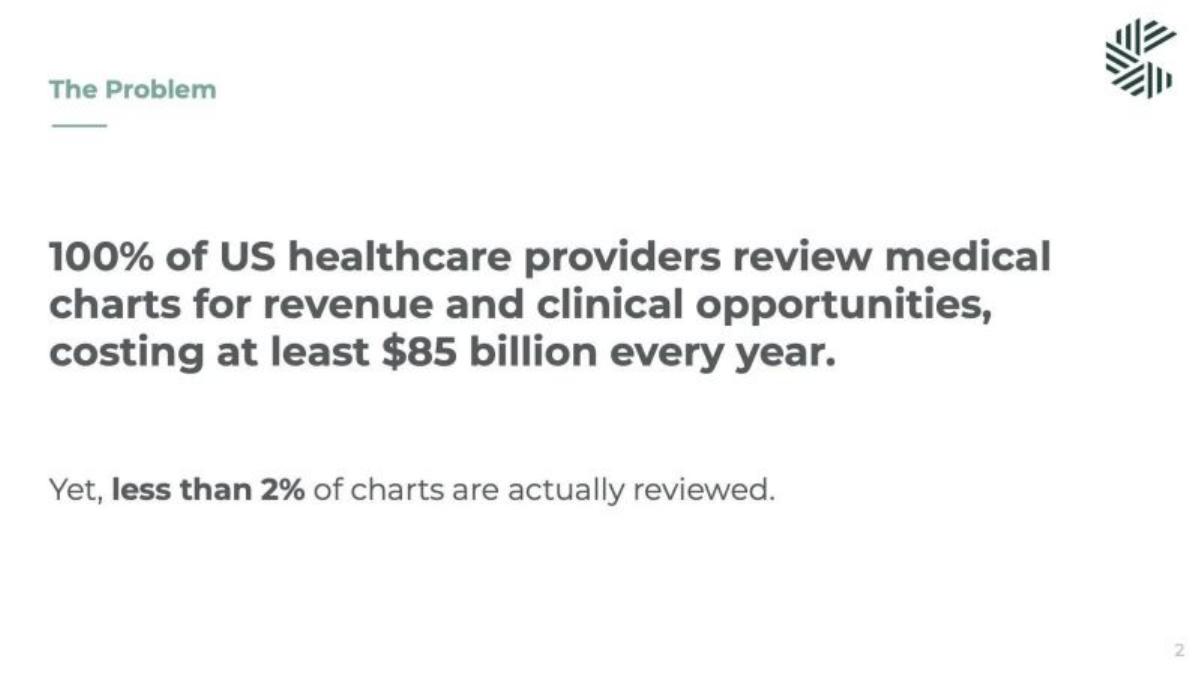
AI chart review for US healthcare providers. Provider pain.
Charta Health deck, slide 2. Exact stored slide matched to this analysis.
Our analysis: The contrast between high spending and low coverage makes the gap obvious in one reading.
Evidence and limitation: Two figures: an annual cost ($85B) and a coverage gap (under 2% of charts reviewed). No source on the slide.
What a founder can adapt: For provider software, state what the buyer spends today and how much of the job still goes undone.
Supporting analysis
What the deck claims: "The Problem — 100% of US healthcare providers review medical charts for revenue and clinical opportunities, costing at least $85 billion every year. Yet, less than 2% of charts are actually reviewed."
Presentation choice: One buyer, one cost, one gap. Nothing else on the slide.
When it does not fit: No source for $85 billion. Add one in small type.
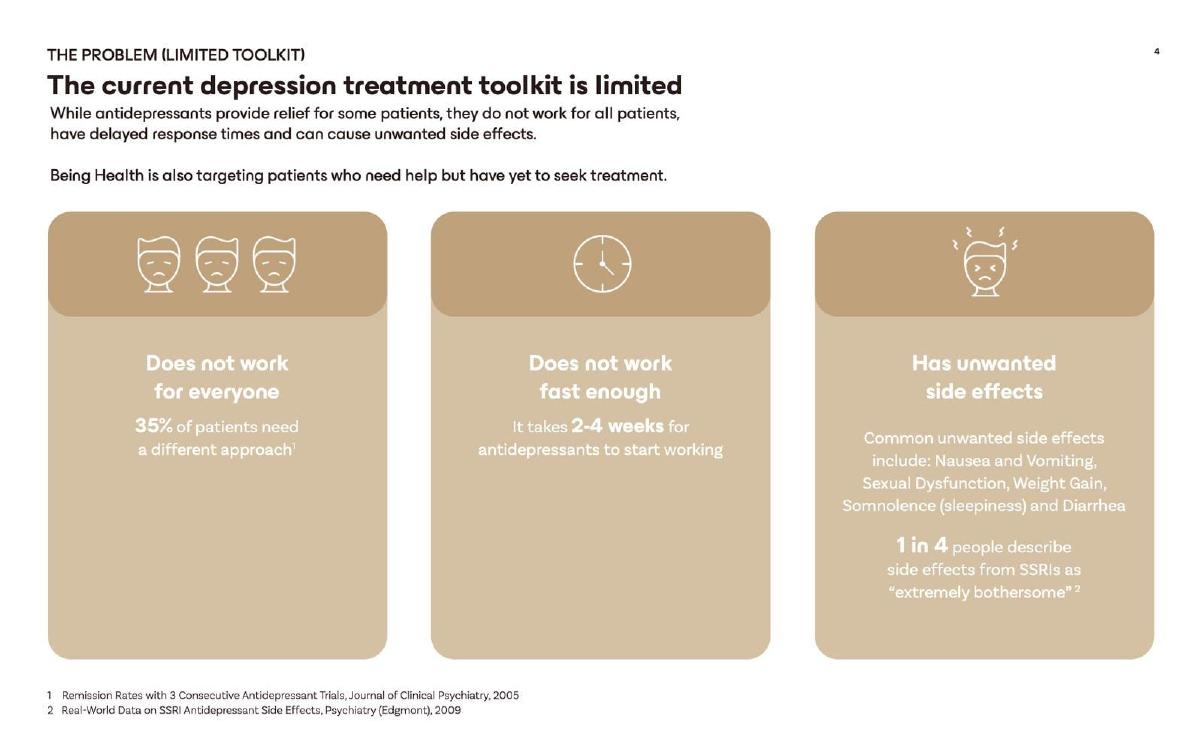
Depression treatment. Patient pain, framed as limits of current treatment.
Being Health deck, slide 4. Exact stored slide matched to this analysis.
Our analysis: It frames the problem as specific failures of the current treatment, which sets up exactly what a new treatment must beat.
Evidence and limitation: Three clinical figures, two with journal citations on the slide.
What a founder can adapt: Name the current standard of care and list where it falls short, one number per point.
Supporting analysis
What the deck claims: "The current depression treatment toolkit is limited. While antidepressants provide relief for some patients, they do not work for all patients, have delayed response times and can cause unwanted side effects." Three panels: "Does not work for everyone — 35% of patients need a different approach"; "Does not work fast enough — It takes 2-4 weeks for antidepressants to start working"; "Has unwanted side effects — 1 in 4 people describe side effects from SSRIs as 'extremely bothersome'". Footnotes cite the Journal of Clinical Psychiatry (2005) and Psychiatry (Edgmont) (2009).
Presentation choice: Each weakness of the standard treatment has a number and a source.
When it does not fit: The citations are from 2005 and 2009. Use recent sources where they exist.
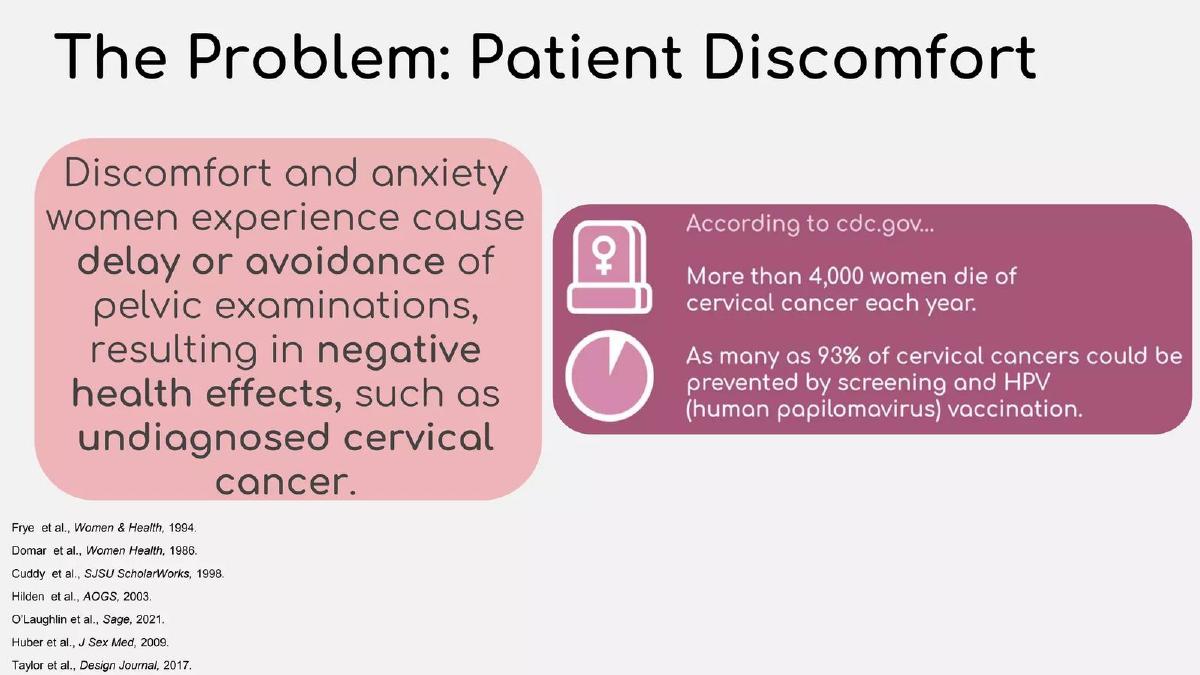
Women's health device for pelvic examinations. Patient pain linked to a clinical outcome.
Feminora deck, slide 4. Exact stored slide matched to this analysis.
Our analysis: It connects an experience problem (discomfort) to an outcome problem (missed screening, deaths), which raises the stakes.
Evidence and limitation: A CDC mortality figure and a prevention figure, plus academic references for the discomfort claim.
What a founder can adapt: If your problem is patient experience, show what it leads to clinically.
Supporting analysis
What the deck claims: "The Problem: Patient Discomfort — Discomfort and anxiety women experience cause delay or avoidance of pelvic examinations, resulting in negative health effects, such as undiagnosed cervical cancer." "According to cdc.gov... More than 4,000 women die of cervical cancer each year. As many as 93% of cervical cancers could be prevented by screening and HPV (human papillomavirus) vaccination." Seven journal references are listed at the bottom left.
Presentation choice: The chain from discomfort to avoidance to deaths is stated and sourced.
When it does not fit: The 93% figure covers screening and vaccination together, not examination comfort. Don't imply your product addresses all of it.
Skin cancer imaging and telemedicine, Canada. Access gap linked to outcomes and cost.
MedX Health deck, slide 4. Exact stored slide matched to this analysis.
Our analysis: The strongest cause-and-effect chain in the set: shortage → wait → late diagnosis → higher cost and lower survival.
Evidence and limitation: Shortage, wait-time, cost and survival figures; no sources on the slide.
What a founder can adapt: Show what a delay costs in money and outcomes at each stage.
Supporting analysis
What the deck claims: "Problems impacting successful outcome of skin cancer": "Canada has only 565 Dermatologists serving 37 million people." "Wait times to see a Dermatologist in Canada can be between 5 to 18 months under the current referral method." Quebec "represents 23% of the Canadian population almost 40% of Skin Cancer Deaths". "A Stage 1 Melanoma cost $2,500 to treat and the 10 year survival rate is 97%. A Stage 4 Melanoma cost ~$1,000,000 to treat and the 10 year survival rate is 15%." MedX "reduces wait times down to 72 hours".
Presentation choice: It gives both the payer (treatment cost) and the patient (survival) a reason to care.
When it does not fit: The solution is mixed into the problem slide, and none of the figures are sourced. Split them and add citations.
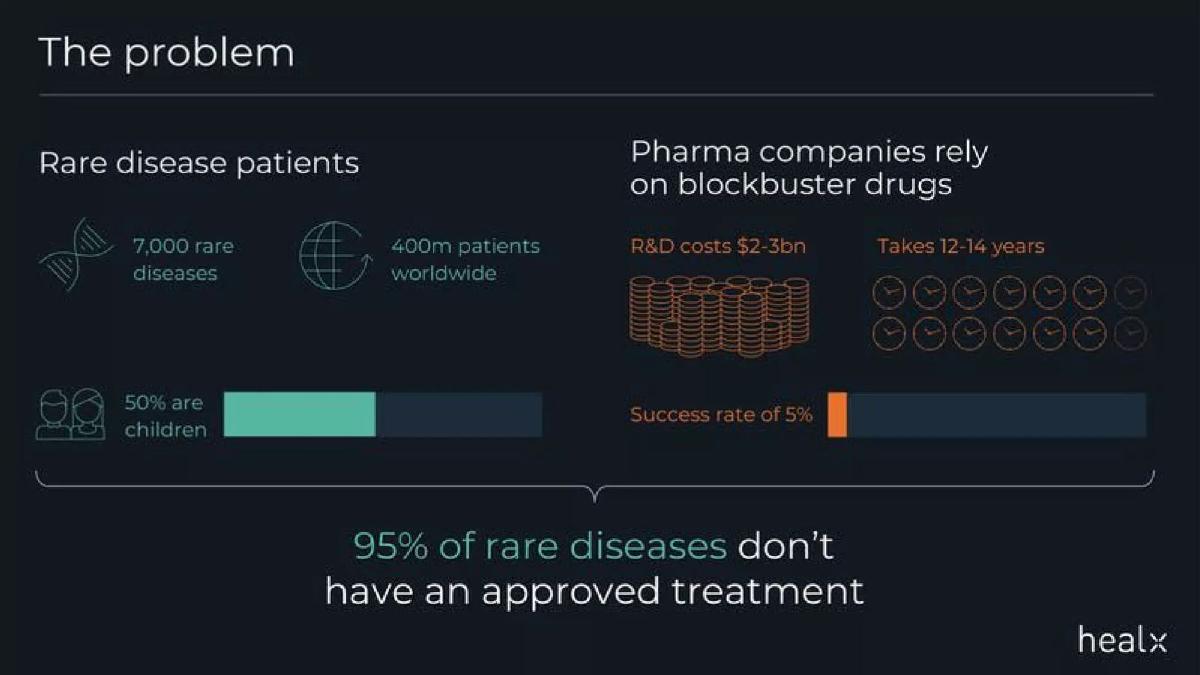
AI drug discovery for rare diseases. Two sides: patients and pharma.
Healx deck, slide 2. Exact stored slide matched to this analysis.
Our analysis: It explains why the need goes unmet: the economics of drug development don't favour small patient groups.
Evidence and limitation: Patient-side and industry-side figures, visualised; no sources.
What a founder can adapt: For therapeutics, pair the patient need with the reason incumbents don't address it.
Supporting analysis
What the deck claims: "The problem" — Rare disease patients: "7,000 rare diseases", "400m patients worldwide", "50% are children". Pharma companies rely on blockbuster drugs: "R&D costs $2-3bn", "Takes 12-14 years", "Success rate of 5%". Conclusion: "95% of rare diseases don't have an approved treatment".
Presentation choice: It shows both the unmet need and why the current system doesn't meet it.
When it does not fit: No sources for widely quoted figures like 7,000 diseases and a 5% success rate. Cite them.
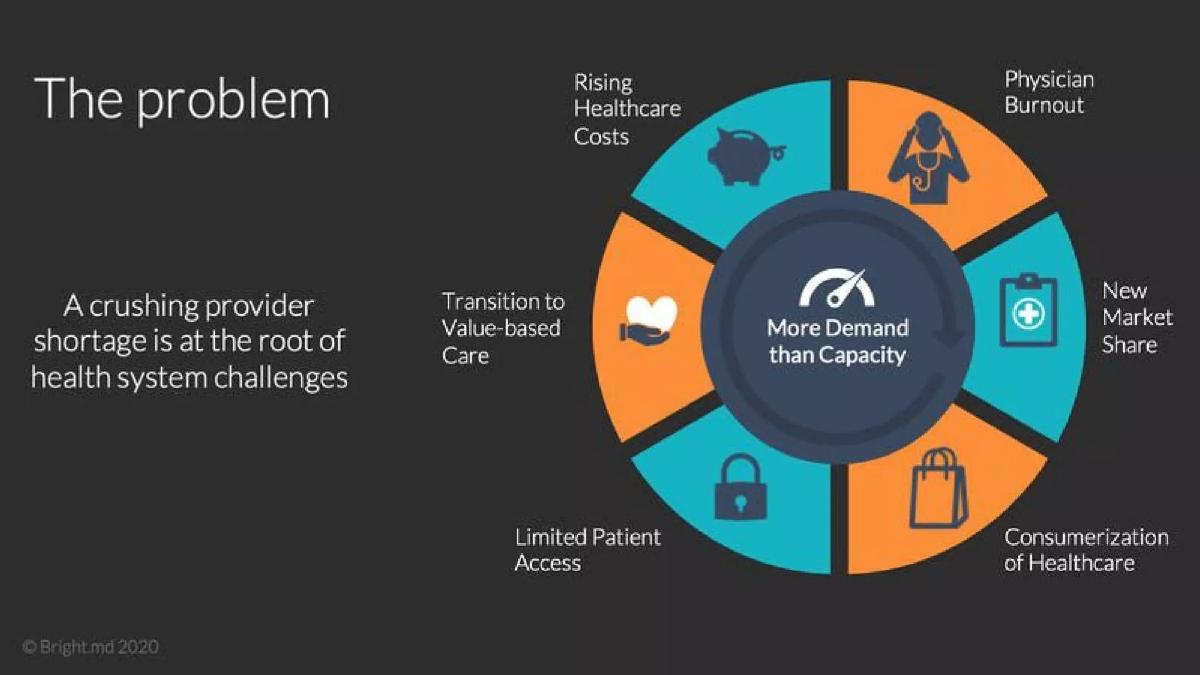
Virtual care automation for health systems. Included as a weaker pattern.
Bright.md deck, slide 2. Exact stored slide matched to this analysis.
Our analysis: The headline names a real problem (provider shortage), but the wheel lists industry trends that apply to every health startup.
Evidence and limitation: None: six labels with no figures.
What a founder can adapt: Keep the headline and replace the wheel with one number: the shortage in clinicians or the wait it causes.
Supporting analysis
What the deck claims: "The problem — A crushing provider shortage is at the root of health system challenges." A wheel around "More Demand than Capacity" lists: Rising Healthcare Costs, Physician Burnout, New Market Share, Consumerization of Healthcare, Limited Patient Access, Transition to Value-based Care.
Presentation choice: Included as a contrast: it shows how general trends crowd out the specific problem.
When it does not fit: Lists of industry trends. Pick the one your product changes.
Name whose problem it is. Patient, clinician, health system, payer and pharma buy for different reasons.
Pair the pain with a consequence in numbers: dollars, delay, or a clinical outcome.
Cite clinical and cost statistics on the slide. Being Health and Feminora footnote theirs; most others don't.
Link a delay to an outcome when you can. MedX's wait time → late-stage cost and survival is the strongest chain here.
Skip the system-wide list. Rising costs and burnout are true for every health startup.
Build your healthcare problem slide
Answer each line with one number and one source.
Who. Whose problem: patient, clinician, health system, payer or drug developer? Who pays to fix it?
Pain. What exactly goes wrong today, in their terms?
Consequence. What does it cost in money, time or clinical outcome?
Source. Where does each number come from, and how recent is it?
Copyable framework: [Who] face [pain]. It costs [amount / delay / outcome] ([source, year]). Today they rely on [current option], which [limitation].
Illustrative example 1 — written by us
Before: Healthcare is broken: rising costs, burnout, limited access.
After: Primary care clinics spend 2 hours a day per physician on prior authorisations (AMA survey, 2024). 1 in 3 requests is delayed over a week, and patients abandon treatment while they wait.
What improved: Our illustrative rewrite; figures are invented for the example. It names the buyer, gives a cost and a consequence, and shows a source.
What this guide adds
The general problem slide guide covers how to describe customer pain in any industry. Healthcare adds two decisions it doesn't cover. First, whose pain to show, because the patient who suffers, the clinician who treats, the system that bears the cost and the payer that reimburses are usually different people. Second, what kind of evidence to show, because investors expect clinical and cost claims to carry a source.
The reimbursement guide covers who pays once you have a product; the clinical evidence guide covers proof that the product works. This guide covers the step before both: showing that the problem is real, costly and owned by someone who will act.
Four ways to frame a healthcare problem
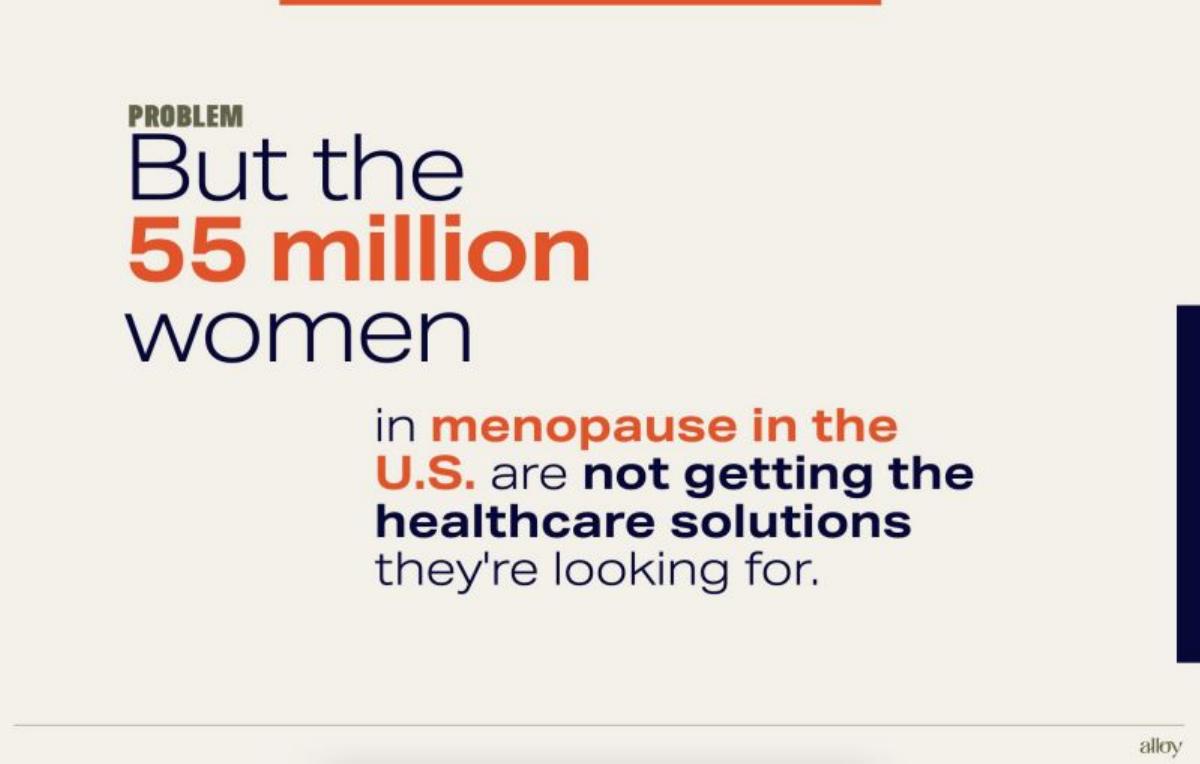
Patient pain: symptoms, access or experience (Alloy, Feminora, Being Health). Strongest for consumer and direct-to-patient companies; pair it with a clinical consequence so it doesn't read as a lifestyle problem.
Provider pain: cost, workload or missed revenue inside health systems (Charta Health, Bright.md). Strongest for software sold to hospitals and clinics; state the cost to the buyer.
Access and outcome gaps: waiting times or shortages linked to worse outcomes (MedX). Strongest when the delay can be tied to a cost or survival figure.
Drug development: unmet need plus the cost and failure rate of developing drugs (Healx). Strongest for therapeutics and discovery platforms selling to or partnering with pharma.
Common mistakes
Industry trends instead of a problem. Rising costs and burnout apply to every health startup.
Unsourced clinical figures. Investors in health expect a citation.
Wrong person's pain. Show the pain of the buyer, or explain how the patient's pain reaches the buyer.
Borrowing a bigger statistic. Don't imply you address a whole mortality figure if you address one cause.
Mixing problem and solution. Put your product on the next slide.
Diagnostic checklist
It says whose problem it is and who pays.
The consequence is a number: cost, delay or outcome.
Clinical and cost figures carry a source and year.
Statistics match the part of the problem you address.
The solution is on a separate slide.
Frequently asked questions
How we chose these examples
Corpus: published pitch deck teardowns on StartupFundraising.com. Founder-uploaded private decks are excluded.
Selection (2026-09-24): we searched extracted text of slides 2–4 for slides titled "problem" that mention patients, clinicians, hospitals, disease or diagnosis, and inspected about twenty-five candidates. We excluded decks already used in other healthcare guides (Carrum Health, Cedar), text-only memo pages (At-Home Nursing Services), duplicated deck versions, non-healthcare matches, and Kensho Health (similar framing to Bright.md).
Overlap check: the general problem slide guide covers customer pain in any industry; the reimbursement and clinical evidence guides cover payment and proof of effect. This guide covers whose healthcare pain to show and how to support it.
Bright.md is included to show a weaker pattern.
Review: all seven stored slide images were inspected on 2026-09-24 and matched to company, deck and slide number (editorial model review). No person has yet completed an editorial review of this page.
Figures are as shown on the slides; we have not verified them. We make no claim that any slide caused a fundraising outcome.