Feminora’s 16-slide deck addresses a long-standing issue in women's healthcare: the discomfort and clinical limitations of the traditional vaginal speculum. By introducing the OneSpec, a device featuring a 360-degree expansion design, the company targets both patient anxiety and physician visibility issues. The deck is notable for its detailed cost analysis, comparing the OneSpec’s $7,950 annual cost per clinician against the $11,450 cost of traditional plastic disposables. While the market size is relatively small at $86.48 million, the company presents a clear regulatory and commercializati…
Key takeaways
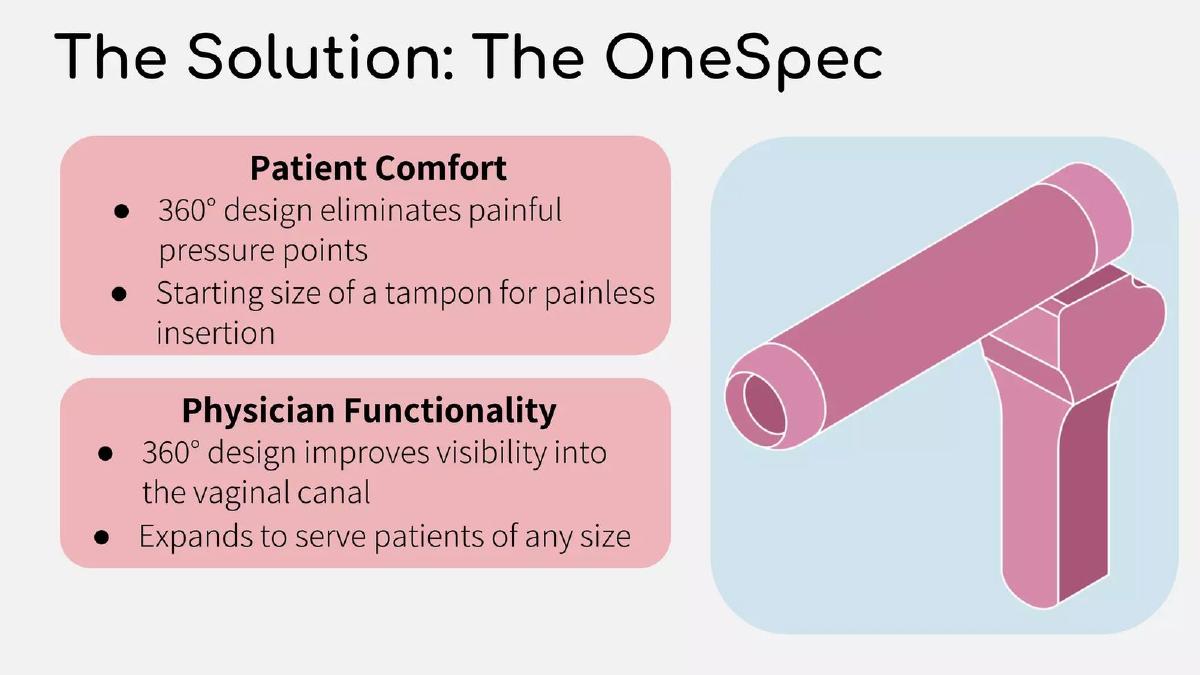
- The OneSpec device uses a 360-degree expansion design to eliminate painful pressure points and improve visibility (Slide 6).
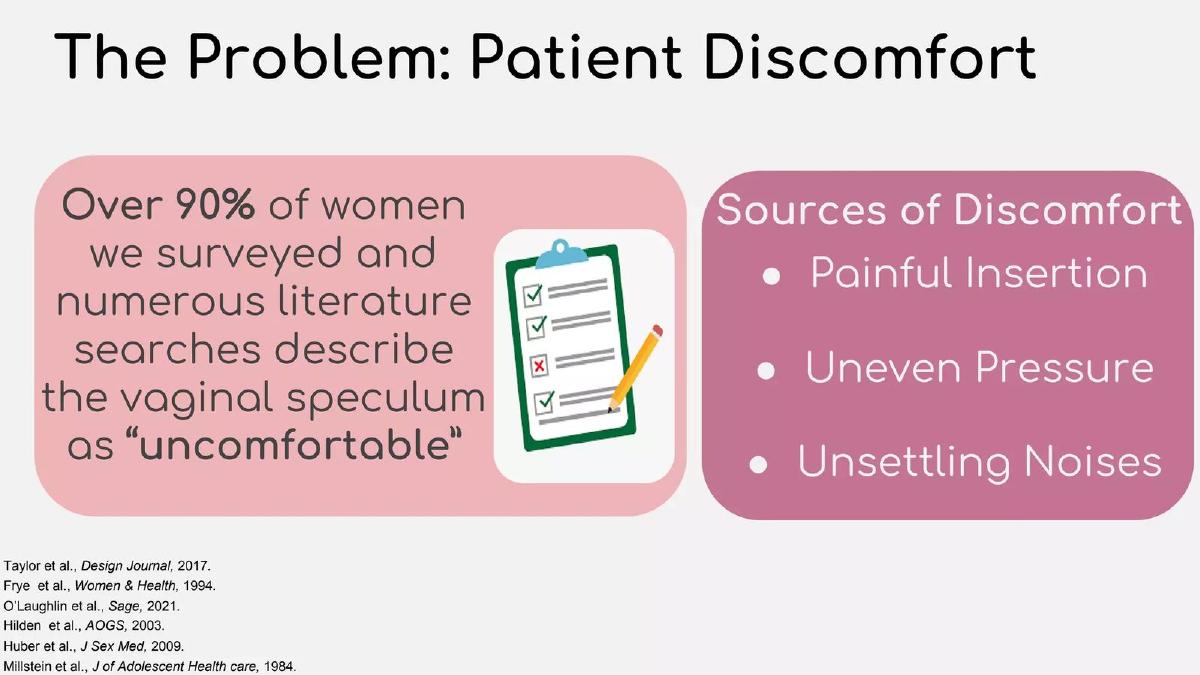
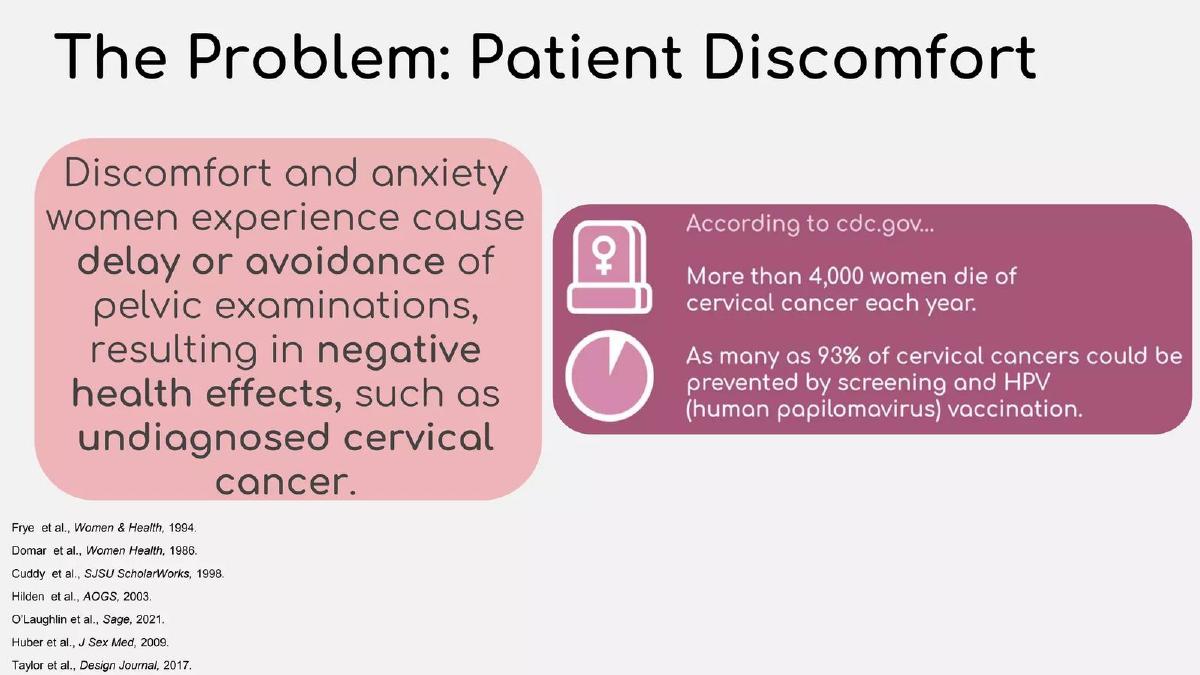
- Over 90% of surveyed women describe the standard speculum as uncomfortable, leading to exam avoidance and undiagnosed cancers (Slide 3, 4).
- Feminora utilizes a razor-razor blade model with a $65 reusable handle and $1 disposable inserters (Slide 7).
- Annual cost analysis claims Feminora saves clinics money, totaling $7,950 per clinician versus $11,450 for standard plastic speculums (Slide 12).
- The 2019 US market for speculums was valued at $86.48 million with a 3.3% growth rate (Slide 13).
- The development timeline targets FDA 510(k) submission in 2023 and IP licensure to larger companies by 2027 (Slide 15).
- The team is composed of BME students and PhD/MD founders from the University of California, Irvine (Slide 16).
- The deck lacks a specific dollar amount for the funding ask, stating only a need for 'Funding for FDA Clearance' (Slide 15).
Company Overview and Problem Identification
Slides 1-2: The Hook and Visual Context
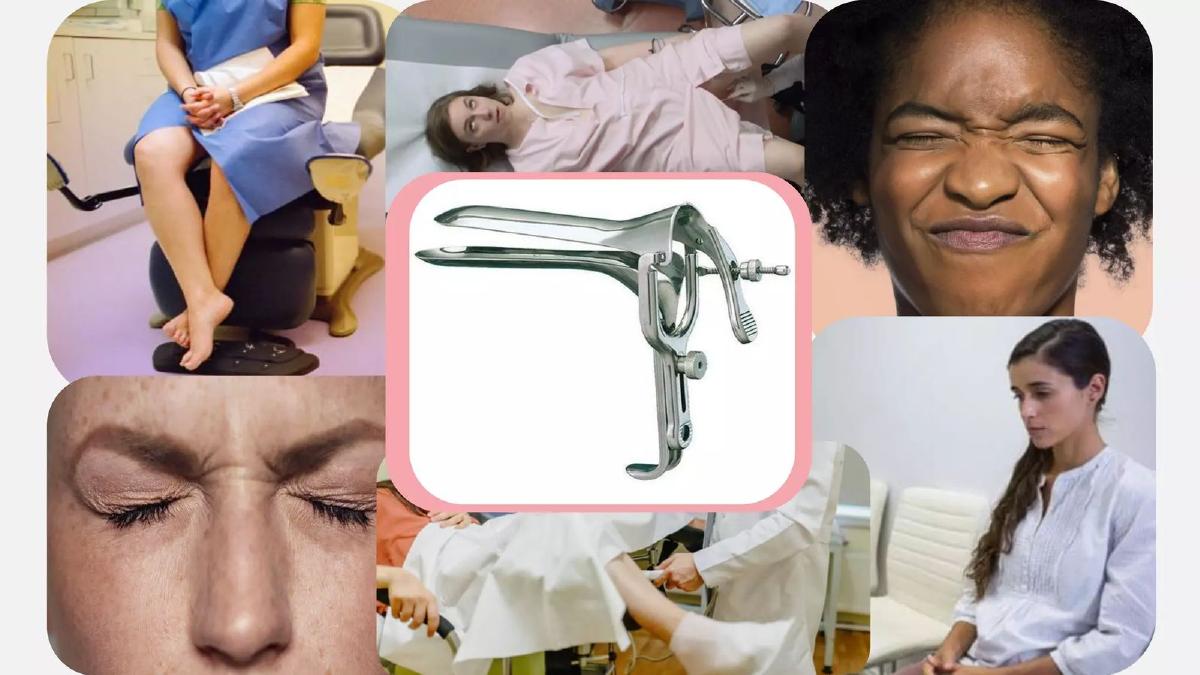
Feminora opens with a clear tagline: "Comfort for patients, Convenience for physicians." Slide 2 uses a collage of images to establish the emotional and physical reality of pelvic exams. It shows the traditional metal speculum centered among images of women expressing discomfort, anxiety, and physical tension. This sets the stage for a solution-oriented pitch by emphasizing a problem that has remained largely unchanged for decades.
Slides 3-4: The Patient Problem
Slide 3 quantifies the discomfort, citing that over 90% of women surveyed and numerous literature sources describe the vaginal speculum as "uncomfortable." It lists three specific sources of pain: painful insertion, uneven pressure, and unsettling noises. Slide 4 elevates the stakes from mere discomfort to clinical outcomes. It links exam anxiety to the avoidance of pelvic examinations, which the deck claims results in undiagnosed cervical cancer. Citing cdc.gov, the slide notes that 4,000 women die of cervical cancer annually, 93% of which could be prevented by screening.
Slide 5: Physician Limitations
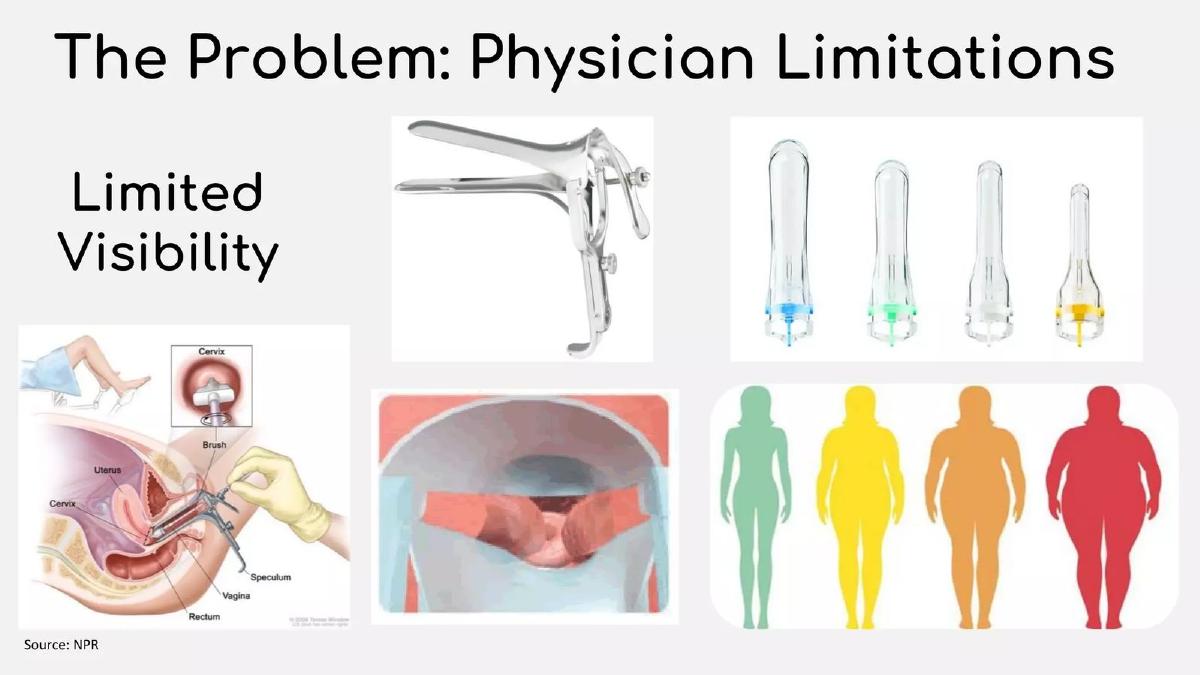
The deck shifts focus to the provider's perspective. Slide 5 uses medical illustrations to show the "limited visibility" afforded by current tools. It highlights how current speculums (metal and plastic) may not accommodate patients of all sizes effectively, often requiring clinics to stock multiple sizes (shown as four different plastic speculum variants) and still resulting in obstructed views of the cervix.
The Solution and Product Mechanics
Slide 6: Introducing OneSpec
The solution slide introduces the "OneSpec." The key value propositions are split between the patient and the physician. For the patient, the 360-degree design eliminates pressure points, and the starting size is comparable to a tampon. For the physician, the design improves visibility and expands to serve patients of any size, theoretically replacing the need for multiple device sizes.
Slide 7: Business Model
Feminora explicitly labels their strategy as a "Razor-Razor Blade Model." They list a Reusable Speculum Handle at $65.00/unit and a Disposable Inserter at $1.00/unit. This slide is effective because it immediately answers how the company scales: through the high-volume sale of $1 disposables rather than the one-time sale of handles.
Slide 8: Mechanical Functionality
Slide 8 provides CAD renderings of the device in its "Starting Position" and "Ending Position." It specifies a diameter range of 0.5 inches to 2.0 inches. This technical detail is crucial for medical device investors to understand the mechanical feasibility of the 360-degree expansion claim made in earlier slides.
Market Positioning and Financials
Slide 9: Competitive Analysis
The competitive matrix compares OneSpec against Welch Allyn, Pederson, Yona, and Ceek. OneSpec is the only device shown to check every box, including "360-degree design," "Even Pressure," and "Soundless." It is notable that newer competitors like Yona and Ceek are included, showing that Feminora is aware of the modern "FemTech" landscape rather than just comparing themselves to 19th-century metal designs.
Slides 10-12: Cost Analysis
This three-slide sequence is the strongest part of the deck's commercial argument. Slide 10 establishes the baseline: a gynecologist sees ~100 patients per week, and a standard plastic speculum costs ~$2. Slide 11 breaks down the inventory needs per clinician per year. Slide 12 provides the final tally: Feminora claims an annual total cost of $7,950 per clinician (including sterilization and disposal) compared to $11,450 for traditional plastic. By showing a $3,500 saving per clinician, Feminora moves the conversation from "better patient experience" to "better clinic bottom line."
Slide 13: Market Opportunity
The market slide is conservative, which can be a double-edged sword. It cites a 2019 US market value of $86.48 million. A pie chart shows the market share of incumbents: BD (16%), Welch Allyn (22%), Teleflex (18%), and Integra Lifesciences (16%). While the market is not in the billions, the clear fragmentation suggests there is room for a superior product to capture significant share.
Execution Strategy and Team
Slide 14: Sales and Marketing Plan
The go-to-market strategy focuses on private clinics and concierge providers. The logic is that these smaller, high-touch providers are more likely to adopt new technology that enhances patient experience as a competitive advantage. This is a standard "beachhead" strategy for medical devices that might struggle to get through large hospital procurement systems initially.
Slide 15: Development Timeline and Ask
The timeline shows the company's progression from LLC formation in 2021 to a planned IP licensure in 2027. The inclusion of "Licensure" as the end goal suggests the founders are looking for an exit via acquisition by one of the incumbents mentioned on Slide 13. The "Ask" on this slide is vague, requesting "Funding for FDA Clearance" without specifying a dollar amount or equity terms.
Slide 16: The Team
The final slide introduces a team primarily associated with the University of California, Irvine (UCI). It includes four BME (Biomedical Engineering) students, a business advisor, and two founders: Christine King, PhD (Engineer) and Dinh Vu, MD (ObGyn). The presence of an ObGyn as a founder provides necessary clinical credibility, while the UCI partnerships (Applied Innovation, Samueli School of Engineering) suggest strong institutional support.
What Works and What is Missing
What Works
Direct Cost Comparison: The detailed breakdown of annual costs per clinician is a compelling way to sell a medical device to a clinic manager. · Clear Mechanical Differentiation: The CAD drawings and diameter specs clearly explain how the device differs from the 150-year-old standard. · Realistic Exit Strategy: By targeting IP licensure to incumbents by 2027, the company acknowledges it is likely a feature-play acquisition target rather than a standalone conglomerate.
What is Missing
Specific Funding Ask: The deck mentions needing funding for FDA clearance but does not state how much they are raising or what the milestones for that capital will be. · Clinical Data: While they cite literature on the problems of current speculums, there is no data from their own pilot tests or user studies to prove the OneSpec actually reduces pain in a clinical setting. · Manufacturing Details: There is no mention of manufacturing partners or the cost of goods sold (COGS) for the $1 disposable inserter, which is the core of their revenue model.
Founder Takeaway
Founders in the medical device space should emulate Feminora's focus on the economic buyer . While the patient benefits are the emotional heart of the pitch, the cost-savings analysis on Slide 12 is what actually closes a deal with a clinic or an investor. However, founders should be more specific with their "Ask" slide, providing a clear dollar amount and a breakdown of how that capital will move the company through the regulatory milestones listed on the timeline.
Frequently asked questions
- What is the primary innovation of the OneSpec device?
- Unlike traditional duck-bill speculums that open on a hinge, the OneSpec features a 360-degree expansion design. According to Slide 6 and Slide 9, it starts at the size of a tampon (0.5 inches) and expands uniformly up to 2.0 inches. This design aims to eliminate specific pressure points for the patient while providing the physician with an unobstructed view of the vaginal canal.
- How does Feminora plan to make money?
- The company employs a 'Razor-Razor Blade' business model detailed on Slide 7. They sell a reusable speculum handle for $65.00 per unit and a single-use disposable inserter for $1.00 per unit. This creates a recurring revenue stream from every pelvic exam performed using the system, while keeping the initial barrier to entry low for clinics.
- Is the speculum market large enough for venture scale?
- Slide 13 identifies the 2019 US market value at $86.48 million. While this is a relatively small niche for traditional venture capital, the deck notes a 3.3% growth rate. The strategy appears to be focused on capturing share from incumbents like BD and Welch Allyn (who hold ~16% and ~22% respectively) before licensing the IP in 2027.
- What are the regulatory hurdles for this device?
- Feminora identifies the need for FDA 510(k) clearance. According to the development timeline on Slide 15, the company planned to submit this application in 2023. This is a standard pathway for medical devices that can demonstrate they are 'substantially equivalent' to a legally marketed device already on the market.
- Who is the target customer for Feminora?
- The initial sales and marketing plan (Slide 14) targets private clinics, concierge physicians, doulas, and midwives. These providers are prioritized because they benefit directly from patient loyalty and volume driven by increased comfort. The long-term plan involves licensing the technology to larger speculum companies to reach the hospital market.