Fewzion’s pitch deck is a focused exercise in industrial B2B value proposition. By identifying a specific, high-cost pain point—the $1M to $2M cost of consultants to design management systems that are 'seldom sustained'—Fewzion positions itself as a permanent, software-driven alternative. The deck excels at quantifying the stakes, claiming that just 10% of a production improvement is worth approximately $1M per week. While the visual design is dated, the traction slide is exceptionally strong for an early-stage company, listing active contracts with AngloAmerican and Peabody Energy. The deck…
Key takeaways
- Fewzion identifies its core users as shift supervisors, aiming to put plans directly in their hands for better accountability (Slide 1).
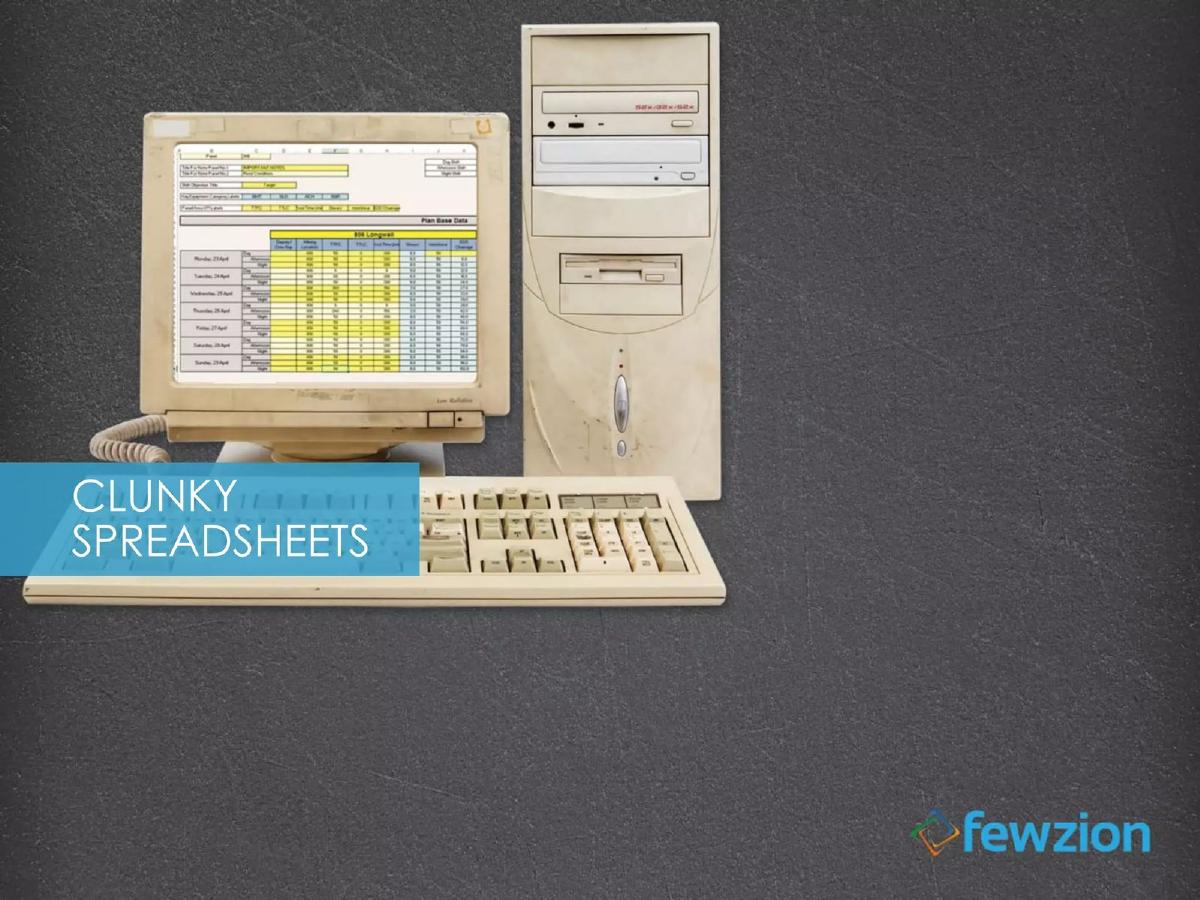
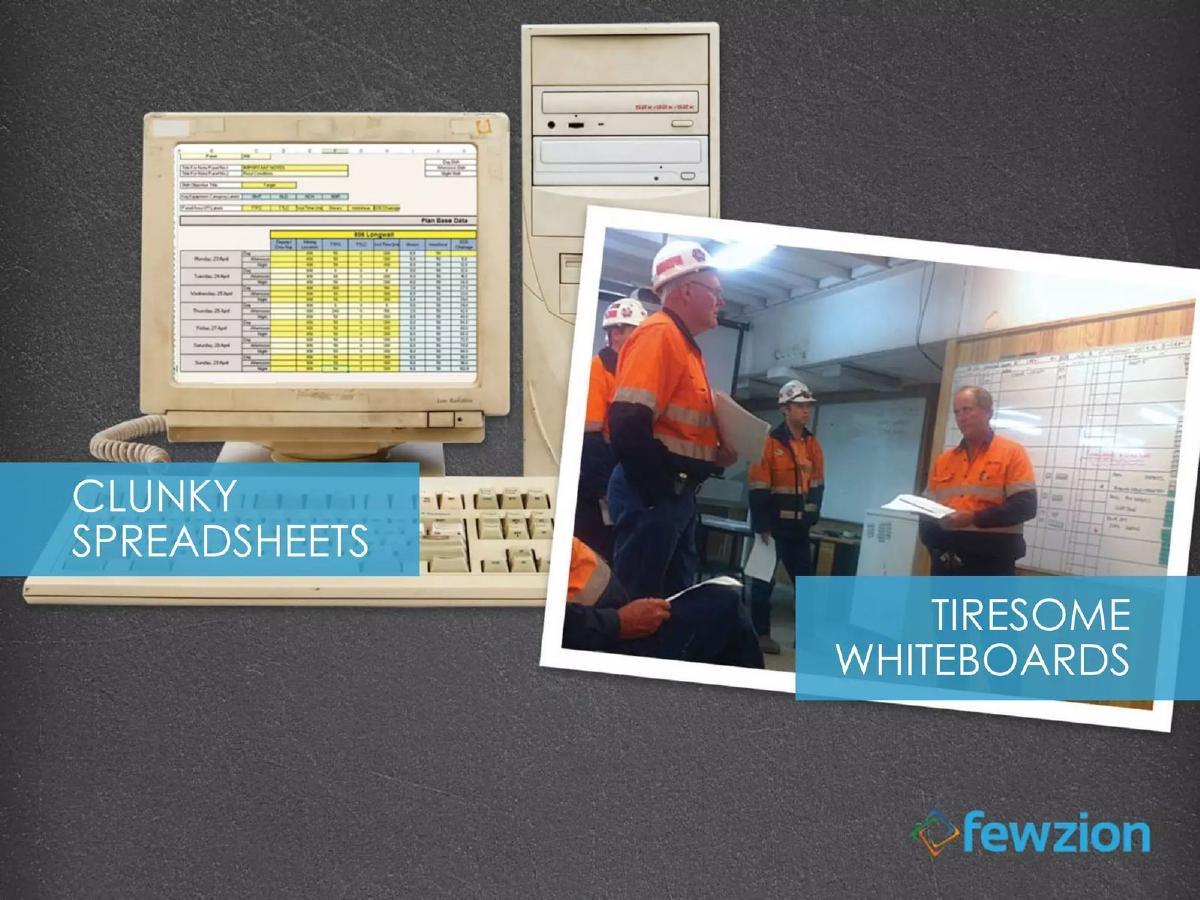
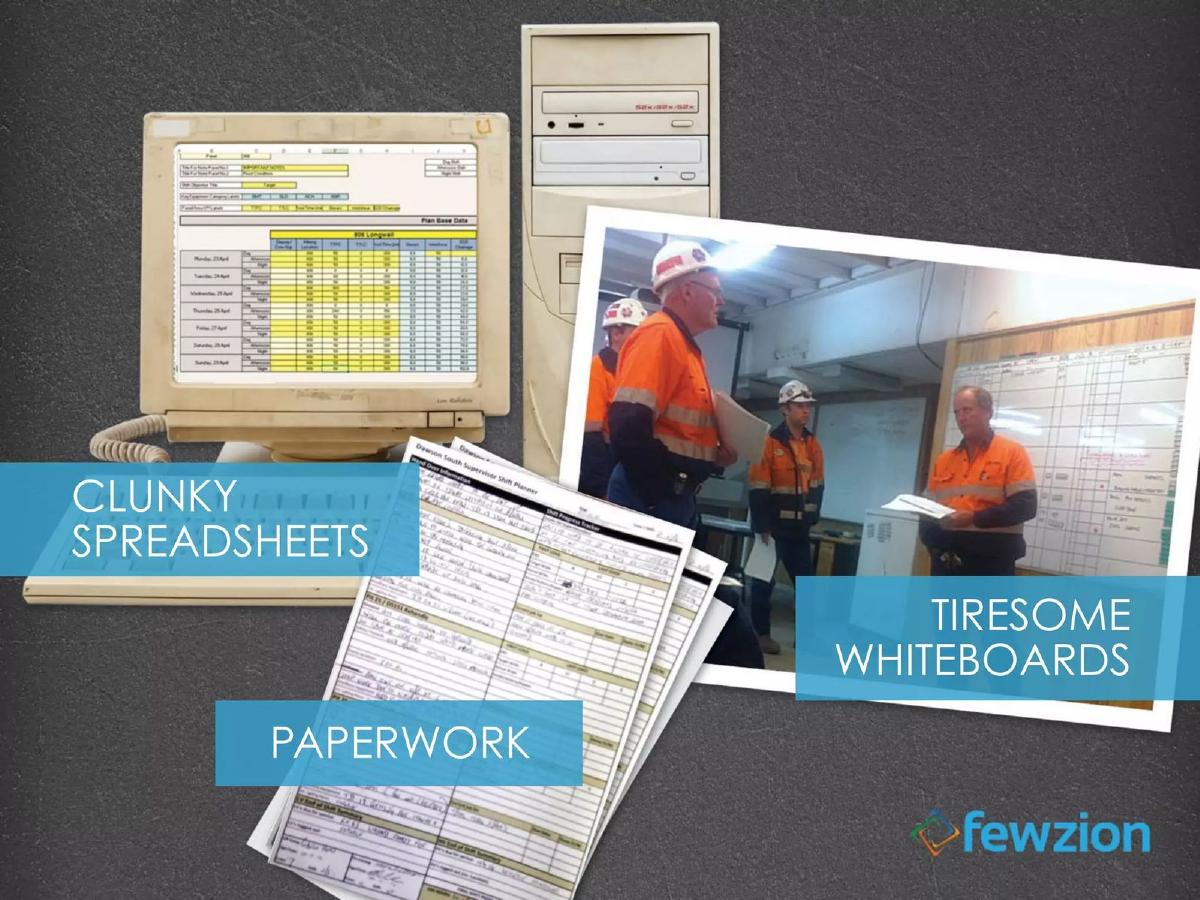
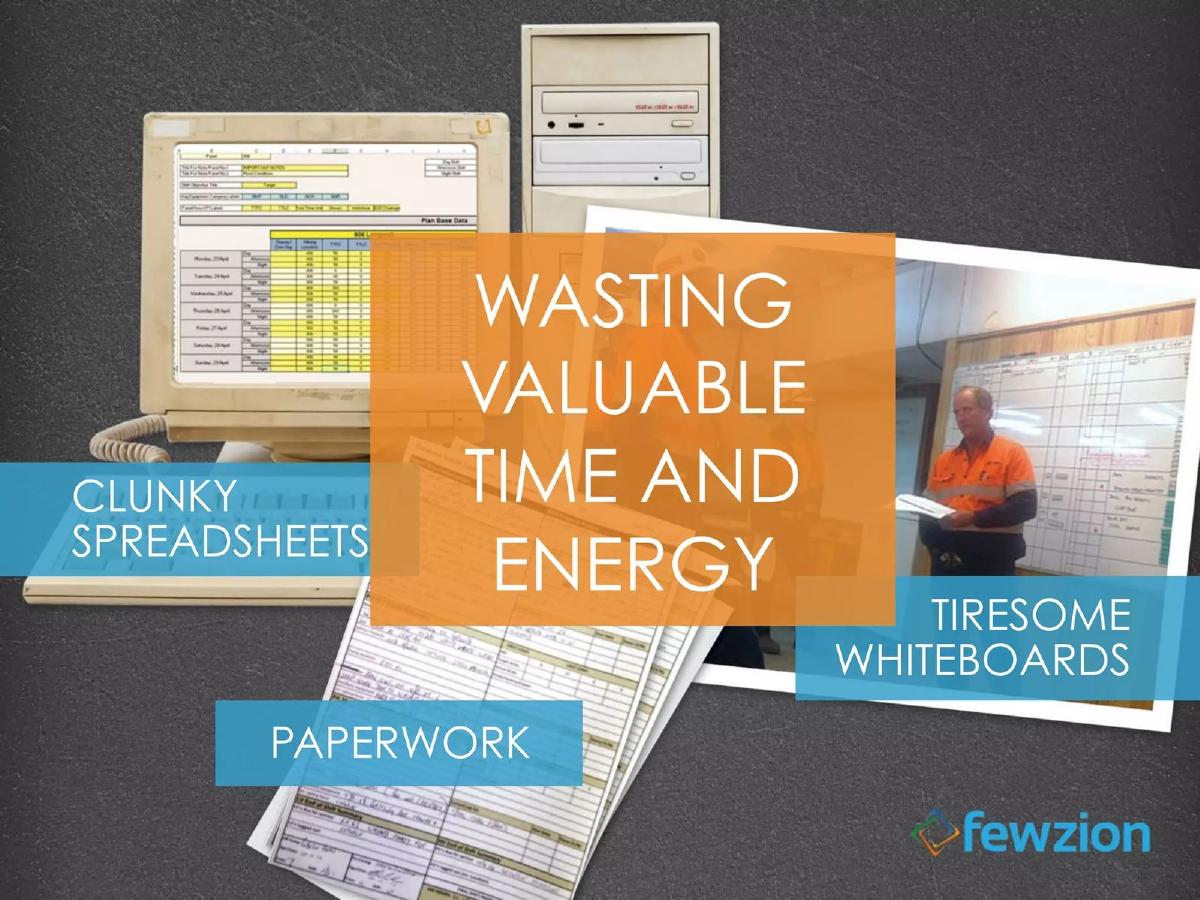
- The 'Problem' is visualized through outdated hardware and manual processes, specifically 'clunky spreadsheets' and 'tiresome whiteboards' (Slide 2).
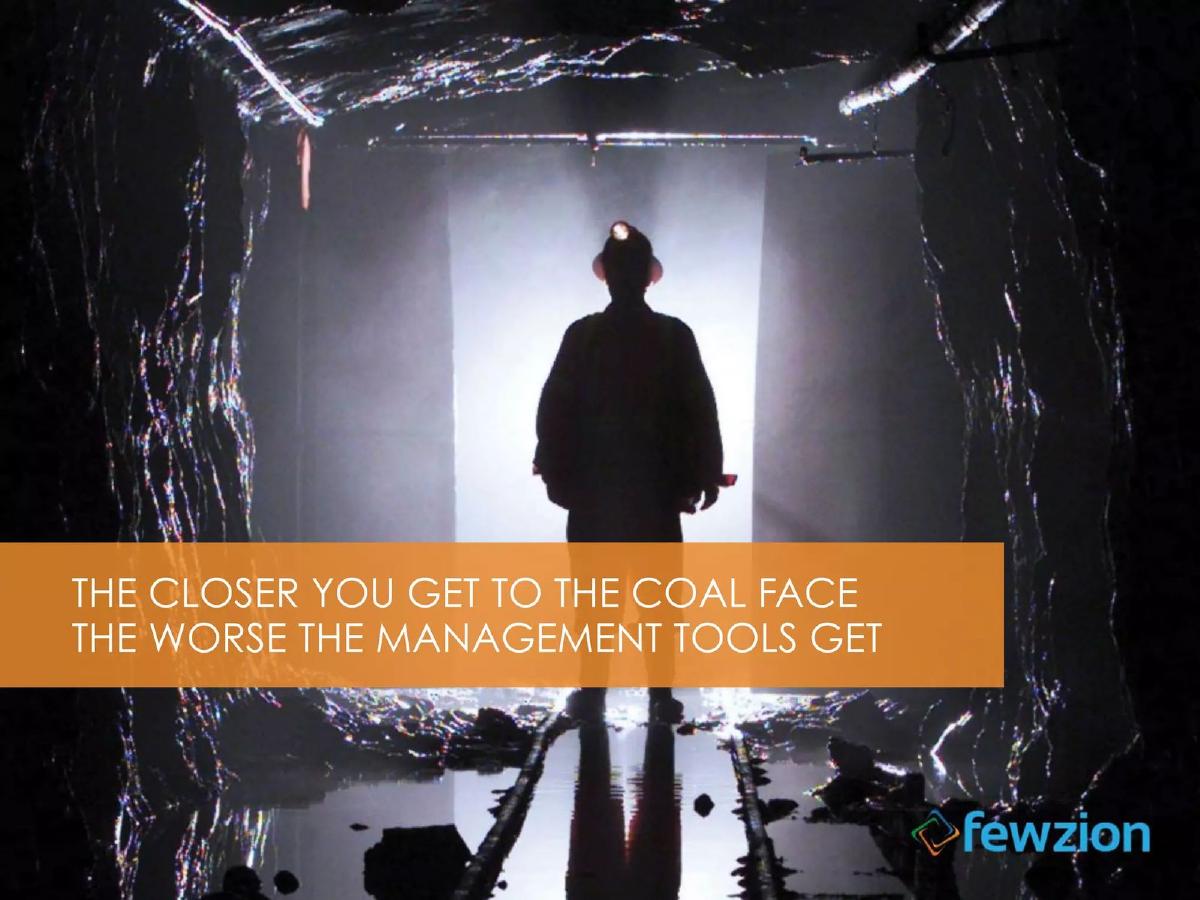
- The company highlights a failed alternative: consultants who charge $1M to $2M for systems that are rarely sustained (Slide 3).
- A production chart from June 2012 to March 2013 shows output more than doubling, with 10% of that improvement valued at $1M per week (Slide 4).
- The product follows a four-step management cycle: Plan, Execute, Review, and Improve (Slide 5).
- The 'Review' phase utilizes a touch-screen interface for entering actuals, which the company claims holds staff accountable (Slide 6).
- Traction is significant, with paying contracts from AngloAmerican and Peabody Energy, and proposals out to Xstrata, Barrick, and BHP Billiton (Slide 7).
- The deck indicates expansion potential into Construction and Oil & Gas, citing interest from Caltex and Laing O'Rourke (Slide 7).
Fewzion Pitch Deck Analysis: The Industrial Efficiency Play
Fewzion’s 2013 pitch deck, presented at Slingshot, is a masterclass in identifying a high-value niche and attacking it with specific, quantifiable ROI. The deck focuses on the mining industry, a sector notorious for high capital expenditure and complex logistics, where even marginal gains in efficiency translate to millions of dollars in profit. By positioning their software as the 'accountability layer' for shift supervisors, Fewzion moves beyond simple task management into the realm of operational excellence.
Slide 1: Title and Mission
The cover slide immediately identifies the target audience: shift supervisors. The tagline, "Puts a plan in the hand of shift supervisors and holds them accountable for executing it," is highly functional. It avoids vague tech jargon in favor of a clear operational promise. The background image of hands holding a large piece of coal anchors the deck in the mining industry. Founders Alex Retzlaff and Paul Moynagh are listed, along with the company's Gust profile and website.
Slide 2: The Problem - Analog Inefficiency
Slide 2 uses a classic 'Before' visualization. It juxtaposes an image of an ancient beige desktop computer running a spreadsheet with a photo of miners standing in front of a whiteboard. The labels "CLUNKY SPREADSHEETS" and "TIRESOME WHITEBOARDS" identify the status quo as the enemy. This slide effectively argues that while the industry has modernized its heavy machinery, its management tools are stuck in the past.
Slide 3: The Failed Alternative
This is a strategic 'wedge' slide. It addresses the common solution mining companies use: expensive consultants. Fewzion claims the "COST FOR CONSULTANTS TO DESIGN AND IMPLEMENT THESE SYSTEMS" ranges from "$1m – $2m." The critical blow is the orange banner stating these systems are "VERY SELDOM SUSTAINED!" This positions Fewzion not just as a cheaper alternative, but as a more durable one.
Slide 4: Quantifying the Value Proposition
Slide 4 is the 'Money Slide.' It features a line graph showing production more than doubling between June 2012 and March 2013. The most compelling text on the slide is: "10% OF THIS IMPROVEMENT IS WORTH APPROX $1M / WEEK." In the footer, they show their work: "50 shears, 1600 tonnes / shear, at $150 / tonne x 10% = $1.2m." By showing the math, Fewzion makes a massive claim feel grounded and achievable.
Slide 5: The Management System Framework
Fewzion introduces its product logic using a standard four-part cycle: 1. PLAN, 2. EXECUTE, 3. REVIEW, 4. IMPROVE. This slide uses a background of industrial gears to reinforce the idea that the software is a component of the larger operational machine. It’s a simple conceptual model that helps non-technical investors understand how the software actually functions within a mine's workflow.
Slide 6: Product Deep Dive - The Review Phase
This slide focuses on step 3 of the cycle: Review. It shows a screenshot of the software interface, specifically a touch-screen keypad for entering data. The text "ENTERING ACTUALS INTO A TOUCH SCREEN HOLDS THEM ACCOUNTABLE" highlights the core value of the product. By capturing data at the source (the shift supervisor), the software eliminates the lag and errors associated with manual reporting.
Slide 7: Traction and Pipeline
This is arguably the strongest slide in the deck. Fewzion demonstrates they are already working with the biggest players in the industry. They list "PAYING CONTRACTS WITH TOP TIER MINERS ALREADY," specifically AngloAmerican and Peabody Energy. They also list proposals with Xstrata, Barrick, and BHP Billiton. Finally, they show horizontal expansion potential into Oil & Gas ( Caltex ) and Construction ( Laing O'Rourke ). For a 2013 startup, this level of enterprise traction is exceptional.
Slide 8: The Conclusion
The deck ends by reiterating its strengths: a "BLUE CHIP PIPELINE," "GLOBAL SCALE," and "SAFE HANDS." It provides direct contact information for Paul Moynagh. While it lacks a specific 'Ask,' the slide functions as a strong closing argument for the company's stability and growth potential.
What Works in This Deck
Specific ROI: The calculation on Slide 4 ($1M per week) is the kind of figure that stops an investor from skimming. It turns a software tool into a profit engine. · Enterprise Validation: Listing AngloAmerican and BHP Billiton provides immediate credibility. In heavy industry, nobody wants to be the first customer; Fewzion proves they are already past that hurdle. · Clear User Persona: The deck repeatedly mentions 'Shift Supervisors.' This shows the founders understand the actual hierarchy of a mine and who needs to use the tool for it to be successful. · Competitive Positioning: By attacking the 'Consultant' model, they frame themselves as a high-margin software solution replacing a high-cost, low-sustainability service model.
What Is Missing
The Team Slide: While the founders are named, there is no information about their backgrounds. In industrial tech, investors look for 'founder-market fit'—did these individuals work in mines? Do they have software engineering backgrounds? · The Ask: The deck does not state how much money is being raised or what the milestones for the next 18 months are. · Unit Economics: While we see the value to the customer, we don't see the value to Fewzion. What is the ACV (Annual Contract Value)? What is the implementation time? · Competition: The deck ignores other software competitors, focusing only on spreadsheets and consultants. A modern deck would need to address other EAM (Enterprise Asset Management) or ERP (Enterprise Resource Planning) integrations.
What Founders Should Copy
The 'Show Your Work' Footer: If you make a big claim about ROI, put the formula in the footer. It builds trust instantly. · The Status Quo Visuals: Using photos of the actual 'bad' way of doing things (the whiteboard photo on Slide 2) is much more effective than just writing 'manual processes' in a bullet point. · Segmented Pipeline: Slide 7 is a great way to show traction. Don't just list logos; categorize them by 'Paying,' 'Proposals,' and 'Interest' to show the movement through the sales funnel.
Frequently asked questions
- What specific problem does Fewzion solve for mining companies?
- Fewzion addresses the lack of accountability and efficiency in shift management. According to the deck, mining operations often rely on 'clunky spreadsheets' and 'tiresome whiteboards' that fail to bridge the gap between high-level planning and on-the-ground execution. They also point out that expensive consultant-led systems ($1M-$2M) are rarely sustained, whereas Fewzion provides a digital tool for supervisors to track 'actuals' in real-time.
- How does Fewzion quantify the financial impact of its software?
- On Slide 4, Fewzion provides a production chart showing that output more than doubled over a 12-month period. They calculate that just 10% of this production improvement is worth approximately $1M per week. This calculation is based on a formula provided in the footer: 50 shears, 1600 tonnes per shear, at $150 per tonne, with a 10% efficiency gain equaling $1.2M.
- Who are the founders and what is their contact information?
- The founders listed on Slide 1 are Alex Retzlaff and Paul Moynagh. The final slide provides Paul Moynagh's email address and a phone number (0431 74 84 94), along with the company's website and Gust profile link. This direct access is typical for 2013-era decks looking for immediate investor follow-up.
- What is the current state of Fewzion's sales pipeline in the deck?
- The sales pipeline is robust for an early-stage firm. As of Slide 7, they have paying contracts with AngloAmerican and Peabody Energy. They also have active proposals with Xstrata, Barrick, and BHP Billiton. Furthermore, they cite interest from non-mining sectors, specifically Caltex (Oil & Gas) and Laing O'Rourke (Construction).
- Does the deck include a specific funding request or valuation?
- No, the provided slides do not include a specific 'Ask' slide detailing the amount of capital being raised, the valuation, or the intended use of funds. While Slide 8 mentions it is a 'Great Investment,' the technical details of the round are omitted from this version of the presentation.