The Hykso pitch deck, which eventually became the foundation for FightCamp, is a masterclass in using 'elite validation' to justify a mass-market expansion. With only 12 slides, the deck relies heavily on visual evidence and high-impact metrics rather than dense text. It successfully showcases a transition from a professional training tool used by the Canadian and USA Olympic Teams to a consumer-facing 'Peloton for Boxing' model. By highlighting a $600,000+ revenue milestone and an 86% monthly growth rate, the founders proved that their punch-tracking hardware had moved beyond the prototype s…
Key takeaways
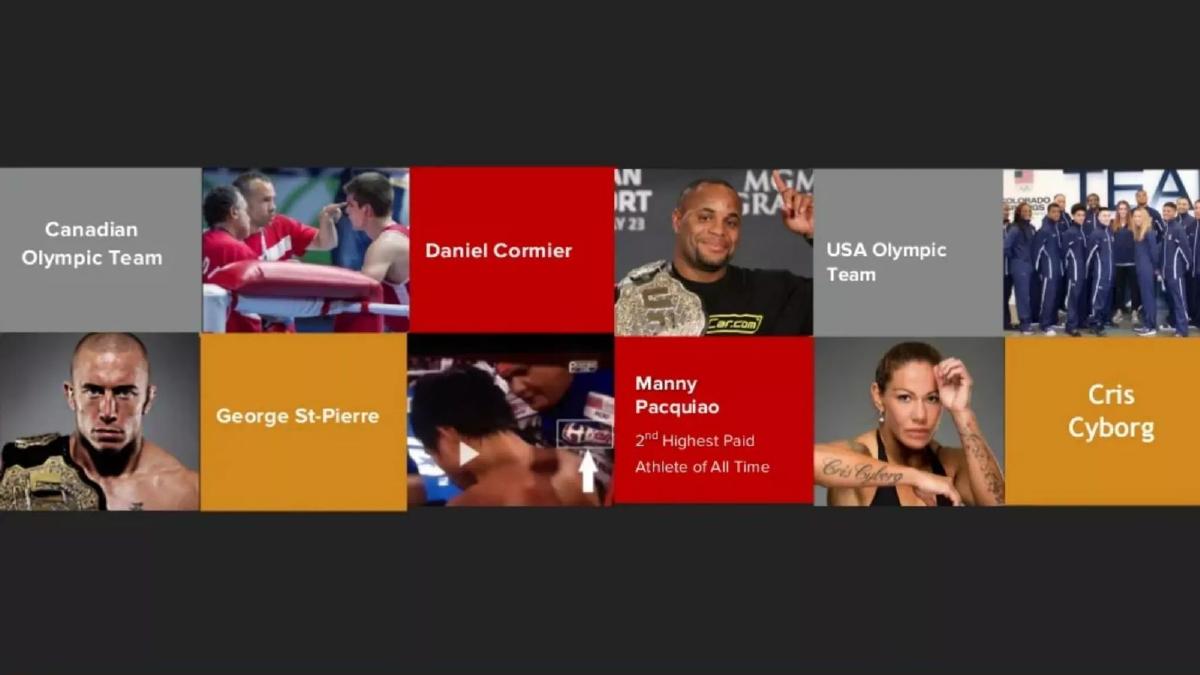
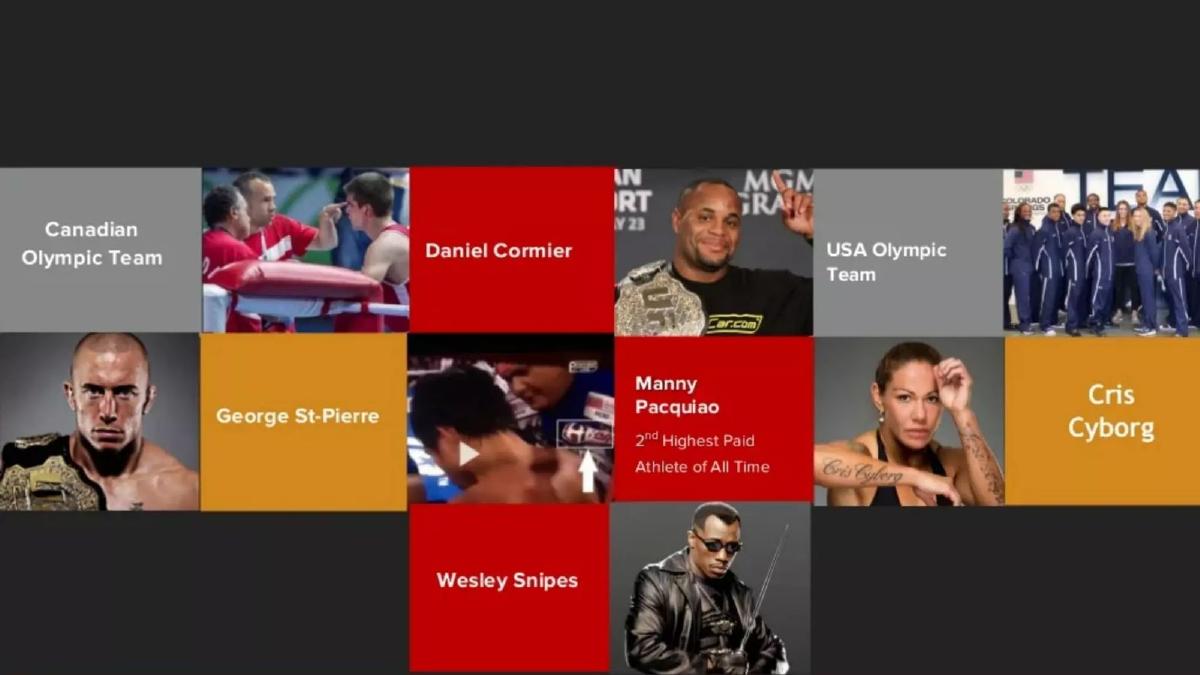
- The deck leverages massive social proof by featuring the Canadian and USA Olympic Teams and athletes like Manny Pacquiao on Slide 2.
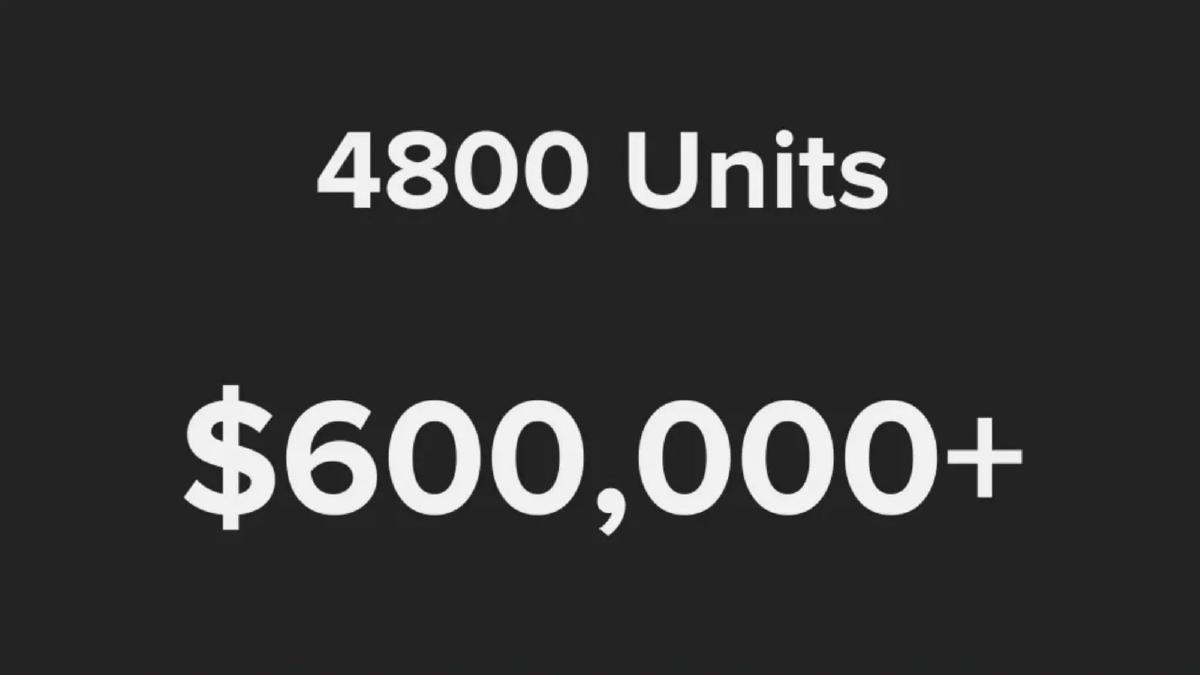
- Traction is presented with high-impact simplicity, showing 4,800 units sold and $600,000+ in revenue on Slide 4.
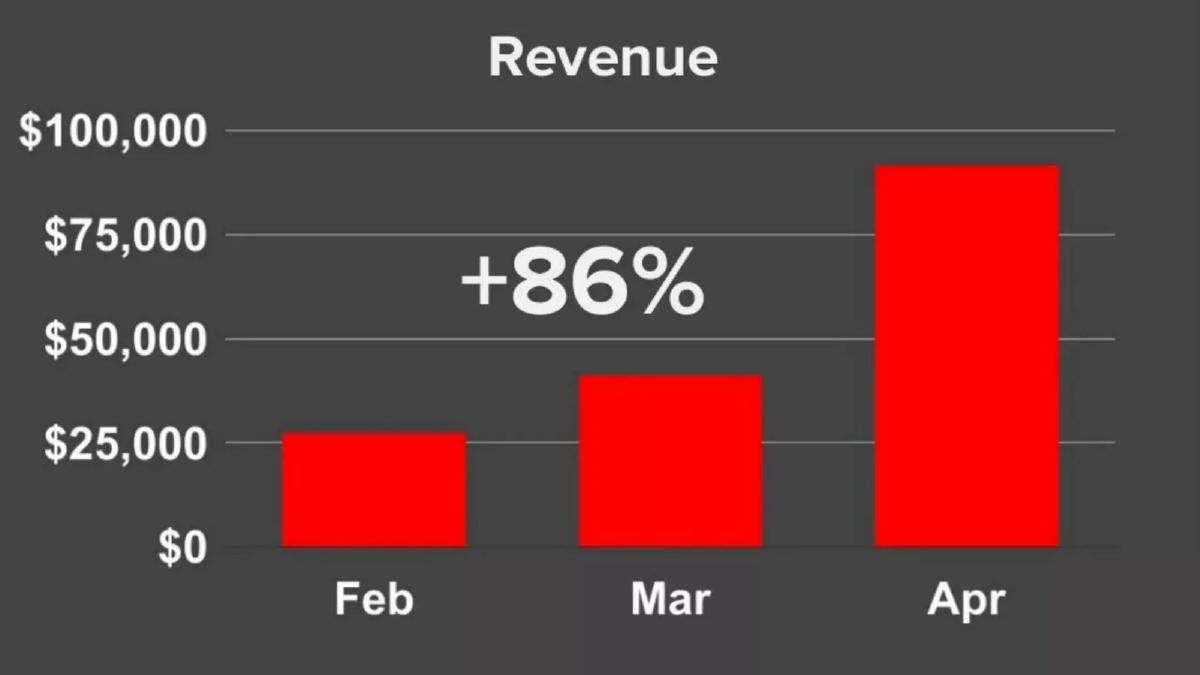
- Growth velocity is the core hook, with a bar chart on Slide 5 showing an 86% increase in revenue from February to April.
- The company identifies a $10B+ market opportunity on Slide 6 to justify the scale beyond professional boxing.
- Market validation is supported by the growth of physical franchises, citing TITLE Boxing Club as the #1 fastest-growing franchise of 2015 on Slide 7.
- The team slide (Slide 8) emphasizes technical and athletic credibility, featuring a 2X USA Boxing Champion and engineers with MEMS and Microelectronics backgrounds.
- The vision for the future is clearly articulated on Slide 11 as 'Group boxing classes in your living room,' signaling a shift to a content-plus-hardware model.
- Slide 12 uses a side-by-side visual comparison with Peloton to position the company as the leader of a new category: at-home connected boxing.
The Hykso Pitch Deck: From Pro Tool to Consumer Powerhouse
The story of FightCamp begins with Hykso, a company that realized early on that hardware is a means to an end. This 12-slide deck represents a pivotal moment in the company's history: the transition from selling punch trackers to professional athletes to building a subscription-based fitness empire. It is a lean, visually-driven presentation that prioritizes traction and social proof over dense financial modeling.
Slides 1-3: The Power of Elite Validation
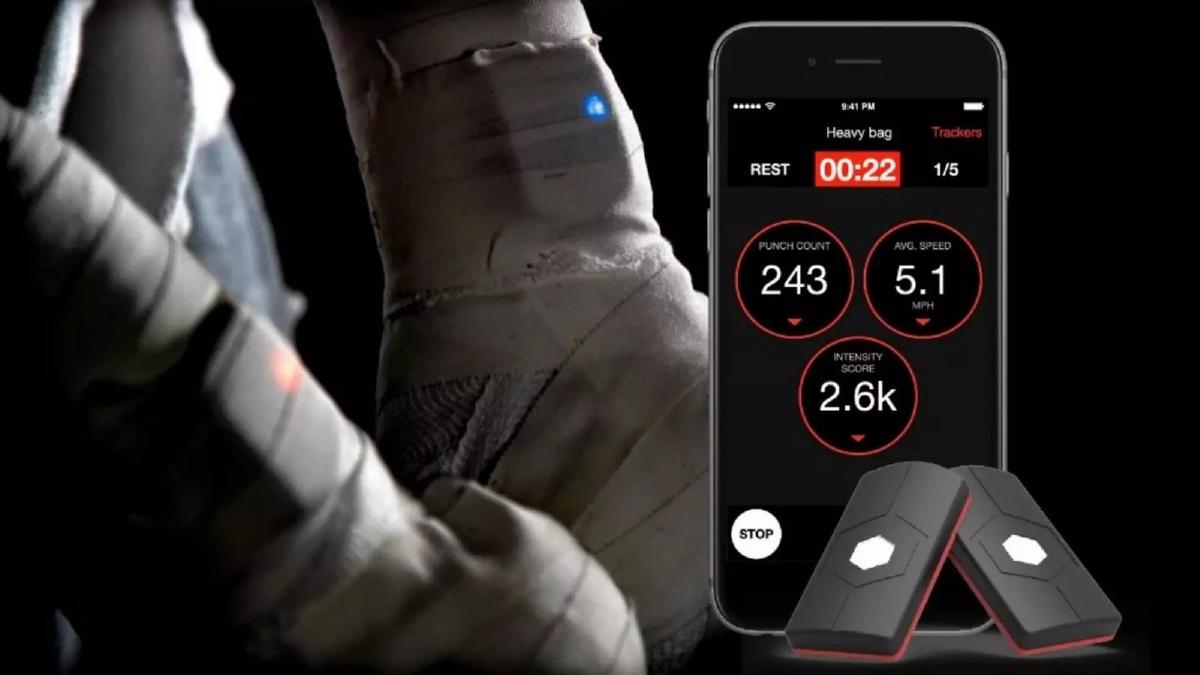
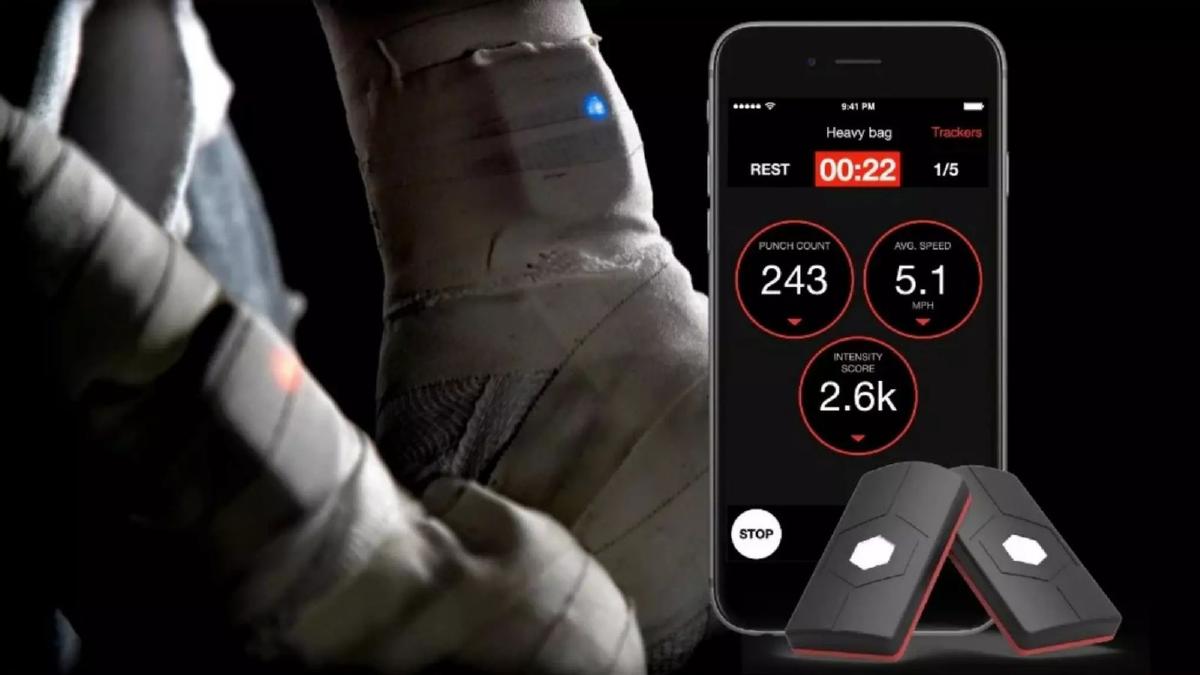
Slide 1 is a pure product shot. It shows the wearable trackers tucked into hand wraps, synced to a smartphone app displaying punch count (243), average speed (5.1 MPH), and an intensity score (2.6k). It immediately establishes what the product does without a single word of copy.
Slide 2 and Slide 3 are nearly identical, serving as a 'wall of fame.' The company lists the Canadian Olympic Team, the USA Olympic Team, and legendary fighters like Daniel Cormier, George St-Pierre, and Manny Pacquiao (noted as the '2nd Highest Paid Athlete of All Time'). Slide 3 adds Wesley Snipes to the mix. This is a classic 'if it's good enough for them, it's good enough for you' play. By the third slide, the investor is convinced that the technology is accurate and respected by the world's most demanding users.
Slides 4-5: Proving the Revenue Engine
Slide 4 moves into hard metrics. It states 4800 Units sold and $600,000+ in revenue. This is a critical milestone for a hardware startup, proving that the product has moved past the 'friends and family' beta phase into actual commercial viability.
Slide 5 focuses on velocity. A simple bar chart shows revenue growth across February, March, and April. The headline metric is +86% . While the absolute numbers on the Y-axis are relatively small (peaking just under $100,000 for the month of April), the steepness of the curve is designed to excite investors about the month-over-month momentum. It answers the question: 'Is this growing fast enough to be a venture-scale business?'
Slides 6-7: Defining the Market Opportunity
Slide 6 is a 'big number' slide, simply stating $10 B+ . While it lacks a breakdown of TAM (Total Addressable Market) versus SAM (Serviceable Addressable Market), it sets the stage for the next slide which provides context for where that money is currently being spent.
Slide 7 highlights the '2015 Fastest Growing Franchises' from Entrepreneur Magazine. It shows TITLE Boxing Club at #1 and 9Round Franchising at #6. This is a brilliant way to prove market demand without using their own internal data. By showing that physical boxing gyms are the fastest-growing segment in fitness, Hykso makes the case that there is a massive, underserved audience of boxing enthusiasts who would likely want a home-based solution.
Slides 8-10: The Team and the Industry Ties
Slide 8 introduces the founders and key leads. The pedigree is impressive: Khalil Zahar (CEO) holds an M.A.Sc. in MEMS; Alex Marcotte (CTO) and Alex Lapointe are specialists in Microelectronics. Crucially, Tommy Duquette is listed as a 2X USA Boxing Champion. The slide also features the logos of 500 Startups and Y Combinator , signaling that the company has already been vetted by top-tier accelerators.
Slide 9 is a lifestyle/branding shot of the hardware in a gym setting, reiterating the key stats: $600k+ Revenue , 86% monthly growth , and a $10B+ Market . This acts as a summary slide for the first half of the deck.
Slide 10 displays the UFC and WBC logos. This suggests official partnerships or deep integrations with the governing bodies of combat sports, further insulating the company from competitors who lack these professional ties.
Slides 11-12: The Pivot to 'Peloton for Boxing'
Slide 11 contains the most important text in the deck: 'GROUP BOXING CLASSES IN YOUR LIVING ROOM.' This is the birth of the FightCamp brand. It moves the value proposition from 'track your punches' to 'join a community and get a workout.' The imagery shows the app in a training context, moving away from the professional ring toward the home environment.
Slide 12 concludes the deck with a side-by-side comparison. On the left, a woman on a Peloton bike; on the right, a woman boxing with Hykso trackers. There is no text on this slide, but the message is unmistakable: Peloton did this for cycling, and we are doing it for boxing. It is a bold, aspirational closing that defines the company's ultimate ambition.
What Works in the Hykso/FightCamp Deck
Extreme Social Proof: Using the Olympic teams and Manny Pacquiao immediately removes any doubt about the product's technical efficacy. · Visual Simplicity: The deck is not cluttered. It uses large fonts, high-quality photography, and clear charts. This is ideal for a presentation where the founder wants the audience to listen rather than read. · The Peloton Comparison: In 2015-2016, Peloton was the gold standard for fitness exits. Aligning with that narrative helped investors categorize the 'at-home boxing' opportunity instantly. · Growth Focus: Highlighting 86% monthly growth is a powerful way to distract from the fact that total revenue is still under $1M.
What is Missing from the Hykso/FightCamp Deck
The 'Ask': There is no slide detailing how much money is being raised or what the valuation is. · Unit Economics: For a hardware-plus-subscription business, investors usually want to see the CAC (Customer Acquisition Cost) vs. LTV (Lifetime Value). This deck does not mention the cost to manufacture the units or the price of the future subscription. · Competitive Landscape: While they compare themselves to Peloton, they don't address other wearable trackers (like Everlast or PIQ) that were emerging at the time. · Financial Projections: There are no forward-looking statements or 3-5 year revenue targets.
What a Founder Should Copy
The 'Wall of Fame' Slide: If you have high-profile users, don't hide them in a bullet point. Give them a full slide with photos. · The Category Comparison: If you are the 'X for Y,' use a visual comparison like Slide 12. It is much more memorable than a text-heavy explanation of your business model. · Pedigree Alignment: Notice how Slide 8 balances 'academic' credentials (MEMS, Microelectronics) with 'street' credentials (2X Boxing Champion). This balance is vital for hardware startups in niche markets. · Traction over Features: The deck barely mentions how the sensors work. It focuses entirely on the fact that people are buying them and the best in the world are using them.
Frequently asked questions
- What was the primary business model of Hykso at the time of this deck?
- At the time of this deck, Hykso was primarily a hardware-centric company. Slide 4 shows the sale of 4,800 units generating over $600,000 in revenue. However, the final slides (11 and 12) indicate a strategic shift toward the 'FightCamp' model, focusing on on-demand subscription content and 'group boxing classes in your living room' to mirror the success of Peloton.
- How does the deck handle competition?
- The deck does not include a traditional competitive matrix or a list of direct rivals. Instead, it uses Slide 12 to draw a direct parallel with Peloton. By placing the Peloton logo next to the Hykso logo, the founders suggest they are not competing with other boxing trackers, but rather capturing the same high-growth 'connected fitness' market that Peloton pioneered for cycling.
- Is there a clear 'Ask' or use of funds in the deck?
- No. This 12-slide deck omits a formal 'Ask' slide. There is no mention of the specific dollar amount being raised, the valuation, or how the capital will be allocated. This suggests the deck may have been used as a teaser or a presentation deck for a demo day (like Y Combinator or 500 Startups, both of which are logo-referenced on Slide 8) rather than a full due-diligence document.
- What role does professional boxing play in their strategy?
- Professional boxing serves as the ultimate 'trust signal.' Slides 2, 3, and 10 feature logos and images of the UFC, WBC, and world-class champions. The strategy is to prove the technology works for the best fighters in the world first, thereby making it a 'must-have' aspirational product for the average consumer fitness enthusiast.
- What technical expertise does the team highlight?
- The team emphasizes a mix of hardware engineering and domain expertise. Slide 8 lists a CEO with a Master's in MEMS (Micro-Electro-Mechanical Systems), a CTO and Firmware Developer with backgrounds in Microelectronics, and a Machine Learning lead. This is balanced by a Biz Dev Lead who is a 2X USA Boxing Champion, ensuring the product remains relevant to the sport.