Feel Reel Mindhack addresses the 'translation gap' in academic research, specifically within the mental health sector. The deck highlights that while 1.8 million research articles are published annually, less than 5% of this information becomes common knowledge. The startup proposes a solution involving 'targeted messaging' and a 'simple approach' to turn complex studies into social media content. The deck features early traction data from a Twitter experiment that reached 250 people in three hours. However, the presentation is notably light on business fundamentals, omitting a revenue model,…
Key takeaways
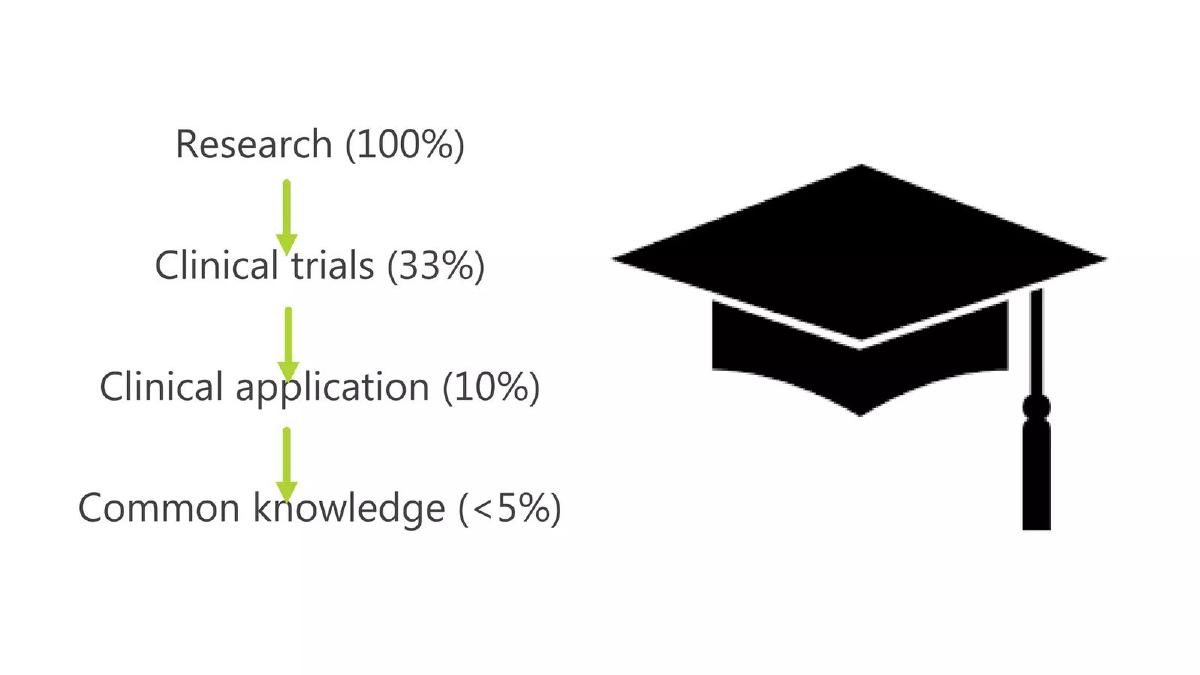
- The core problem is the lack of public access to scientific research, with less than 5% of research reaching 'common knowledge' status (Slide 6).
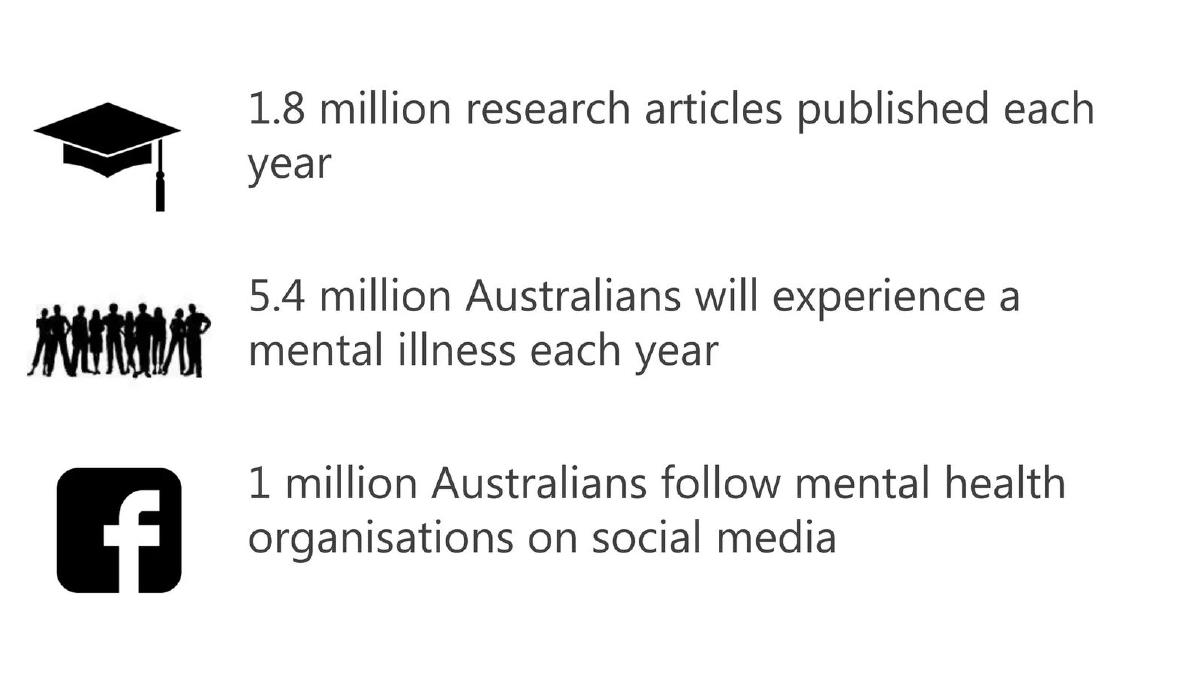
- The total addressable market is framed by the 5.4 million Australians who experience mental illness each year (Slide 5).
- Early validation was sought through a social media test that achieved 250 people reached and 3 retweets within 3 hours (Slide 9).
- The startup identifies three primary target partners: The Translation Institute of Australia, marketing/branding companies, and health bloggers (Slide 10).
- The team is comprised of eight individuals, including two mental health researchers, a health research translator, and a social media specialist (Slide 12).
- The deck lacks any mention of unit economics, pricing, or a specific financial ask for investors.
- The proposed solution relies on a 'research based' and 'simple approach' to content creation, though the specific product interface is not shown (Slide 11).
- The company lists affiliations or potential partners including The University of Western Australia and the Government of Western Australia Department of Health (Slide 4).
Company Overview
Feel Reel Mindhack is a mission-oriented startup based in Australia, focused on the 'translation' of academic research into public-facing media. The deck specifically targets the mental health sector, arguing that the vast majority of scientific progress remains locked behind academic paywalls or complex jargon, failing to reach the people who need it most.
Slide 1: Title Slide
The deck opens with the company logo—a stylized video camera icon—and the tagline "Bringing research to life." The branding is minimal, using a green and black color palette. The name "Feel Reel" suggests a focus on video content (Reel) and emotional wellbeing (Feel).
Slide 2: The Problem
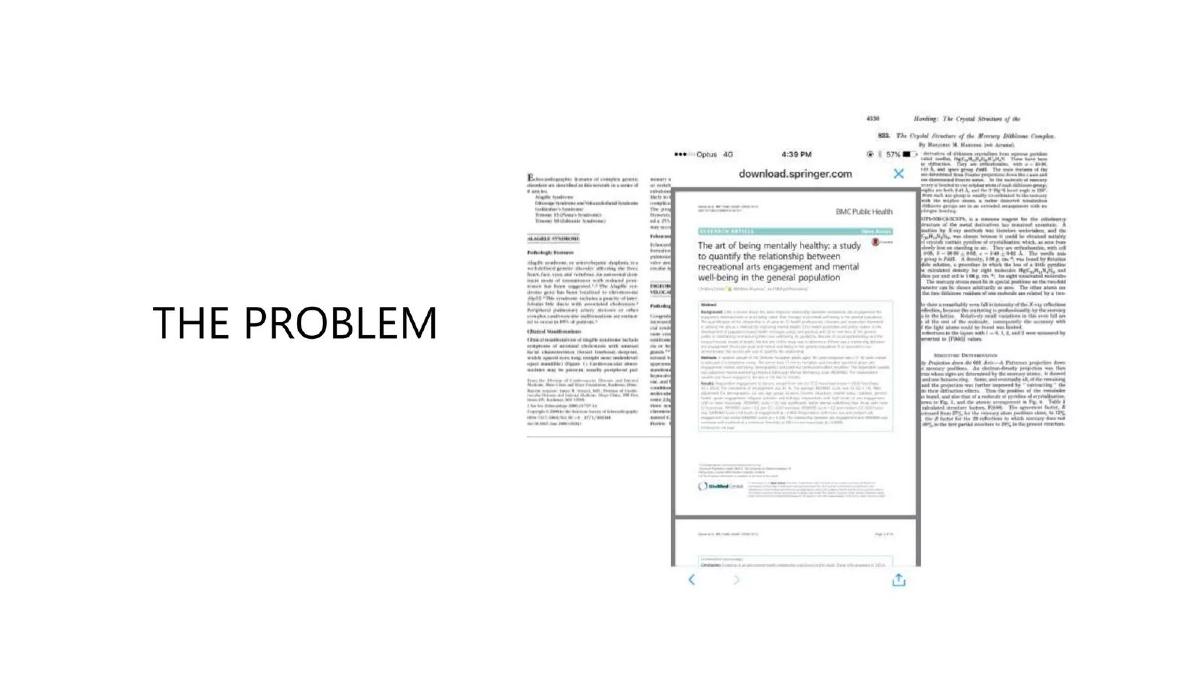
Slide 2 is a simple header slide titled "THE PROBLEM." It features a collage of academic papers and a mobile screenshot of a BMC Public Health article titled "The art of being mentally healthy." This slide visually represents the density and inaccessibility of current research formats.
Slide 3: The Concept
This slide uses icons to illustrate the company's function. It shows the Feel Reel logo acting as a bridge between a graduation cap (representing academia) and a group of people (the public). It is a visual representation of their value proposition: translation.
Slide 4: Partners and Platforms
Slide 4 displays several logos, including The University of Western Australia, the Government of Western Australia Department of Health, and Meeting for Minds. On the right side, it shows icons for Facebook, YouTube, and Twitter, alongside a small thumbnail of a presenter. This suggests existing institutional affiliations or intended distribution channels.
Slide 5: Market Statistics
This slide provides the quantitative justification for the business. It states there are 1.8 million research articles published each year . It then narrows the focus to Australia, noting that 5.4 million Australians will experience a mental illness each year and 1 million Australians follow mental health organisations on social media . These figures establish the supply of content and the demand for information.
Slide 6: The Translation Gap
Slide 6 contains the most compelling data point in the deck. It illustrates a funnel: Research (100%) leads to Clinical trials (33%) , then Clinical application (10%) , and finally Common knowledge (<5%) . This effectively highlights the inefficiency of the current knowledge transfer system.
Slide 7 & 8: Audience Visualization
Slides 7 and 8 are largely decorative, featuring the silhouette of a crowd and a large Facebook icon with the text "1,000,000+." These slides reiterate the scale of the social media audience mentioned on Slide 5 but do not add new data.
Slide 9: Traction and Validation
This slide presents a micro-case study. It shows a tweet from Christina Davies (dated 21/05/2016) containing a 5-second video. The metrics listed are: 3 hours , 250 people reached , and 3 retweets . While these numbers are small, they are used to demonstrate that research-based video content can generate immediate engagement.
Slide 10: Target Partners
The company identifies three key areas for collaboration: The Translation Institute of Australia , Marketing and branding companies , and Health bloggers . This slide acts as a rudimentary go-to-market strategy, though it does not explain how these partnerships would be structured or monetized.
Slide 11: The Approach
Slide 11 lists three pillars of their methodology: Simple approach , Targeted messaging , and Research based . These are qualitative descriptors of their content creation process.
Slide 12: The Team
Nick: Social media specialist · Sarah: Health research translator · Christina: Mental health researcher · Linelle: Mental health researcher · Lauren: Creative catalyst · Jess: Lived experience · Matt: Business developer · Sally: Creative writer
The team is heavily weighted toward research and creative roles, which aligns with the product, but the lack of surnames or professional backgrounds (e.g., former companies or degrees) makes it difficult to assess their execution capability.
Slide 13: Distribution
This slide features icons for a classical building (likely representing universities or government institutions) and a YouTube play button. It reinforces the idea of moving knowledge from institutions to digital video platforms.
Slide 14: Closing Slide
The deck concludes by repeating the title slide with the logo and tagline. There is no contact information, website URL, or call to action provided on this final slide.
What Feel Reel Mindhack Does Well
The deck is exceptionally clear about the problem it is solving. By quantifying the "translation gap" (Slide 6), the founders have identified a specific pain point in the academic and healthcare sectors. The use of simple iconography makes the concept easy to grasp within seconds. Furthermore, the inclusion of a real-world test (Slide 9), however small, shows a bias toward action and an understanding that social media engagement is the primary metric for their success.
What is Missing from the Deck
The most significant omission is the Business Model . There is no explanation of how the company generates revenue. Is it a fee-for-service agency model for universities? A subscription platform for health bloggers? A sponsored content play? Without this, it is impossible to evaluate the company as a commercial venture.
Additionally, the Ask is missing. A pitch deck is a tool to secure a specific outcome—usually funding or a partnership. By failing to state what they need (e.g., $250k for a pilot program), the founders leave the audience without a clear next step. The Competitive Landscape is also ignored; there are many science communication agencies and health-tech platforms that the founders should have acknowledged to demonstrate their unique positioning.
Founder Takeaways
Quantify the Gap: If your startup acts as a bridge between two worlds, use a slide like Slide 6 to show exactly how much value is being lost in the current process. Percentages are powerful tools for illustrating inefficiency.
Show, Don't Just Tell, Traction: Even if your data is modest, showing a real screenshot of a social media post with timestamps and engagement numbers is more persuasive than a bullet point saying "we have good engagement."
Define Roles Clearly: The team slide includes a "Lived experience" role. In the mental health and social impact space, showing that your team includes the target demographic is a strong way to build credibility and ensure product-market fit.
Avoid the "Ghost Ending": Never end a deck without contact information and a specific request. Whether you want an investment, a follow-up meeting, or a pilot partner, you must tell the viewer what to do next. Regardless of how good the problem definition is, a deck without an ask is just a presentation, not a pitch.
Frequently asked questions
- What is the primary product of Feel Reel Mindhack?
- Based on the slides, the product is a content translation service that converts academic mental health research into accessible video and social media posts. Slide 1 uses the tagline 'Bringing research to life,' and Slide 9 shows a screenshot of a short video explaining the benefits of arts for mental wellbeing. It appears to be a creative agency or platform focused on health communication.
- How does the company plan to make money?
- The deck does not explicitly state a business model. It lists 'Marketing and branding companies' and 'Health bloggers' as potential targets on Slide 10, suggesting a B2B service model or a content licensing play. However, there is no mention of subscription fees, project costs, or advertising revenue anywhere in the 14 slides.
- What stage of development is the company in?
- The company appears to be at the pre-seed or conceptual stage. Slide 9 highlights a single tweet from May 2016 as evidence of reach. The lack of a defined product UI or a list of paying customers indicates that this is a proof-of-concept deck rather than a scaling startup.
- Who is the target audience for their content?
- The deck identifies the general population, specifically the 5.4 million Australians experiencing mental illness and the 1 million Australians who already follow mental health organizations on social media (Slide 5). They aim to bridge the gap between the 'Graduation Cap' (academia) and the 'Silhouettes' (the public) as shown on Slide 3.
- Is there a clear investment opportunity presented?
- No. The deck concludes without a 'The Ask' slide. There is no information regarding how much capital is being raised, what the valuation is, or how the funds will be allocated. It serves more as a pitch for a partnership or a grant than a traditional venture capital investment deck.