Feast (originally letsfeast.com) presents an 18-slide deck that leans heavily on the 'show, don't tell' philosophy. The company identifies a massive gap in the cooking education market, citing that 30 million people search Google for 'How to cook' every month (Slide 6). The deck transitions from the problem of uninspiring food options to a solution centered on structured, digital culinary courses. Traction is a highlight, showing a growth trajectory from approximately 400 signups in March to over 2,500 in July (Slide 13). While the deck is light on unit economics and competitive analysis, it…
Key takeaways
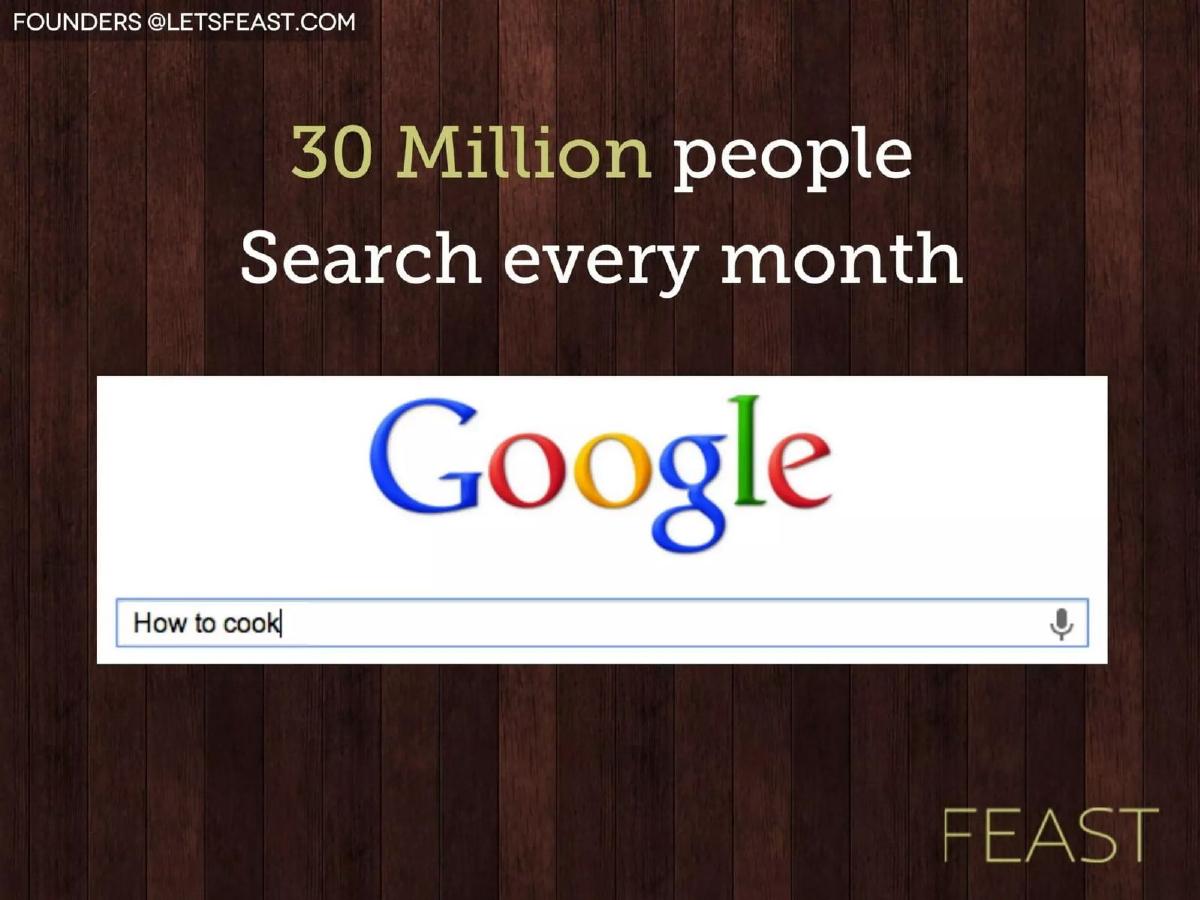
- The deck identifies a massive top-of-funnel opportunity with 30 million monthly Google searches for cooking instructions (Slide 6).
- Feast utilizes a 'freemium' content model, offering free introductory courses alongside paid specialized classes ranging from $5 to $15 (Slide 15).
- User growth is demonstrated through a clear bar chart showing signups increasing from under 500 in March to a projected 3,000+ in July (Slide 13).
- The 'The Feasters' slide uses social proof by aggregating user-generated content and Facebook comments to demonstrate community engagement (Slide 12).
- The market size is presented as a singular, bold figure of $7.4 billion, though the specific source or segment is not detailed on the slide (Slide 16).
- The founders highlight previous experience at notable tech companies including Udemy, SeatGeek, and Zaarly to build credibility (Slide 17).
- The deck concludes with a specific and direct funding ask of $500k (Slide 18).
- Visual storytelling is prioritized over text, with several slides (Slides 2, 3, 4, 9) containing no copy at all to emphasize the 'food' experience.
The Feast Pitch Deck: A Visual Journey into Culinary Education
The Feast pitch deck from 2015 is an interesting artifact from the 'full-stack' era of startups. While the company eventually pivoted and faced the challenges common to the food-tech sector, this specific deck focuses heavily on the educational and community aspects of the brand. It uses a wood-grain aesthetic and high-resolution photography to evoke a kitchen-table feel, moving away from the sterile 'SaaS' look common in many tech decks.
Slides 1-5: Setting the Emotional Stage
Slide 1: Title Slide The deck opens with the brand name 'FEAST' and the tagline 'START LEARNING HOW TO COOK TODAY.' The URL letsfeast.com is prominent. The background is a dark wood paneling that persists throughout the deck, establishing a warm, domestic brand identity.
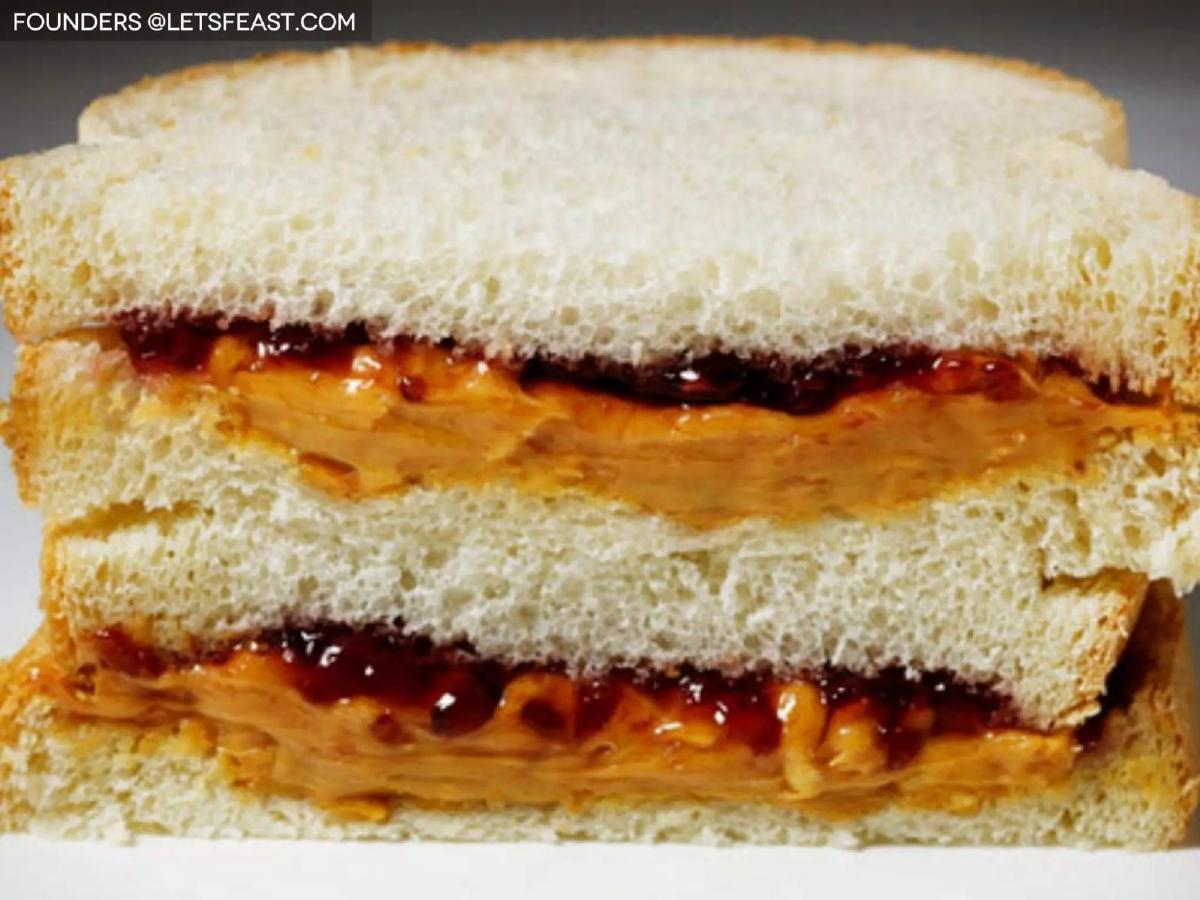
Slide 2: The PB&J Problem This slide contains no text. It is a high-definition, cross-section photo of a peanut butter and jelly sandwich. In the context of the following slides, it represents the 'status quo' or the simple, uninspired food people eat when they lack cooking skills.
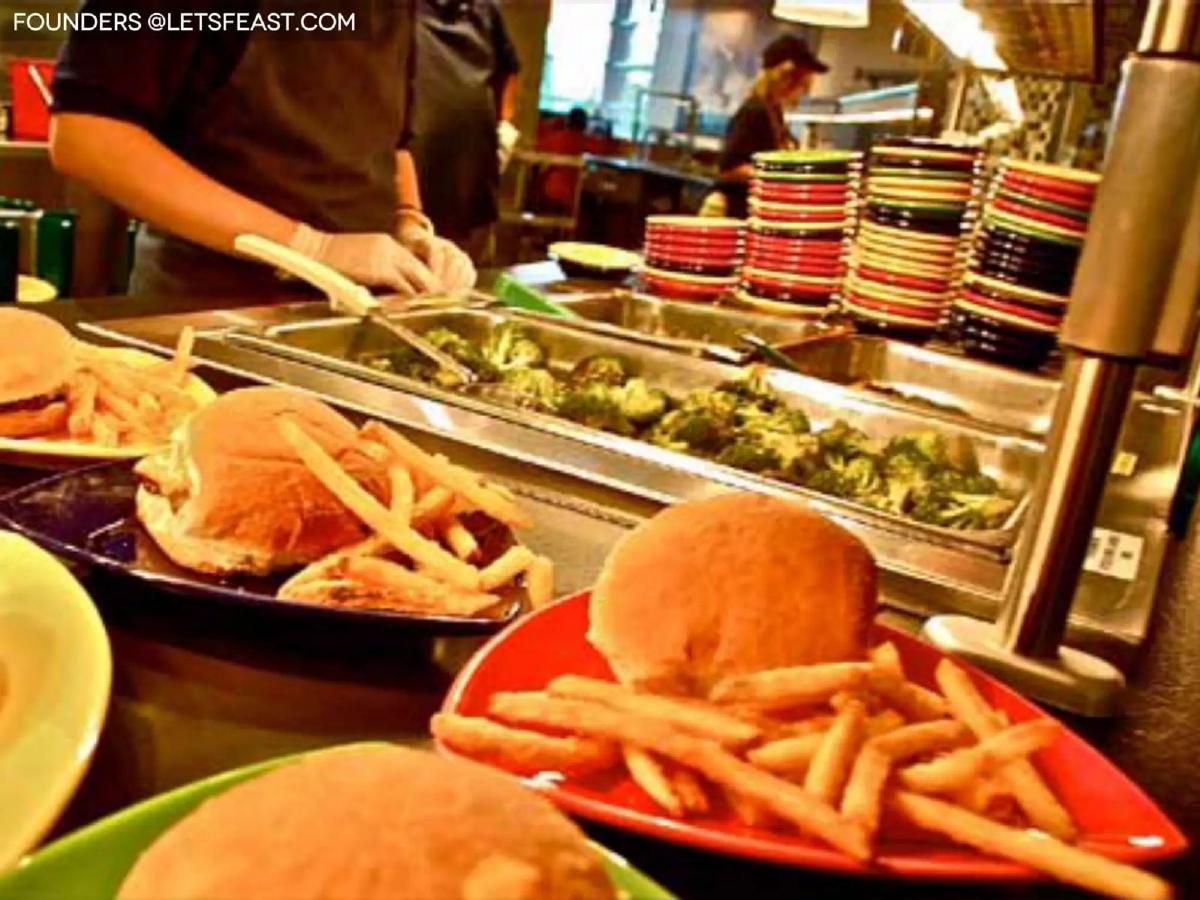
Slide 3: Institutional Food Another wordless slide. It shows a cafeteria-style setup with burgers, fries, and steam trays of broccoli. This contrasts the 'home-cooked' promise of Feast with the reality of mass-produced, low-quality convenience food.
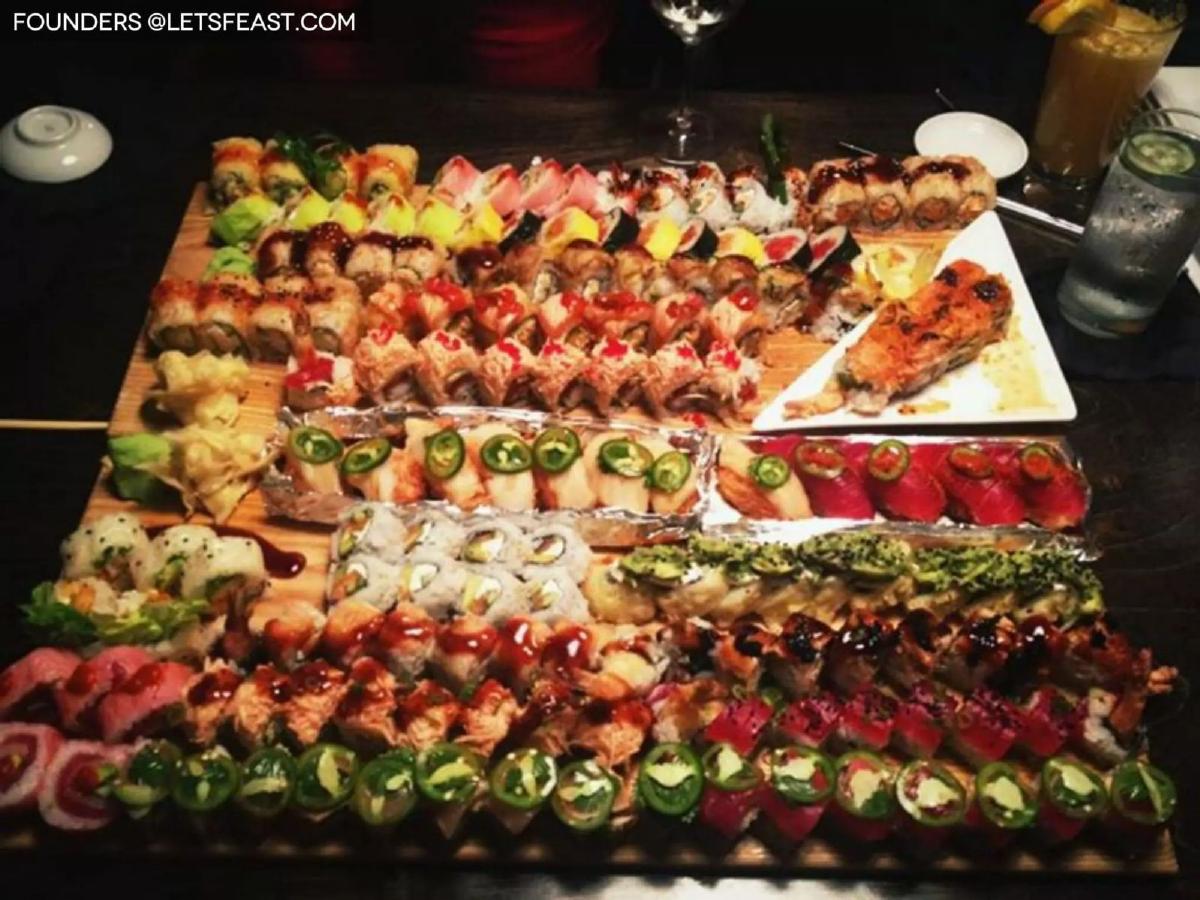
Slide 4: The Aspirational Feast Continuing the visual narrative, Slide 4 shows a massive spread of sushi. This represents the 'Feast'—the high-level culinary output that users presumably want to achieve but currently find intimidating.
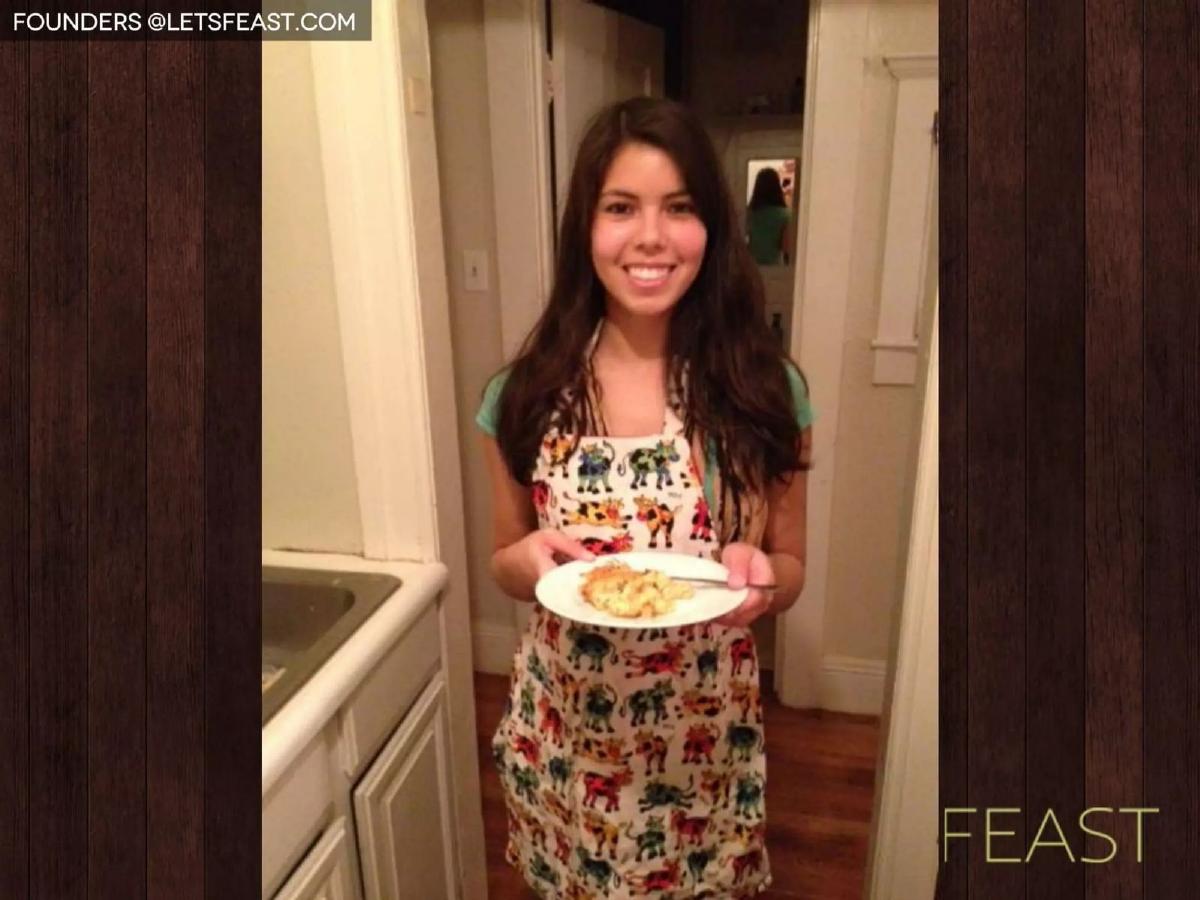
Slide 5: The Human Element A photo of a young woman (likely a user or founder) in a cow-print apron holding a small plate of food. This grounds the deck in reality, showing that the goal isn't just professional chef-level food, but personal accomplishment in a home kitchen.
Slides 6-10: Market Demand and the Current Mess
Slide 6: The Search for Knowledge Feast introduces its first hard metric here: '30 Million people Search every month' on Google for 'How to cook.' This is a classic 'demand-side' slide that proves the problem isn't a lack of interest, but perhaps a lack of a centralized, quality solution.
Slide 7: The Content Chaos This slide is a collage of YouTube thumbnails. It visually represents the current state of online cooking education: fragmented, varying in quality, and overwhelming. It implies that while the information is 'out there,' it is not organized for a learner.
Slide 8: The Logistics of Learning A photo of a woman at the back of a car filled with boxes labeled 'STAST' (likely a precursor name or a partner brand). This hints at the physical component of the business—potentially meal kits or ingredients—though the deck later focuses more on the digital courses.
Slide 9: The Skill Gap A close-up of a hand holding an egg. No text. It emphasizes the foundational, tactile nature of cooking that Feast intends to teach.
Slide 10: The Solution (Web Interface) A screenshot of the letsfeast.com homepage. The headline reads 'A BETTER WAY TO LEARN HOW TO COOK.' It features a lead magnet: 'Ready to start cooking? Get our 7 Day Crash Course emailed to you for free.' This shows the top-of-funnel strategy for user acquisition.
Slides 11-15: Product and Traction
Slide 11: Instructional Content A slide showing 'Lesson 2: Ninja Kitchen Knife Skills.' It demonstrates the instructional style: clear photos, simple text ('Doesn’t matter what kind of knife you have. The technique is the same.'), and a focus on fundamental techniques like how to hold a knife.
Slide 12: The Feasters (Community) This slide is titled 'THE FEASTERS' and features a collage of users in their kitchens. It includes a Facebook post from Evan Hamilton: 'I still suck at poaching eggs. How to you make them non-runny-looking?' This proves the platform is fostering a community where users feel comfortable asking for help.
Slide 13: Signups (Growth) The 'Traction' slide. It shows a bar chart of signups from March to July. The numbers are:
March: ~400 · April: ~850 · May: ~1,150 · June: ~2,150 · July: ~2,750 (with a 'proj.' total reaching ~3,300)
This shows a healthy growth curve, nearly doubling between May and June.
Slide 14: Behind the Scenes A photo of a cooking lesson being filmed. This demonstrates that Feast is a content creator, not just a curator. It shows the 'full-stack' nature of their production—they own the curriculum.
Slide 15: The Marketplace (Revenue) This slide shows the course catalog and pricing. It includes:
Fermentation: FREE! · Fire Roasting: Enroll $5 · Indoor Grilling: FREE! · Indian Cooking: Enroll $5 · Paleo Noodles!: Enroll $5 · Seafood Stock from Scratch: Enroll $15 · Roasting a Whole Chicken: Enroll $12 · Searing the Perfect Steak: Enroll $12
This clarifies the business model: a mix of free 'hook' content and paid 'deep-dive' courses.
Slides 16-18: The Big Picture and The Ask
Slide 16: Market Size A simple slide stating '$7.4 BILLION.' There is no further context provided on the slide, but in a pitch setting, this would be the moment the founder explains the TAM (Total Addressable Market).
Slide 17: The Team The team slide features David Spinks (CEO) and Nadia Eghbal (COO). Spinks' profile includes logos for Zaarly, LeWeb, Udemy, SeatGeek, Blogdash, and The Community Manager. Eghbal's profile includes Newsbound and GreatSchools. This highlights a team with deep experience in community growth and digital platforms.
Slide 18: The Ask The final slide is direct: 'WE’RE RAISING 500K.' It provides an email address (Founders @ letsfeast.com) and social links. It is a clean, unambiguous conclusion to the pitch.
What Works in the Feast Deck
Visual Narrative: The deck does an excellent job of using imagery to evoke the 'problem' and the 'solution' without needing heavy blocks of text. The contrast between the PB&J/Cafeteria food and the 'Feast' spread is a powerful psychological hook.
Clear Traction: Slide 13 provides exactly what investors want to see in a seed deck: a clear, upward-sloping bar chart of user acquisition. Even if the numbers are relatively small (in the low thousands), the month-over-month growth rate is compelling.
Low-Friction Monetization: The pricing on Slide 15 ($5 to $15) suggests a product that is easy for a consumer to say 'yes' to. It demonstrates that the company has already thought through its revenue streams and has a live marketplace.
What is Missing from the Feast Deck
Unit Economics: While we see the price of the courses, we don't see the cost of acquisition (CAC) or the lifetime value (LTV). For a consumer content business, knowing how much it costs to get one of those 3,000 signups is critical.
Competitive Landscape: The deck implies that YouTube is the competition (Slide 7), but it doesn't explicitly name other players in the space (like MasterClass, which launched around the same time, or Blue Apron/HelloFresh, which were the 'physical' competitors for cooking at home).
Source of Market Data: The $7.4 Billion figure on Slide 16 is bold but unsubstantiated. Investors generally prefer to see a 'bottom-up' calculation or a cited source for such a large number.
What a Founder Should Copy
The 'Community' Slide: Slide 12 is a great example of how to show community engagement. Using actual screenshots of user questions and interactions is much more convincing than simply saying 'we have an active community.'
The 'Problem' Visualization: Instead of listing 'People are bad at cooking' as a bullet point, Feast showed a sad sandwich and a cafeteria tray. Founders should look for ways to visualize the 'pain' their product solves.
Directness of the Ask: Many founders bury the funding ask or make it vague. Feast’s final slide is a model of clarity: amount, contact info, and next steps.
Frequently asked questions
- What is Feast's primary business model according to the deck?
- Feast operates as a digital culinary school. Slide 15 shows a marketplace of online courses where some content is free (Fermentation, Indoor Grilling) while others are monetized via one-time enrollment fees. Prices listed include $5 for 'Indian Cooking' or 'Paleo Noodles,' $12 for 'Searing the Perfect Steak,' and $15 for 'Seafood Stock from Scratch.' This suggests a low-friction, high-volume content sales strategy.
- How does Feast demonstrate product-market fit?
- The deck uses a combination of search intent data and internal traction. Slide 6 highlights the 30 million monthly searches for 'How to cook,' while Slide 13 shows consistent month-over-month growth in signups. Additionally, Slide 12, titled 'The Feasters,' displays real user interactions and questions, proving that people are actively using the platform to solve cooking challenges like poaching eggs.
- Who are the founders and what is their background?
- The team consists of David Spinks (CEO) and Nadia Eghbal (COO). Spinks has a strong background in community and tech, with logos for Zaarly, Udemy, SeatGeek, and The Community Manager appearing on his profile. Eghbal is associated with Newsbound and GreatSchools. Their collective experience suggests a focus on platform growth and community building rather than professional culinary arts (Slide 17).
- What is the total addressable market (TAM) for Feast?
- Slide 16 simply states '$7.4 BILLION' in large gold text against a wood-grain background. While the deck does not provide a breakdown of how this number is calculated (e.g., whether it refers to the online education market, the grocery market, or the cooking appliance market), it serves to signal the scale of the opportunity to investors.
- What is the specific funding goal mentioned in the deck?
- The final slide (Slide 18) states 'WE’RE RAISING 500K.' This is a straightforward seed-stage ask. It includes contact information and links to their AngelList and Twitter profiles, making the call to action clear for potential investors viewing the deck.