ActivityHero’s 13-slide deck from 2012 successfully navigates the transition from identifying a visceral pain point—the 'frustrating' and 'time-consuming' process of booking kids' camps—to presenting a scalable marketplace solution. The deck leans heavily on social proof and early momentum, showcasing a growth curve that reached 150,000 unique visitors by June (Slide 8). With a clear market size of $30 billion (Slide 4) and a diverse vendor base including the YMCA and iD Tech Camps (Slide 9), the founders established immediate credibility. While the deck is light on specific unit economics an…
Key takeaways
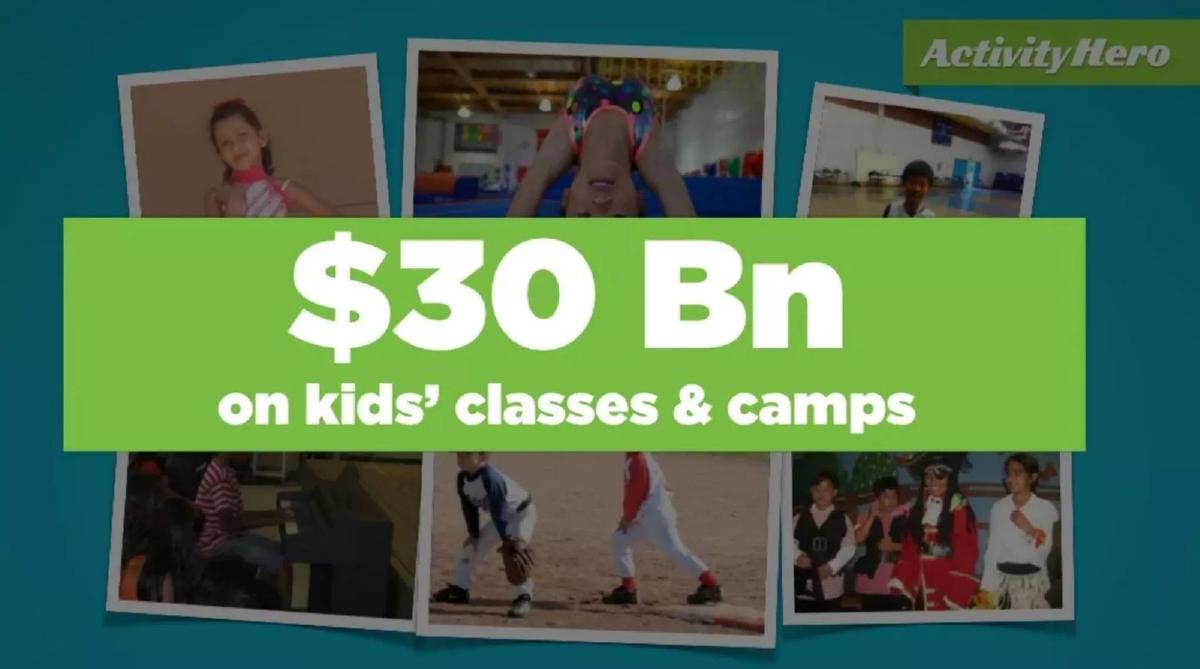
- The deck identifies a massive $30 billion market opportunity specifically within kids' classes and summer camps (Slide 4).
- Early traction is demonstrated through a momentum chart showing growth to 150,000 unique visitors over a six-month period (Slide 8).
- The platform had already facilitated $1.4 million in camp enrollments at the time of the pitch (Slide 9).
- The vendor ecosystem is split nearly evenly between paid and free listings, with 52% of vendors paying for the service (Slide 9).
- The founding team highlights strong academic and professional pedigrees, including Stanford, MIT, and Intuit (Slide 11).
- Existing social proof is leveraged by showcasing logos from VentureBeat, TechCrunch, and Fox 29 (Slide 7).
- The initial funding ask was for $750,000, though catalogue data indicates they eventually raised $2.2 million (Slide 13).
- The deck uses a 'Kids Activities Network' vision to suggest a future beyond a simple directory, involving carpools and school connections (Slide 10).
The Marketplace for Modern Parenting
ActivityHero’s 2012 seed deck is a classic example of a marketplace pitch that focuses on the 'pain' of the consumer and the 'gain' of the vendor. In the early 2010s, the digitization of local services was a major investment theme, and this deck follows that playbook by targeting a highly emotional and high-spend category: childcare and enrichment. The deck is concise, totaling 13 slides, and relies more on visual storytelling and high-level metrics than deep financial modeling.
Slides 1-4: The Hook and the Opportunity
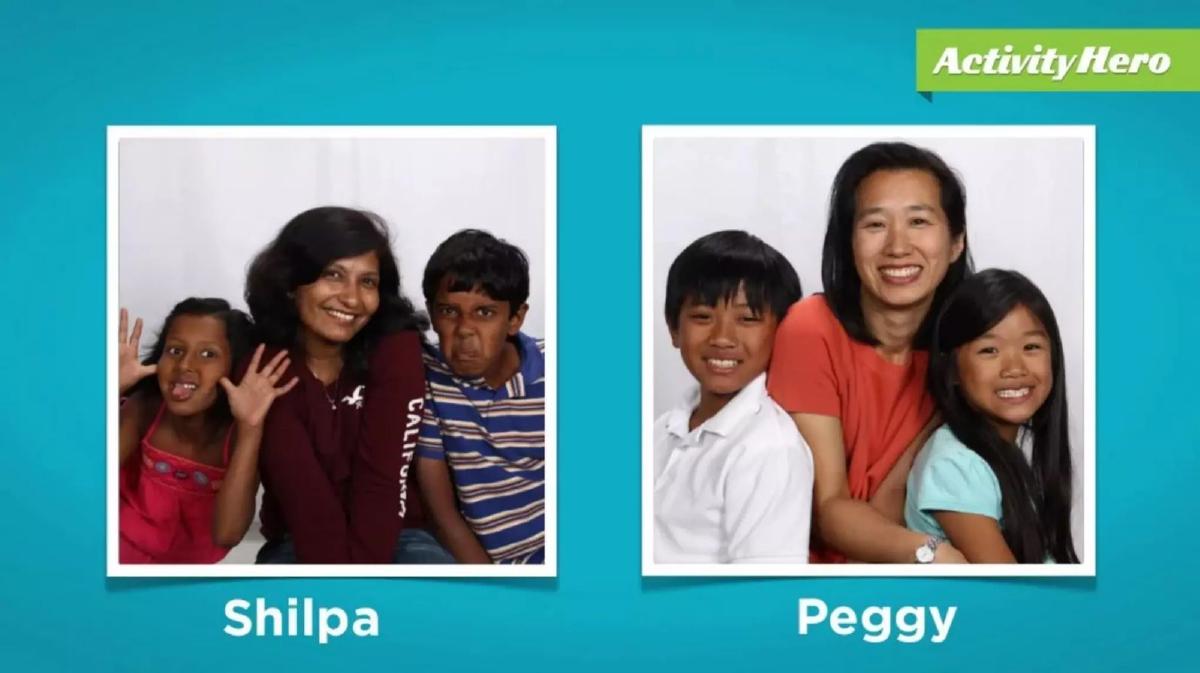
The deck opens with a simple title slide (Slide 1) featuring a child in a superhero cape and the tagline "All about kids activities." This immediately establishes the brand's friendly, family-oriented tone. Slides 2 and 3 introduce the human element, showing the founders (Shilpa and Peggy) with their children and a collage of kids participating in various activities like gymnastics, basketball, and piano. This isn't just filler; it establishes the founders as 'user-founders' who understand the problem firsthand.
Slide 4 delivers the 'Big Number' that investors look for: $30 Bn on kids’ classes & camps . By placing this figure over the activity collage, the deck suggests a massive, untapped market that is currently being transacted through inefficient, offline channels. It sets the stage for a 'winner-takes-all' marketplace argument.
Slides 5-7: The Problem and the Heroic Solution
Slide 5 uses a word cloud to describe the current 'busy mom' workflow: searching Google, asking other moms, looking for school signs, and calling providers. Slide 6 punctuates this with two large red bars labeled TIME CONSUMING!!! and FRUSTRATING!!! . This is a standard but effective way to build empathy for the customer before revealing the product.
Slide 7 introduces the solution: "ActivityHero to the Rescue!!!" The slide shows a screenshot of the platform, highlighting two primary functions: SEARCH and DISCOVER . Notably, this slide includes a 'social proof' bar at the bottom with logos from TechCrunch, VentureBeat, and CBS Philly . This tells investors that the product is already live and attracting media attention, reducing the perceived risk of the 'idea stage.'
Slides 8-9: Proof of Momentum
The 'Momentum' slide (Slide 8) is perhaps the most important in the deck. It shows a steep upward curve of unique visitors, starting below 12,500 in January and peaking at 150,000 Uniques in June. This 12x growth in six months is the primary 'hook' for a seed-stage investor. It proves that the marketing or SEO strategy is working.
Slide 9, titled "Vendors Love Us," addresses the supply side of the marketplace. It claims $1.4M camp enrollments and shows a pie chart where 52% of vendors are 'Paid.' This is a critical detail because it proves the business model. If more than half of the vendors are paying, the platform is providing tangible ROI to the businesses listed. The slide also features logos of major partners like the YMCA, iD Tech Camps, and Tutor.com , showing that the platform can scale from local mom-and-pop shops to national franchises.
Slides 10-13: Vision, Team, and the Ask
Slide 10, "What next?", hints at the long-term moat. By showing a "Kids Activities Network" that connects homes, schools, and cars, the company suggests it will move into logistics (carpooling) and social networking. This moves the company from a 'directory' (low multiple) to a 'platform' (high multiple).
The Founders slide (Slide 11) is strong, highlighting Stanford, MIT, and Intuit backgrounds, along with 4 patents . This suggests a team that can not only build the product but also navigate the complexities of a two-sided marketplace. Slide 12 reinforces this by showing an impressive roster of existing investors and advisors from Facebook, PayPal, and LinkedIn , including Deb Liu (then a high-ranking Facebook executive).
The final slide (Slide 13) is the 'Ask.' It features another child in a cape and a clear figure: $750K . It also provides a link to their AngelList profile and a direct email. While the catalogue data shows they eventually raised $2.2M, this slide shows they were initially seeking a smaller seed round to fuel the momentum shown on Slide 8.
What Works in This Deck
The Traction-First Approach: By Slide 8, the investor already knows the product works and people want it. Showing 150,000 unique visitors and $1.4M in transactions is a powerful way to justify a seed valuation.
Clear Market Sizing: The $30B figure on Slide 4 is specific. It doesn't just say 'Education' or 'Childcare'; it specifies 'classes and camps,' which aligns perfectly with the product screenshots.
High-Quality Social Proof: The combination of media logos (Slide 7), national vendor logos (Slide 9), and high-profile advisor logos (Slide 12) creates a 'halo effect' that makes the startup seem inevitable.
What Is Missing
Unit Economics: The deck mentions that 52% of vendors are 'Paid,' but it doesn't explain the take rate, the subscription cost, or the Customer Acquisition Cost (CAC) vs. Lifetime Value (LTV). Investors in 2012 might have been more lenient, but today’s investors would want to see the 'math' of the marketplace.
Competitive Landscape: There is no mention of competitors. In 2012, other players were entering the 'local discovery' space. Failing to acknowledge them can sometimes make a team look naive or overconfident.
Detailed Use of Funds: The $750K ask is clear, but there is no breakdown of how that money will be spent. Will it go toward engineering, sales, or geographic expansion? The 'What next?' slide is too visionary to serve as a tactical roadmap for the capital.
What a Founder Should Copy
The 'Problem' Visualization: Slide 5 and 6 are excellent. Instead of a boring bulleted list, they use a word cloud and high-contrast 'frustration' bars to make the pain point feel real.
The Momentum Chart: If you have a 'hockey stick' graph, make it the centerpiece of your deck. ActivityHero’s Slide 8 is clean, easy to read, and uses a single, powerful metric (Uniques).
Founder-Market Fit: Slide 11 doesn't just list jobs; it uses logos to tell a story of elite education and top-tier corporate experience. If your team has 'pedigree,' use the logos—they are processed faster than text by the human brain.
Frequently asked questions
- What was the primary problem ActivityHero aimed to solve?
- According to Slides 5 and 6, the problem was the fragmented and manual nature of finding kids' activities. Parents were forced to look for school signs, search Google, call providers, and coordinate carpools manually. The deck characterizes this current state as 'Time Consuming' and 'Frustrating,' positioning ActivityHero as a centralized digital solution to replace these disparate methods.
- How did ActivityHero demonstrate market demand?
- ActivityHero used two primary metrics: user traffic and transaction volume. Slide 8 shows a 'Momentum' graph where unique visitors grew from roughly 10,000 in January to 150,000 by June. Slide 9 complements this by stating they had already achieved $1.4 million in camp enrollments, proving that users weren't just browsing but were actually spending money through the platform.
- What was the business model indicated in the deck?
- While a detailed revenue breakdown is missing, Slide 9 provides a significant clue. It shows that 52% of their vendors are 'Paid' while 48% are 'Free.' This suggests a freemium marketplace model where activity providers likely pay for premium placement, lead generation, or transaction processing, while a base level of listings keeps the directory comprehensive for parents.
- Who were the key people behind the company?
- The company was led by three female founders: Peggy Chang, Shilpa Dalmia, and Chandini Ammineni. Slide 11 highlights their credentials, including degrees from Stanford and MIT, experience at Intuit, and the possession of four patents. This slide establishes 'founder-market fit' by showing a mix of technical expertise and corporate experience.
- What was the 'What Next' vision for the company?
- Slide 10 introduces the concept of a 'Kids Activities Network.' The graphic depicts houses connected to schools and cars, suggesting that ActivityHero planned to expand from a simple booking portal into a community-driven network. This likely included features for carpooling, social sharing among parents, and deeper integration with school systems to create a stickier ecosystem.