Amodo’s 2015 pitch deck, presented at the Startup AddVenture Zagreb competition, serves as a visual-heavy introduction to a B2B connected car platform. The deck emphasizes the shift toward usage-based insurance (UBI) and driver coaching through a gamified approach. While the presentation excels at high-level branding and product visualization, it is notably light on historical financial data and specific competitive advantages. The core of the pitch rests on a projected 2018 revenue target of €13.5M, derived from a 2.5% market share of the European UBI policy market. However, the deck omits a…
Key takeaways
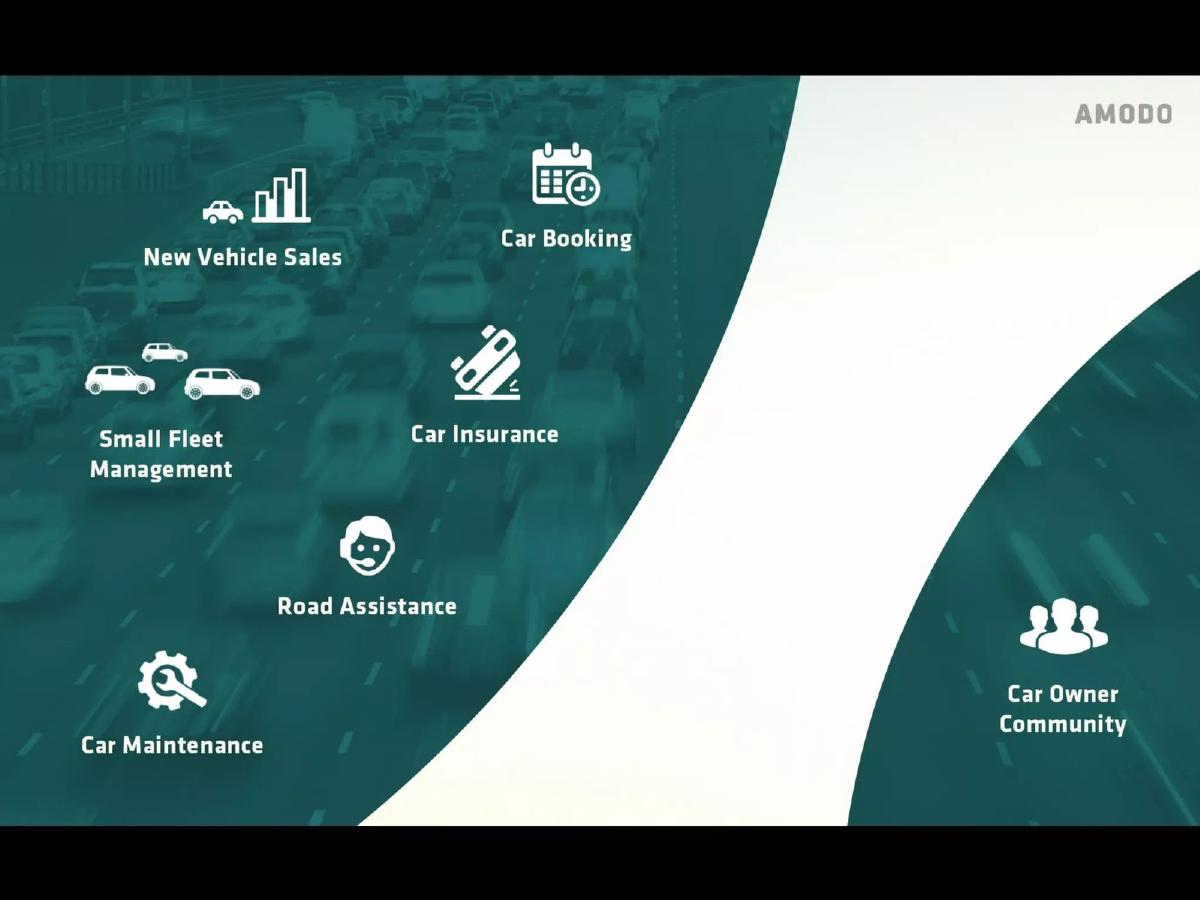
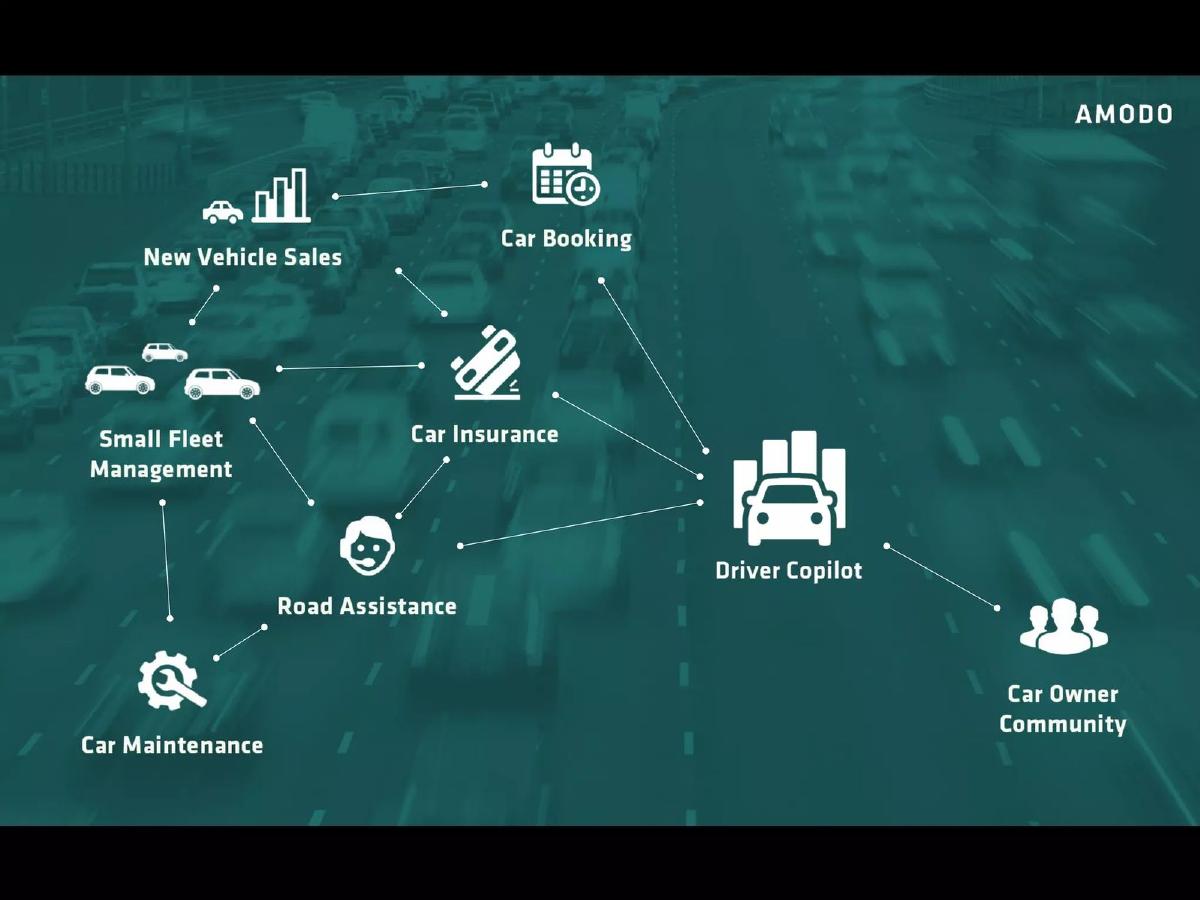
- The deck identifies seven key verticals for the platform, including Car Insurance, Road Assistance, and Small Fleet Management (Slide 2).
- Amodo positions its value proposition around 'Driver Engagement & Coaching' using an 'individualised, gamified approach' (Slide 3).
- The technology stack is described as 'Advanced Driving Data Analytics' focusing on context and condition-based analysis (Slide 4).
- The product, 'Driver Copilot,' includes a mobile app, a web-based dashboard for trends analysis, and a physical OBD hardware plug-in (Slide 5).
- Market sizing focuses on Europe, predicting over 50 million usage-based policies by 2018 (Slide 6).
- The business model is a B2B monthly license fee comprising hardware, the Driver Copilot software, data connectivity, and partner margin (Slide 7).
- Financial projections for 2018 target €13.5M in revenue based on 400,000 UBI policies (Slide 7).
- The deck lacks a team slide, a competitive landscape analysis, and a specific capital requirement or 'Ask' (Slide 8).
Introduction
The Amodo pitch deck from the 2015 Startup AddVenture Zagreb competition is a prime example of a 'stage deck.' It is designed with minimal text and high-impact visuals, intended to support a speaker rather than serve as a comprehensive reading document. Amodo operates in the insurtech and telematics space, providing a platform that connects cars to the cloud to enable usage-based insurance (UBI) and fleet management. The following teardown examines the eight slides provided, analyzing the narrative flow and the data presented.
Slide 1: Title and Event Branding
The opening slide serves as a placeholder for the competition. It features the Startup AddVenture Zagreb logo and the TechCrunch Pitch Slap branding. There is no company logo on this specific slide, but the context of the event is clear. This slide establishes the company's presence in the 2015 European startup ecosystem.
Slide 2: The Connected Car Ecosystem
Slide 2 introduces the scope of Amodo's platform without using a single sentence of prose. It uses a background image of heavy traffic overlaid with seven icons representing different business verticals. The listed areas of focus are: New Vehicle Sales , Car Booking , Small Fleet Management , Car Insurance , Road Assistance , Car Maintenance , and Car Owner Community . By highlighting these, Amodo signals that while insurance might be their primary entry point, the platform is designed to be a holistic 'Connected Car Platform' (as later defined on Slide 5).
Slide 3: The Value Proposition - Driver Engagement
Slide 3 pivots to the end-user experience. The headline is DRIVER ENGAGEMENT & COACHING , with a sub-headline specifying an INDIVIDUALISED, GAMIFIED APPROACH . The visual of a driver in a convertible suggests a focus on the consumer experience. This slide is critical because it addresses the 'how' of the data collection: by making the app engaging and gamified, Amodo ensures that drivers actually use the technology, which in turn provides the data necessary for the B2B clients.
Slide 4: The Technology - Data Analytics
Slide 4 focuses on the backend capabilities. The headline reads ADVANCED DRIVING DATA ANALYTICS , supported by the phrase CONTEXT AND CONDITIONS BASED ANALYSIS . This indicates that Amodo is not just tracking speed or GPS, but is analyzing how those factors interact with the environment (weather, traffic, time of day). The background image of a sprawling city at night reinforces the idea of large-scale data sets and urban connectivity.
Slide 5: The Product - Driver Copilot
This is the 'Product' slide, and it is the most information-dense visual in the deck. It introduces the name AMODO Connected Car Platform and its flagship interface, Driver Copilot . The slide shows a multi-device ecosystem:
Desktop Dashboard: Displays a 'Smart Report,' 'Trends Analysis,' and 'Vehicle Status.' It shows a specific user, 'Gorjan Agacevic,' with a trip distance of 564 km and 19h 13m spent in traffic. · Mobile App: Shows a driver safety score of 79 and various 'Achievements' like 'Green Driver.' · Tablet App: Displays detailed trip logs and maps. · Hardware: A small black OBD-II plug-in device is shown, which is the physical source of the data.
This slide successfully demonstrates that the product is a cross-platform solution ready for both consumers and enterprise administrators.
Slide 6: Market Opportunity
Slide 6 addresses the market size. It focuses on the period 2015 - 2018 and the geography of Europe . The central claim is a market of > 50 Million usage based policies . By narrowing the focus to Europe, the deck remains realistic and targeted, though it does not cite the source for this 50 million figure. The map background highlights the specific region of operation.
Slide 7: Business Model and Projections
Slide 7 explains how Amodo makes money. The text states, "We charge a monthly licence to our B2B clients." A stacked bar chart breaks down the Monthly licence breakdown into:
Partner Margin · Data Connectivity · Driver Copilot (the software core) · Hardware
On the right side, the deck lists Expected revenues in 2018 . The figures are specific: a Market Share of 2,50% (15M) , resulting in 400.000 UBI Policies and € 13.5M in revenue. This slide is the most important for investors, as it links the product to a clear financial outcome, even if the numbers are purely speculative projections.
Slide 8: Conclusion and Contact
The final slide is a standard 'Thank You' slide. It includes the contact email for gorjan.agacevic@amodo.eu and the website www.amodo.eu . The imagery is whimsical—a child wearing a tinfoil hat with wires—which contrasts with the high-tech nature of the previous slides, perhaps intended to leave a memorable, human impression on the audience.
What Works
The deck is visually cohesive and professional. It avoids the common mistake of cluttering slides with too much text, which is vital for a pitch competition where the audience's attention should be on the speaker. The product slide (Slide 5) is excellent; it clearly shows that the company has thought through the entire user journey from hardware to mobile to desktop. Furthermore, the business model slide (Slide 7) is transparent about the revenue components, showing that Amodo understands the costs associated with hardware and data connectivity.
What is Missing
As a standalone fundraising document, this deck has significant gaps:
No Team Slide: There is no information about the founders' backgrounds, their technical expertise, or their history in the insurance or automotive industries. · No Traction Data: The deck is entirely forward-looking. It does not mention any current pilots, signed contracts, or the number of active users at the time of the 2015 pitch. · No Competitive Analysis: The telematics space was already crowded in 2015. The deck fails to mention how Amodo differs from competitors like Progressive’s Snapshot or other third-party telematics providers. · No Funding Ask: There is no mention of how much money the company is looking to raise or how that capital would be allocated to reach the 2018 goals. · No Unit Economics: While the revenue breakdown is shown, the actual cost per user or the acquisition cost for B2B partners is omitted.
Founder Takeaways
Founders should emulate the visual clarity of Slide 5. Showing the product across multiple devices helps investors visualize the 'platform' nature of the business. Additionally, the market sizing on Slide 6 is a good example of geographic focus; rather than claiming a 'trillion-dollar global market,' Amodo focused on a specific, reachable European segment. However, founders must ensure that if they use a deck like this for one-on-one investor meetings, they include the missing 'hard' slides—Team, Traction, and The Ask—to provide the necessary due diligence material.
Frequently asked questions
- What is Amodo's primary product?
- Amodo’s primary product is the 'Driver Copilot,' a connected car platform. As shown on Slide 5, this includes a hardware component (likely an OBD-II dongle), a mobile application for drivers to track safety and eco-scores, and a web dashboard for B2B clients to perform 'Trends Analysis' and monitor vehicle status.
- How does Amodo generate revenue?
- According to Slide 7, Amodo operates a B2B licensing model. They charge clients a monthly fee that is broken down into four components: Hardware, the Driver Copilot software platform, Data Connectivity, and a Partner Margin. This suggests they act as a full-stack service provider for insurers or fleet managers.
- What market is Amodo targeting?
- The deck specifically targets the European market for usage-based insurance (UBI). Slide 6 highlights a projection of over 50 million UBI policies in Europe between 2015 and 2018. The company aimed to capture 2.5% of this market, equating to 400,000 policies.
- What are the key metrics mentioned in the deck?
- The deck is forward-looking rather than historical. The primary metrics are projections for 2018: 400,000 UBI policies, a 2.5% market share (out of a 15M addressable segment), and €13.5M in annual revenue. Slide 5 also shows sample driver metrics like an 'Overall Score' of 98 and 'Overspeeding Time' of 12%.
- What is missing from this pitch deck?
- This deck omits several critical fundraising elements. There is no team slide detailing founder expertise, no slide explaining the competitive landscape, no mention of current traction or existing partners, and no 'Ask' slide indicating how much capital is being raised or how it will be used.