The QualSights (formerly Georama) deck is a masterclass in brevity, consisting of only eight slides. Rather than overwhelming investors with technical specifications, the deck focuses on a clear 'Then vs. Now' narrative, transitioning from expensive satellite trucks to mobile-based bandwidth aggregation. The company successfully raised $11.2 million by leaning heavily on social proof, showcasing a client roster that includes NASA, Google, and Marriott. While the deck lacks traditional financial projections, unit economics, and a specific 'ask' slide, it compensates with a strong traction narr…
Key takeaways
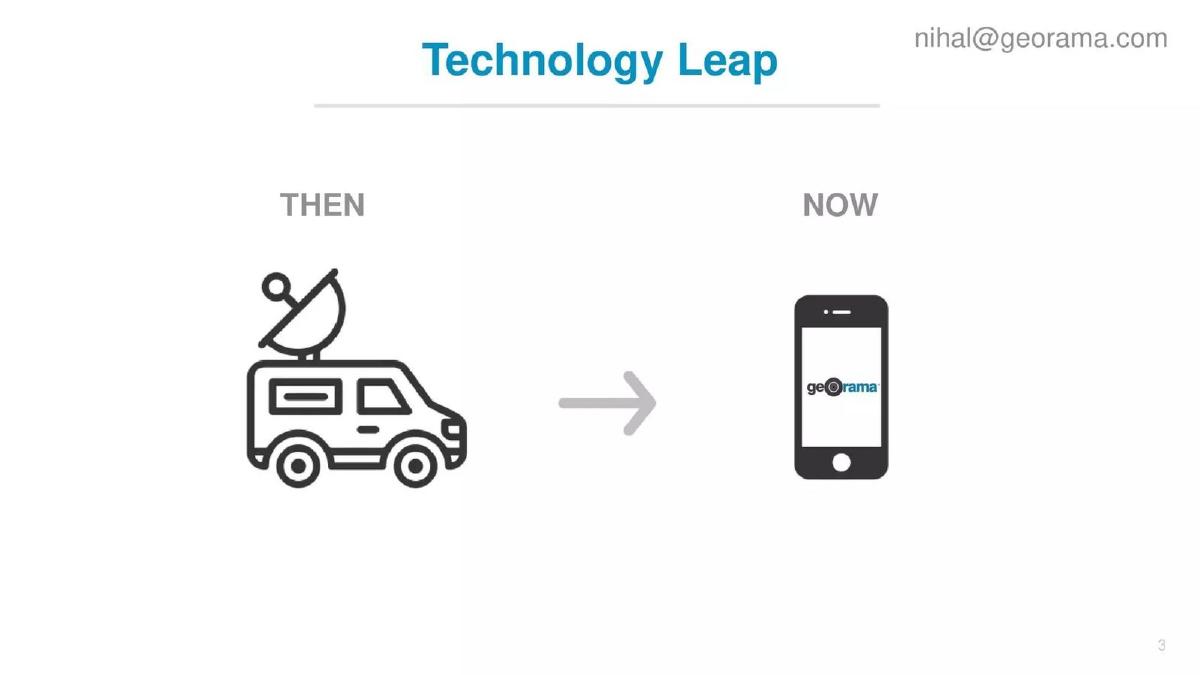
- The deck uses a simple 'Then vs. Now' visual on Slide 3 to illustrate the shift from satellite vans to mobile software.
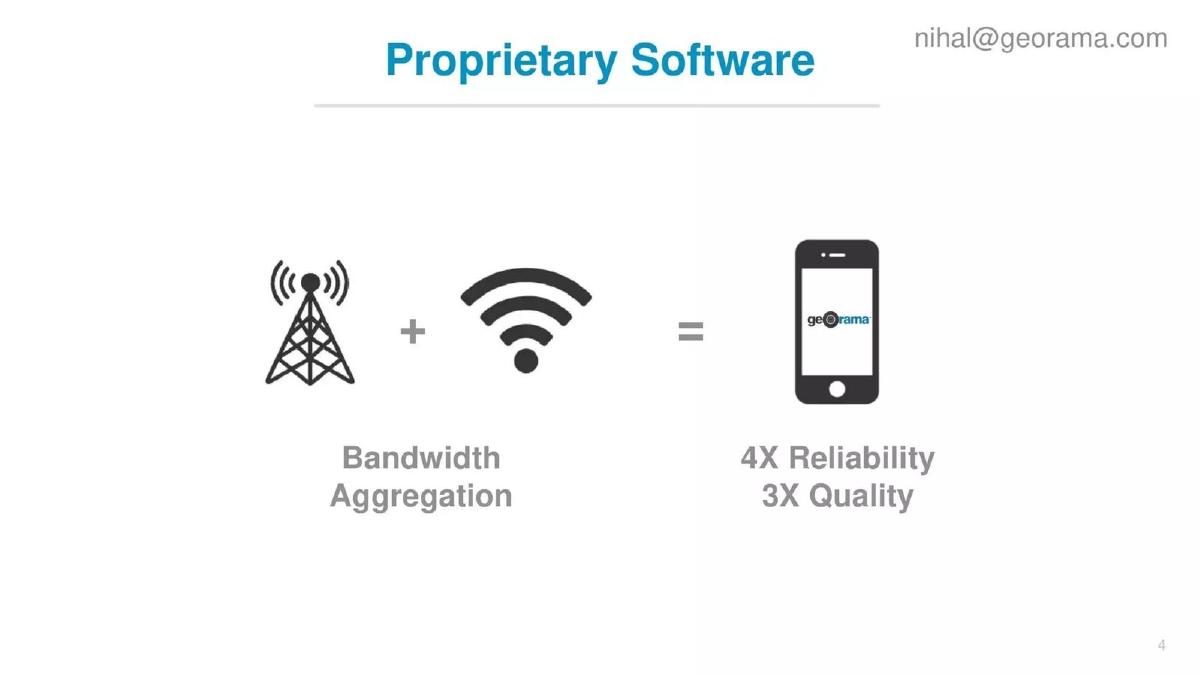
- Proprietary technology is defined by 'Bandwidth Aggregation,' claiming 4X reliability and 3X quality on Slide 4.
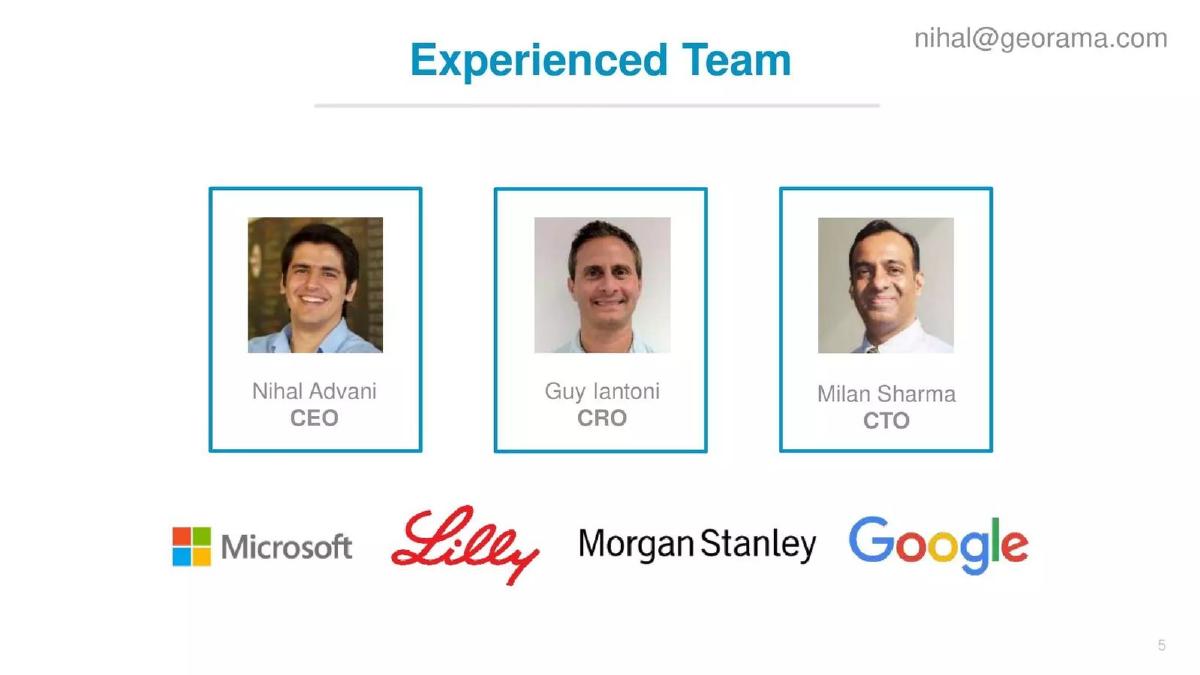
- The team slide (Slide 5) leverages massive corporate logos including Microsoft, Eli Lilly, Morgan Stanley, and Google.
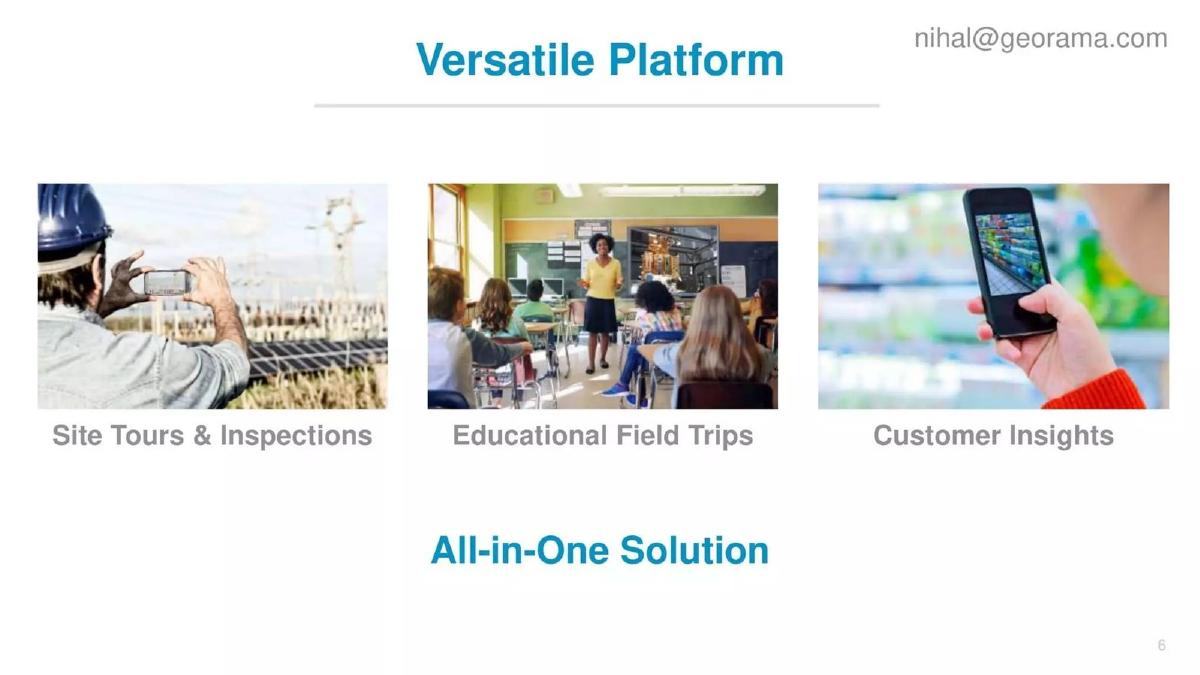
- Market versatility is demonstrated through three distinct use cases: Site Tours, Education, and Customer Insights on Slide 6.
- Traction is quantified as 'Over $250K in Revenue YTD' on Slide 7, with a projection of $750K mentioned on Slide 8.
- The company identifies a '$40+ Billion Market Opportunity' on the final summary slide (Slide 8).
- Blue-chip validation is the core strategy, featuring logos like NASA, Oracle, Marriott, and IDEO on Slide 7.
- The deck completely omits a competition slide, a detailed financial model, and a specific fundraising 'ask' amount.
The Power of Brevity: The QualSights (Georama) Teardown
QualSights, originally founded as Georama, provides a rare look at a Series A deck that prioritizes momentum over minutiae. With only eight slides, the deck successfully navigated a significant funding round by focusing on a singular technical breakthrough: making mobile live video reliable enough for the enterprise. According to catalogue facts, the company raised $11,200,000 in 2011, though the deck itself reflects a later stage of their evolution where they were already generating significant revenue.
The Hook and the Problem
Slide 1: Title Slide The deck opens with the Georama logo and the tagline: "An enterprise platform for broadcasting live video on the go." This is a functional, no-nonsense introduction. The inclusion of a direct email address (nihal@georama.com) on every slide is a subtle but effective way to ensure the founder is reachable as the deck is shared internally among VC partners.
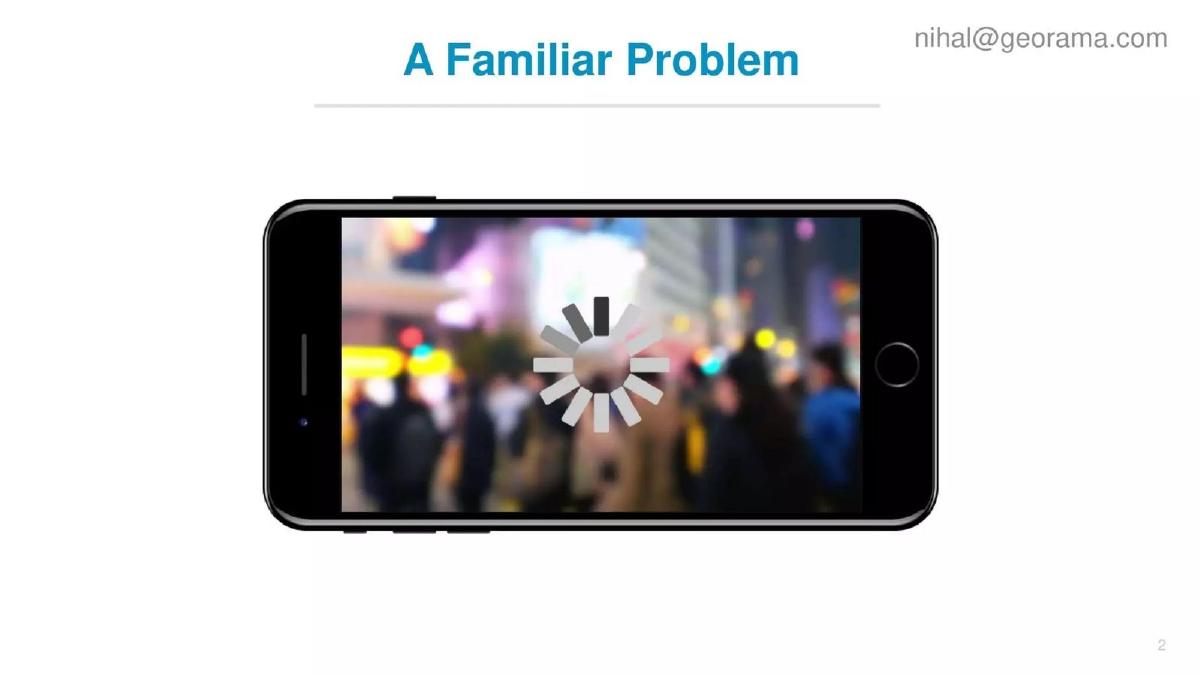
Slide 2: A Familiar Problem Slide 2 is purely visual. It shows a smartphone with a loading/buffering icon over a blurred city scene. It identifies the pain point without using a single word of copy: mobile video is unreliable. This sets the stage for their technical solution.
The Solution and Technology
Slide 3: Technology Leap This is the most important narrative slide in the deck. It uses a "Then vs. Now" comparison. On the left, a "Then" icon of a satellite truck; on the right, a "Now" icon of a smartphone running Georama. This frames the company not just as an app, but as a replacement for expensive, legacy hardware infrastructure. It suggests a massive reduction in CAPEX for potential clients.
Slide 4: Proprietary Software Slide 4 explains the "how." The company uses "Bandwidth Aggregation"—combining cellular and Wi-Fi signals—to achieve "4X Reliability" and "3X Quality." By quantifying the improvement, they move from a vague promise to a measurable technical advantage. This is the core of their intellectual property and their primary competitive moat.
The Team and Market Versatility
Slide 5: Experienced Team The team slide features Nihal Advani (CEO), Guy Iantoni (CRO), and Milan Sharma (CTO). The strength of this slide lies in the logos at the bottom: Microsoft, Eli Lilly, Morgan Stanley, and Google. This tells investors that the leadership has experience in big tech, enterprise sales, and high finance. It reduces the perceived execution risk.
Slide 6: Versatile Platform QualSights demonstrates that their technology isn't a one-trick pony. They highlight three verticals:
Site Tours & Inspections: Showing a worker in a hard hat. · Educational Field Trips: Showing a classroom. · Customer Insights: Showing a consumer in a retail environment.
This slide is a double-edged sword; while it shows a large Total Addressable Market (TAM), it also risks looking unfocused. However, the subsequent traction slide proves they were actually winning in all three.
Traction and the Big Picture
Slide 7: Strong Traction This is the "money slide." It categorizes their blue-chip clients under the same three verticals from the previous slide. Notable logos include:
Site Tours: Marriott, Oracle, CWP Renewables, Choose Chicago. · Education: NASA, The Open University, Baylor University. · Customer Insights: IDEO, Kantar TNS, Publicis Groupe, ZS.
The slide concludes with a bold claim: "Over $250K in Revenue YTD." For a Series A deck, this level of revenue combined with these specific logos is often enough to close a round on its own.
Slide 8: Summary The final slide reiterates the value proposition: "Game Changing Technology," "Big Clients + On Track For $750K," and a "$40+ Billion Market Opportunity." It ends with the website URL, leaving the investor with the three most important takeaways: the tech works, people are paying for it, and the market is huge.
What Works in This Deck
Extreme Clarity: The deck never gets bogged down in technical jargon. It uses simple icons and clear headers to move the reader through the story in under two minutes.
Logo Density: The ratio of high-quality logos to slides is incredibly high. By Slide 7, the investor has seen logos for Google, Microsoft, NASA, and Marriott. This creates an aura of inevitability.
Quantified Value: Instead of saying the video is "better," they say it is "4X more reliable." Instead of saying they have "good sales," they state "$250K YTD." Specificity builds trust.
What is Missing
The Ask: There is no slide stating how much money they are raising or what they plan to do with the capital. While this is sometimes omitted in decks shared publicly, it is a critical component of a pitch.
Competition: The deck ignores other live-streaming platforms. While they frame themselves against satellite trucks, investors would likely want to know how they compare to emerging mobile competitors or established enterprise video tools like Zoom or WebEx.
Unit Economics: There is no mention of Customer Acquisition Cost (CAC), Lifetime Value (LTV), or the sales cycle length. For an enterprise platform, understanding how long it takes to land a client like NASA is vital for forecasting growth.
What a Founder Should Copy
The 'Then vs. Now' Slide: Every founder should have a slide that visualizes the paradigm shift they are creating. Comparing your software to a physical, expensive predecessor (like the satellite truck) is a powerful way to signal value.
The Logo-Vertical Alignment: If you are selling into multiple industries, don't just list logos in a pile. Group them by use case as QualSights did on Slide 7. This proves that your product is a platform, not just a tool for one specific niche.
Minimalist Design: This deck proves you don't need 20 slides of text. If your traction is strong and your tech is clear, let the logos and the revenue numbers do the heavy lifting.
Frequently asked questions
- How did QualSights raise $11.2M with only 8 slides?
- QualSights relied on high-signal validation rather than volume. By showing that organizations like NASA and Marriott were already paying for the service, they proved product-market fit. The deck focuses on a clear technological advantage—bandwidth aggregation—which solved a 'familiar problem' of video buffering. When a startup has six-figure revenue and world-class logos, investors often require less introductory material.
- What is 'Bandwidth Aggregation' in the context of this deck?
- As shown on Slide 4, Georama (QualSights) combines cellular signals and Wi-Fi to ensure a stable stream. They claim this results in 4X reliability and 3X quality compared to standard mobile streaming. This was their primary 'moat' at the time, allowing enterprise-grade broadcasting from a smartphone without the need for expensive hardware.
- Why is the team slide so effective despite having little text?
- Slide 5 uses 'Logo Association.' By placing the founders' photos directly above the logos of Microsoft, Google, and Morgan Stanley, they communicate a high level of professional pedigree without needing to list specific job titles or years of experience. It tells the investor that the team has 'been there, done that' at the highest levels of tech and finance.
- Is the lack of a competition slide a mistake?
- In most cases, yes. However, QualSights positioned itself as a 'Technology Leap' (Slide 3). By comparing themselves to a satellite truck rather than other apps, they framed the competition as 'the old way of doing things' rather than other software startups. This narrative choice focuses the investor on the massive cost savings of their solution.
- What happened to Georama after this deck?
- The company eventually rebranded to QualSights. As the 'Customer Insights' use case (Slide 6) proved to be the most lucrative and scalable, they pivoted from a general live-streaming platform to a specialized consumer insights tool. This allowed them to deepen their AI capabilities and focus on the brands and agencies mentioned on their traction slide.