The Edge pitch deck is a product-centric presentation that focuses heavily on the mechanics of its platform rather than market size or financial projections. The company positions itself as an all-in-one solution for data collection, analysis, and automated payments, specifically targeting the gaming and esports sector. By leveraging 'True Data' directly from sources like Twitch and Twitter, Edge aims to replace manual contractual obligations with cryptographically signed smart contracts. While the deck is visually clean and clearly articulates its three core benefits—True Data, Fast Payments…
Key takeaways
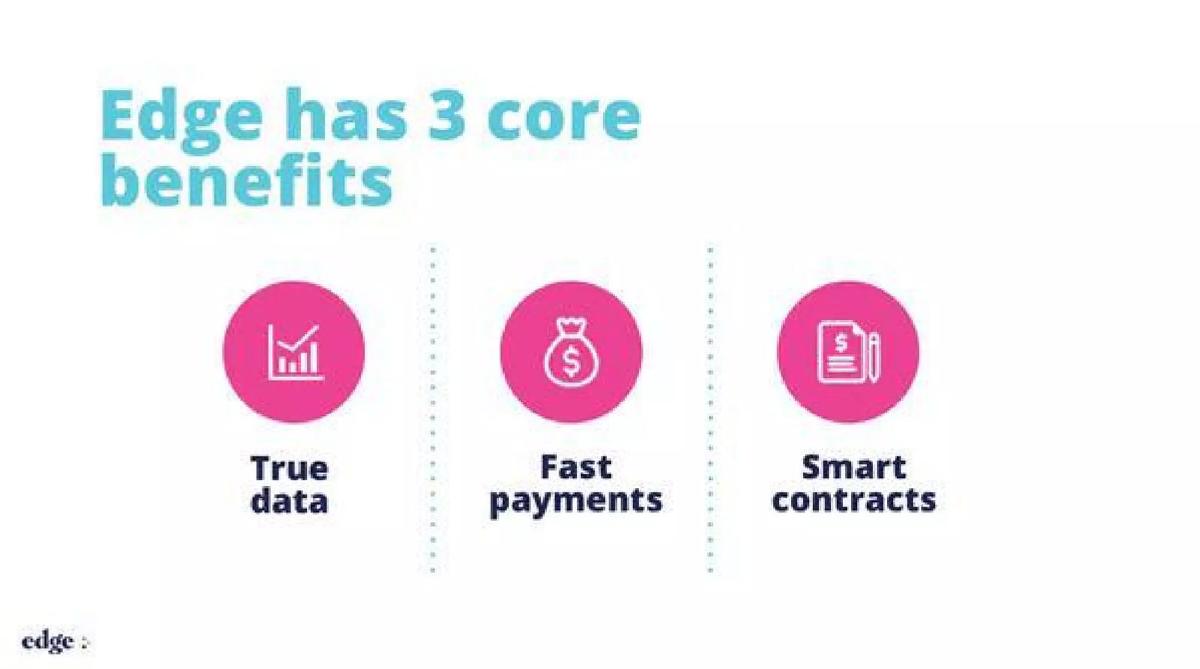
- The platform centers on three core benefits: True data, Fast payments, and Smart contracts as shown on Slide 5.
- Edge claims its payments are 1/3 of the price of PayPal's fee, according to Slide 10.
- The technology uses cryptographically signed events stored in an immutable ledger for contract security, per Slide 12.
- Data is pulled directly from sources like Twitch, Twitter, Discord, and Instagram to avoid third-party trackers, as detailed on Slide 2 and Slide 8.
- The deck highlights a specific use case for the Chicago Huntsmen Modern Warfare player contract on Slide 7.
- Minors can use a guardian to approve and accept payments on their behalf, a specific feature for the gaming demographic noted on Slide 11.
- The deck completely omits a team slide, market size (TAM/SAM/SOM), and a specific funding ask.
- Edge positions itself as a solution for people without bank accounts, offering worldwide payments as stated on Slide 11.
The Edge Pitch Deck: A Technical Deep Dive into Esports Automation
Edge, formerly known as Airbitz, presents a 14-slide deck that is remarkably focused on product functionality. Founded in 2014 and based in San Diego, the company raised $2,500,000 in a Seed round. This deck represents a transition point for the company as it moved toward providing an SDK platform for security and blockchain-based data applications. The narrative of the deck is built around the automation of business through 'True Data' and smart contracts, specifically within the gaming ecosystem.
Introduction and User Interface
Slide 1: Title Slide The deck opens with the Edge logo and the tagline 'GET THE EDGE' over a dark blue background with abstract data visualizations. It is a standard, minimalist opening that establishes the brand identity without revealing the industry or product category immediately.
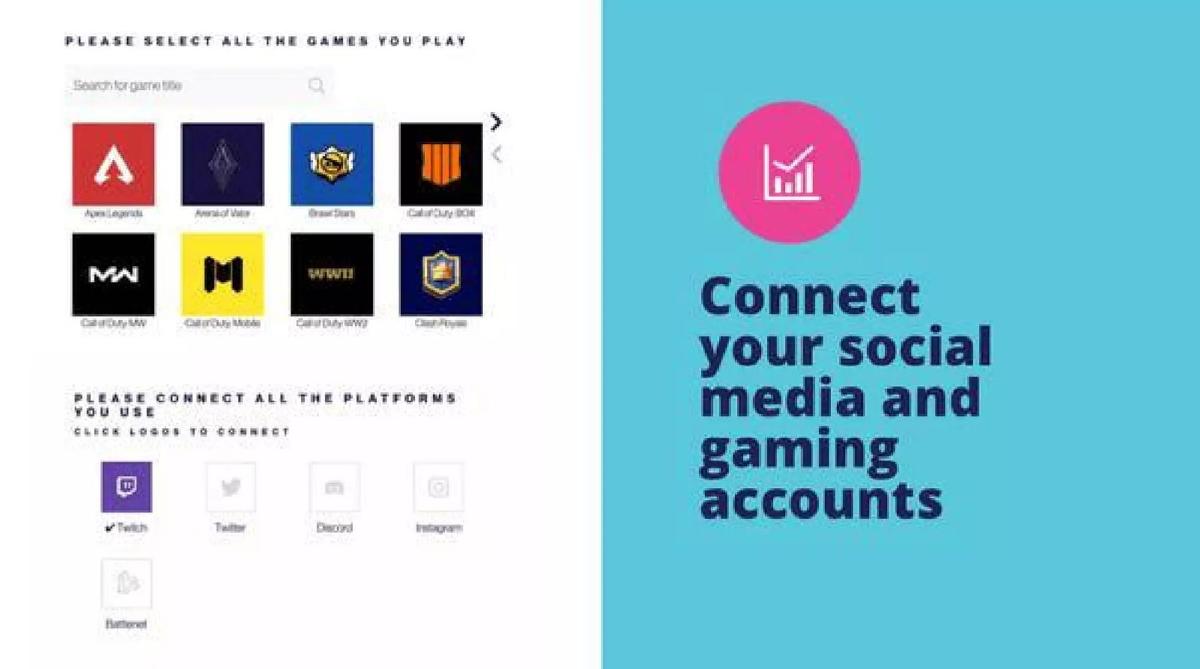
Slide 2: Account Connection This slide immediately dives into the user experience. It shows a mockup of an interface where users select games like Apex Legends and Clash Royale, and connect platforms including Twitch, Twitter, Discord, and Instagram. The text 'Connect your social media and gaming accounts' establishes that the platform relies on direct API integrations rather than external scraping.
The Core Value Proposition
Slide 3: Transition Slide A simple question: 'How does Edge work?' This serves as a functional break in the deck to move from the 'what' to the 'how.'
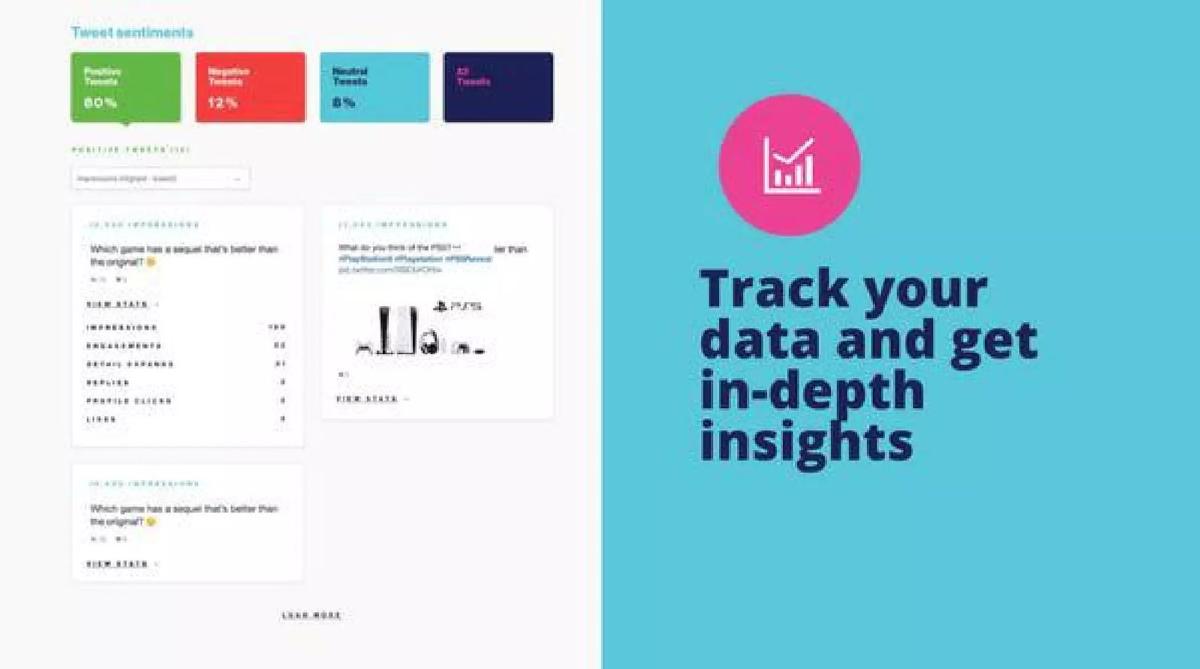
Slide 4: Data Insights Edge showcases its analytics capabilities here. The slide displays a dashboard for 'Tweet sentiments' with metrics like 80% positive tweets and 12% negative tweets. It also shows impression and engagement data for specific posts. The key message is 'Track your data and get in-depth insights,' positioning the tool as a business intelligence platform for influencers and teams.
Slide 5: The Three Pillars This is the most important conceptual slide in the deck. It identifies the '3 core benefits' of Edge: True data , Fast payments , and Smart contracts . By grouping these three, Edge explains its full-stack approach to the gaming business: they find the data, they verify the obligations, and they move the money.
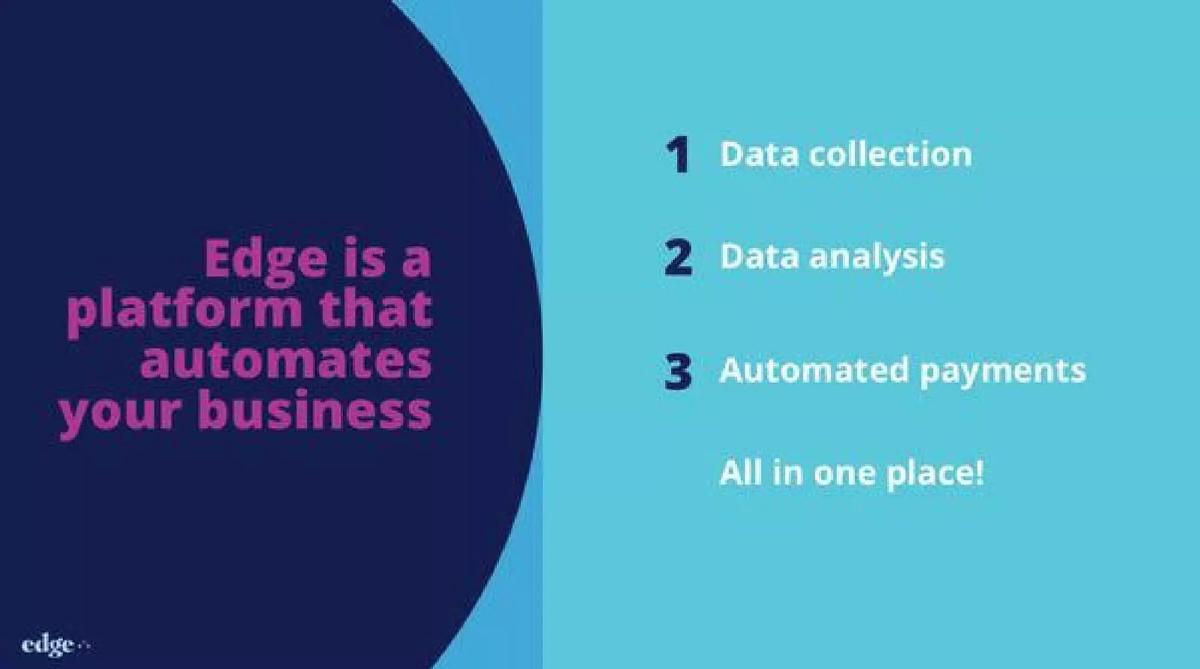
Slide 6: Platform Automation Edge defines itself as a 'platform that automates your business.' It breaks this down into a three-step process: 1. Data collection, 2. Data analysis, and 3. Automated payments. The phrase 'All in one place!' emphasizes the consolidation of fragmented tools.
Use Cases and Data Integrity
Slide 7: Contractual Obligations This slide provides a concrete example using the 'Chicago Huntsmen Modern Warfare player contract.' It shows how monthly obligations (like streaming on Twitch) are linked to payments. The visual demonstrates a flow from a data event to a payment trigger, making the abstract concept of a smart contract tangible for the reader.
Slide 8: Data Differentiation Edge answers the question 'What makes our data different?' with four points. The most significant is the claim that they get data 'directly from the source,' meaning they do not use third-party trackers. They also highlight 'Machine Learning Insights' for complex interpretations and predictions, though the deck does not elaborate on the specific models used.
Slide 9: Data Usage This slide reinforces the utility of the data: tracking, insights, and contract validation. It ends with a privacy-focused statement: 'IT'S YOUR DATA NOT OURS!', which is a common refrain in blockchain-adjacent startups to build trust with users.
Payment Mechanics and Smart Contracts
Slide 10: Payment Advantages (Part 1) Edge gets specific about its financial disruption. It claims payments are '1/3 of the price of PayPal's fee.' It also mentions 'Identity Verification' and compliance with local tax laws, addressing two major hurdles in the professional gaming space where many participants are young or international.
Slide 11: Payment Advantages (Part 2) The list of payment features continues, highlighting 'Worldwide payments' in regions like Latin America and Asia. A unique feature is 'Guardian Approval,' allowing minors to participate legally. Perhaps most importantly for the crypto-inclined, it states 'NO BANK ACCOUNT NECESSARY,' implying the use of digital assets for settlement.
Slide 12: Smart Contract Specifics This slide explains the technical backend. Actions are tracked via linked accounts, cryptographically signed, and 'stored in an immutable ledger.' This is the only slide that explicitly references the underlying blockchain architecture that enables the automation of payments once actions are verified.
Conclusion and Contact
Slide 13: Summary A repetition of Slide 5, asking 'Why should you get the Edge?' and restating the three pillars: True data, Fast payments, and Smart contracts. This serves to reinforce the primary takeaway before the final slide.
Slide 14: Contact Us The deck concludes with contact information for Adam Whyte, Founder and CEO, including an email address. The background image of a backlit mechanical keyboard reinforces the gaming focus of the pitch.
What Works in the Edge Pitch Deck
The Edge deck excels at visual clarity and feature definition . By centering the entire presentation around three core benefits (Slide 5), the founders make it very easy for an investor to remember what the company does. The use of a real-world example, the Chicago Huntsmen contract on Slide 7, is a highly effective way to explain a complex technical process like 'automated smart contract execution' without getting bogged down in jargon.
Furthermore, the specific competitive claims are strong. Stating that their fees are 1/3 of PayPal's (Slide 10) provides a clear economic reason for businesses to switch to their platform. The inclusion of niche but vital features for the gaming industry, such as guardian approval for minors (Slide 11), shows a deep understanding of their target market's specific pain points.
What is Missing from the Edge Pitch Deck
While the deck is strong on product, it is dangerously light on business fundamentals . The most glaring omission is the Team Slide . Investors at the Seed stage are primarily investing in the founders' ability to execute; by omitting the team's background, Edge misses the chance to build credibility.
There is also no Market Slide . The deck assumes the reader already knows that esports and gaming are large, growing markets. Without TAM (Total Addressable Market) or SAM (Serviceable Addressable Market) figures, it is difficult for an investor to gauge the potential scale of the investment. Additionally, the deck lacks a Competition Slide . While they mention PayPal as a fee comparison, they do not address other blockchain-based payment platforms or gaming analytics firms.
Finally, there is no Ask or Roadmap . A pitch deck is a tool to raise money, yet this deck never specifies how much capital is needed, what the valuation expectations are, or what milestones the company intends to hit with the next round of funding.
What a Founder Should Copy from this Deck
Founders should emulate the 'Three Pillars' approach used on Slide 5 and Slide 13. Distilling a complex platform into three simple, benefit-driven categories is an excellent way to ensure the message sticks. If your product does ten things, find the three that matter most and repeat them.
The UI-first storytelling on Slide 2 and Slide 4 is also worth copying. Instead of describing the platform in abstract terms, Edge shows the screens the user will actually interact with. This makes the product feel 'real' and ready for market. Lastly, the direct comparison to a legacy incumbent (PayPal on Slide 10) is a classic and effective way to demonstrate value. If you can prove you are significantly cheaper or faster than the industry standard, put that figure in bold text.
Final Thoughts
The Edge deck is a product showcase disguised as a pitch deck. It is highly effective at explaining what the product is and how it works, but it fails to explain why it is a venture-scale business opportunity. For a Seed round, the technical clarity likely helped bridge the gap, but the omission of team and market data makes it an incomplete narrative. It serves as a great example of how to explain a technical product simply, but a poor example of how to structure a comprehensive investment case.
Frequently asked questions
- What is the primary problem Edge is solving?
- Based on the deck, Edge addresses the friction in gaming and esports business operations. It solves the issue of unreliable data scraping by using 'True Data' directly from source platforms. It also tackles the high cost and slow speed of traditional payment processors like PayPal by automating payments through smart contracts that only trigger once specific, data-verified contractual obligations are met.
- How does the platform handle security and verification?
- Edge utilizes blockchain technology to ensure security. According to Slide 12, every event in a contract is cryptographically signed and stored in an immutable ledger. Furthermore, Slide 10 mentions identity verification to ensure payees are who they say they are, and Slide 11 notes that the system is fully compliant with local tax laws.
- What specific gaming platforms does Edge integrate with?
- Slide 2 shows a user interface for connecting accounts, including Twitch, Twitter, Discord, Instagram, and Battle.net. It also lists specific games such as Apex Legends, Arena of Valor, Brawl Stars, Call of Duty (Black Ops 4, Modern Warfare, Mobile, WWII), and Clash Royale, suggesting a deep integration with popular esports titles.
- What are the cost benefits for businesses using Edge?
- The most significant cost benefit mentioned is in payment processing. Slide 10 explicitly states that Edge payments are 1/3 of the price of PayPal's fee. Additionally, Slide 11 claims the platform allows businesses to calculate ROI before starting a campaign based on in-depth data analysis, potentially reducing wasted marketing spend.
- What critical information is missing from this pitch deck?
- This deck is missing several standard venture components. There is no 'Team' slide to establish founder credibility, no 'Market' slide to show the scale of the opportunity, and no 'Competition' slide. Most importantly, there is no 'Ask' slide detailing how much capital is being raised or how it will be deployed.