EdZola presents a narrative-driven pitch focused on bridging the digital divide for non-profits. With 4 years of operations and a team of 15, the company has reached over 1,000 NGOs and completed 70+ projects (Slide 3). The deck emphasizes their role as a technical partner that builds customized Management Information Systems (MIS) to streamline admissions, operations, and placements for upskilling and education programs. Key metrics include saving 3-4 hours daily for partners and enabling a 40x increase in student reach for specific programs (Slide 8). While the deck is strong on social proo…
Key takeaways
- The founder's background includes experience as a software engineer at Zoho and a teaching fellowship with Teach For India (Slide 2).
- EdZola has completed over 70 projects and reached more than 1,000 NGOs in 4 years of operation (Slide 3).
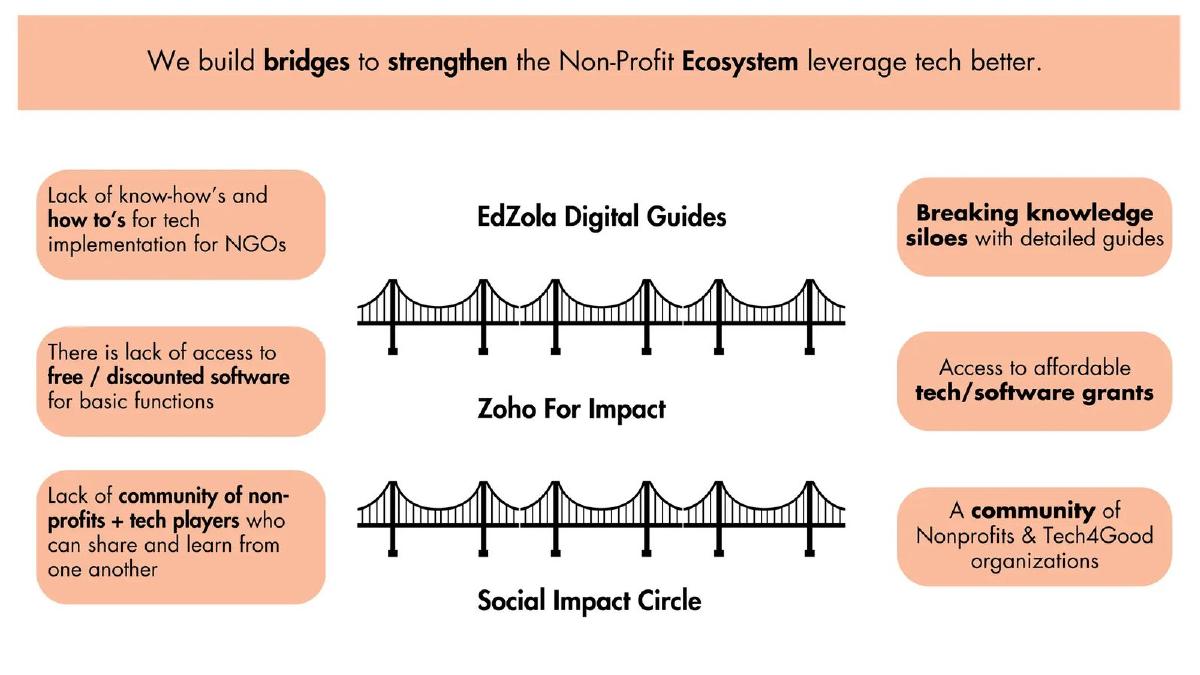
- The product offering includes 'EdZola Digital Guides', 'Zoho For Impact', and a 'Social Impact Circle' community (Slide 4).
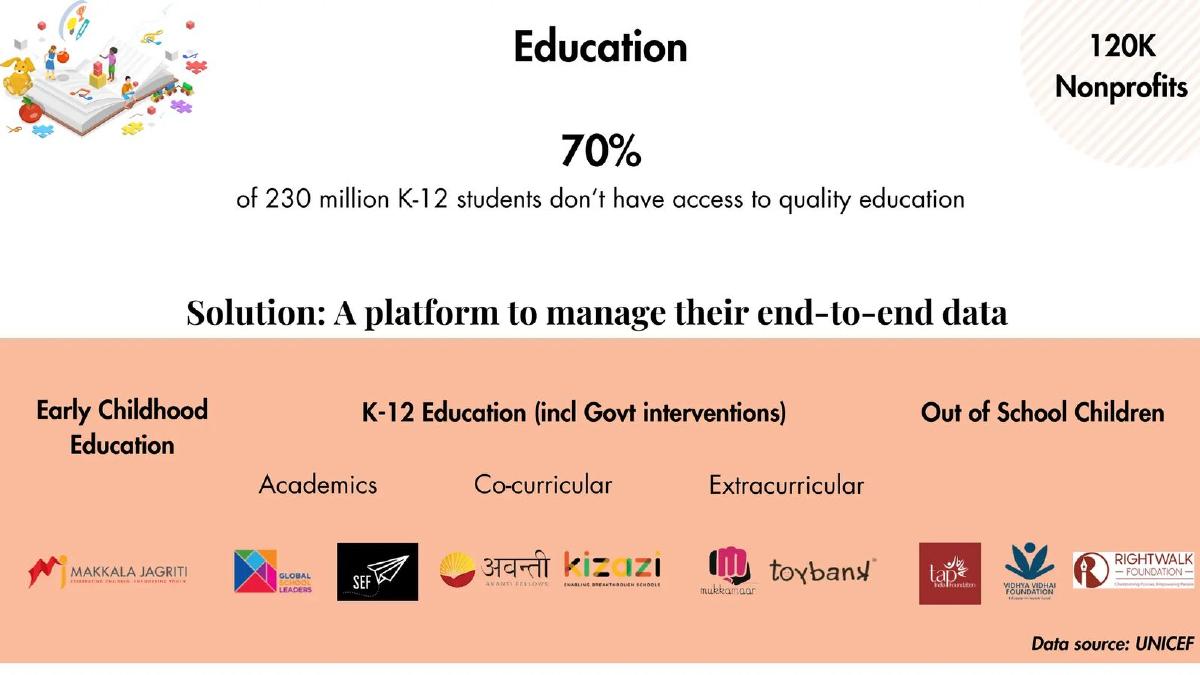
- In the education sector, EdZola targets the 70% of 230 million K-12 students in India who lack quality education access (Slide 5).
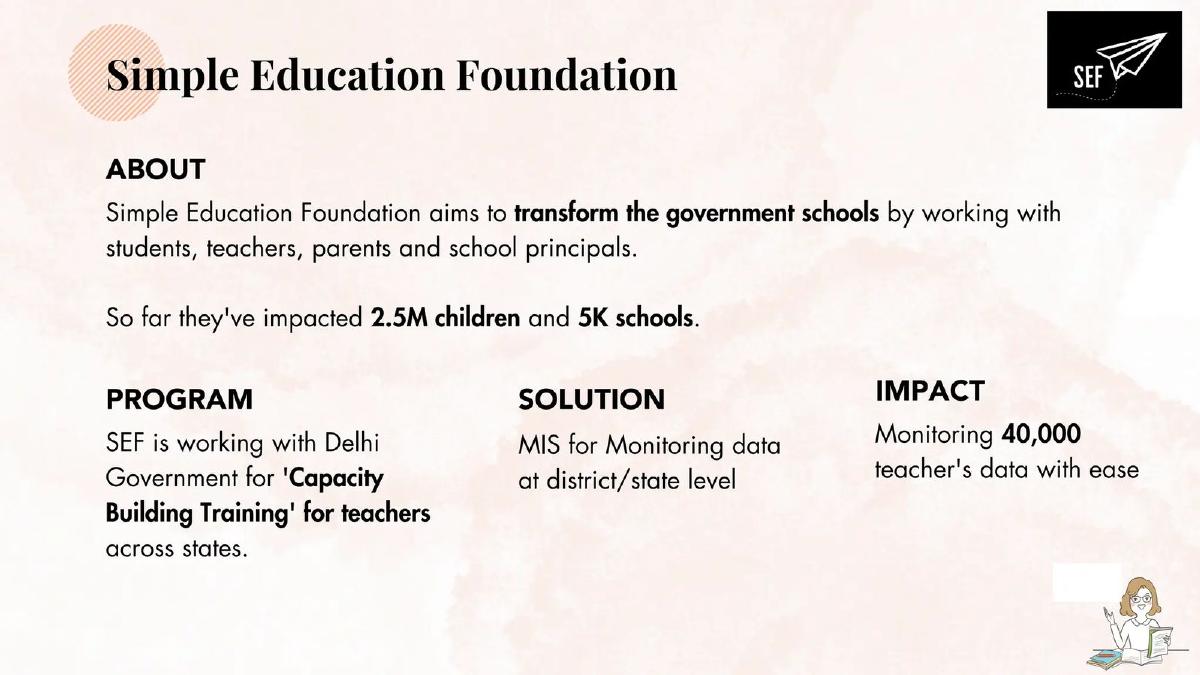
- For the Simple Education Foundation, EdZola built an MIS to monitor data for 40,000 teachers (Slide 6).
- The platform for The/Nudge Institute supports 1,000+ app users and streamlined end-to-end placement processes (Slide 8).
- The business model relies on a mix of referrals, inbound content (resources/events), and direct outreach via RFPs and LinkedIn (Slide 9).
- The deck omits a specific 'Ask' slide, failing to mention the amount of capital sought or the intended use of funds.
EdZola Pitch Deck Analysis
EdZola’s pitch deck, dated May 2024, positions the company as a technical bridge for the non-profit sector in India. The presentation is structured to highlight the founders' transition from high-tech corporate environments to social impact, emphasizing the massive data gap in the NGO ecosystem. With a focus on Education and Upskilling, the deck uses case studies to demonstrate how technical infrastructure leads to operational efficiency and scaled impact.
Slide 1: Title Slide
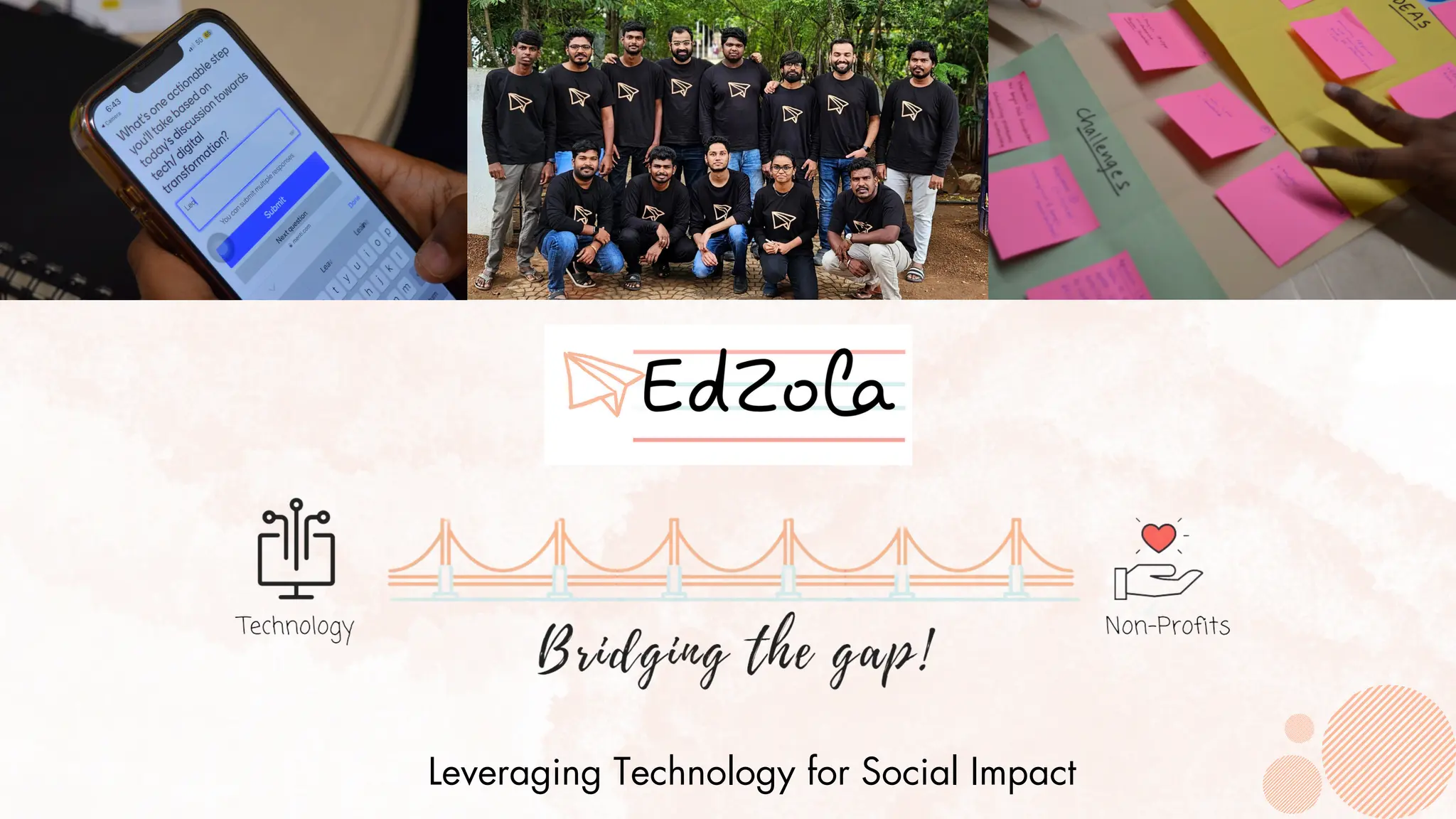
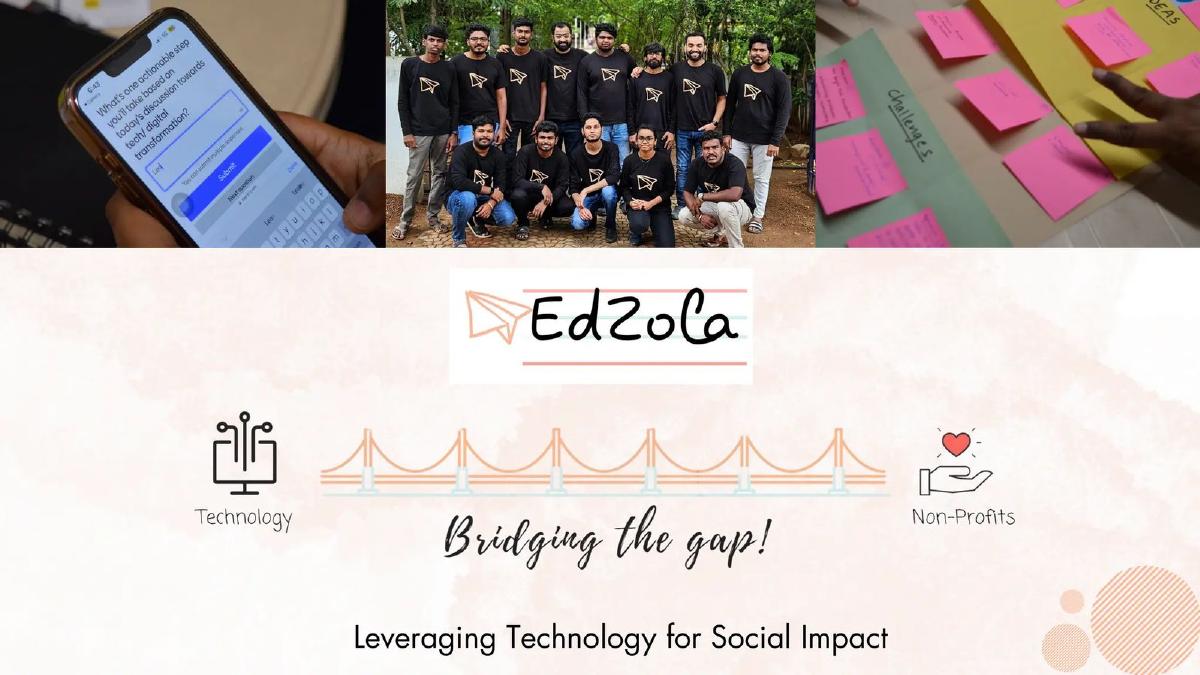
The cover slide introduces EdZola with the tagline "Bridging the gap! Leveraging Technology for Social Impact." The visual elements include a bridge connecting "Technology" and "Non-Profits." It features photos of the team and a mobile device showing a digital transformation survey, establishing the company’s focus on mobile-first or digital-first interventions.
Slide 2: Our Story
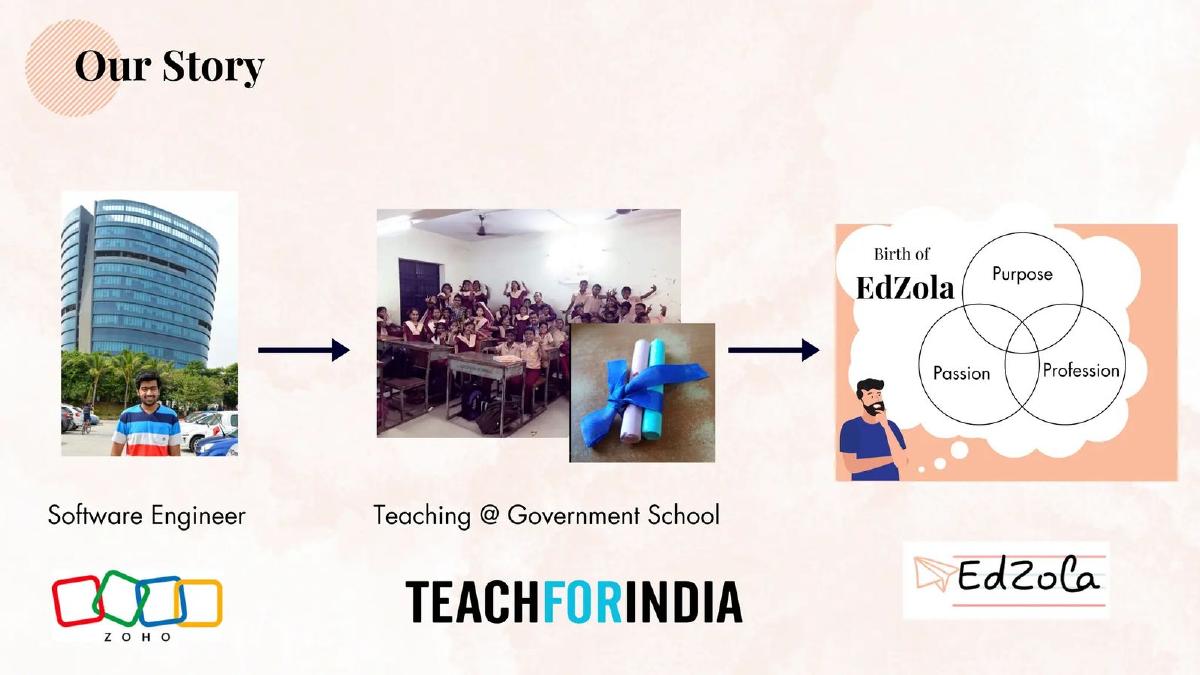
This slide provides the founder's pedigree. It follows a linear progression: a Software Engineer at Zoho , followed by a teaching stint at a government school via Teach For India . The slide uses the Ikigai-style Venn diagram to show the "Birth of EdZola" at the intersection of Passion, Purpose, and Profession. This is a strong "Founder-Market Fit" slide, showing the transition from a technical background to first-hand experience with the problems in the social sector.
Slide 3: Vision and Traction
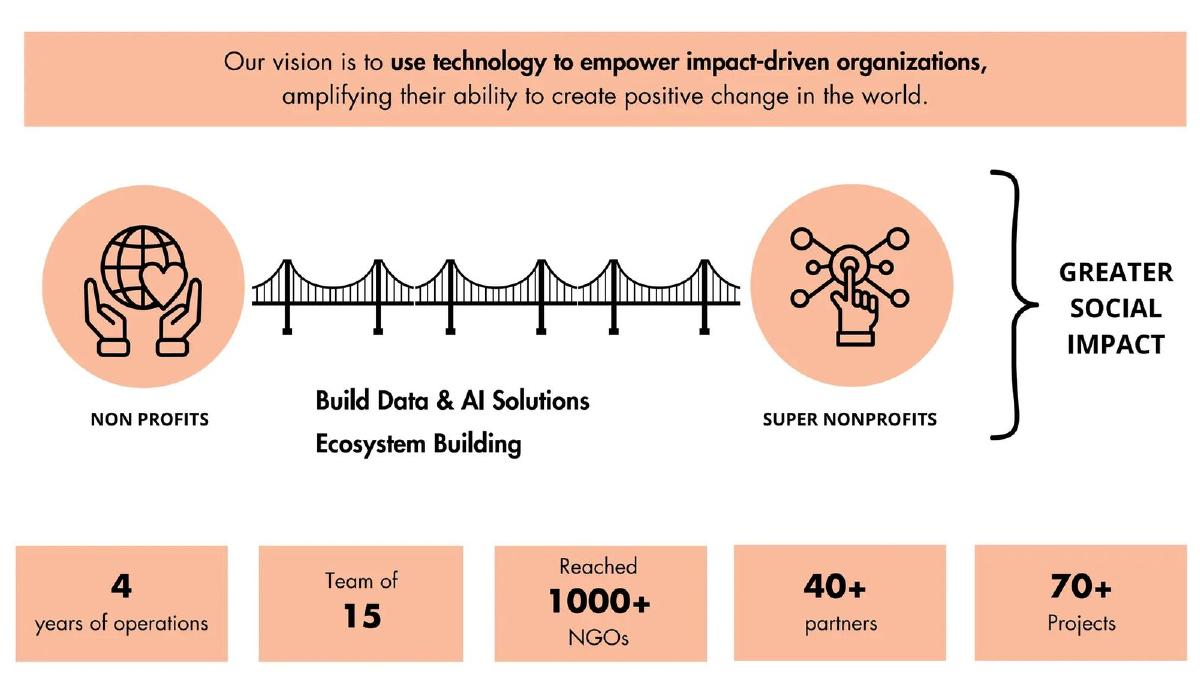
Slide 3 outlines the company's vision: "to use technology to empower impact-driven organizations." It provides five key metrics for their 4 years of operations :
Team of 15 · Reached 1000+ NGOs · 40+ partners · 70+ Projects
The slide introduces the concept of "Super Nonprofits," suggesting that EdZola’s goal is to upgrade standard NGOs through data and AI solutions to achieve greater social impact.
Slide 4: Ecosystem Building
This slide addresses the specific barriers NGOs face: lack of technical know-how, lack of access to affordable software, and lack of community. EdZola proposes three solutions: EdZola Digital Guides for knowledge sharing, Zoho For Impact for software grants, and the Social Impact Circle for community building. This slide demonstrates that EdZola is not just a dev shop but an ecosystem player.
Slide 5: Education Sector Focus
Focusing on the education vertical, slide 5 cites UNICEF data stating that 70% of 230 million K-12 students in India lack access to quality education. The solution offered is a "platform to manage their end-to-end data." The slide features logos of several partners, including Makkala Jagriti, Global School Leaders, and Avanti Fellows, categorized by Early Childhood, K-12, and Out of School interventions.
Slide 6: Case Study - Simple Education Foundation (SEF)
This slide provides a concrete example of EdZola's work. For SEF, which works with the Delhi Government, EdZola built a Management Information System (MIS) for monitoring data at the district and state levels. The stated impact is the ability to monitor 40,000 teachers' data with ease, supporting an organization that has impacted 2.5 million children.
Slide 7: Upskilling Sector Focus
Turning to the upskilling sector, slide 7 uses the Wheebox India Skills Report to note that ~50% of youth (118 million out of 242 million) are unemployable. EdZola’s solution is an "End to end platform to streamline processes from admissions to placements." Partner logos include The/Nudge Institute, NavGurukul, and TRRAIN.
Slide 8: Case Study - The/Nudge Institute
This slide details the "Future Perfect Program" for underprivileged students. The challenges cited were improper data management and a lack of understanding regarding program reach. EdZola implemented a centralized MIS covering Admissions, Operations, Delivery, and Placements. The results listed are:
1K+ App users · 3-4 hours saved everyday · 40x Increase in students reached
Slide 9: Business Model
The business model slide uses a funnel graphic to show how they acquire partners and generate revenue. Lead sources include Partnerships/Referrals , Inbound (Resources, Events, Communities), and Direct Outreach (RFP, LinkedIn). The output of this funnel is "Customized platforms/solutions" which result in Revenue from Funders and NGOs, and Impact for Beneficiaries.
Slide 10: Conclusion
The final slide is a standard "Thank You" page. It provides links to their LinkedIn and website but notably lacks a call to action or a funding ask . There is no information regarding how much money the company is looking to raise or what the next milestones are.
What EdZola Does Well
EdZola excels at establishing Founder-Market Fit . By showing the founder's journey from Zoho (a major Indian tech success) to Teach For India, they immediately validate their ability to understand both the technical requirements and the ground-level realities of the social sector. The use of specific case studies (SEF and The/Nudge Institute) with quantifiable metrics—like saving 4 hours a day or increasing reach by 40x—provides the "proof of work" that many early-stage impact decks lack.
The deck also does a good job of segmenting the market . By breaking down their work into Education and Upskilling, and then further into specific sub-categories like "Early Childhood" or "Out of School," they show a sophisticated understanding of the NGO landscape in India.
What Is Missing from the EdZola Deck
The most glaring omission is the Financials and The Ask . For a pitch deck, it is critical to state what you are looking for. Are they raising a Seed round? Are they looking for grants? How much? Without this, the deck feels like a brochure for services rather than a fundraising document. Furthermore, there are no financial projections or historical revenue figures, making it impossible for an investor to judge the scalability or sustainability of the business model.
Additionally, the deck lacks a Competitive Landscape . While they mention they are "bridging the gap," they don't acknowledge other tech-for-good consultancies or off-the-shelf MIS products that NGOs might use. Finally, while they mention a "Team of 15," there is no Team Slide showing the leadership or their specific expertise beyond the founder's story on slide 2.
What Other Founders Should Copy
Founders should emulate EdZola’s metric-driven case studies . Instead of just saying "we build software for NGOs," they show exactly what that software does (streamlining admissions to placements) and what the result is (40x reach). This turns a vague service into a tangible value proposition.
The Ecosystem Approach on slide 4 is also worth copying. By showing that they provide guides and community in addition to software, they position themselves as a thought leader in their niche, which builds trust with non-technical founders or NGO directors. This "content as a moat" strategy is highly effective for B2B or B2NGO businesses.
Final Verdict
EdZola has built a credible, impact-focused organization with impressive traction in the Indian social sector. Their deck is an excellent example of how to communicate social value through technical metrics. However, to be a successful fundraising tool for equity investors, it needs to be bolstered with a clear financial roadmap, a competitive analysis, and a specific investment ask.
Frequently asked questions
- What exactly does EdZola build for non-profits?
- EdZola builds customized data and AI solutions, specifically Management Information Systems (MIS). According to slides 6 and 8, these platforms handle end-to-end data management including admissions, daily operations, delivery excellence, and placement tracking. They also offer digital guides and help NGOs access software grants through their 'Zoho For Impact' partnership.
- How does EdZola generate revenue?
- Slide 9 illustrates a business model where revenue is generated by providing 'Customized platforms/solutions' to NGOs and Funders. The lead generation funnel includes partnerships, referrals, inbound resources, events, and direct outreach through LinkedIn and RFPs. However, the deck does not specify if they use a SaaS subscription model or a project-based service fee.
- What is the scale of EdZola's current impact?
- As of the May 2024 deck, EdZola reports 4 years of operations with a team of 15. They have reached over 1,000 NGOs, worked with 40+ partners, and completed 70+ projects. Slide 8 specifically notes that their intervention helped one partner increase their student reach by 40x.
- Who are the key partners mentioned in the deck?
- The deck lists several prominent Indian social impact organizations, including The/Nudge Institute, Simple Education Foundation (SEF), Makkala Jagriti, Global School Leaders, Avanti Fellows, and NavGurukul. These are cited as partners in the education and upskilling sectors on slides 5 and 7.
- Is this a venture capital pitch or a social impact report?
- The deck functions more as a capability statement or a social impact report than a standard VC pitch. It lacks a slide for 'The Ask' (Slide 10 is just a thank you), financial forecasts, and a competitive analysis. It is designed to build credibility with potential NGO partners and philanthropic funders rather than traditional equity investors.