Edurino raised a €3.8 million Seed round in 2021 using a 16-slide deck that emphasizes the intersection of physical play and digital education. The company addresses the 'screen time' dilemma by providing haptic figurines and an ergonomic stylus that unlock educational content on tablets. The deck is notable for its strong early traction, citing over €55,000 in pre-sales revenue within two months and inbound interest from more than six large retailers. By positioning themselves as a platform rather than just a toy manufacturer, Edurino outlines a path toward personalized tutoring and long-ter…
Key takeaways
- The company raised €3.8 million in 2021, exceeding the €3 million target stated on slide 2.
- Early validation was proven through a crowdfunding campaign that generated over €41,000 from 500 customers (slide 2).
- The product uses a 'razor and blade' model, selling a starter kit for €44.99 and additional figurines for €19.99 to €24.99 (slide 12).
- A small-scale study with 8 children showed a 56% improvement in literacy skills over six weeks (slide 7).
- Unit economics projections show a planned increase in Contribution Margin II from 9% in 2022 to 29% by 2024 (slide 15).
- The deck identifies a €31.8 billion European toy market, targeting a €100 million SOM by 2026 (slide 13).
- The team features founders with backgrounds at BCG and a core team with experience from Kolibri Games and Goodgame Studios (slide 10).
- Distribution is planned as a multi-channel approach, starting with online marketing in 2021 and moving to large retailers in 2022 (slide 16).
Executive Summary and The 'Phygital' Opportunity
Edurino's pitch deck is a masterclass in presenting a 'phygital' (physical plus digital) product to Seed-stage investors. The deck, used to raise a €3.8 million round in 2021, focuses heavily on early market validation and the tension between child play and parental educational goals. By leading with a clear problem-solution set, the founders position their hardware not as a toy, but as a gateway to a comprehensive digital curriculum.
Slides 1-2: The Hook and The Ask
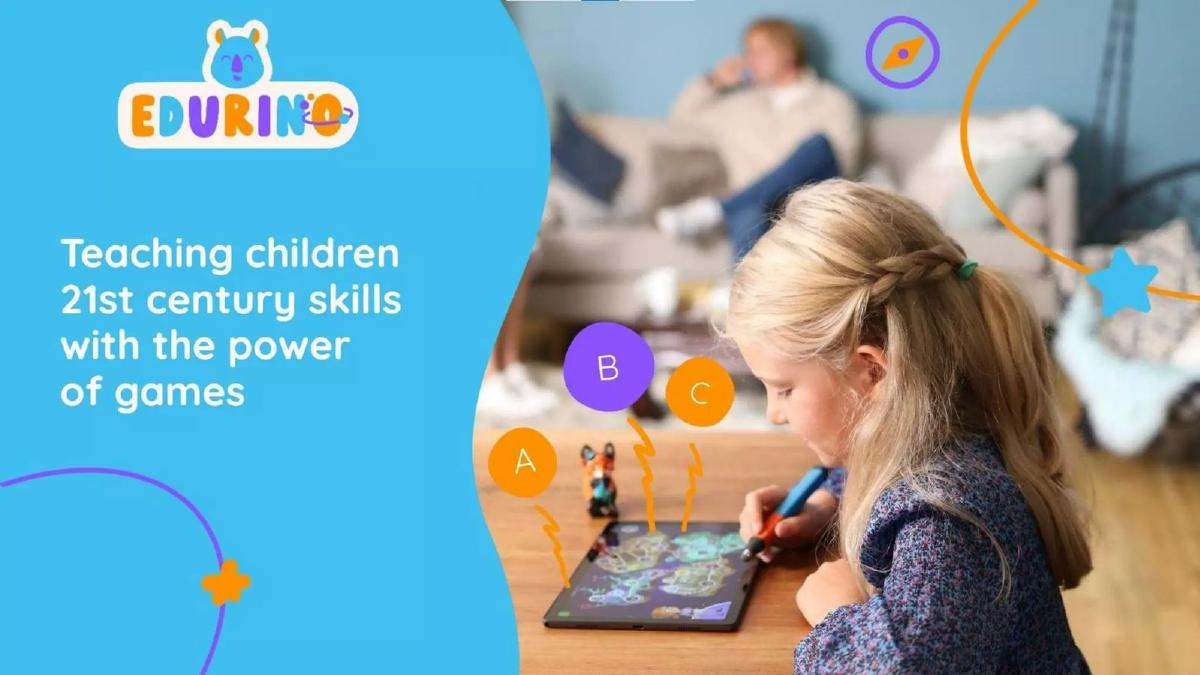
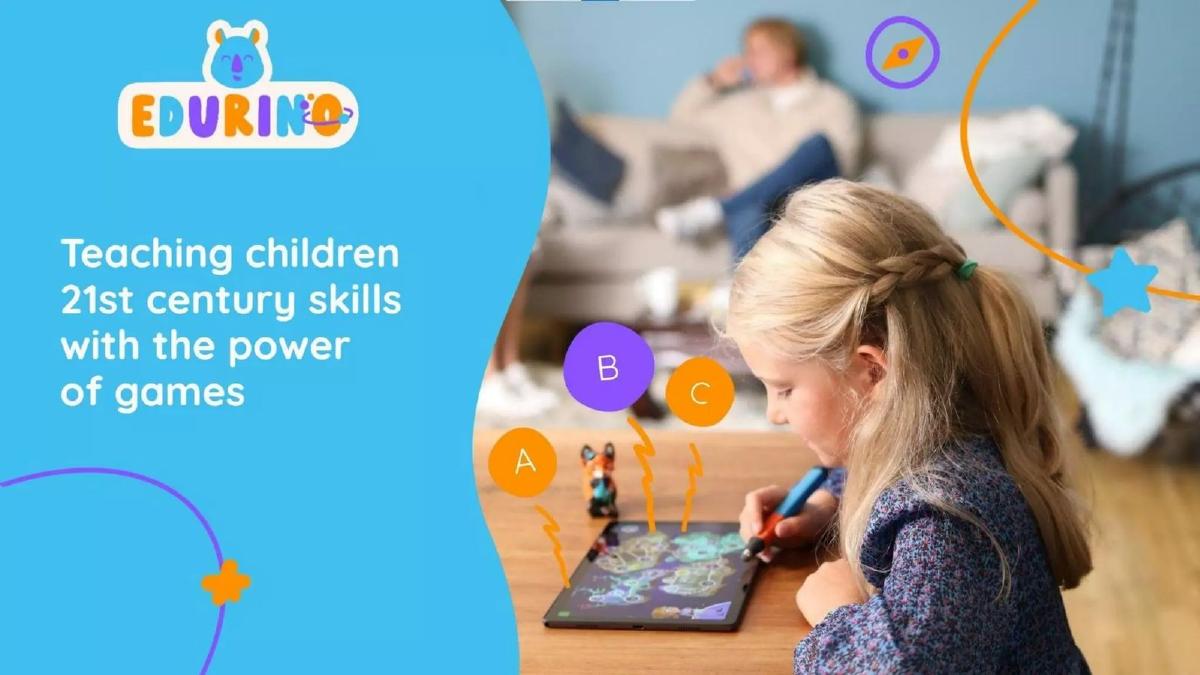
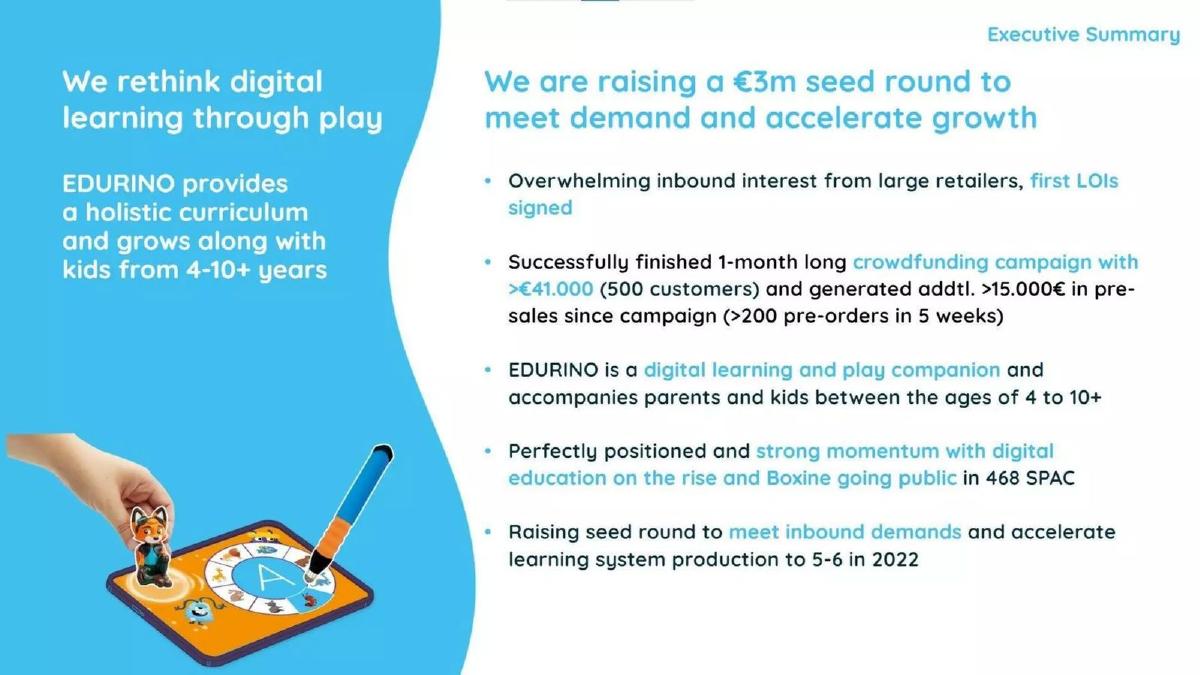
Slide 1 introduces the brand with high-quality lifestyle photography, immediately establishing the target demographic: young children using tablets in a home environment. The tagline, "Teaching children 21st century skills with the power of games," sets a broad but ambitious scope. Slide 2 serves as an Executive Summary and a clear statement of intent. It explicitly states the goal: "We are raising a €3m seed round to meet demand and accelerate growth." This slide is dense with traction metrics, noting a successful crowdfunding campaign that raised ">€41.000" from 500 customers and an additional ">15.000€" in pre-sales. Mentioning the 468 SPAC IPO of Boxine (Tonies) provides immediate market context and a successful exit comparable for investors.
Slides 3-5: Problem, Solution, and Curriculum
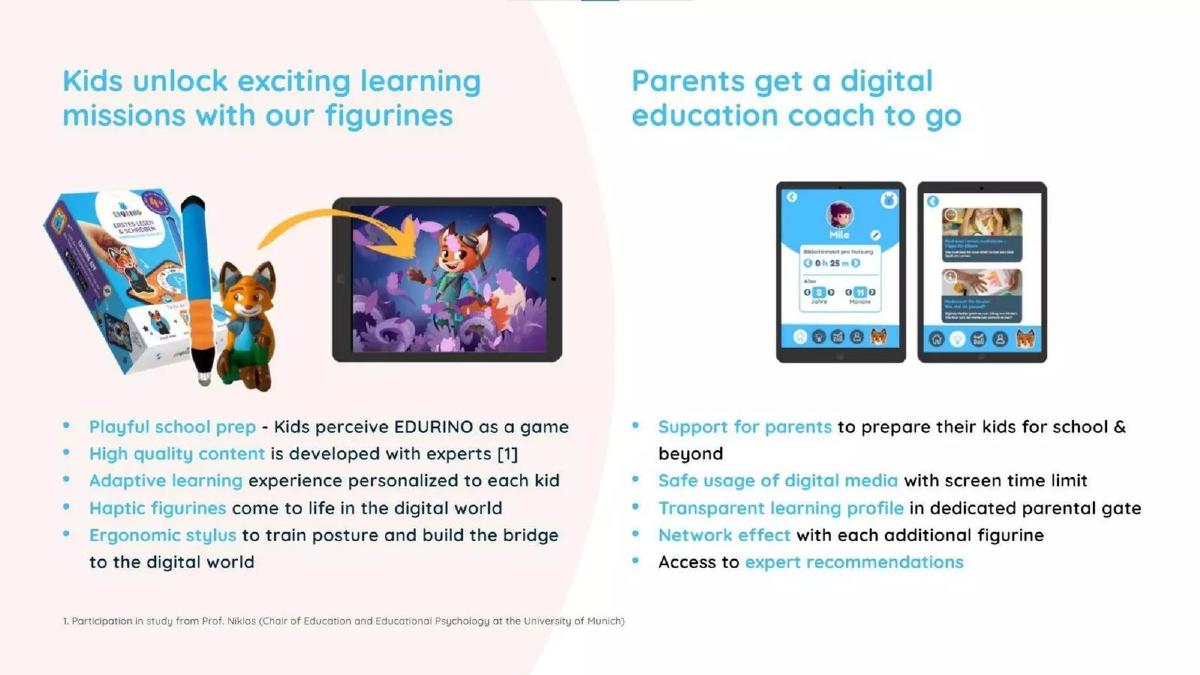
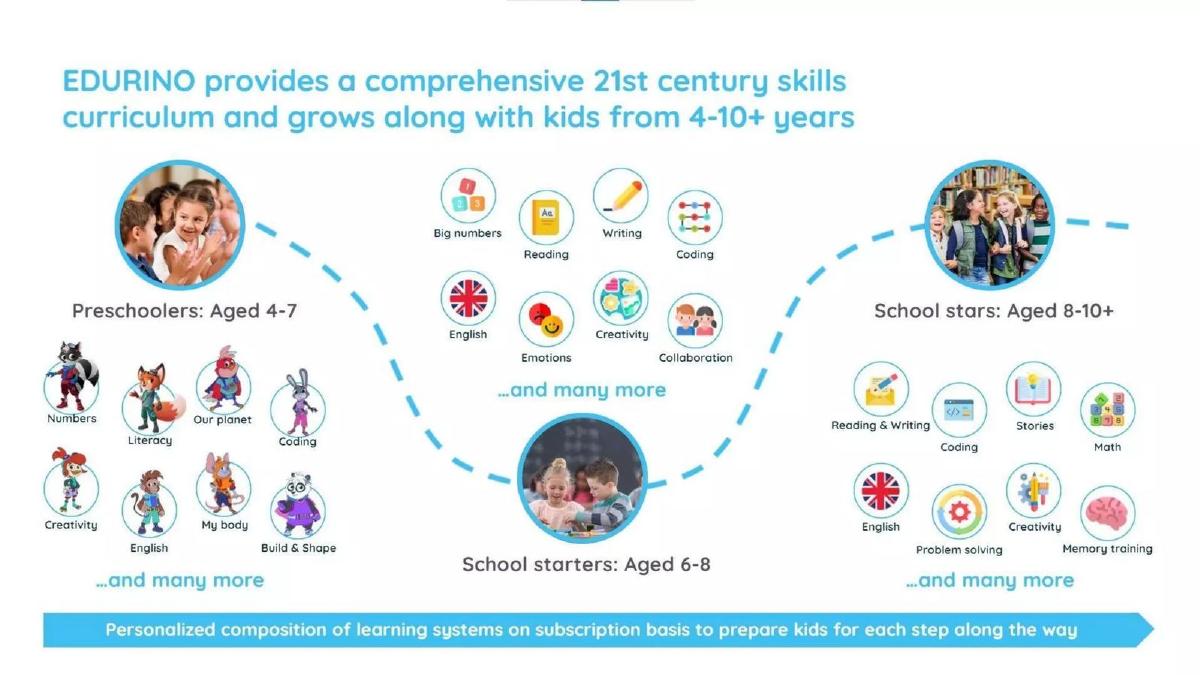
Slide 3 identifies the core conflict: kids want to play on screens, while parents are skeptical and want them to learn. Slide 4 introduces the hardware-software bridge. It highlights the "Haptic figurines" and "Ergonomic stylus" as the tools that turn passive screen time into active learning. A footnote on this slide cites participation in a study by Prof. Niklas at the University of Munich, adding academic weight to the product claims. Slide 5 maps out the curriculum, showing a progression from "Preschoolers (Aged 4-7)" focusing on literacy and numbers, to "School stars (Aged 8-10+)" tackling coding and problem-solving. This demonstrates the potential for a high Lifetime Value (LTV) as the product grows with the child.
Slides 6-9: Vision, Traction, and Social Proof
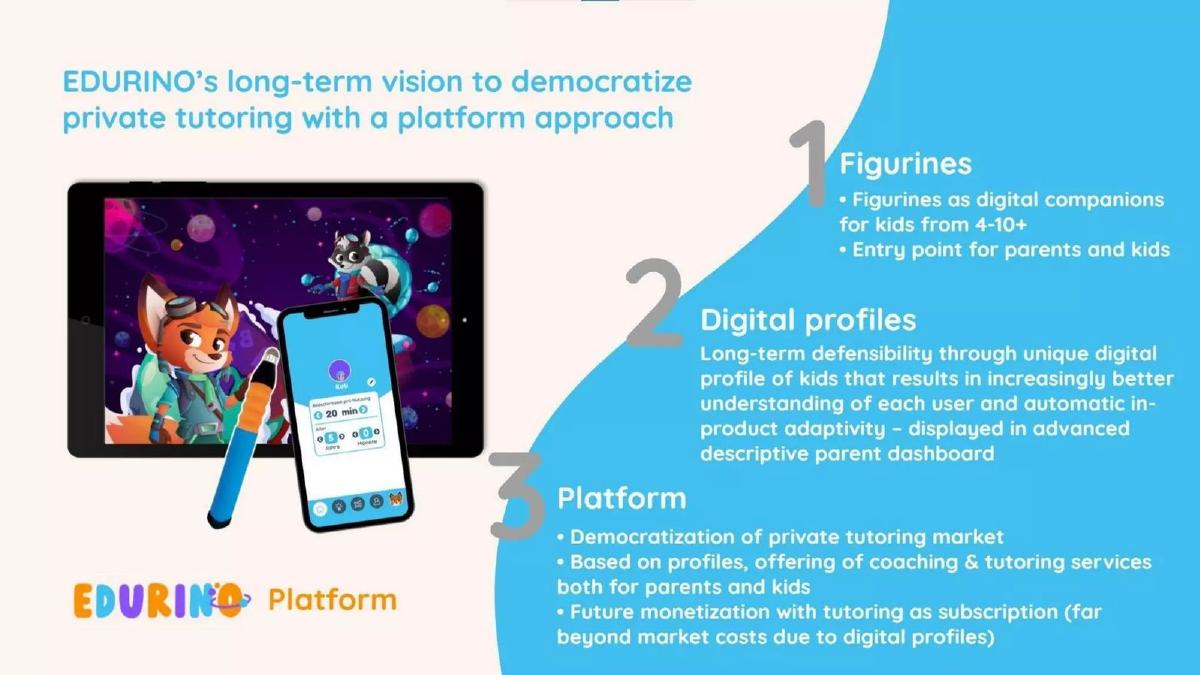
Slide 6 pivots from a toy company to a "Platform approach," aiming to "democratize private tutoring." This is a crucial slide for venture scale, suggesting that the hardware is merely the entry point for a data-driven service. Slide 7 reinforces traction with four key pillars: inbound requests from ">6 large retailers," ">€55.000" in pre-sales, ">20 Kindergartens" using the product, and a "56% improvement" in literacy skills based on a small study. Slide 8 showcases media attention from outlets like Welt and Startup Valley, alongside parental testimonials. Slide 9 is a simple placeholder for a product demo video, which is essential for hardware pitches to prove the tech actually works.
Slides 10-12: Team, Roadmap, and Business Model
The team slide (Slide 10) is strong, featuring founders Franziska and Irene with BCG backgrounds, supported by a core team with deep gaming experience from Kolibri Games and Goodgame Studios . The presence of high-profile advisors like Verena Pausder and Jens Begemann adds significant credibility. Slide 11 provides a roadmap through 2023, focusing on the production of "5-6 figurines" and the launch of the parent dashboard. Slide 12 explains the 'razor and blade' business model: a "Starter-set priced with €44,99" and "Additional characters... priced with €19,99 - €24,99." This clear pricing structure allows investors to easily model the revenue potential.
Slides 13-16: Market, Competition, and Unit Economics
Slide 13 defines the TAM at "€31.8bn" for the European toy market, with a target SOM of ">€100m" by 2026. Slide 14 is a competitive matrix that compares Edurino to incumbents like Tonies and Osmo, specifically highlighting Edurino's "Story-based learning approach" and "Scalability with digital platform approach." Slide 15 is perhaps the most important for a Seed round: a detailed unit economics waterfall. It shows a projected Gross Margin of 62% and a Contribution Margin II of 9% in 2022, scaling to 29% by 2024 as LTV increases. Finally, Slide 16 outlines a multi-channel go-to-market strategy, transitioning from online brand building to large-scale retail distribution in 2022.
What Works in This Deck
Tangible Traction: The deck doesn't just promise interest; it cites specific Euro amounts from crowdfunding and pre-sales (Slide 2 and 7). · Academic Validation: Referencing the University of Munich (Slide 4 and 7) helps overcome the skepticism often directed at educational apps. · Clear Unit Economics: The waterfall charts on Slide 15 provide a transparent look at how the company intends to become profitable, which is often a weak point in hardware decks. · Strategic Comparisons: By mentioning the Tonies (Boxine) SPAC, they anchor their valuation and potential in a real-world success story.
What is Missing
Detailed COGS Breakdown: While Gross Margin is mentioned, a deeper breakdown of manufacturing costs versus shipping and logistics for the physical components would be beneficial for hardware-wary investors. · Churn/Retention Data: Although it is a Seed round, any early data on how long children stay engaged with the first figurine before needing the next would strengthen the LTV claims. · Technology Moat: The deck explains what the product does, but not how the figurines interact with the screen (e.g., capacitive touch, NFC, etc.), which is relevant for assessing technical defensibility.
What a Founder Should Copy
The Executive Summary Slide: Slide 2 is a perfect example of how to summarize the ask, the traction, and the market timing in one glance. · The Curriculum Roadmap: Slide 5 effectively shows how a product can expand its targetable age range, increasing the total addressable market over time. · Advisor Positioning: The way Edurino displays their advisors alongside their core team (Slide 10) shows how to leverage external expertise to bolster a young founding team. · Platform Vision: Even if you are selling a physical widget, always include a slide (like Slide 6) that explains how that widget becomes a scalable platform or data play.
Frequently asked questions
- What is the core product offering of Edurino?
- Edurino offers a hybrid learning system consisting of haptic figurines, an ergonomic stylus, and a digital app. As shown on slide 4, the figurines act as keys to unlock specific 'learning missions' on a tablet. The system is designed for children aged 4 to 10+, focusing on 21st-century skills like coding, literacy, and emotional intelligence.
- How does Edurino plan to monetize beyond physical toy sales?
- While the current model relies on hardware sales, slide 6 outlines a long-term 'Platform' vision. This includes using digital profiles to understand user progress and eventually offering coaching and tutoring services. The company envisions future monetization through a tutoring subscription model, leveraging the data collected via the parent dashboard.
- What kind of market traction did the company have at the time of the pitch?
- According to slide 7, Edurino had significant early momentum: over €55,000 in pre-sales revenue within two months, one signed LOI from a major toy retailer, and established collaborations with over 20 kindergartens in Munich. They also reported 5-10 organic pre-orders per day following their initial crowdfunding campaign.
- Who are the primary competitors identified in the deck?
- Slide 14 compares Edurino to several players: Lingokids (app-only), Anton (classroom-focused), Osmo (hybrid), and Tonies (hardware-focused). Edurino differentiates itself by claiming a more scalable digital platform approach compared to Tonies and a more story-based learning approach compared to Osmo.
- What are the projected unit economics for the business?
- Slide 15 provides a detailed breakdown. In 2022, they projected an LTV of €97 with a 62% Gross Margin, resulting in a 9% Contribution Margin II after marketing and sales costs. By 2024, they expect LTV to rise to €158 (based on a starter kit plus 6 figurines), pushing the Contribution Margin II to 29%.