The Ediket pitch deck, dated December 2017, introduces a freelance marketplace for editing and writing consulting, targeting the 1.5 billion non-native English speakers globally. The deck highlights an inefficient existing market dominated by agencies taking 50% commission, and positions Ediket as a solution offering vetted editors and a streamlined process. Key metrics presented include a Customer Acquisition Cost of $20, an Annual Contract Value of $150, and an Average Price Per Job of $50. Ediket aims to capitalize on the trend of specialized freelance marketplaces, differentiating itself…
Key takeaways
- The company, Ediket, operates as a 'Freelance Marketplace for Editing + Writing Consulting' (Slide 1).
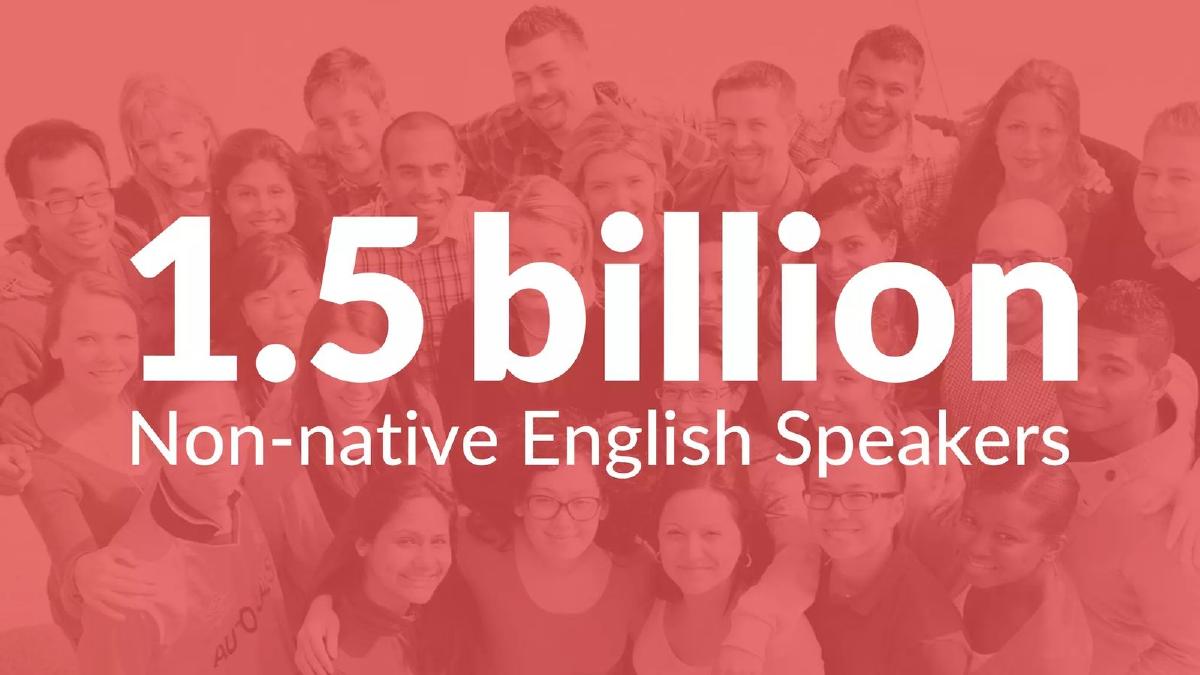
- The target market is identified as '1.5 billion Non-native English Speakers' (Slide 2).
- The problem statement includes a personal anecdote about the difficulty of writing while studying abroad in the USA (Slide 3).
- The existing market is characterized as an 'Extremely Inefficient Market' where 'Editing Service Agencies' take a '50% Commission' (Slide 4).
- Ediket's solution involves a three-step process: 'SUBMIT WRITING', 'MATCH VETTED EDITOR', and 'GET & RATE THE RESULT' (Slide 5).
- Key financial metrics are provided: '$20 Customer Acquisition Cost', '$150 Annual Contract Value (ACV)', and '$50 Average Price Per Job' (Slide 6).
- Ediket positions itself within the trend of specialized marketplaces, stating that 'Freelance offerings are beginning to separate into specialized marketplaces' (Slide 7).
- The team slide introduces a 'Global Team' with roles such as CEO/Co-founder, CTO/Co-founder, Operation, and Quality Control, showing US and Canadian flags for team members (Slide 8).
Ediket Pitch Deck Teardown: Freelance Marketplace for Editing + Writing Consulting
This teardown analyzes the Ediket pitch deck, titled 'Ediket Pitch Deck (English) - December 2017' from SlideShare. The deck presents Ediket as a freelance marketplace specializing in editing and writing consulting. This analysis focuses on the first 10 slides provided, out of a total of 38 slides in the full deck. The company positions itself to address the needs of non-native English speakers and the inefficiencies within the existing editing and writing services market.
Slide-by-Slide Breakdown
Slide 1: Title Slide
The first slide serves as the title slide, prominently displaying the company name 'ediket' in bold, black letters against a blurred, grayscale background featuring a person working on a laptop. Below the company name, a dark gray bar contains the text 'Freelance Marketplace for Editing + Writing Consulting'. This slide clearly states the company's name and its core business function, immediately setting the context for the presentation.
Slide 2: Market Size / Problem Introduction
This slide features a large, bold white number '1.5 billion' centered on a coral-colored background, overlaid on a group photo of diverse individuals. Below the number, in smaller white text, it reads 'Non-native English Speakers'. This slide aims to establish the vast potential market size by highlighting the number of non-native English speakers, implying a significant demand for editing and writing consulting services.
Slide 3: Personal Problem Statement
This slide presents a personal anecdote to illustrate the problem. On the left, there is a photograph of two young individuals in what appears to be a computer lab. On the right, a screenshot of a Facebook post from 'Susan Choi' dated 'April 9, 2011' reads 'Editing min kyu's paper at 12am =o=;;;'. A large yellow text overlay at the bottom of the slide states, 'While studying abroad in USA, Writing was Difficult for me'. This slide uses a personal narrative to make the problem relatable and underscore the challenges faced by non-native English speakers in academic or professional writing contexts.
Slide 4: Market Inefficiency
Titled 'Extremely Inefficient Market', this slide uses a flowchart to depict the current landscape of editing services. It shows 'Researchers' submitting a 'Thesis' to 'Editing Service Agencies'. 'Research Organizations' 'Pay' these agencies, which then conduct 'Sales & Rebate'. The agencies 'Deliver' work to 'Freelance Editors' who perform 'Revision' and 'Deliver' back. A large yellow starburst graphic highlights '50% Commission' taken by 'Editing Service Agencies'. This slide visually explains the traditional, agency-centric model and points out a significant inefficiency: the high commission fees.
Slide 5: Ediket's Solution / Product Flow
This slide illustrates Ediket's streamlined process with three main steps: 'SUBMIT WRITING', 'MATCH VETTED EDITOR', and 'GET & RATE THE RESULT'. Each step is accompanied by a screenshot of the Ediket platform interface. The 'SUBMIT WRITING' section shows a text input area. The 'MATCH VETTED EDITOR' section displays profiles of three editors: 'Jonathan Feldheim (Attorney, Northwestern University Journalism)', 'Maddison Wallace (Copywriter, University of Melbourne Publishing & Communications)', and 'Brittany Lozano (ESL Curriculum Writer, Korea University International Commerce)'. The 'GET & RATE THE RESULT' section shows a completed editing job with a review and rating. This slide demonstrates the user journey and highlights the platform's ability to connect users with qualified editors.
Slide 6: Key Metrics
Titled 'We know what to do!', this slide presents three key financial metrics in large white text within red circles, set against a blurred background of a person relaxing on a beach chair with a laptop. The metrics are: '$20 Customer Acquisition Cost', '$150 Annual Contract Value (ACV)', and '$50 Average Price Per Job'. These figures provide a snapshot of Ediket's unit economics, indicating their understanding of customer acquisition and revenue generation.
Slide 7: Market Positioning / Specialization Trend
This slide is titled 'Freelance offerings are beginning to separate into specialized marketplaces'. It categorizes marketplaces into 'Catch-All Marketplaces' (featuring logos for Freelancer, Upwork, Fiverr, Guru) and specialized categories: 'Design' (99designs, with 'Raised $45M USD', 'Founded in 2008'), 'Programming' (GIGSTER, with 'Raised $12.5M USD', 'Founded in 2013'), and 'Writing + Editing' (ediket logo). An arrow connects the catch-all marketplaces to the specialized ones, with a yellow callout stating 'Same Functions & Workflows for Different Services'. A yellow starburst graphic indicates '15% of Online Freelancing' next to the specialized marketplaces. This slide positions Ediket within a broader industry trend towards niche platforms and highlights its focus on writing and editing.
Slide 8: Team Slide
Titled 'Global Team with understanding of Target Markets', this slide introduces four team members with their photos, roles, and national flags. The members are: 'CEO/Co-founder' (US flag), 'CTO/Co-founder' (Canadian flag), 'Operation' (Canadian flag), and 'Quality Control' (US flag). Below the team photos, logos of educational institutions and companies are displayed: 'THE GEORGE WASHINGTON UNIVERSITY', 'RICE', 'SAMSUNG ELECTRONICS', and 'DIMENSION IMAGING'. This slide aims to establish the credibility and relevant experience of the founding team, emphasizing their global background and understanding of the target market.
Slide 9: Current Market Analysis
This slide, titled 'Current Market', breaks down the market into three segments: 'Traditional Agencies', 'Freelance Marketplaces', and 'Machine Grammar Checking'. For each segment, it provides 'Size', 'Business', and 'Document Type' information. 'Traditional Agencies' are listed with a '$5B↑' size, '20,000+ Business (No Dominant Business)', and 'Academic Research, Business Documents'. 'Freelance Marketplaces' show '$500M↑' size, logos for freelancer, Upwork, fiverr, guru, and 'many others' as businesses, and 'Resumes, Cover Letters, Press Releases' as document types. 'Machine Grammar Checking' shows '$100M↑' size, logos for grammarly, WhiteSmoke, 1Checker, GradeProof, and 'Emails, Assignments' as document types. Footnotes indicate sources for the size figures: '(1) ibisworld.com, 2014' and '(2) Freelance Marketplace Market Size - Payment Volume'. This slide provides a comprehensive overview of the competitive landscape and the total addressable market, quantifying the opportunity for Ediket.
Slide 10: Writing Consulting Complexity
This slide is titled 'Writing Consulting is too complicated to be offered online.' It presents a linear flow diagram starting with 'Writing Consulting' leading to a blank document, then documents labeled 'A', 'B', 'C', and 'C''. Below the flow, four red icons with descriptions illustrate the process: a lightbulb for 'Let's Brainstorm Together', two stethoscopes for 'Change Your Topic' (appearing twice), and a pen for 'I Will Edit It'. This slide highlights the perceived complexity of writing consulting, suggesting that traditional methods involve multiple iterative steps and personal interaction, which might be challenging to digitize.
What Works Well
The Ediket deck effectively introduces a clear problem and solution. The opening slides immediately establish a large target market of '1.5 billion Non-native English Speakers' (Slide 2), which is a compelling figure for investors. The personal anecdote on Slide 3 makes the problem relatable and demonstrates founder empathy. The visual representation of the 'Extremely Inefficient Market' on Slide 4, particularly the '50% Commission' figure, clearly articulates the pain point Ediket aims to solve. The solution flow on Slide 5 is well-illustrated with product screenshots, showing a tangible and user-friendly platform. The inclusion of key metrics like 'Customer Acquisition Cost', 'Annual Contract Value', and 'Average Price Per Job' on Slide 6 provides early validation of the business model and unit economics. Slide 7 effectively positions Ediket within a growing trend of specialized marketplaces, differentiating it from broader competitors. The team slide (Slide 8) highlights a 'Global Team' with relevant experience, which is important for a company targeting an international market. Finally, the 'Current Market' analysis on Slide 9 provides a detailed breakdown of the total addressable market, backed by sources, offering a robust view of the opportunity.
What Is Missing
Based on the provided 10 slides, several critical components typically found in a comprehensive pitch deck are not yet present. There is no explicit 'Ask' slide, which would detail the funding amount sought and how it will be used. While some unit economics are presented on Slide 6, a more detailed financial projection, including revenue forecasts, profitability, and burn rate, is absent. A clear business model beyond the general 'freelance marketplace' description, such as specific pricing tiers or revenue share percentages, is not fully elaborated. The competitive advantage or unique selling proposition (USP) of Ediket beyond specialization is not deeply explored; while it shows how it differs from catch-all platforms, it doesn't detail its edge over other potential specialized writing/editing services. There is no mention of traction, such as user numbers, growth rates, or revenue generated to date. A roadmap outlining future product development or market expansion plans is also missing. Furthermore, while the team is introduced, a deeper dive into their individual expertise and specific contributions to Ediket's success is not provided.
What a Founder Should Copy
Founders can learn several lessons from the Ediket deck. Firstly, the immediate presentation of a massive market opportunity (Slide 2) is an effective hook. Using a personal story to illustrate the problem (Slide 3) is a powerful way to build empathy and demonstrate a deep understanding of the user's pain. Visually depicting market inefficiencies with clear figures, like the '50% Commission' on Slide 4, helps investors quickly grasp the problem's scale and the potential for disruption. Showcasing the product's user flow with actual screenshots (Slide 5) makes the solution tangible and easy to understand. Presenting early unit economics (CAC, ACV, Average Price Per Job) on Slide 6 is crucial for demonstrating business viability. Positioning the company within a broader industry trend (specialized marketplaces on Slide 7) helps investors understand the strategic context. Lastly, a clear market segmentation and sizing (Slide 9) with cited sources provides credibility and quantifies the opportunity, which is essential for any fundraising effort.
Frequently asked questions
- What problem is Ediket trying to solve?
- Ediket aims to solve the inefficiency and high costs associated with traditional editing and writing consulting services. The deck highlights that existing 'Editing Service Agencies' take a '50% Commission' and that writing, especially for non-native English speakers, can be 'Difficult' (Slide 3, 4).
- Who is Ediket's target market?
- Ediket's primary target market is identified as the '1.5 billion Non-native English Speakers' (Slide 2). The problem statement also suggests a focus on individuals like students studying abroad who face writing challenges (Slide 3).
- What are Ediket's key business metrics presented in the deck?
- The deck presents three key business metrics: a 'Customer Acquisition Cost' of '$20', an 'Annual Contract Value (ACV)' of '$150', and an 'Average Price Per Job' of '$50' (Slide 6).
- How does Ediket differentiate itself from competitors?
- Ediket differentiates itself by being a specialized marketplace for 'Writing + Editing', contrasting with 'Catch-All Marketplaces' like Upwork and Fiverr. It positions itself alongside other specialized platforms like 99designs for Design and GIGSTER for Programming (Slide 7).
- What is the total market size Ediket is addressing?
- Ediket addresses a 'Current Market' estimated to be over $5.6 billion, composed of 'Traditional Agencies' ($5B+), 'Freelance Marketplaces' ($500M+), and 'Machine Grammar Checking' ($100M+) (Slide 9).