Astek Diagnostics' 2023 pitch deck is a highly technical, data-driven presentation that successfully navigated the complex Seed-stage healthcare landscape. By focusing on a massive, underserved problem—Urinary Tract Infections (UTIs) and the rise of antimicrobial resistance—the company established immediate clinical relevance. The deck excels by showcasing tangible progress, including a 96.97% accuracy rate in clinical pilots and a clear roadmap for expanding from urine samples to blood and CSF. With $1.4M in grants and $2.6M in prior investment already secured at the time of the deck, Astek…
Key takeaways
- The company provides specific clinical accuracy data, showing an improvement from 82.00% to 96.97% across pilot phases (Slide 14).
- Astek identifies a significant market pain point: 47% of UTIs are treated with inappropriate antibiotics, contributing to a $55B annual cost for antimicrobial resistance (Slides 6-7).
- The Jiddu system is positioned as a recurring revenue model, with a $10K one-time device purchase and $50 per test cartridge (Slide 8).
- The deck outlines a robust IP portfolio with one issued patent for the test algorithm and three pending disclosures (Slide 15).
- A detailed regulatory and commercial timeline predicts FDA clearance by April 2025 and a potential buyout as early as Q1 2025 (Slides 17-19).
- The team is supported by a 10-person advisory board covering specialized fields like urology, microbiology, and regulatory affairs (Slide 13).
- The business model relies on outsourcing manufacturing and maintenance to vendors like Key Tech to remain focused on R&D (Slide 19).
- Comparable transactions in the space show a median revenue multiple of 9.7x, providing a valuation benchmark for investors (Slide 20).
Executive Summary and Vision
Slides 1-3: The Mission and the Platform
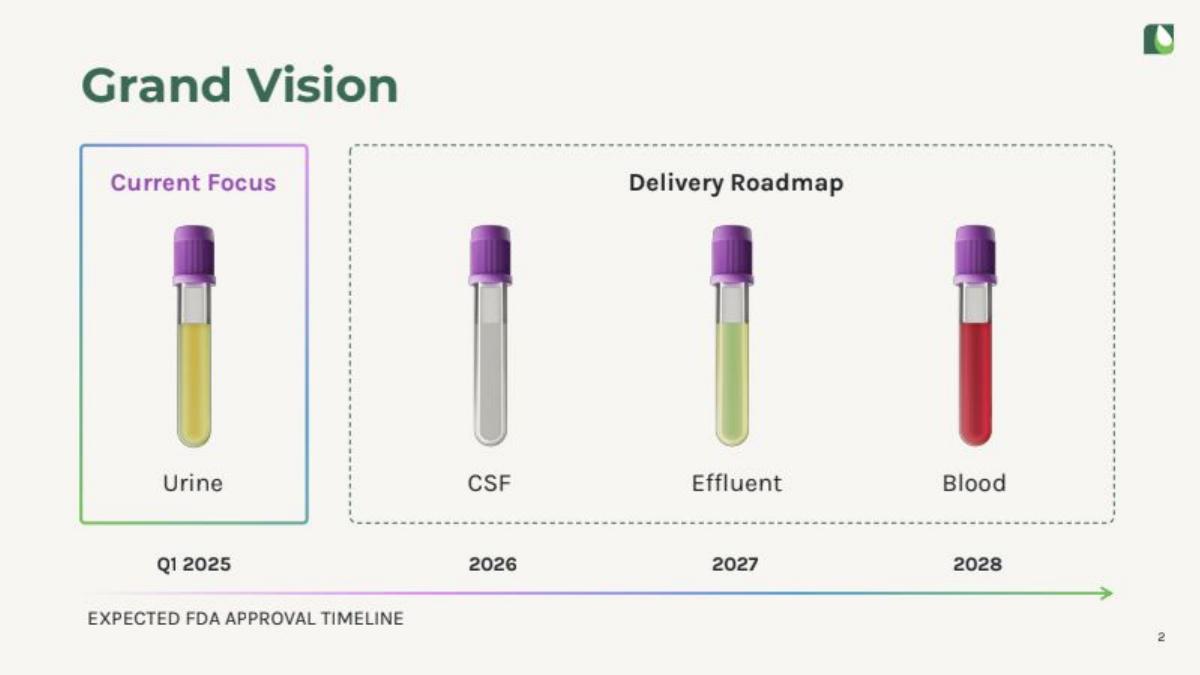
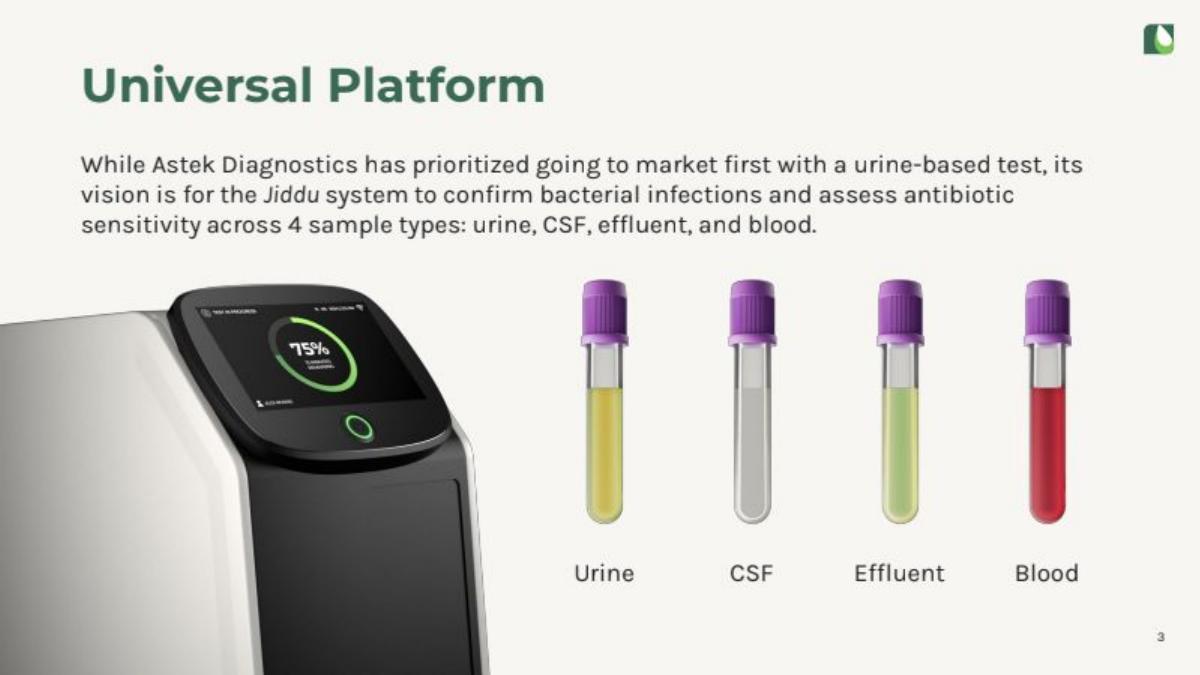
Astek Diagnostics opens with a clear, human-centric cover slide featuring the tagline "Saving Lives Through Antibiotic Sensitivity Precision Diagnostics." This immediately establishes the company as a deep-tech healthcare play. Slide 2, titled "Grand Vision," sets a high-stakes roadmap. While the current focus is on urine-based testing (targeted for Q1 2025), the company plans to expand into CSF (2026), Effluent (2027), and Blood (2028). This is a critical slide for Seed investors because it demonstrates that while the initial entry point is narrow (UTIs), the platform is "Universal" (Slide 3) and has a massive Total Addressable Market (TAM).
Slides 4-5: The Comprehensive Approach
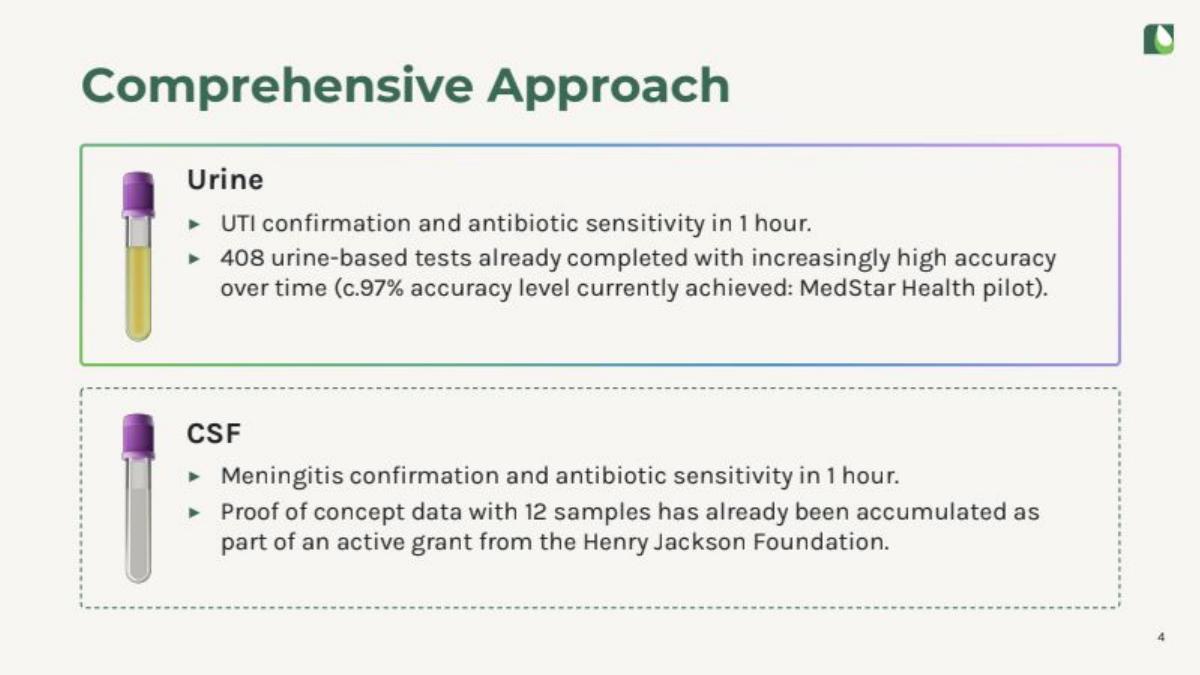
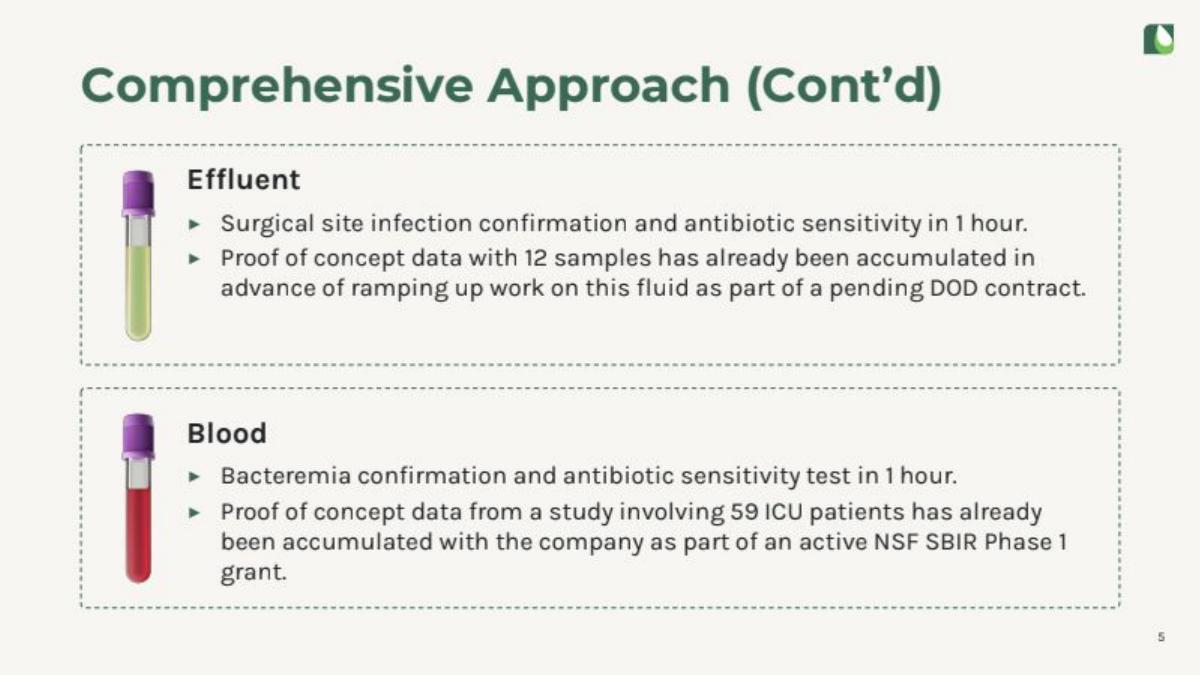
These slides provide the technical 'proof of life' for the expansion mentioned in the vision. For the urine-based test, they cite 408 tests completed with 97% accuracy at the MedStar Health pilot. For the other fluids, they cite specific grant-funded proof-of-concept data: 12 samples for CSF (Henry Jackson Foundation), 12 for Effluent (pending DOD contract), and 59 ICU patients for blood (NSF SBIR Phase 1 grant). By tying each fluid type to a specific pilot or grant, Astek de-risks the future roadmap.
The Problem and Market Opportunity
Slides 6-7: The UTI Problem and Antimicrobial Resistance
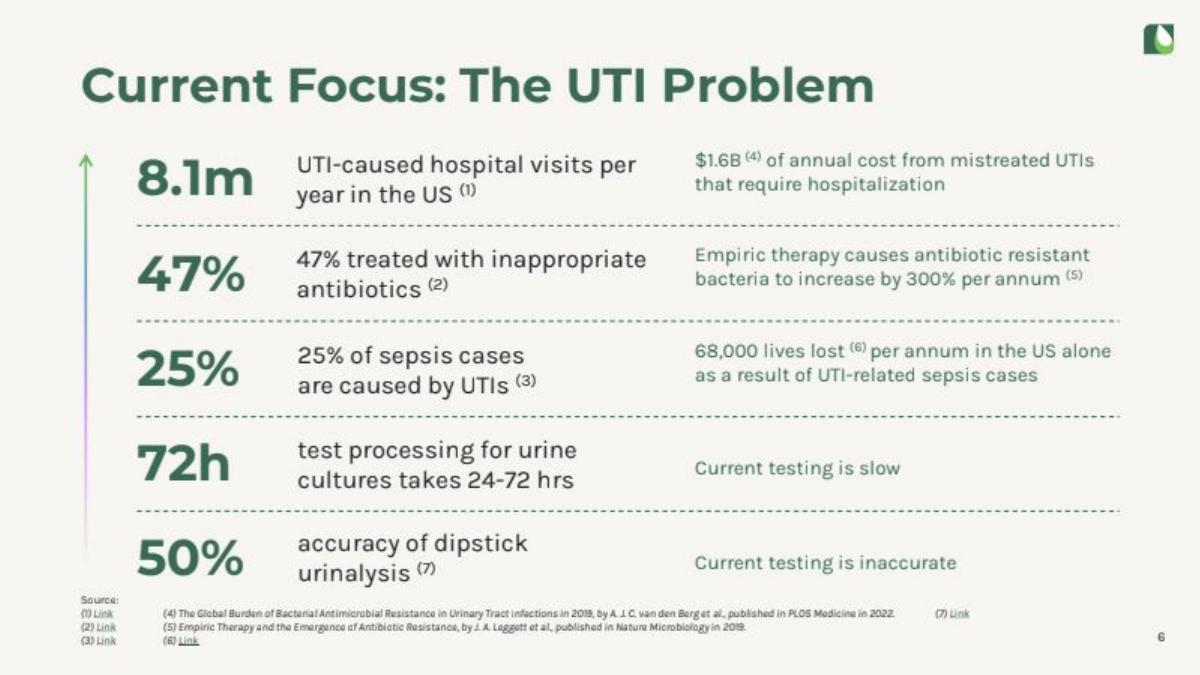
Astek presents a compelling case for why their solution is needed now . They cite 8.1 million UTI-caused hospital visits per year in the US and a staggering 47% rate of inappropriate antibiotic treatment. The most effective data point here is the "72h" test processing time for current cultures versus their 1-hour promise. Slide 7 connects this to the broader global crisis of "Super Bugs," noting that the economic cost of antimicrobial resistance (AMR) in the US is approximately $55 billion per year. This shifts the narrative from 'better diagnostic' to 'essential infrastructure for public health.'
The Solution and Technology
Slides 8-11: The Jiddu System
Slide 8 introduces the hardware: the Jiddu system . It highlights four key value propositions: 1-hour results, point-of-care testing, ease of use (automated with disposable cartridges), and cost-effectiveness. The pricing is explicitly stated: "$10K as a one-time device purchase" and "$50 per test cartridge." This transparency is rare in Seed decks and helps investors model the revenue potential immediately.
Slides 9 and 10 walk through the mechanics: placing the sample in a microfluidic cartridge, automated filtering, 35-minute cultivation, and final detection. Slide 11 explains the underlying science: Metabolic Activity Detection . A bar chart shows that while a sample has high metabolic activity, the introduction of effective antibiotics (like Cephalexin) causes that activity to drop to near zero. This visualizes the 'aha' moment of the technology—if the bacteria stop 'breathing,' the drug is working.
Team and Advisory Board
Slides 12-13: Deep Domain Expertise
The team slide (Slide 12) features 9 members, led by CEO Mustafa Al-Adhami. The presence of a dedicated Microbiologist, Bioengineer, and Computer Scientist suggests a balanced technical team. However, Slide 13 is the real 'heavy lifter.' The Advisory Board includes 10 MDs and PhDs from prestigious institutions like Johns Hopkins, University of Maryland, and Harvard. They are categorized by specialty (Urology, Intensive Care, Regulatory Affairs), which signals to investors that the company has the necessary clinical and regulatory guidance to navigate the FDA.
Validation and Intellectual Property
Slides 14-16: Proving the Concept
Slide 14, "Technology Validation," is perhaps the most important slide in the deck. It shows a clear progression of accuracy: 82.00% in the first UMB pilot, rising to 95.60% in the second, and reaching 96.97% in the MedStar pilot. This 'up and to the right' data on accuracy is the ultimate de-risking mechanism for a diagnostic company. Slide 15 details the IP Overview , listing one issued patent for the test algorithm and three pending disclosures for the cartridge and reagents. Slide 16 summarizes the company's momentum: $1.4M in scientific grants, $2.6M from investors (including Y Combinator and Wexford Science + Technology), and a pipeline of 10 pilot partners.
The Investment Case
Slides 17-21: Timeline, Terms, and Exit
Slide 17 provides a timeline through 2025, with a clear goal of FDA Clearance by April 2025 . Slide 18, "Investment Terms," uses placeholders ($XXM) for the current round but specifies the instrument: convertible notes . It also mentions a 33% tax refund for investors via the Biotechnology Investment Incentive Tax Credit (BIITC), a clever 'sweetener' for the deal. Slide 19 explicitly discusses the Exit Strategy , naming potential acquirers like BioMerieux and Qiagen. Slide 20 backs this up with Comparable Transactions , showing that similar companies have been acquired for multiples as high as 59.5x revenue. The deck concludes with an Executive Summary (Slide 21) that reiterates their 95%+ accuracy and their need for funding to complete clinical trials.
What Works and What is Missing
What Works
Data Transparency: The inclusion of specific accuracy percentages from named hospital pilots is incredibly persuasive. · Clear Business Model: The $10k/$50 split makes the path to revenue easy to understand. · Regulatory Roadmap: Tying the exit strategy to the April 2025 FDA clearance date gives investors a clear 'liquidity event' horizon. · Advisory Depth: The 10-person advisory board covers every possible clinical and regulatory hurdle.
What is Missing
Unit Economics: While we see the price ($50/cartridge), we don't see the COGS (Cost of Goods Sold). Investors would want to know the gross margin on those disposables. · Competitive Landscape: The deck mentions 'current testing' is slow, but it doesn't name specific competitors in the rapid diagnostic space (e.g., T2 Biosystems or Accelerate Diagnostics). · Detailed Use of Funds: Slide 21 says the funds are to "finalize platform development," but a more granular breakdown of spend (R&D vs. Clinical Trials vs. G&A) is missing.
Founder Takeaways
1. De-risk with Data: If you are in a technical field, don't just say your product works—show the progression of it working. Astek's slide showing accuracy moving from 82% to 97% tells a story of engineering discipline. 2. Align with Incentives: Mentioning the BIITC tax credit shows that the founders are thinking about the investor's bottom line from day one. 3. The Platform Narrative: Start with a narrow, solvable problem (UTIs) but show a clear technical path to a much larger market (Blood/Sepsis). This provides the 'safety' of a niche and the 'upside' of a giant.
Frequently asked questions
- What is the primary problem Astek Diagnostics is solving?
- Astek focuses on the 'UTI Problem,' where current testing takes 24-72 hours and is often inaccurate. This leads to 47% of patients receiving inappropriate antibiotics, fueling the rise of 'Super Bugs' and costing the US healthcare system billions. Their Jiddu system aims to provide results in just one hour, allowing for immediate, precise treatment.
- How does the Jiddu system work technically?
- The system uses metabolic activity detection. It captures bacteria from a sample via a microfluidic cartridge, cultivates it for 35 minutes in a conductive media with specific antibiotics, and then measures metabolic activity. A decline in activity indicates the antibiotic is effective, while high activity suggests infection presence.
- What is the company's current stage of clinical validation?
- As of the deck's publication, Astek had completed 408 tests. They successfully finished a pilot with the University of Maryland Medical Center and were in the midst of an ongoing pilot with MedStar Health, where they achieved 96.97% accuracy. A third pilot with Johns Hopkins was listed as pending for 2024.
- What is the revenue model for the hardware?
- Astek employs a 'razor and blade' strategy. They charge a $10,000 one-time fee for the Jiddu device and generate recurring revenue through $50 disposable test cartridges. This model is designed to be cost-effective for hospitals while providing predictable cash flow for the company.
- What is the expected timeline for an investor exit?
- The deck explicitly states that the company has already been approached by strategic investors like BioMerieux and BD. They anticipate becoming a prime acquisition target upon FDA clearance in April 2025, with a potential buyout occurring as early as the first quarter of that year.