Floqq’s pitch deck, presented at a 500Startups Demo Day, is a masterclass in high-impact, low-text presentation design tailored for a live stage. The deck prioritizes visual storytelling, using large-scale imagery and bold metrics to communicate a clear narrative: the massive demand for online vocational training in Latin America. With a reported 300% user growth and $800,000 already raised, the company demonstrates significant early-stage momentum. However, the deck is notably light on granular financial data, unit economics, and a detailed team breakdown, likely relying on the presenter to…
Key takeaways
- The company positions itself as the leader for online education in Latin America on slide 1.
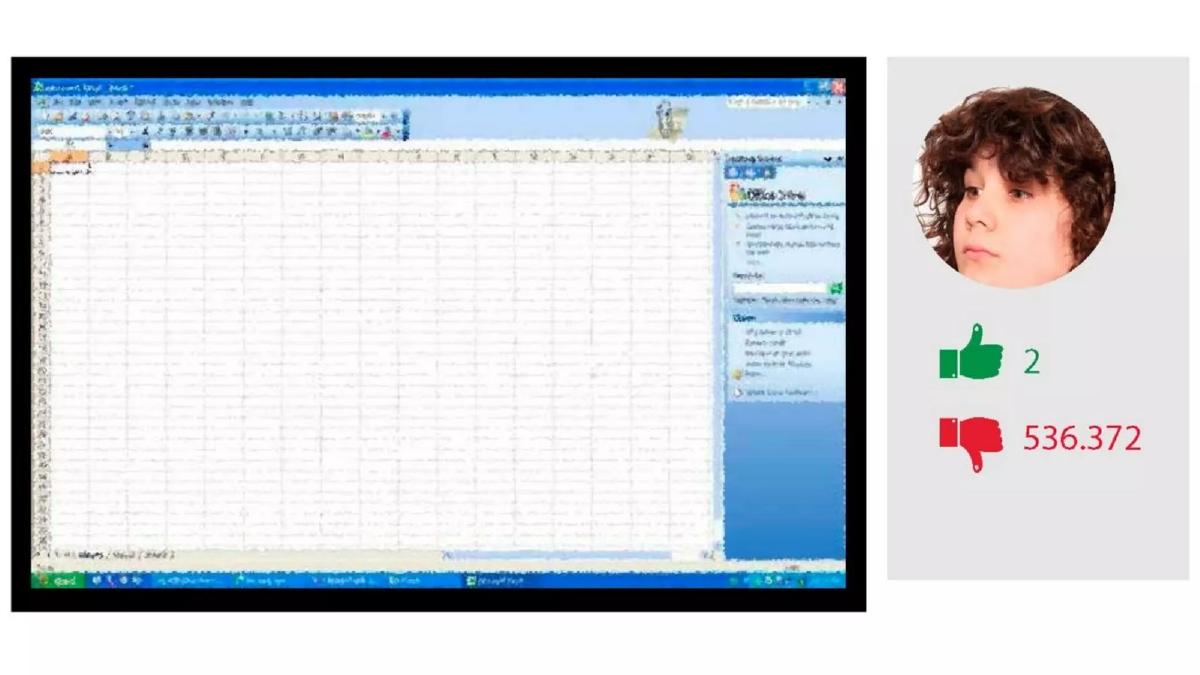
- Slide 3 uses a visual metaphor of a low-quality spreadsheet tutorial with 536,372 dislikes to illustrate the problem of poor existing content.
- The product is a marketplace for video courses covering topics from 'Origami' to 'Raising Startup Capital' as shown on slide 4.
- Slide 5 identifies Lynda.com as a primary competitor or market comparable, highlighting a $100M figure.
- A hockey-stick growth chart on slide 7 claims 300% user growth, reaching nearly 40,000 users by June.
- The platform is cross-device compatible, showing interfaces for laptop, tablet, and smartphone on slide 8.
- Slide 9 confirms the company has already raised $800,000 in funding prior to this presentation.
- The deck omits a traditional team slide, business model details, and a specific current 'ask' for new capital.
Introduction: The Demo Day Format
The Floqq pitch deck is a classic example of a 500Startups Demo Day presentation. These decks are designed for a live audience where the speaker provides the context, and the slides provide the visual punctuation. As a result, the deck is extremely light on text and heavy on large, evocative imagery. The primary goal of this deck is not to explain the intricacies of the cap table, but to generate enough excitement for investors to book a follow-up meeting.
Slide 1: Title and Mission
The deck opens with a bold, minimalist title slide. FLOQQ is displayed in a bright teal font against a dark grey background. The sub-headline, "Changing Online Education in Latin America," immediately establishes two critical pieces of information: the industry (EdTech) and the geographic focus (LATAM). This is a strong start because it allows investors who do not invest in EdTech or emerging markets to self-select out immediately, while capturing the attention of those who do.
Slide 2 and 3: The Problem Statement
Slide 2 is a full-bleed photo of a young man with a microphone, likely representing a content creator. Slide 3 gets to the heart of the problem. It shows a low-resolution, poorly formatted Excel spreadsheet—the kind of content often found in amateur YouTube tutorials. To the right, a graphic shows a user profile with 2 'likes' and 536,372 'dislikes.' This is a visual shorthand for the poor quality of existing free online education. It suggests that while the demand for learning is high, the supply of quality content is severely lacking.
Slide 4: The Solution and Product Marketplace
Slide 4 provides a look at the Floqq interface. It is presented as a grid-based marketplace of courses. The categories listed at the top include Online Marketing, Programming, Business, Lifestyle, and Design and Photography. Specific course titles visible include "Origami: How to fold paper into figures," "How To Build a Mobile App," and "Raising Startup Capital." This slide confirms that Floqq is a horizontal marketplace, covering both professional skills and personal hobbies.
Slide 5 and 6: Market Opportunity and Localization
Slide 5 features the Lynda.com logo over a black-and-white photo of a boxing match, with green money bags and a large $100M figure. This likely refers to Lynda's revenue or a recent funding round at the time of the deck's creation. It serves to validate the business model by pointing to a successful US predecessor. Slide 6 uses a juxtaposition of two images: one of two fit, Western-looking men and another of a man in a traditional sombrero. This is a somewhat blunt visual metaphor for the need to localize content. The implication is that US-centric platforms do not resonate with or serve the specific cultural and linguistic needs of the Latin American audience.
Slide 7: Traction and Growth
Traction is the most important slide in a Demo Day deck. Slide 7 shows a line graph titled "300% Users Growth." The Y-axis scales from 0 to 40,000. The graph shows steady growth from January to March, followed by a significant inflection point in April, leading to nearly 40,000 users by June. This "hockey stick" curve is exactly what seed-stage investors look for, as it suggests the company has found a repeatable way to acquire users.
Slide 8: Product Accessibility
Slide 8 shows the Floqq platform across three devices: a laptop, a smartphone, and a tablet. A specific course, "Como hacer pan" (How to make bread), is shown with a price tag of 9€ . This is the first and only hint at the business model—a transactional, pay-per-course marketplace. The multi-device display emphasizes that learning can happen anywhere, which is a key selling point for modern EdTech platforms.
Slide 9: Funding Status
Slide 9 is a simple, high-impact slide stating "$800K raised" over a background of $100 bills. In the context of a pitch, this is a momentum builder. It signals that the founders are capable of raising capital and that the venture has already been de-risked by earlier investors. It sets the stage for the next round of funding without explicitly stating the new terms on the slide.
Slide 10: Contact Information
The deck concludes with the logo and a general contact email: founders@floqq.com . This is standard for a Demo Day deck, directing interested parties to a single point of contact for follow-up discussions.
What Works in This Deck
Visual Clarity: The deck avoids the common mistake of cluttering slides with bullet points. Each slide has one job and one message, which is essential for a presentation that will be viewed from the back of a crowded room.
Market Validation: By referencing Lynda.com and the $100M figure, Floqq doesn't have to spend time explaining why online video education is a good business. They simply have to explain why they are the right team to win the Latin American version of that business.
Clear Traction: The 300% growth chart is the strongest piece of evidence in the deck. It moves the conversation from "this might work" to "this is already working."
What Is Missing
The Team: There is no team slide in this 10-slide selection. Investors invest in people at the seed stage, and omitting the founders' backgrounds (especially if they have previous exits or deep EdTech experience) is a missed opportunity for the static version of this deck.
Unit Economics: While we see a course priced at 9€, we don't know the Customer Acquisition Cost (CAC) or the Lifetime Value (LTV). We also don't know the revenue split between the platform and the instructors.
The Ask: The deck mentions what has been raised ($800K) but does not state what they are looking for now. Are they raising $1M? $2M? What will that money be used for? (e.g., marketing, content production, geographic expansion).
Founder Takeaways
Design for the Medium: If you are presenting on a stage, copy Floqq's minimalist style. If you are emailing a deck to be read in private, you must add more text to explain the visuals. This deck is a "stage deck," not a "leave-behind deck."
Use Comparables Wisely: Comparing yourself to a giant like Lynda.com is a double-edged sword. It validates the market, but it also sets a very high bar for execution. If you use this tactic, be prepared to explain your unique "moat" that prevents the giant from simply translating their site and crushing you.
Highlight the Inflection Point: Floqq’s growth chart is effective because it shows a clear change in trajectory. If your growth is linear, a chart might not be your strongest slide. If it's exponential, make it the centerpiece of your presentation.
Frequently asked questions
- What is Floqq's core value proposition?
- Floqq aims to provide high-quality, professional, and vocational online video courses specifically for the Latin American market. As shown on slide 3, they contrast their offering against the 'bad' content currently available on the web (illustrated by a low-quality YouTube-style screencast with high dislikes). Their goal is to be the localized version of successful US-based education platforms.
- How does Floqq demonstrate market traction?
- Traction is primarily demonstrated through user growth and prior funding. Slide 7 shows a growth curve that accelerates sharply between March and June, ending at approximately 40,000 users. Additionally, slide 9 states they have already raised $800,000, which serves as social proof that other investors have already vetted the business model and team.
- Who are Floqq's main competitors according to the deck?
- Slide 5 explicitly features the Lynda.com logo. By placing the Lynda logo alongside a $100M figure and a boxing metaphor, Floqq suggests they are either competing for the same market share or aiming to replicate Lynda's success within the specific geographic and linguistic niche of Latin America.
- What is missing from this pitch deck?
- This is a Demo Day deck, which is typically designed to support a 2-minute speech rather than stand alone. Consequently, it lacks a team slide (names/bios), a detailed breakdown of the business model (commission rates or subscription fees), a competitive landscape matrix, and a specific 'ask' regarding how much they are currently raising and at what valuation.
- What is the significance of the $800,000 figure on slide 9?
- This figure represents capital already secured. In a Demo Day context, this is used to signal momentum. It tells the audience that the 'train is leaving the station' and that the startup is already well-capitalized enough to have built a product and acquired 40,000 users, reducing the perceived risk for new investors.