Flower One Holdings' November 2020 investor presentation serves as a progress report for a capital-intensive cannabis infrastructure project. The deck highlights a massive 400,000 square foot flagship greenhouse in Nevada, positioning the company as a high-volume wholesale and brand partner. With a reported Q3 2020 revenue of $11.9M, the company demonstrates significant scaling from its first harvest in Q2 2019. The presentation leans heavily on physical assets—including a 55,000 square foot production facility and 50kg+ distillation capacity—to justify its value proposition to brand partners…
Key takeaways
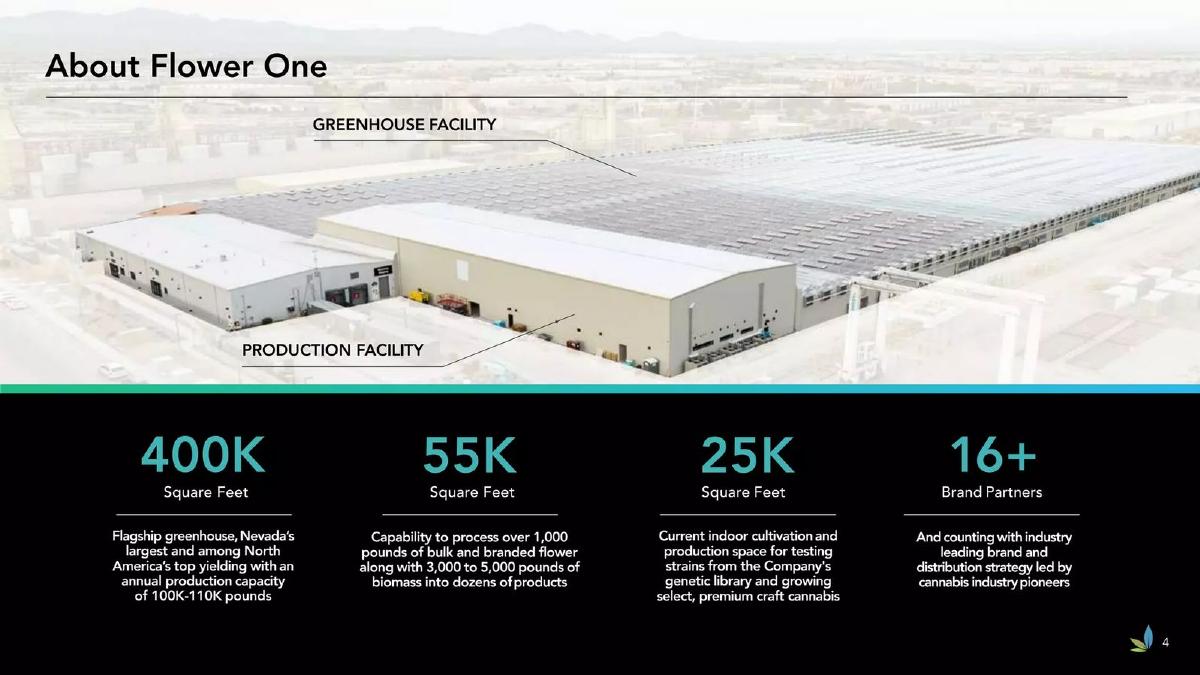
- The company operates a 400,000 square foot flagship greenhouse, cited as Nevada's largest, with an annual capacity of 100K-110K pounds (Slide 4).
- Revenue grew from under $1M in Q1 2019 to a record quarterly high of $11.9M in Q3 2020 (Slide 16).
- The facility includes a 55,000 square foot production space capable of processing over 1,000 pounds of flower and 3,000-5,000 pounds of biomass (Slide 4).
- Extraction capabilities include Ethanol, LPG, and CO2 with a commercial scale distillation capacity of 50kg+ (Slide 13).
- The value proposition for brand partners focuses on speed of market entry and eliminating the high cost of building dedicated facilities (Slide 7).
- A strategic partnership with the 'Cookies' brand is highlighted, featuring a testimonial from founder Berner calling Flower One the leader in Nevada (Slide 10).
- The deck provides a specific COVID-19 response timeline for Nevada, showing the transition from delivery-only in March to casino reopenings in June 2020 (Slide 22).
- The leadership team listed includes Ken Villazor (CEO), Kellen O'Keefe (CSO), and David Kane (Interim CFO), though full bios are omitted in this selection (Slide 25).
Flower One Holdings: A Study in Cannabis Infrastructure Scale
The November 2020 investor presentation for Flower One Holdings is a classic 'infrastructure-first' deck. In the capital-intensive world of legal cannabis, especially in a high-traffic market like Nevada, scale is often presented as the primary moat. This deck focuses heavily on the physical footprint and the resulting revenue throughput, positioning the company as the essential backend for consumer-facing brands.
Slide 1: Title and Public Listing Status
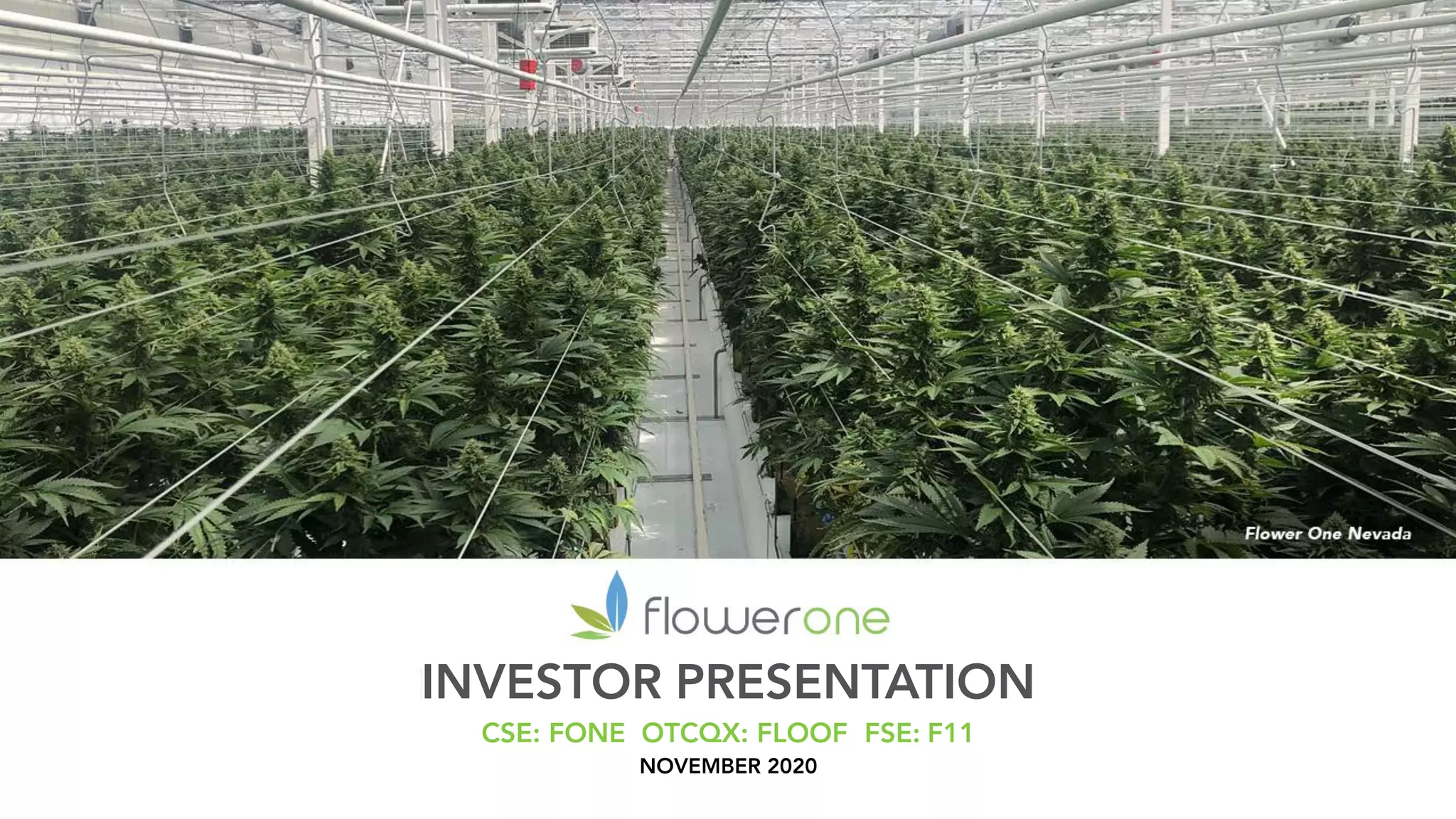
The cover slide establishes the company's identity and its status as a publicly traded entity. It lists three tickers: CSE: FONE, OTCQX: FLOOF, and FSE: F11. The background image is a high-perspective shot of a massive cannabis cultivation bay, immediately signaling the industrial scale of the operation. The date is clearly marked as November 2020.
Slide 4: About Flower One - The Physical Asset
This slide is the core of the company's value proposition. It uses an aerial photo of their facility to label two distinct areas: the Greenhouse Facility and the Production Facility. The metrics provided are substantial: 400K Square Feet for the flagship greenhouse (Nevada's largest) with a 100K-110K pound annual capacity. It also notes 55K Square Feet of production space and 25K Square Feet for indoor cultivation and testing. Finally, it mentions 16+ Brand Partners , framing the company as a platform rather than just a single-brand grower.
Slide 7: The B2B Value Proposition
Flower One splits its value proposition into two categories: Brand Partners and Retail Partners. For brands, the focus is on speed and ease of market entry and eliminating the high cost of capital required to build facilities. For retailers, the focus is on simplified single source ordering and just-in-time delivery to free up working capital. This slide effectively communicates that Flower One is a service provider to the industry, not just a competitor to other brands.
Slide 10: Strategic Partnership - Cookies
The deck devotes an entire slide to the 'Cookies' brand. This is a common tactic in cannabis fundraising: leveraging the cultural capital of a well-known partner. The slide includes a quote from Berner, the founder of Cookies, stating, "Flower One was the leader in Nevada." It lists associated brands like Minntz, Runtz, and Lemonnade, and uses lifestyle photography to connect Flower One's industrial facility to the 'streetwear and music culture' that drives Cookies' retail success.
Slide 13: Extraction and Refinement Capabilities
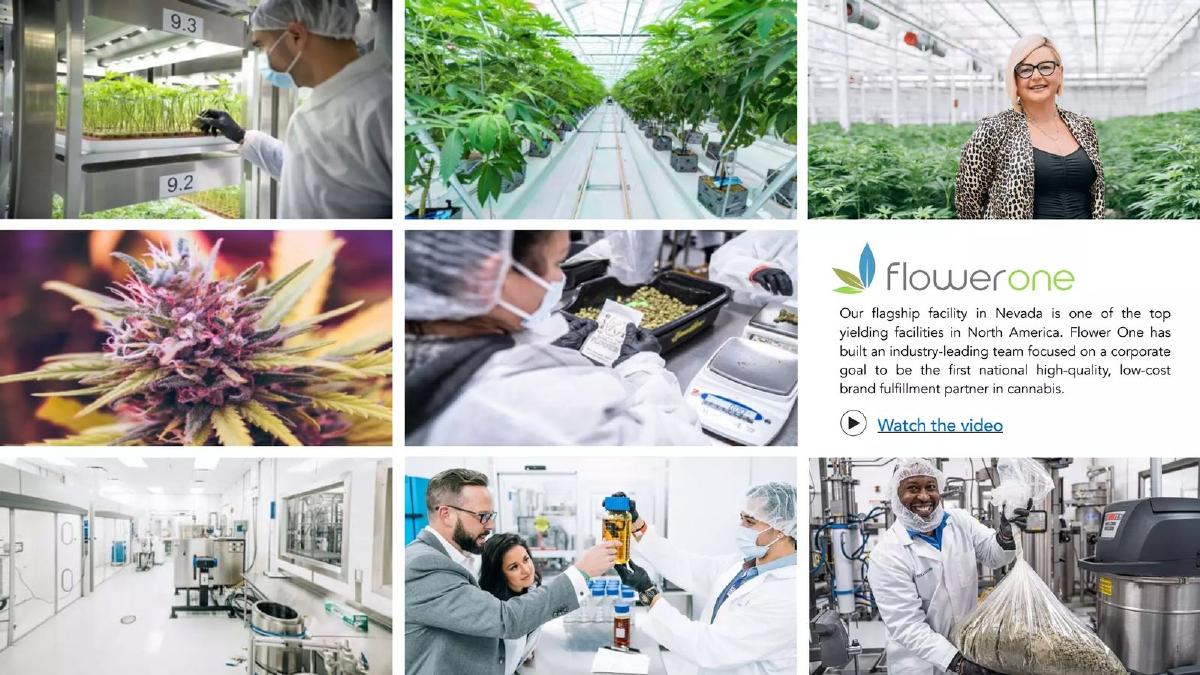
To move beyond raw flower, Slide 13 highlights the company's processing power. It lists capabilities in Ethanol, LPG, and CO2 extraction. The key metric here is 50kg+ of commercial-scale distillation capacity. The slide emphasizes 'Top Talent,' including scientists and engineers, though it does not name them individually. The imagery shows a clean-room environment, reinforcing the pharmaceutical-grade nature of their production.
Slide 16: Revenue Performance and Growth Trajectory
This bar chart tracks revenue from Q1 2019 to Q3 2020. It shows a clear 'hockey stick' growth pattern, starting from near zero and reaching a Highest Recorded Quarterly Revenue of $11.9M in Q3 2020. The chart annotates key milestones: the first harvest in Q2 2019, the start of greenhouse sales in Q3 2019, and the launch of the production lab in Q4 2019. Notably, it addresses the Q2 2020 dip, attributing the lower revenue to the COVID-19 State Closure , while still claiming the results were ahead of guidance.
Slide 19: Appendix and Visual Proof
The appendix begins with a full-bleed photo of the greenhouse interior. This serves as visual confirmation of the scale mentioned on Slide 4. The rows of plants stretching into the distance are intended to give investors confidence that the '400K square feet' is fully utilized and operational.
Slide 22: Initial State Government Response Plan
In the context of 2020, regulatory and pandemic-related risks were paramount. This slide provides a timeline of Nevada's reopening phases, from March 20 (delivery only) to June 4 (casinos reopening). This context is crucial for investors to understand the Q2 revenue dip and the subsequent Q3 recovery shown on Slide 16.
Slide 25: Contact and Leadership
The final slide lists the executive team: Ken Villazor (President & CEO) , Kellen O'Keefe (Chief Strategy Officer) , and David Kane (Interim CFO) . It provides contact emails for each, as well as for media and investor inquiries handled by NATIONAL Capital Markets. While it lacks the detailed professional histories often found in earlier-stage decks, it provides the necessary points of contact for a public company audience.
What Flower One Holdings Does Well
The deck is exceptionally strong at conveying industrial scale . In a market where many operators struggle with consistency and volume, Flower One uses high-quality photography and specific square-footage metrics to prove they are a 'real' infrastructure player. The revenue chart on Slide 16 is also highly effective; by labeling specific operational milestones (like the lab launch), they show a direct correlation between capital expenditure and top-line growth. The inclusion of a major brand partner like Cookies provides third-party validation that their large-scale product meets market quality standards.
What is Missing from the Deck
Despite the impressive scale, the deck omits several critical financial metrics. There is no mention of Unit Economics —specifically the 'lowest cash cost per gram' mentioned on Slide 7 is never quantified. For a commodity-adjacent business, knowing the exact cost to produce versus the wholesale price is vital. Furthermore, the deck does not provide a Use of Proceeds or a specific 'Ask.' While this is common for general investor updates for public companies, it leaves potential investors wondering if the company is currently seeking to raise debt or equity to further expand. Finally, the Competitive Landscape is ignored; there is no mention of other MSOs (Multi-State Operators) active in Nevada.
Founder Takeaways: Copy the Clarity, Avoid the Omissions
Founders building infrastructure-heavy businesses should copy the way Flower One visualizes their assets . Don't just say you have a factory; show the factory and label the specific capacities of each section. The 'Value Proposition' slide (Slide 7) is also a great template for B2B2C companies, as it clearly separates why a brand should use them versus why a retailer should buy from them. However, founders should avoid being vague about costs. If you claim to have the 'lowest cash cost,' you must back that up with a number, or investors will assume the claim is marketing fluff rather than a financial reality.
Frequently asked questions
- What is Flower One's primary business model?
- Flower One operates as a large-scale cannabis cultivator and producer. According to Slide 7, they act as a platform for brand partners, providing the infrastructure, regulatory licenses, and cultivation analytics needed for brands to enter the Nevada market without building their own facilities. They also serve retail partners through single-source ordering and just-in-time delivery.
- How large is Flower One's production capacity?
- The company highlights massive scale on Slide 4, featuring a 400,000 square foot flagship greenhouse with an annual production capacity of 100,000 to 110,000 pounds. Additionally, they have 55,000 square feet of production space and 25,000 square feet for indoor cultivation and testing.
- What does the revenue growth look like for the company?
- Slide 16 shows a steep growth trajectory. Revenue was negligible in Q1 2019, rising slightly after the first harvest in Q2 2019. By Q4 2019, revenue reached approximately $5.8M following the launch of their production lab. Despite a dip in Q2 2020 due to COVID-19 closures, they hit a record $11.9M in Q3 2020.
- Who are the key brand partners mentioned in the deck?
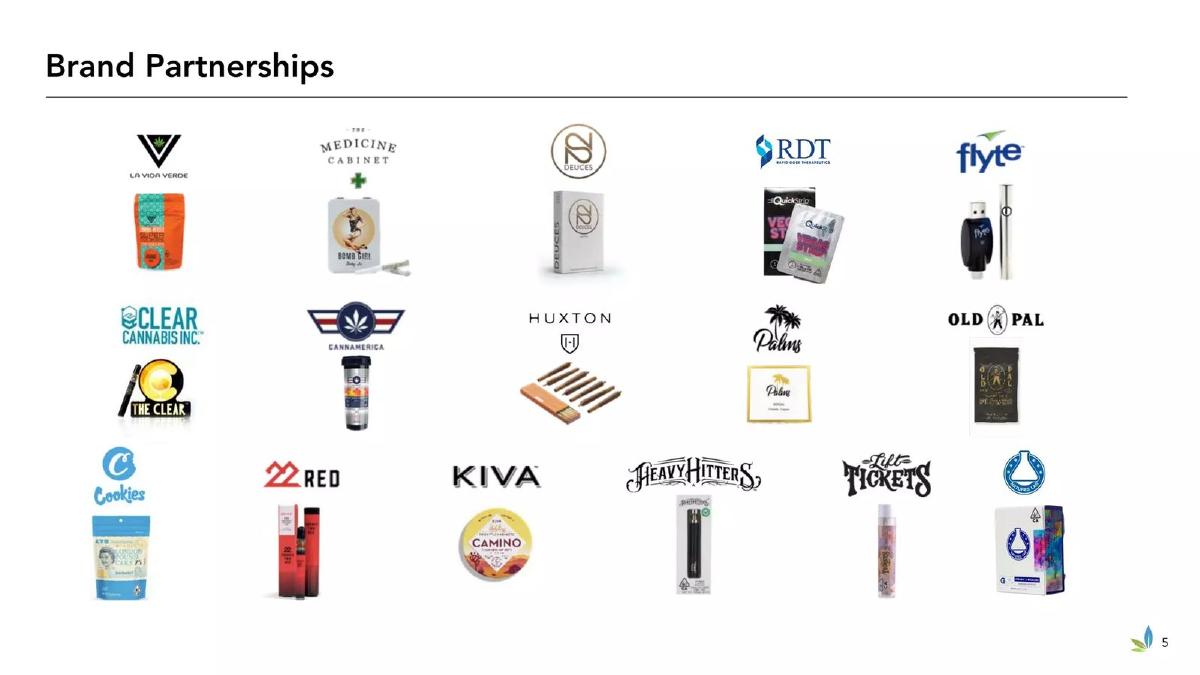
- The deck emphasizes a partnership with Cookies, one of the most recognized cannabis brands globally. Slide 10 details this relationship, including other associated brands like Minntz, Runtz, Grandiflora, and Lemonnade. The company claims to have over 16 brand partners in total as of November 2020.
- How did COVID-19 impact the company's operations in 2020?
- Slide 22 outlines the Nevada government response. In March 2020, cannabis establishments were deemed essential but limited to delivery-only. Curbside pick-up was allowed in May, and storefronts reopened later that month. Slide 16 shows that while Q2 2020 revenue was 'ahead of company guidance,' it was significantly lower than Q1 2020 due to these state closures.