Flower One Holdings Inc. positions itself as the leading large-scale cannabis cultivator in Nevada, utilizing a 400,000 sq. ft. high-tech greenhouse to supply the state's growing retail market. The deck emphasizes a multi-brand strategy, acting as the production partner for established names like Cookies, Kiva, and Old Pal, while also developing in-house brands like NLVO. Financial data shows significant revenue growth, peaking at $11.9M in Q3 2020, despite pandemic-related challenges. The presentation focuses heavily on physical infrastructure, including a 55,000 sq. ft. production facility…
Key takeaways
- The company operates the largest high-tech commercial greenhouse in Nevada at 400,000 sq. ft. (Slide 9).
- Revenue grew from under $1M in Q1 2019 to a record quarterly high of $11.9M in Q3 2020 (Slide 17).
- Flower One serves as the Nevada production partner for major brands including Cookies, Kiva, and 22Red (Slide 13).
- The Nevada retail cannabis market is shown growing from $539M in 2018 to an estimated $730M in 2020 (Slide 9).
- The company maintains a diverse facility portfolio, including a 55,000 sq. ft. post-harvest production and extraction facility (Slide 9).
- Cookies was recognized as the top-selling flower brand in Nevada by total sales in Q4 2020 (Slide 13).
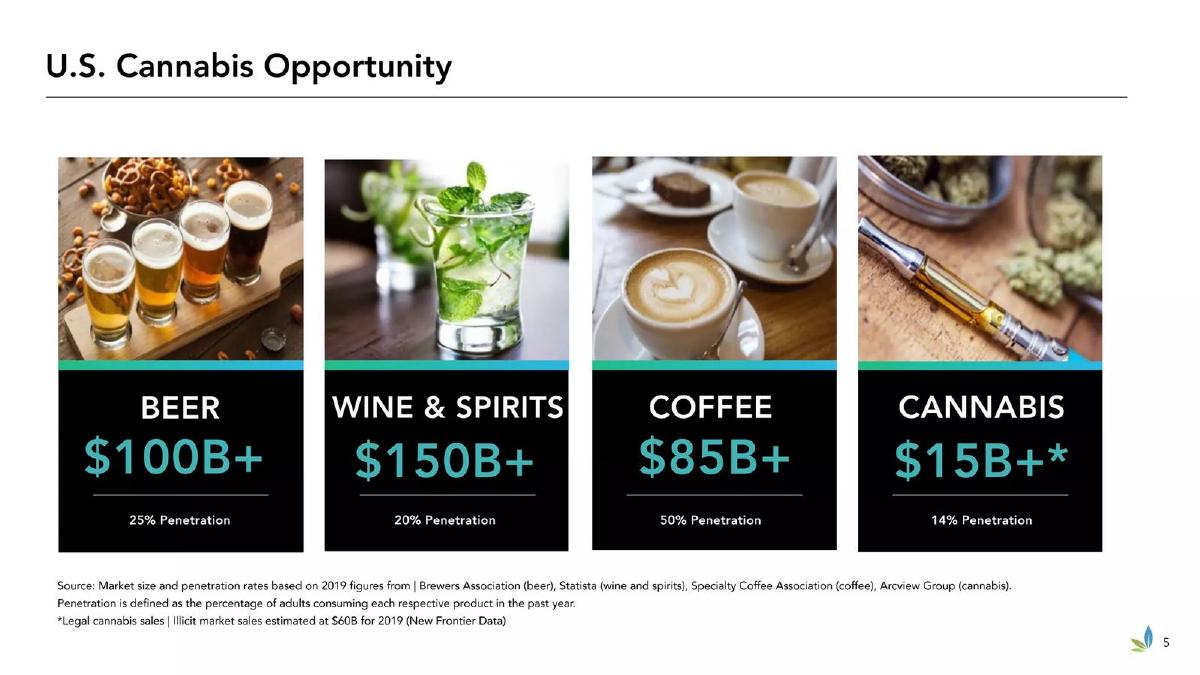
- The deck identifies a significant market opportunity, comparing the $15B+ legal cannabis market to the $100B+ beer market (Slide 5).
- Management at the time of the deck consisted of interim leadership, including Kellen O'Keefe as President & Interim CEO (Slide 33).
Flower One Holdings Inc. Investor Presentation Analysis
Flower One Holdings Inc. presents a narrative of industrial-scale dominance in the Nevada cannabis market. The deck, dated January 2021, focuses on the transition from infrastructure build-out to revenue generation. By emphasizing their massive physical footprint and partnerships with 'tier-one' cannabis brands, the company attempts to de-risk the investment by showing clear market share gains and operational maturity.
Slide 1: Title and Market Presence
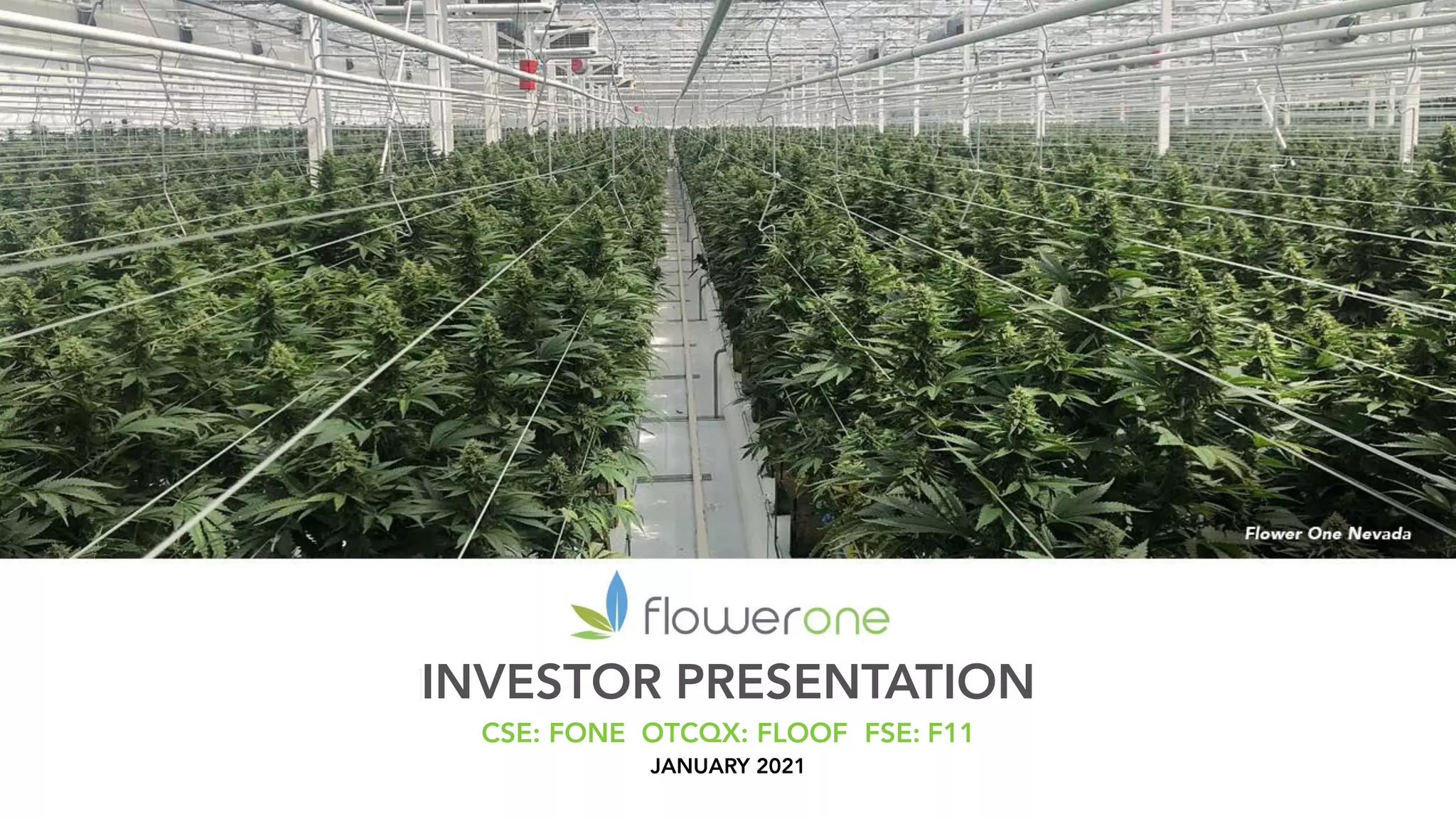
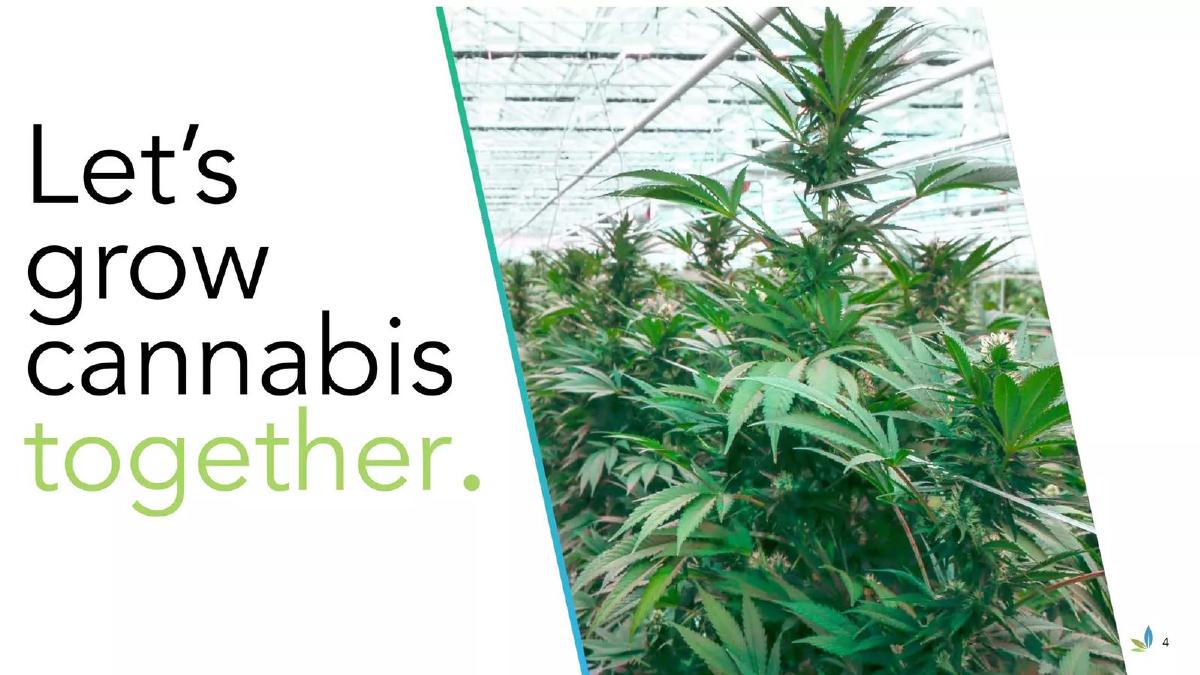
The cover slide establishes the company's identity and public trading status. It lists tickers for the CSE (FONE), OTCQX (FLOOF), and FSE (F11). The background image features a vast, industrial-scale greenhouse, immediately signaling that this is not a boutique operation but a high-volume agricultural play. The text 'Flower One Nevada' in the corner reinforces their geographic focus.
Slide 5: U.S. Cannabis Opportunity
This slide uses a standard market comparison framework to illustrate the 'blue sky' potential of the cannabis industry. It compares Cannabis ($15B+ market size, 14% penetration) to Beer ($100B+, 25% penetration), Wine & Spirits ($150B+, 20% penetration), and Coffee ($85B+, 50% penetration). The footnote is critical, noting that while legal sales are $15B, the illicit market is estimated at $60B, suggesting a massive opportunity for conversion to legal channels as regulations evolve.
Slide 9: Why Nevada?
Flower One makes a concentrated bet on the Nevada market. The slide highlights that 80% of cannabis sales in the state occur within Clark County (Las Vegas). It showcases a growing retail market, moving from $539M in 2018 to an estimated $730M in 2020. The company lists three key facilities: a 400,000 sq. ft. greenhouse, a 55,000 sq. ft. post-harvest and extraction facility, and a 25,000 sq. ft. indoor cultivation facility. The 'limited licensing structure' mentioned is a key point for investors, as it represents a barrier to entry for competitors.
Slide 13: Brand Performance Highlights
This timeline slide tracks the company's partnership milestones from Q3 2019 to Q1 2021. It shows a rapid succession of launches: Kiva, Cookies, and Old Pal in 2019; 22Red and NLVO (in-house) in 2020; and Lift Tickets and Nature’s Lab in early 2021. The slide claims significant market wins, such as Old Pal being the 'Top Selling Flower' in Q4 2019 and Q2 2020, and Cookies taking the top spot in Q4 2020. This slide is intended to prove that Flower One can successfully execute for third-party brands.
Slide 17: Revenue Performance
The revenue chart shows a clear upward trajectory, albeit with a dip in Q2 2020. Revenue grew from approximately $500k in Q1 2019 to $11.9M in Q3 2020. The annotations explain the growth drivers: the first harvest in Q2 2019, the start of greenhouse sales in Q3 2019, and the launch of the production lab in Q4 2019. The Q2 2020 dip is attributed to 'COVID-19 State Closure,' but the company notes that revenue remained 'ahead of company guidance' during that period.
Slide 21: Cookies Brand Deep Dive
A full slide is dedicated to the Cookies brand, founded by Berner and Jai. It emphasizes the brand's global recognition and 'cult-like' following, evidenced by photos of long lines outside retail locations. A quote from Berner states, 'it was clear that Flower One was the leader in Nevada.' This slide serves as a powerful testimonial, leveraging the most famous brand in cannabis to validate Flower One’s production capabilities.
Slide 25: 22Red Brand Deep Dive
Similar to the Cookies slide, this focuses on 22Red, founded by Shavo Odadjian of System Of A Down. It highlights the brand's 'celebrity' status and 'proprietary genetics.' By showcasing these lifestyle-oriented brands, Flower One positions itself as the 'engine' behind the industry's most marketable products, rather than just a commodity wholesaler.
Slide 29: Nature’s Lab Extracts
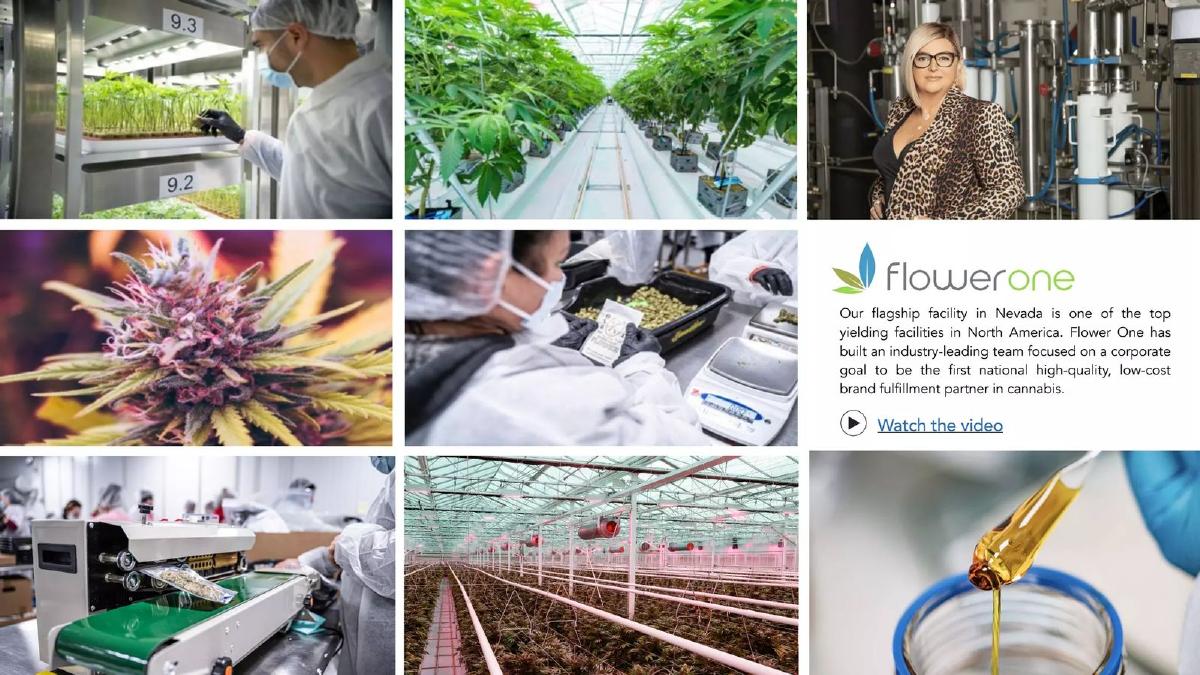
This slide focuses on the high-end concentrate market. Nature’s Lab is described as a 'high-end cannabis extraction company' known for 'Sauce' (a 50/50 blend of THC-A Crystalline and Cannabis Terpenes). The imagery shows professional, laboratory-style packaging, emphasizing the 'artisan' and 'solvent-free' nature of the products. This demonstrates Flower One's ability to handle complex, value-added processing beyond simple flower cultivation.
Slide 33: Contact Information
The final slide provides contact details for the executive team. Notably, both the CEO (Kellen O'Keefe) and CFO (Richard Groberg) are listed as 'Interim.' This is a significant detail for investors, as it indicates a company in the midst of a leadership transition. The slide provides direct email addresses for investor and media inquiries, maintaining a standard level of transparency for a public entity.
What Flower One Does Well
The deck excels at conveying scale . The use of large-format photography of the greenhouse and the specific square footage callouts (400,000 sq. ft.) make it clear that Flower One is an industrial player. They also do an excellent job of borrowed credibility . By dedicating entire slides to partner brands like Cookies and 22Red, they let the success of those brands reflect on their own operational competence. The revenue chart is also well-annotated, providing context for why growth happened at specific intervals (e.g., 'Start of Greenhouse Sales').
What is Missing from the Deck
Despite the strong revenue growth, the deck is notably silent on profitability and unit economics . There is no mention of EBITDA, net income, or cost per gram produced. For a company operating a 400,000 sq. ft. facility, the cost of production is the most critical metric for long-term survival, yet it is absent. Additionally, there is no detailed team slide beyond the contact page. While the interim leaders are named, the broader operational team’s experience in large-scale agriculture or CPG is not highlighted. Finally, the deck lacks a clear 'Ask' or use of proceeds , likely because it is a general investor update for a public company rather than a specific private round pitch.
What Other Founders Should Copy
Founders should emulate the market concentration strategy shown on Slide 9. Instead of claiming they will conquer the entire U.S., Flower One explains exactly why Nevada—and specifically Clark County—is the right place to win first. The brand timeline on Slide 13 is also a great way to show momentum; it transforms a list of partners into a narrative of consistent execution. Lastly, the comparative market sizing on Slide 5 is a classic but effective way to help investors visualize the long-term ceiling of a new industry by comparing it to mature, culturally similar categories like alcohol and coffee.
Final Analyst Thoughts
Flower One’s presentation is a 'bricks and mortar' deck. It is designed to convince investors that the company has built a physical moat that cannot be easily replicated. The strategy of being the 'backend' for famous brands is a smart way to capture market share without the massive marketing spend required to build a brand from scratch. However, the lack of bottom-line financial data and the interim status of the leadership team are significant red flags that suggest the company was focusing on top-line growth and infrastructure at the expense of fiscal stability during this period.
Frequently asked questions
- What is Flower One's primary competitive advantage in Nevada?
- According to Slide 9, Flower One's primary advantage is its scale and infrastructure. It operates a 400,000 sq. ft. greenhouse, which it claims is the only large-scale greenhouse in the state. This is supplemented by a 55,000 sq. ft. extraction facility and a 25,000 sq. ft. indoor cultivation site, allowing them to serve the entire Nevada market under a limited licensing structure.
- How does Flower One generate revenue?
- Flower One generates revenue through a mix of in-house brand sales and brand partnerships. Slide 13 shows they produce and sell products for major brands like Cookies, Kiva, and Old Pal. Slide 17 demonstrates the resulting revenue growth, which accelerated significantly after the start of greenhouse sales in Q3 2019 and the launch of their production lab in Q4 2019.
- What is the significance of the Cookies partnership?
- Cookies is highlighted on Slide 21 as one of the most recognized cannabis brands globally. Flower One acts as their leader in Nevada for cultivation and production. The partnership is a key driver of volume, as Cookies was recognized as the top-selling flower brand in the state by total sales in Q4 2020, as noted on Slide 13.
- What market trends does the deck use to justify the investment?
- Slide 5 compares cannabis to established consumer categories like beer ($100B+), wine/spirits ($150B+), and coffee ($85B+). It notes that legal cannabis sales were $15B+ with only 14% penetration, suggesting massive upside as it reaches the penetration levels of beer (25%) or coffee (50%). Slide 9 further highlights Nevada's specific growth and the concentration of 80% of sales in Clark County.
- Who was leading the company at the time of this presentation?
- Slide 33 lists the primary contacts as Kellen O'Keefe, who served as President & Interim CEO, and Richard Groberg, who served as Interim Chief Financial Officer. The presence of 'Interim' titles suggests the company was in a period of leadership transition during the January 2021 reporting period.