Flowcarbon’s 20-slide deck, styled as a 'Lite Paper,' presents a sophisticated technical solution to a fragmented $1 billion market. The company aims to solve the illiquidity and opacity of the voluntary carbon market by tokenizing credits into the 'Goddess Nature Token' (GNT). The deck relies heavily on market tailwinds, citing projections that the corporate carbon market will grow from $300M in 2018 to over $20B by 2030. While the deck excels at explaining complex tokenomics—such as the two-way bridge for retiring, unwrapping, or redeeming credits—it is notably silent on specific team biogr…
Key takeaways
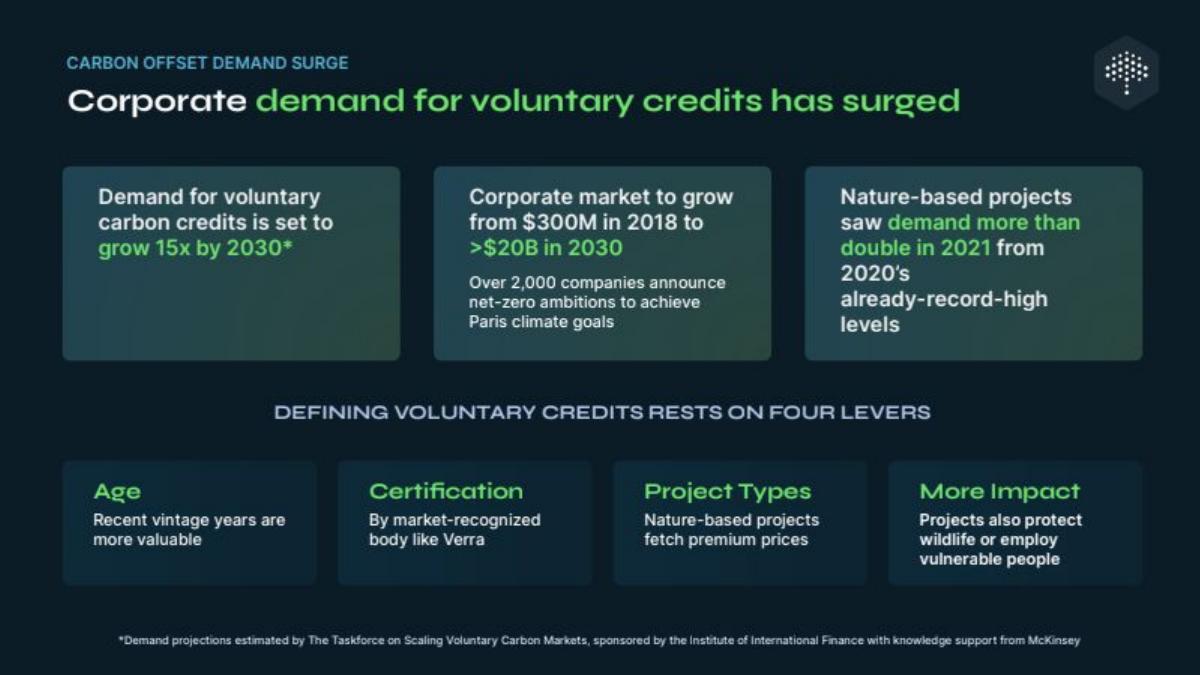
- The voluntary carbon market is projected to grow 15x by 2030, reaching over $20B (Slide 5).
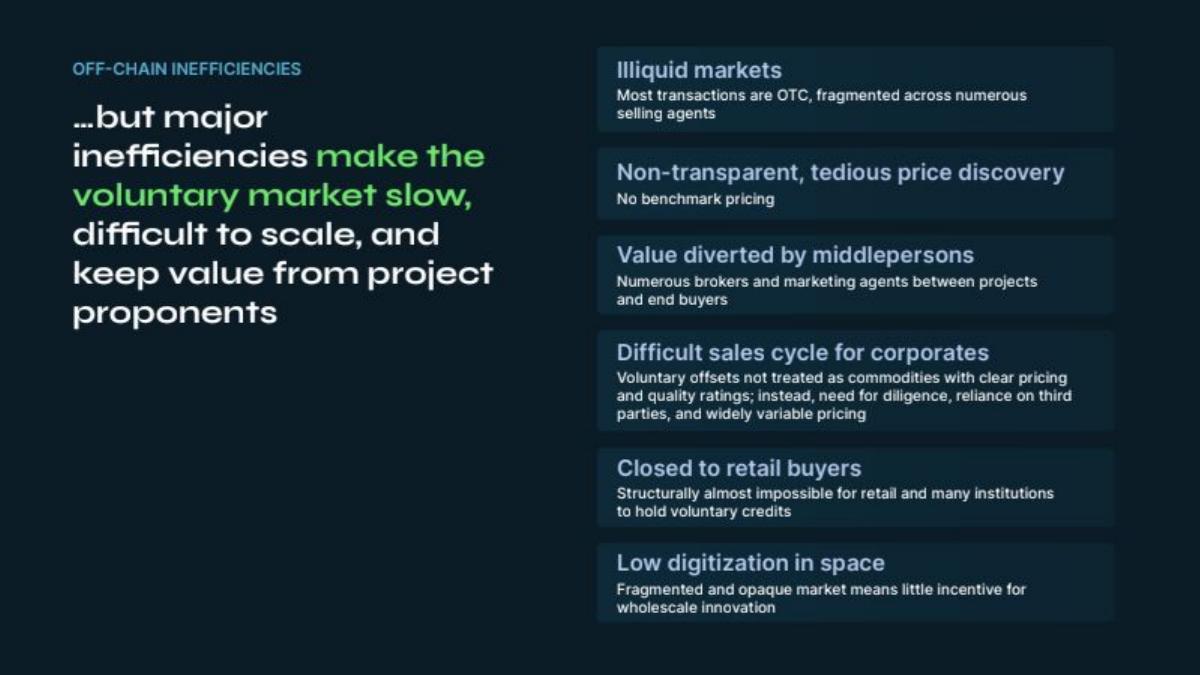
- Current off-chain markets suffer from illiquidity, non-transparent price discovery, and high middleman fees (Slide 6).
- On-chain carbon volume reached $2B in November 2021, doubling the YTD volume of the traditional market (Slide 8).
- The Goddess Nature Token (GNT) is backed 1:1 by live, 'unretired' carbon credits held in a bankruptcy-proof SPV (Slide 9).
- Flowcarbon uses a rolling five-year vintage period for its credits to ensure quality and relevance (Slide 10).
- The technical architecture allows for a two-way bridge: tokens can be retired for offsets or redeemed for physical credits (Slide 12).
- The platform utilizes ERC-20 standards, enabling integration with existing DeFi protocols and liquidity pools (Slide 15).
- The deck omits specific founder names and bios, referring only to a 'team comprised of blockchain experts' and 'experienced founders' (Slide 17).
Flowcarbon: A Masterclass in Market-First Narrative
The Flowcarbon deck, labeled as a Lite Paper , functions less like a traditional startup pitch and more like a technical manifesto for a new financial primitive. In 2022, the intersection of Web3 and ClimateTech was at its peak, and this deck perfectly captures that zeitgeist. By focusing on the massive inefficiencies of the $1B traditional carbon market and contrasting them with the $2B explosion of on-chain carbon in a single month, Flowcarbon built a compelling case for a $70M Seed round.
Slides 1-2: The Vision and the Primitive
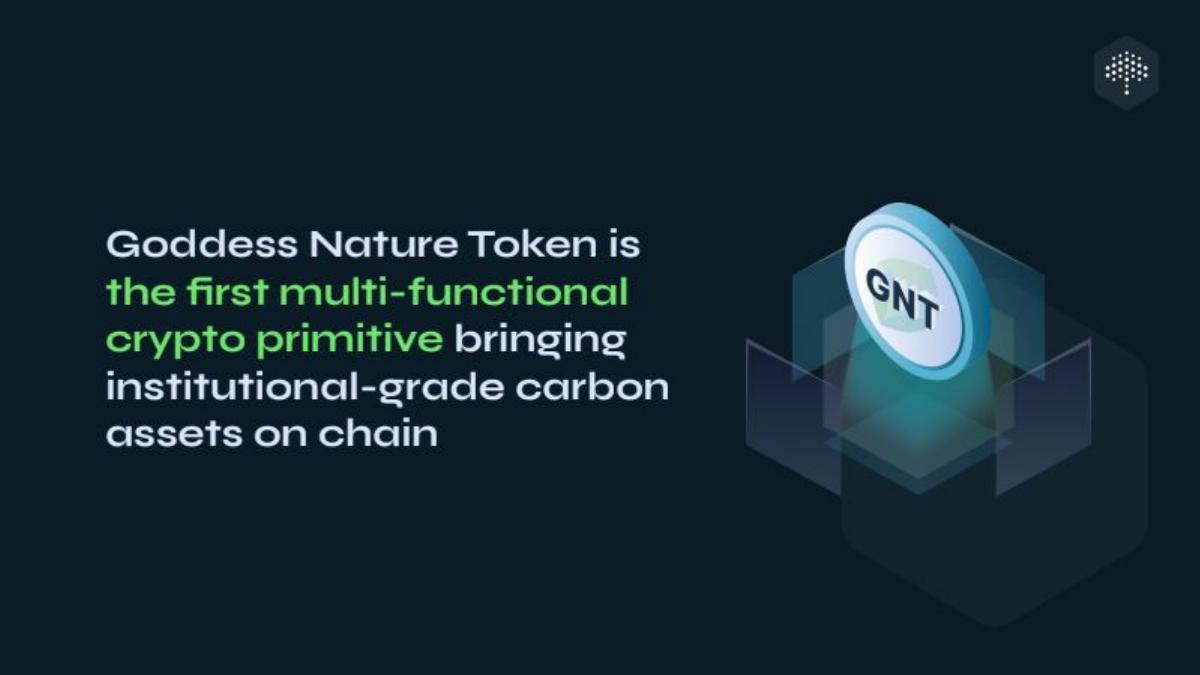
The deck opens with a minimalist title slide (Slide 1) and immediately introduces the Goddess Nature Token (GNT) on Slide 2. It defines GNT as the "first multi-functional crypto primitive bringing institutional-grade carbon assets on chain." This sets a high-level tone, signaling that the company is not just a marketplace, but an infrastructure provider for the next generation of environmental finance.
Slides 3-5: The Macro Opportunity
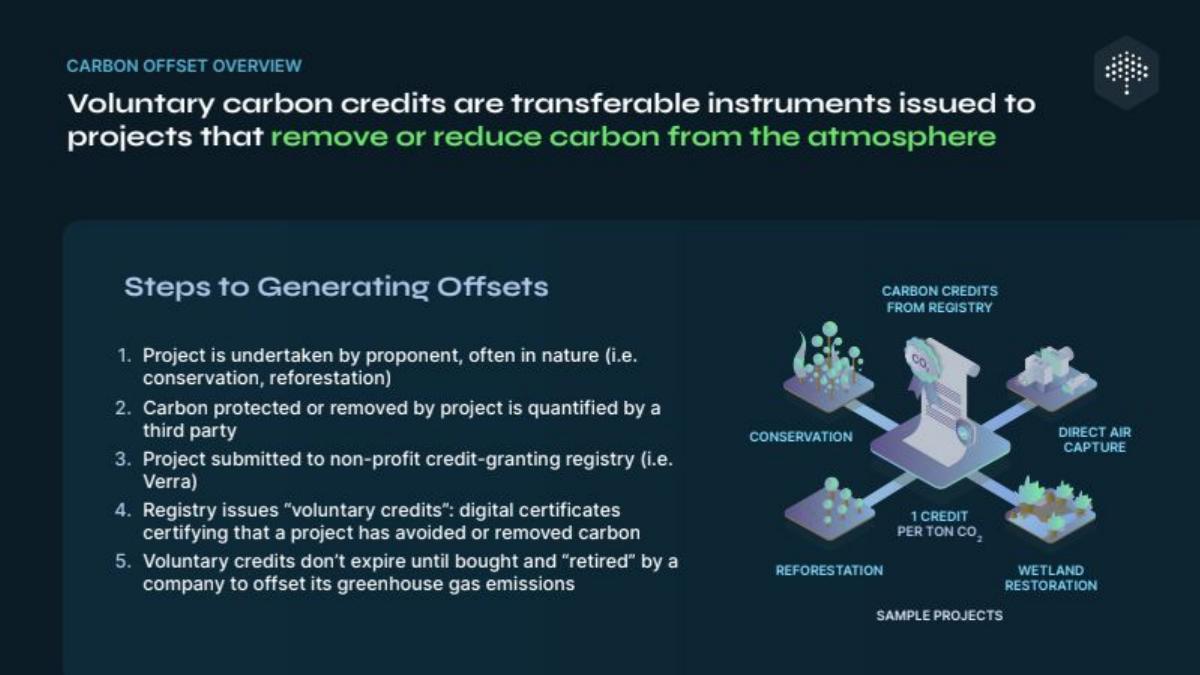
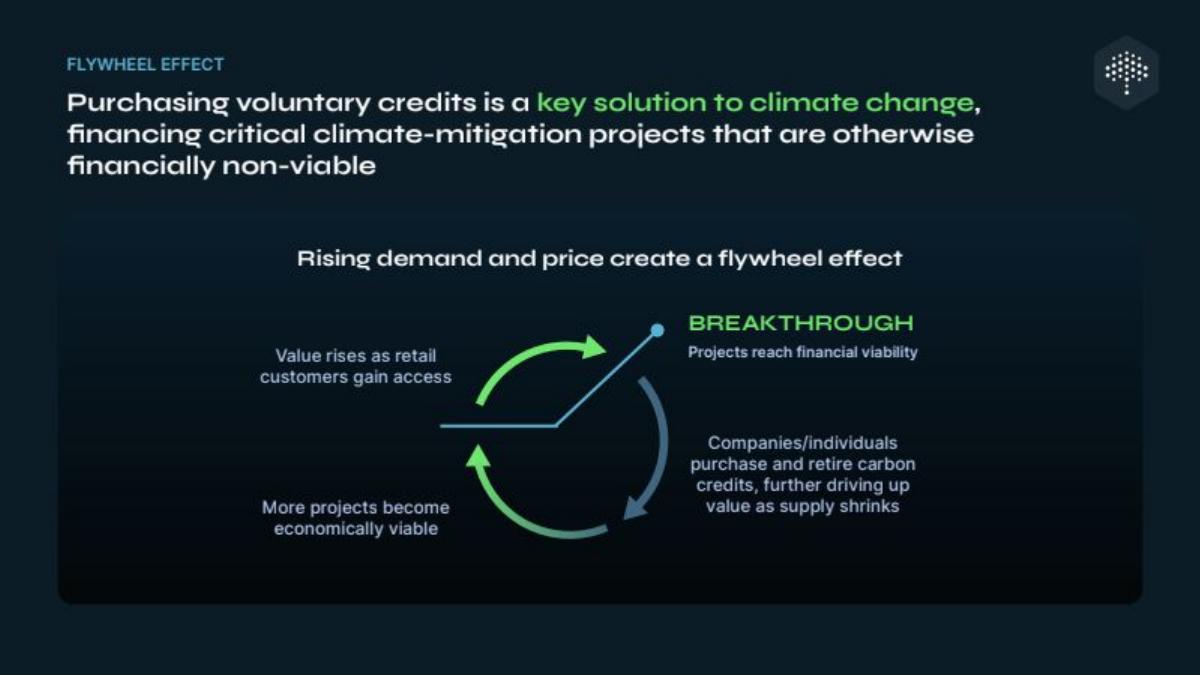
Slide 3 provides a necessary primer on carbon offsets, defining them as transferable instruments for projects that remove or reduce carbon. It lists sample projects like Direct Air Capture and Wetland Restoration . Slide 4 introduces the "Flywheel Effect," arguing that rising demand and price make more projects economically viable, which in turn creates a breakthrough for climate mitigation.
Slide 5 is the 'money slide' for investors. It cites data from the Taskforce on Scaling Voluntary Carbon Markets (sponsored by IIF and McKinsey) stating that demand for voluntary credits is set to grow 15x by 2030 . It highlights a massive jump in market size from $300M in 2018 to >$20B in 2030 . This 66x projected growth in market value is the primary hook for the $70M round.
Slides 6-8: The Friction and the Momentum
Slide 6 lists the "Off-Chain Inefficiencies" that plague the current market: illiquid OTC transactions, non-transparent price discovery, and value diverted by middlepersons. Slide 7 offers the solution: tokenization to create a liquid, transparent market.
Slide 8 provides the proof of concept. It notes that in November 2021 , the on-chain carbon market (led by Klima DAO) reached $2B , doubling the YTD volume of the traditional $1B off-chain market. However, Flowcarbon points out the flaws in existing on-chain efforts: they often use low-quality or already 'retired' credits. This positions Flowcarbon as the 'adult in the room' providing high-quality, live assets.
Slides 9-12: The GNT Deep-Dive
This section is the technical core of the deck. Slide 9 explains that GNT is backed 1:1 by voluntary carbon credits held in a bankruptcy-proof SPV managed by a professional third party. Slide 10 details the strict criteria for these credits: they must be nature-based, from registries like Verra , and from recent vintages (e.g., in 2022, only V17-V22 were eligible).
Slide 11 explains the pooling mechanism: individual projects are tokenized into GCO2 tokens , which are then wrapped into the fungible GNT . This mitigates project-specific risk. Slide 12 introduces the "two-way bridge," allowing users to Retire, Unwrap, or Redeem tokens. This is a critical feature for institutional trust, as it allows a token holder to exit the blockchain and claim the physical credit at any time.
Slides 13-16: Technical Architecture and Blockchain Advantage
Slide 13 provides a visual flow chart of the bridging process, from project to SPV to GNT bundle. Slide 15 offers a technical overview, confirming that GNT follows ERC-20 standards , making it compatible with DeFi protocols like liquidity pools and lending platforms. It also notes that the system is Audited by Quantstamp , a key trust signal in Web3 fundraising.
Slide 16 summarizes the "Blockchain Advantage," focusing on democratized access and price transparency. It claims that DeFi takes power away from traditional brokers and marketing agents, enabling anyone to buy carbon credits with permissionless borrowing and leverage.
Slides 17-20: The Team and Conclusion
Slide 17, "About the Flowcarbon Team," is surprisingly vague. It mentions the team is comprised of "blockchain experts, carbon market experts, environmentalists, and experienced founders," but it does not list a single name or previous company. While the catalogue facts mention Adam Neumann , his name is absent from the slides. This is a common tactic for founders with high-profile but controversial histories, relying instead on the strength of the institutional backing mentioned in the same slide.
The deck concludes with a call to action on Slide 18: "Climate change mitigation is now in your hands," followed by a standard legal disclaimer on Slide 19.
What Flowcarbon Does Well
The deck is exceptionally strong at market education . Carbon markets are complex, and tokenizing them adds another layer of difficulty. Flowcarbon uses clear diagrams (Slides 3, 4, 11, and 13) to explain how a physical tree becomes a digital token and eventually a retired offset.
It also excels at positioning . By acknowledging the success of early movers like Klima DAO but highlighting their quality issues (Slide 8), Flowcarbon defines itself as the premium, institutional-grade alternative. The focus on "bankruptcy-proof SPVs" and "Quantstamp audits" addresses the primary fears of traditional investors entering the crypto space.
What is Missing from the Deck
The most glaring omission is the Team Slide . For a $70M round, investors usually want to see the specific track records of the individuals executing the plan. The generic descriptions on Slide 17 suggest the round was sold on the strength of the lead investors (a16z) and the macro thesis rather than individual bios.
There is also a total lack of Unit Economics or Revenue Model . The deck explains how the token works, but not how Flowcarbon makes money. Does the company take a fee on the bridge? A management fee on the SPV? A spread on the GNT bundle? These are standard questions for a B2B SaaS or marketplace model that remain unanswered here.
Finally, there is no Go-To-Market (GTM) strategy . While Slide 17 mentions experience selling to museums and art galleries, there is no roadmap for how they will acquire the "2,000 companies" mentioned on Slide 5 that have announced net-zero ambitions.
Founder Takeaways
Use a 'Lite Paper' format for complex tech: If your product requires significant education, don't be afraid to lead with market mechanics. Flowcarbon spends 50% of the deck explaining the industry before showing the product. · Cite credible third-party data: The use of McKinsey and IIF projections on Slide 5 gives the $20B market claim an air of inevitability that is hard for investors to ignore. · Address the 'Why Now': Slide 8 uses the recent $2B surge in on-chain carbon to prove that the market is ready, even if the current solutions are flawed. · Build trust through audits: In any Web3 or fintech play, mentioning third-party auditors (like Quantstamp on Slide 15) is non-negotiable for institutional rounds.
Frequently asked questions
- What is the Goddess Nature Token (GNT)?
- GNT is Flowcarbon's primary crypto primitive. As described on slide 11, it represents a claim on a pool of carbon credit assets. Individual projects are tokenized into GCO2 tokens, which are then wrapped into the fungible, liquid GNT token. This structure is designed to mitigate project-level risk by offering diversified exposure to the carbon market.
- How does Flowcarbon ensure the quality of its carbon credits?
- According to slide 10, the company enforces strict criteria: credits must be from one of four market-recognized registries (like Verra), must be nature-based (reforestation, conservation), and must fall within a rolling five-year vintage window. This ensures that the underlying assets are both environmentally impactful and commercially relevant to corporate buyers.
- What problem does blockchain solve in the carbon market?
- Slide 16 outlines four key advantages: democratized access (removing gatekeepers), price transparency (rapid price discovery), decentralized innovation (interoperability with DeFi), and impact accountability (smart contracts providing full transparency). The deck argues that these features unlock the speed and scale necessary to finance 'planet-saving projects' that are currently non-viable.
- What are the 'two-way bridge' mechanics mentioned in the deck?
- Slide 12 explains that GNT holders have three options: they can 'Retire' the token to claim a carbon offset, 'Unwrap' it to get a specific project token (GCO2), or 'Redeem' it for the actual off-chain unretired carbon credit. This flexibility ensures that the token maintains a direct link to real-world utility and physical assets.
- Who are the investors and how much was raised?
- While the deck itself mentions being 'backed by leading institutional investors' on slide 17, the catalogue facts confirm Flowcarbon raised $70M in a 2022 Seed round. The investor list includes high-profile names such as a16z (Andreessen Horowitz), Samsung Next, and Invesco.