Persona raised $150M in 2021 for its Series C round using a 12-slide deck that prioritizes vision and social proof over granular financial data. The deck positions Persona as 'trusted identity infrastructure' rather than a simple KYC tool. It leans heavily on the pedigree of its leadership team (ex-Dropbox, Square, Coursera) and a blue-chip investor roster including Founders Fund and Index Ventures. While the deck lacks traditional metrics like ARR or churn, it compensates with a powerful list of enterprise customers like Square and Brex, and testimonials claiming a 2x increase in conversion…
Key takeaways
- The leadership team highlights deep experience from Dropbox, Square, Coursera, and LinkedIn on slide 2.
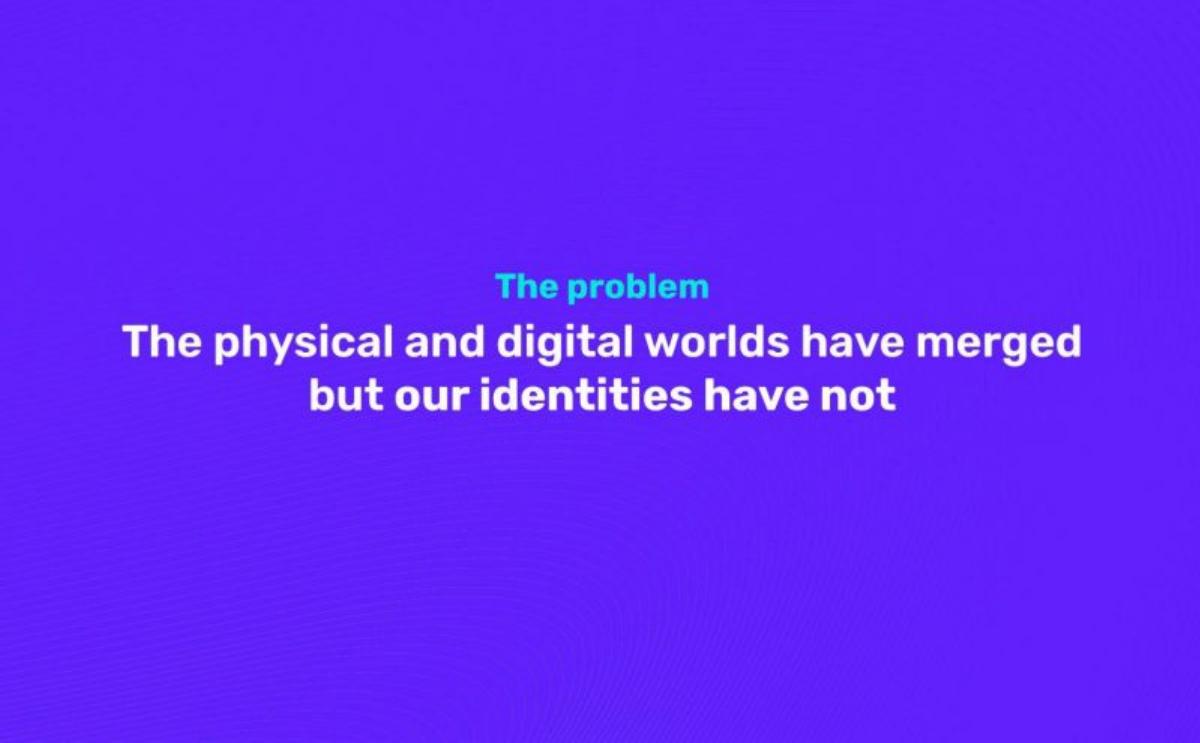
- The company identifies a core market shift: the merger of physical and digital worlds without a corresponding merger of identities (slide 3).
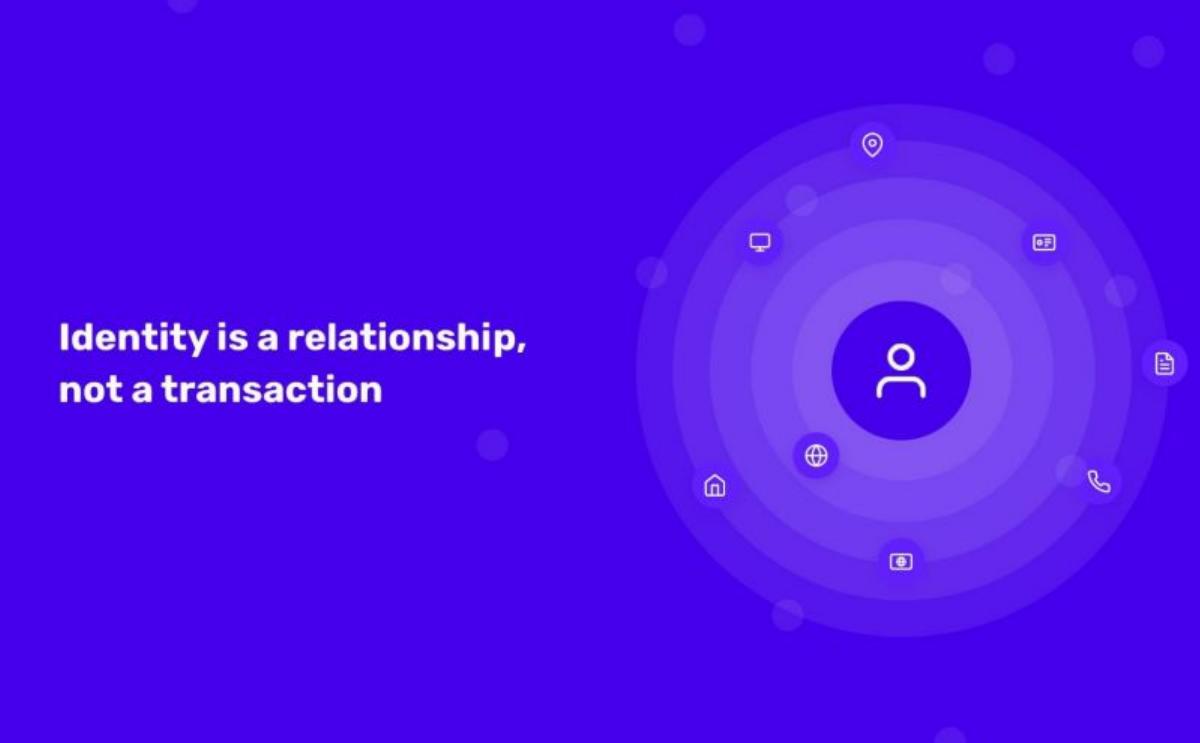
- Persona frames identity as a 'relationship, not a transaction,' signaling a move away from one-off verification toward lifecycle management (slide 6).
- The deck explicitly calls out the failure of 'one size fits all' approaches in a fragmented market covering KYC, AML, and account recovery (slide 7).
- A competitive matrix positions Persona as the only solution offering both high flexibility and high ease of implementation (slide 8).
- The product is presented as a modular API with 'building blocks' for both customer-facing and operational workflows (slide 9).
- Social proof is a primary driver, showcasing 12 major logos across lending, crypto, and edtech on slide 10.
- Quantifiable impact is shown through a customer testimonial stating that conversion rates doubled after switching to Persona (slide 11).
The Narrative Strategy of a Series C Powerhouse
The Persona Series C pitch deck is an exercise in restraint. By the time a company reaches a $150M Series C led by the likes of Founders Fund and Coatue, the 'pitch' is often a formality to align on vision, as the hard data has already been scrutinized in the due diligence phase. This 12-slide deck reflects that reality. It doesn't lead with revenue charts; it leads with a philosophical argument about the nature of identity in a digital-first world.
Slide 1: The Identity Infrastructure Thesis
The cover slide establishes the brand's minimalist aesthetic and core tagline: "Trusted identity infrastructure for any use case." The use of the word "infrastructure" is a deliberate choice. It suggests that Persona is not just an application or a tool, but a foundational layer upon which other businesses are built. This positioning is critical for achieving the high valuation multiples associated with platform plays rather than simple SaaS tools.
Slide 2: Pedigree and Backing
Slide 2 is a 'trust' slide. It splits the screen between the leadership team and the investor base. The leadership section features Charles Yeh (CTO), Rick Song (CEO), and Christie Kim (COO) , with logos from Dropbox, Square, Coursera, and LinkedIn . This establishes immediate founder-market fit. Below, the investor list is a 'who's who' of Silicon Valley, featuring Bond, Coatue, First Round, Founders Fund, Index Ventures, Insight Partners, and Meritech . The right side of the slide provides quick scale indicators: Founded in Oct 2018 , headquartered in San Francisco , and 80+ Employees .
Slides 3-5: The Macro Problem and Vision
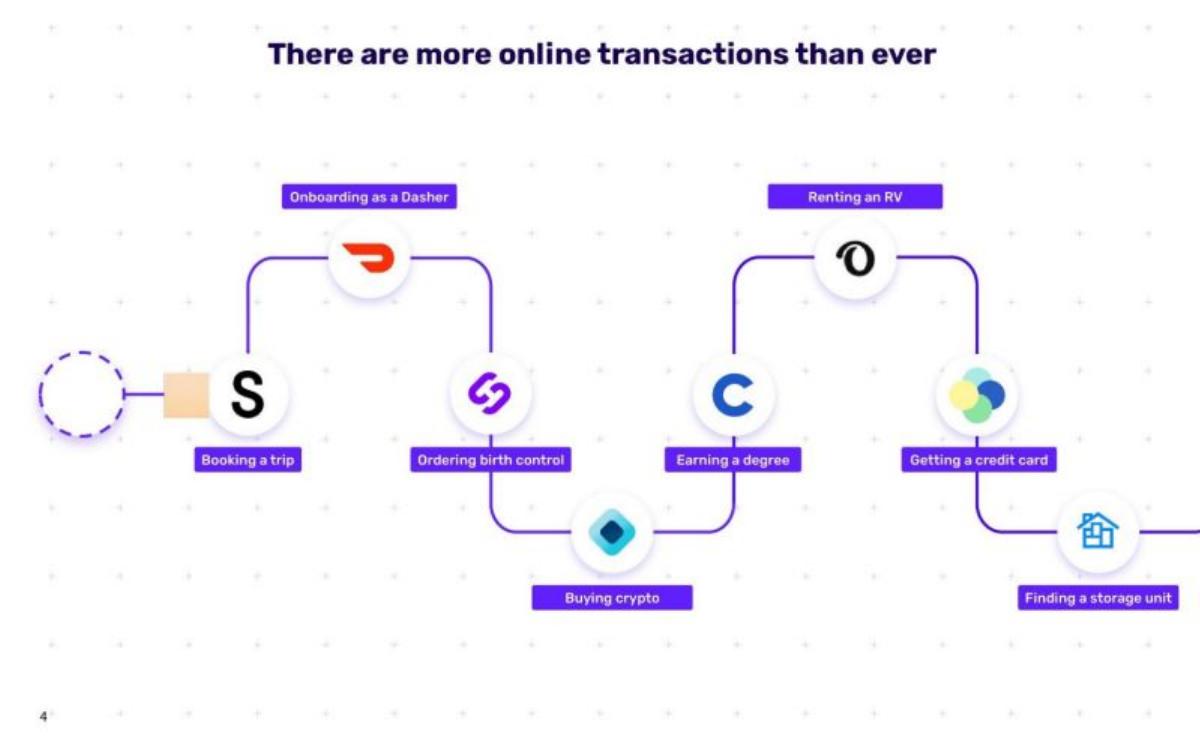
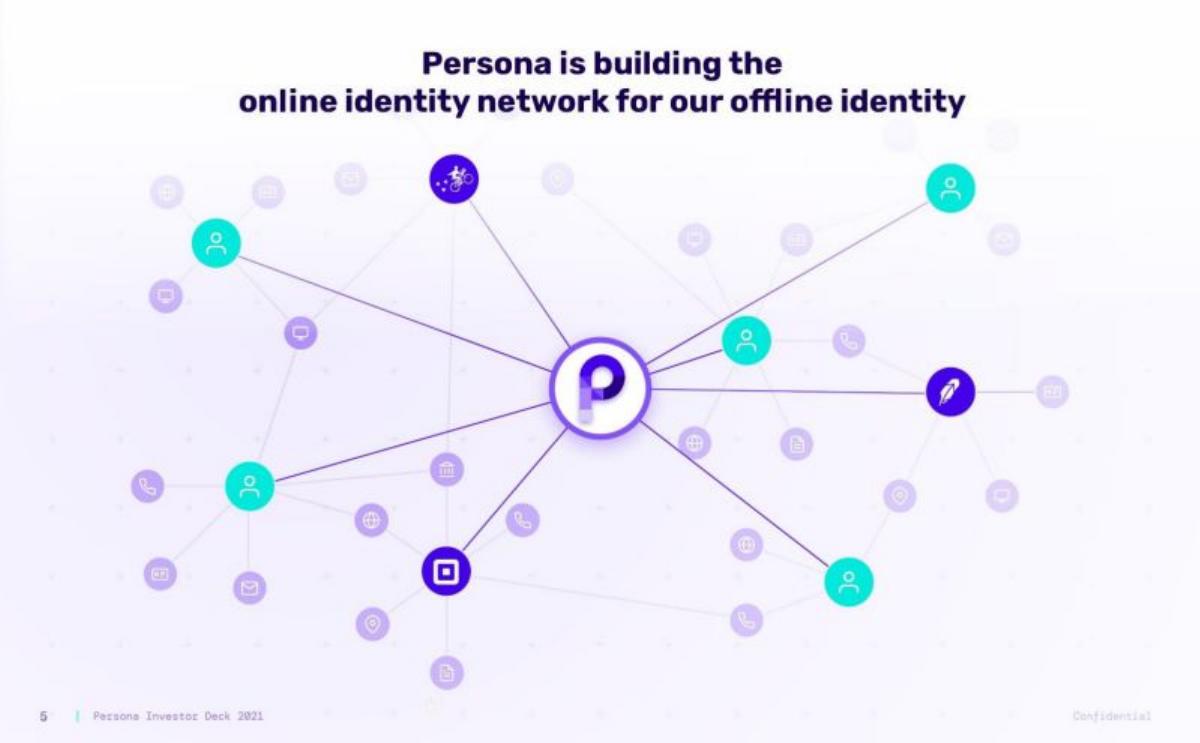
Persona uses a three-slide sequence to build its case. Slide 3 states the problem: "The physical and digital worlds have merged but our identities have not." Slide 4 visualizes the complexity of modern life through a journey of online transactions, including "Onboarding as a Dasher," "Buying crypto," and "Renting an RV." This illustrates that identity is no longer just about a passport; it's about a series of disparate digital actions. Slide 5 introduces the solution: "Persona is building the online identity network for our offline identity," shown as a hub-and-spoke model connecting various services to a central Persona core.
Slides 6-7: Redefining the Category
Slide 6 contains a single, powerful sentence: "Identity is a relationship, not a transaction." This is the deck's most important pivot. Most identity verification (IDV) companies are transactional—you pay per check. Persona is arguing for a long-term relationship model. Slide 7 reinforces this by showing the fragmentation of the market. It lists KYC, Fraud Prevention, Underwriting, Authentication, Account Recovery, Data Governance, Escalating privileges, High risk transactions, Onboarding, and BSA/AML . The message is clear: the old 'one size fits all' approach is dead, and a fragmented market requires a unified infrastructure.
Slide 8: The Competitive Landscape
The competitive matrix on slide 8 is standard but effective. It plots Ease of Implementation against Flexibility . Persona places itself in the top-right quadrant. It positions Single Point Solutions as easy to implement but inflexible, In-house Solutions as flexible but difficult to build, and All-in-one Solutions as a mediocre middle ground. Persona claims to offer the best of all worlds.
Slide 9: Product Architecture
Slide 9 provides a high-level look at the product. It shows an API layer sitting above Customers (onboarding screens) and Operations (internal dashboards), all built on a modular Infrastructure . To the right, it lists the "building blocks": Address Lookup, Adverse Media, Business Lookup, Email Risk, PEP List, Phone Number Risk, Social Media, and Watchlists . This slide explains how the flexibility mentioned on the previous slide is actually delivered—through a modular, API-first approach.
Slides 10-11: Social Proof and Results
Slide 10 is a logo wall that proves the "universal" nature of the product. It features 12 major companies across diverse sectors, including Square (Lending), Brex (Credit), Coursera (EdTech), and BlockFi (Crypto) . Slide 11 provides the qualitative and quantitative proof. A testimonial from Maria A. at BlockFi states that "our conversation rate has doubled" since switching to Persona. Another from Liam D. at Sonder mentions a "massive reduction in customer service requests." These are high-impact results that move the needle for enterprise buyers.
What Works in This Deck
Strong Narrative Arc: The deck moves logically from a high-level philosophical problem to a specific infrastructure solution, backed by massive social proof. · Pedigree as a Proxy for Data: By highlighting ex-Square and ex-Dropbox leadership alongside top-tier VCs, the deck signals that the "smart money" has already vetted the unit economics. · Category Creation: Persona successfully moves the conversation from "ID verification" to "Identity Infrastructure," which justifies a much larger market cap. · Visual Simplicity: The deck is uncluttered, using a consistent purple-and-white theme that feels modern and professional.
What Is Missing
Financial Metrics: There is zero mention of Revenue, ARR, Gross Margin, or Burn. While common in late-stage decks, it makes the deck less of a standalone document and more of a conversation starter. · Market Size (TAM): The deck assumes the investor already knows the identity market is huge. It doesn't provide a specific dollar amount for the Total Addressable Market. · The "Ask": There is no slide detailing how much they are raising or what the funds will be used for. (We know from the catalogue facts it was $150M, but it isn't in the slides). · Roadmap: The deck focuses entirely on what Persona is today. It doesn't show a 3-5 year product roadmap or vision for future expansion.
What Founders Should Copy
The "Relationship vs. Transaction" Frame: If you are in a commoditized market, find a way to reframe your service as a long-term relationship or essential infrastructure. Modular Product Visualization: Slide 9 is a great way to show a complex API product. It breaks the tech down into "building blocks" that are easy for a non-technical investor to understand. Specific Testimonials: Don't just use quotes that say "we love this product." Use quotes that cite specific business outcomes, like "doubled conversion rates" or "reduced service requests." Logo Categorization: Instead of a random pile of logos, slide 10 categorizes them by industry. This proves the product is truly horizontal and can scale across the entire economy.
Frequently asked questions
- What is Persona's core value proposition?
- Persona positions itself as 'trusted identity infrastructure for any use case' (slide 1). Unlike point solutions that only handle one-time KYC checks, Persona offers a customizable framework that handles the entire identity lifecycle, from onboarding and fraud prevention to account recovery and data governance (slide 7).
- Who are the key investors in Persona?
- According to slide 2, Persona's cap table includes high-profile venture capital firms such as Bond, Coatue, First Round Capital, Founders Fund, Index Ventures, Insight Partners, and Meritech. This level of institutional backing is a significant signal of market fit and growth potential for a Series C round.
- How does Persona differentiate itself from competitors?
- On slide 8, Persona uses a 2x2 matrix to compare itself against 'Single Point Solutions,' 'All-in-one Solutions,' and 'In-house Solutions.' It claims to occupy the top-right quadrant, offering the highest level of 'Flexibility' combined with the highest 'Ease of Implementation.'
- What specific industries does Persona serve?
- Slide 10 demonstrates that Persona's platform is 'universal across use cases.' It lists specific customers in Lending (Square, Petal), Credit (Brex), Digital Pharmacy (SimpleHealth), Hospitality (Sonder), EdTech (Coursera, Udemy), Fintech (AngelList), Crypto (BlockFi), Home Viewing (Rently), HR (Rippling), and Marketplaces (Outdoorsy).
- What metrics are included in the deck?
- The deck is notably light on internal financial metrics. It mentions having '80+ Employees' (slide 2) and cites a customer testimonial from BlockFi stating their 'conversation rate has doubled' since switching to Persona (slide 11). However, it omits standard Series C data such as ARR, net dollar retention, or customer acquisition costs.