Perplexity AI’s Series B deck is an anomaly in the world of venture capital, consisting of only five slides to secure $73.6M. The presentation focuses almost exclusively on the 'Problem' and 'Solution' through a direct comparison of traditional search versus their AI-driven 'Answer' engine. By highlighting the friction of sponsored links and SEO-bloated content, Perplexity positions itself as the 'world’s best research assistant.' The deck lacks traditional components such as a team slide, financial projections, market sizing, or a formal 'Ask.' However, the strength of the product vision and…
Key takeaways
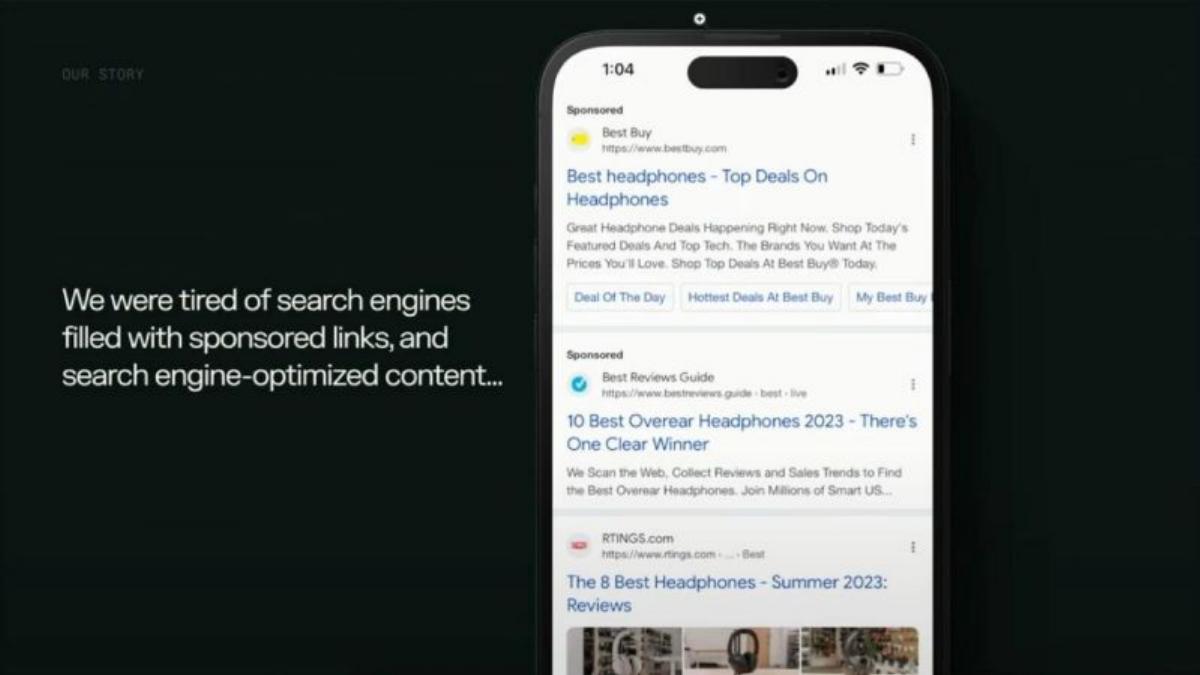
- The deck identifies the core problem as search engines being 'filled with sponsored links, and search engine-optimized content' on Slide 1.
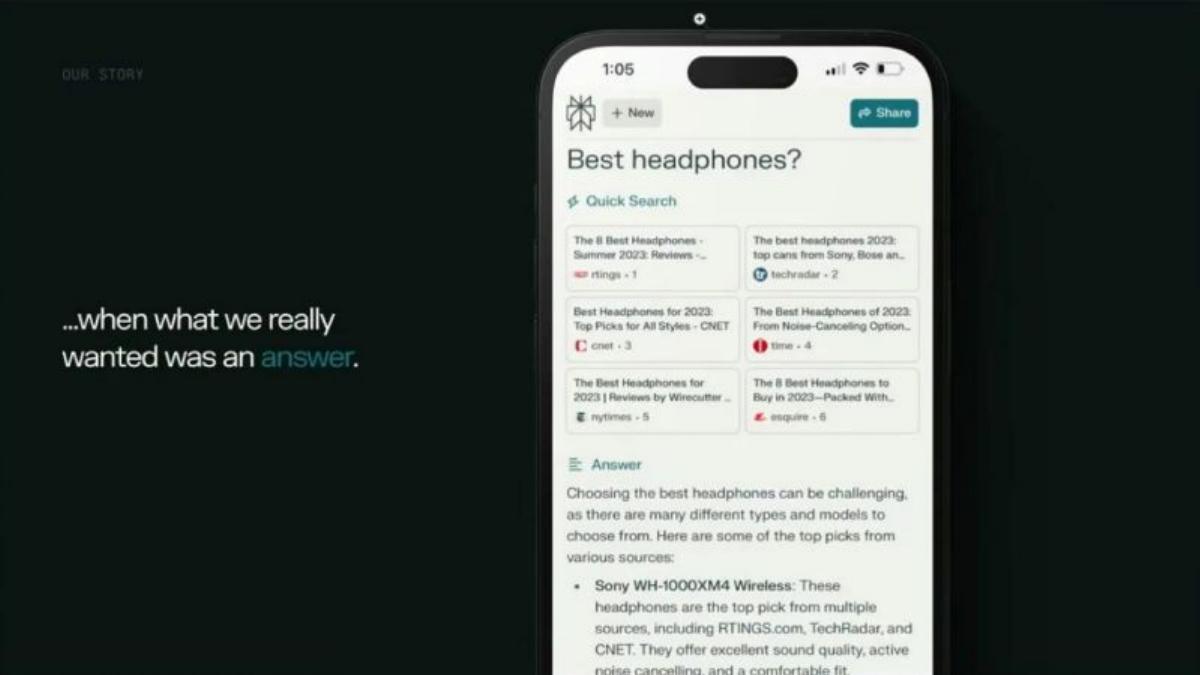
- Perplexity defines its value proposition not as a list of links, but as providing a direct 'answer' on Slide 2.
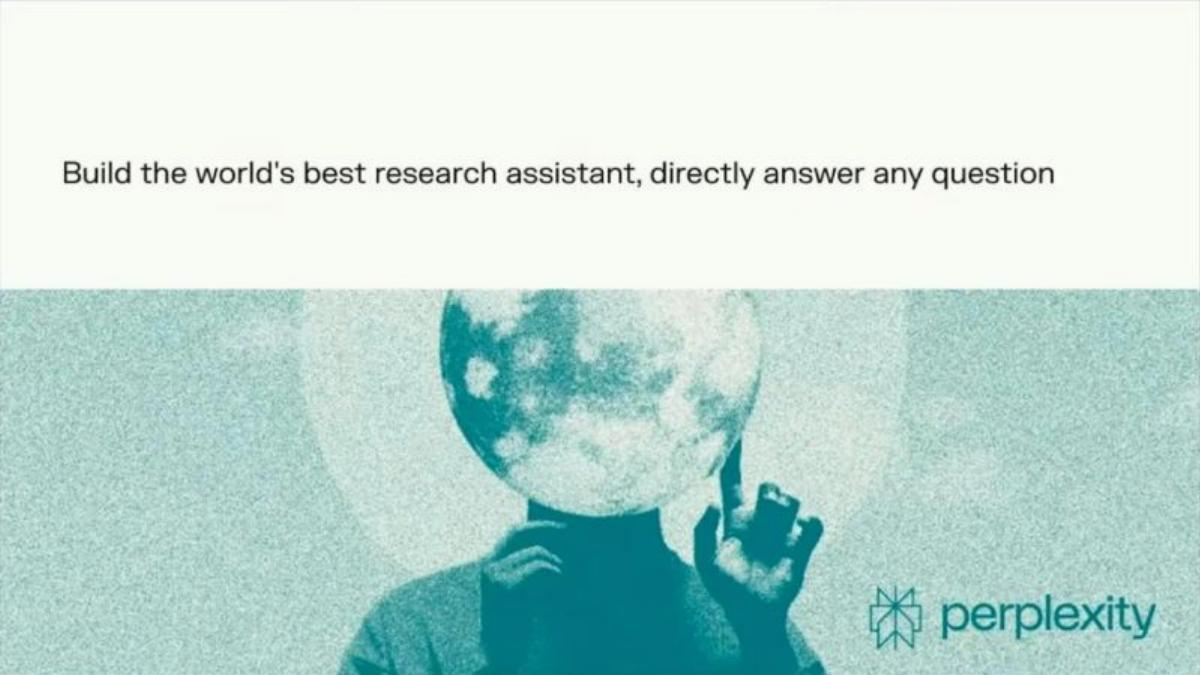
- The mission statement is explicitly stated as building the 'world’s best research assistant' on Slide 3.
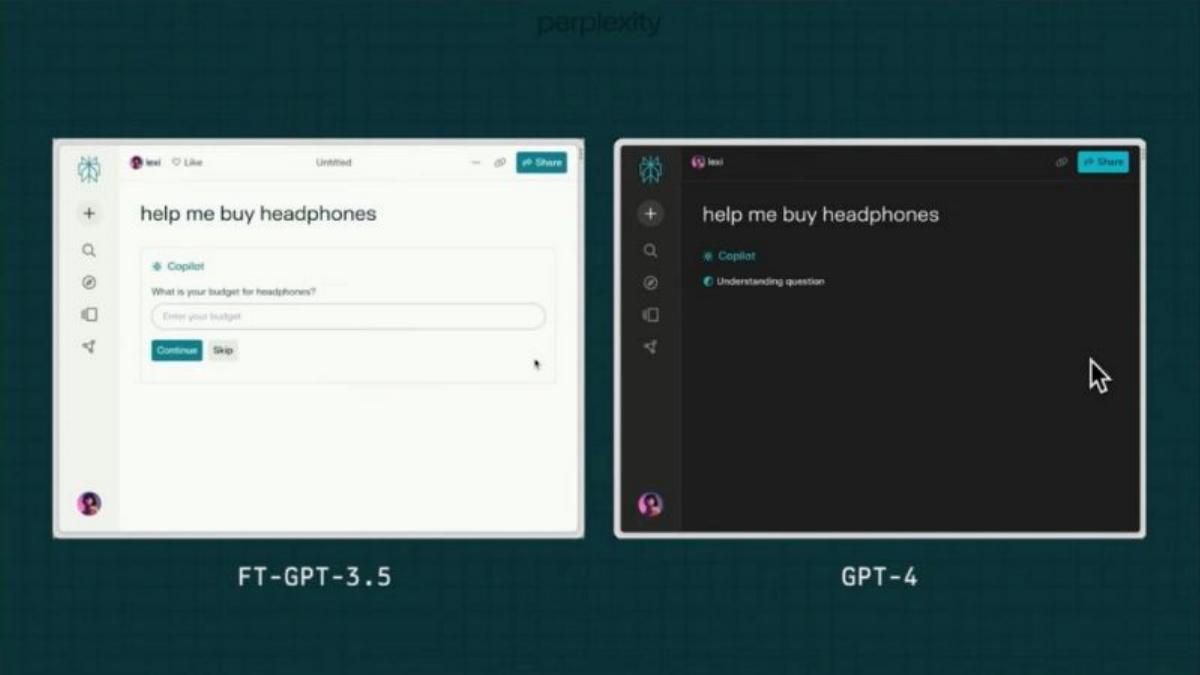
- The product demonstrates multi-model flexibility, showing interfaces for both 'FT-GPT-3.5' and 'GPT-4' on Slide 4.
- The deck omits all traditional business metrics, including user growth, revenue, and churn.
- There is no team slide, despite the company having significant pedigree in the AI space.
- The presentation contains no competitive landscape analysis or market size (TAM) calculations.
- The final slide in the provided sequence is a third-party promotional slide and not part of the core Perplexity narrative.
The 5-Slide Series B: Perplexity AI’s Minimalist Pitch
Perplexity AI’s Series B deck is a masterclass in restraint. Raising $73.6M in a round led by IVP, with participation from NVIDIA and Jeff Bezos, usually requires a mountain of data. Instead, Perplexity delivered a 5-slide narrative that focuses entirely on the user experience. This teardown examines how they leveraged a simple 'Old vs. New' framework to disrupt the most entrenched market in tech: Search.
Slide 1: The Problem of Search Friction
The deck opens with a slide titled 'OUR STORY.' It features a mobile mockup of a traditional search engine result page. The text is blunt: 'We were tired of search engines filled with sponsored links, and search engine-optimized content...'
This slide is effective because it identifies a universal frustration. By showing a screen cluttered with 'Sponsored' tags from Best Buy and '10 Best' listicles, Perplexity isn't just pitching a product; they are airing a common grievance. They define the enemy not as a specific company, but as a degraded user experience. The use of a mobile mockup grounds the problem in the device where most search happens today.
Slide 2: The Solution as an 'Answer'
Slide 2 completes the 'Our Story' arc. The text reads: '...when what we really wanted was an answer.' The accompanying mockup shows the Perplexity interface. Instead of a list of blue links, the user sees a curated list of sources and a concise, synthesized 'Answer' regarding 'Best headphones?'
This is a classic 'Before and After' technique. Slide 1 showed the noise; Slide 2 shows the signal. Note the specific UI elements highlighted: a 'Quick Search' box with sources like RTINGS, TechRadar, and CNET, followed by a bulleted summary. This slide proves that the product exists and functions as a 'research assistant' rather than a mere link-aggregator.
Slide 3: The Vision Statement
Slide 3 transitions from the 'what' to the 'why.' Against a surrealist background of a figure with a moon for a head, the text states the mission: 'Build the world’s best research assistant, directly answer any question.'
This is the 'North Star' slide. It elevates the pitch from a utility tool to a grand ambition. By using the term 'research assistant' instead of 'search engine,' Perplexity avoids a direct head-to-head comparison with Google's advertising business model and instead carves out a new category of productivity software. The branding here is clean, professional, and distinct from the 'tech-heavy' aesthetic of many AI startups.
Slide 4: Model Flexibility and Product Depth
Slide 4 provides a glimpse into the technical flexibility of the platform. It shows two side-by-side interfaces labeled 'FT-GPT-3.5' and 'GPT-4.' The user prompt is 'help me buy headphones,' and the UI shows a 'Copilot' feature asking for a budget.
This slide serves two purposes. First, it shows that Perplexity is not a 'wrapper' for a single model; it is a platform that can leverage different LLMs (Large Language Models) depending on the task. Second, it introduces the 'Copilot' functionality, which suggests a conversational, multi-step interaction. This moves the product beyond a simple Q&A box into a proactive assistant that asks clarifying questions ('What is your budget for headphones?').
Slide 5: The Missing Pieces
The fifth slide in this sequence is a promotional slide for the deck library itself, meaning the actual Perplexity presentation ends at Slide 4. This is where the teardown must address what is not there.
Team Slide: There is no mention of the founders' backgrounds at OpenAI or Meta. · Traction/Metrics: There are no charts showing Monthly Active Users (MAU), query growth, or retention rates. · Business Model: The deck does not explain how Perplexity intends to make money (e.g., Pro subscriptions or B2B API access). · Market Size: There is no TAM/SAM/SOM analysis. · Competition: There is no mention of Google, Bing, or ChatGPT. · The Ask: There is no slide stating how much they are raising or how the funds will be used.
What Founders Should Copy
1. The 'Problem/Solution' Contrast: Perplexity spends 40% of its deck just showing the difference between the current state of the world and their vision. If your product solves a visceral pain point, show the pain first.
2. UI-First Storytelling: Instead of listing features in bullet points, Perplexity shows the product in action. The mockups are clean and focus on the output the user cares about.
3. Categorical Positioning: By calling themselves a 'research assistant,' they change the criteria by which they are judged. They aren't a 'worse search engine' because they don't have ads; they are a 'better assistant' because they don't have ads.
Final Analysis
The Perplexity AI Series B deck is a 'teaser' or 'vision' deck. It is highly probable that this was the introductory deck used to secure the first meeting, followed by a much deeper dive into the data room. However, its success proves that at the Series B level, if your product has captured the zeitgeist and your narrative is tight, you don't need a 20-slide deck to generate interest from the world's top investors. The clarity of the 'Answer' vs. 'Links' argument was enough to anchor a $73.6M round.
Frequently asked questions
- How did Perplexity raise $73.6M with only 5 slides?
- In high-momentum sectors like Generative AI, the product's utility often speaks louder than a 20-page deck. Perplexity focused on the visceral frustration users feel with Google Search. By showing a side-by-side comparison of the 'old way' (ads and SEO) versus the 'new way' (direct answers), they established a clear product-market fit narrative that resonated with sophisticated investors like IVP and NEA.
- Why are there no financial or growth metrics in this deck?
- For a Series B, the absence of metrics is unusual. It is highly likely that a full data room existed behind this presentation. This deck functions as a 'vision deck'—a high-level narrative used to anchor the conversation around the product experience rather than the spreadsheet. It assumes the investor is already aware of the explosive growth trends in AI search.
- What is the significance of showing GPT-3.5 and GPT-4 on Slide 4?
- This slide highlights Perplexity's role as an orchestrator of models. By showing both versions, they demonstrate that their value lies in the user interface and the 'Copilot' research layer, rather than being tied to a single underlying LLM. This mitigates the risk of being perceived as just a 'wrapper' by showing how they integrate different levels of compute for different user needs.
- Is the lack of a team slide a mistake?
- In this specific case, no. The founders of Perplexity (Aravind Srinivas, Denis Yarats, Johnny Ho, and Andy Konwinski) have backgrounds at OpenAI, Meta, and Quora. In the tight-knit Silicon Valley AI community, their pedigree was likely a known quantity. For most founders, however, omitting the team slide is a critical error that should be avoided.
- What can early-stage founders learn from this minimalist approach?
- The primary lesson is the power of the 'Problem/Solution' gap. Perplexity doesn't describe their technology; they describe the user's relief. If you can make an investor feel the pain of the current status quo (Slide 1) and the elegance of your solution (Slide 2), you have won half the battle. However, most founders will still need the 'missing' slides to prove execution capability.