Peoplewave’s pitch deck is a masterclass in brevity, designed for a three-minute presentation window. The company addresses the $12.59 billion HR software market by targeting the emotional and functional failures of traditional performance reviews. By March 2018, the startup had already secured 100 SME sign-ups and 45 pilot customers with a remarkably low customer acquisition cost (CAC) of $45. The deck is highly specific, requesting a final $100,000 to close out their seed round while simultaneously pitching for new pilot customers with 50 to 5,000+ employees. While it lacks a detailed finan…
Key takeaways
- The company identifies a massive market opportunity, citing a global market size of $12.59 billion in 2016 with a 9.6% CAGR (Slide 4).
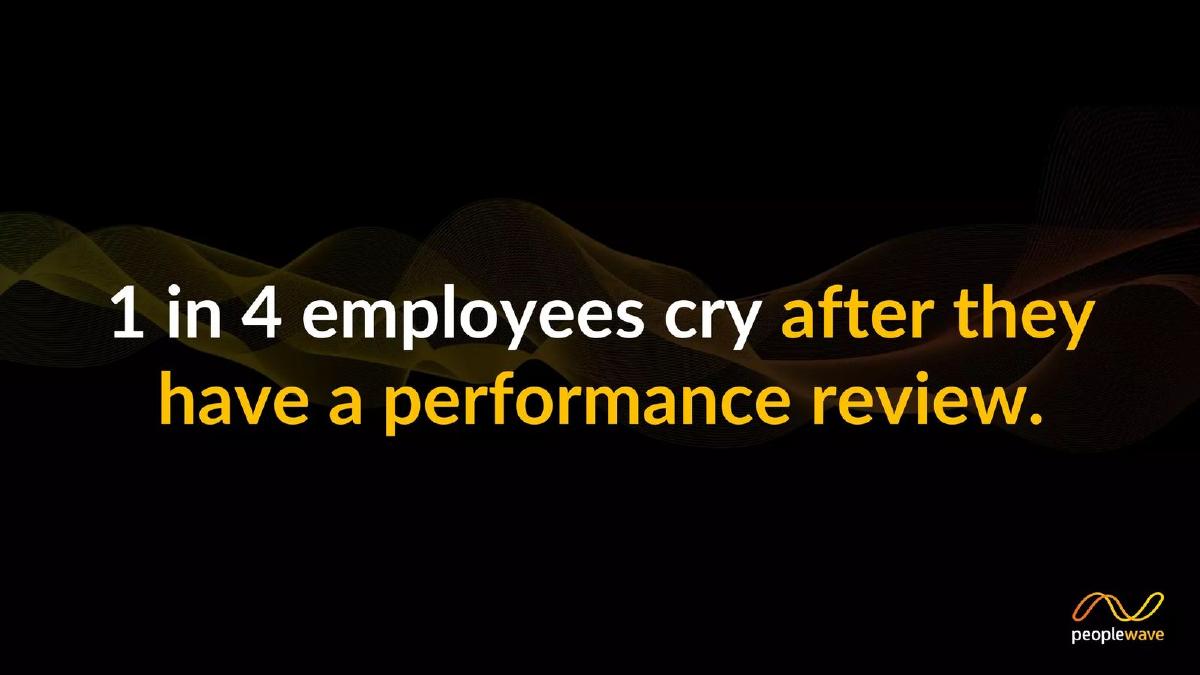
- Peoplewave uses emotional hooks to define the problem, stating that 1 in 4 employees cry after performance reviews (Slide 3).
- The startup demonstrates significant early traction with 100 SME sign-ups and 45 pilot customers achieved between November and January (Slide 7).
- A highly efficient customer acquisition cost (CAC) of $45 is highlighted as a primary growth metric (Slide 7).
- The product suite is clearly divided into 'First 100 Days' for onboarding and 'Performance Wave' for appraisals, both of which were in-market by March 2018 (Slide 6).
- The 'HR Command Centre' analytics tool was positioned as a future value driver with a 'Coming 2018' launch date (Slide 6).
- The funding ask is extremely specific, seeking the 'last USD $100,000' of their seed round (Slide 8).
- The team is led by a digital marketing expert and a technology leader, though the deck lacks a dedicated slide for the full team's pedigree (Slide 5).
Introduction and Vision
The Peoplewave pitch deck, dated March 2018, is a concise 16-slide presentation (with 8 key slides provided for this analysis) that positions the company as a disruptor in the human resources software space. The cover slide (Slide 1) immediately establishes the brand identity: 'Cloud-based HR Software' focusing on onboarding, data-driven appraisals, and people analytics. The tagline, 'Putting People First in People Management,' suggests a shift away from administrative-heavy legacy systems toward employee-centric design.
The Emotional and Market Problem
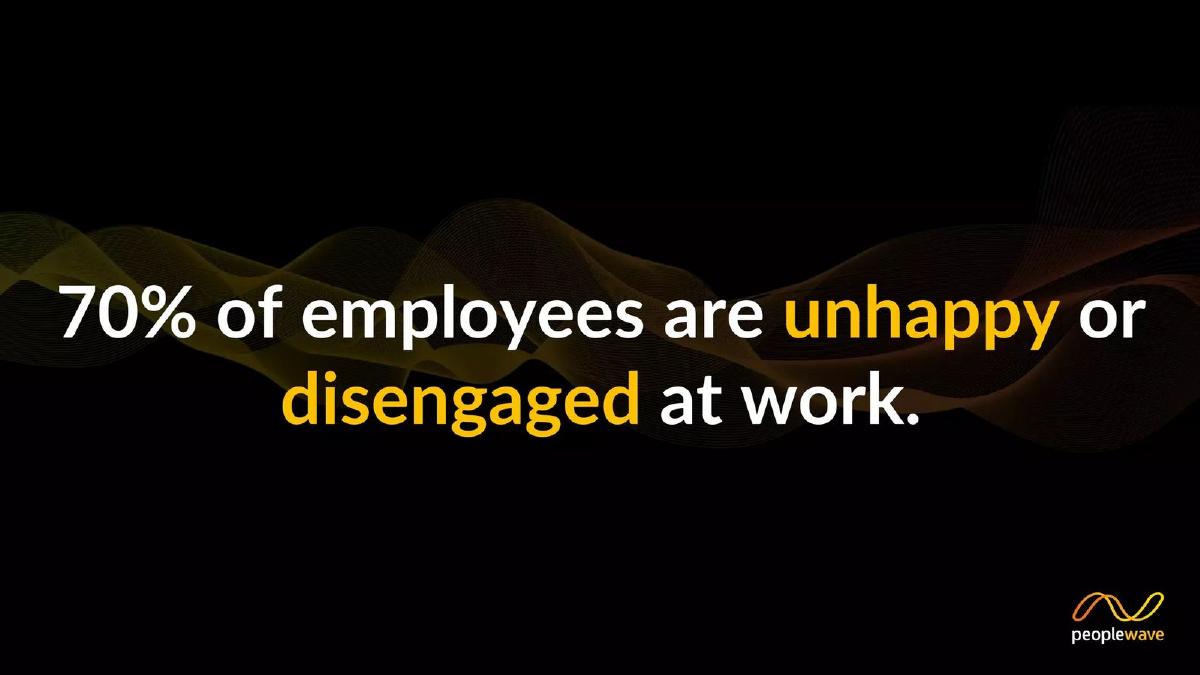
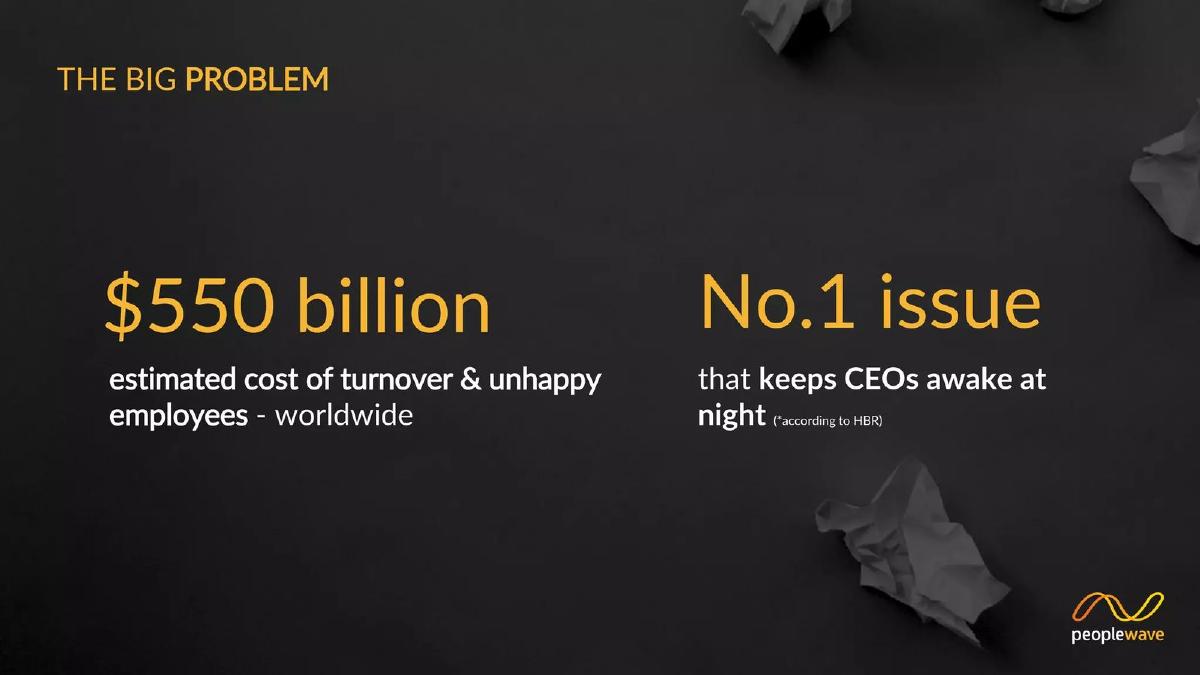
Peoplewave utilizes a 'shock and awe' approach to problem identification. Slide 2 and Slide 3 present two stark statistics: 70% of employees are unhappy or disengaged, and 1 in 4 employees cry after performance reviews. By leading with the emotional toll of bad management, Peoplewave creates a narrative that their software isn't just a utility, but a necessary cultural intervention. This is a common tactic in HR tech to justify why existing giants like Workday or SAP aren't solving the 'human' element of HR.
Slide 4 transitions from the emotional to the economic. It cites a global market size of $12.59 billion in 2016 , projected to reach $19.88 billion by 2021 . The 9.6% CAGR (Compound Annual Growth Rate) provides the necessary 'Big Problem, Big Opportunity' context that venture capitalists look for to ensure the market is large enough to support a unicorn-scale exit.
Company Profile and Product Suite
Slide 5 provides a snapshot of the company's status as of early 2018. Founded in Singapore in January 2017, the company grew to 17 employees in just over a year. The slide identifies the founders: Damien Cummings (CEO) and Phil Aldridge (CTO) . While this slide gives the basics, it lacks the deep 'why us' pedigree often found in longer decks, such as previous successful exits or specific industry awards.
Slide 6 details the 'Peoplewave Products.' The company offers a multi-modular approach:
First 100 Days: A mobile-optimized onboarding tool for new hires. · Performance Wave: A data-driven 360-degree review tool. · HR Command Centre: A centralized analytics dashboard with competitor benchmarking (listed as 'Coming 2018').
The visual representation of the software across mobile and desktop devices on Slide 6 demonstrates a modern UI/UX, which is a critical selling point against clunky legacy HR platforms.
Traction and Unit Economics
The most compelling slide for a financial analyst is Slide 7, titled 'GTM & Customer Acquisition.' It covers a three-month period from November to January. The company reports:
100 SME Customer Sign-ups (SaaS). · 45 Pilot Customers (SaaS). · A $1.5 million Enterprise Sales Pipeline.
The standout metric here is the $45 Cost Per Acquisition (CAC) . For a B2B SaaS company, a $45 CAC is exceptionally low, especially when targeting enterprise pipelines. This suggests a highly efficient digital marketing funnel or a product that has significant organic pull in the SME market. However, the deck does not provide the Lifetime Value (LTV) or the Average Revenue Per User (ARPU), making it difficult to calculate the full LTV/CAC ratio.
The Ask
Slide 8 is the 'Ask' slide, and it is refreshingly direct. Rather than a vague 'seeking investment' bullet point, Peoplewave specifies they are 'Seeking last USD $100,000' in seed funding. This indicates a 'closing' deck used to fill the remainder of a round rather than a 'discovery' deck used to find a lead investor. Additionally, they use the slide to ask for pilot customers (50 to 5,000+ employees) and PR support, treating the pitch as a holistic business development opportunity rather than just a capital raise.
What Works in This Deck
1. Extreme Clarity of Purpose: Within the first three slides, the investor knows exactly what the problem is and how big the market is. There is no 'fluff' about the future of work; it focuses on the pain of the current review process.
2. Metric-Driven Traction: Including the $45 CAC and the specific number of sign-ups (100) and pilots (45) provides concrete evidence of product-market fit. Many seed decks rely on 'soft' traction like 'partnerships in discussion,' but Peoplewave uses hard numbers.
3. Visual Product Evidence: Slide 6 shows actual screenshots of the software. This reduces 'tech risk' in the eyes of the investor by proving the product is built, functional, and aesthetically competitive.
What Is Missing
1. Competitive Landscape: The deck does not mention competitors like Lattice, 15Five, or Culture Amp. Investors in the HR tech space would immediately want to know how Peoplewave differentiates itself from these established players beyond just 'putting people first.'
2. Financial Projections: While the CAC is mentioned, there is no slide showing projected revenue growth, burn rate, or how the $100,000 will be allocated. Even in a 3-minute pitch, a high-level 'Use of Funds' chart is standard.
3. Business Model Details: The deck mentions 'SaaS,' but it doesn't specify the pricing tiers. Is it per-user-per-month? Is there an implementation fee for the enterprise pipeline? This information is vital for understanding the scalability of the $45 CAC.
Founder Recommendations
Founders should emulate Peoplewave’s brevity and specificity . If you are raising a bridge round or closing the tail end of a seed round, being able to say 'we need exactly $X to finish this round' creates a sense of urgency and momentum. Furthermore, leading with a highly relatable, emotionally resonant problem (like the 'crying' statistic) is an excellent way to ensure your pitch is remembered in a sea of dry, technical presentations. However, founders should be prepared to provide a supplemental 'Data Room' that includes the competitive analysis and detailed financial modeling that this 3-minute deck omits.
Frequently asked questions
- What is the primary problem Peoplewave is trying to solve?
- Peoplewave targets employee disengagement and the failure of traditional HR processes. According to Slide 2 and Slide 3, 70% of employees are disengaged, and 25% have a negative emotional reaction (crying) to performance reviews. The company aims to replace these 'broken' systems with data-driven, transparent onboarding and appraisal tools that put 'people first.'
- How does Peoplewave acquire customers so cheaply?
- Slide 7 shows a Cost Per Acquisition (CAC) of just $45. While the deck doesn't detail the exact marketing channels, it attributes this efficiency to a mix of 100 SME sign-ups and 45 pilot customers. This suggests a low-touch SaaS sales model for smaller businesses combined with a growing $1.5 million enterprise sales pipeline.
- What is the current stage of the product development?
- As of the March 2018 deck, two products were fully 'Available Now': First 100 Days (onboarding) and Performance Wave (appraisals). A third product, the HR Command Centre for analytics and benchmarking, was scheduled for release later in 2018 (Slide 6).
- What is the specific investment opportunity mentioned?
- Peoplewave was not looking for a massive lead investor at the time of this deck. Instead, Slide 8 indicates they were seeking the 'last USD $100,000' to complete their seed funding round. This suggests the round was already mostly committed, and they were looking for a final check to close.
- Who are the founders of Peoplewave?
- The company was founded in January 2017 in Singapore by Damien Cummings (CEO), described as a digital/marketing expert, and Phil Aldridge (CTO), described as a technology leader. By the time of the pitch, the company had grown to 17 employees (Slide 5).