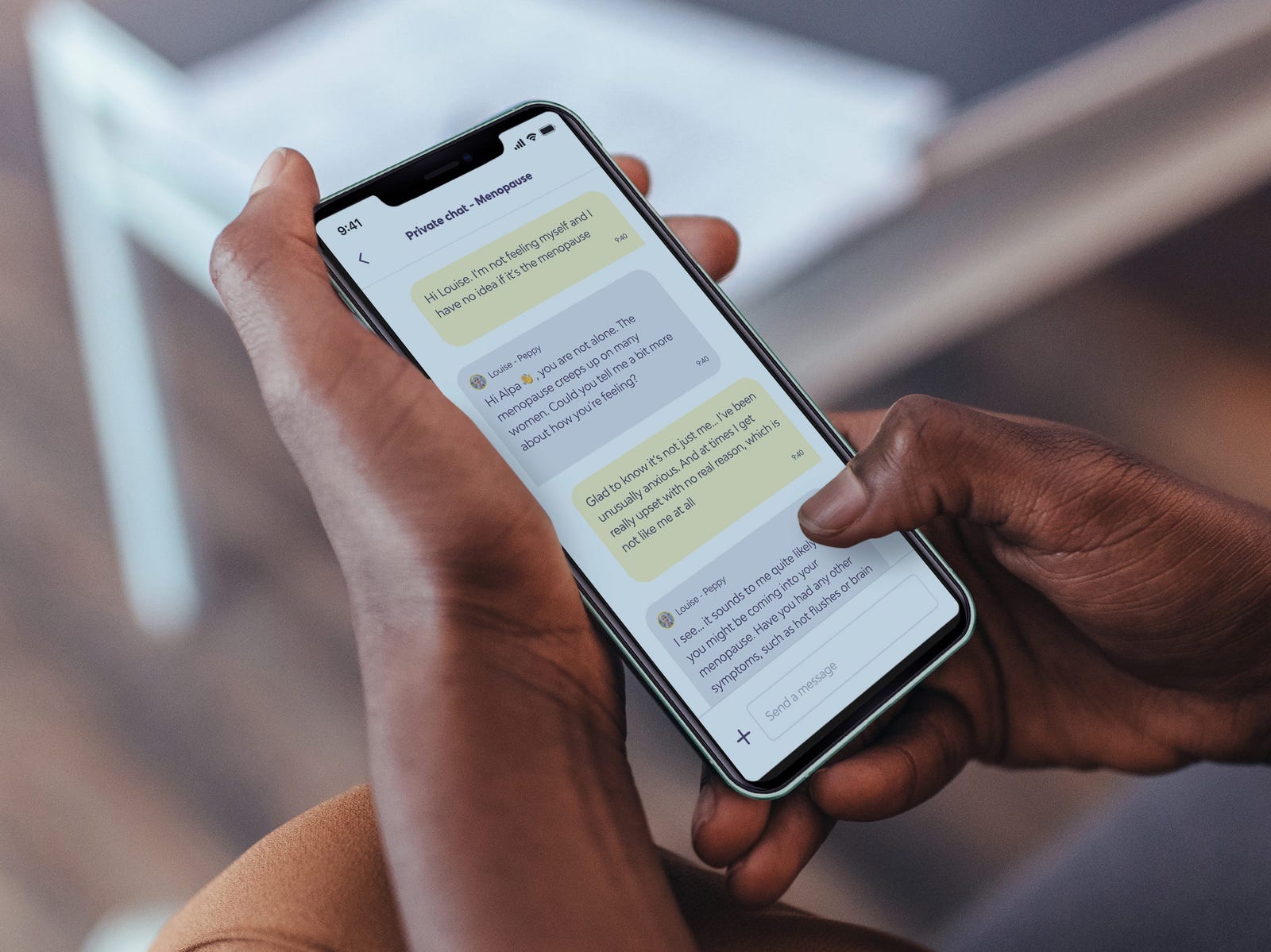
Peppy’s Series B deck is a lean, metric-heavy presentation that prioritizes market dominance and clinical efficacy over technical jargon. Raising $45M in 2023, the company used just 10 slides to demonstrate a powerful narrative of expansion, moving from the UK’s leading provider to a global contender. The deck excels by showing, not just telling; it uses Net Revenue Retention (NRR) of 123% and specific symptom improvement data (26% improvement in menopause symptoms) to prove the business model's sustainability. While it lacks a traditional team slide or a detailed financial breakdown of the $…
Key takeaways
- Peppy claims the title of UK’s #1 provider of gender-based and reproductive health benefits, with over 1 million people having access to the platform (Slide 3).
- The company demonstrated hyper-growth with >8x ARR growth since their Series A and a high Net Revenue Retention (NRR) of 123% (Slide 4).
- International expansion is a core pillar of the Series B strategy, noting that >30% of current clients already have a US HQ (Slide 5).
- The platform addresses a broad range of underserved needs including Menopause, Fertility, Men’s Health, and Baby care (Slide 6).
- Macroeconomic drivers like the 'War for Talent' and 'Great Resignation' are cited as primary catalysts for employer adoption (Slide 7).
- Clinical efficacy is quantified with an NPS of 70 and a reported 26% improvement in menopause symptoms within 90 days (Slide 8).
- The deck highlights B2B social proof through partnerships and awards with major brands like Mace, Wickes, and Vitality (Slide 9).
- The total addressable market is framed by the statistic that 1-in-3 of the workforce is dealing with these specific health episodes (Slide 10).
Introduction: The Lean Series B Narrative
Peppy’s Series B deck, used to secure $45M in 2023, is a masterclass in brevity. In an era where pitch decks often bloat to 25+ slides, Peppy focuses on a tight 10-slide narrative that emphasizes market leadership, clinical validation, and massive B2B traction. As reported by Business Insider, this round was led by AlbionVC and included participation from 8-Bit Capital and others. The deck doesn't waste time on 'what is healthcare'; it jumps straight into why Peppy is winning the category of gender-based health benefits.
Slide 1 & 2: The Product and the Promise
The deck opens with a high-fidelity mockup of the Peppy app in use. Slide 1 shows a 'Private chat - Menopause' interface, humanizing the technology immediately. The dialogue between a user (Alpa) and a Peppy practitioner (Louise) demonstrates the empathetic, personalized nature of the service. Slide 2 introduces the brand and the tagline: 'Happy, healthy employees. Now we’re talking.' This positions the company squarely in the HR-tech and benefits space, rather than just a consumer health app.
Slide 3: Establishing Dominance
Slide 3 is a 'Big Numbers' slide designed to kill any doubt about their market position. It claims Peppy is the 'UK’s #1 provider of gender-based and reproductive health benefits.' Two key proof points are highlighted: 'Over 1 million people have access to Peppy' and the claim that they are 'World #1 in menopause.' By using the flags of the UK, Ireland, and the USA, they signal their existing footprint and their immediate ambitions.
Slide 4: The Traction Quadrant
This is arguably the most important slide for a Series B investor. Slide 4 , titled 'Peppy at a glance,' provides four hard metrics:
8x ARR growth since Series A. · 123% NRR (Net Revenue Retention), which is a gold-standard metric for B2B SaaS, indicating that customers are not just staying, but spending more over time. · 3 Countries of operation. · 100s of Clients .
These figures suggest a business that has found product-market fit and is ready to scale capital-efficiently.
Slide 5: The International Expansion Strategy
Slide 5 addresses the 'Where next?' question. The slide states, 'In 2022 we’re going international, leveraging our current client base.' The Venn diagram is particularly clever; it shows that over 30% of their current UK-based clients actually have a US HQ. This implies that their entry into the US market isn't a 'cold start' but rather a 'follow-the-customer' strategy, which significantly lowers the risk of international expansion in the eyes of an investor.
Slide 6: Defining the 'Underserved' Problem
Slide 6 pivots to the 'Why.' It argues that the current healthcare system misses 'big, underserved health needs.' It lists Menopause, Fertility, Men’s Health, Women’s Health, and Baby care. The right side of the slide is filled with raw, vulnerable questions from users (e.g., 'Is it ok to be incontinent after childbirth?' and 'My libido is non existent - what can I do?'). This creates a visceral sense of the gap Peppy fills—problems that are often too 'taboo' for traditional primary care but critical for employee well-being.
Slide 7: Macro Tailwinds
Slide 7 connects the product to the broader economy. It lists 'Underlying trends' like the 'War for talent' and a 'Diverse, multigenerational workforce.' It also cites 'Current drivers' such as 'Pandemic effects' (Hybrid working/Great Resignation) and 'Unaffordable inflation adjustments.' The argument is clear: employers can no longer just compete on salary; they must compete on specialized support that keeps employees at their desks and loyal to the firm.
Slide 8: Clinical Outcomes and Efficacy
For a healthcare company, engagement isn't enough; you need outcomes. Slide 8 delivers this with an NPS of 70 ('Excellent') and a specific stat: 'Users see 26% symptom improvement in menopause symptoms within 90 days.' The bar chart shows a dramatic shift in symptom severity from Day 0 to Day 90. This data is crucial for B2B sales, as it allows HR departments to justify the spend based on actual health improvements and, by extension, reduced absenteeism.
Slide 9: Social Proof and B2B Validation
Slide 9 focuses on the 'Great Employer' narrative. It features a long testimonial from Mace (a global consultancy and construction firm) regarding talent retention. The quote specifically mentions that senior-level women stayed with the firm despite being offered more money elsewhere because of the support provided by Peppy. The slide also lists awards won in partnership with Wickes and Vitality, reinforcing their status as a trusted enterprise partner.
Slide 10: The Market Opportunity Recap
The final slide, Slide 10 , repeats the brand logo and tagline but adds a final staggering statistic: 'Approximately 1-in-3 of the workforce is dealing with one of these health episodes for themselves or a loved one.' This re-frames the 'niche' health categories mentioned earlier as a massive, mainstream workforce issue, leaving the investor with the impression of a huge, untapped TAM (Total Addressable Market).
What Works in Peppy's Deck
1. Outcome-Oriented Data: Unlike many wellness apps that track 'steps' or 'logins,' Peppy tracks 'Symptom Improvement' (Slide 8). This is the language of healthcare and insurance, making them a much more formidable B2B play.
2. The 'Follow-the-Sun' Expansion Model: Showing that 30% of their UK clients are US-headquartered (Slide 5) is a brilliant way to de-risk the most expensive part of a startup's journey: entering the American market.
3. High NRR: A 123% NRR (Slide 4) for a benefits platform is exceptional. It proves that once Peppy gets into an organization, they are able to expand their footprint, likely by adding more health modules (e.g., moving from Menopause to Men's Health).
What is Missing from Peppy's Deck
1. The Team Slide: In the 10 slides provided, there is no mention of the founders or the clinical leadership. For a Series B healthcare company, investors usually want to see a mix of seasoned B2B operators and respected medical professionals.
2. Competitive Landscape: The deck assumes Peppy is #1 without acknowledging competitors like Maven Clinic or Carrot Fertility. A 'Why We Win' slide comparing features or clinical depth would have been standard for this stage.
3. Financial Use of Funds: There is no slide detailing the $45M ask. While this information is often shared in a separate data room or a longer version of the deck, its absence here leaves the 'future' section of the narrative feeling a bit thin.
Founder's Playbook: What to Copy
Use 'Voice of the Customer' to define the problem: Slide 6’s list of user questions is far more effective than a bulleted list of 'pain points.' It proves the founders understand the intimate, specific needs of their users.
Lead with your strongest B2B metric: If you have an NRR over 110%, it should be on your 'At a Glance' slide. It is the single most convincing metric for a recurring revenue business model.
Quantify the 'Soft' benefits: Peppy successfully turned 'employee loyalty' into a quantifiable asset by using the Mace testimonial on Slide 9, which explicitly mentions avoiding recruitment costs. If you are selling to HR, you must show how your tool saves the company money on hiring and retention.
Frequently asked questions
- What is Peppy's primary business model based on the deck?
- Peppy operates as a B2B healthcare benefits platform. According to Slide 7 and Slide 9, they sell directly to employers who provide the service to their employees to improve retention and talent acquisition. Their success is measured by Net Revenue Retention (123% on Slide 4), indicating that existing corporate clients frequently expand their contracts.
- How does Peppy prove that their healthcare intervention actually works?
- Peppy uses clinical outcome data rather than just engagement metrics. Slide 8 shows that menopause users see a 26% symptom improvement within 90 days. It also includes a bar chart showing a significant reduction in 'Severe' symptoms and a tripling of 'Mild or No symptoms' by Day 90, supported by an 'Excellent' NPS of 70.
- What are the key growth metrics shared in the Series B deck?
- The deck highlights four major KPIs on Slide 4: greater than 8x ARR growth since their Series A, a 123% Net Revenue Retention rate, operations in 3 countries, and a client base numbering in the hundreds. Slide 3 adds that they have reached over 1 million covered lives.
- What specific health areas does the platform cover?
- Slide 6 lists the core pillars: Menopause, Fertility, Men’s Health, Women’s Health, and Baby. The slide also includes specific user queries ranging from IVF grief and nutrition to prostate cancer concerns and postpartum incontinence, showing the breadth of their specialized support.
- What is missing from this pitch deck?
- The 10-slide version of the deck is notably missing a Team slide, a detailed Competitor analysis, and a specific 'The Ask' slide detailing how the $45M will be spent. It also lacks a detailed roadmap or financial projections beyond the historical 8x growth mentioned on Slide 4.