Vintage Wine Estates (VWE) presented a compelling case for a $690 million SPAC merger by positioning itself as the primary consolidator in a fragmented wine market. The deck emphasizes a 'proven and successful track record' of acquisitions, moving from a single winery in 2000 to a massive portfolio including Layer Cake, Girard, and B.R. Cohn. With 2,800 total acres under control and a projected FY 2021 revenue of $200mm+, the company pitched a path to $450mm+ in medium-term revenue through continued M&A and expansion into hard seltzers and cannabis-infused beverages. While the deck is visuall…
Key takeaways
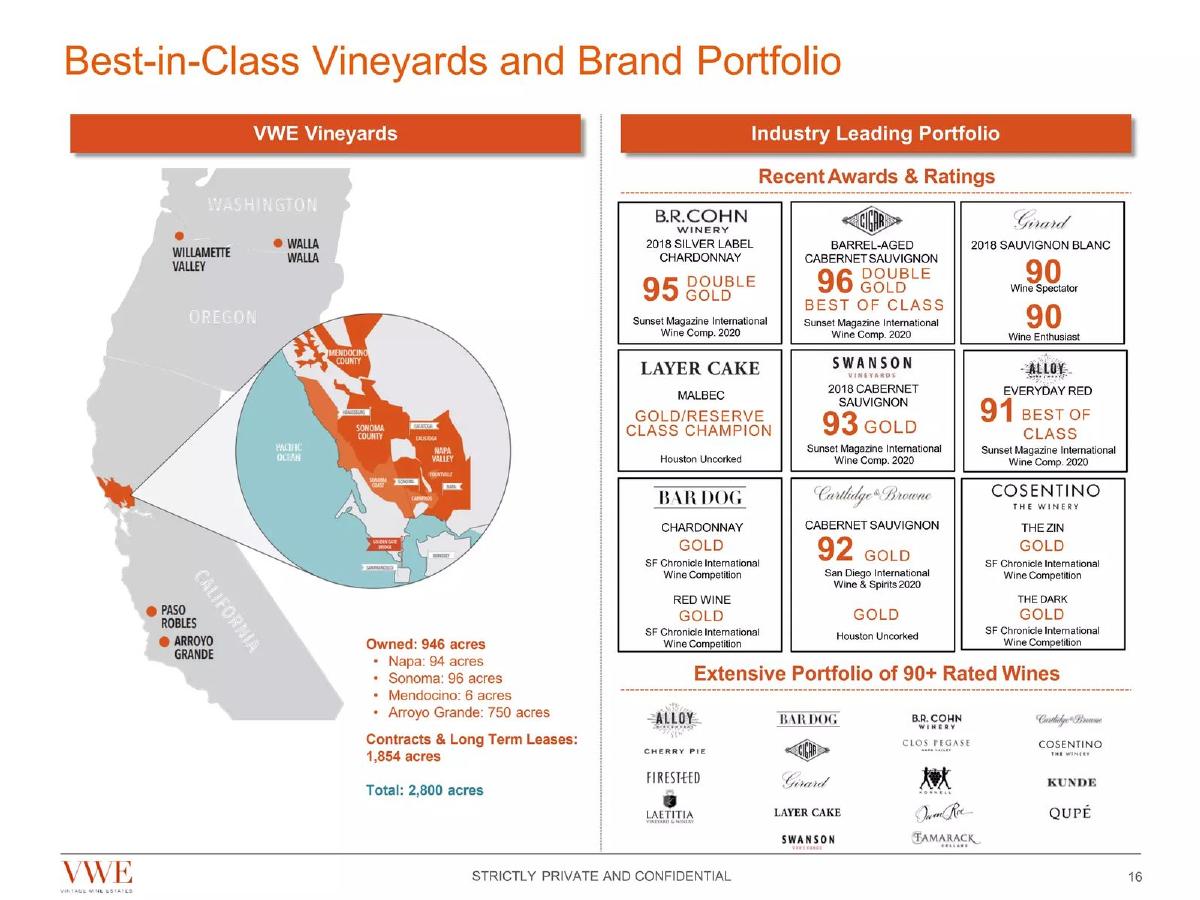
- The company manages a total of 2,800 acres, consisting of 946 owned acres and 1,854 acres under contract or long-term lease (Slide 16).
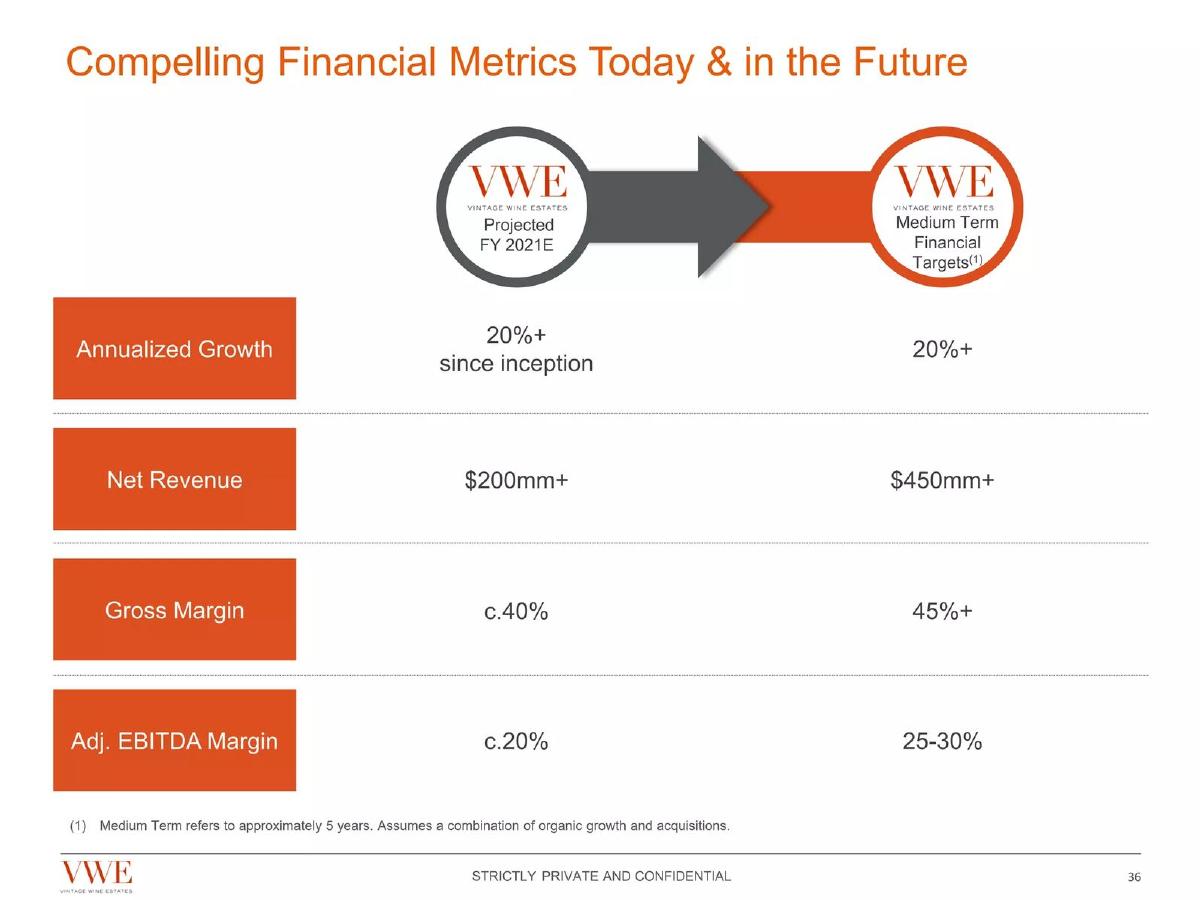
- VWE projects a net revenue of $200mm+ for FY 2021, with a medium-term target of $450mm+ (Slide 36).
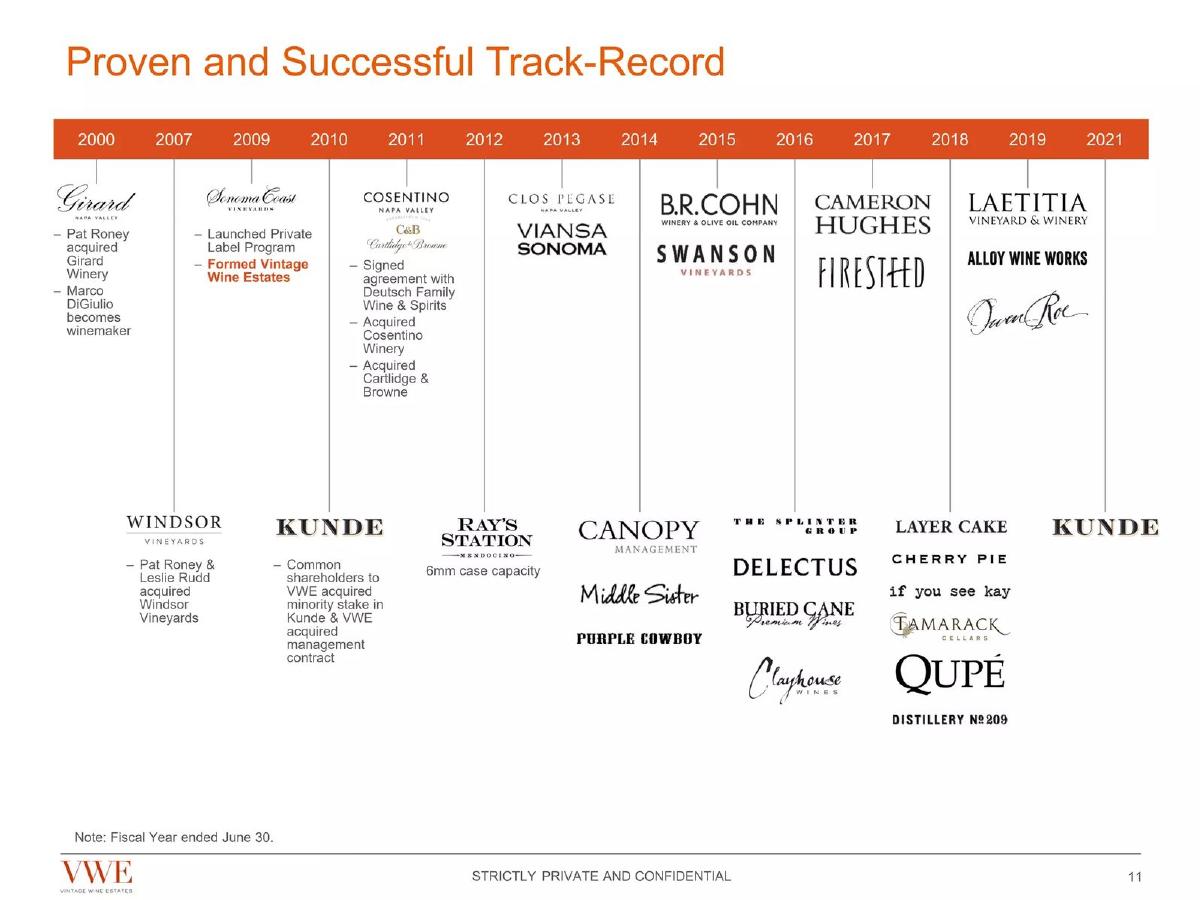
- The acquisition timeline shows a rapid acceleration of M&A activity, with 11 brands or groups acquired between 2017 and 2021 (Slide 11).
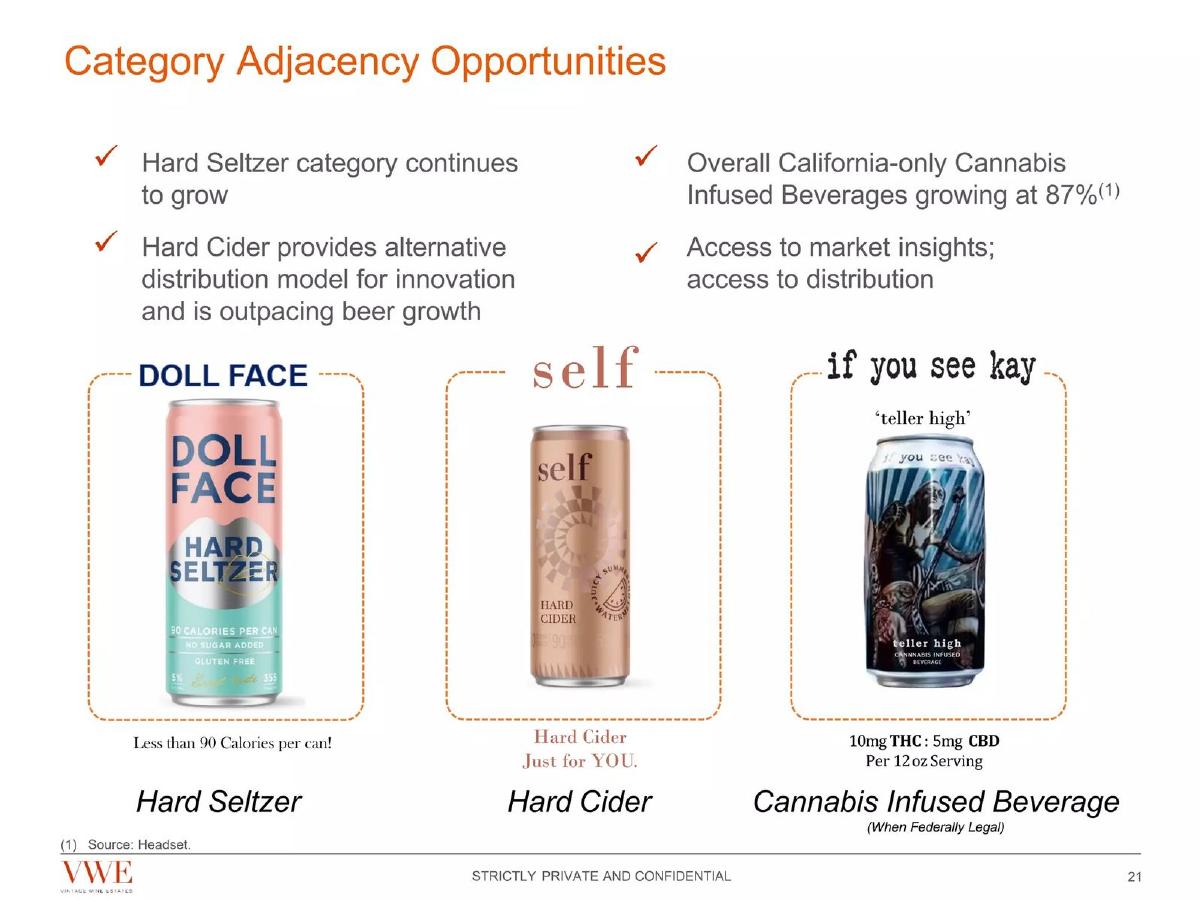
- The strategy includes aggressive expansion into 'Category Adjacency Opportunities' such as hard seltzer, hard cider, and cannabis-infused beverages (Slide 21).
- Gross margins are currently cited at approximately 40%, with a medium-term target to exceed 45% (Slide 36).
- Adjusted EBITDA margins are projected to grow from approximately 20% to a range of 25-30% in the medium term (Slide 36).
- The portfolio is highly decorated, featuring multiple 90+ rated wines and 'Double Gold' awards from the Sunset Magazine International Wine Competition (Slide 16).
- The deck identifies the company as an 'industry consolidator' with an 'extensive, actionable acquisition pipeline' (Slide 45).
Vintage Wine Estates: The Consolidation Playbook
The Vintage Wine Estates (VWE) pitch deck is a masterclass in presenting a 'roll-up' strategy. In a fragmented industry like wine, where thousands of small producers struggle with distribution, VWE positions itself as the ultimate aggregator. This teardown examines the 45-slide deck used to facilitate their $690M SPAC merger, focusing on how they balanced heritage brand imagery with aggressive financial engineering.
Slide 1: The Brand Mosaic
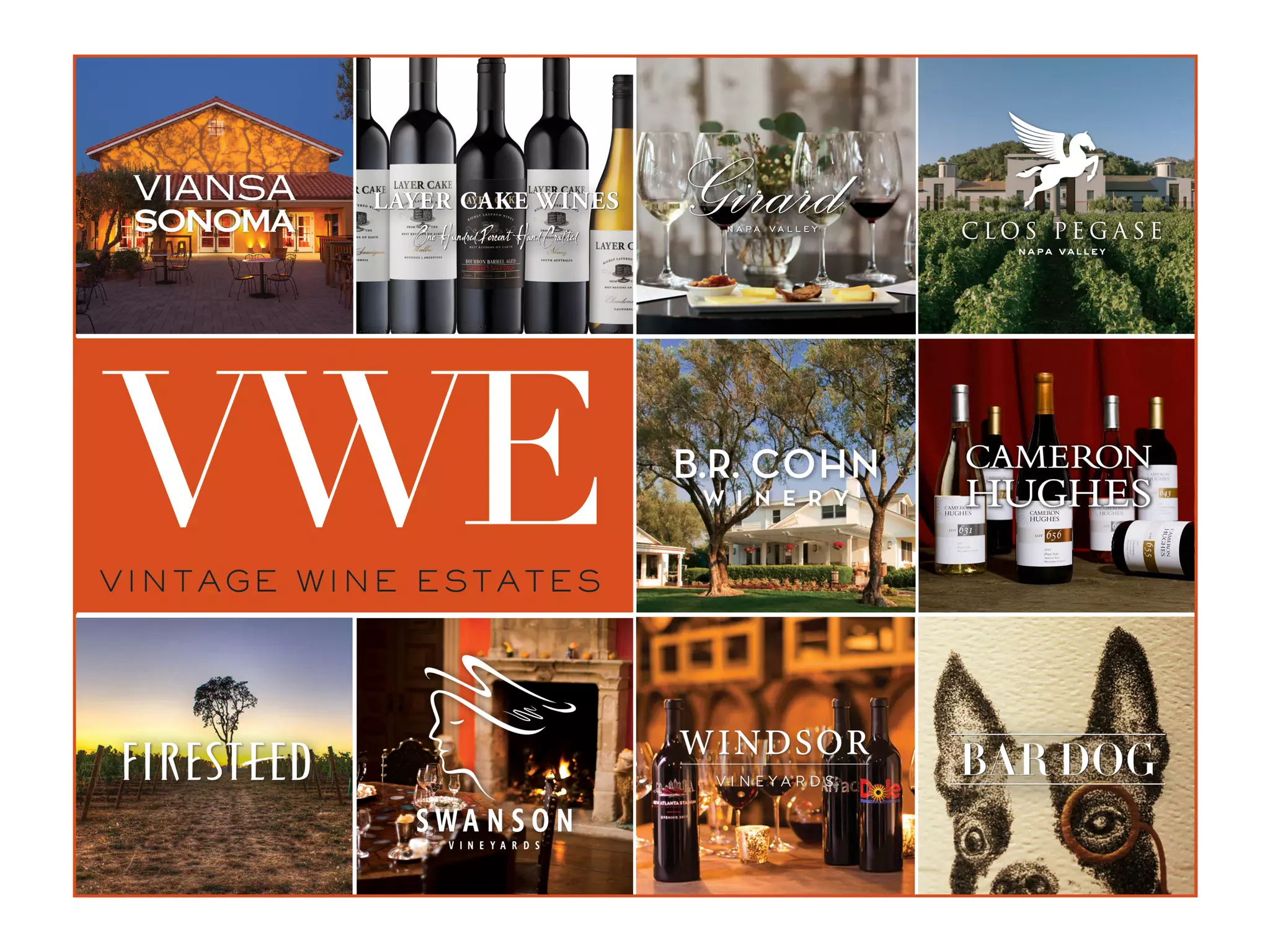
The cover slide sets the tone immediately. Rather than focusing on a single corporate logo, it presents a grid of ten distinct brands, including Viansa Sonoma, Layer Cake, Girard, and Clos Pegase. This visual choice communicates that VWE is not a single winery, but a platform. It signals to the investor that the value lies in the diversity and breadth of the portfolio rather than the success of a single label.
Slide 10: Introduction & Investment Thesis
Section I serves as a transition, using high-quality lifestyle photography of vineyards and bottled products. While it lacks text, the imagery is designed to evoke the premium nature of the assets. In a SPAC deck, these 'mood slides' are often used to break up the dense financial data that follows, reminding investors of the tangible real estate and inventory backing the valuation.
Slide 11: The Acquisition Timeline
This is one of the most critical slides in the deck. Titled "Proven and Successful Track-Record," it maps the company's growth from 2000 to 2021. It shows a clear evolution: starting with the acquisition of Girard in 2000, forming the VWE umbrella in 2009, and then hitting a massive stride in 2017-2019 with the acquisition of brands like Layer Cake, Cherry Pie, and Tamarack Cellars. The timeline proves that the management team is not just winemakers, but experienced M&A practitioners who can integrate multiple brands annually.
Slide 16: Asset Base and Portfolio Quality
Slide 16 provides the 'hard' data on production and quality. It splits the view between geography and accolades. VWE discloses a total of 2,800 acres under management, with a significant 750-acre concentration in Arroyo Grande. By showing that they only own 946 of these acres, they demonstrate a capital-efficient model that uses long-term leases to control supply. The right side of the slide lists 90+ ratings for brands like B.R. Cohn (95 points) and Swanson (93 points), validating that their scale has not come at the expense of product quality.
Slide 21: Category Adjacency Opportunities
To justify a $690M valuation, VWE needed to show growth beyond the mature wine market. Slide 21 introduces hard seltzers, ciders, and cannabis-infused beverages. They cite an 87% growth rate for California-only cannabis beverages. This is a classic 'future-proofing' slide, designed to appeal to growth investors who might find traditional wine too stagnant. The inclusion of 'Doll Face' seltzer and 'if you see kay' cannabis drinks shows a willingness to experiment with modern, edgy branding that contrasts with their heritage estates.
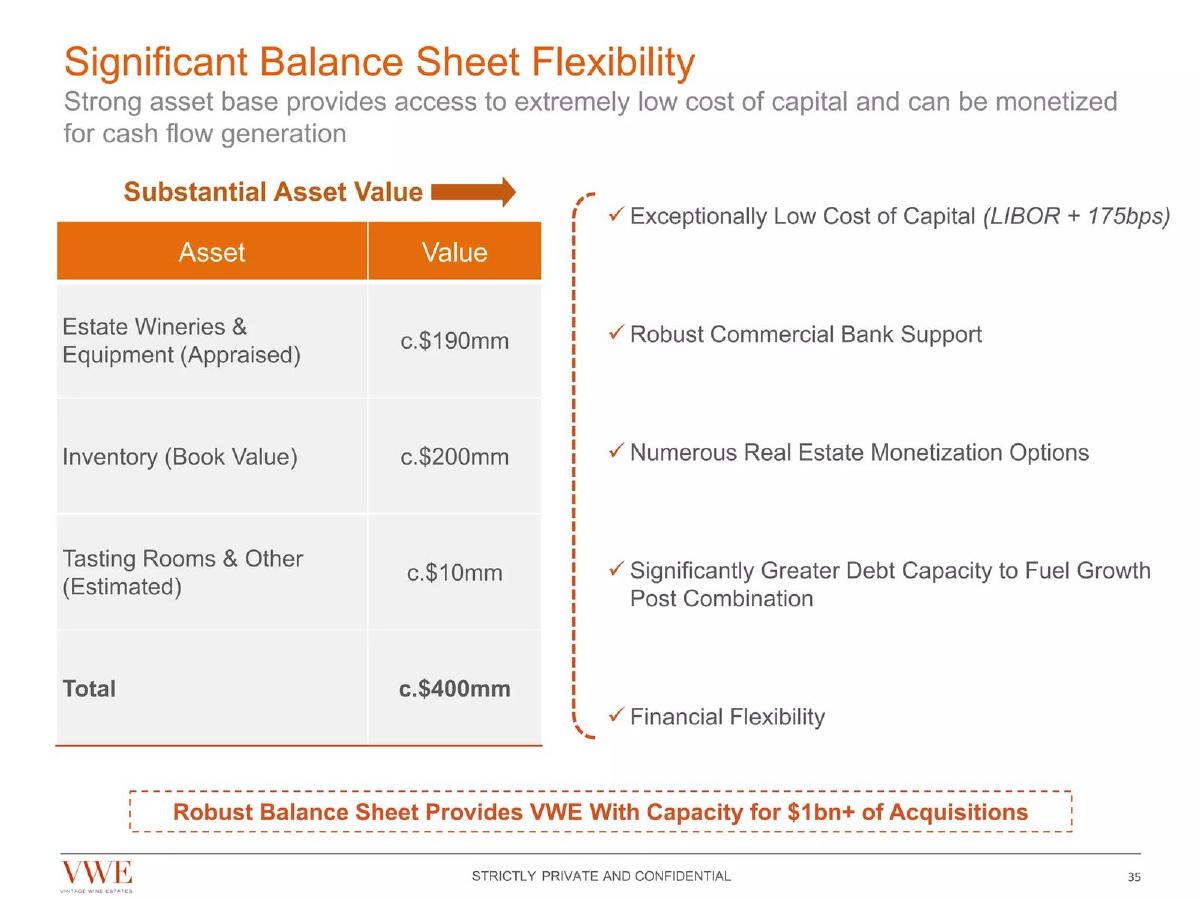
Slide 35: Financial Overview Transition
Similar to Slide 10, this is a section header. It uses imagery of tasting rooms and spirits (Distillery No. 209) to signal the transition into the company's P&L and balance sheet. The use of sunset imagery over vineyards is a common trope in this deck, intended to soften the impact of the heavy financial modeling that typically follows in a SPAC presentation.
Slide 36: The Financial Targets
This slide is the 'money slide.' It provides a direct comparison between Projected FY 2021 metrics and 'Medium Term Financial Targets.' VWE projects $200mm+ in revenue for 2021, with a goal to more than double that to $450mm+. The most important figures here are the margin expansions: moving Gross Margin from 40% to 45%+ and Adjusted EBITDA Margin from 20% to 25-30%. This suggests that as the company scales, it expects to find significant back-office and distribution efficiencies.
Slide 45: Investment Highlights Summary
The final slide summarizes the pitch into six pillars. It emphasizes the 'large, growing market,' the 'diversified capabilities,' and the 'extensive, actionable acquisition pipeline.' Notably, it mentions 'best-in-class oversight from BCAC,' which is a nod to the SPAC sponsors, reassuring the market that the transition from a private company to a public one will be managed by professionals. The use of portraits for the management team adds a human element to a deck that is otherwise very asset-heavy.
What Vintage Wine Estates Does Well
The deck excels at proving the 'platform' concept. By showing a 20-year history of acquisitions, the founders move the conversation away from 'can we make good wine?' to 'can we continue to buy and optimize wineries?' This is a much more scalable narrative for public markets. The clear distinction between owned land and leased land also shows a sophisticated understanding of asset-light vs. asset-heavy operations, which is crucial for maintaining a healthy balance sheet during rapid expansion.
What is Missing from the Deck
Despite the 45-slide length, the nine slides provided omit a detailed breakdown of unit economics per bottle or a deep dive into the 'Direct to Consumer' (DTC) vs. wholesale revenue split. While they mention 'diversified capabilities across channels' on Slide 45, the actual percentage of revenue coming from their tasting rooms versus national retail chains is not explicitly detailed in these highlights. Additionally, there is no mention of the specific risks associated with the cannabis beverage market, other than a small 'When Federally Legal' disclaimer.
Founder Takeaways: How to Pitch a Roll-Up
If you are building a company that grows through acquisition, your deck must follow the VWE blueprint in three ways. First, use a timeline to prove that your M&A activity is a repeatable process, not a one-off event. Second, show 'operating leverage'—demonstrate how your margins will improve as you add more brands to your existing infrastructure. Finally, don't just show what you've bought; show the quality of those assets. VWE’s use of 90+ point wine ratings proves that they aren't just buying 'distressed' assets, but are curating a high-quality portfolio that can command premium pricing.
Frequently asked questions
- What is the core investment thesis of Vintage Wine Estates?
- The thesis centers on VWE acting as a platform for industry consolidation. By acquiring fragmented wine brands and integrating them into a centralized distribution and production infrastructure, they aim to drive margin expansion and top-line growth. The deck highlights their ability to scale from $200mm to $450mm in revenue by leveraging their existing asset base and multi-channel capabilities.
- How much land does Vintage Wine Estates actually own?
- According to slide 16, the company owns 946 acres across Napa (94), Sonoma (96), Mendocino (6), and Arroyo Grande (750). However, their total footprint is much larger at 2,800 acres, as they utilize 1,854 acres through contracts and long-term leases to maintain a flexible supply chain without the full capital intensity of land ownership.
- What are the specific financial targets for the SPAC merger?
- The company set clear medium-term (approximately 5-year) goals on slide 36: increasing net revenue from $200mm+ to $450mm+, expanding gross margins from 40% to 45%+, and boosting Adjusted EBITDA margins from 20% to 25-30%. These targets are predicated on a combination of organic growth and continued acquisitions.
- How does VWE plan to diversify beyond traditional wine?
- Slide 21 outlines 'Category Adjacency Opportunities.' VWE is moving into hard seltzers (Doll Face), hard ciders (Self), and cannabis-infused beverages (if you see kay). They specifically note that the cannabis beverage market in California is growing at 87%, though they clarify this expansion is contingent on federal legality.
- Who is providing oversight for this transaction?
- The deck mentions an 'experienced management team' paired with oversight from BCAC (Bespoke Capital Acquisition Corp), the SPAC partner. This combination is intended to reassure investors that the company has both deep industry expertise in winemaking and the public market sophistication required for a $690M entity.