The ViralGains Demo Day deck is a highly optimized, 9-slide presentation designed for speed and impact. It bypasses lengthy problem statements to focus on immediate proof of market fit, citing $1.2 million in 2013 sales and 250 million ad impressions. The deck leans heavily on social proof, showcasing 18 major brand logos including ExxonMobil, Lexus, and Paramount. A standout feature is the team slide, which quantifies founder credibility through '$225 million of exits' rather than just listing past titles. While the deck lacks a specific 'Ask' slide or detailed unit economics, it serves as a…
Key takeaways
- The company leads with hard traction, reporting $1.2 million in sales for 2013 on slide 2.
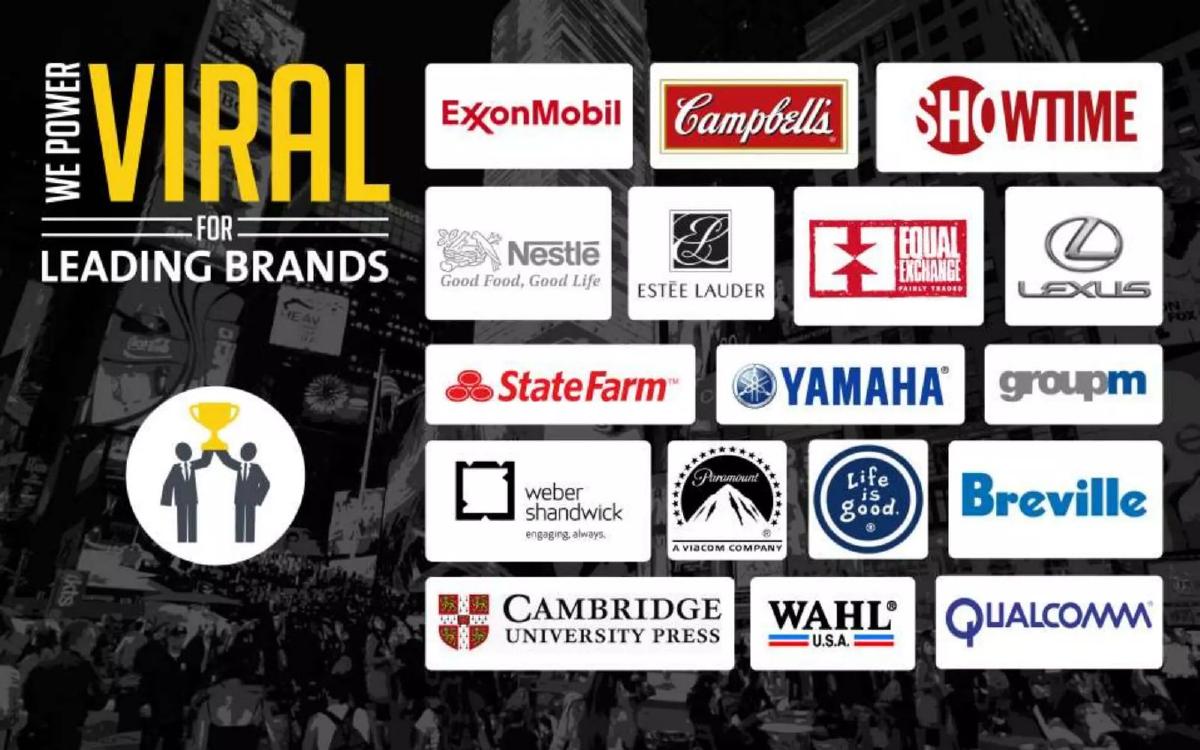
- Social proof is a primary driver, with slide 3 displaying 18 recognizable brand logos including Nestle and State Farm.
- The platform's value proposition is distilled into four pillars: Video, Views, Shares, and Conversations (slide 4).
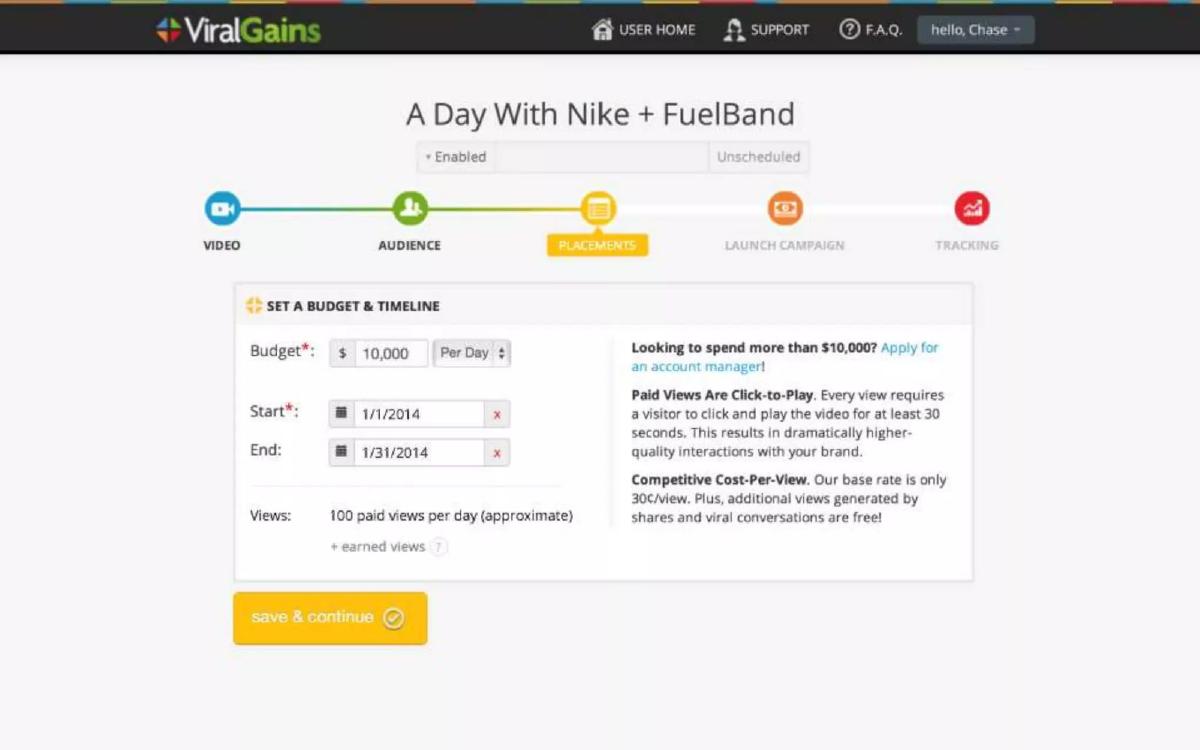
- Product functionality is demonstrated via a single dashboard screenshot showing a $10,000 daily budget for a Nike campaign (slide 5).
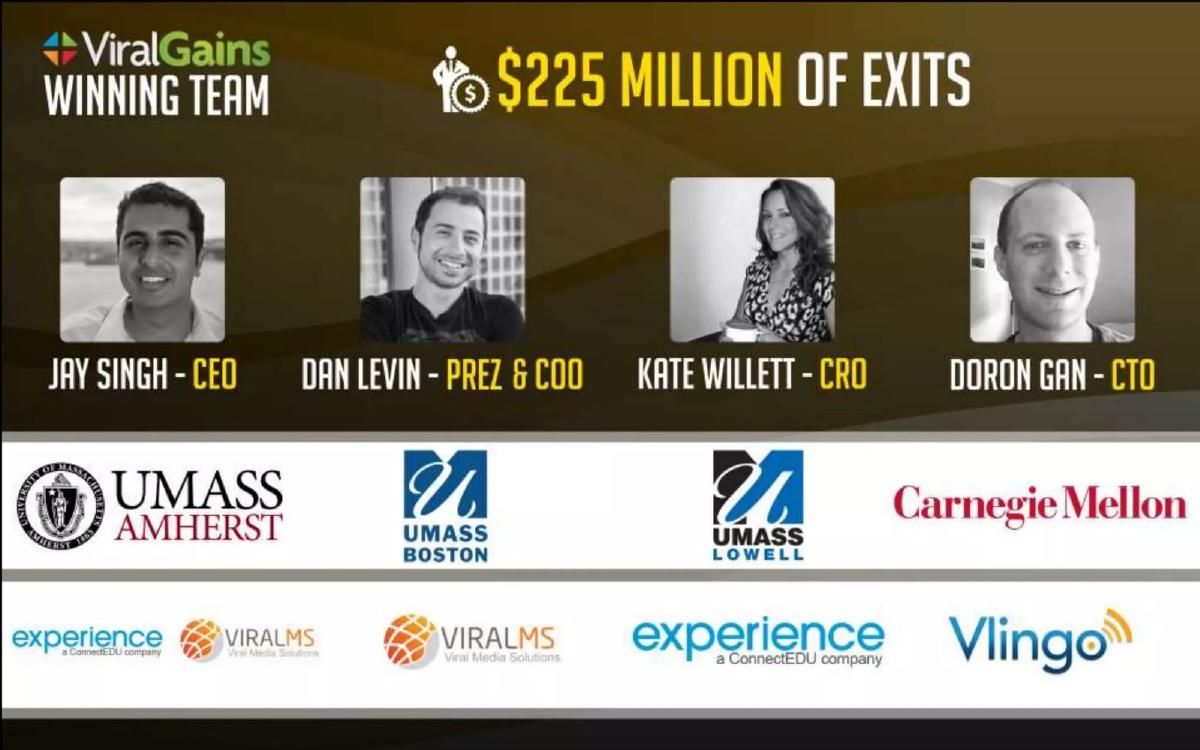
- Founder pedigree is quantified by a collective '$225 million of exits' rather than qualitative descriptions (slide 6).
- The market opportunity is framed as a $97 billion digital advertising landscape, with a $6 billion specific niche in online video (slide 7).
- Revenue projections show aggressive growth targets, moving from $5 million in 2014 to $15 million in 2015 (slide 8).
- The deck completely omits a formal 'Ask' slide, choosing to end only with contact information and an AngelList link (slide 9).
ViralGains: The Power of Social Proof in a Demo Day Format
The ViralGains pitch deck is a lean, high-impact presentation that prioritizes results over theory. In just nine slides, the company manages to communicate significant revenue, enterprise-level adoption, and a seasoned leadership team. This teardown examines how they used a short-form deck to maximize credibility during a Demo Day presentation.
Slide 1: Title and Tagline
The cover slide is minimalist, featuring the ViralGains logo and the tagline "HELPING ADVERTISERS GO VIRAL." Below the text is a cluster of colorful speech bubbles containing icons for mobile devices, shopping carts, email, and social connectivity. It immediately establishes the sector (AdTech/Social) without clutter.
Slide 2: Early Traction
ViralGains makes a strategic choice to lead with traction rather than a problem statement. Slide 2 lists three major milestones: "$1.2 MILLION SALES IN 2013," "250 MILLION AD IMPRESSIONS SERVED," and "11 FORTUNE 500 CUSTOMERS." By putting these figures upfront, the founders eliminate the risk of investors questioning the product's viability or market demand.
Slide 3: Brand Logos
This slide is a pure exercise in social proof. Titled "WE POWER VIRAL FOR LEADING BRANDS," it displays 18 logos. Notable names include ExxonMobil, Nestle, Estée Lauder, Lexus, State Farm, Yamaha, Paramount, and Qualcomm. The sheer volume of blue-chip logos serves to validate the "11 Fortune 500 Customers" claim from the previous slide and suggests a high level of trust from enterprise procurement departments.
Slide 4: Word of Mouth at Scale
Slide 4 explains the mechanics of the platform using a simple flow diagram. It connects "VIDEO" to three outcomes: "VIEWS," "SHARES," and "CONVERSATIONS." A human icon in the center suggests that the platform bridges the gap between content and the audience. It is a high-level conceptual slide that avoids technical jargon.
Slide 5: Product Interface and Pricing
The deck provides a single screenshot of the user interface, titled "A Day With Nike + FuelBand." This slide is dense with information about the business model. It shows a "Budget: $10,000 Per Day" and a date range for January 2014. The text on the right explains the value proposition: "Paid Views Are Click-to-Play," requiring a 30-second engagement. It also notes a "base rate is only 30¢/view" and highlights that "additional views generated by shares and viral conversations are free!" This is the only slide that touches on unit economics.
Slide 6: The Winning Team
The team slide features four executives: Jay Singh (CEO), Dan Levin (Prez & COO), Kate Willett (CRO), and Doron Gan (CTO). The headline for this slide is "$225 MILLION OF EXITS." This is a powerful way to frame experience, focusing on the financial outcome for previous investors rather than just years of service. The slide also lists academic institutions (UMass, Carnegie Mellon) and previous companies (Vlingo, ViralMS, Experience).
Slide 7: Market Opportunity
ViralGains uses a simple bubble chart to define the market. They cite a "$97 BILLION DIGITAL ADVERTISING OPPORTUNITY" and a "$6 BILLION ONLINE VIDEO" niche. While the source of these numbers is not cited on the slide, they serve to show that the company is playing in a massive, established market with a specific focus on the fast-growing video segment.
Slide 8: Revenue Projections
The projection slide is bold and simple. It forecasts "$5 MILLION OF REVENUE IN 2014" and "$15 MILLION OF REVENUE IN 2015." Given that they stated $1.2 million in sales for 2013, these projections represent a 4x and then a 3x year-over-year growth rate. The visual style mirrors the market opportunity slide, creating a sense of consistency.
Slide 9: Contact Information
The final slide provides three ways to connect: an AngelList URL ( ANGEL.CO/VIRALGAINS ), a general founder email, and the company website. There is no specific call to action regarding a funding round amount or terms.
What ViralGains Does Well
Immediate Credibility: By placing $1.2M in revenue on the second slide, they instantly separate themselves from pre-revenue startups. · Quantified Experience: The "$225 Million of Exits" headline on the team slide is a highly effective way to signal to VCs that the founders know how to build and sell companies. · Transparent Pricing: Including the 30-cent-per-view cost and the 30-second engagement requirement on the product slide answers a major investor question (how do you make money?) without needing a separate slide. · Logo Density: The brand wall on slide 3 is exceptionally strong for an early-stage company, suggesting a very effective sales engine.
What is Missing from the ViralGains Deck
The Problem Statement: The deck assumes the audience already understands that viral marketing is hard or that traditional video ads are inefficient. There is no slide dedicated to the "pain point." · Competitive Landscape: There is no mention of competitors or how ViralGains differs from other video distribution platforms or social media native advertising. · The Ask: The deck does not state how much money they are looking to raise or what they plan to do with the capital (e.g., hiring, geographic expansion, R&D). · Unit Economics: While they mention the 30-cent price point, they do not disclose their margins, customer acquisition costs (CAC), or lifetime value (LTV).
Lessons for Founders
Lead with your strongest asset: If you have revenue, lead with it. If you have a world-class team, lead with that. ViralGains had both and put them in the first six slides. · Use Demo Day decks for interest, not closure: This deck is designed to be spoken over. It uses large fonts and minimal text, which is ideal for a stage presentation where the audience's attention is split between the speaker and the screen. · Quantify your team's history: Instead of saying your team is "experienced," show the dollar value of the companies they have previously built or the scale of the projects they have managed. · Show, don't just tell, the product: The Nike campaign screenshot on slide 5 does more work than three slides of bullet points would. It shows the UI, the pricing, the targeting, and the reporting all in one view.
Frequently asked questions
- What is the core product offered by ViralGains?
- Based on slide 4 and 5, ViralGains is a viral marketing platform focused on online video. It allows advertisers to set budgets and timelines for video campaigns, charging a base rate of 30 cents per 'Click-to-Play' view. The platform aims to generate 'earned views' through shares and social conversations that occur after the initial paid interaction.
- How does ViralGains justify its team's expertise?
- ViralGains uses a highly quantitative approach to team credibility on slide 6. Instead of long biographies, they highlight '$225 million of exits' across the leadership team. They also list affiliations with institutions like UMass and Carnegie Mellon, and past companies such as Vlingo and Viral Media Solutions (ViralMS).
- What specific traction metrics are shared in the deck?
- Slide 2 provides three primary metrics: $1.2 million in sales for the year 2013, 250 million total ad impressions served, and a client base that includes 11 Fortune 500 customers. This establishes that the company is past the experimental phase and has achieved enterprise-level scale.
- What is the pricing model for the ViralGains platform?
- Slide 5 reveals a transparent pricing model. The platform charges a base rate of 30 cents per view. These are defined as 'Click-to-Play' views, meaning a visitor must click and play the video for at least 30 seconds to count as a paid interaction. Any additional views generated by social sharing are provided for free.
- Is there a clear investment ask in this presentation?
- No, the deck does not include a slide detailing how much capital is being raised, the valuation, or the intended use of funds. This is common for Demo Day decks where the goal is to secure follow-up meetings rather than close a round on stage. It directs interested parties to their AngelList profile on slide 9.