The Vidlet deck, originally branded as VidCaster, is a 20-slide Seed stage presentation that successfully raised approximately $1.2M. Rather than following the traditional 'Problem-Solution-Market' template, it leads with high-caliber social proof, featuring logos like Airbnb, Zendesk, and Microsoft on slide 3. The narrative is heavily anchored in a specific case study (Airbnb), contrasting the 'messy' experience of YouTube with the 'clean' conversion-oriented experience of an owned video site. While the deck lacks a formal market size (TAM) slide and detailed unit economics, it compensates w…
Key takeaways
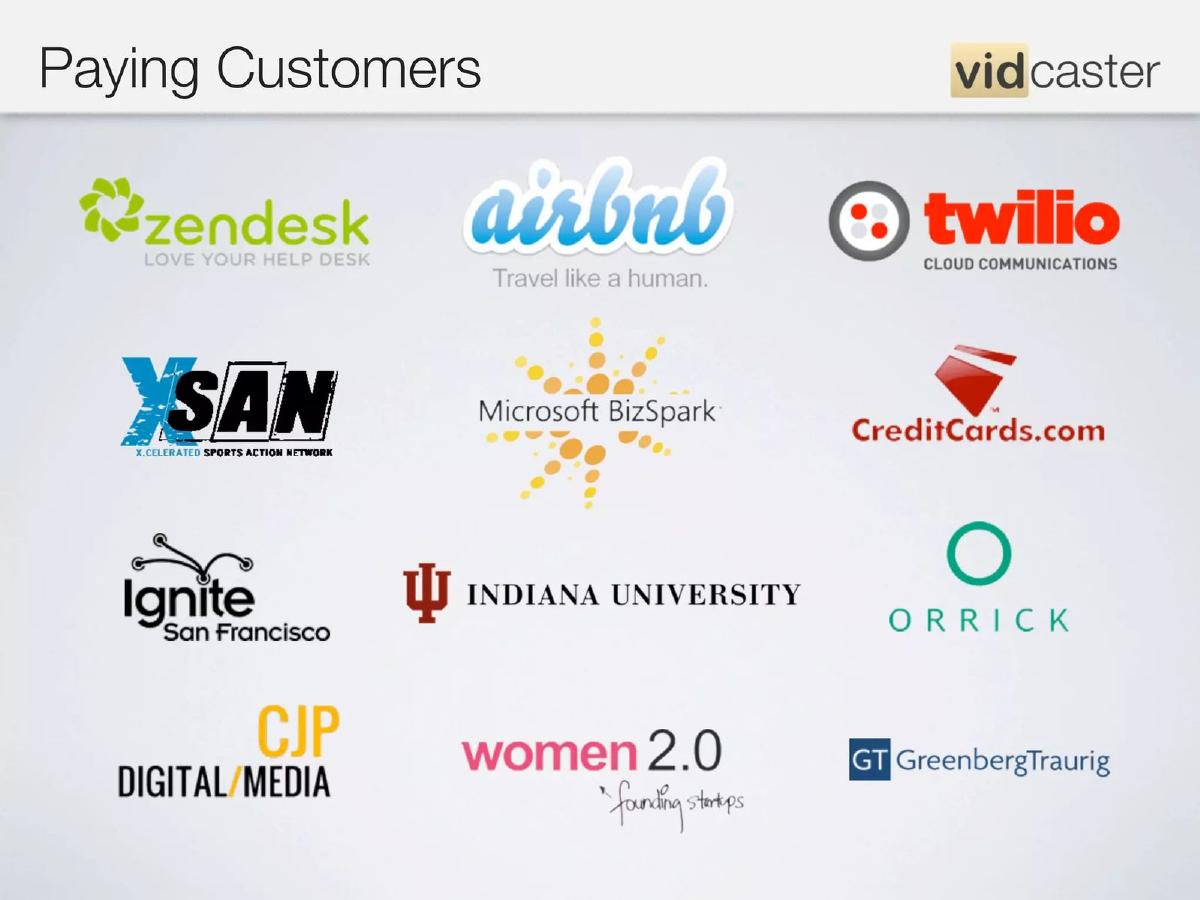
- The deck leads with a high-density logo slide featuring major tech players like Airbnb, Twilio, and Zendesk (Slide 3).
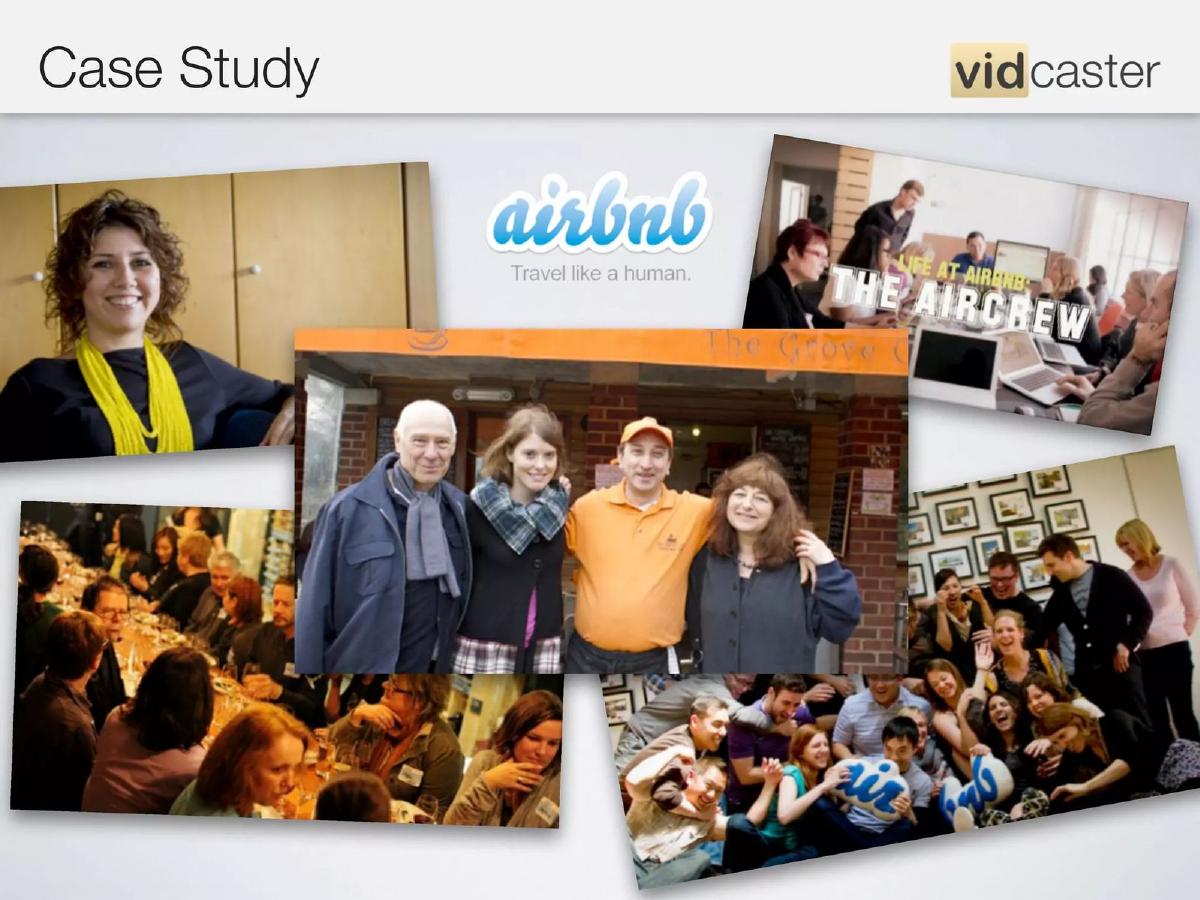
- A deep-dive case study on Airbnb (Slides 4-6) serves as the primary vehicle for explaining the product's value proposition.
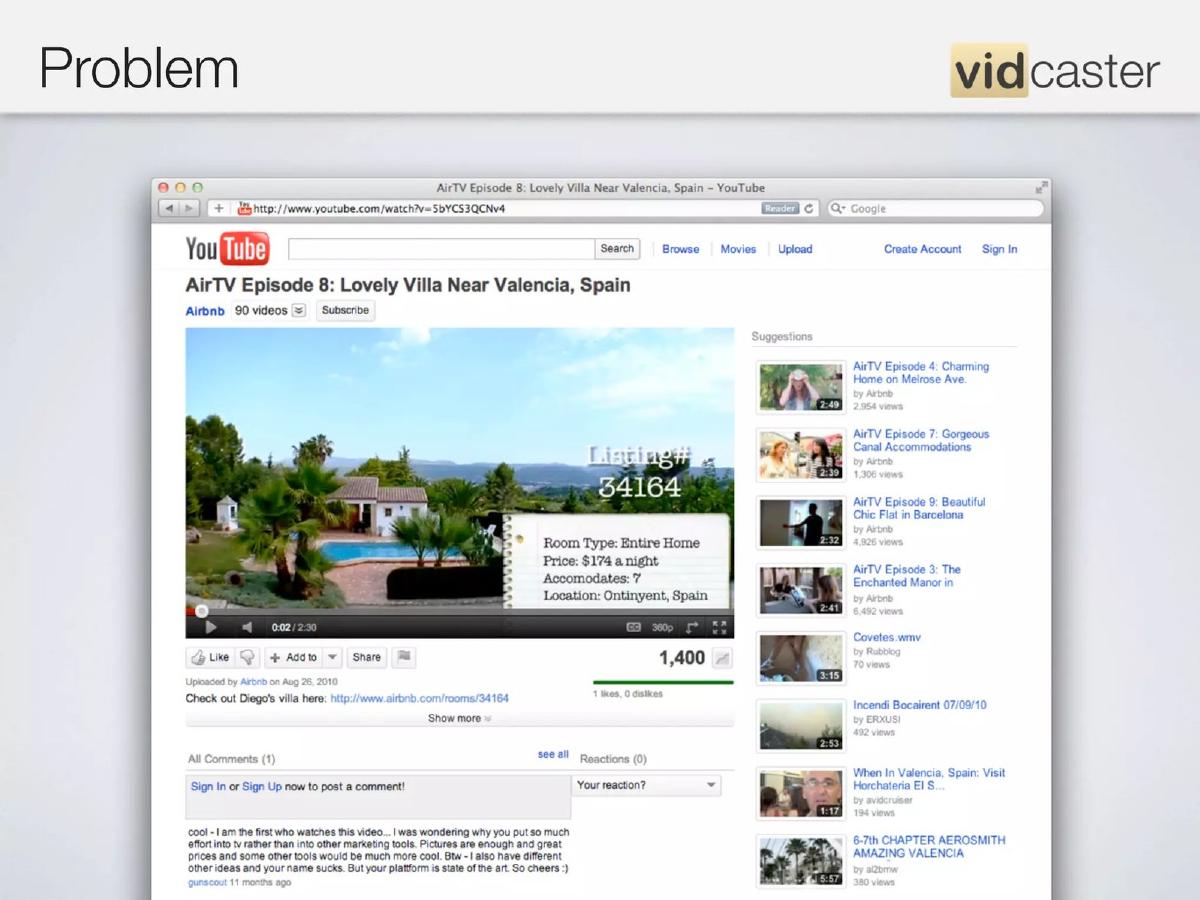
- The 'Problem' is visually defined as the loss of traffic and brand control on YouTube (Slide 5).
- The deck claims 3x viewership growth for clients by moving to a branded environment (Slide 7).
- A significant portion of the deck (Slides 9-17) is dedicated to the technical advantage of Video SEO and owning search results.
- The team slide highlights a strong advisory board including Dave McClure and Paul Singh (Slide 18).
- The specific fundraising ask at the time of this deck was $500k (Slide 19).
- The company reports a 5x increase in new user signups after implementing an 'instant signup' feature (Slide 17).
The Narrative Strategy: Proof Over Promise
The Vidlet deck (presented here under its former name, VidCaster) is a fascinating artifact from the early 2010s SaaS era. It ignores many of the 'rules' taught in modern accelerator programs. There is no slide dedicated to the 'Trillion Dollar Market,' and there is no complex financial model. Instead, the founders bet entirely on social proof and technical differentiation . By the third slide, the investor has already seen the logos of Airbnb and Twilio. This creates an immediate 'fear of missing out' (FOMO) that carries the rest of the presentation.
Slides 1-3: The Hook and Social Proof
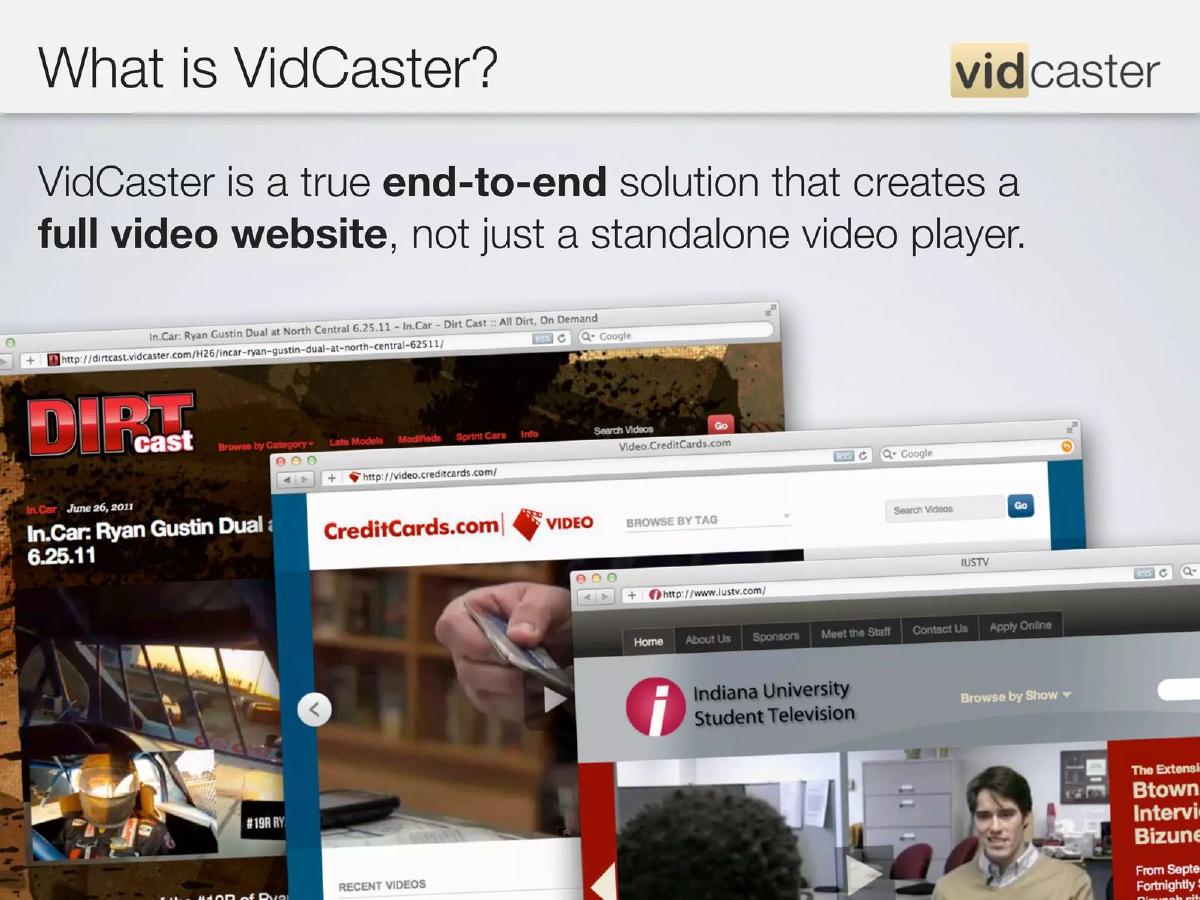
Slide 1 is a minimalist title slide featuring the VidCaster logo. It establishes a clean, professional aesthetic that is maintained throughout the deck. Slide 2 immediately answers the 'What is it?' question. It defines the product as an 'end-to-end solution' for 'full video websites.' This is a strategic positioning move; they aren't competing with the Wistia or Vimeo players; they are competing for the entire web property. The slide uses screenshots of 'Dirt Cast,' 'CreditCards.com,' and 'Indiana University' to show the product in the wild.
Slide 3 is the 'Paying Customers' slide. It is exceptionally strong for a seed-stage company. Featuring Zendesk, Airbnb, Twilio, Microsoft BizSpark, and Orrick provides massive credibility. For a seed investor, seeing that these sophisticated tech companies are already paying for the solution validates the product-market fit more effectively than any market research graph could.
Slides 4-8: The Airbnb Case Study
Instead of a generic problem/solution framework, Vidlet uses a specific narrative. Slide 4 introduces the Airbnb case study with lifestyle photography. Slide 5 (Problem) shows an Airbnb video on YouTube. The visual highlights the 'clutter' of YouTube: related videos from other users, comments, and the lack of Airbnb branding. It's a 'leaky bucket' for traffic.
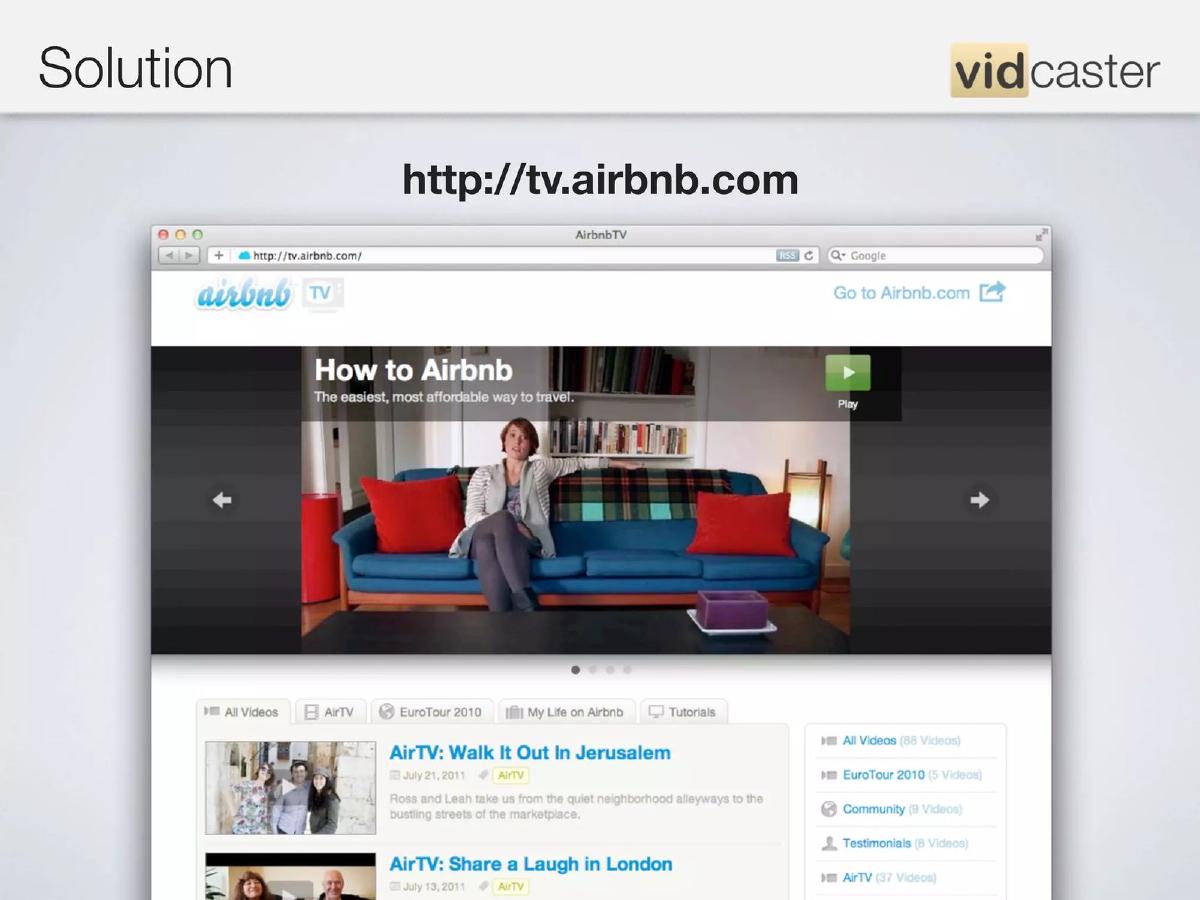
Slide 6 (Solution) shows the alternative: tv.airbnb.com. This is a clean, branded environment where every 'suggested video' is also an Airbnb video. Slide 7 provides the 'so what'—claiming 3x viewership growth and showing that 54% of views now happen on the 'Your Site' method versus only 19% on YouTube. Slide 8 summarizes the lesson: video drives action, but free sites are not ideal. The 'Ideal' is a branded environment on your own domain with full control.
Slides 9-16: The SEO Deep Dive
A significant portion of the deck is dedicated to a single technical advantage: Video SEO. This is a 'wedge' strategy. Slides 9-12 walk through the 'Missed Opportunity.' They show a Google search for 'Virgin America' where the video results lead to YouTube or Vimeo, and eventually to 'Keyboard Cat' (Slide 12). This is a humorous but effective way to show how a brand loses a customer's attention.
Slides 13-16 show the 'Success' version. Using 'Hackers and Founders' and 'Microsoft BizSpark' as examples, they show how VidCaster allows these organizations to own the Google search results. When a user clicks a video in Google, they land on the company's own domain (hackersandfounders.tv) rather than a third-party site. This section is repetitive but intentional; it hammers home the ROI of the product: owning the traffic you earn.
Slides 17-20: Traction, Team, and The Ask
Slide 17 (Steady Growth) shows two charts: Total Videos and Total Users over the past 6 months. While the Y-axis lacks numbers (a common omission to protect sensitive data), the trend lines are aggressively up-and-to-the-right. They specifically credit a 5x increase in new user signups to the implementation of 'instant signup,' which demonstrates the team's focus on conversion optimization.
Slide 18 (Team) lists the four core members but gives more visual weight to the 'Advisors and Investors.' This is a common tactic when a team is young; they lean on the reputations of Dave McClure (500 Startups), Paul Singh, and Christine Tsai . This signals to new investors that the company has already passed the 'sniff test' of prominent Silicon Valley figures.
Slide 19 (Summary) is the closing pitch. It summarizes the company as a 'Proven product' with a 'Unique approach' and a 'Driven team.' Crucially, it includes the fundraising ask: 'Now raising $500k.' Slide 20 provides contact info and social handles.
What Works
Case Study Focus: By focusing on Airbnb, the deck makes a complex value proposition (Video SEO and CMS) easy to understand. · Visual Evidence: The deck 'shows' the problem and solution through screenshots rather than bullet points. The 'Keyboard Cat' slide (Slide 12) is a brilliant way to illustrate traffic leakage. · Social Proof: Leading with a heavy logo slide (Slide 3) immediately builds trust. · The SEO Wedge: Identifying a specific, high-value technical benefit (owning the search result) makes the product feel like a 'must-have' for marketing departments.
What is Missing
Market Size (TAM): There is no mention of how big the 'Video CMS' or 'Branded Video' market is. Investors are left to guess the ceiling of the business. · Business Model/Pricing: The deck mentions 'Paying Customers' but doesn't explain how they pay. Is it a monthly SaaS fee? Is it based on bandwidth? Is it per video? · Unit Economics: There is no mention of Customer Acquisition Cost (CAC) or Lifetime Value (LTV). While common to omit at the Seed stage, it would have strengthened the 'Steady Growth' slide. · Competition: The deck treats YouTube as the only competitor. It ignores other enterprise video platforms like Brightcove or Wistia, which were active during this period.
What a Founder Should Copy
The 'Problem' Visualization: If your product solves a 'messy' user experience, show the mess. Slide 5 and Slide 12 are perfect examples of how to visualize a pain point. · The 'Before and After' Narrative: Use a single customer to tell the story of your product. It is much more memorable than a list of features. · Advisor Bench: If you have notable investors or advisors, put their faces in the deck. It acts as a proxy for due diligence for the next investor. · Clear Ask: Don't end the deck without a specific dollar amount. Slide 19 is clear and direct.
Frequently asked questions
- How much did Vidlet raise with this deck?
- According to the catalogue listing, Vidlet raised approximately $1.2M in funding. However, slide 19 of this specific deck shows a 'Now raising' target of $500k, suggesting this deck was used during a specific tranche or earlier portion of their seed round.
- What is the core problem Vidlet solves?
- The deck identifies the 'Problem' (Slide 5) as the limitations of third-party video sites like YouTube. It argues that free video sites are not ideal because they lack branding, divert traffic to competitors via 'suggestions,' and prevent companies from owning their SEO and domain authority.
- Who are the key people behind the company?
- The team (Slide 18) consists of Kieran (CEO), Ray (Marketing), Steve (Design), and Jiang (Development). They are supported by a high-profile group of advisors and investors including Dave McClure (500 Startups), Paul Singh, and Christine Tsai.
- What metrics does the deck use to show traction?
- The deck uses relative growth metrics rather than absolute revenue. It cites 3x viewership growth (Slide 7), 5x new user signup growth since switching to instant signup (Slide 17), and visual evidence of ranking on the first page of Google for 'Video SEO Success' (Slides 13-14).
- How does the product differ from a standard video player?
- Slide 2 explicitly states that VidCaster is a 'true end-to-end solution that creates a full video website, not just a standalone video player.' This distinction is key to their value prop of owning the entire user experience and SEO footprint.