VideoPeel’s 17-slide deck is a highly effective example of a Seed-stage presentation that leads with traction and tangible outcomes. Instead of getting bogged down in the mechanics of video hosting, the deck focuses on the 'why'—specifically, how user-generated video testimonials drive a 24% increase in conversions (Slide 3). The narrative is anchored by the founder’s pedigree at Facebook and a clear demonstration of a frictionless product that requires no downloads or logins for the end user. While the deck uses placeholders for specific MRR figures on its traction slide, the surrounding dat…
Key takeaways
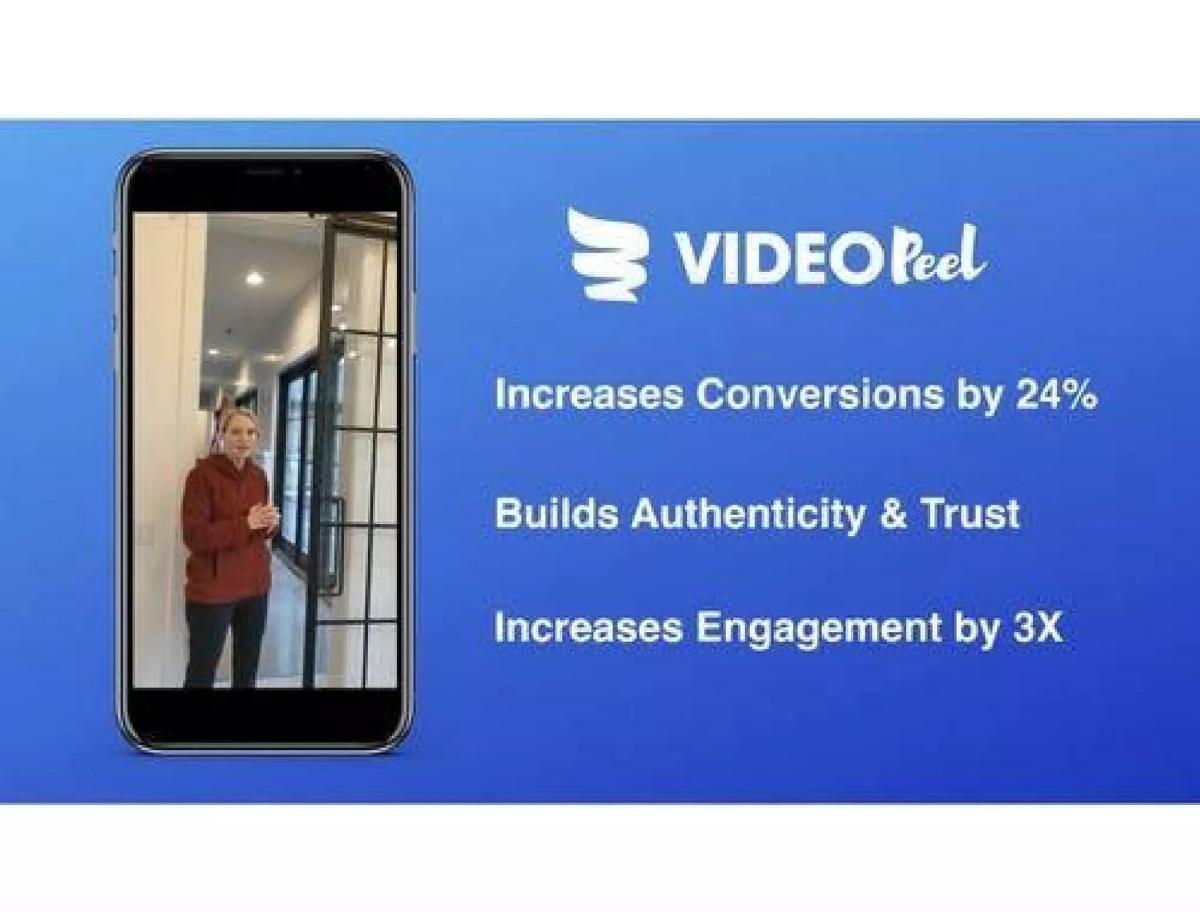
- The deck claims a specific 24% increase in conversions and a 3X increase in engagement for clients using their video testimonials (Slide 3).
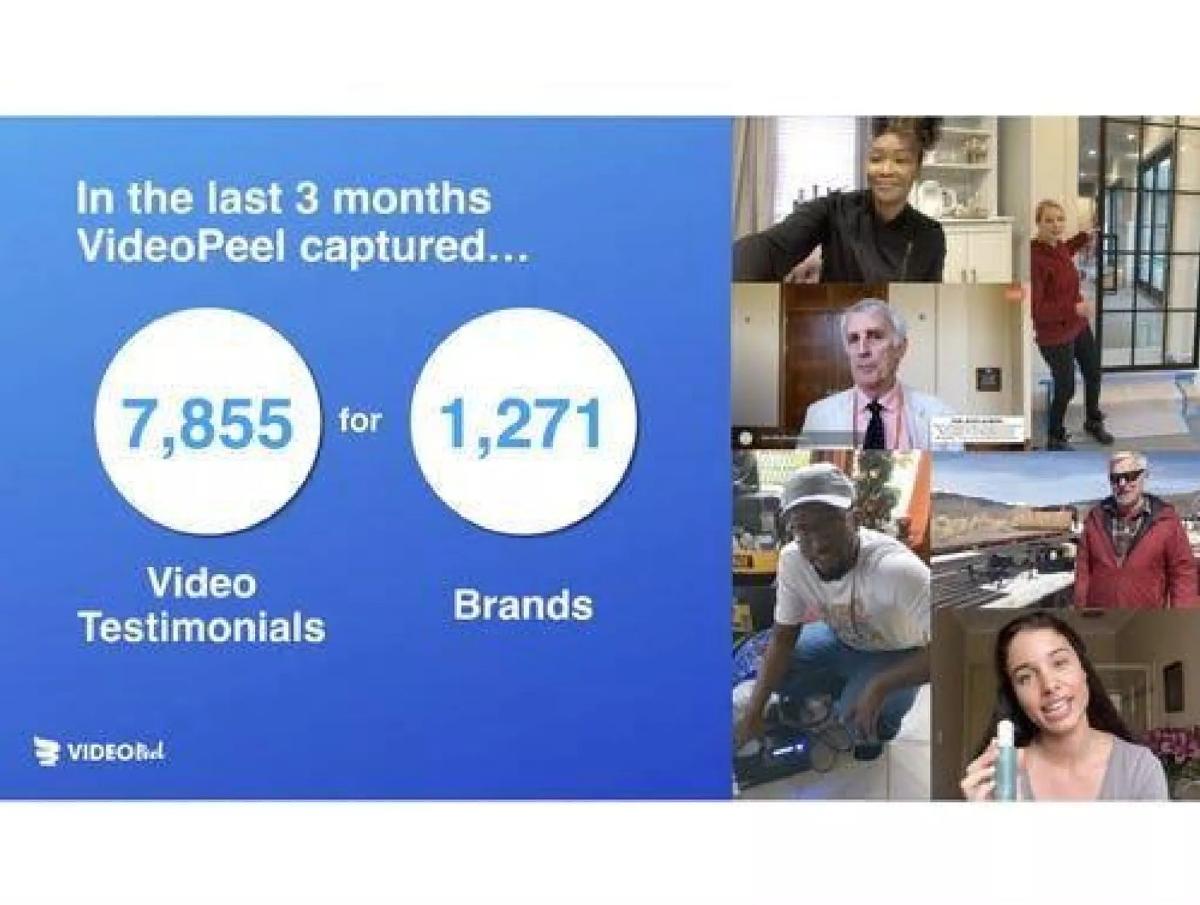
- Traction is quantified by the volume of content: 7,855 video testimonials captured for 1,271 brands in a three-month period (Slide 4).
- The product's core value proposition is friction reduction, stating that customers can record with 'no download, nor login required' (Slide 7).
- The platform handles technical heavy lifting automatically, including transcoding, encryption, transcription, and tagging (Slide 9).
- VideoPeel highlights a 20% better Cost Per Acquisition (CPA) for clients using their videos on Facebook and Instagram ads (Slide 11).
- The market size is defined as $4 billion, with a specific $300 million initial focus on the eCommerce sector (Slide 15).
- The team slide emphasizes 'Unrivaled Leadership' with experience from Facebook, Google, Amazon, and Microsoft (Slide 16).
- The deck omits a specific 'Ask' slide detailing the amount being raised or the intended use of funds within the 17-slide sequence.
The Narrative: Outcomes Over Features
VideoPeel’s pitch deck is a masterclass in focusing on the end result rather than the technical process. In the world of SaaS, it is easy to get lost in the 'how'—the APIs, the cloud storage, the encoding. VideoPeel ignores these technicalities until the middle of the deck, choosing instead to lead with the 'what': more money for the customer. By framing the product as a conversion tool rather than a video tool, they move the conversation from a discretionary marketing expense to a necessary revenue driver.
Introduction and the 'Why'
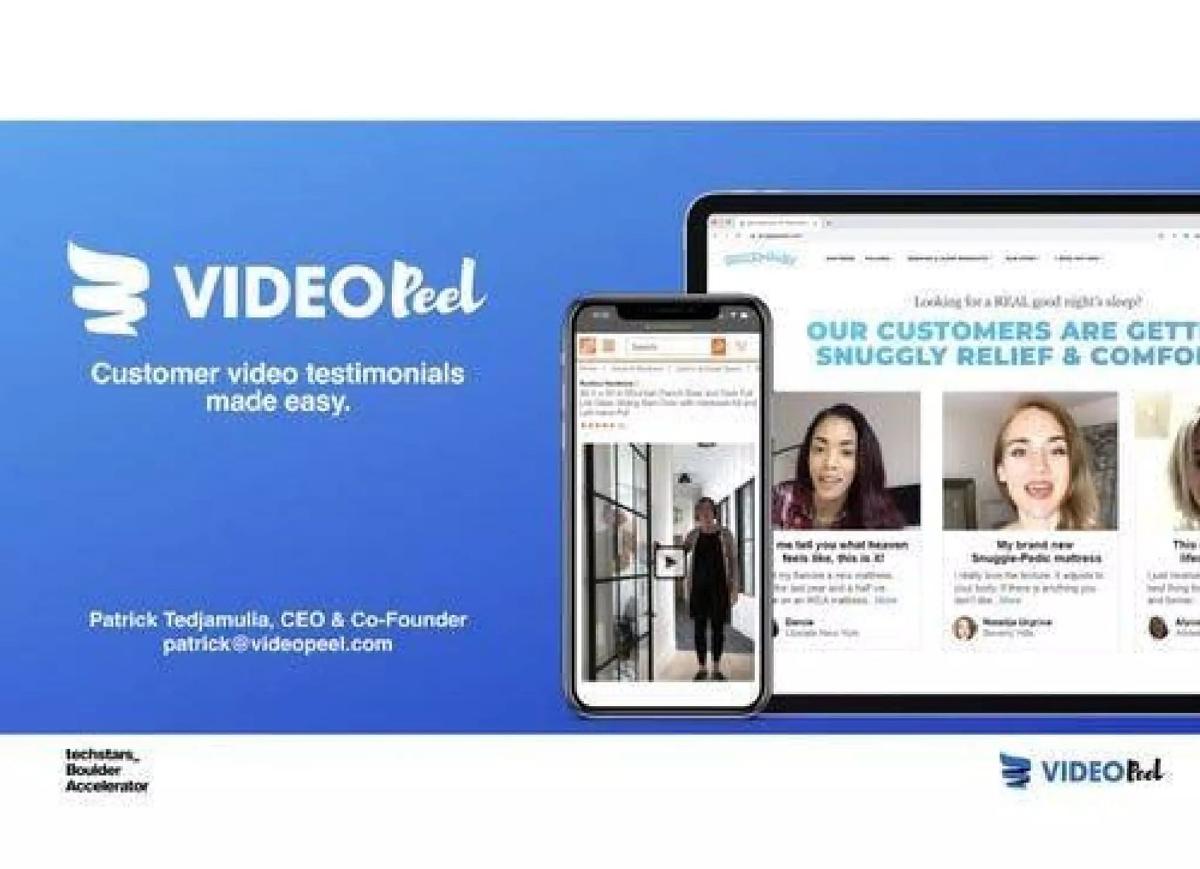
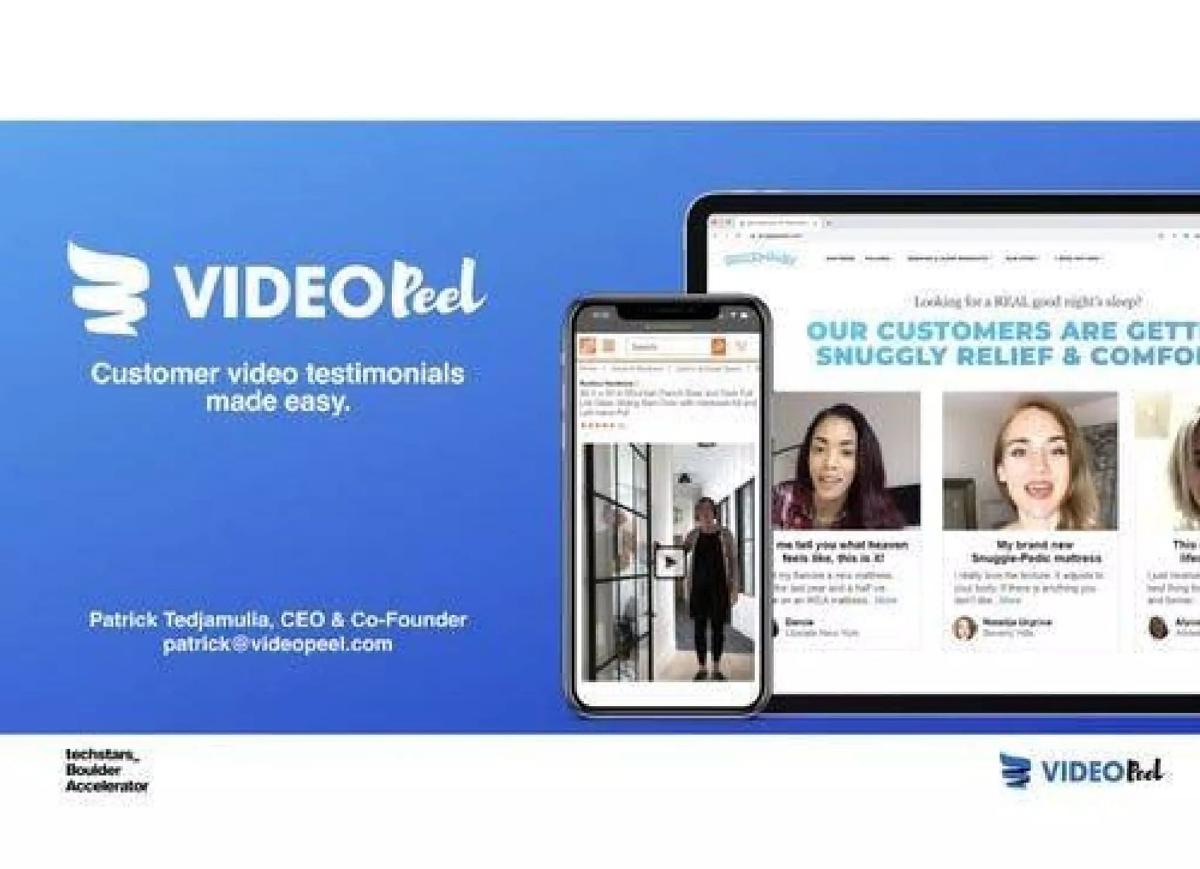
Slide 1: Title Slide The deck opens with a clear value proposition: "Customer video testimonials made easy." It features the Techstars Boulder Accelerator logo, immediately signaling to investors that the company has been vetted by a top-tier program. The visual shows the product in action on both mobile and desktop, establishing the cross-platform nature of the tool.
Slide 2: The Origin Story This slide establishes founder-market fit. It features a photo of Patrick Tedjamulia at Facebook. The text explains that as a leader in Facebook’s ads management team, Patrick realized businesses lacked the authentic content needed to tell their stories. This provides a logical 'why now' and 'why us' narrative—the founder saw the problem from inside the world's largest advertising engine.
Slide 3: The Value Proposition This is the 'hook' slide. It lists three primary metrics: Increases Conversions by 24%, Builds Authenticity & Trust, and Increases Engagement by 3X. By putting these numbers on the third slide, VideoPeel ensures that every subsequent slide is viewed through the lens of these high-impact outcomes.
Traction and Scale
Slide 4: Volume Metrics To prove the 24% conversion claim isn't a fluke, Slide 4 shows scale. In a three-month period, the platform captured 7,855 video testimonials for 1,271 brands. This demonstrates that the product is already being used at scale and has found a repeatable use case across a large number of customers.
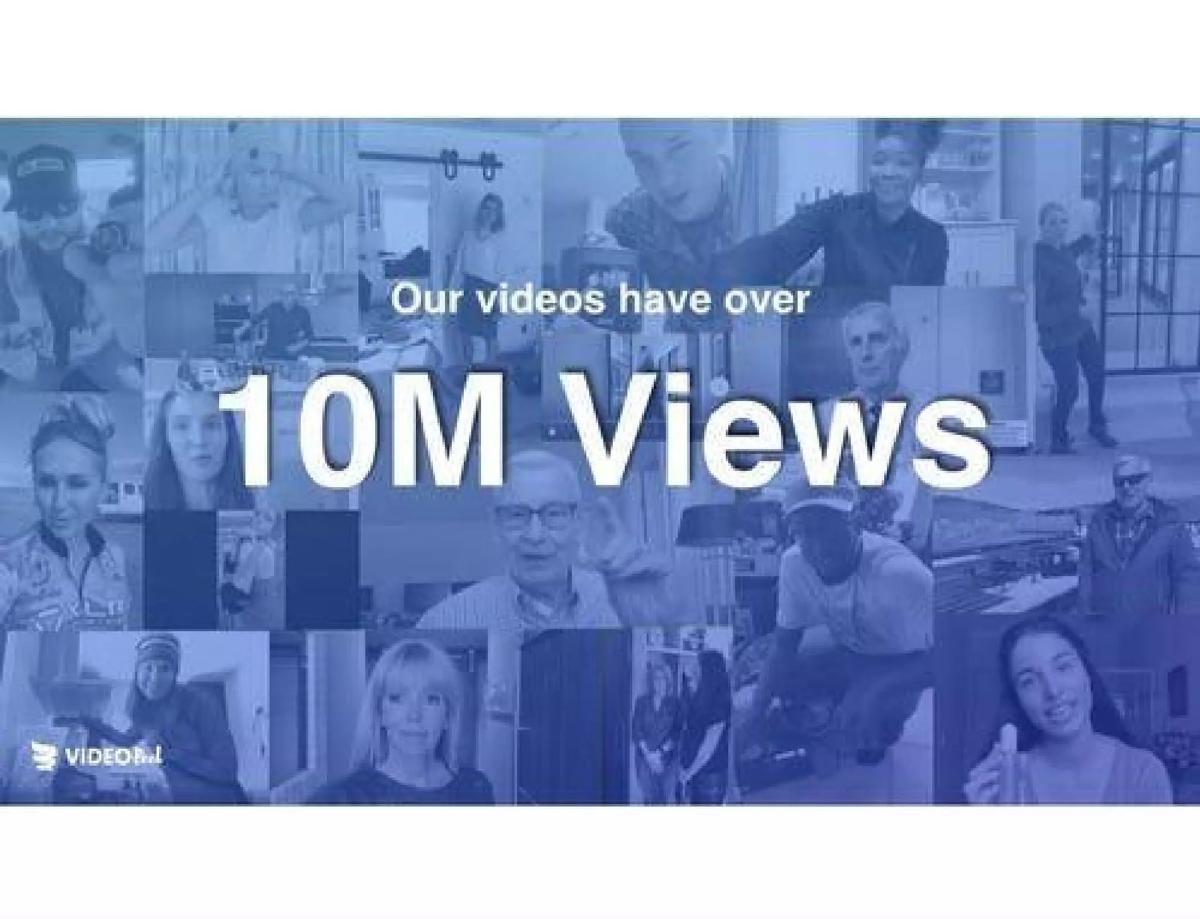
Slide 5: Reach The deck claims their videos have over 10 million views. This metric is used to show the secondary value of the platform: distribution. It’s not just about capturing the video; it’s about the massive audience those videos reach once published.
Product Walkthrough: Removing Friction
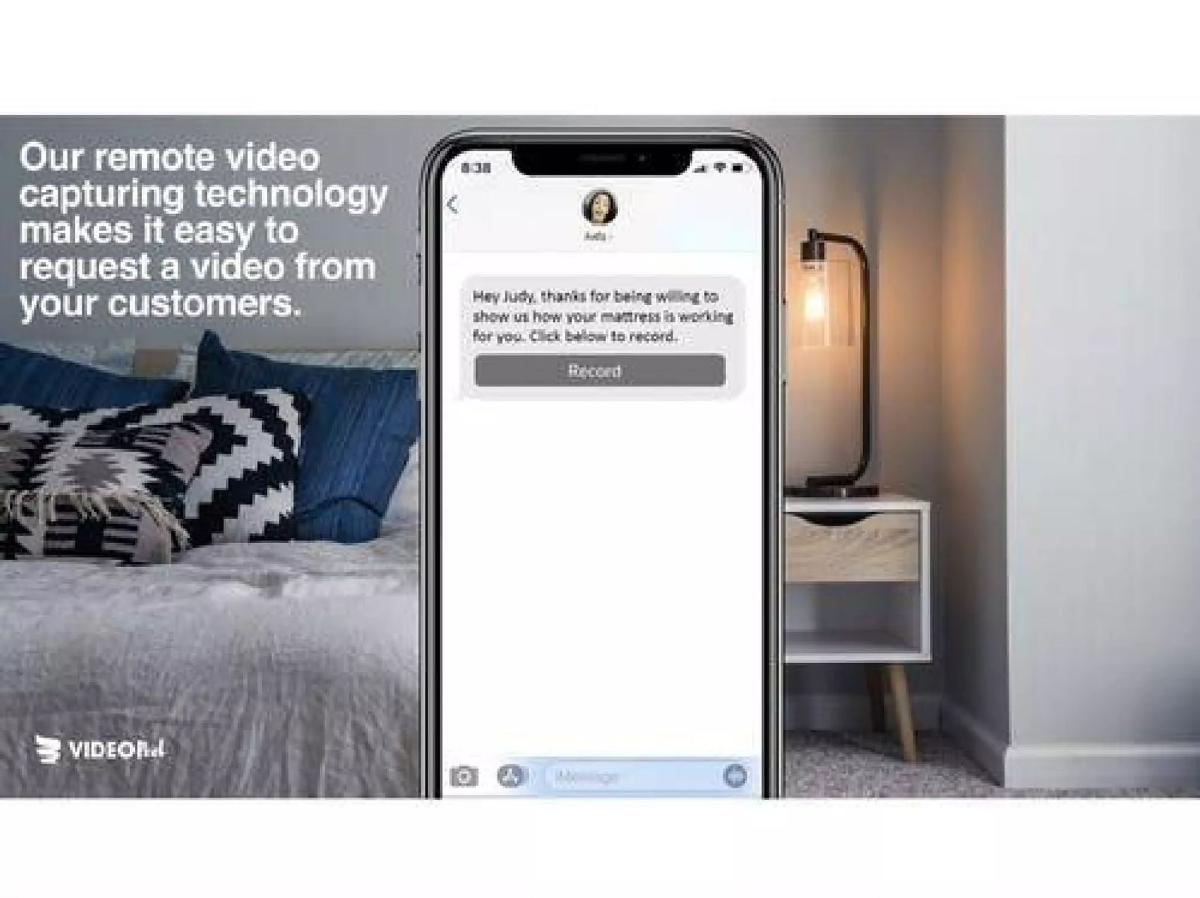
Slide 6: The Request The product section begins by showing how easy it is for a business to request a video. The visual is a simple text message with a 'Record' button. This emphasizes the 'remote' and 'easy' aspects of the platform mentioned in the intro.
Slide 7: The User Experience This is a critical slide for any user-generated content (UGC) platform. It explicitly states: "no download, nor login required." In 2015, the friction of downloading an app was a major barrier to UGC. VideoPeel identifies this pain point and presents their solution as a 'just click and record' experience.
Slide 8: Rights and Automation The deck addresses a common legal hurdle: rights management. It shows a digital signature screen where customers agree to terms. This indicates the platform is built for enterprise-grade compliance, not just casual use.
Slide 9: The Backend Finally, the deck touches on the technology. It mentions automatic transcoding, encryption, transcription, and tagging. This slide reassures investors that while the front end is simple, the back end is a robust, automated engine that handles the 'messy' parts of video management.
Case Studies and Integrations
Slide 10: Shopify Integration VideoPeel highlights its Shopify App, which automates the process for e-commerce stores. It repeats the "+24% Conversion" metric here, tying the product directly to the world's largest e-commerce ecosystem.
Slide 11: Ad Performance This slide targets the marketing spend. It claims a "20% Better Cost Per Acquisition" on Facebook and Instagram. This is a powerful argument for CMOs: using VideoPeel makes your existing ad budget 20% more efficient.
Slide 12: Channel Expansion The platform isn't limited to a brand's own site. Slide 12 shows integrations with Amazon, Home Depot, and Wayfair. It claims a 13X increase in engagement on these channels, positioning VideoPeel as an essential tool for multi-channel retailers.
Business Model and Market
Slide 13: Pricing Plans The pricing is transparent and tiered: $69/month for small businesses, $399/month for mid-level, and $5K/month for enterprise. This shows a clear path to high ACV (Annual Customer Value) through the enterprise tier while maintaining a high-volume 'long tail' of smaller customers.
Slide 14: Revenue Traction This slide is a placeholder in the public version of the deck, showing "$XX K MRR" and "XX% growth month over month." While the numbers are hidden, the background is a collage of customer logos (Indiegogo, Kajabi, KT Tape), which serves as visual social proof of their market penetration.
Slide 15: Market Size VideoPeel defines its Total Addressable Market (TAM) as $4 Billion, spanning Healthcare, Education, Software, and Government. They narrow their Serviceable Obtainable Market (SOM) to a $300 Million focus on eCommerce. This 'beachhead' strategy is a favorite for investors because it shows focus.
Team and Conclusion
Slide 16: The Team The team slide is exceptionally strong. It features logos from Facebook, Google, P&G, Amazon, Microsoft, Ogilvy, AT&T, and GoPro. By associating their team members with these giants, they argue that they have the 'Unrivaled Leadership' necessary to dominate the space.
Slide 17: Closing The deck ends with a call to "Join us in our journey!" and provides the CEO's contact information. It features more product shots, reinforcing the visual identity of the brand one last time.
What Works in This Deck
Outcome-First Messaging: The deck doesn't lead with "we host videos." It leads with "we increase conversions by 24%." This is a much more compelling reason to invest. · Friction Reduction: Highlighting the "no download, no login" feature addresses the single biggest reason why UGC platforms fail. · Social Proof: The use of logos—both from customers (Slide 14) and former employers (Slide 16)—creates an aura of inevitability and professional competence. · Visual Clarity: The slides are not cluttered. They use large fonts, clear screenshots, and consistent branding.
What is Missing
The Ask: There is no slide detailing how much money they are raising or what they plan to do with it. This is a major omission for a fundraising deck. · Competitive Landscape: The deck assumes VideoPeel is the only solution. Investors would want to know how they stack up against incumbents or other UGC tools. · Unit Economics: While pricing is shown, there is no mention of Customer Acquisition Cost (CAC) or Lifetime Value (LTV), which are crucial for a Seed-stage SaaS company. · Roadmap: The deck shows what the product does today, but not where it is going. A 'Future Vision' slide could have helped paint a larger picture.
What a Founder Should Copy
The 'Founder-Market Fit' Slide: Slide 2 is perfect. It uses a personal photo and a brief story to explain why the founder is uniquely qualified to solve this specific problem. · The Integration Slide: Slide 12 shows that the product lives where the customers already are (Amazon, Wayfair). Showing integrations proves that your product is part of an existing workflow, not an isolated island. · The Metric-Driven Hook: Copy the way Slide 3 presents three clear, bold metrics. It gives the investor three 'hooks' to remember the company by.
Frequently asked questions
- What is VideoPeel's primary product?
- VideoPeel is a remote video capturing platform designed for businesses to collect, manage, and share video testimonials from their customers. As shown on Slide 7 and Slide 8, the platform allows customers to record videos from any device without needing to download an app or create a login, making the collection process frictionless for the end user.
- How does VideoPeel prove its value to investors?
- The deck relies heavily on outcome-based metrics. On Slide 3, it cites a 24% increase in conversions and a 3X increase in engagement. Slide 11 further supports this by claiming a 20% improvement in Cost Per Acquisition (CPA) for social media ads. These figures demonstrate that the product isn't just a utility, but a revenue driver for its clients.
- What is the company's business model?
- VideoPeel uses a tiered SaaS pricing model. Slide 13 outlines three plans: Small Business (up to $69/month), Mid-level Business (up to $399/month), and Enterprise (up to $5K/month). This structure suggests they target a wide range of customers, from solo entrepreneurs to large corporations.
- Who are the founders and what is their background?
- The leadership team, detailed on Slide 16, includes CEO Patrick Tedjamulia (ex-Facebook, Google, P&G), CTO Ben Cobb (Amazon expert), and Co-Founder Maria Tedjamulia (ex-Microsoft, Ogilvy). The deck leverages these 'Big Tech' logos to establish immediate credibility and 'unrivaled expertise' in the ad-tech and software space.
- What is missing from the VideoPeel pitch deck?
- The deck is notably missing a specific 'Ask' slide that defines the round size and use of proceeds. Additionally, while Slide 14 shows a placeholder for '$XX K MRR,' the actual financial figures are redacted or omitted in this version. There is also no detailed competition slide or long-term product roadmap beyond the current feature set.