Viavy Fish Shop presents a 9-slide deck focused on solving the scarcity and high cost of fresh seafood in Antananarivo, Madagascar. The company proposes a web platform that bypasses traditional intermediaries to connect over 500,000 small-scale fishers with a target market of 6 million people. Their business model relies on a $6 USD average fee per kilogram, covering both the product and home delivery. While the deck outlines a clear social mission—lifting fishers out of poverty—it lacks critical financial details such as a specific funding ask, current traction metrics, or a breakdown of ope…
Key takeaways
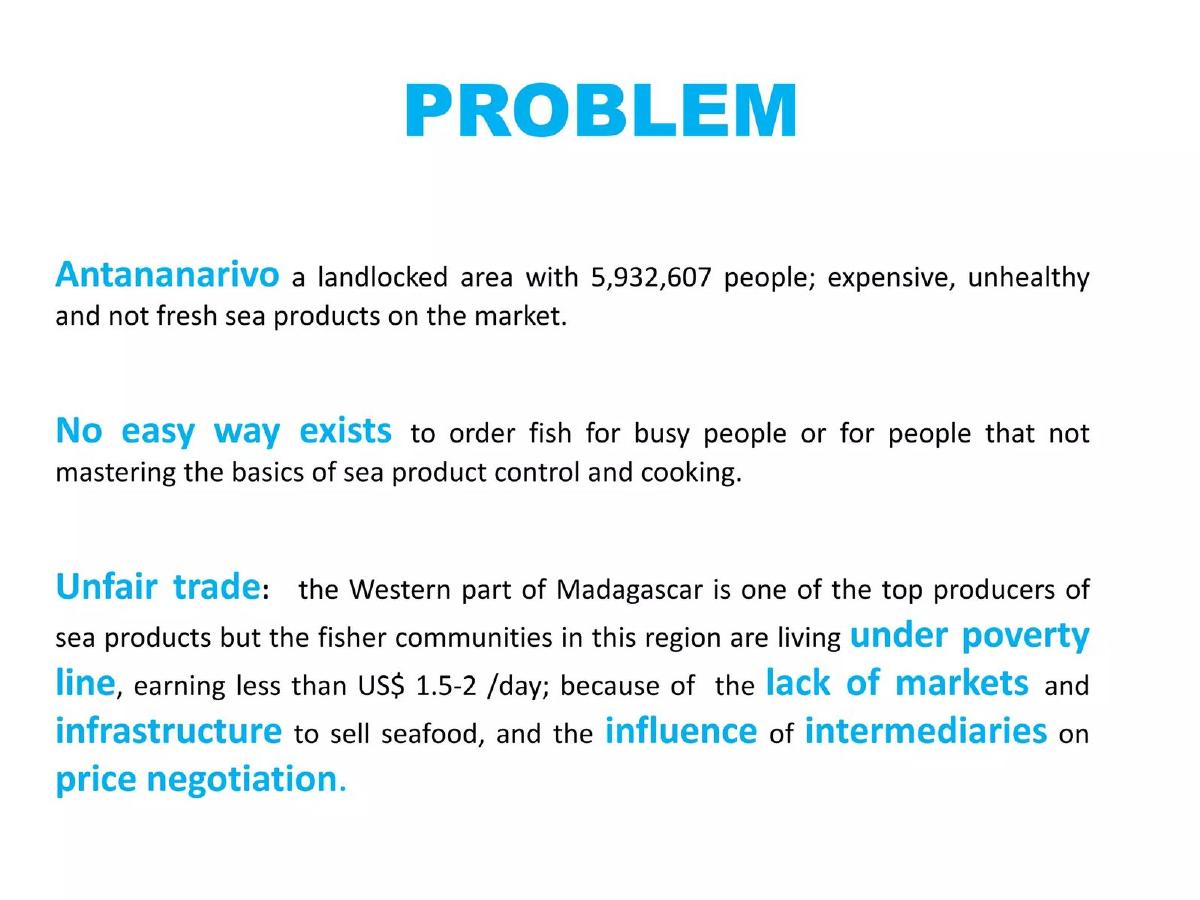
- The problem slide identifies Antananarivo as a landlocked area with 5,932,607 people facing expensive and unhealthy seafood options (Slide 2).
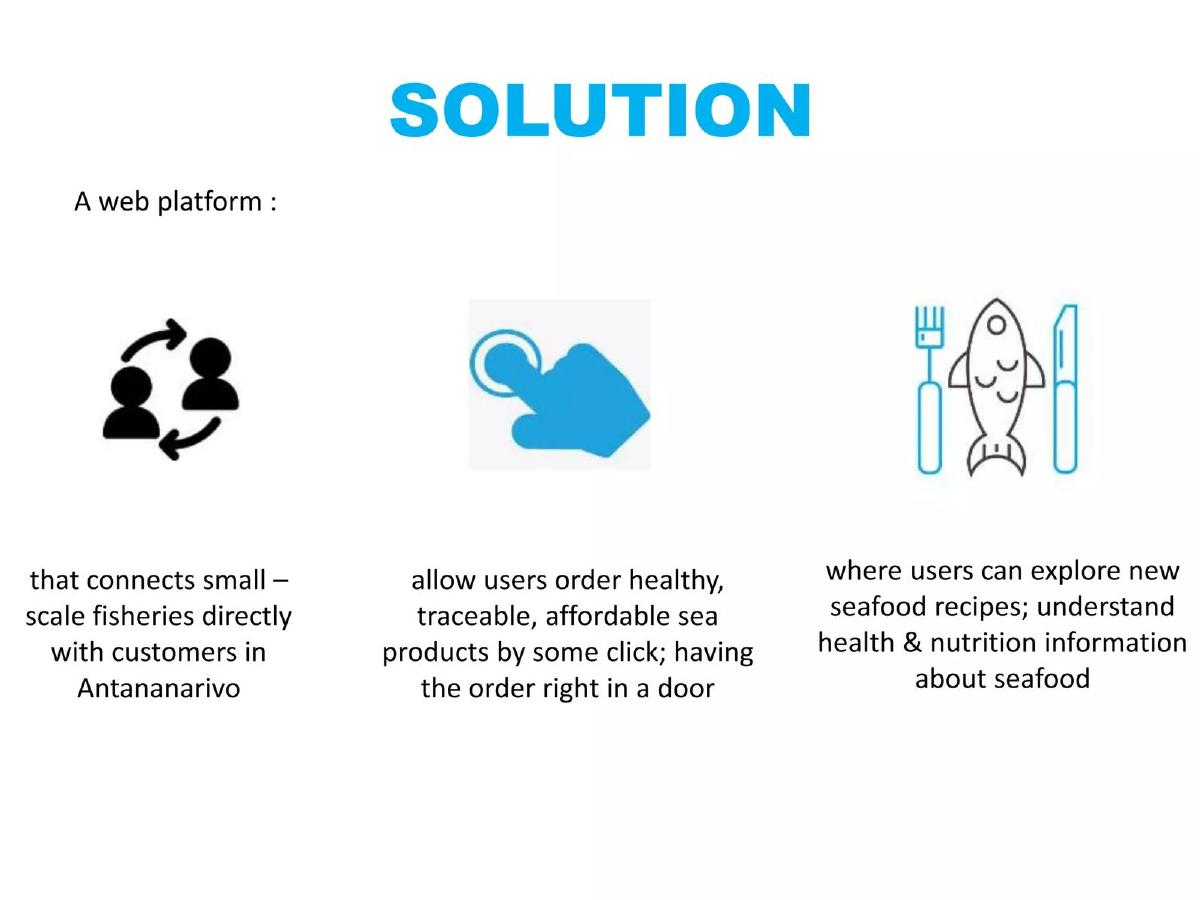
- Viavy Fish Shop intends to operate as a web platform connecting small-scale fisheries directly to urban customers (Slide 3).
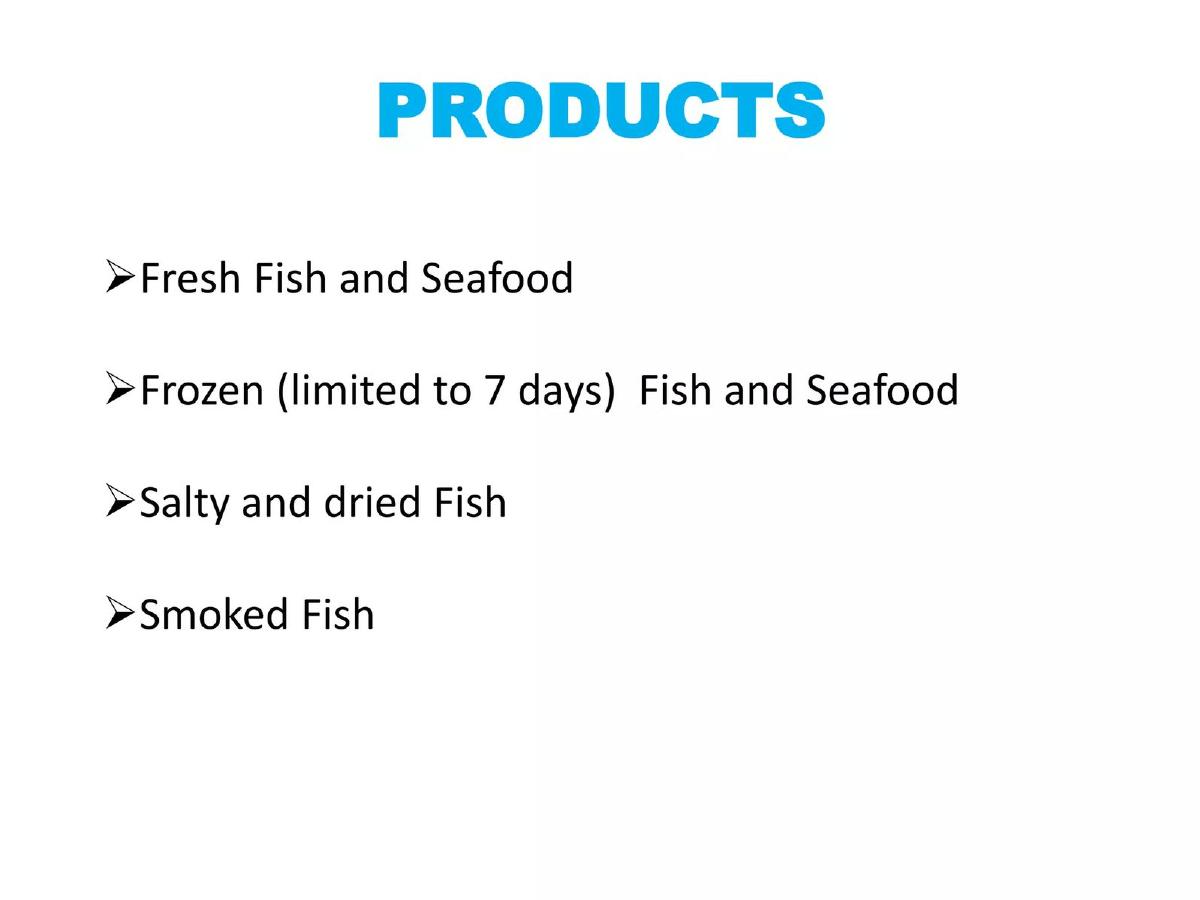
- The product range includes fresh, frozen (7-day limit), salty, dried, and smoked fish (Slide 4).
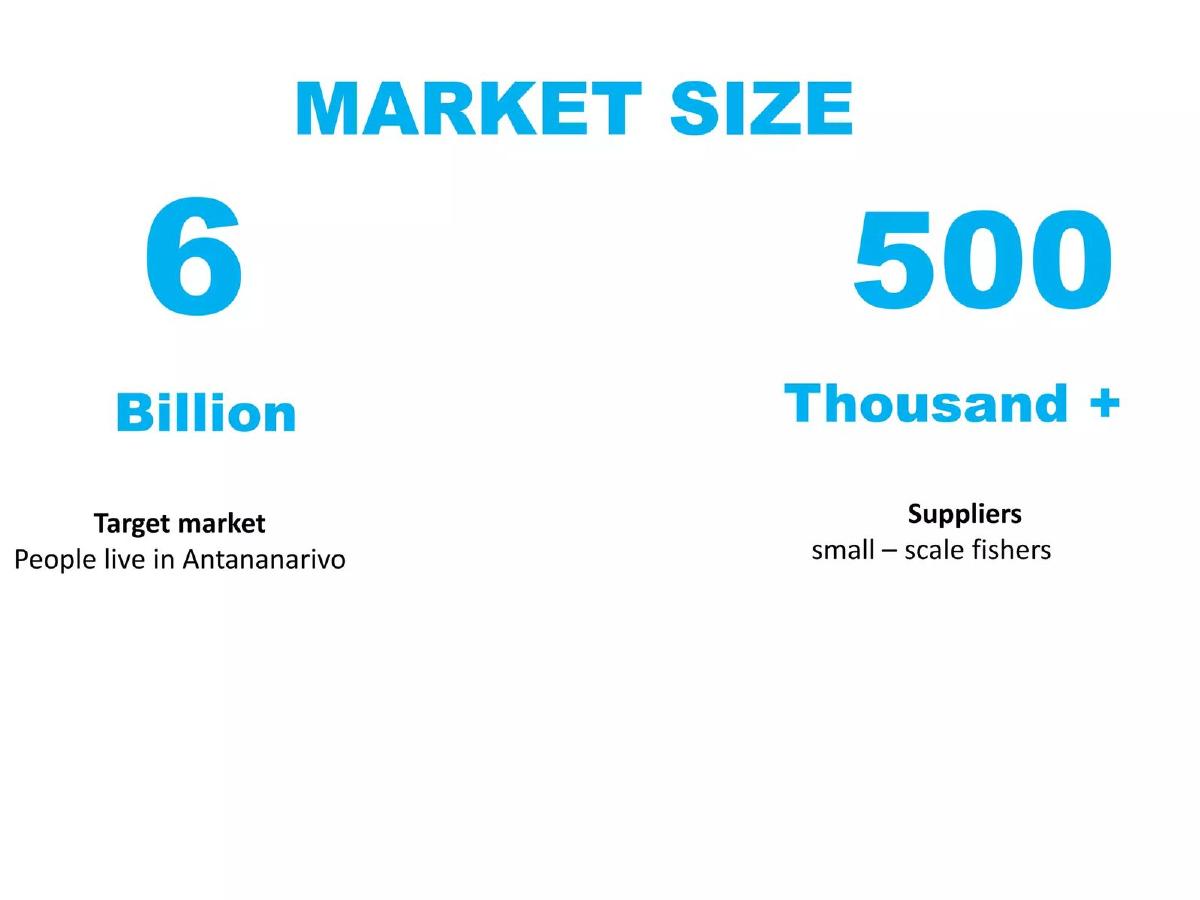
- Market size is defined by 6 billion target customers and 500 thousand plus suppliers, though the 6 billion figure likely refers to a broader vision than the local population (Slide 5).
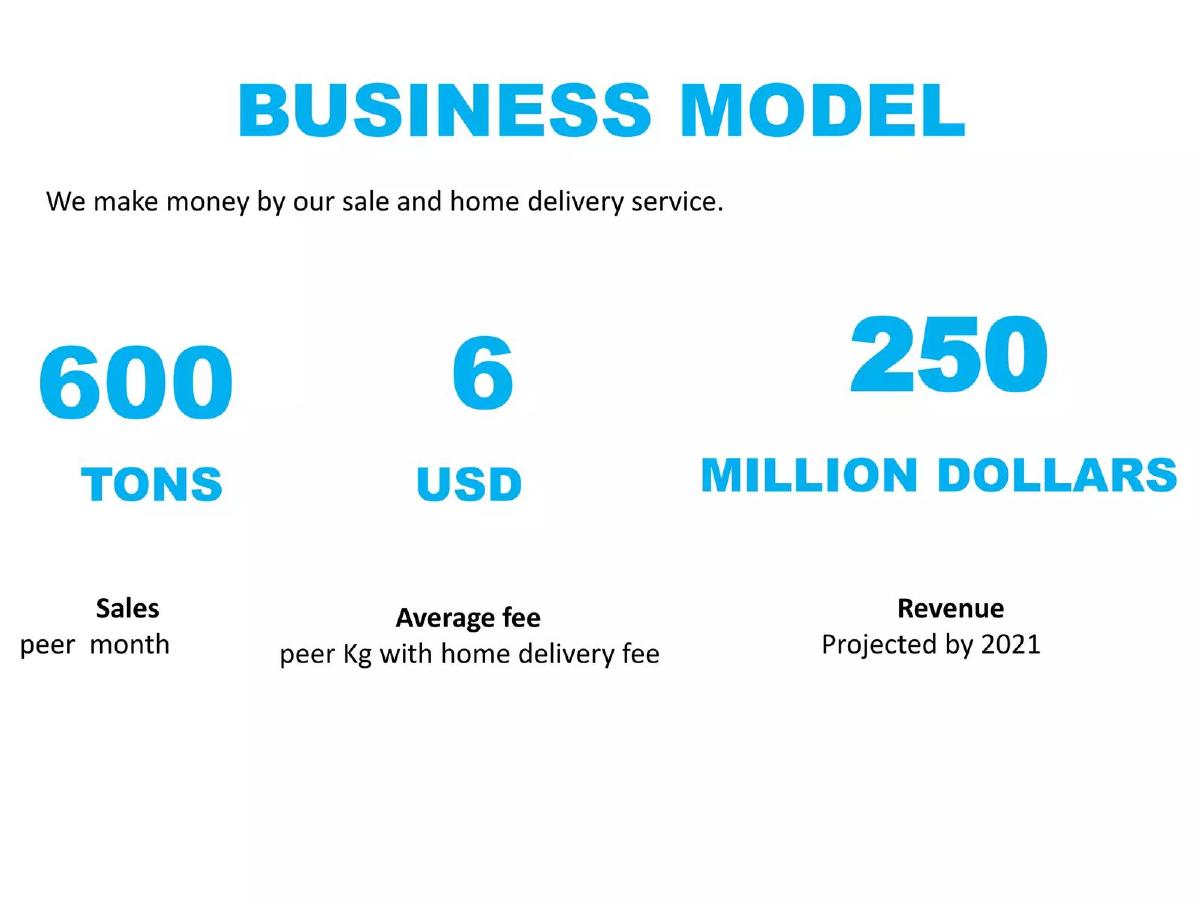
- The business model targets 600 tons of sales per month with an average fee of $6 USD per kg including delivery (Slide 6).
- Revenue is projected to reach $250 million by 2021 (Slide 6).
- The company claims to be the first online seafood company in Madagascar (Slide 8).
- The team includes a 'Fish control specialist' and an advisor with 35 years of fishing experience (Slide 9).
Viavy Fish Shop: A Direct-to-Consumer Seafood Play in Madagascar
Viavy Fish Shop is a logistics and e-commerce startup targeting the seafood market in Madagascar. The deck focuses on the disparity between the high production capacity of the Western part of the country and the lack of fresh, affordable seafood in the landlocked capital, Antananarivo. The following teardown analyzes the 9-slide presentation provided.
Slide 1: Title and Branding
The cover slide introduces the company name, VIAVY FISH SHOP , accompanied by a logo depicting a woman carrying a basket of fish. The tagline, "THE BEST OF THE SEA ON YOUR TABLE," establishes the core mission: bridging the gap between coastal resources and the consumer's dining room. The branding is functional but lacks the professional polish typically seen in high-growth tech decks.
Slide 2: The Problem
The problem is framed across three dimensions: geography, convenience, and social equity. First, the deck identifies Antananarivo as a landlocked area with 5,932,607 people who suffer from expensive and unhealthy seafood options. Second, it notes that no easy way exists for busy people to order fish. Third, it addresses "Unfair trade," stating that while Western Madagascar is a top producer, fisher communities live "under poverty line, earning less than US$ 1.5-2 /day" due to intermediaries and lack of infrastructure.
Slide 3: The Solution
The solution is defined as "A web platform" that performs three functions:
Connects small-scale fisheries directly with customers in Antananarivo. · Allows users to order healthy, traceable, and affordable sea products with "some click" for home delivery. · Provides a space for users to explore seafood recipes and nutritional information.
Slide 4: Product Range
This slide lists the inventory categories the platform intends to carry:
Fresh Fish and Seafood · Frozen (limited to 7 days) Fish and Seafood · Salty and dried Fish · Smoked Fish
The mention of a 7-day limit for frozen products indicates a focus on high-turnover inventory and potentially limited cold-storage capabilities.
Slide 5: Market Size
The market size slide contains two large figures: 6 Billion for the target market and 500 Thousand + for suppliers. The 6 billion figure is highly confusing; given the context of Slide 2, which cites a local population of ~5.9 million, the "6 Billion" figure is likely a typo or refers to a global market that is not relevant to the current local operational plan. The 500,000+ suppliers refers to small-scale fishers.
Slide 6: Business Model and Projections
This is the most data-heavy slide in the deck. It states the company makes money through "sale and home delivery service." Key targets include:
600 TONS: Sales per month. · 6 USD: Average fee per kg including home delivery. · 250 MILLION DOLLARS: Projected revenue by 2021.
The math for the revenue projection is aggressive. 600 tons at $6,000 per ton ($6/kg) equals $3.6 million in monthly revenue, or roughly $43.2 million annually. To reach $250 million, the company would need to scale significantly beyond the stated 600-ton monthly target.
Slide 7: Market Adoption
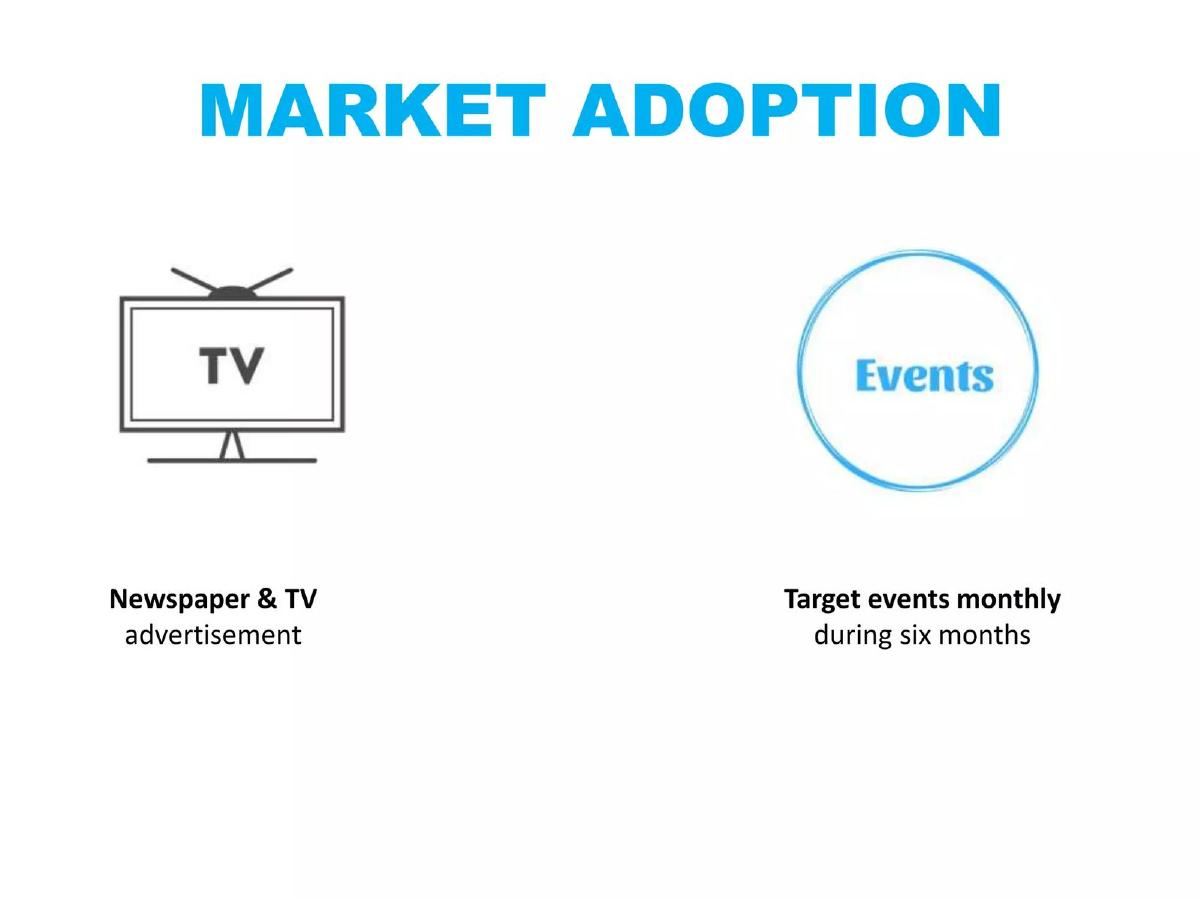
The go-to-market strategy is traditional. It relies on "Newspaper & TV advertisement" and targeting "events monthly during six months." There is no mention of digital marketing, social media, or SEO, which is surprising for a company describing itself as a "web platform."
Slide 8: Competitive Advantage
First to the market: Claiming to be the first online seafood company in Madagascar. · Easy to Use: Ordering via image/video. · Time save: Eliminating the need to visit physical markets. · Save money: Through affordable products. · Free recipe & traceability: "From the boat to the table." · Small-scale fisheries success: Promoting fair trade and protecting marine ecosystems.
Slide 9: The Team
RATIARISOA Daniela L.: Founder & CEO, described as an African Women Entrepreneurship Cooperative fellow and database developer. · Rasambazafy Ambinintsoa N. E.: Fish control specialist. · SOATINAHY Blandine: Marketing Manager & Accountant. · RAMANANTSOA Mbola: Full-stack developer. · HIARISAINA Fanjava: Developer & Video Maker. · MBONDRAZA: Product Manager & Advisor with 35 years of fishing experience. · RATIARISOA Danielie D.: Community Manager.
The team appears to have a balance of technical development skills and industry-specific expertise.
What Works / What is Missing
What Works: The deck identifies a very clear and visceral problem. The logistics of getting fresh food into landlocked urban centers in developing nations is a proven pain point. The social mission—improving the lives of fishers earning less than $2 a day—is compelling and aligns well with impact-focused investors. The inclusion of a 'Fish control specialist' and a veteran advisor adds necessary credibility to the handling of perishable goods.
What is Missing: The most significant omission is the Ask . The deck does not state how much capital is being raised or what that capital will be used for (e.g., refrigerated trucks, warehouse space, or marketing). Furthermore, the Market Size slide (Slide 5) contains a massive discrepancy with the "6 Billion" figure that undermines the credibility of the data. There is also no mention of Traction ; an investor cannot tell if this is a conceptual idea or a business that has already moved its first ton of fish. Finally, the Unit Economics are vague; while they cite a $6/kg fee, they do not disclose the acquisition cost of the fish or the cost of delivery, making it impossible to determine gross margins.
Founder Takeaways
Verify your macro numbers: If your target city has 6 million people, do not put "6 Billion" on your market slide. It suggests a lack of attention to detail that can be fatal during due diligence. Address the 'How': In a logistics business, the 'how' is more important than the 'what.' A founder should explain how they will maintain the cold chain over long distances in Madagascar. Include a clear Ask: Never end a pitch deck without telling the investor exactly what you need from them to reach the next milestone.
Frequently asked questions
- What is the primary value proposition of Viavy Fish Shop?
- The primary value proposition is providing fresh, traceable, and affordable seafood to the landlocked population of Antananarivo. By connecting small-scale fishers directly to consumers via a web platform, they aim to eliminate expensive intermediaries, reduce prices for buyers, and increase earnings for fishers who currently live under the poverty line earning less than $2 USD per day.
- How does the company plan to generate revenue?
- According to Slide 6, the company generates revenue through direct sales and home delivery services. They cite an average fee of $6 USD per kilogram, which includes the delivery cost. Their financial goal is to reach 600 tons of sales per month, leading to a projected revenue of $250 million by the year 2021.
- What are the biggest risks identified in the deck?
- While not explicitly listed as 'risks,' the deck highlights significant infrastructure and logistical challenges. Slide 2 mentions a 'lack of markets and infrastructure' and the 'influence of intermediaries.' Successfully managing the cold chain for 'Fresh Fish' and 'Frozen Fish' (limited to 7 days) in a region with infrastructure deficits represents a major operational hurdle.
- Is there any evidence of current traction?
- No. The deck does not provide current sales figures, user numbers, or partnership agreements with specific fisheries. All financial figures provided on Slide 6, including the 600 tons per month and $250 million revenue, are presented as projections or targets rather than historical performance data.
- What is missing from this pitch deck that an investor would need?
- The deck is missing several standard components: a specific capital ask (how much money they need), a 'Use of Funds' breakdown, a competitive landscape analysis beyond being 'first to market,' and detailed unit economics. It also lacks a roadmap showing the milestones required to reach their 600-ton monthly sales target.