Find my Doctor’s pitch deck is a high-level summary of a health-tech platform operating in Pakistan. With only 9 slides, it prioritizes traction and future service expansion over granular financial data. The company reports substantial reach, citing 250,000+ satisfied customers and 400,000+ doctor visits on slide 3. The narrative centers on the evolution from a simple service provider into a 'Healthcare Superapp' (slide 9), incorporating telehealth, medicine delivery, and lab tests. While the deck successfully establishes the scale of the opportunity—projecting a $15 billion market by 2025—it…
Key takeaways
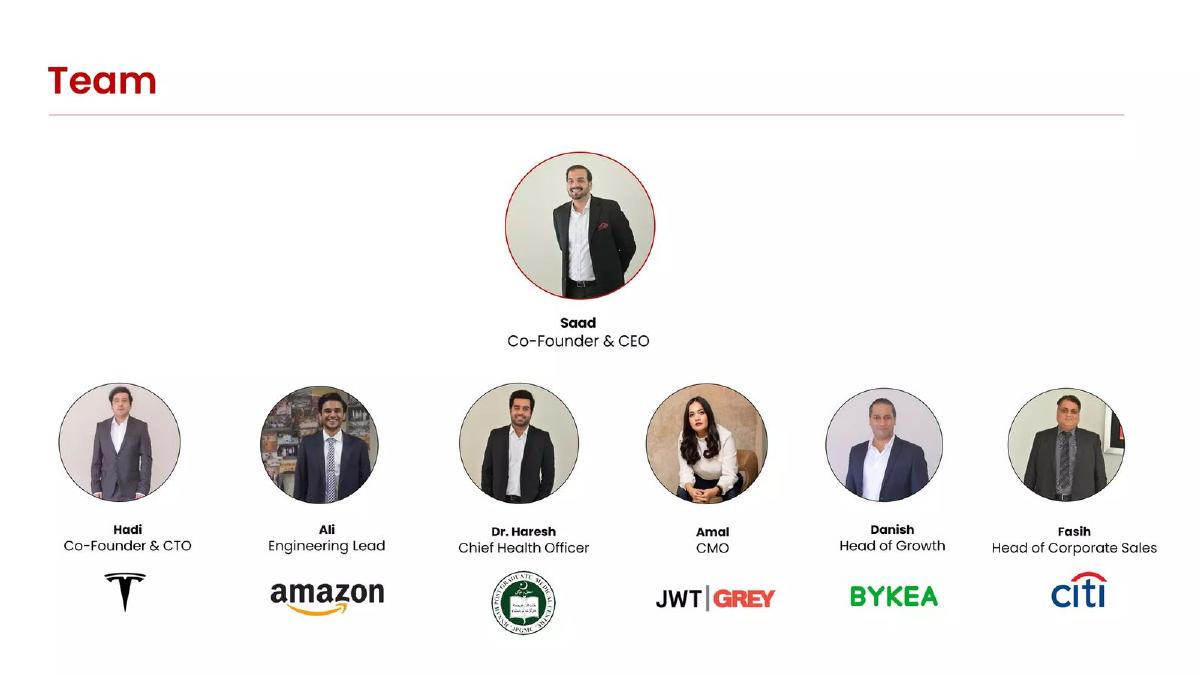
- The team features experience from major global and local brands including Tesla, Amazon, Citi, and Bykea (Slide 2).
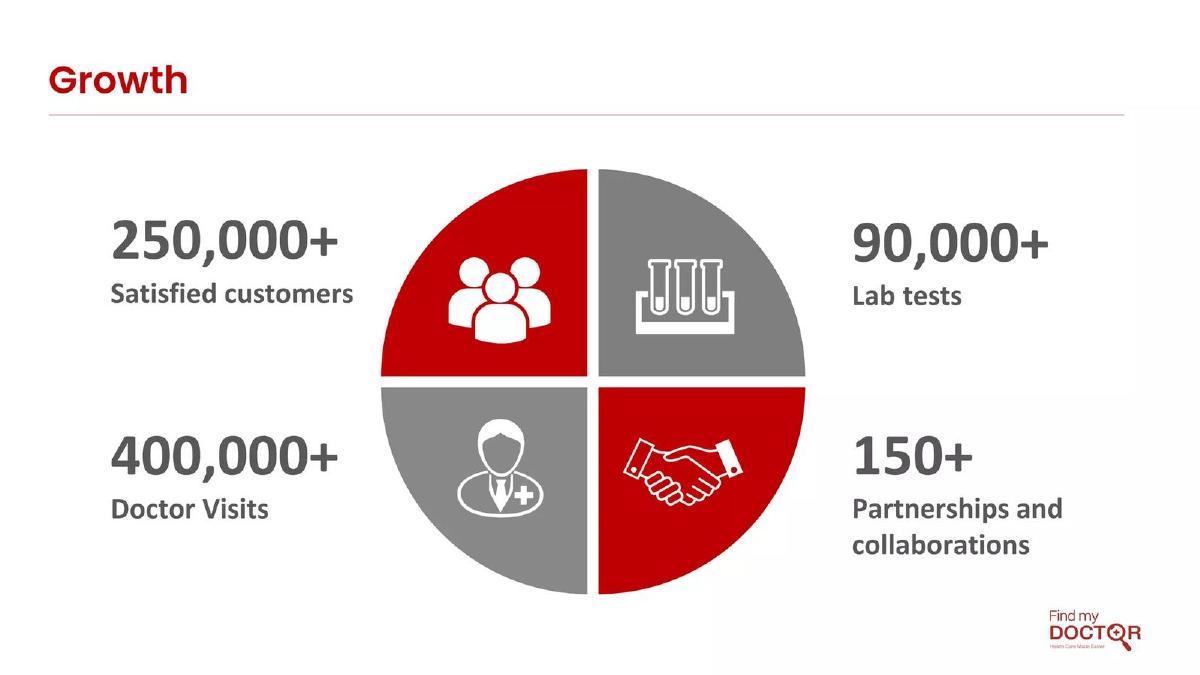
- Traction is significant, with the company claiming over 400,000 doctor visits and 90,000+ lab tests completed (Slide 3).
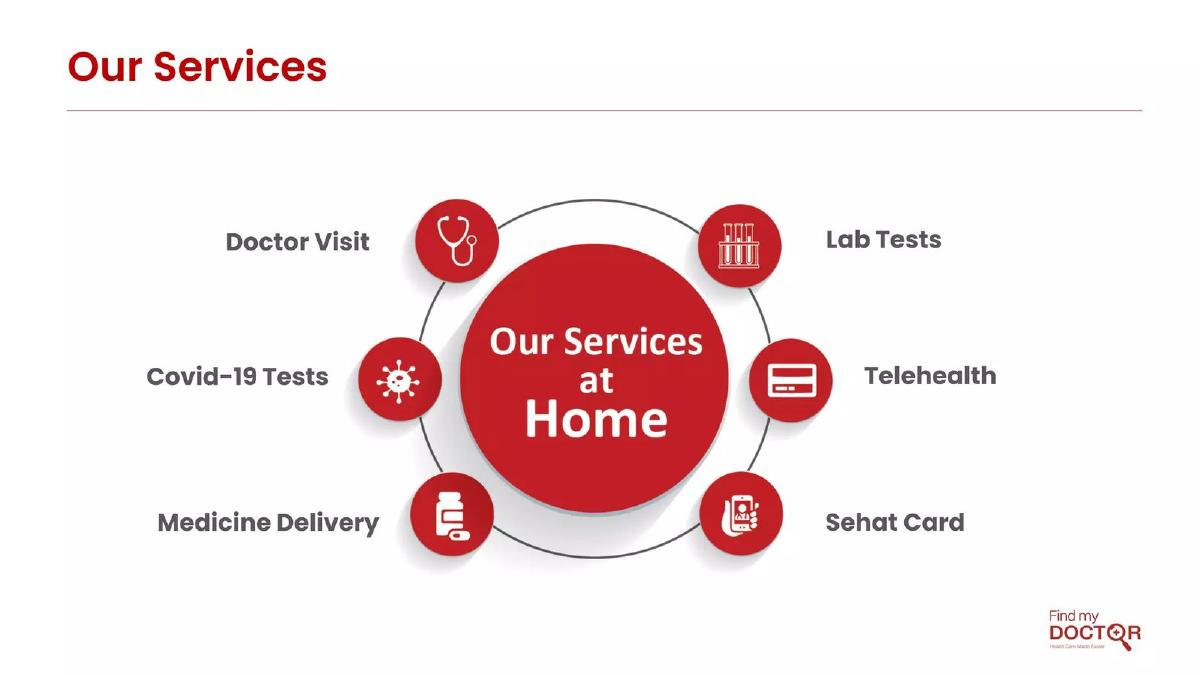
- The service offering is broad, covering home doctor visits, medicine delivery, telehealth, and the Sehat Card (Slide 4).
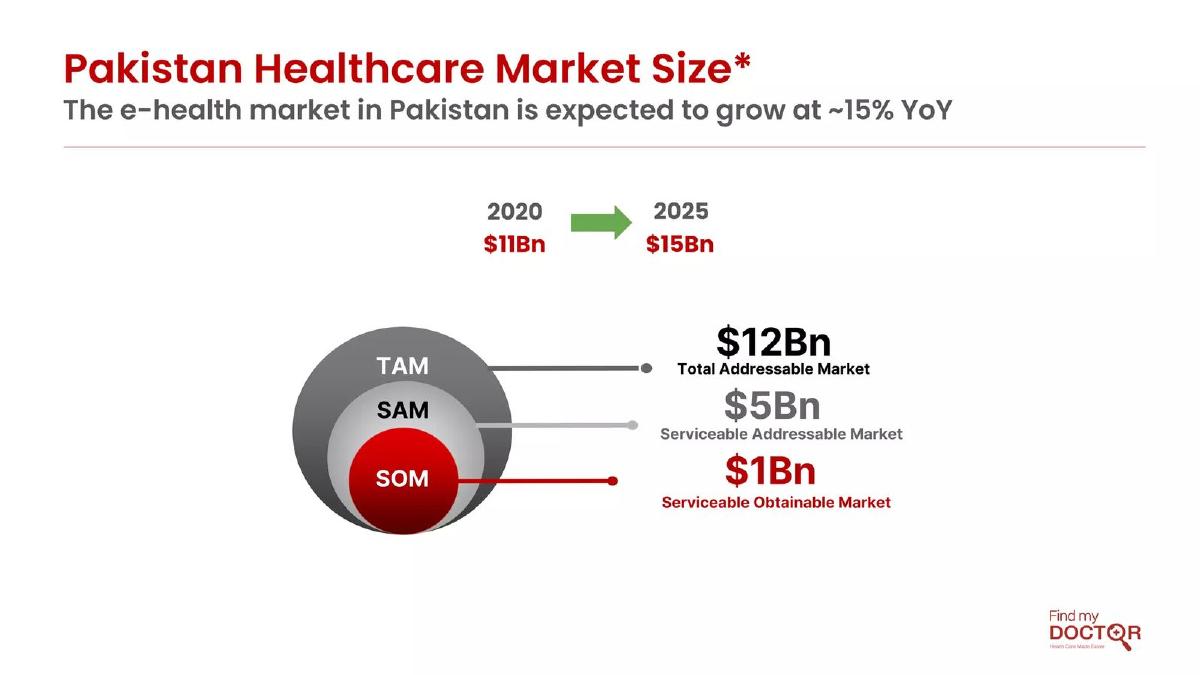
- The Pakistan healthcare market is projected to reach $15 billion by 2025, with e-health growing at 15% YoY (Slide 5).
- Future growth relies on a 'Dark Store' model for medicine delivery with a 99-minute fulfillment target (Slide 8).
- The company is shifting its technical infrastructure to AWS and developing a dedicated app for doctors (Slide 7).
- There is no slide detailing the specific funding amount requested or the intended use of proceeds.
- The deck omits a business model slide, leaving the revenue generation mechanics for each service unclear.
Find my Doctor Pitch Deck Analysis
Find my Doctor presents a streamlined 9-slide deck that functions as a high-level overview of their operations in Pakistan. The deck is titled an 'Investment Memorandum,' though it lacks many of the technical and financial details typically found in such a document. Instead, it focuses heavily on the 'Superapp' vision and the impressive traction the team has achieved to date.
Slide 1: Title Slide
The title slide is minimalist, featuring the company logo and the tagline 'Health Care Made Easier.' The branding is consistent, using a red and white color scheme that persists throughout the deck. The label 'Investment Memorandum' sets an expectation for a deep dive that the subsequent eight slides only partially fulfill.
Slide 2: Team
The team slide is a strong point for the company. It lists seven key members, including the CEO, CTO, Engineering Lead, Chief Health Officer, CMO, Head of Growth, and Head of Corporate Sales. The slide uses recognizable corporate logos to validate the team's pedigree, citing experience at Tesla, Amazon, JWT Grey, Bykea, and Citi . This suggests a blend of international tech standards and local market expertise.
Slide 3: Growth
This slide provides the 'why now' for investors by showcasing significant scale. The figures quoted are:
250,000+ Satisfied customers · 400,000+ Doctor Visits · 90,000+ Lab tests · 150+ Partnerships and collaborations
The volume of doctor visits relative to the customer count suggests a high retention rate or frequent usage per user, which is a positive signal for a healthcare platform.
Slide 4: Our Services
Find my Doctor defines its core offering as 'Our Services at Home.' The ecosystem includes:
Doctor Visit · Lab Tests · Telehealth · Sehat Card · Medicine Delivery · Covid-19 Tests
By grouping these under a single umbrella, the company demonstrates its intent to own the entire patient journey from diagnosis to treatment and fulfillment.
Slide 5: Pakistan Healthcare Market Size
The market slide uses a standard TAM/SAM/SOM funnel. It notes that the e-health market in Pakistan is expected to grow at ~15% YoY . The specific figures provided are:
The slide also projects the total healthcare market growing from $11Bn in 2020 to $15Bn in 2025 . This provides a clear macro-economic tailwind for the business.
Slide 6: 2022 & Beyond – Services
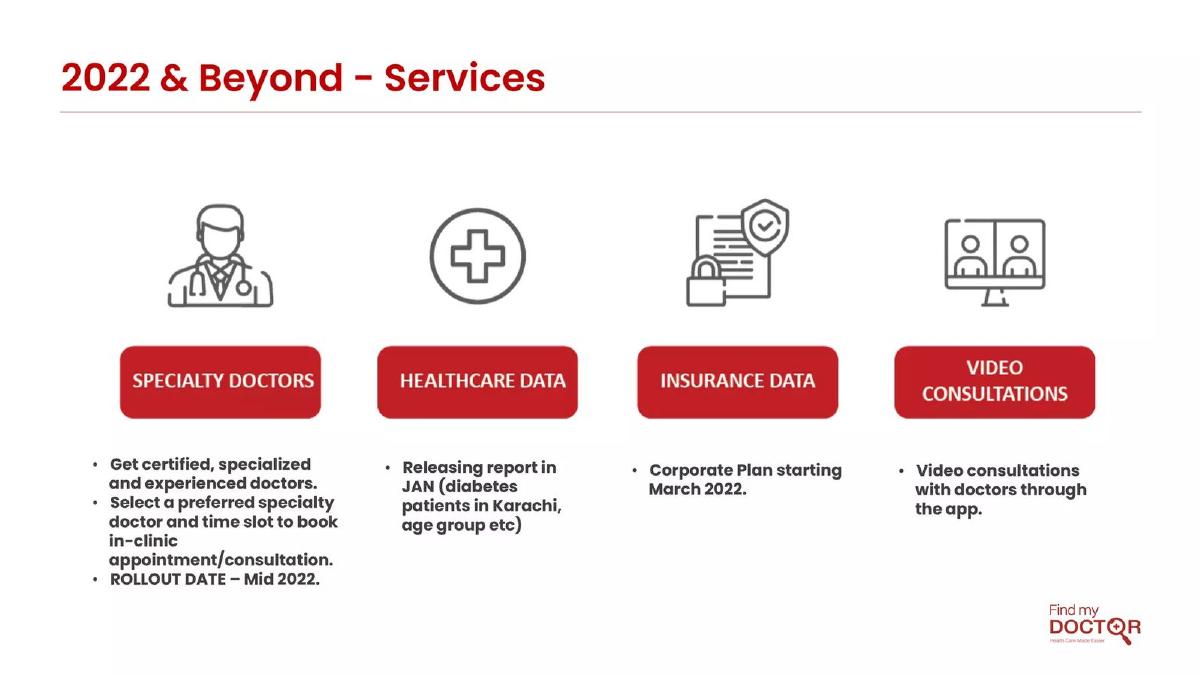
This slide outlines the roadmap for service expansion. Key initiatives include:
Specialty Doctors: A rollout planned for mid-2022. · Healthcare Data: Releasing reports on specific demographics (e.g., diabetes patients in Karachi). · Insurance Data: Launching a Corporate Plan in March 2022. · Video Consultations: Integrating video directly into the app.
This indicates a move toward higher-margin specialized care and B2B corporate revenue streams.
Slide 7: 2022 & Beyond – Technology
The technology roadmap focuses on infrastructure and user experience. The company plans to:
Improve UI/UX and introduce a chat feature. · Build a complete E-Commerce setup for the pharmacy. · Launch a separate app for doctors featuring GPS, audio, and video. · Shift the entire backend to AWS .
The mention of a separate doctor app is crucial, as it suggests a focus on the supply-side experience, which is often a bottleneck in healthcare marketplaces.
Slide 8: What’s Next?
Slide 8 introduces the two pillars of their immediate future: Dark Stores and Virtual Care . The Dark Store initiative is particularly aggressive, promising 24/7 medicine delivery across Karachi within 99 minutes . This moves the company into the logistics space, competing with general delivery apps but with a specialized pharmaceutical focus.
Slide 9: A Healthcare Superapp
The final slide serves as a visual summary, displaying multiple app screens to reinforce the 'Superapp' concept. It shows interfaces for booking doctors, selecting cities, and the pharmacy categories. It functions as a closing vision statement rather than a call to action.
What Works in This Deck
Strong Traction Metrics: The inclusion of 400,000+ doctor visits on slide 3 is the most compelling part of the deck. It proves that the service is not just a concept but a functioning utility with significant market penetration.
Clear Market Focus: By focusing exclusively on Pakistan and providing specific local market data (Slide 5), the founders demonstrate a deep understanding of their operating environment. The mention of the 'Sehat Card' (Slide 4) shows alignment with local government healthcare initiatives.
Pedigreed Team: The team slide (Slide 2) effectively uses 'halo' branding from companies like Amazon and Tesla to build immediate credibility for a startup operating in an emerging market.
What Is Missing From This Deck
The Ask: There is no slide stating how much money the company is raising, at what valuation, or what the specific milestones for the next round of funding will be. This is a critical omission for a document labeled an 'Investment Memorandum.'
Business Model: While the services are clear, the economics are not. The deck does not explain how the company makes money—whether through commissions on doctor visits, margins on medicine, or subscription fees for the corporate plan.
Competitive Landscape: The deck assumes a vacuum. In a market as large as Pakistan, there are significant competitors in the telehealth and delivery spaces. Failing to address how Find my Doctor wins against local rivals like Oladoc or Marham is a missed opportunity to show defensive moats.
Financial History: There are no mentions of revenue growth, burn rate, or unit economics (CAC/LTV). Investors in the health-tech space typically require a look at the sustainability of the growth presented on slide 3.
Founder's Guide: What to Copy
The 'Superapp' Visualization: Slide 9 is an excellent way to end a deck. It visually communicates the breadth of the product without requiring dense text. Founders building multi-service platforms should use similar mockups to show the 'completeness' of their vision.
Service Ecosystem Mapping: Slide 4 uses a simple circular graphic to show how different services (Telehealth, Pharmacy, Lab Tests) revolve around the central theme of 'Services at Home.' This is a very effective way to explain a complex business model in seconds.
Roadmap Categorization: Splitting the roadmap into 'Services' (Slide 6) and 'Technology' (Slide 7) is a smart move. It shows that the founders are thinking about both the business development side and the technical scalability required to support that growth.
Frequently asked questions
- What is the primary value proposition of Find my Doctor?
- Based on slide 4 and slide 9, the company positions itself as a 'Healthcare Superapp' that provides 'Services at Home.' This includes physical doctor visits, lab tests, COVID-19 testing, medicine delivery, and telehealth consultations, aiming to make healthcare more accessible in the Pakistani market.
- How large is the market opportunity according to the deck?
- Slide 5 quantifies the Pakistan healthcare market at $11 billion in 2020, expected to grow to $15 billion by 2025. The company identifies its Total Addressable Market (TAM) as $12 billion and its Serviceable Obtainable Market (SOM) as $1 billion.
- What are the key growth milestones mentioned?
- Slide 3 lists over 250,000 satisfied customers, 400,000+ doctor visits, 90,000+ lab tests, and 150+ partnerships. Slide 6 further notes a 'Corporate Plan' launch in March 2022 and a rollout of specialized doctor services in mid-2022.
- What is the 'Dark Store' strategy mentioned in the deck?
- Slide 8 introduces 'Dark Stores' as a core component of their future strategy. The goal is to provide 24/7 medicine delivery across Karachi with a delivery time of within 99 minutes, suggesting a move into quick-commerce for pharmaceuticals.
- Does the deck include financial projections or an exit strategy?
- No. The 9-slide deck is strictly focused on team, current traction, market size, and the product roadmap. It does not provide historical revenue, burn rate, profit margins, or any information regarding a potential exit for investors.