India Future Society is a media and networking platform focused on future technology and longevity science, positioning itself as a high-authority publication for the Indian market. The deck, dated August 2015, outlines a transition from a volunteer-led organization to a commercial entity. With a modest ask of $100,000 at a $500,000 valuation, the company seeks to monetize through a four-tier membership model ranging from free access to 'Platinum' status for investors. While the deck demonstrates early traction with over 52,000 all-time views and a 25-person volunteer team, it lacks specific…
Key takeaways
- The company uses a high-authority analogy, claiming to be 'The New York Times' for Future Technology on slide 2.
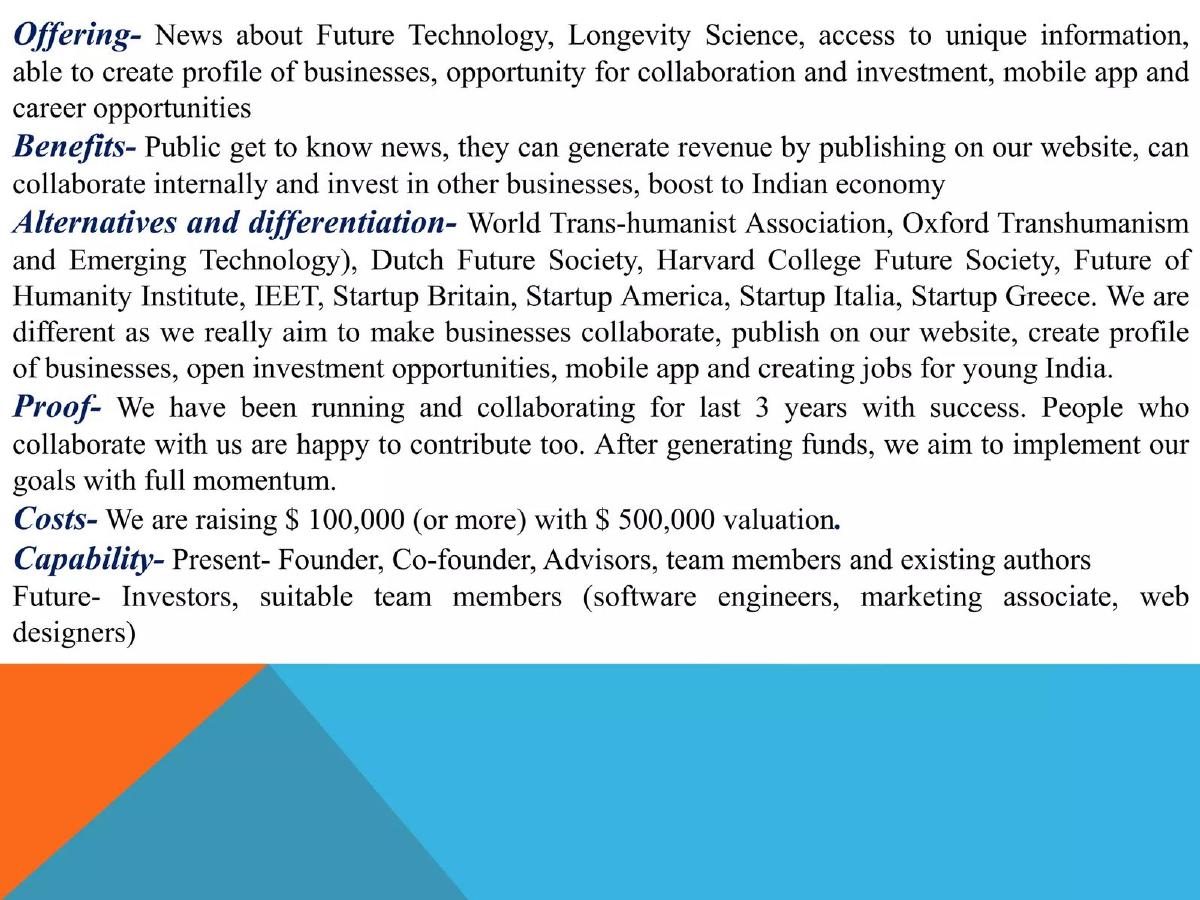
- The financial ask is $100,000 at a $500,000 valuation, as stated on both slide 3 and slide 5.
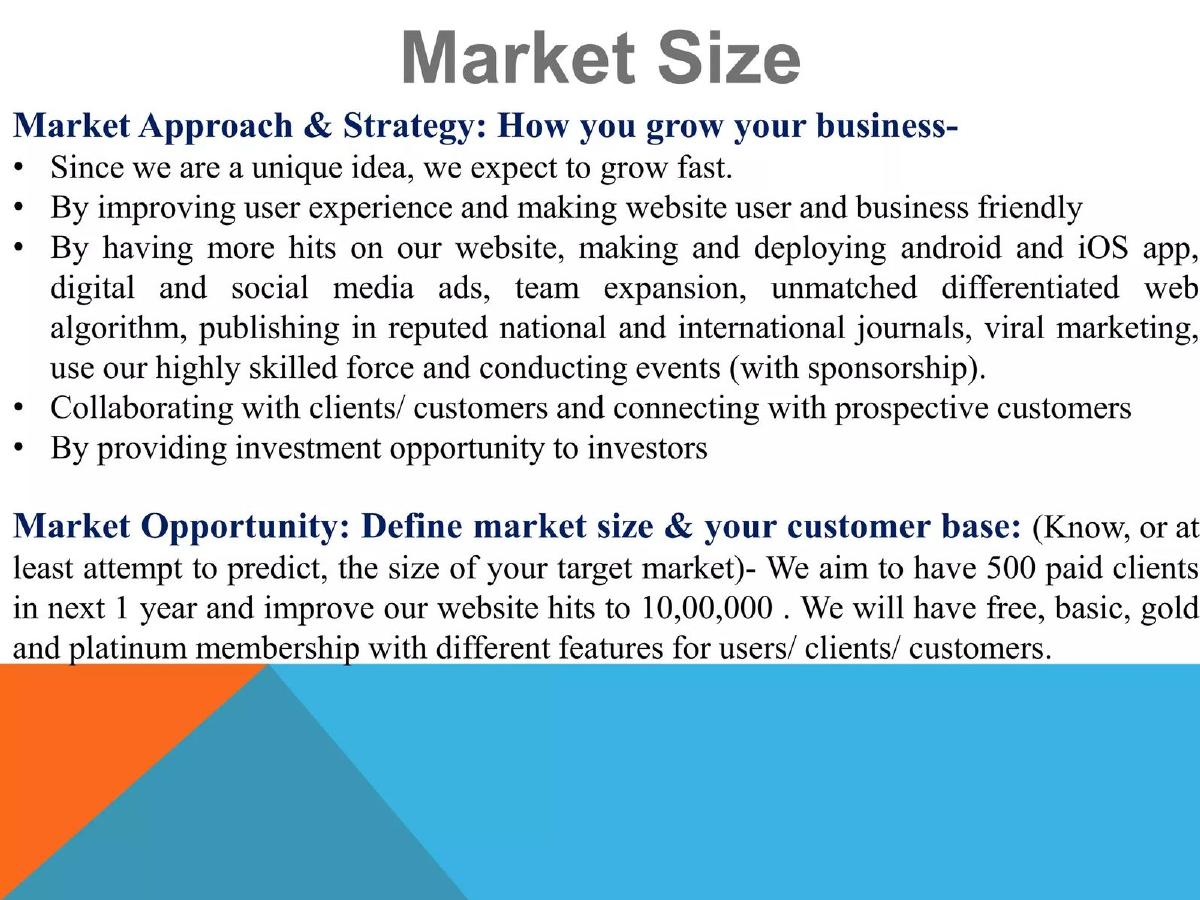
- Revenue is planned through a tiered membership model: Free, Basic, Gold, and Platinum, detailed on slide 5.
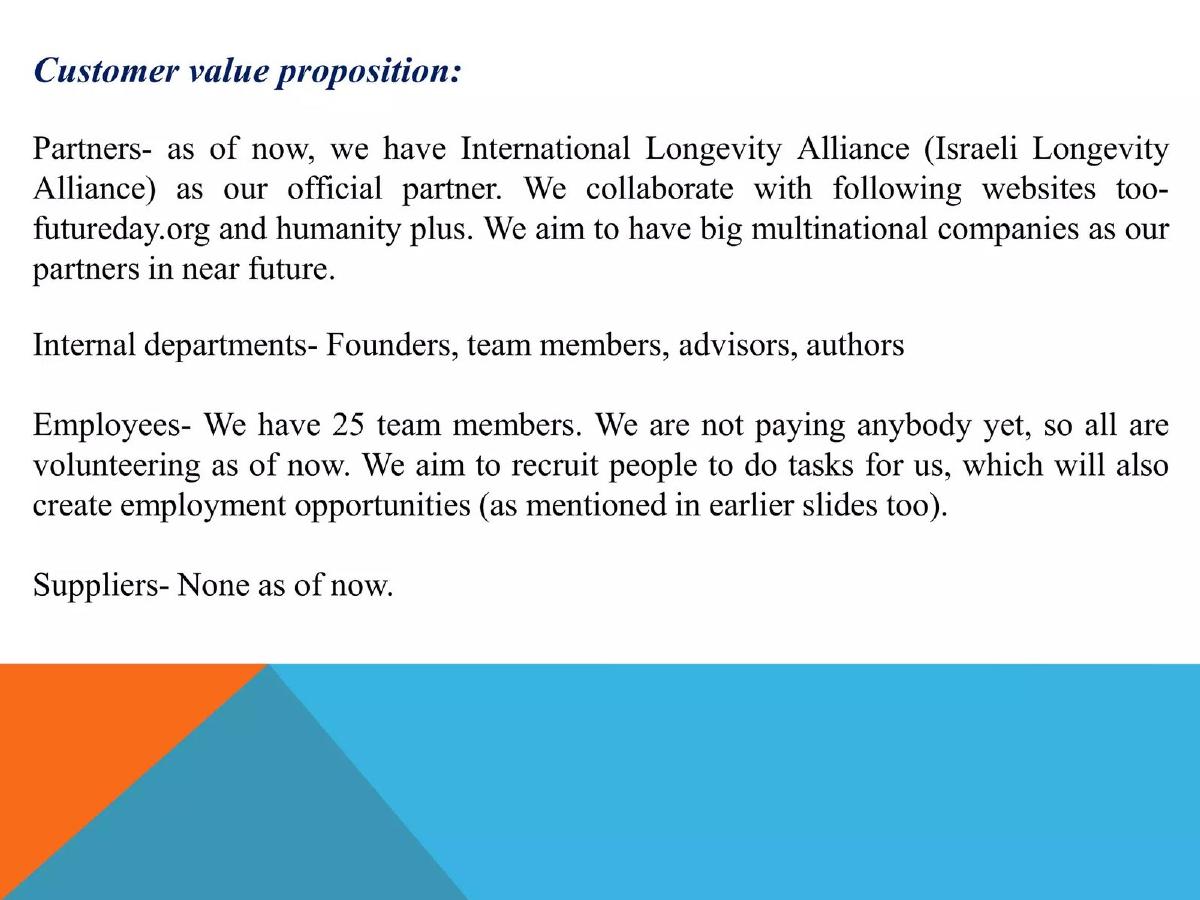
- The organization currently operates with 25 volunteer team members and no paid staff, according to slide 4.
- Traction data shows 52,464 all-time views and a peak of 2,920 views in a single day, as illustrated on slide 6.
- The platform aims to bridge the gap between content and capital by offering 'Platinum' members access to investors and angels (slide 5).
- The deck lists the International Longevity Alliance (Israeli Longevity Alliance) as an official partner on slide 4.
- Future hiring plans prioritize software engineers, marketing associates, and web designers to replace the current volunteer structure (slide 3).
Slide-by-Slide Analysis
Slide 1: Title Slide
The title slide identifies the entity as 'India Future Society' and specifies it was prepared for 'Founder Institute (Founder Lab)' in August 2015. The branding is minimal, featuring a logo that incorporates the initials 'IFS' in a blocky, multi-colored format. The inclusion of the date and the specific program (Founder Institute) sets the context that this is an early-stage pitch developed within an accelerator framework.
Slide 2: Vision / Elevator Pitch
This slide uses a classic 'X for Y' analogy: 'We are "The New York Times" for Future Technology.' This is a bold claim intended to signal high editorial standards and authority. However, the slide is otherwise empty, missing any visual cues or supporting text that might explain how they intend to achieve that level of prestige or scale.
Slide 3: The Overview (Offering, Benefits, Costs, Capability)
This is a text-heavy slide that combines several traditional pitch deck elements. Under Offering , they list news about longevity science and future tech, business profiles, and a mobile app. The Benefits section highlights revenue generation for publishers and a boost to the Indian economy. Alternatives and differentiation lists a wide array of transhumanist organizations, claiming IFS is different because it facilitates business collaboration and investment. The Costs section explicitly states a raise of '$ 100,000 (or more) with $ 500,000 valuation.' Finally, Capability admits the current team is a mix of volunteers and authors, with a need for software engineers and web designers in the future.
Slide 4: Customer Value Proposition
This slide focuses on the ecosystem. It identifies the 'International Longevity Alliance' as an official partner and mentions collaborations with futureday.org and humanity plus. A critical disclosure here is under Employees : 'We have 25 team members. We are not paying anybody yet, so all are volunteering as of now.' This highlights the project's roots as a community-driven initiative rather than a commercial startup. The slide also notes a lack of current suppliers.
Slide 5: Revenue Model
The business model is a tiered subscription service. Free website users get basic news. Basic membership allows businesses to post content. Gold membership adds access to client data. Platinum membership is the premium tier, offering access to 'investors/ angels/ VC’s' and follow-up investment opportunities. The timeline for revenue is conservative, stating they can show clients in 6 months but won't generate revenue for 1 year. The 'Ask' is repeated here: $100,000 at a $500,000 valuation.
Slide 6: Traction (Analytics)
This slide provides a screenshot of a web traffic dashboard. Key metrics include 52,464 all-time views and 58 comments. The bar chart shows a significant spike in May 2014 (reaching over 8,000 views that month), but the 'Today' metric is very low at 13 views. This suggests that while the site has historical reach, it lacks consistent daily engagement or a 'sticky' user base at the time the deck was produced.
Slide 7: What you are looking for
This slide acts as a secondary 'Ask' slide, expanding beyond capital. The list includes networking with 'great minds,' hiring employees to 'deliver tasks,' international exposure, and recommendations from the Indian Government's Department of Science and Technology (DST). It reads more like a wish list than a strategic roadmap, mixing high-level goals like 'Fast growth' with specific needs like 'Sponsorship.'
Slide 8: Product or Service: Your Solution
This slide attempts to define the 'secret sauce.' It claims the solution is a 'mixture of means of publishing' and promotes 'unique contents.' The plan to solve the problem involves a 'marketing strategy' and 'hiring intelligent work force.' The current operations are described as publishing content, organizing events, and collaborating with advisors. It remains vague on the actual technology or platform features that would differentiate it from a standard WordPress blog or a LinkedIn group.
Slide 9: Thanks & Attribution
The final slide attributes the 'deck/formula' to various sources, including 500 Startups (Dave McClure), Reid Hoffman (LinkedIn & Greylock), and TechStars. This indicates the founder was following a specific template or pedagogical approach provided by the Founder Institute, which explains the structured (if somewhat repetitive) nature of the slides.
What Works
Clear Financial Ask: The deck does not hide the numbers. Stating a $100,000 ask at a $500,000 valuation on multiple slides (3 and 5) gives investors an immediate understanding of the deal terms and the stage of the company.
Niche Focus: By focusing on 'Longevity Science' and 'Future Technology' within the Indian market, the company carves out a specific territory. The partnership with the International Longevity Alliance provides a degree of niche credibility.
Transparency on Team: The founder is honest about the current state of the workforce. Admitting that all 25 team members are volunteers (Slide 4) prevents any misunderstanding about the company's burn rate or operational maturity.
What is Missing
Unit Economics: While a revenue model is listed (Slide 5), there is no mention of the price points for the Basic, Gold, or Platinum tiers. Without these figures, it is impossible to calculate the Lifetime Value (LTV) or the number of customers needed to reach break-even.
Technical Roadmap: The deck mentions a mobile app and a platform for business profiles, but there are no mockups, screenshots of the product interface, or a timeline for development. For a company seeking to be a 'New York Times' of tech, the lack of a product demo is a significant gap.
Market Size (TAM/SAM/SOM): There is no data regarding the size of the Indian tech media market or the specific longevity science sector. Investors need to know if the 'New York Times' of this niche can actually become a large-scale business.
Specific Use of Funds: While the ask is $100k, the deck only mentions general categories like 'hiring software engineers' and 'marketing.' A detailed breakdown of how that $100k will be spent over the first 12-18 months is missing.
Founder's Guide: What to Copy
The Use of Analogies: Using the 'New York Times' analogy (Slide 2) is a strong way to communicate a brand's intended positioning instantly. It sets an expectation for quality and authority that investors can easily visualize.
Traction Screenshots: Including actual analytics screenshots (Slide 6) is always better than just typing numbers into a bullet point. It provides a 'source of truth' that builds trust, even if the numbers themselves are modest.
Competitive Landscape Listing: Slide 3 does a good job of listing actual organizations (IEET, Startup Britain, etc.) rather than just generic categories. This shows the founder has researched the global ecosystem in which they operate.
Clear Attribution: Acknowledging the sources of the pitch deck methodology (Slide 9) shows a coachable founder who is following best practices from established venture leaders like Dave McClure and Reid Hoffman.
Frequently asked questions
- What is the core product of India Future Society?
- Based on slide 3 and slide 8, the core product is a content and networking platform. It provides news on future technology and longevity science, allows businesses to create profiles, and facilitates collaboration and investment. They also mention a mobile app and the organization of events to promote unique content.
- How does the company plan to generate revenue?
- Slide 5 outlines a membership-based revenue model. The 'Basic' tier allows businesses to post on the site, 'Gold' adds access to client information, and 'Platinum' provides access to investors, angels, and VCs. The founder notes that revenue generation is expected to begin one year after funding.
- What is the current scale of their audience?
- Slide 6 provides a screenshot of their analytics, showing 52,464 all-time views and 58 comments. The daily traffic is relatively low, with 'Today' showing only 13 views, though they achieved a 'Best ever' day of 2,920 views, likely due to a specific viral event or publication.
- Who is currently running the company?
- According to slide 4, the team consists of 25 members, all of whom are volunteers. Slide 3 mentions the team includes a Founder, Co-founder, advisors, and existing authors. The funding is intended to transition these roles into paid positions, specifically for engineering and marketing.
- What are the primary competitive differentiators mentioned?
- Slide 3 lists several academic and international organizations like the World Trans-humanist Association and the Future of Humanity Institute as alternatives. India Future Society differentiates itself by focusing on business collaboration, job creation for 'young India,' and providing a direct path to investment opportunities.