NVision’s deck focuses on the critical gap in current oncology imaging: the inability to see if a treatment is working in real-time. By utilizing a quantum-based polarizer to enhance the signal of 13C-pyruvate, NVision claims to increase MRI sensitivity by 100,000x, turning standard MRI machines into metabolic imagers. The deck successfully balances high-level physics with clinical necessity, highlighting 12 Letters of Intent from tier-1 medical centers like MSKCC and MD Anderson. While the technical 'how' is kept at a high level, the business model—a 'razor-and-blade' approach involving loan…
Key takeaways
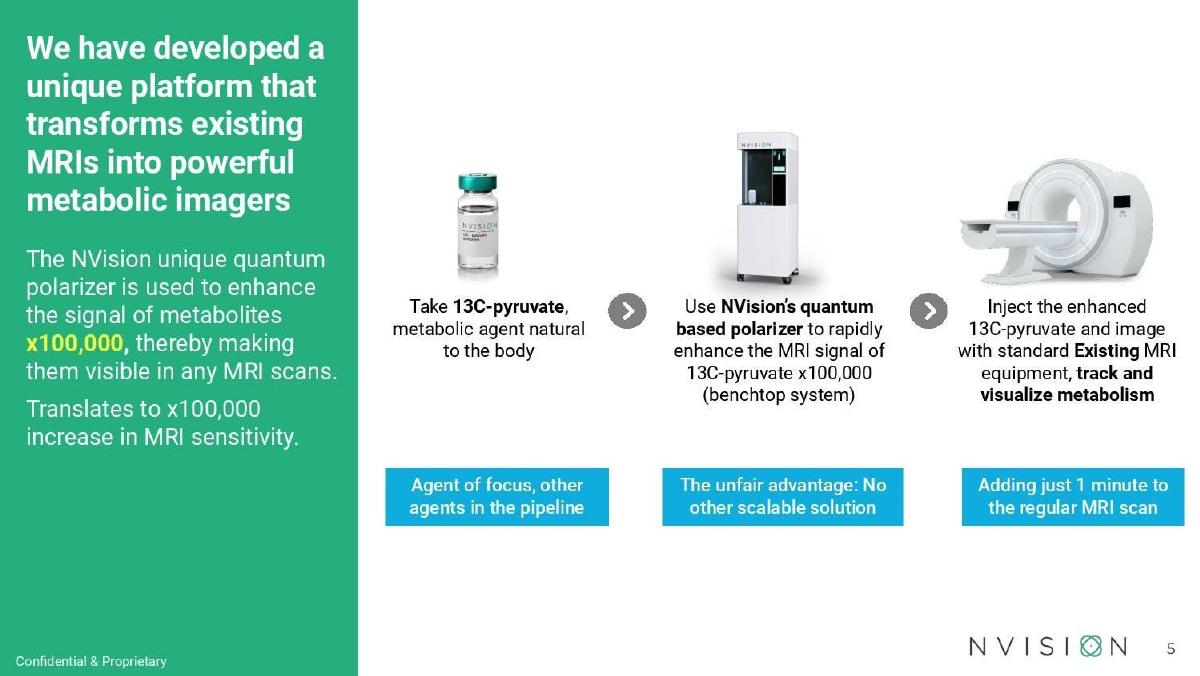
- The core value proposition is a 100,000x increase in MRI signal sensitivity using a quantum-based polarizer (Slide 5).
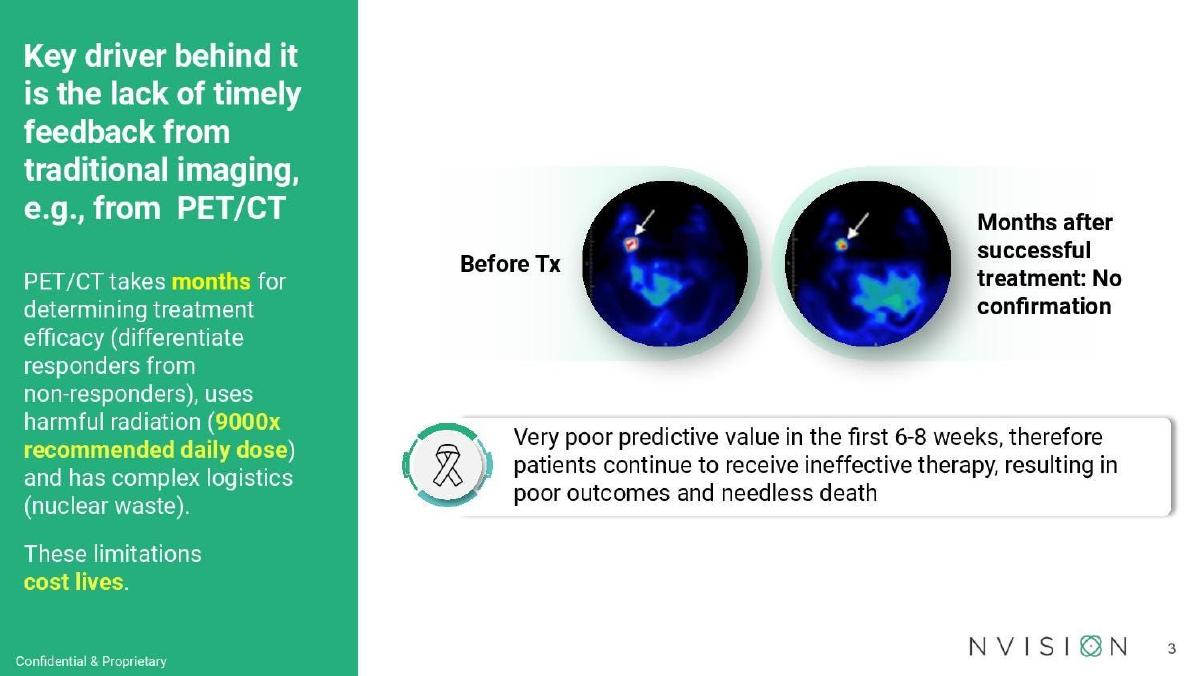
- NVision addresses a specific clinical failure: PET/CT scans take months to show efficacy and use 9,000x the recommended daily radiation dose (Slide 3).
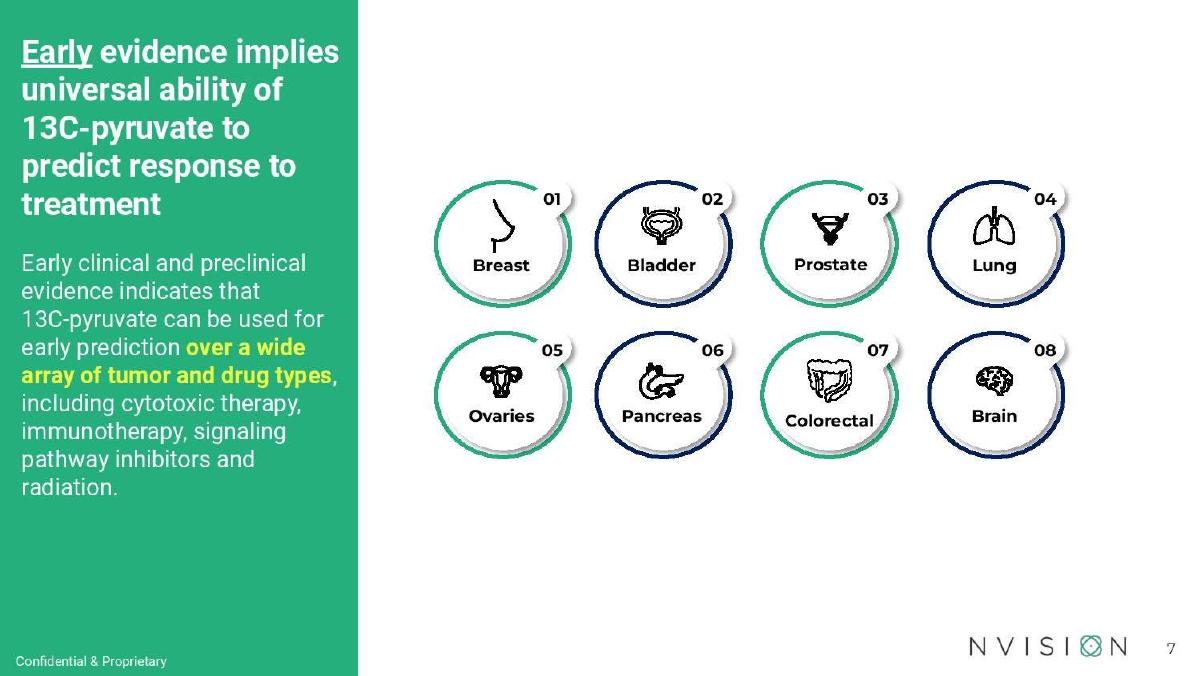
- The technology aims for universal application across eight major cancer types, including breast, lung, and brain (Slide 7).
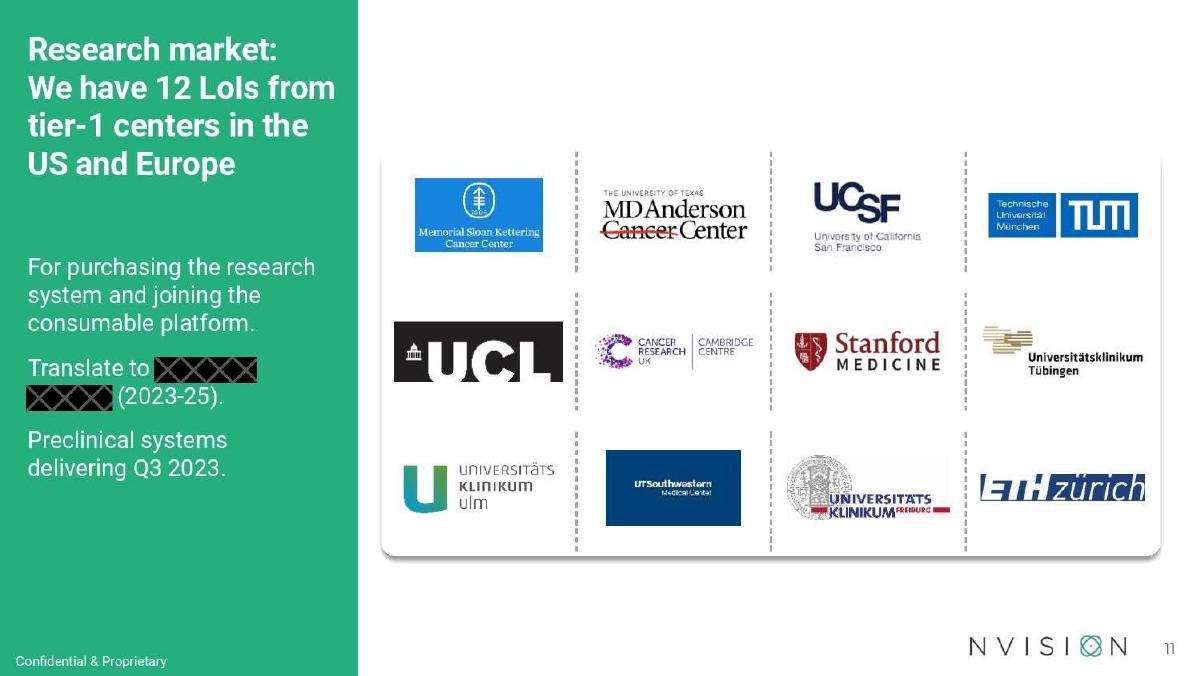
- Market demand is evidenced by 12 Letters of Intent (LoIs) from top-tier institutions including Stanford Medicine and UCSF (Slide 11).
- The business model is built on recurring revenue from proprietary consumable kits, while the hardware is loaned to centers (Slide 13).
- The team is highly specialized, consisting of 50 experts from 10 countries with >60% at the PhD level (Slide 15).
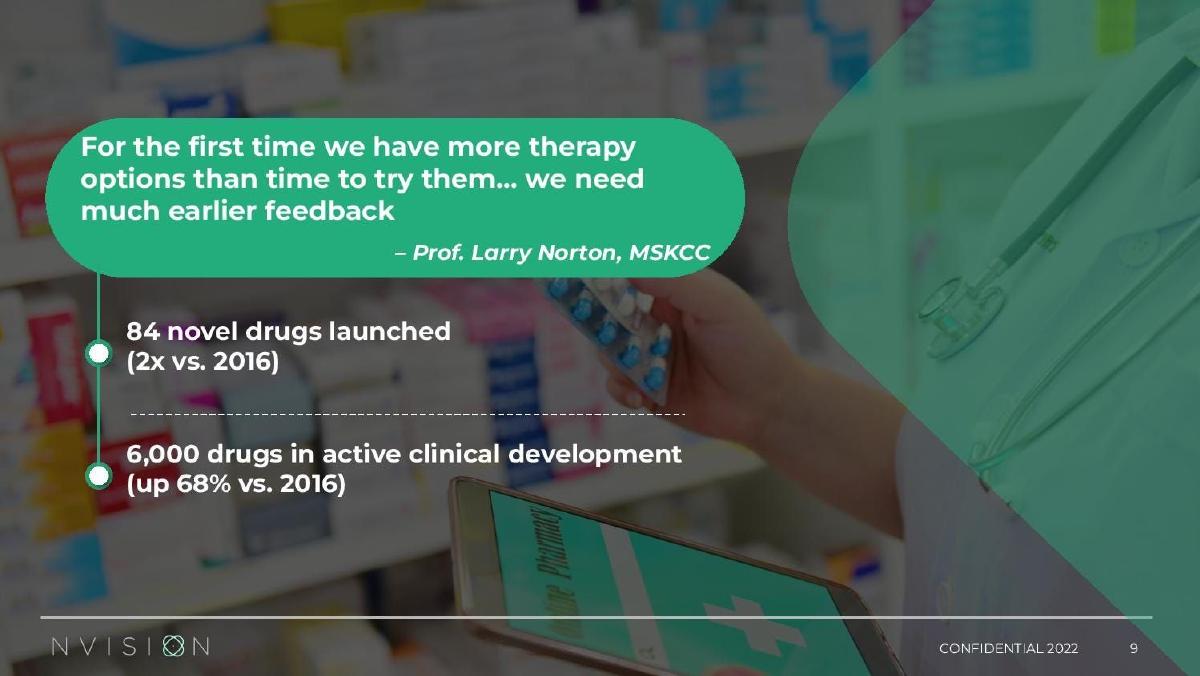
- The deck highlights a massive surge in drug development (6,000 drugs in clinical development) to justify the need for faster feedback loops (Slide 9).
- The solution integrates into existing workflows, adding only one minute to a standard MRI scan (Slide 5).
NVision Pitch Deck Teardown: The Quantum Leap in Oncology Imaging
NVision is tackling one of the most significant bottlenecks in modern oncology: the feedback loop. As reported by Business Insider, the company raised $17M in 2024 to advance its quantum-enhanced MRI technology. The deck presented here, dated July 2022, outlines a vision where 'Metabolic MRI' becomes the standard for cancer treatment monitoring.
Slide 1: Title and Vision
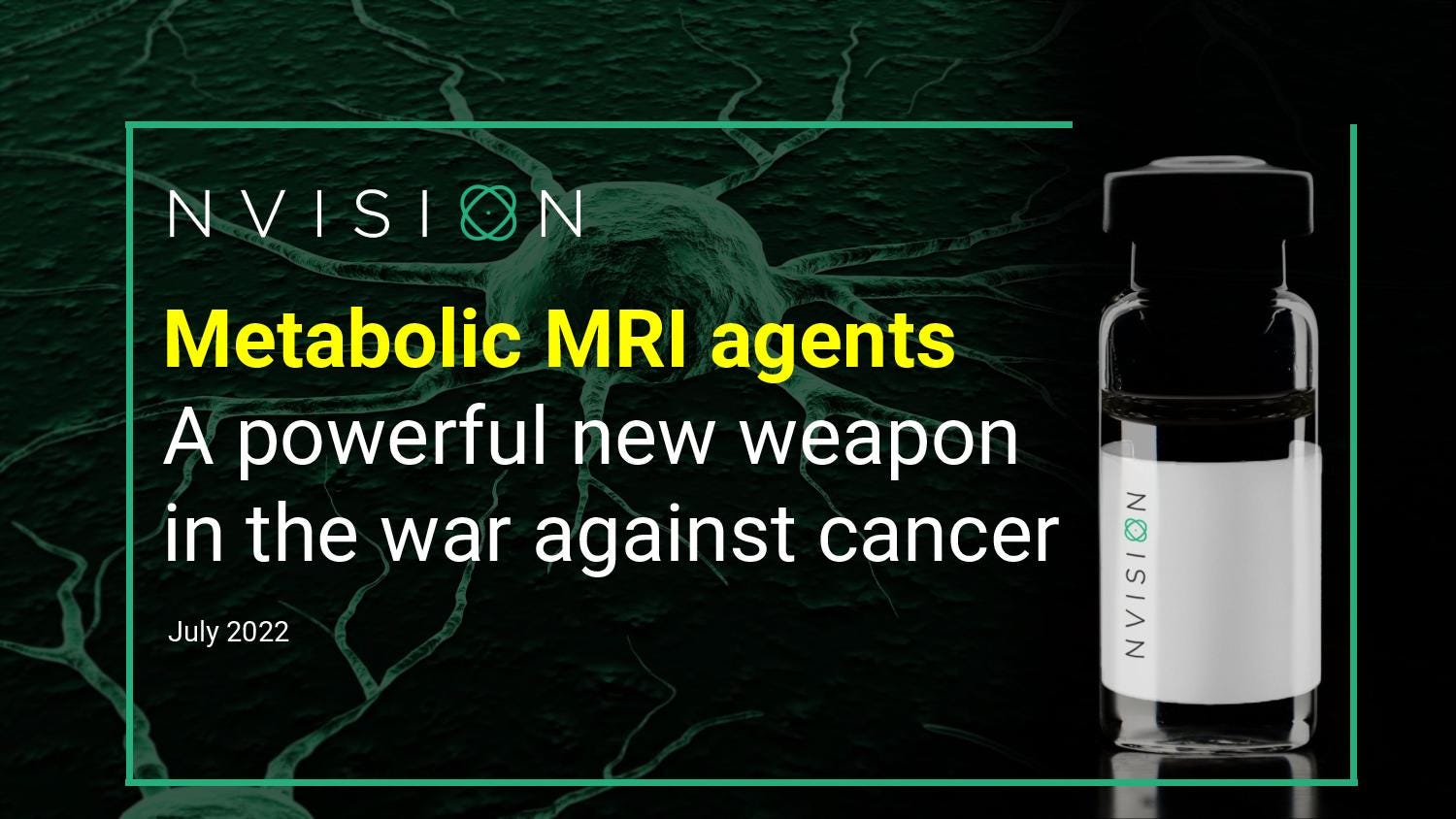
The opening slide sets a somber but aggressive tone. The headline, 'Metabolic MRI agents: A powerful new weapon in the war against cancer,' immediately identifies the sector (oncology) and the product (MRI agents). The visual of a medical vial labeled 'NVision' next to a microscopic image of a cell provides a clear link between the chemical agent and the biological target.
Slide 3: The Problem – The Failure of Traditional Imaging
Slide 3 is a classic 'problem' slide, focusing on the limitations of PET/CT scans. NVision highlights three critical pain points: time, safety, and logistics. They state that PET/CT takes 'months' to determine if a treatment is working, uses '9000x recommended daily dose' of radiation, and creates 'nuclear waste.' The most damning claim is that these limitations 'cost lives' because patients continue ineffective therapy during the 6-8 week window where traditional imaging has 'very poor predictive value.'
Slide 5: The Solution – The Quantum Polarizer
This slide explains the 'how' without getting bogged down in quantum mechanics. The process is broken into three steps: taking 13C-pyruvate (a natural metabolic agent), using the 'NVision quantum based polarizer' to enhance the signal by x100,000 , and injecting it into a patient for a standard MRI scan. The 'unfair advantage' is explicitly stated: 'No other scalable solution.' Crucially for clinical adoption, they note this adds 'just 1 minute to the regular MRI scan.'
Slide 7: Clinical Evidence and Scope
NVision asserts that their technology is not a niche tool for a single cancer type. Slide 7 lists eight major areas where early evidence implies the ability of 13C-pyruvate to predict response: Breast, Bladder, Prostate, Lung, Ovaries, Pancreas, Colorectal, and Brain. By claiming a 'universal ability,' NVision significantly expands its Total Addressable Market (TAM) from a specific diagnostic tool to a platform technology for all oncology.
Slide 9: The Macro Trend – The Drug Explosion
To justify the need for faster imaging, Slide 9 cites a quote from Prof. Larry Norton of MSKCC: 'For the first time we have more therapy options than time to try them.' The slide provides supporting data: 84 novel drugs launched (2x vs. 2016) and 6,000 drugs in active clinical development (up 68% vs. 2016). This frames NVision not just as a better camera, but as an essential piece of infrastructure for the pharmaceutical industry’s growth.
Slide 11: Market Validation – The LoIs
Traction in deep tech is often measured by the quality of research partners. Slide 11 displays the logos of 12 tier-1 centers that have signed Letters of Intent (LoIs). The list is a 'who's who' of medicine: Memorial Sloan Kettering, MD Anderson, UCSF, Stanford Medicine, and ETH Zürich. This slide serves as a massive de-risking signal for investors, proving that the world’s leading experts believe in the technology's potential.
Slide 13: The Business Model – Razor and Blade
NVision clarifies its path to revenue on Slide 13. They are building a 'pharmaceutical business, based on kit reimbursement.' The strategy is to loan the hardware (the polarizer) to centers for free ('One-off') to eliminate capital expenditure hurdles for hospitals. The 'Recurrent' revenue comes from 'proprietary starting materials and reagents' sold as consumable kits. This is a high-margin, scalable model familiar to healthcare investors.
Slide 15: The Team – The 'Manhattan Project'
Deep tech requires deep talent. Slide 15 showcases a team of 50 physicists, chemists, and engineers from 10 countries. The key metric here is that >60% are at the PhD level , with backgrounds from MIT, Berkeley, and ETH. By calling themselves a 'Manhattan Project,' they emphasize the intensity and singular focus of their collocated team in Ulm, Germany.
Slide 18: The Vision – Metabolic Imaging at Scale
The final slide is a conceptual render of the product in a clinical setting. It reinforces the goal: 'deploy quantum polarizers to thousands of medical centers to enable metabolic imaging by standard MRIs at scale.' It leaves the investor with a vision of a future where NVision hardware is as ubiquitous as the MRI machines they enhance.
What Works in This Deck
Clarity of the '100,000x' Value: In deep tech, founders often struggle to quantify their advantage. NVision repeats the 'x100,000 signal enhancement' multiple times. It is a simple, powerful number that even a non-physicist can understand as a massive leap forward.
Addressing Clinical Workflow: Many medical innovations fail because they require doctors to change their entire routine. NVision emphasizes that their process adds only one minute to an existing MRI scan and uses standard equipment. This lowers the 'activation energy' for hospital adoption.
High-Signal Traction: The LoI slide is exceptionally strong. In the medical field, getting MSKCC and MD Anderson to sign on to a research system is a significant hurdle. It suggests the underlying science has already passed rigorous peer scrutiny.
What is Missing from This Deck
Regulatory Path: While the deck mentions a 'reimbursable market,' it lacks a specific slide detailing the FDA/EMA regulatory timeline. For a medical device/agent combo, the 'Valley of Death' is often the clinical trial and approval phase. Investors would want to see a roadmap for these milestones.
Unit Economics: While the 'razor-and-blade' model is mentioned, there are no specific figures regarding the cost to manufacture a polarizer versus the expected price or margin of a consumable kit. The deck stays at the strategic level rather than the tactical financial level.
Competitive Landscape: The deck claims there is 'no other scalable solution,' but it doesn't mention other hyperpolarization techniques (like DNP - Dissolution Dynamic Nuclear Polarization) or how NVision specifically beats existing competitors in that niche space.
What a Founder Should Copy
The 'Macro Need' Slide: Slide 9 is a masterclass in framing. By showing that drug development is accelerating, they make their diagnostic tool a 'must-have' rather than a 'nice-to-have.' If your industry is seeing a surge in 'Supply' (drugs), position your startup as the necessary 'Filter' or 'Validator.'
Visualizing the Process: Slide 5 uses simple icons and a linear flow to explain a process involving quantum physics. Founders in complex industries should aim for this level of 'at-a-glance' understanding.
The 'Team Density' Metric: Instead of just listing names and bios, NVision uses a percentage (>60% PhDs) and a collective noun ('Manhattan Project'). This communicates a level of intellectual horsepower that individual bios sometimes fail to capture.
Frequently asked questions
- What is the primary technical innovation NVision is pitching?
- NVision has developed a quantum-based polarizer that enhances the signal of metabolic agents, specifically 13C-pyruvate, by 100,000 times. This allows standard MRI machines to visualize cellular metabolism, which is normally invisible, providing a 'metabolic map' of a tumor's response to treatment far earlier than traditional imaging methods like PET or CT.
- How does NVision plan to make money?
- The company employs a 'razor-and-blade' business model. According to slide 13, NVision plans to loan the expensive quantum polarizer hardware to medical centers for free ('One-off') to lower the barrier to entry. Revenue is generated through the 'Recurrent' sale of proprietary consumable kits containing the starting materials and reagents needed for each scan.
- What is the clinical advantage over current PET/CT scans?
- Slide 3 notes that PET/CT scans have 'very poor predictive value' in the first 6-8 weeks of treatment and expose patients to 9,000x the recommended daily radiation dose. NVision’s metabolic MRI aims to provide immediate feedback on whether a therapy is working, allowing doctors to switch ineffective treatments sooner and avoid needless patient suffering.
- Who are the early adopters of this technology?
- NVision has secured 12 Letters of Intent (LoIs) from world-renowned research and medical centers. These include Memorial Sloan Kettering (MSKCC), MD Anderson Cancer Center, UCSF, Stanford Medicine, UCL, and ETH Zürich. These partnerships are focused on purchasing research systems and joining the consumable platform.
- What does the team composition look like?
- The deck describes the team as a 'Manhattan Project' for metabolic MRI. It consists of 50 physicists, chemists, and engineers collocated in Ulm, Germany. Over 60% of the staff hold PhDs, with many recruited from top-tier global research labs such as MIT, Berkeley, and ETH.