nuwo’s pitch deck is a concise, aesthetically driven presentation that addresses the 'Future of Work' through the lens of physical infrastructure. By branding their offering as 'Homeoffice as-a-Service,' the company targets the B2B market with a solution that combines a white-label webshop, logistics, and insurance. The deck effectively uses the 'pain point' of employee health—citing that over 75% of remote workers suffer from physical ailments due to poor equipment—to justify a subscription-based furniture model. While the deck excels at defining the problem and the product interface, it is…
Key takeaways
- The company defines its category as 'Homeoffice as-a-Service' on slide 1, signaling a shift from one-time furniture sales to a recurring service model.
- nuwo identifies a significant health crisis in remote work, stating on slide 3 that >75% of employees suffer from headaches and back pain due to improper home equipment.
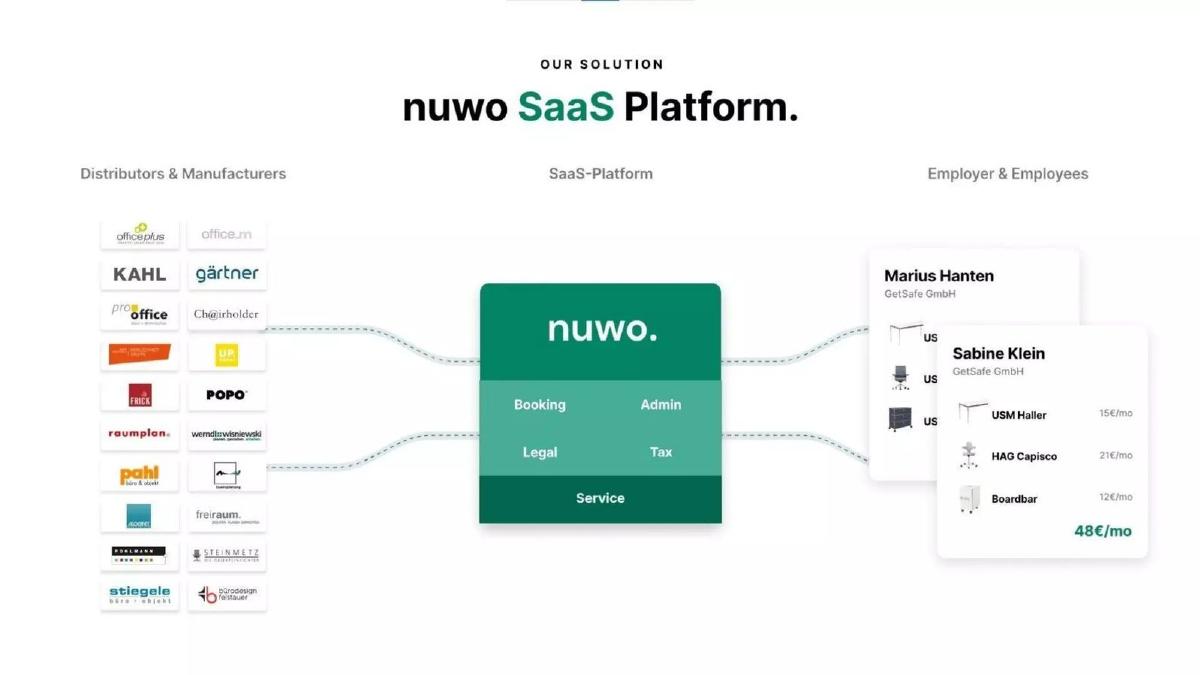
- The business model relies on a 'nuwo SaaS Platform' that connects distributors and manufacturers to employers and employees (slide 6).
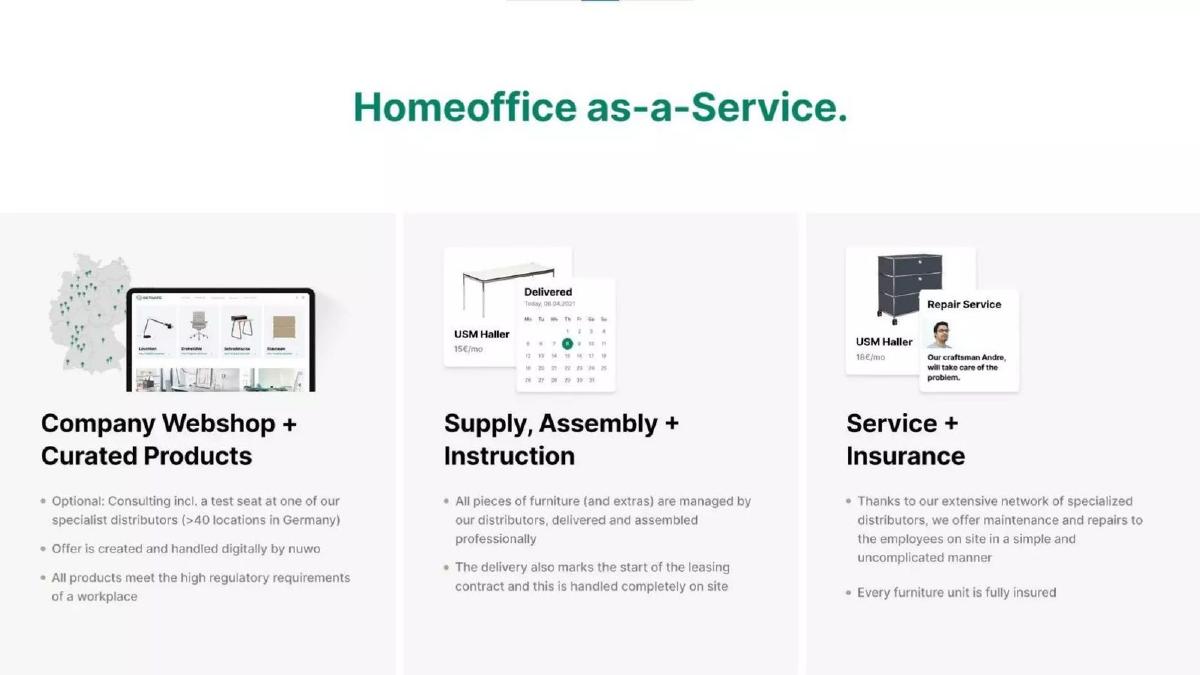
- The service is comprehensive, covering supply, assembly, instruction, maintenance, and insurance for all furniture units (slide 5).
- A case study on slide 8 demonstrates the value proposition: providing €1,800 worth of furniture for a 'nuwo rate' of €50/month.
- The deck highlights a productivity increase of 20-30% for employees with ergonomically equipped workplaces (slide 9).
- The platform offers a white-label webshop for companies, as shown in the 'GetSafe' example on slide 7.
- The deck lacks critical financial data, including current revenue, growth metrics, and a specific funding request.
The Pitch for Infrastructure in a Distributed World
nuwo’s pitch deck is a clean, 11-slide presentation that focuses on the physical reality of the remote work revolution. While many 'Future of Work' startups focus on software for collaboration or payroll, nuwo addresses the tangible: the desk, the chair, and the lamp. By framing furniture as a service (HaaS), they attempt to turn a capital-expenditure-heavy logistics problem into a scalable SaaS-enabled marketplace. The deck is visually consistent and uses high-end furniture imagery to suggest a premium service level, though it leaves many quantitative questions unanswered.
Slides 1-4: The Macro Shift and the Pain Point
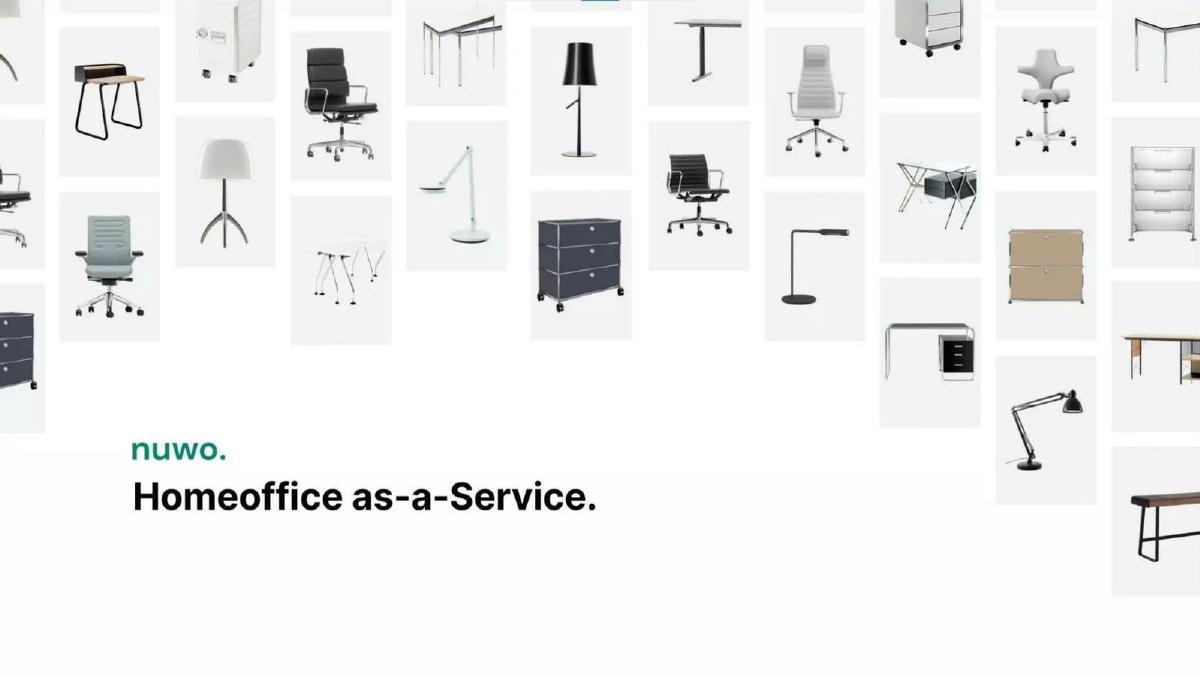
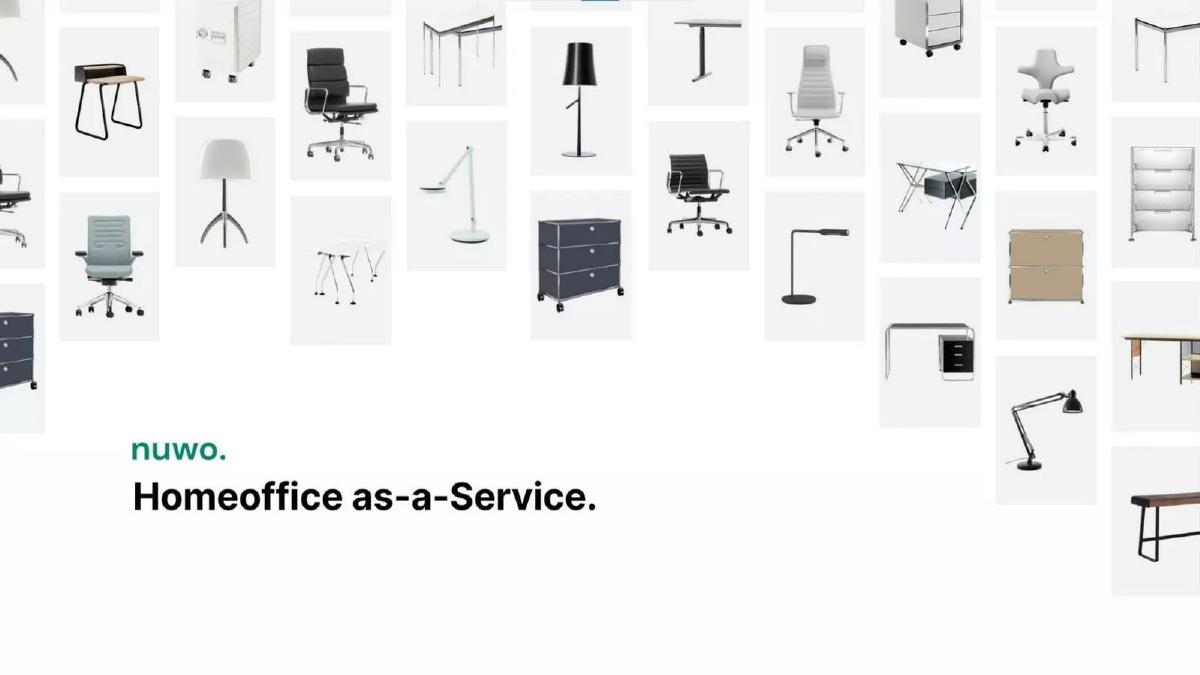
Slide 1 introduces the brand and the core value proposition: "Homeoffice as-a-Service." The background is a collage of high-end, minimalist office furniture, immediately establishing the aesthetic and industry focus.
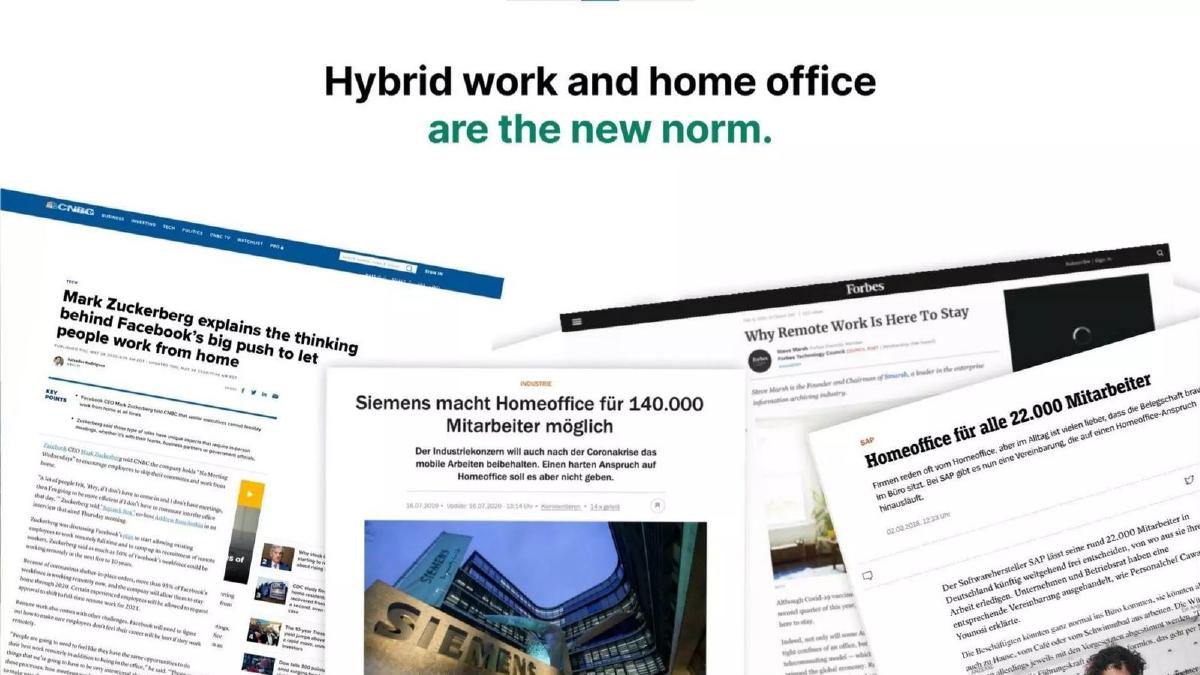
Slide 2 uses social proof through media headlines. It features clippings from CNBC, Forbes, and German outlets like Industrie and SAP, highlighting that remote work is "here to stay." The slide mentions Siemens making home office possible for 140,000 employees and SAP doing the same for 22,000. This sets the scale of the potential market without providing a specific TAM figure.
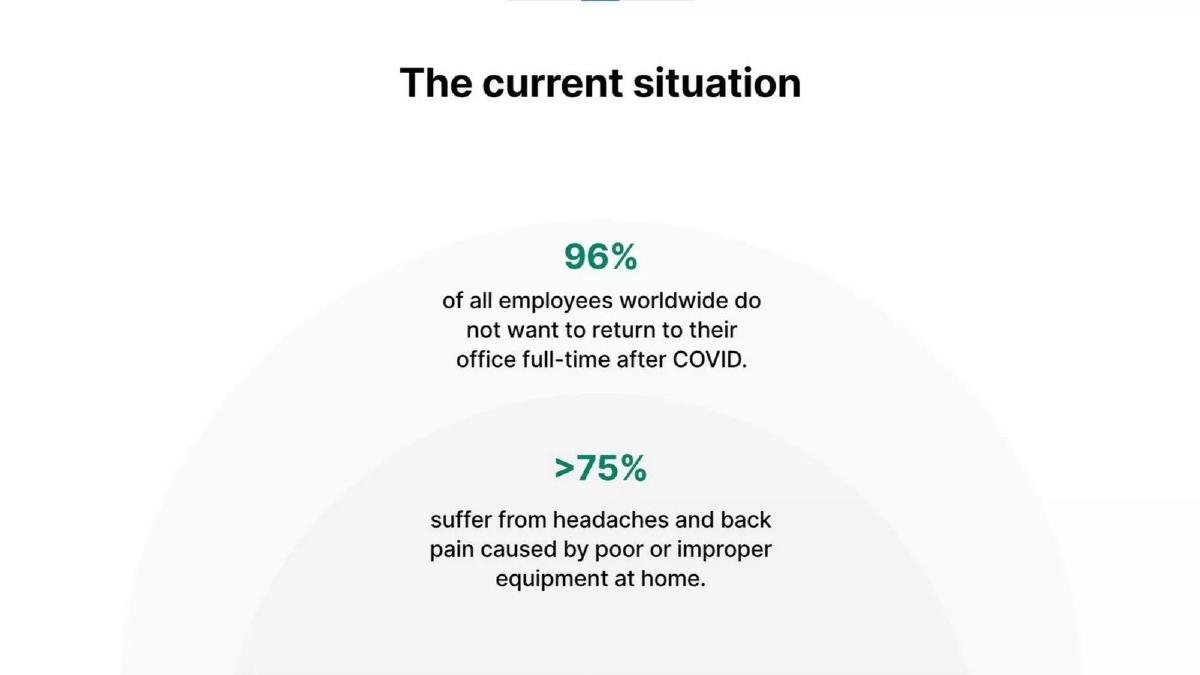
Slide 3 quantifies the problem. It claims that 96% of employees worldwide do not want to return to the office full-time after COVID. More importantly, it highlights a health crisis: over 75% of employees suffer from headaches and back pain due to poor home equipment. This shifts the conversation from "perk" to "necessity" and "compliance."
Slide 4 acts as a transition, stating that nuwo converts the "Future of Work" challenge into an opportunity for organizations. It is a high-level vision statement intended to bridge the problem to the solution.
Slides 5-8: The Product and Platform Mechanics
Slide 5 breaks down the service into three pillars: Company Webshop + Curated Products, Supply/Assembly/Instruction, and Service + Insurance. Notable details include the mention of over 40 locations in Germany for specialist distributors and the fact that all products meet "high regulatory requirements of a workplace." This is a key selling point for HR and Legal departments concerned with occupational health and safety laws.
Slide 6 illustrates the "nuwo SaaS Platform." It shows the company as the central hub connecting "Distributors & Manufacturers" (listing 18 logos) to "Employer & Employees." The platform handles Booking, Admin, Legal, Tax, and Service. This slide is crucial as it defines nuwo not just as a furniture leaser, but as a software layer that manages the lifecycle of the asset.
Slide 7 shows a mockup of a white-label webshop for a company called GetSafe. It lists specific monthly prices for high-end items: a Herman Miller Aeron for 18€/m, a USM Haller table for 17€/m, and a Nimbus Roxxane lamp for 9€/m. This makes the service feel concrete and affordable compared to the retail price of these items.
Slide 8 provides a "Real-life example" featuring Christian Wiens of GetSafe. It shows a bundle consisting of a HAG Capisco chair, a Sedus Secretair desk, and an Artemide Tolomeo lamp. The total value is cited as €1,800, while the "nuwo rate" is just €50/month. This slide effectively demonstrates the financial arbitrage of the leasing model for the employer.
Slides 9-11: The Business Case and Team
Slide 9 outlines why companies should invest in this. It focuses on three areas: Employee Health (reducing sick leaves), Motivation & Benefits (claiming a 20-30% productivity increase from ergonomic setups), and "New Work" (increasing satisfaction and flexibility). The productivity stat is a powerful hook, though the source of the data is not cited on the slide.
Slide 10 is a creative inclusion: an Apple advertisement from 1987 titled "How to succeed in business without leaving the house." The headline "History repeats itself" suggests that the home office is not a fad but a long-gestating evolution that has finally reached a tipping point. It adds a layer of historical inevitability to the pitch.
Slide 11 is the team slide. It features Lisa Rosa Bräutigam (Co-Founder & CEO) and Lukas Schlund (Co-Founder). The slide provides their email addresses and phone numbers but is entirely devoid of professional biographies, past exits, or relevant industry experience. This is a significant omission for a seed or Series A deck.
What Works in the nuwo Deck
Clear Categorization: The term "Homeoffice as-a-Service" is an excellent piece of positioning. It takes a complex logistical service and fits it into a mental model (SaaS) that investors already understand and value highly.
Focus on Regulatory Compliance: By mentioning that products meet "high regulatory requirements," nuwo appeals to the risk-aversion of large enterprise clients. In many jurisdictions, employers are legally responsible for the ergonomic safety of their employees' workstations, even at home. nuwo positions itself as the 'compliance' layer for this risk.
Visual Clarity: The deck is professionally designed and uses high-quality product imagery. It sells the "aspiration" of a beautiful home office, which is a key part of the employee benefit proposition.
What is Missing from the nuwo Deck
Financials and Traction: There are no charts showing revenue growth, number of active users, or the number of corporate contracts signed. Without these, it is impossible to tell if this is a concept or a functioning business.
The Ask: The deck does not state how much money the company is looking to raise, what the valuation expectations are, or how the funds will be allocated (e.g., hiring, geographic expansion, inventory financing).
Competitive Landscape: nuwo is not the only company in the furniture-as-a-service space. The deck fails to mention competitors or explain why their SaaS-first approach is superior to traditional leasing companies or other startups in the space.
Unit Economics: While we see the monthly rate for a chair, we don't see the margin. Investors would want to know the cost of acquisition (CAC), the lifetime value (LTV) of a corporate contract, and the depreciation schedule of the furniture assets.
What a Founder Should Copy
The Case Study Slide: Slide 8 is a perfect example of how to show value. By comparing the €1,800 retail value to a €50 monthly fee, the founder makes the "buy vs. lease" decision a no-brainer for a CFO looking to preserve cash flow while providing high-end perks.
The Ecosystem Map: Slide 6 effectively shows how the company sits in the middle of a complex value chain. Founders building marketplace or platform businesses should use this style of diagram to show how they provide value to both the supply side (distributors) and the demand side (employers).
Problem Quantification: Using a specific health-related stat (the 75% figure on slide 3) is much more effective than simply saying "people like working from home." It grounds the business in a physical necessity rather than a fleeting preference.
Frequently asked questions
- What is nuwo's core business model?
- nuwo operates a 'Homeoffice as-a-Service' platform. It acts as a middleman between furniture manufacturers/distributors and corporate employers. Employers provide their staff with access to a curated, white-label webshop where they can select ergonomic furniture. Instead of a large upfront purchase, the equipment is provided via a monthly leasing fee that includes delivery, assembly, maintenance, and insurance.
- How does nuwo address the 'Future of Work' trend?
- The deck argues that hybrid and home office work are the 'new norm,' citing that 96% of employees do not want to return to the office full-time. nuwo positions itself as the solution to the 'transformational challenge' of ensuring these remote environments meet regulatory and ergonomic standards, which traditional office-based companies are often unequipped to manage logistically.
- What are the primary benefits for the employer?
- According to the deck, the primary benefits include improved employee health (reducing sick leave), increased productivity (estimated at 20-30% for ergonomic setups), and enhanced employee retention. It also simplifies the administrative burden of managing distributed assets through a centralized SaaS platform that handles booking, legal, tax, and service aspects.
- What information is missing from the nuwo pitch deck?
- The deck is missing several standard venture capital requirements. There is no mention of the Total Addressable Market (TAM), no financial projections or historical revenue, no competitive analysis, and no 'Ask' slide detailing how much capital is being raised or how it will be used. The team slide also lacks biographies or credentials.
- Who are nuwo's partners and customers?
- Slide 6 displays logos for several distributors and manufacturers, including office.m, gärtner, and stiegele. The deck also features 'GetSafe' as a primary case study and customer example, showing how their employees (like CEO Christian Wiens) use the platform to lease high-end furniture like the HAG Capisco chair and Herman Miller Aeron.